Srini Pillay, MD
Harvard-trained psychiatrist, neuroscientist and biotech advisor pioneering psychogenic longevity—the science of how psychological factors influence health, aging and longevity.
Visit WebsiteAbout Srini Pillay
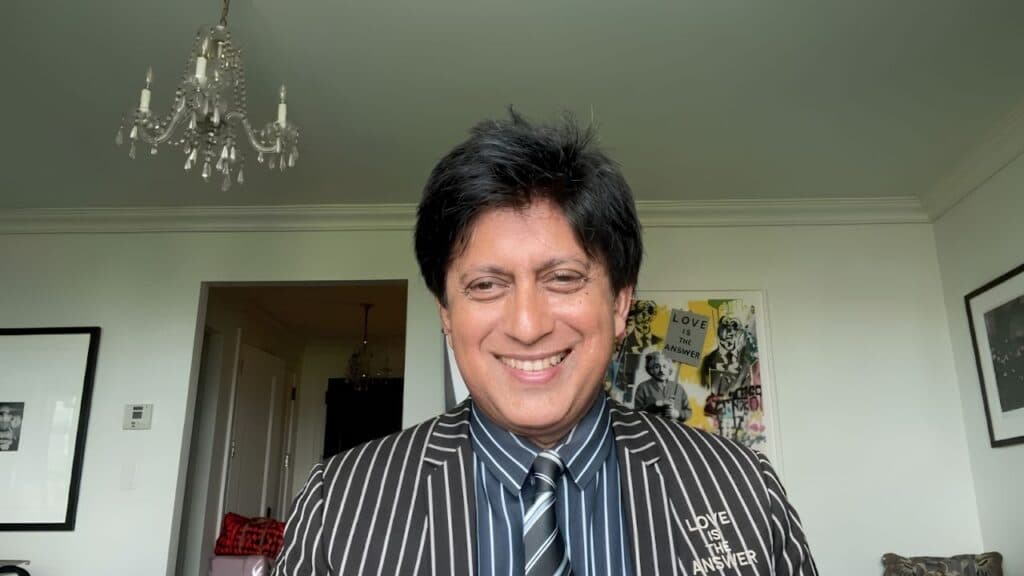
Harvard-trained psychiatrist, brain researcher and technology entrepreneur
Professions: AI & Web3 Builder, Anti-Aging Specialist, Author, Biohacking Advocate, Biological Investigator, Biotech Expert, Brain Health Advocate, Brain Health Expert, Brain Performance Expert, Brain-Based Learning Specialist
Specialties: Adult psychiatry, Aging and Longevity, Body-Mind Therapy, Functional psychiatry, Integrative Psychiatry, Mind Body Coaching
Dr. Srini Pillay is a Harvard-trained psychiatrist, neuroscientist, entrepreneur, and biotechnology advisor whose work spans brain science, AI, human performance, and healthy longevity. A former Harvard Medical School Assistant Professor and Director of the Outpatient Anxiety Disorders Program at McLean Hospital, he spent 17 years conducting brain-imaging research and has advised biotechnology ventures across cardiovascular disease, oncology, neurodegeneration, immunology, and regenerative medicine. Today, he is pioneering the emerging field of psychogenic longevity, exploring how psychological factors such as optimism, purpose, social connection, and resilience influence biological aging, cognitive vitality, healthspan, and longevity.
Ideas for podcast episodes :
- Harvard-trained psychiatrist and neuroscientist Dr. Srini Pillay explores the emerging science of psychogenic longevity—how mindset, lifestyle and biomarkers interact to shape healthspan and longevity.
- Can Your Mind Change How Fast You Age? — The emerging science connecting psychological states, biomarkers, healthspan, and longevity.
- Younger From the Inside Out — Why living longer may depend on more than diet, exercise, sleep, and genetics.
- The Missing Pillar of Longevity — Why optimism, purpose, relationships, and psychological resilience deserve a place alongside lifestyle medicine.
- Can Optimism Help You Live Longer? — What research suggests about optimism, cardiovascular health, inflammation, and longevity.
- Your Psychological Age vs. Your Biological Age — Why how old you feel may reveal something important about how you age.
- Can Your Relationships Change Your Biology? — Loneliness, social connection, inflammation, cardiovascular health, and mortality.
- When the Mind Gets Under the Skin — How stress, expectations, emotions, and psychological patterns may leave measurable biological signatures.
- The Biology of Meaning — What purpose and meaning may do to inflammation, stress physiology, and healthy aging.
- Is Stress Making You Older? — Chronic stress, cellular aging, immune function, and what we can potentially change.
- The Placebo Effect Is More Powerful Than You Think — How expectation can alter dopamine, pain, stress responses, and physical experience.
- Can Your Expectations Change Your Health? — From placebo and nocebo effects to predictive processing and behavior.
Questions I'm always ready to answer :
- You use the term “psychogenic longevity.” What does it mean, and why do you think psychology is a missing piece of the longevity conversation?
- Can the way we think and feel actually influence how quickly we age?
- We hear constantly about diet, exercise, sleep, and supplements. How much are we overlooking the mind?
- What psychological factors have the strongest evidence linking them to healthspan or longevity?
- You talk a lot about optimism. Is there really evidence that optimists live longer—and if so, why?
- Can chronic stress actually leave a measurable signature in our cells or biomarkers?
- What does loneliness do to the body, and is feeling lonely more important than how many people we actually have around us?
- Can having a strong sense of purpose actually change your biology?
- How do our expectations influence health? What do placebo and nocebo effects tell us about the power of prediction?
- You’ve spent years in psychiatry and brain research and have also advised biotech companies. What did you see that convinced you these worlds needed to come together?
