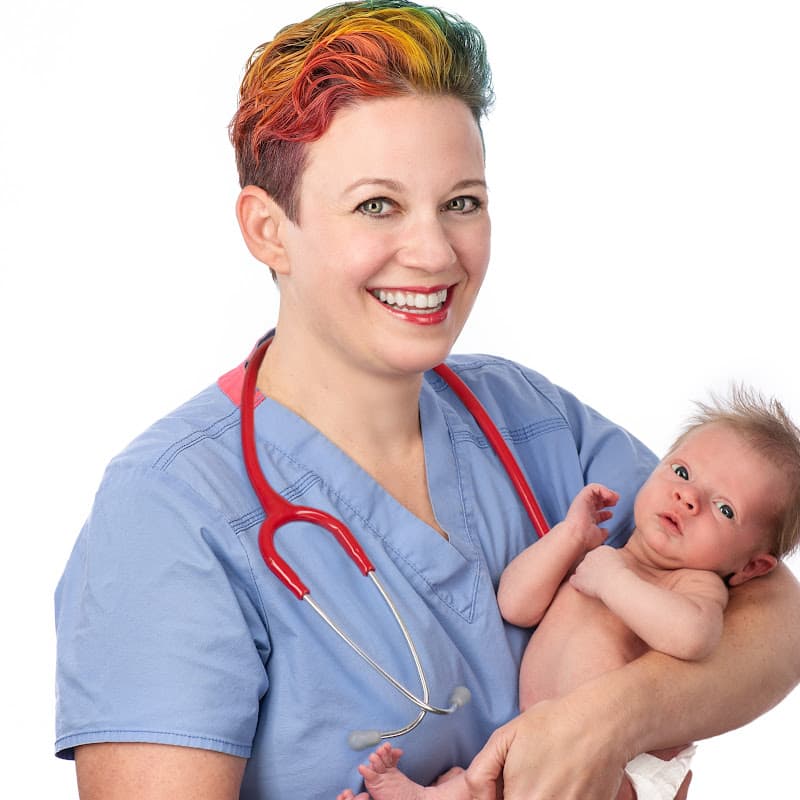
Full Transcript Season Three Introduction 0:03 Hi, welcome to season three of the baby manual podcast, the holistic mama's handbook. 0:08 This season will go through alternative and supportive care to help you take care of your little one when they're sick, but too young to take most medicines. 0:15 I'm your host, a pediatrician and mom, and the author of The Baby Manual and The Holistic Mama's Handbook, Dr. 0:21 Carol Keim. 0:23 Hello and welcome to season three, episode one. 0:26 Today I'm going to talk about the different types of complementary and alternative medicine that we have available for children. 0:33 The reason I am putting this together is because children who are less than three and even under age six still get sick and they do suffer from many common things. 0:42 But there are a lot of times that in the office I have to tell parents there's not really much to do except wait it out. 0:48 And I don't like that answer. 0:49 So I've started going to alternative practitioners, interviewing them, going through the research, and I found that there actually is a lot of things that 0:56 we can do to help our children feel better when they're not feeling well. 1:00 I find that Western medicine, which is our traditional medical system in the US, does have some great advantages, like it's really good at keeping you 1:09 alive and treating illnesses with things like antibiotics, but it is not always the best at improving quality of life and so I found that a multi-faceted
Western Medicine Overview 1:18 approach is really often the better one. 1:20 You can treat both the symptoms and the underlying disease at the same time and it possible to do multiple things at one time to help your children feel better. 1:29 But it's important to know what's safe, what has been proven to help, and what can actually interfere with other types of modalities as well. 1:38 I'm writing a book called The Holistic Mama's Handbook. 1:40 It's coming out on November 15th of 2023. And you can preorder it on Amazon if you're listening to this before that. 1:46 Otherwise, it is available for Amazon purchase. 1:49 But stay tuned through this season because we're going to go through things like teething, colic, constipation, allergies, 1:55 all kinds of stuff. 1:56 So this episode is all about what types of modalities are available. 2:01 There are different types practitioners you might want to see. 2:03 So Western medical doctors are things like MDs and DOs. 2:08 And then we also have mid-level providers like nurse practitioners and physician assistants. 2:12 And we all have very similar training, but MDs and DOs have a lot more training and a more in-depth understanding of medications and how they work in the 2:22 body than do PAs and NPs. 2:24 Our philosophy is that the Body is a collection of independent systems and that you treat the underlying cause whenever possible, 2:31 and we also aim to prolong life as well. 2:34 We use tools like physical examination, lab testing, so blood testing urine testing stool testing. 2:40 We can do nose swabs. 2:42 we do imaging like ultrasound, CAT scans, MRIs, x-rays. 2:47 And then we use medications whose direct action has been well understood and proven scientifically to work. 2:53 So we know how it's working on a cellular level or a chemical level and why it is helping you to get better. 2:59 The training for a medical doctor is typically four years of college undergraduate degree, then four of years medical school. 3:06 The first two years are classroom learning and the second two are in hospital bedside learning. 3:11 And then we have three to five years residency where you're working directly underneath some other doctors so that they're watching you through the process 3:19 and helping you learn as you are also practicing medicine. 3:23 Then some doctors will also sub-specialize. 3:26 So you may hear things like there's a pediatrician who has their three to five years of residency, but then to become, say, 3:34 a Pediatric Cardiologist, you have to do a fellowship afterwards. 3:38 How to tell if you've got a good one? 3:40 Well, an MD or DO should be open-minded and it should ask lots of questions, should perform a complete physical examination, 3:47 and should offer you multiple treatment options. 3:50 And they're gonna work together with you on the treatment plan. 3:53 So it's not just a single, your child has this one thing and there's only one treatment for it.
Acupuncture for Children 3:58 Try to find one that will give you a couple of different options because when you hear things like you have to do this or there is nothing you can do, 4:06 It means they're not really thinking outside the box enough. 4:09 Again, look for someone who's an MD or DO rather than a nurse practitioner or physician assistant because they just don't have as much training and they 4:17 don t necessarily know where those gaps are so they might not be thinking of all the possible scenarios. 4:23 As far as alternative medicine goes, acupuncture is one of the oldest medical systems in the world. 4:29 And their philosophy is that your body has qi inside, which is the energy that flows through your bodies, and when you stimulate points along these specific 4:39 channels that the qI runs along, it can affect nerves and muscles, It releases chemicals into the bloodstream and it can trigger the body's natural healing 4:48 mechanisms to bring about homeostasis. 4:50 And homeo stasis is when your body is in balance and is able to heal well. 4:54 So it's not too inflamed, but it is also just inflame enough to fight off infections. 5:00 For children, acupuncture doesn't involve needles. 5:02 It's actually called shonation. 5:05 And they use these tools, like these blunt objects, little triangle-shaped things and things that look like little combs. 5:11 They can stroke or press along these chi channels. 5:16 These can have the same effect as it would to put needles in an adult. 5:20 When you go to a pediatric acupuncturist, they should not be putting needles into your child. 5:24 I know a lot of parents get really nervous thinking that their children are going to be stuck with needles, and they will not. 5:31 So other tools for acupuncture in children. 5:33 They will observe your child, they'll ask questions, They'll feel the pulses on both of their wrists. 5:40 Sometimes they look at their tongue and then they will treat them. 5:43 So the blunt tools are used to stroke and tap and push on the points and it should be painless. 5:48 It should not be scary. 5:50 And sometimes they will also use things like cupping, which is using either fire cupping where they'll put a flame into a glass cup and then take that 5:59 away and put the cup onto the child and it sucks up their skin into it. 6:03 Or they can use these pressure cups that are hooked up to a little system that they pump and that can bring more blood flow into that area. 6:11 And it does sometimes cause these circular bruises, but that is a normal part of it, and it helps with that blood flow and healing. 6:17 And sometimes they use Moxibustion. 6:20 That means burning something called moxa, which is made from mugwort. 6:24 They can put the moxah sticks that they used. 6:27 It smells a little bit like incense.
Chiropractic Care 6:29 Then they'll hold it close to your child, it warms up, then the Moxa itself is meant to be healing, that's really nice. 6:37 The training for an acupuncturist is four years of a college undergraduate degree, and then three years at acupunture school to become a licensed acu-punctuist, 6:46 or LAC, And then a four-year degree. 6:50 So that's just one extra year to be a Doctor of Acupuncture in Chinese Medicine. 6:55 I do recommend going to a DACM if possible, because they will probably also have training in chinese herbs, which can often help a lot along with these 7:06 acuplcture techniques. 7:08 And how to spot a good one? 7:09 They should be certified in pediatric acupuncture or shone shin, they should have experience with pediatrics, and again, 7:17 DACM versus an LAC is preferred. 7:21 For chiropractic, the philosophy of chiropractic is that the body has an innate ability to heal itself and that nerves control everything. 7:29 And the nerves that come out of the spine sometimes get compressed from bones being out-of-alignment. 7:35 When they get a little bit compressed, pressure on those nerves causes dysfunction in the bodies. 7:41 So relieving that pressure should help to increase the nerve flow to the various end organs and muscles and should restore homeostasis in your body. 7:52 The tools that you'll see with chiropractic, first they do adjustments primarily. 7:57 So adjustments in children should not involve twisting or popping. 8:02 They should be very gentle. 8:04 A lot of times they just use their pinkies, or they may use, and that's called manual manipulation, um, sometimes they use the whole hand. 8:12 There's a little clicker device that they can use and it looks like a tiny pogo stick. 8:16 It just goes onto the bone itself and makes a clicking noise and will click several times as they push onto it. 8:23 And that will gently and very accurately move one of the bones. 8:28 And you may notice different types of tables at different chiropractic offices.
Naturopathy Basics 8:32 So there are flat tables that are just like a solid massage table. 8:36 There are ones called drop tables where different sections will come out. 8:40 And then sometimes they'll do adjustments on these really small tables, that look sort of like footstool or ottoman, and your child may be kneeling on 8:47 the ground and then leaning onto that table The training for a chiropractor involves three or four years of undergraduate school and then three to four 8:56 year of chiropractic school where they earn a D.C. 8:59 which is a doctor of Chiropractic. 9:01 The way to find a good one, you can look on a website called icpa4kids.com and find one that is a certified pediatric chiropractor. 9:13 They should be certified in Webster technique, they should gentle, listen to your child, and your children should not say ouch or be hurt during any of 9:22 the adjustments and again no twisting and no popping. 9:26 I find that a lot of pediatric chiropractors are also certified in prenatal chiropractic. 9:32 So I would prefer a pre-natally and pediatric chiropractor over a general chirapractor just because they are more specialized and tend to be a little more gentle. 9:41 Naturopathy is a relatively new field of medicine, about 50 years old at this point. 9:47 And with natuopathy, the philosophy is that the body has the inherent nature to heal itself and you treat the whole person, 9:54 including mental, emotional, genetic, environmental, and social components. 10:01 First, do no harm, just like with Western medicine. 10:03 Identify and treat the cause, but not just the symptoms. 10:07 And prevention is the best cure. 10:08 When really the idea of naturopathy is that we try to use natural medicines, things like supplements and foods and lifestyle changes before turning to 10:19 Western medical treatments like prescription medications or over-the-counter medications. 10:24 A naturopathic doctor is a teacher whose main role is to educate, empower, and motivate parents to take responsibility of their own health and their children's health. 10:33 So some of the tools you'll see used are things like nutrition counseling, homeopathy, herbal remedies, hydrotherapy, which is using hot or cold water 10:43 or blankets or towels that are wet to wrap the child and to stimulate things, like the immune system to kick up, massage, 10:52 fascial manipulation, Which looks a lot like massage but is a little gentler and more superficial. 10:57 It's not as deep. 10:58 Acupuncture, some are trained in acupuncture, sometimes fasting techniques or intermittent fasting and breathing techniques. 11:06 But since naturopathy is so broad, there are not very many studies that have been done on it as a discipline, but there a lot of studies about the specific
Homeopathy Explained 11:15 techniques that are used. 11:16 So when I cover some of these things in future episodes, you'll hear me referring to more like the homeopathic approach and supplements and herbs and things 11:27 like that. 11:28 Training to become a naturopathic doctor are four years of undergraduate degree and then four-years of natropathy school. 11:36 And the curriculum includes a lot of the same classes as Western medical doctors, but less pharmacology and more training on things like herbal and alternative 11:44 remedies and modalities. 11:46 The way to find a good naturopath is one who is certified by the AANMC and one knows when to refer to Western doctors when they do need medicine or other 11:57 pharmacologic interventions. 11:59 Also, I would find one that is not selling supplements from their own office but recommending things like vitamins and supplements in general because I 12:08 found there can sometimes be a conflict of interest. 12:11 As you may know, with Western medical doctors, we're not able to have any sort of financial agreement with any pharmacology companies. 12:18 And if we do, it's considered a conflict of interest. 12:21 It's unethical and illegal to be affiliated with a pharmacy company. 12:26 That's because we want to know that our doctors are only prescribing things that are actually best for the patient. 12:32 and not things that benefit them financially. 12:34 And I feel that way about a lot of providers. 12:36 So any alternative providers that are only trying to sell you a specific brand of supplements that they carry in their office, 12:42 a lots of times do have financial ties to that company. 12:46 They may not necessarily be suggesting the ones that would be best for your child, but rather they may have that conflict of interest. 12:54 Homeopathy is something that is very controversial. 12:59 The philosophy of homeopathy is that like cures like and that when you take a substance and you dilute it multiple times, 13:07 somewhere between 20 and 200 times the stronger it gets or the more active it is. 13:13 This goes against Western medical treatment and a lot of our scientific thinking and is really difficult to prove in studies. 13:21 With homeapathy, the tools they use are Observing a person's constitution. 13:27 So seeing what sort of body type they have, how they move, what they think, um, with their lifestyle is like. 13:34 And they get this sort a gestalt about the person and also about that disease itself or the symptoms themselves. 13:40 They may recommend slightly different treatments based on that. 13:43 Things like whether a mucus is thick or thin, whether there's a burning sensation in the eyes or a tickling sensation, things like that where it's just
Aromatherapy and Essential Oils 13:52 these very slight differences. 13:54 So there's not really a specific, like with Western medicine, we have a treatment that treats this one disease. 14:01 With homeopathy, it's more this constellation of symptoms in this type of person tends to respond well to this homeopathic intervention. 14:11 The way that they make homeopathic remedies is they dilute whatever substance it is in water and then they'd diluted that another 10 times and another 14:20 ten times until they've reached a dilution where the original substance is no longer detectable. 14:26 And then, they use that water to turn it into, sometimes they leave it as a liquid substance and so things like homeopathy eye drops or sometimes teething 14:37 medicines will be liquids or they turn them into pellets that are made with sugar. 14:41 For a classical homeopath, they should have two to four years of undergraduate training and then three to 4 years homeopathy school. 14:50 So a good homeo path will be considered a CCH or certified classical Homeopath. 14:56 And they shouldn't again be recommending remedies based on the remedy itself, not on specific brands or ones that they have available. 15:05 Aromatherapy is another one that we sometimes use and the philosophy of aromtheraphy is that you can strengthen the self-healing process by stimulating 15:15 the immune system. 15:16 So inhaled stent molecules will travel along the olfactory nerves to the emotional center of the brain called the amygdala and can trigger a reaction in there. 15:25 And you may know already, sometimes strong smells can really associate you with various times in your life in certain instances and can bring you back 15:34 in time. 15:34 It's kind of amazing. 15:36 But also we find receptors for these molecules all over the body. 15:41 And so some essential oils are absorbed through the skin and can actually work on the immune system and be anti-inflammatory. 15:48 Some work to relax muscles. 15:50 There are some that will work in the airways when you breathe in, the smell of them to help open up the lungs. 15:55 So essential oil, it's important to find a good brand that is made well so they can be extracted either by steam distillation or cold processing. 16:06 And you want to that is pure, that only has the one type of ingredient in it. 16:13 And you can look up companies online to see which ones are made well and which are really tested well. 16:20 But these are not FDA regulated, so it can be tricky. 16:24 Remember that the oils that can be either inhaled through a diffuser, they should never be directly inhalable like in a nebulizer or anything like that. 16:31 They should just be put into a defuser with water which puts the smell out into the room. 16:37 Or sometimes they're ingested but very rarely in children because they are so concentrated they can actually become poisonous in the children. 16:44 So I very very recommend ingesting them. 16:46 And they could be applied topically as well to the skin.
Nutrition, Supplements, and Closing 16:50 When you're applying essential oils topicaly to children you should put it in a carrier oil, which is an inert oil something like coconut oil almond oil 17:00 avocado oil and that will help to dilute the essential oil down so it's not so concentrated and it doesn't burn their skin or irritate it. 17:09 There's no training required to become an aromatherapist, and so a way to spot a good one is somebody that has a big range of experience who's not tied 17:18 to a particular brand, who will recommend, again, the oil itself rather than the specific brand of the Good oils come in dark glass bottles because light 17:29 can often break down these components in them. 17:33 And they'll list the plant name in Latin and also sometimes in English. 17:37 Then they shouldn't have any other chemicals added into them When it comes to nutrition and supplements, just about anyone can help to suggest things like 17:48 nutritional interventions and various vitamins and supplement that your child can take. 17:52 So there's not anything in particular pertaining to that, but we will go through various nutritional intervention as I go though the different topics in 18:01 the future. 18:03 But of course, nothing can really replace a very good healthy diet filled with lots of fruits and vegetables, whole grains, 18:10 minimally processed foods, and things like healthy proteins, which may include meats, but can also include vegetable protein sources, 18:20 in lots and lots water. 18:22 So remember, the Holistic Mama's Handbook will be available on Amazon after November 15th of 2023. You can pre-order it now if it hasn't been that date yet, 18:32 or if has, you can just go on and order. 18:33 It's available all around the world. 18:35 And also, if you have a little one who's less than a year old, remember that there's a book called The Baby Manual that I wrote as well. 18:43 Sure, you know that there's lots of episodes in this podcast as well about that. 18:49 But if you like all your information in one place, one of these books would be a great way to get all of that I hope you have a wonderful day and thank 18:55 you for listening. 18:58 Thank you. 18:58 For listening to the baby manual podcast, please hit that subscribe button below so you don't miss the new episodes as they come out. 19:05 I would also love it if could leave me a review. 19:07 You can also follow me on YouTube, TikTok, Instagram or Facebook for quick tips and tricks that will make you feel like an expert.
Comments