Full Transcript Chinese Medicine and the Eyes 0:00 Heart element is the only one that has four meridians associated with it. 0:06 Triple-burner pericardium and heart small intestine. 0:11 So what happens, and this isn't the whole course, I actually teach a whole course in Chinese medicine at the acupuncture school, 0:17 but this isn't a course in Chinese medicine, but we look at all these different elements and where those imbalances are and different parts of the eye 0:28 relate to different elements. 0:30 A lot of times we're treating dry eye. 0:33 And as an optometrist or an ophthalmologist, we might do rastasis or Zydra or different steroids. 0:40 And we might do warm compresses and eye drops. 0:44 But in Chinese medicine, the spleen is the upper lid, the stomach is the lower lid. 0:50 And as a neuro-ophthalmologist, and as I talked before, we know about the gut-brain connection. 0:56 There's a gut-eye connection. 0:58 So sometimes we have digestive issues that are the underlying pattern that are affecting the dry eye. 1:09 Welcome to the IQ Podcast. 1:11 I'm Dr.
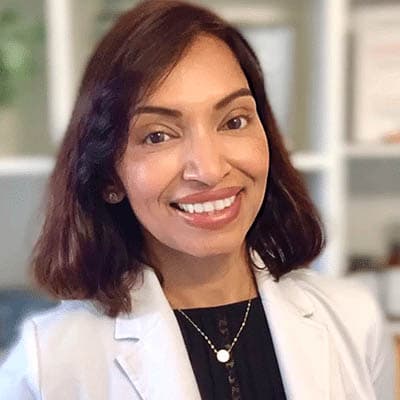
Podcast Introduction and Summit Overview 1:12 Ronni Banek, here to help you boost your IQ with powerful insights that connect your eyes, your brain, and your whole body wellness. 1:21 This episode was recorded during the iHealth Summit, where the world's leading experts shared breakthrough insights in vision and holistic eye care. 1:30 Can traditional Chinese medicine and acupuncture help to support your eyes? 1:35 What do liver health, energy flow, and your emotions have to do with your vision? 1:40 And finally, could ancient Eastern healing techniques be the missing link in your eye health journey? 1:47 Join us for this eye-opening discussion with our next expert, Dr. 1:51 Mark Grossman, as we explore the power of traditional Chinese medicine and acupuncture for lifelong vision wellness. 1:59 This is one you don't want to miss. 2:00 Stay tuned. 2:02 Hello, I'm Dr. 2:03 Rani and I'm here to talk about something we often take for granted, our vision. 2:08 In my book, Beyond Carrots, Best Foods for Eye Health A-Z, I delve into how crucial it is to be proactive about your vision health. 2:16 Certain eye issues are quite common, such as dry eye and eye strain, while others frequently develop with age like cataracts, 2:24 macular degeneration, diabetic retinopathy, and glaucoma. 2:28 Some of these types of eye conditions can be debilitating and even lead to loss of vision. 2:33 The good news is that many of these sight-stealing conditions are preventable if you take the right steps. 2:39 Your eyes are precious and they deserve the best care possible. 2:43 To ensure healthy vision for life, you need to provide your eyes with the proper nutrition they need. 2:49 Nutrients like lutein, theaxanthin, and bioflavonoids, also omega fatty acids, are like fuel for your eyes, keeping them strong and vibrant. 2:58 But here's the truth, sometimes our diets have gaps. 3:02 That's where my age-size supplement bundle comes in.
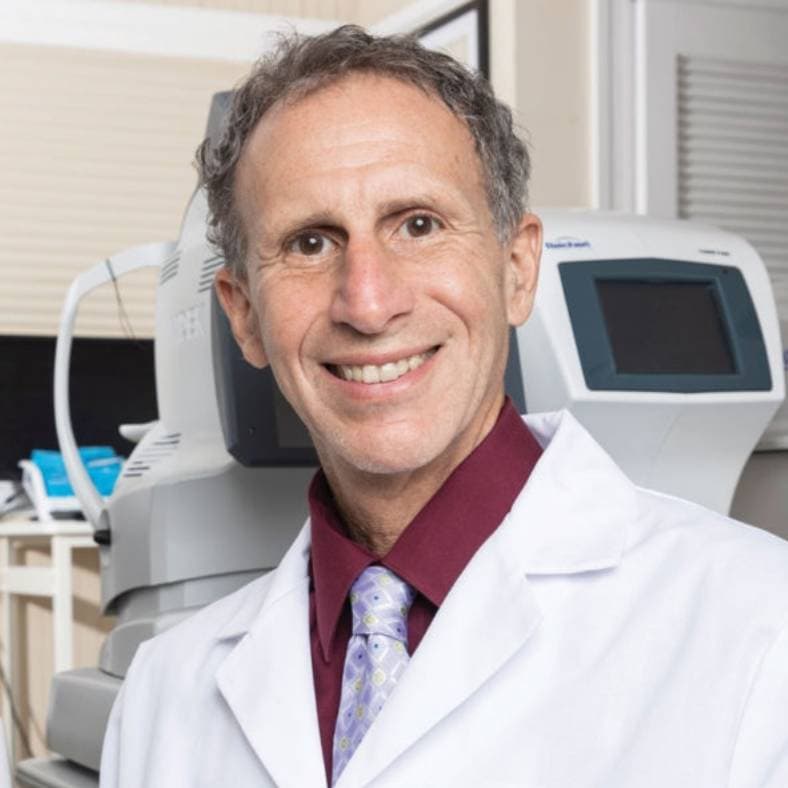
Eye Health, Nutrition, and Supplement Promotion 3:06 It's the result of years of research and my passion for eye health. 3:10 The age-size bundle contains the three essential supplements I recommend to my patients. 3:16 Let's start with Fortify, a blend of powerful ingredients that protect against stressors like blue and UV light, eye strain, 3:23 free radicals, and oxidative stress. 3:26 Next is Nourish, a complete multivitamin. 3:29 Nourish provides the foundational building blocks your eyes need for cellular function and repair, along with powerful bioflavonoids that support the delicate 3:37 structures within your eyes. 3:39 And then there's Soothe, a unique complete blend of omegas, three, six, seven, and nine. 3:44 This blend of omega supports a healthy inflammatory response, nourishes dry eye, and helps fight against macular degeneration. 3:52 Remember, taking care of your eyes isn't just about today, it's an investment in your future. 3:58 By being proactive now, you can enjoy healthy vision for years to come so you can continue reading, using a device, staying independent, 4:06 and seeing the faces of your loved ones. 4:08 So, join me in taking the first step towards a lifetime of clear, vibrant vision. 4:13 It's time to introduce your eyes to the Ageless Eyes Bundle. 4:17 I invite you to learn more on my website about each of the powerful supplements that make up the trio in the Ageless Eyes Bundle. 4:24 Let's embark on this journey together because your eyes deserve nothing but the best. 4:30 The Ageless Eyes Bundle. 4:32 See the world with clarity and confidence. 4:37 Welcome to the Eye Health Summit. 4:39 Today, I'm thrilled to have Dr. 4:42 Mark Grossman join me for an enlightening conversation on traditional Chinese medicine and acupuncture for eye health. 4:50 Dr. 4:50 Grossman is a renowned optometrist and licensed acupuncturist with over 40 years of experience integrating Western and Eastern approaches to eye care. 5:02 Dr. 5:02 Grossman is truly a pioneer in using traditional Chinese medicine or TCM to support vision health. 5:09 And he's co-authored several books, including Natural Eye Care, a comprehensive manual for practitioners of oriental medicine. 5:18 Thank you so much, Dr. 5:19 Grossman, for joining us for the Eye Health Summit. 5:23 Thank you so much, Dr. 5:24 Banach, and great gratitude for you putting this all together. 5:28 So I'm all ready to answer any questions you might have. 5:32 Excellent. 5:32 That's what we're here for, right? 5:33 To help people get better vision and maintain healthy vision. 5:36 So I'm so glad you could join us and share your expertise because you have a really unique background. 5:42 And I want to start off by asking you about that background. 5:45 How have you, as an optometrist, how did you get interested in traditional Chinese medicine or was it vice versa? 5:51 Were you practicing already? 5:53 And then you went into the field of optometry. 5:56 No, okay. 5:58 I grew up in New York City and I went, you know how certain times in life signs come to you that this is going to be your soul's journey of what you need 6:07 to be in life to be in service to others. 6:11 I grew up in New York City and I went to a high school called Stuyvesant High School, which was a math and science high school. 6:17 And I was always interested in meditation and Eastern approaches to medicine. 6:24 But those things were not available in New York and a way to study it. 6:30 So when I went to college, I got the sign that I was supposed to be an optometrist. 6:36 Now, why was I supposed to be an optometrist? 6:38 I was getting my ankle taped. 6:40 I was playing on the basketball team. 6:42 And I asked the, and I can remember it like it was yesterday. 6:45 I asked the trainer, and he said, what are you doing next year? 6:48 He goes, I'm going to optometry school. 6:51 You don't make a lot of money, you make enough money, but nobody dies on you. 6:55 I said, great. 6:57 I don't want anybody dying on me. 6:59 I would never get too emotionally involved in my patients. 7:02 But he said, you have to be good in math and science. 7:06 I said, I can do that. 7:08 So I took the journey, and I was so dedicated to become an optometrist.
Dr. Grossmanu2019s Background and Path to Chinese Medicine 7:14 And then, again, the sign came 15, 16 years later. 7:19 I finally paid off my loans for optometry school. 7:23 And there, in my friend's living room, was one of the first books on Chinese medicine. 7:29 It was The Web That Has No Weaver. 7:34 And just like I got that sign that I was supposed to be an optometrist, the book looked at me. 7:40 I looked at the book and I said, oh my God, I got to study Chinese medicine now. 7:45 But it was not licensed in New York yet. 7:49 called up my friend, he goes, guess what? 7:51 It's gonna be licensed next year. 7:53 So if you go to school in Connecticut, we're moving it to New York City, you'll be one of the first licensed acupuncturists in New York State. 8:02 I said, I don't know why I'm going, but I'm going. 8:06 So I went three to four years to do the full program in Chinese medicine. 8:11 And you know what it did? 8:13 It changed my whole outlook on medicine. 8:16 It answered many of the questions that we couldn't answer in regular optometry school. 8:23 Why did the right eye get worse than the left eye? 8:26 Why did that cataract develop in the right eye before the left eye? 8:30 Why did they get macular degeneration in this eye and at this age? 8:35 It answered the question of Why? 8:37 You took what was happening around you and you let yourself open up to all these possibilities, exploring first studying optometry, 8:46 then studying this area that wasn't even available to you in your state. 8:51 I think sometimes we have to listen to the universe and the signs that the universe sends us to allow growth and really to find our own true journey in 9:00 this world, like what we were meant to do. 9:01 So I can definitely tell you have this a passion for this area. 9:05 Now I wanted to ask you about traditional Chinese medicine. 9:08 I have a very limited understanding of it, but I understand that organs are sometimes connected to each other. 9:15 So how are the eyes viewed in traditional Chinese medicine? 9:18 Are there specific organs that the eyes are connected to? 9:20 The beauty, the artistry of Chinese medicine is that just in In regular medicine, and this is from the book that has no web that has no weaver, 9:33 we look at how does X cause Y? 9:36 In Chinese medicine, we look at what is the relationship between X and Y. 9:42 And I believe in my soul that all disease, dis-ease in the body-mind has to do with relationships to the stars, to the sky, 9:53 to the mountains, to our families. 9:57 And when we have imbalance in relationships, we have in Chinese medicine patterns of disharmony. 10:04 And the patterns of disharmony is what we treat. 10:07 We don't treat macular degeneration, glaucoma, cataracts. 10:13 We treat the person behind the eyes. 10:15 So in Chinese medicine, and this is what's really cool, all the meridians, there's 12 meridians, all the meridians go to the eyes. 10:26 All the meridians go through the heart. 10:31 So there's a heart-eye connection. 10:34 Just as you, as a neuro-optimologist, and I'll get into that later because I'm so excited that you're doing this, sorry, 10:41 is the fact that embryologically, physiologically, neurologically, what is the eye? 10:47 It is brain tissue. 10:50 We don't see with our eyes. 10:52 Our eyes are tools for the mind. 10:55 So if we believe in the neuroplasticity of the brain, which science has shown, then we have neuroplasticity of the eye. 11:05 If we treat the patterns behind the eye problems, then the eye problem can get better along with other things in the body. 11:16 So we treat patterns of disharmony imbalances, and then when we see what happens. 11:22 Now, are there specific meridians or organ systems that relate more to eyes? 11:27 Yes. 11:28 In Chinese medicine, the liver, the wood element, the liver gallbladder opens up to the eyes. 11:34 So in most of my treatments, as you can see, are all those acupuncture charts behind me. 11:39 There's usually some liver points, but all five elements relate to the eyes. 11:48 What are some of the other elements?
How Chinese Medicine Views the Eyes 11:49 Because this is all new to me, I'm sure to many other people who are listening as well. 11:53 What are the elements that are oftentimes referred to in traditional Chinese medicine? 11:58 We've got the water element. 12:00 The water element is made of kidney, which is the yin, and the bladder, which is the yang. 12:07 So the water element is one of the elements. 12:11 And then there's cycles and patterns. 12:13 Wood element, liver, gallbladder. 12:16 Earth element, spleen, stomach. 12:21 Metal element, lung, large intestine. 12:24 Heart element is the only one that has four meridians associated with it. 12:30 Triple burner pericardium and heart, small intestine. 12:35 So what happens, and this isn't the whole course, I actually teach a whole course in Chinese medicine at the acupuncture school, 12:41 but this isn't a course in Chinese medicine, but we look at all these different elements and where those imbalances are and different parts of the eye 12:52 relate to different elements. 12:54 A lot of times we're treating dry eye. 12:57 And as an optometrist or an ophthalmologist, we might do rastasis or Zydra or different steroids. 13:05 And we might do warm compresses and eye drops. 13:08 But in Chinese medicine, the spleen is the upper lid. 13:12 The stomach is the lower lid. 13:14 And as a neuro-ophthalmologist, and as I talked before, we know about the gut-brain connection. 13:21 There's a gut-eye connection. 13:22 So sometimes we have digestive issues that are the underlying pattern that are affecting the dry eye. 13:33 So do I do all the other things like we learned traditionally in optometry and ophthalmology school? 13:40 Absolutely. 13:42 Are we going to avoid looking at the gut? 13:45 Are we going to avoid looking at other things? 13:49 And again, anything that's good for circulation, oxidative stress, inflammation, dementia, Alzheimer's, glucose levels, all these things affect the eyes. 14:02 It's so interesting as I'm hearing you speak about all the meridians and the elements and how imbalances can lead to eye issues. 14:09 So I practice neuroophthalmology, but I also practice functional medicine, which is a very similar kind of approach where we think about balances between 14:18 different organ systems. 14:19 So sometimes there can be imbalances in the gut that lead to certain eye issues and may contribute to certain eye issues. 14:25 or sometimes it's within the endocrine system where our hormones are off balance. 14:30 I'm in totally agreement with you in that the eye is not an isolated organ. 14:35 It is intimately connected with almost every other organ system in the body. 14:41 No, don't just treat the eye problem. 14:43 I also agree that you have to treat where the problem is coming from. 14:46 So take a few steps back. 14:48 And we call it in functional medicine, we call it root cause we call this drug root cause medicine. 14:53 So I'm assuming it's very similar to what you're doing in traditional Chinese medicine, looking at where the problems stemming from rather than just putting 15:00 a bandaid on the problem with Like you mentioned the example of dry eyes, a prescription drop or warm compresses. 15:06 Don't just put a bandaid on the problem. 15:08 Find out where it's coming from and try to approach it from that lens. 15:11 I wanted to shift a little bit now and talk a little bit about acupuncture for eye health because a lot of my patients oftentimes ask me, 15:20 Dr. 15:20 Banik, can I get acupuncture? 15:23 for macular degeneration or for glaucoma or other optic nerve issues. 15:27 What are your responses to that? 15:30 How do you use acupuncture in your practice for vision health? 15:33 It's very interesting. 15:35 Like you said in the bio, I've been doing this for 45 years now. 15:39 And right now I'm doing more telemedicine and in direct eye health and only seeing patients in person. 15:49 once every six weeks for eye health, but I'm doing acupuncture once or twice a week. 15:55 And acupuncture for eye health in terms of macular degeneration, glaucoma, cataracts, dry eyes, again, I'm using that very all the time. 16:08 Now there's specific treatments for it. 16:10 There's one treatment out of Denmark specifically for macular degeneration called micro acupuncture where we put a lot of specific needles in the hands 16:19 and the feet and around the eyes. 16:22 Glaucoma, we're also looking, again, as we know, there's many different kinds of glaucoma. 16:28 There's open angle glaucoma, narrow angle glaucoma, pigmentary glaucoma, pseudo exfoliation glaucoma. 16:34 So depending on the type of glaucoma, and again, Where is it coming from? 16:41 Is it more of a liver pattern of disharmony? 16:45 Is it more of emotional, psychological? 16:48 Again, we treat the body, mind and spirit. 16:52 So a lot of times I have so many stories of patients.
Meridians, Elements, and Dry Eye Patterns 16:58 Why did they, like I said before, why in Chinese medicine, the right eye is more the male father eye. 17:05 The left eye is more the mother, yin, feminine eye. 17:10 So what happens when we see macular degeneration in a 58-year-old, 59-year-old woman in the right eye? 17:20 Huh, why did they develop that? 17:24 in traditional Western medicine, we're gonna look, we might do injections. 17:29 I work with retinal specialists all the time, but acupuncture can be used as an adjunct. 17:35 And we talk about, you talk about functional medicine. 17:39 Some people talk about Chinese medicine as alternative medicine, but I think we're on the same page that it's integrative medicine. 17:47 That we need to, I tell every single patient you've got to put your team together. 17:56 I am not your ophthalmologist. 17:59 I am not your neurologist. 18:00 I am not your naturopath. 18:02 I am not your Alexander teacher. 18:05 You need to put your team together. 18:07 And when you put your team together, then that's where you have discernment and inquiry. 18:13 And as you're doing this summit, what's the core is the curiosity, the inquiry, and knowledge is power. 18:22 And by giving people more knowledge, then they can become the people who transform their own health. 18:30 I love what you said, Dr. 18:32 Grossman, about putting your team together. 18:34 Because it's not that one modality of care is going to substitute for everything else. 18:40 It's really doing it together. 18:41 So yes, you can follow the traditional recommendations, whether it be medications or injections, if you really need them, 18:48 injections into the eye for something like macular degeneration. 18:52 In parallel with that, you can still do all of these other approaches, whether it be traditional Chinese medicine combined with acupuncture, 19:01 whether it be nutrition, whether it be other types of integrative care methods, light therapy, photobiomodulation, that's coming up. 19:09 and it's getting a lot of attention these days for overall health, but also for eye health. 19:13 So really you have to find the providers that are most in line with your way of thinking and who really resonate with you and build your team that way. 19:24 Who do you connect with? 19:25 Who is listening to you and your complaints and build that team. 19:30 I wanted to ask you a little bit more about the acupuncture. 19:33 Can you just walk us through what's a typical regimen for someone? 19:35 Let's say they're coming to see you for glaucoma. 19:39 open-angle glaucoma, let's say. 19:40 How often do they need to get acupuncture? 19:42 What is the duration? 19:43 And also, how soon before you can start to see some changes or results from the treatment that you're providing? 19:50 That's a very interesting question. 19:52 And I just wanted to add to it. 19:54 Two years ago, I spent some time in India visiting the eye hospitals and also integrating Ayurvedic medicine, which I don't consider myself an expert in. 20:04 But again, again, a one that looks at the patterns behind it. 20:10 Now, in Chinese medicine, again, the answer to almost every question that I do is yes and no. 20:16 Some people come in and when I check all the meridians, I check pulses, I check tongue, I check all the different points on their bodies, 20:26 to see with applied kinesiology and muscle testing, to see if there's any weaknesses in the circulation. 20:33 So if somebody comes in and I say, hey, you're pretty healthy. 20:36 I just had a 92-year-old with macular degeneration, but she is one of the healthiest people in my office. 20:45 So I only see her once every four to six weeks. 20:50 I send her back to her retinal specialist and we're monitoring her with the OCT and the scans. 20:57 But going back to your question with glaucoma, when I work with somebody with glaucoma, I always have to make sure that they see a glaucoma specialist 21:07 so that they're really looking at it from the Western approach. 21:10 But like you as a functional medicine and a neuro-ophthalmologist, what we're offering is other things in the toolkit. 21:18 So it's, yeah, and this is my problem. 21:20 I'm just getting a little excited here. 21:23 The issue with Western medicine is, again, we said the X goes Y, but let's take a glaucoma, for example, because this is a pet peeve of mine because I 21:33 went into eye care because my grandmother went blind from glaucoma and I took care for growing up.
Acupuncture for Glaucoma and Vision Support 21:42 And in fact, I did a whole article for the Townsend letter on an integrative approach to glaucoma. 21:50 But think about glaucoma as an eye doctor. 21:54 The only thing we have are drugs or surgery to lower the eye pressure. 22:00 Now, is that important? 22:02 Yes, it's very important. 22:04 But it's not a disease, a disease of eye pressure. 22:10 it's a disease of the optic nerve. 22:12 It's how the optic nerve is getting affected. 22:15 And we all know the optic nerve is related to the brain and the visual pathway. 22:21 So if you have glaucoma, and let's say normal pressure is 10 to 22, and we know as your other doctors will talk about, we're integrating corneal thickness 22:33 or whatever, but we wanna see the cupping and the vulnerability with the OCT testing. 22:39 Now, all we have as optometrist or ophthalmologist, again, is drugs or surgery to lower the pressure, which is important. 22:47 And we can do that with herbs and acupuncture, too, because it's usually due, there's a connection between the heart and circulation and the eyes. 22:56 But wouldn't it make sense to build up the wall? 22:59 to make the wall stronger? 23:01 Can we do neuroprotection? 23:03 Can we do things on neuroprotection to make the optic nerve stronger? 23:08 So not only are we lowering the pressure, we're making the nerve stronger, so we're working on it on both ends. 23:17 Why is the pressure build up or why is there a vulnerability? 23:21 Were they born that way? 23:23 And especially today with lion's mane mushrooms, great for neuroprotection. 23:28 So what quiaflopoic acid. 23:31 And again, the inflammation type of thing. 23:34 But inflammation can be worked with acupuncture, circulation. 23:39 Why is the pressure getting built up? 23:43 Why is there a vulnerability? 23:46 Yeah, no, I hear exactly what you're saying. 23:48 And I'm in full agreement. 23:49 It's just not enough to treat one thing. 23:52 We really have to look at it again very holistically. 23:54 Like, why is this happening? 23:56 As you mentioned, is it a circulation problem? 23:58 Is it oxidative stress? 24:00 Is it mitochondrial dysfunction? 24:01 Is it a toxin that's affecting our body in a negative way? 24:05 So yes, you can do the traditional treatments, but really try to get a little bit deeper and understand why is the process happening. 24:13 I love so much of what you've said, Dr. 24:15 Grossman. 24:15 Now I wanted to ask you a little bit about the herbs or other botanical products that you may use in traditional Chinese medicine. 24:25 Are there specific ones you recommend for specific types of complaints? 24:28 Like, for example, if someone's developing a cataract and they want to take an herbal supplement, do you have recommendations based off of disease processes 24:37 or is it, again, based off of an individual's imbalances that they may be having? 24:42 both. 24:43 Okay, so what happened was years ago when I was in acupuncture school, I scoured the literature on everything on vision and Chinese medicine. 24:53 And as there's not too many people crazy enough to go to you, because I see your curiosity and your inquiry, you studied neuroophthalmology and then you 25:03 studied functional medicine. 25:05 So I said not too many people like, oh, yeah, I already paid off my loans. 25:09 Now I'm going to go to school for three to four more years and study acupuncture. 25:14 So what happened was they would say in Chinese medicine, glaucoma. 25:18 But we know there's lots of different kinds of glaucoma. 25:21 Cataracts. 25:22 We know there's six different kinds of cataracts. 25:24 Macular degeneration. 25:25 So what I did is that I put together some basic constitutional formulas on herbal things. 25:35 And basically, let's say for glaucoma. 25:39 Since glaucoma, if the pressure is a little higher, is usually due to liver energy rising. 25:46 So it's built up and we call liver key stagnation. 25:49 The energy is stuck, so the pressure goes up. 25:52 So one of the beautiful formulas in Chinese medicine is called buplerium and P&E combination. 26:01 The English translation for that is relaxed wanderer. 26:06 And all the studies have shown that stress, it can affect eye pressure. 26:13 So relax wanderer, bupilar and peony combination is one of my core herbal formulas for glaucoma. 26:21 So what I did is I took that formula and then I added some other herbs to it, which bring the energies to the eyes. 26:30 One of my favorites is licey berries, goji berries, wolfberry, which those are all the same, chrysanthemum. 26:37 And of course, we all know about bilberry and ginkgo biloba, which increases the ocular circulation, especially to the optic nerve.
Herbal Formulas and At-Home Eye Care 26:46 But we got to be a little careful if we're going to add the ginkgo biloba, because if they're on blood thinners, then we don't want to thin the blood. 26:54 This is where it gets individualized. 26:57 So I look at glaucoma in most cases as a wood element issue, and I will add and do a herbal formula for that. 27:08 The other one, let's say in macular degeneration, I look at it more of an earth element issue where because it's very related, 27:19 because macular degeneration is one of the only, not only, but it has been shown to be a nutritionally responsive condition. 27:28 I mean, as long as like 1970s, Joanna Senden at Harvard was talking about lutein and zeaxanthin helping the macula. 27:38 So since it's nutritionally related, earth element has to do with the stomach and the spleen. 27:44 And it's about digestion. 27:45 It's how the drusen are getting rid of the toxic products. 27:49 So I'm really looking at an earth element. 27:52 And then in earth element herbal formula, the core one that I recommend is either Gandameria and Gandamerian astragalus combination or ginseng astragalus combination. 28:05 And again, I added the lysis, the chrysanthemum. 28:09 I added some other herbs to it, and then I called it retinal support. 28:14 And then it depends on the condition. 28:18 But herbal medicine, again, that has to be a very powerful adjunct to the eye care toolkit for many of these eye conditions. 28:29 Dr. 28:30 Grossman, what you've shared has been so fascinating. 28:32 I could spend hours talking to you about this because we're in complete alignment about combining our approaches with the traditional methods. 28:40 If someone were to integrate traditional Chinese medicine into their eye care, you know, as a patient, let's say they're having some vision problems, 28:47 whatever it may be, do you have any simple tips for them? 28:50 I know some of these things like the supplements, the formulations need to be custom recommended, not something that people should do DIY, 28:57 but Is there anything people could do at home on their own from a traditional Chinese medicine perspective to support their vision health? 29:06 Yeah, one of the beautiful things that they could do, and they teach this in China in the school system, is Chinese acupressure. 29:14 You get all these points, bladder one, gallbladder one, and stomach one, and triple burn at 23. And I have all these eye massage points, 29:25 and I have videos of these on my website that people can have. 29:29 But a really cool thing that people can do that really feels fantastic is they can just go and get in one of those warming eye masks whether they use it 29:40 put warm compresses in a let's say in chamomile tea clean compress in boiled water because chamomile is a muscle relaxant or they for those of you who 29:52 do use microwaves, they can microwave this eye mask, and that'll keep moist heat all on these acupressure points. 30:00 So it'll increase the circulation. 30:04 It's, oh my God, it's like getting one of those towels in a Japanese restaurant, but it doesn't lose its heat. 30:09 So right there, you are doing preventative medicine and increasing circulation around your eyes. 30:17 And that's a very powerful way. 30:20 hips. 30:21 Palming, which is one of the Bates methods, which one of your teachers is going to teach, and you warm up your hands, you put it, 30:30 you have a little cup here and you go like this, but you know what point is right in the middle? 30:35 Dr. 30:36 Banach, I like it when it's crossed, okay? 30:39 Okay. 30:39 Yeah. 30:40 It doesn't matter which way, but a little cup that you see right here, this point, pericardium eight, heart protector. 30:50 It's like giving yourself reiki. 30:52 So you're getting healing energy. 30:57 You're doing Chinese medicine and Bates method together. 31:02 I love that. 31:04 It's so interesting that you're linking this back to Chinese medicine because everything you've mentioned, the self acupressure, 31:11 the warm compresses, the palming, I recommend it to my patients, but from a different perspective, from more of a mechanical perspective or loosening the 31:21 oils and the oil glands perspective, but you're connecting it to other parts of the body, which is so important. 31:27 I just love this.
Where to Learn More and Closing Remarks 31:28 And again, we could talk for hours about some of these aspects, and maybe we'll talk offline. 31:34 But I wanted to thank you, Dr. 31:35 Grossman, for sharing all of your amazing knowledge and expertise in the iHealth Summit. 31:41 Really, I'm sure people will be, their eyes will be open to some of these approaches, and hopefully they'll seek out providers on their own or perhaps 31:48 come to see you. 31:49 How can people learn more from you, whether it's taking one of your courses or watching your videos? 31:55 How can they connect with you? 31:57 I don't do tumor bill on my website, naturaleyecare.com. 32:02 I also, it's probably about six or 800 pages of research, has free eye exercises. 32:09 They could also contact me directly at drgroceman2020 at gmail.com if they have any questions. 32:21 when you want to interest in the consultation. 32:24 And I am doing some online classes through Kripalo Yoga Center and Omega Institute. 32:30 I love that facility. 32:31 I've been there. 32:32 It's amazing. 32:33 Yeah. 32:33 So I've been teaching there for over 20 years and Omega Institute, maybe we'll eventually do something together. 32:40 Thank you for your participation. 32:42 I'm sure you'll be, again, impacting the lives of so many thousands of people by sharing expertise. 32:49 And our goal is all the same. 32:50 It's to elevate eye health, to make it a priority, and to use various different approaches to support your vision. 32:57 And so thank you again, Dr. 32:58 Grossman, for joining us. 32:59 And we will include all of those links that you mentioned so anyone can reach out to Dr. 33:04 Grossman and access some of his materials. 33:06 I really strongly encourage you to do that. 33:08 Again, thank you so much for being a guest on the iHealth Summit. 33:12 Okay, much appreciation. 33:14 Thank you. 33:15 Thank you for tuning in to the IQ Podcast. 33:18 I hope you enjoyed today's episode and learned something new to help you boost your IQ. 33:24 Leave us a review and share the podcast with your family and friends. 33:28 Stay connected with me for more eye-opening insights on eye health, nutrition, and lifestyle. 33:35 Until next time, keep your vision clear and your IQ sharp.
Comments