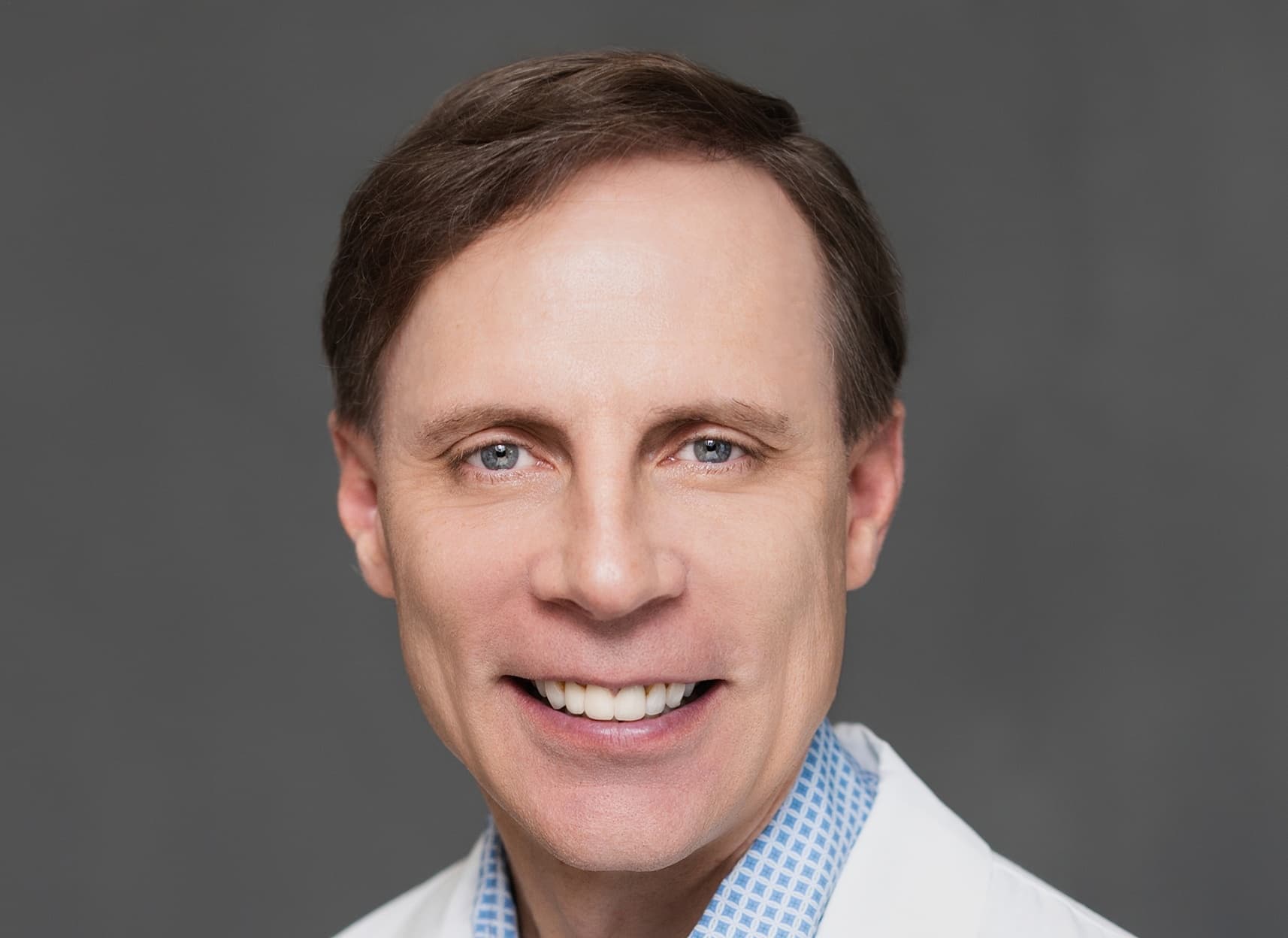
Full Transcript 0:00 Hi, everybody. Great to be with you. 0:02 I'm really excited to have Doctor Jared Zeff with me. 0:05 He's actually one of my mentors. 0:07 Many years ago when I was back in school, I think we're hitting like 30 years ago. 0:10 Jared. But, time flies. 0:13 But anyways, I wouldn't have doctors F-bomb 0:15 because he's really one of the people we look up to in 0:18 integrating philosophy with action and medicine. 0:22 A lot of people don't realize in life you have to have a sound philosophy 0:25 because it directs how you act in life, in medicine, 0:29 how you treat people, 0:30 how you look for root causes, how you can better help people with medicine. 0:33 And so it's very, very important. 0:35 So today we're going to talk about the relationship between gut health 0:39 and the importance or the hierarchy and whole body healing. 0:42 And so I think when you listen to this, you'll find it 0:44 very interesting in innately, it's going to make a lot of sense to you. 0:48 But before we get into that, I want to introduce you to Doctor Jared Zeff. 0:52 He's a doctor. 0:53 He's also an educator for medical students, for doctors. 0:58 He's got a private practice here in Washington, in the Washington area. 1:03 Washington state, you're just on the border, right, of Portland and Washington. 1:07 Yeah. Vancouver. Washington. 1:08 Vancouver. Exactly. 1:10 So he's still available to see as a doctor. 1:13 And he's wants more words I won't tell you about. 1:16 But in 1989, you were nature path position of the year, the United States. 1:20 So that's that's pretty impressive. 1:22 2002 you got a lifetime achievement award from the Northwest Nature Path 1:26 Physicians Association. 1:28 Follow your contribution. 1:29 So basically anyone in holistic Nature path knows who doctors F is. 1:34 And we greatly appreciate him. 1:36 So Doctor Zeff, very interested to kind of get this importance of got health 1:42 and the hierarchy in terms of medicine, preventing disease, healing disease. 1:47 I wrote that book, The Holistic Guide 1:48 to Gut Health, where I got into the science validating 1:52 nature theory in terms of how the gut affects whole body health. 1:57 It's indisputable now, but many decades ago, 2:00 most doctors thought we were kind of off our rocker. 2:02 But this is the truth prevailed. 2:04 So please go ahead and talk to us about this. 2:07 Okay. 2:08 Let me let me start this way. 2:09 In our culture, we generally understand 2:13 the role of doctors is to diagnose and treat disease. 2:17 That is to say, to figure out what's wrong and to fix it. 2:21 And the is one of the assumptions of that way of thinking 2:24 is that there are diseases. 2:27 There are about 14,000 diseases listed in the CD ten. 2:32 And so the job of the doctor is when the sick person comes in 2:36 to figure out which one of those diseases they have or how many, and treat them 2:42 as entities, so to speak, almost as if they're separate from the patient. 2:47 That's intuitive. 2:49 Everybody understands that. 2:50 We learned that in our culture as children, just from how people talk. 2:53 Looking at the television, everything else, 2:56 the job of the doctor is to diagnose and fix your problem. 3:00 There's another way of thinking about it. 3:03 And in fact, there are a number of different ways of thinking about it. 3:05 And we would call these ways of thinking an underlying philosophy of medicine. 3:11 So the philosophy of conventional medicine is based upon a simple 3:14 and elegant paradigm, the diagnosis and treatment of disease. 3:18 That's not what I do. 3:20 That's not how I think. 3:21 Certainly as a physician, I'm trained in that. 3:24 I'm aware of that. You're aware of that. 3:26 We understand all of these 14, 000 diseases, more or less. 3:29 We've studied pathology, etc. 3:32 but as a nature physician, I operate in a different paradigm. 3:36 The paradigm I operate in could better be 3:40 characterized as the restoration of health. 3:44 Now this. 3:46 This is the goal of any. 3:48 But instead of focusing on disease, I'm focusing on health. 3:53 And my my underlying assumption begins with A person should be healthy. 3:57 And if they're sitting in my office, they're not healthy. 3:59 Why aren't they healthy? You should be healthy. 4:02 What's happening to disturb your health? 4:05 So I see my role 4:06 not fundamentally as determining what's the nature of your disease. 4:10 But why aren't you healthy? 4:12 And that means I have to understand what health is, what are the determinants 4:15 of health, and examine my patient looking for what's disturbing the health. 4:21 And primary among the disturbances of health is diet and digestion. 4:26 They're foundational. 4:28 In order to be healthy, you need to be able to sleep, rest, 4:30 eat, exercise, digest, make sure all your nutrients are 4:35 there, and have have good relationships in your life. 4:38 And when you do these things, you feel good. 4:41 You feel healthy most of the time. 4:43 Once in a while, maybe you get a cold or flu, which is really 4:46 a cleansing process to kind of re to tune up the system. 4:50 So when when the sick person is sitting in front of me, 4:54 I'll spend I spend typically two hours with a new patient. 4:57 A medical doctor spends 4:58 maybe 10 or 15 minutes with a patient because we're doing different things. 5:03 They're identifying the disease, maybe with lab tests and symptom picture 5:07 and then prescribing, usually medication to counter the disease. 5:12 I'm trying to figure out why aren't you healthy? 5:15 And that means I have to go through a lot of aspects of your life. 5:19 How do you eat? 5:20 How do you digest? 5:21 How do you sleep? 5:22 How do you exercise? What are your relationships likes? 5:24 What is your health been like your whole life? 5:27 What kinds of things may have happened 5:29 that may have been suppressed or maybe impacting your health today? 5:32 That happened maybe 20 years ago, and then I'm going to do a physical exam. 5:36 I'm going to look at how all the different systems of the body are functioning. 5:40 I'm not looking primarily for disease, but I may find it. 5:43 What I'm looking for 5:45 is what is functioning the way it's supposed to and what isn't. 5:49 One of the most common things I see, for example, is low adrenal function. 5:53 A lot of people are stressed 5:55 in our culture, especially now when you're stressed over a period of time, 5:59 your adrenals become lower and lower than people get tired. 6:03 Then they don't sleep as well. 6:04 They're tired during the day. 6:05 They tend to maybe even want to take a nap around two in the afternoon. 6:09 They don't think as well. 6:11 This is easy to correct, but it's not a disease 6:15 is it's an under of a tired system. 6:20 So I'm looking for all these kinds of things and principal among them. 6:24 I'm looking at diet and digestion. 6:26 So I go through 6:27 what my patients eat for each meal, what their diet patterns are like. 6:32 Are there any foods that are a problem for them, 6:34 any food cravings, anything they don't like? 6:37 And then I do some testing to find out. 6:39 Are there foods they literally don't digest? 6:42 Well, probably for enzymatic reasons. 6:45 And if you don't digest something 6:47 well, what doesn't digest well ferments or putrefying in the intestine. 6:51 These processes generate toxins. 6:53 The toxins enter the bloodstream. This is measurable. 6:56 And those toxins tend to foster inflammation. 6:58 Inflammation is a common denominator of almost all disease, 7:02 especially chronic disease. 7:03 And many times people are told, well, you have a problem like arthritis. 7:08 We don't know why your joints are inflamed. 7:11 We're going to give you some medicine to stop the inflammation. 7:14 Well, what I'm what I would say is you have this 7:17 arthritis, your joints are inflamed. 7:19 And at least part of the reason is because you're not digesting well and you're 7:23 generating toxins in your intestine that are inflaming your joints. 7:26 Because your joints get a lot of stress. 7:28 They need a lot of blood flow. 7:30 If there's this toxicity, this pro-inflammatory stuff in the blood, 7:34 it's going to stimulate inflammation in the joints. 7:36 So to reverse the arthritis, I'm going to tell you first eat differently 7:40 and let's improve your digestive function. 7:42 So this is how I would characterize 7:47 the role of diet and digestion in gut health. 7:51 And then in the generation of inflammation in the system 7:55 which underlies most chronic disease problems, is that now it seems like today 8:00 most doctors that aren't into nature path functional holistic medicine. 8:04 They'll agree. 8:05 Yes, we now know diet definitely plays a role in preventing and treating disease, 8:10 but they definitely aren't knowledgeable 8:14 on that second factor you just talked about and digestion. 8:18 In other words, you and I, we may have patients where, 8:21 yeah, they're eating pretty well. 8:22 They're not necessarily eating offending foods or eating pretty healthy 8:25 the way God's made food, but because maybe chronic stress, maybe imbalances 8:30 and or microbiome, various reasons, they're not breaking the food down. 8:35 So maybe talk to us a bit more about how you identify that. 8:38 And then ways you can work 8:40 with the healing systems of the body to get the digestion back on track. 8:44 Okay. 8:44 One of the things you will commonly see, no matter what 8:48 chronic disease problem your patient has, they also have a digestive problem. 8:54 Now, sometimes that may 8:56 be the reason they come in because they have a digestive problem. 8:59 But currently about one third of American adults take proton pump inhibitors. 9:05 They have a digestive problem. 9:06 They either take over the counter or they're prescribed 9:09 something like Brazil or some other drug that suppresses stomach acid production. 9:14 This is considered a great boon in conventional medicine. 9:18 It eases a lot of gut pain or stomach pain. 9:21 On the other hand, it's a stomach poison. 9:24 It prevents the stomach from generating acids 9:27 so that it can't digest as well. 9:29 And from that point on down the whole digestive system, 9:33 the digestive process doesn't work right if there isn't enough 9:37 stomach acid to start the system. 9:39 And so we see that this is extremely common. 9:43 Like I said, about a third of American adults take these essentially 9:47 stomach poisons, poison digestion. 9:50 And the result of that is they don't digest as well. 9:52 But they didn't. 9:53 They had a digestive problem in the first place. 9:56 That's where this started. 9:57 So in order to understand why that's happening and to correct it, 10:01 the first thing I'm going to look at is tell me what you eat, 10:05 see what the pattern of my patients digest or diet is. 10:10 Do they have in their diet all the nutrients they need, the right 10:15 amino acids, the right fatty acids, enough vitamins, minerals, etc.? 10:21 I don't really care so much 10:24 whether they're vegan or vegetarian or omnivorous or whatever. 10:28 That's everybody's digestion is a little different, 10:31 and different people need different things. 10:33 I don't think there's an ideal diet for everybody. 10:36 So I'm going to first look at their dietary patterns. 10:39 Then I'm going to do some testing to find out. 10:42 Are there foods you don't digest? 10:43 Well now let me explain this. Like this. 10:47 Everybody has the same face. 10:49 We have two eyes and nose or mouth? Ears. 10:52 Most people have hair on the top. 10:54 I don't have as much as a lot of people, but we have the same face basically. 10:58 But our faces are individualized. 11:00 I can pick my wife's face out of a million other faces. 11:04 Same face, but a different face. 11:06 And that's similar to what underlies the difference in my face is my enzyme. 11:12 My enzymes are determined by my genetics, how my body puts itself together 11:16 from the time I'm a tiny little one cell thing until I grow into in, in 11:22 through this amazing process, I my arms and eyes and ears 11:26 and knows everything develops. 11:27 And I come out of my mom and I'm a whole being. 11:31 And that all started from one tiny little cell about the size of a pencil dot, 11:36 that process that directs, that continues throughout the rest of your life, that 11:40 that intelligence, that organizing process. 11:43 We call this at a nature. 11:46 I'm going to come back to that a little later. 11:48 But that process is worked through a system of genetics 11:52 and the genetics code for enzymes. 11:54 Primarily they code for proteins. 11:57 Your digestion is enzymatically driven, 12:00 your stomach makes acid, and from the rest of that process, 12:04 there are digestive enzymes produced by the pancreas produce 12:08 to some extent by the gut lining. 12:11 And those enzymes are all the same, just like our faces are all the same, 12:15 but they're different in the same way that our faces are different. 12:18 Some people don't digest milk as well as other people. 12:22 Everybody knows about lactose intolerance. 12:24 Lactose intolerance means that person doesn't 12:28 make lactase or doesn't make a high quality lactase. 12:31 They can't digest lactose, so they shouldn't eat it. 12:34 They body doesn't process it right. 12:36 And it becomes essentially becomes a toxin in the gut. 12:40 If people who can't digest it, eat it. 12:43 And that's not the only kind of problem like that. 12:46 There are many potential problems like that. 12:48 They're not generally seen or recognized in conventional medicine, 12:51 because conventional medicine doesn't concern itself 12:53 with the physiology of digestion as much as it does with the 12:57 specific diseases that can be identified in the digestive system. 13:02 But as a nature physician, I want to know how come you're not healthy? 13:05 And one of the primary reasons 13:07 is because you're eating something your body doesn't know how to digest. 13:10 So there's an old naturopathic method that we can test for that. 13:13 I use that method. 13:15 I teach that method. In fact, I taught you that. 13:18 So we we look for specifically what are you eating? 13:23 I do you have adequate nutrients in your diet and does your are you capable 13:27 of digesting the things you eat if you're not, eliminate that thing. 13:33 The most common one I see in my patient base is milk products. But. 13:37 But some people do fine with milk products. 13:39 So my wife has a fruit intolerance of all things. 13:42 So if she eats fruit, it messes her up. 13:45 So we learned this 40 years ago. 13:47 She doesn't eat fruit. 13:48 When I met her, she had a chronic kidney problem. 13:50 Her father died of chronic kidney disease. 13:53 As soon as she quit eating the fruit, her kidney cleared up and she's fine 13:57 as long as she stays away from fruit. 13:59 If she eats it, it messes her up so she doesn't eat it. 14:03 So then I 14:04 look at how to put together a diet for my patients. 14:07 Everybody's a little different. 14:08 In fact, I have a dietary counselor. 14:11 One of my daughters works in the office. 14:13 She's got advanced degrees in in food and food preparation and all that. 14:18 And she'll even take people to the store and show them 14:22 what foods to buy for them, and even teach them how to cook them. 14:26 And in fact, for several patients, she does the cooking. 14:28 So we put together a diet for the patient that's individually individualized 14:33 for them. 14:33 And the purpose of it is to enhance digestion, 14:37 to clear up underlying digestive problems. 14:40 To go further than that, I will give almost every patient at the beginning 14:44 a simple digestive tonic, a bitter tonic to improve stomach function. 14:47 If there are no members, 14:48 all or one of the proton pump inhibitors, we work to get them off of that. 14:52 That's almost always possible. 14:54 It's usually fairly easy. 14:56 It may take a month or two to 14:58 to get them off of that and to restore stomach function, 15:01 but we want to restore it in such a way that their digestion improves. 15:06 So we use 15:07 simple herbs, sometimes digestive enzymes, in some patients. 15:10 We can also use acupuncture to improve digestive function. 15:14 We use hydrotherapy to improve digestive function. 15:16 Hydrotherapy works. 15:18 We'll use a simple system which will all Doctor Carroll developed 15:22 called constitutional hydrotherapy, 15:24 where you put alternating hot and cold packs on the chest and abdomen 15:28 and on the back to improve blood flow into the digestive system. 15:32 And as the blood flow improves, it helps speed the healing of that system. 15:37 As long as we've removed the toxicities and now the blood is healthier 15:40 and contains better nutrition and less potential toxicities. 15:45 So we use hydrotherapy to improve the blood. 15:47 We acupuncture to improve motility 15:50 in the digestive system and improve the energetics of the digestive system. 15:54 If we need to do that there are some exercise ISOs actually you can do. 15:59 Fasting is an important addition to that system. 16:01 I fast myself every year at least once a year. 16:04 Literally. 16:05 God tells me go on a fast and if he tells me to do it, I can do it. 16:10 And if I try and do it on my own, it's a lot harder. 16:13 But last year he told me to do a 30 day fast, which is the longest I ever did. 16:17 I went for 30 days. 16:19 I didn't have anything to eat, just water. 16:21 And at the end of 30 days I got really hungry and the fast was over. 16:25 And so I ate. 16:26 But during the fast I felt great. 16:28 And I don't know why. 16:30 30 days, but usually it's a week or two. 16:33 Usually in the summer I fast, sometimes 16:36 I'll fast, sometimes when I'm ill, when I help Covid. 16:40 I didn't need anything for two weeks, 16:42 but that was because I didn't have any energy. 16:44 That was different situation. 16:47 I didn't have enough energy, but I came through it just fine. 16:50 I took some homeopathic medicine 16:52 and some hydrotherapy and got through that problem just fine. 16:55 And I'm 76, so 16:57 yeah, that's great. 16:58 What's interesting when I'm talking to patients, they come in. 17:01 Well, some come in chronic diseases and I start going through all their health 17:04 history, always part prioritize the digestion. 17:08 And I start just asking a general question. 17:10 I digress problems, but people say, oh no, not really. 17:14 And then you start asking very specific, do you have some bloating? 17:17 Well yeah I do just occasional. Well, yeah. 17:19 Most days quite a bit. 17:20 You talked about their bones problems there. 17:22 They got belching. 17:23 They got asked reflux. 17:24 So it's almost inevitable if someone has a chronic disease, 17:28 if you probe them enough you're going to find 17:30 just through their symptoms they got digestive issues. 17:32 Obviously you can run labs and stuff and see it too, 17:34 but it's if you got a chronic disease to some degree, some people 17:38 it's more problematic and others, but there's always a digestive component. 17:43 Yes. So if you're going to heal the disease, 17:48 you have to heal the digestion. 17:49 And usually that's where you have to start. 17:53 How would you maybe in just ending this segment 17:55 and we're going to do another interview with Doctor Zeff 17:57 on a skin health relate to gut health. 17:59 But maybe just give us a minute or two of your thoughts on, 18:03 you know, when you started in nature path mass and, you know, several decades ago, 18:08 of course, and you're treating the digestion getting good results, 18:12 obviously this is something that was, 18:17 if you will, in allopathic medicine. 18:19 And now the courses reversed again, where the science that they like to follow 18:24 has demonstrated this naturopathic theory, European Chinese medicine. 18:30 I mean the history goes back and back, 18:31 the connection between the gut and whole body health. 18:34 Just tell us your thoughts on how now it's come around where it's it's, 18:38 you know, being accepted because this is what the evidence shows. 18:43 Well, I think you summarized it really well. 18:45 If we look back in medical history in the West, if we look back 18:48 even to Hippocrates, there are about there are a number of writings. 18:53 Hippocrates didn't write, 18:54 but he had students who wrote his lectures, so to speak. 18:58 And we have these writings attributed to called the Hippocratic Corpus, 19:02 or the body of the Writings of Hippocrates. 19:05 And the first one is called On Ancient Medicine. 19:07 Now, when I was a student at Nature Ethics School in Kansas, 19:11 I used to study at the medical school basement 19:14 where there was this little section on history of medicine. 19:17 No one ever went there, so it was really quiet and study carols. 19:20 I'd go down there. 19:22 I'd do my study, and I noticed up on the top shelf 19:26 there was a set of books called the Hippocratic Corpus. 19:28 And I thought, wow, this is really cool. 19:30 I'm going to read about Hippocrates medical secrets. 19:33 I'm going to start with that. 19:35 So I picked the first volume, which was called On Ancient Medicine. 19:38 I began to read it, and I kept looking for the secrets of healing. 19:42 And all he was writing about was diet and digestion. 19:44 And I thought, this, this isn't this isn't the real stuff I went through. 19:48 What what herbs did he use? 19:49 Or what matters is the well, the reason that's what he wrote about that 19:53 first was because that was the basis. 19:57 And later on I came to understand that. 19:59 I went back to that. 20:00 I read it again, and I began to incorporate that into my teaching 20:03 when I was teaching students at the Nature College, at History of Medicine. 20:07 So we can trace this back way back not only to Hippocrates, 20:12 but the ancient Greeks 2500 years ago 20:16 referred to Egyptian medicine as ancient medicine. 20:20 And they talked about how the Egyptians began with the gut. 20:24 They thought disease started in the gut. 20:26 Now the Egyptians are writing 3000, 20:29 maybe even for zero years ago in hieroglyphics. 20:32 And they're writing about and they're treating people 20:36 with purgation and herbs to improve 20:39 gut health and fasting because they say disease begins in the gut. 20:44 And it's the same thing we're talking about today. 20:46 If you don't digest well, the toxicity starts 20:50 in the intestine and it creates inflammation in the body. 20:53 Okay. 20:54 What we're seeing today is increasingly, as you pointed out, 20:57 as a medicine, is looking deeper into health. 21:01 What they're seeing, okay. What's causing 21:03 the inflammation that disturbs the arteries, that creates plaque. 21:07 It isn't cholesterol. 21:10 Cholesterol is a repair substance. 21:13 The body's making. 21:14 So for 40 years they've been trying to get the cholesterol down, 21:18 thinking that it would help art, disease and strokes. 21:22 Well, what we see is with the introduction of statin drugs 21:26 that literally cut production of all in half, 21:30 so that cholesterol is literally too low in the body for a lot of people. 21:35 We haven't seen a reduction in heart attacks and strokes. 21:38 The number is the same. 21:39 That's the that's the main reason people die, 21:41 even though again, roughly a third of adults are taking 21:44 statin drugs to lower cholesterol, that's not the problem. 21:48 What's causing the inflammation? 21:50 I have reversed, lacking in the arteries of patients 21:54 simply with dietary change hydrotherapy, herbal medicine and homeopathy. 21:59 Focusing on digestion. 22:02 I'm not treating the arteries. 22:04 I'm not specifically treating inflammation. 22:07 I'm reducing this inflammatory production of substances in the gut, 22:13 which then the body, as the inflammation goes down, 22:15 the body will reverse the plaque in the arteries. 22:18 And we've proven that through angiogram we've seen the planking reverse. 22:22 And I've had several three different cardiologists who said this is a miracle. 22:27 I've never seen this. This is impossible. How do you do that? 22:29 Well, you fix the digestion 22:32 and the planning reverses because the inflammation goes away. 22:36 And the same is true with most chronic diseases. 22:38 Chronic arthritis. 22:39 What are we looking at? Why are the joints inflamed? 22:42 Why are the tissues inflamed? 22:44 What's the root of this. 22:45 And you can trace it to substances such as if you don't digest 22:49 well what normally would be absorbed, 22:53 like amino acids like tryptophan or tyrosine, 22:57 as they get into the large intestine in the bacterial field, the bacteria 23:01 and the large intestine will further metabolize them into toxic substances. 23:05 This is in the medical literature. 23:08 You can test for it in your office, even. 23:10 And those substances that are brought about by poor digestion and bacterial 23:15 degradation of poorly digested foods, you can track them 23:18 as they enter the bloodstream as inflammatory substances. 23:22 This is measurable. This is in the medical literature. 23:25 There's even books about it. 23:27 In fact, you wrote a book about it. 23:29 Yeah, very, very good. 23:31 Well, that's a good way to end this interview here. 23:34 The the philosophy and the reality between gut health and whole body 23:38 health inflammation. 23:39 So for the viewers out there, it's just critical 23:42 diet and digestion have to be fundamental for your health. 23:46 And so these are great tips doctors that that's given us on insight 23:50 into this problem. 23:51 And look for interview on gut health and skin health. 23:53 A lot of you have skin problems out there. 23:55 And so we're going to get into how that relates to gut health. 23:58 Doctor Zeff, your clinic there in Vancouver, 24:00 Washington, the Salmon Creek Clinic, right. Yes. 24:04 And so you and your daughter both practice there, and so people can definitely 24:09 look them up and get some expertise, help your digestion 24:13 and any other kind of typical body problem. 24:16 So, doctor Zeff, thank you so much for your time. 24:19 My pleasure.
Comments