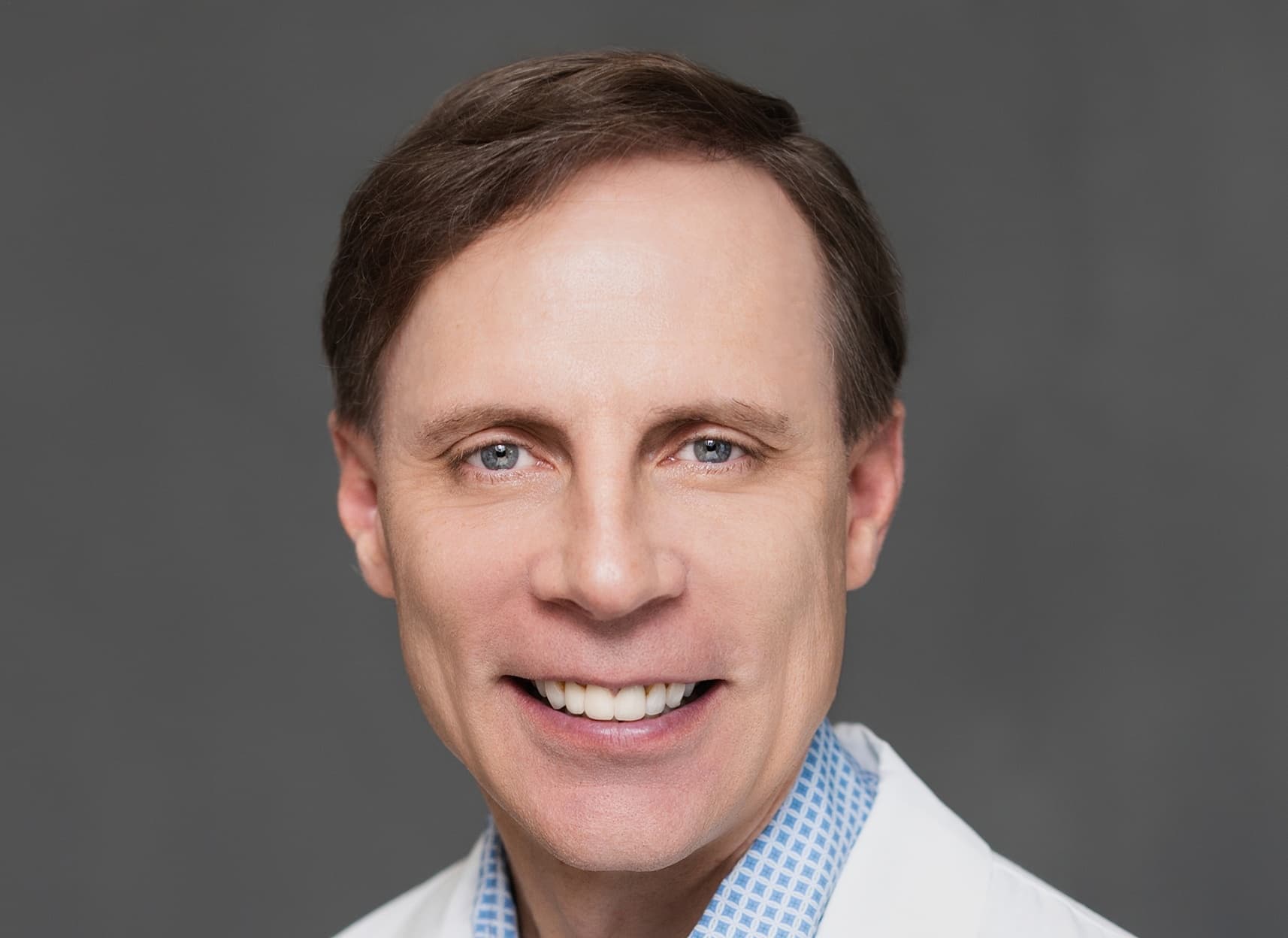
Full Transcript 0:00 Everybody. Great to be with you. 0:01 I have Doctor Jared Zeff with me. 0:03 Very well known nature path doctor and expert in gut health and whole body 0:07 health. 0:08 And today 0:08 we're going to talk about the connection between debt, health and skin health. 0:12 Many of you out there have chronic skin problems skin rashes, eczema, psoriasis. 0:18 Things. 0:18 Are dermatologists going crazy about because they give you creams and 0:22 to go away and come back and you wonder, why do these things keep occurring? 0:25 Quite often there's a gut health going on. 0:28 So Doctor Zeff has been practicing for, boy, I think over four decades now. 0:32 And expertise and functional medicine, naturopathic medicine. 0:37 And so, Doctor Zeff, it's great to have you back on the program. 0:40 Thank you, Mark. 0:42 And you're in Vancouver, Washington, at the Salmon Creek Clinic. 0:45 People can look you up there. 0:46 You and your daughter practice good old styled nature path mess 0:50 and getting at the root cause of why people have health problems 0:52 and helping them to reverse course, which is great nutrition, 0:56 herbal medicine, homeopathy, acupuncture, all that good stuff. 0:59 So that's all. 1:01 Many people have chronic skin problems. 1:04 I saw one study 1:05 a few years 1:06 back, where dermatologists tend to have one of the highest rates of depression, 1:10 and I can totally understand why because we see these patients, 1:12 they they've had chronic skin conditions. 1:14 They usually get a topical cream. 1:17 It gets the press period of time to comes back, usually with a vengeance. 1:20 And the cycle goes on and on. 1:22 And so we see these people and we work more at the root cause 1:26 quite often at that root is, is diet and digestion. 1:29 So tell us a bit more about the philosophy of skin health 1:32 and how that relates to get health and how you address that with patients. 1:36 Okay. I want to begin this with a little story. 1:38 This is a personal is me. 1:41 When I started naturopathic school, I had had eczema. 1:44 I started school when I was 27 after premed at the University of California. 1:49 But I had had eczema very seriously. 1:53 My legs, my I had an ulcer on my right ankle the size of a silver dollar. 1:58 I don't know if anybody remembers 1:59 what a silver dollar is, but that also never healed a 2:03 this chronic ulcer surrounded by itchy, rash skin. 2:07 I used cortisone creams on it and never cleared up. 2:10 I just kept it bandaged because it was too embarrassing 2:13 to have this big ulcer on my leg. 2:14 I was a swimmer in college. 2:16 I worked as a lifeguard in the summer sometimes, and it was embarrassing 2:21 to have this itchy rash all over, but especially this big ulcer on my leg. 2:25 And I could never I could never heal it. 2:27 I went to Nature Catholic school. 2:29 I went through school. 2:30 After I graduated, I met this old doctor, Doctor 2:33 Harold Dick, who became my mentor. 2:35 And one of the first thing he told me was he did an old test 2:39 on me, an old dietary test, and he said, you have to quit eating potato. 2:42 I said, what do you mean, I love potatoes, I eat them every day. 2:45 In fact, when I was in medical school, I could buy 10 pounds of potatoes 2:48 for a dollar. 2:49 This is about 50 years ago and I lived on them. 2:52 I had potatoes for breakfast, lunch and dinner and I liked him. 2:56 They tasted good and they didn't bother me as far as I knew. 2:58 I mean, it fine, but I. 3:01 I took him seriously because I saw he was getting the healing results I was after. 3:07 He told me not to eat the 3:09 I quit eating potatoes and within six weeks my legs were cleared up. 3:12 My ulcer had healed for the first time in over ten years. So 3:17 what's going on here? 3:19 And as I continued to study with him, I understood. 3:21 I learned that what what he literally had told me 3:26 without telling me the words was that my body 3:29 didn't know how to digest potatoes when I ate them. 3:33 Not only did they not digest, but nothing digested as well. 3:36 What didn't digest as well fermented Putrefying rancid ified in my guts. 3:41 These processes generate toxins. 3:43 The toxins get into the bloodstream, they circulate around 3:46 and they overload the system. 3:48 I was at chronic constipation. 3:50 They overload the systems of toxin elimination. 3:54 And then the body will start to put toxins out through the skin. 3:58 Okay, so that's the origin of a lot of skin diseases. 4:02 And that was the origin of my eczema. 4:04 Most eczema is simply that toxicity generated 4:08 in the gut coming out through the skin. 4:11 I could 4:11 eating potatoes or within six weeks my digestion had healed, 4:15 the toxin load in my system had gone down and my skin just healed. 4:20 And I don't even have a scar where that where that ulcer had been for years. 4:25 If I get potatoes now, it's by accident. 4:27 I would never eat them intentionally because I just now that I that I recognize 4:32 this, I can see when I eat them, I start to develop problems. 4:35 I'll get constipated, my skin will start to get itchy. 4:38 So I leave them alone. 4:39 I'll get even joint pains. 4:41 Now I leave potatoes alone. 4:42 And that's been a foundational element in my health. 4:46 And that's become foundational in how I understand medicine 4:49 and how I practice medicine. 4:51 One of the common things we see is infants are brought in by their mom with eczema. 4:57 I just talked about that. 4:59 So they want to know what the problem, because the doctor, the pediatrician, 5:02 gave them a prednisone cortisone cream and they don't want to use it. 5:06 That's why they're coming to a nature path. 5:08 And so we do a simple little test on the baby to find out what they're 5:12 eating that they can't digest. 5:13 Well, with about 90% of these babies within a few weeks, 5:17 they don't have eczema anymore. 5:19 Now, if they're a little more advanced, here's what happens. 5:21 They have the eczema. 5:23 The pediatric gives them cortisone cream. 5:26 They start using the cortisone cream. 5:27 And pretty soon now they have asthma. Why? 5:31 Because the toxins were coming out through the skin. 5:35 The cortisone cream blocked that suppress that problem. 5:39 Then the toxins went deeper. 5:40 Now they're in the lungs and they're trying to come out through the lungs. 5:44 And so they're causing inflammation in the lungs, which is what asthma is. 5:48 And so what what they would see is 5:50 they would give the kids inhalers or whatever for the asthma, 5:54 and they would suppress the asthma, and then the skin would flare up. 5:57 Then they would give 5:58 a more cortisone cream for the skin, and then the asthma would flare up. 6:01 And this has been written about in medicine for over 2000 years. 6:04 This dyad between asthma and eczema, what's the root of it? 6:09 The digestive system. 6:10 If you don't digest well, you create these toxins. 6:13 They come out through the skin. 6:15 If you suppress that, toxicity will go elsewhere in the body, 6:19 most commonly to the lungs. But it can go anywhere. 6:22 And so we're seeing is a root cause of disease. 6:26 And a root cause of skin 6:28 disease is a digestive disturbance resulting in toxin production. 6:32 And the body is trying to get rid 6:33 of the toxins through the sweat glands or glands of the skin, 6:37 which causes inflammation in the skin because the toxins are irritating. 6:41 So people scratch it and now they have eczema. 6:44 Yes, absolutely. 6:46 What's also interesting, as it's come out in the literature lately 6:49 when you don't digest your food well, 6:53 it creates an imbalance in the microbiome. 6:56 In other words, 6:56 a lot of people know, you know, 6:57 if you get cultured foods and these types of things, 6:59 you can feed the good bacteria in your gut. 7:00 If you get enough of the good fiber, you feed good bacteria in your gut. 7:03 But now they have shown that if you're not breaking food down properly, 7:07 that in itself causes an imbalance in the microbiome, right? 7:13 The microbiome is critical to maintain a normal, healthy microbiome. 7:17 The digestive system has the function properly. 7:20 It's not simply a matter of putting the right bacteria 7:23 in your body and pills every day is you've got to create the conditions. 7:27 The natural, normal, healthy state of the gut is to have a healthy microbiome. 7:33 Now, sometimes that's disrupted by antibiotics or by very stressful events 7:37 or something like that. 7:38 And you may need probiotics for a time, but I don't think patients need probiotics 7:42 every day. 7:43 I think they need a healthy digestive system. 7:45 They may need some probiotics for a time after 7:48 they've had an antibiotic or something to help reestablish something. 7:51 But otherwise, eat right, sleep well, digest well, 7:57 get some good water and some good exercise, 7:59 and your microbiome will pretty much take care of itself. 8:02 And I think that's something that's being missed in holistic medicine. 8:05 And that is, again, 8:06 people are focused on the diet and all that to feed the microbiome 8:09 created healthy environment, which is fine. 8:11 But there is that second component which has been shown. 8:15 And of course, we've known this historically just through experience. 8:19 But you're not digesting food properly, does create certain metabolites 8:23 which create an unhealthy microbiome. 8:26 So very interesting. 8:28 The same is true with Sibo. 8:29 Civil is a big issue right now. What is Sibo? 8:32 Well they treat it with antibiotics to to kill those bacteria. 8:35 Why are the wrong bacteria in the small in the small intestine? 8:39 Because they have poor stomach acid production, 8:41 because the motility of the gut isn't functioning, right? 8:44 Because the lower the 8:47 valve is not functioning 8:48 right, because their digestive system is disturbed. 8:52 And so the problem isn't simply, oh, bacteria crawled up 8:56 where they don't belong. We need to kill them. 8:58 If we fix the digestive system, restore good motility, 9:02 restore good gut health, the Sebo just goes away. 9:05 At least that's my experience. 9:08 No. And you raise a very good point, because, look, it's a well-known 9:10 statistic in commensal medicine that when people with Sibo 9:13 get antibiotics, like Faxon, for example, I mean, there's a 50% relapse rate. 9:19 So it's not change underlying environment long term because again, 9:23 those factors aren't being addressed. 9:25 Tell us about I'm 9:26 sure there's a lot of viewers out there wondering about aging of the skin. 9:30 We know based on our experience and based what we see in research 9:33 now too, that again, when you have this mal digestion, you get this endotoxin. 9:38 You're creating a lot of free 9:40 radicals, things which age the body, including the skin. 9:44 The skin is an organ which, you know, it's living. 9:46 And so if you're have these toxins, it can reflect in the skin. 9:50 Maybe tell us what you noticed with that. 9:52 And probably I'm sure like I have it's interesting patients don't come in for it. 9:57 But you improve their diet, you improve their digestion. 9:59 And then over time 10:01 they notice that their skin, of course, they're looking their face mainly. 10:05 And your skin's looking healthier. 10:07 Well, let let me let me start at the the younger 10:11 part of this equation. 10:12 I just had a young woman come into my office. 10:15 She was 20. 10:16 She had cystic acne. 10:18 Very embarrassing. 10:19 She put all kinds of stuff on her face. 10:22 She'd been she had taken Accutane. 10:24 Nothing had really helped her. 10:26 Her mother brought her in. 10:28 What can we do for my daughter's skin? 10:30 I said, we need to look at the root cause of this. 10:33 We I did just what I talked about a little earlier. 10:36 We looked at our diet. We looked at her digestion. 10:39 I told her to quit eating milk products. 10:41 She had an intolerance to milk. 10:43 They didn't know that she had milk every day in her diet. 10:46 I gave her a short series of hydrotherapy, 10:49 a simple stomach tonic to improve stomach function. 10:52 One month later persisted. 10:54 Acne is about 50% better. 10:56 One month after that, it's 90% better. 10:59 She doesn't have cysts anymore. 11:00 She has some pimples on her face. 11:02 One month after that, she barely has anything abnormal on her skin. 11:06 It took about three months. 11:08 We didn't treat her skin. 11:09 I didn't do anything to treat her skin. 11:11 I treated her gut. 11:12 And the result of that was her skin cleared up. 11:15 She was again making toxins that were coming out through her skin, 11:20 literally creating these bacteria were eating this stuff 11:25 and creating these infectious cysts on her skin. 11:29 We stopped the toxicity and that cleared up. 11:31 Not every case is that simple. 11:34 Most of them are. 11:35 Some cases require more work than that. 11:38 Interesting about that too is of course we know. 11:40 We now understand we have a microbiome on your skin. 11:43 We got bacteria that are there symbiotically. 11:46 There's yeast under skin that are symbiotic. 11:48 But again, if they got off now we have this what's called the gut skin axis. 11:54 So because of the gut problems the skin becomes imbalanced. 11:58 So I mean there's many things going on there. 12:01 A hormone imbalance can arise from digestive problems which can play out back 12:05 specially in the younger people. 12:06 So there's this wide range in connection. 12:09 We'll take us through maybe two older people got the psoriasis. 12:12 Of course, that could be all ages. We got the skin aging. 12:15 Talk to us about these things 12:17 in. For most of these problems 12:20 it's the same thing, a different stages of life. 12:24 It'll present somewhat differently with with psoriasis. 12:29 Psoriasis is much more complicated than eczema. 12:32 Often there is a psycho emotional component to it, 12:34 but it's not exclusively that there's a skin microbiome component to it. 12:38 But the root, most of the time the root is in the gut, in the digestion, 12:43 the creation of toxicity, which then creates inflammation in the skin. 12:48 As the skin is being used as a method of eliminating toxins, you combine that 12:53 with some other factors, and these plaques start to form these itchy plaques. 12:58 People scratch them and maybe create infections 13:01 sometimes, and they can be difficult to clear up. 13:04 But I've had I've had I had a girl come in here one time who had 90% of 13:10 her skin was covered with this, these red, itchy plaques of psoriasis. 13:15 About four months later, she had some on the edge of her scalp. 13:19 That was all. 13:20 And what we did was, again, we focused on her gut. 13:24 I didn't do anything to her skin. 13:26 I improved gut function, gave her some hydrotherapy, 13:30 some herbs to improve kidney function to help with elimination, 13:34 gut function to help with elimination and stomach function. 13:37 And as we continue to do this for skin cleared up, 13:43 talk about 13:44 liver health because liver health ties into the digestive system. 13:47 Of course that connects if you would. 13:50 Yeah. 13:51 When when we're seeing when a kid goes from 10 to 15 and they go through puberty 13:57 and they start making hormones, we know all kinds of things happen. 14:00 And one of the things that commonly happens is some acne. 14:03 The hormones change the nature of certain glands in the skin, 14:07 and these can literally can be used to eliminate toxins now. 14:11 And so if they have a high toxic load, they get more acne. 14:14 If they have a low toxic load, they may get a little bit of acne, 14:17 but it won't be that much of a problem if the acnes bet. 14:20 One of the things that's happening is if you're not digesting 14:24 well and the toxicity is being created, all of this toxicity 14:28 goes through the liver. 14:30 The liver has to detoxify, has to conjugate this toxicity, get it out 14:34 either by putting it in the bile or or making it water soluble. 14:37 So it goes out the kidneys 14:39 so the liver can become congested and not do that as well. 14:42 And if it can't metabolize those toxins as well, there's another substance 14:48 that's all of a sudden being produced and that's estrogen. 14:51 And the estrogen has to be conjugated by the liver into a less potent form. 14:57 And if the liver is all busy with all this other toxicity, 15:01 it can't do that as well. 15:02 And so the the estrogen will persist in a strong form in the estradiol form longer. 15:08 And that produces certain changes in many organs in the body. 15:11 And it can affect the skin as well. 15:13 And so we'll get an exaggeration exaggeration of the skin problems 15:18 as these glands are affected 15:20 by the hormones because the estrogen hasn't been conjugated. 15:24 And there's a higher level of toxicity, and the skin becomes a place 15:28 where this disturbance is seen because it's happening in the glands, in the skin. 15:33 So part of the problem is you have to clean out the liver. 15:36 Now we can use herbs to help with that. 15:38 We do that. 15:39 We can use some homeopathy or hydrotherapy to help with that. 15:41 We can use acupuncture to help with that. 15:44 But we also have to go after the source and the sources in the gut. 15:48 We have to heal the gut. 15:49 We have to get the diet right, improve digestive function. 15:52 Then the burden is taken off the liver. 15:55 So we'll use the herbs, maybe temporarily to clean out the liver. 15:58 Then we won't need them anymore. 16:00 And then that skin problem starts to die down. 16:03 You raise a very good point. 16:04 You see a lot nutritional medicine people, you know, get liver formulas 16:09 from the health food store. 16:09 They take them for a month or two, do a quote liver cleanse, which is fine, 16:13 but that if that underlying digestion is still a problem, low stomach acid, 16:18 low enzyme output 16:20 by the pancreas, low bile flow, they will relapse again over time. 16:24 And I tell patients, look, if you don't 16:26 address the digestion in the diet, even though you did a cleanse, 16:30 you pretty much just wasted your time because it's just a matter of time before 16:34 the toxin load builds back up and you're back to where you started again. 16:37 Is this something I'm sure you see with patients? 16:40 Not only that, but all the other methods you're using, 16:44 whether they're herbs or even cortisone, are fighting against the toxicity 16:48 that's still being generated in the disturbed digestion. 16:52 All of the medicines you're going to use will work better, and you will need 16:56 less of if the gut is healthy and you're not pumping toxicities 17:00 into the bloodstream that affect the liver, 17:02 that affect the kidneys, that affect the skin, that affect the bowels. 17:06 You have to focus on clearing, cleaning, improving digestive function. 17:12 And it takes stress off of all these other organs. 17:14 They function better. 17:16 And if you're using medicines, 17:17 you won't need as much and you won't need them as long now tell the viewers. 17:21 Also, in terms of assessing, yes, there's fancy tests that we can do, all we can do 17:25 and they can be expensive and things, but tell the viewers how you can assess. 17:29 We both do the status of the digestion 17:33 by looking around the eyes, especially looking at the tongue. 17:36 Tell people how you can assess knowing that people are moving in the right 17:40 progression for the toxic load coming down, the digestion improving. 17:46 Tell us about what you're looking for with patients. 17:48 Okay, two of the things I look at are the tongue and the pulse. 17:52 I can feel the stomach pulse on the right wrist in the middle position. 17:57 You can feel the stomach pulses. 17:59 Stomach pulse should be smooth, somewhat resilient, not hard, not sharp. 18:04 Now, these words don't mean a lot until you felt a few. 18:07 But you feel the pulse. 18:09 You can feel a disturbed stomach or disturbed digestion 18:13 just by feeling the pulse. 18:14 And one of the things I do every time a patient come in, I feel their pulse. 18:19 I look at their tongue. I take a blood slide. 18:22 I look at the blood under the microscope. 18:23 I look at certain elements in the urine to see toxins. 18:26 But I can feel. 18:27 I can just feeling the pulse, which takes, you know, a few seconds. 18:31 I can say all your stomach's disturbed, or I can feel it and say, oh, 18:34 your stomach's improved, you're doing better. 18:36 You're following my advice, aren't you? Yes. 18:40 I can tell if they violate it. 18:42 I can feel it in their pulse almost immediately. 18:44 The same day I can feel similarly. 18:46 You look at the tongue. 18:47 You want to see a nice smooth pink tongue, a slight white coat. 18:51 No scalloping on the edges, no crack, no big cracks, no discolorations. 18:57 Not a geographic tongue. 18:58 A nice smooth pink tongue. 19:00 And you can look at the tongue and see different kinds of disturbances. 19:04 Is the digestive system under functioning overheated to cold? 19:08 They would say in Chinese medicine you can see sometimes an icy 19:11 looking code on the tongue or a yellow coat on the tongue 19:14 telling me there's inflammation or infection in the tongue. 19:17 The tongue body itself will become red or extremely pale. 19:21 Telling me there's a circulatory problem? 19:23 You can look at the theological reasons to explain that, right? 19:26 You have a high amount of circulation to the tongue. 19:29 It's the entryway to your digestive system and the microbiome and all that. 19:33 So it makes logical sense. 19:35 The secretions on the tongue are coming essentially from the stomach. 19:39 So I can look at the tongue and see what's happening in the stomach. 19:42 I can look at the tongue and see what's happening with the blood flow. 19:46 And that's what you were just saying. 19:48 Look, I look at the patient's tongue all the time, 19:50 and I'd be curious to see what percent you say, but I would say it's rare. 19:55 I see a healthy looking tongue. 19:56 I do see it sometimes, but it's more the exception than the rule. 19:59 How about with you? And you see new cases? 20:03 Most people come to me because they have chronic disease. 20:05 Yeah. 20:06 One of the first things I do and the first time I see them is 20:10 I do a physical exam. 20:11 I look at the time, I feel the pulse, I do a lot of conventional things, 20:16 but I do what we might call nature or functional things as well. 20:19 And when I look at the tongue, I can see your digestive system, 20:23 I can do other things to see it, but I don't need to. 20:26 I can just see it on that time or I can feel it in the pulse. 20:30 We'll see this reflected. 20:32 You can often see it in the eyes. 20:35 Yeah, yeah that's great. 20:36 Well, maybe just take one minute 20:38 and just let's wrap up the connection to in gut health and skin health. 20:42 It seems they would have 20:45 they definitely have some digestive problems 20:48 to some degree and they need to address it. 20:49 What would you say in your summary. 20:51 You you begin this by saying how often 20:55 dermatologists are depressed. 20:58 Why is that? 20:59 Because they're focusing on the skin. 21:02 They're trying to treat the skin 21:04 to clear up skin problems. 21:06 And that's not the root of the problem. 21:08 So they have a lot of failure, so to speak. 21:12 They can suppress inflammation on the skin fairly well, 21:16 but that isn't fundamentally healing except temporary. 21:20 Perhaps the root cause of the skin problems 21:24 is coming from a disturbed digestion, the creation of toxicities, 21:29 which the body is trying to throw out through the skin 21:33 because deliver the kidneys and the bowels have been overloaded already. 21:36 And the skin is an ancillary organ that can be used 21:40 for elimination through the the sweat glands of the glands. 21:43 And as those toxins come out through the skin, we see skin problems. 21:46 We can also see even fungal problems develop 21:49 because the fungus now has something nice to eat on the skin 21:52 or bacterial problems for the same reason acne problems, psoriasis, eczema. 21:58 And then there's a whole 21:59 there's a whole lot of skin problems that are I don't know what this is. 22:02 There's a skin problem. It's hard to diagnose. 22:04 Take a biopsy. 22:06 Well, there's inflammation. Why? We don't know. 22:08 But here's some prednisone or cortisone. 22:10 That's not fundamentally healing. 22:13 The underlying problem is coming from the gut. 22:16 And in order to heal the skin, we have to heal the gut. 22:20 Or I thank Doctor Zafar this 22:22 incredible information on really giving us the inside scoop. 22:26 How get health effects skin health. 22:28 So if you want to have healthy skin, you've got to get that get in order.
Comments