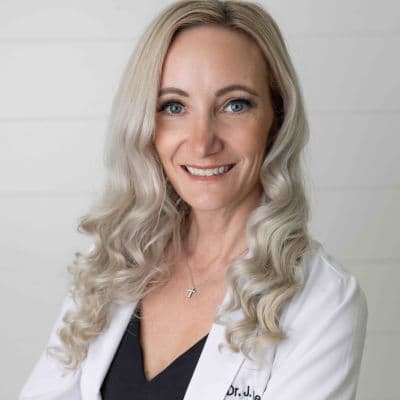
Full Transcript Introduction to Oral Health and Dentistry 0:00 Back in 2010, I went to 0:03 to a vascular inflammation class that was given by some cardiologist. 0:09 The first thing we knew in dentistry was that the oral bugs, the bacteria 0:14 in the mouth, can really increase the chances of heart attack and stroke. 0:20 So that was in the 80s. 0:22 That was early info. 0:23 So it's like, okay, this is this class has been given by cardiologist. 0:27 This is exciting. 0:28 Well at that course, 0:31 they introduced a test 0:33 by Access Genetics called oral DNA. 0:36 And so oh my goodness, I'm on it. 0:38 You know, I came home and tested everybody who would swish and spit and, 0:43 it shows 11 different bacteria, and it's a quantitative PCR test. 0:49 So not only do you see what's there, you see how much. 0:52 Welcome to Doctor Talks, the podcast where every episode leads to a healthier you. 0:58 Join us as we navigate the world of optimal health, 1:01 uncovering groundbreaking strategies to conquer chronic disease. 1:05 In each episode, we'll bring you the latest insights 1:08 from leading health experts, medical innovators, and wellness warriors. 1:12 If you are seeking to transform your health journey, or if you're 1:15 looking for answers to burning questions, you've come to the right place. 1:19 Get ready to unlock the secrets of lifelong health and vitality. 1:23 This is Doctor Talks, 1:25 real talk from real doctors on the issues that matter to you most. 1:32 Hi everyone. 1:33 Welcome back to the Integrative Health Podcast with Doctor Jen. 1:36 We're going to be talking to Doctor Debbie Osment. 1:39 And we're going to be talking all about oral health. 1:42 It will be so fun. 1:43 Doctor Debbie Osment has a private practice, Dennis, since 1985. 1:48 She's been in practice for almost 40 years. 1:50 A graduate of Oklahoma University College of Dentistry, 1:53 she served as adjunct faculty there for seven years. 1:57 Doctor Osment completed a master's degree in metabolic and nutritional medicine 2:01 from the University of South Florida Morrison College of Medicine, 2:04 and is a diplomat with the American Academy 2:07 of Anti-Aging medicine, or a foreign trained at Mayo Clinic. 2:11 She is nationally board certified. A health and wellness coach. 2:14 She's the host of the podcast Vitality Made Simple, 2:17 committed to sharing practical, 2:19 understandable and fun strategies to enhance her vitality and health span. 2:22 Doctor Osment is committed to early diagnosis and intervention of Carrie. 2:26 Dawn told disease to positively affect not only the mouth but the entire body. 2:31 Welcome, Doctor Debbie, so excited to talk to you today. 2:35 Thank you, Doctor Jan, it's a joy to be with you. Yes. 2:39 And I, I love that you are on this mission to fix everyone's oral health 2:44 because as we can know, know the mouth and the gut and the whole body, 2:48 it's it's all connected. 2:49 And some people talk about gut health, but they they ignore their teeth. 2:53 So how did you get from conventional dentistry to now 2:59 what you do working with the whole body, starting with the mouth? 3:03 It was really curiosity. 3:05 Doctor Jen, I had this, sort of boutique practice. 3:09 I, I'm very, relational with knew my patients.
From Conventional Dentistry to Whole-Body Health 3:13 And I started just noticing, you know, 35 3:17 years ago that people were collecting medications 3:21 and, they were, you know, having longer and longer list of these, 3:27 chronic meds, things they would be taking forever. 3:30 And, that that sparked my curiosity. 3:33 But also I noticed that people were, 3:39 the people that had really healthy oral microbiomes. 3:42 I mean, this is before we had oral DNA testing. 3:46 They they were faring better. 3:48 So it was just sort of, you know, like, why didn't the heck is going on? 3:53 And in dental school, we're we're very trained as carpenters. 3:57 I mean, we're good at fixing teeth. 3:59 In fact, I know you're a, a mom of four kids, 4:02 and when our daughter was in kindergarten, her teacher, you know, was saying, 4:06 what are your parents do? 4:07 And she said, mom, my mom is a laundry lady, and she fixes teeth. 4:11 And, so, you know, that was very accurate to be a lottery lady. 4:16 For sure. 4:17 First, the, the thing is, though, 4:20 we tend as a profession to look at teeth 4:24 saved teeth, and focus on teeth. But, 4:29 as I started, like, digging in and going back to school 4:32 and realizing this oral microbiome, it's not staying there. 4:36 It's really not about the teeth, doctor Jen. 4:39 It's really about, 4:41 you know, chronic inflammatory 4:43 inflammation that's all over the body from head to toe. 4:46 And and when you think about the gut, you know, it's this long tube. 4:50 So, you know, the health starts in the gut. 4:53 We know that. 4:53 But the gut really does start in the mouth. 4:58 Yeah it does. 4:58 And people just go to their dentist for their dental cleaning. 5:02 Make sure they don't have cavities. 5:03 They brush and floss and it stops there. 5:06 And I guess my question for you is, what is the biggest misconception 5:10 about oral health that you have noticed with your patients? 5:17 The very 5:18 biggest misconception, and I fueled this in the early days before I understood, 5:24 the vast importance the, the misconception is that a little bleeding is okay. 5:29 So so we go to the dentist and it's like, oh, you know, especially 5:33 someone like you, you're you're, you're gorgeous, you're kind. 5:37 You show up on time, you pay your bill, you've got beautiful teeth. 5:41 And it's like, oh, Doctor Jen, you have a little bleeding. 5:44 No problem. See you in six months. And so. 5:47 Or they'll say, oh, or we you know, I said it, I mean, I, I did this, 5:51 I made this mistake. 5:52 Oh, brush and floss more. 5:55 Brush and floss more. 5:56 Oh. Where are you going on vacation? 5:57 You know, just kind of just ignoring this early, 6:02 early sign of infection, actually. So. 6:07 So that's really my mission is to tell people, you've got to know 6:12 that if there's any bleeding, you've got an infection 6:16 and that is traveling all over your body, and it's inhibiting 6:20 what you want to do in your life, it's inhibiting your relationships. 6:24 It's going to cost money. 6:26 It's going to, you know, keep you down and keep you from 6:29 fulfilling your your God-Given call and your dreams. 6:32 And, it's it's a much bigger deal at the early stages, 6:36 doctor Jen and we ever thought 6:39 interesting. 6:40 So a little bleeding in the guns because, I mean, really, the last 6:44 probably decade hasn't happened to me much, but every once in a while. 6:47 But rarely. 6:49 But you go to the dentist and it's happened with my kids. 6:53 You know, maybe we've been slacking, as you know, parents 6:56 making sure they're actually flossing when they said they floss. 6:59 And then you get in there and you do it, or the dentist 7:02 and you get a little bleeding 7:04 and they're just like, oh, it's because you're not flossing. 7:07 That's why you're having that bleeding. So that's not true. 7:10 Could you explain a little bit more about this bleeding? Yes. 7:14 An epiphany happened to me 7:18 in about 2004, in Nicaragua. 7:22 I was on a medical mission trip. 7:26 And on those trips, you know, we take extraction instruments. 7:30 I mean, it's people line up and it's it's all extractions. 7:34 And, you can always tell somebody has a toothache. 7:37 They'll have, you know, they'll be holding some, you know, rag on their face and, 7:41 and a few people came in that didn't have a toothache 7:45 and just said, I just want you to look at my teeth. 7:49 And, and they looked fantastic. 7:51 I mean, their gums were super healthy. 7:53 Now, this is in a place where there's no fancy toothpaste, 7:57 there's no fancy mouthwash, toothbrushes, you know, super, 8:03 super needy. 8:04 But these people had there were a few people who had these 8:08 incredibly healthy gums, healthy oral microbiome. 8:13 So I'm like, what are you doing? 8:15 Well, they were, getting a little twig and, 8:20 you know, peeling off the rough stuff 8:23 and making what they, they would term chew sticks 8:27 so they would get these little chew sticks 8:30 and scrub between their teeth. 8:33 And it it just sort of lit 8:36 the fire doctor gen of like, okay, they're, 8:39 they're actually disrupting that biofilm.
Bleeding Gums and the Oral Biofilm 8:43 This, this is amazing because it wasn't about money. 8:47 It wasn't about dental care. 8:49 It was just about a daily 8:52 home routine that made a lot of difference. 8:55 You know, flossing is great. I'm not against flossing at all. 8:57 I lost my teeth, but it requires some dexterity 9:01 and especially, say, for your children or a lot of people have, 9:05 you know, dexterity problems and 9:07 and they'll people will used to tease me and they say, oh, well I'm just 9:11 I'm just flossing the front ones, you know, that's all that matter. 9:14 And because the back ones are hard to get to, but but with a little brush 9:19 so that so I came home and started looking for some, you know, options. 9:22 Found these little doctor's brush picks. 9:24 Now, you know, 20, 20 years later, 21 years later. 9:27 There are I have little tools that I recommend for people that help them. 9:33 Actually 9:36 physically 9:36 disrupt the the biofilm that's living 9:39 between their teeth, under the gums, in a concavity. 9:44 Really? 9:44 Something that maybe floss might, 9:49 you know, floss over. 9:51 So it's it's really simpler. 9:53 I think it's simpler than re make it. 9:55 Yeah, yeah. 9:56 So, kind of to break it down like a biofilm. 9:59 I might have you explain that a little bit more, but I like how you said 10:03 how they're in the crevices. 10:05 So think about the worst place to clean in your bathroom. 10:07 Right behind the toilet. 10:10 Right. Like that's like a tooth. Like it's hard to reach. 10:12 And then the stuff gunk up. 10:14 So could you explain biofilms? 10:17 Some of our listeners might be, you know, they might know what biofilm means 10:20 in the gut, but they might not know that we could have biofilms in the teeth. 10:24 So and you're saying 10:25 when that biofilms being disrupted, you're getting the bleeding basically, 10:30 and then that, but then that's going into the bloodstream or. 10:34 Well, partly why you're so insightful. 10:37 It's the the behind the toilet is the perfect 10:40 analogy because, you know, that's where things accumulate. 10:44 Right. 10:44 So so think about this tooth having this concavity, 10:49 where the bacteria produce 10:52 toxins, these toxins can calcify. 10:55 So it produces this kind of calcium, you know, matrix 10:58 that you get hopefully cleaned off when you go to the dentist. 11:01 But to produce that, the bacteria live in a biofilm. 11:05 A biofilm is like, 11:09 a collection, a community of bacteria 11:13 that, that help protect each other. 11:16 So they're living in this protective biofilm. 11:19 They secrete different chemicals that help help them protect each other. 11:24 They help each other grow. 11:25 They provide food for each other. So. 11:28 So that's like a little community living there 11:30 that produces inflammatory cells that get into the bloodstream. 11:34 So whether you disrupt it or not, you're 11:37 absolutely getting those bacterial byproducts 11:42 in in the bloodstream that are, you know, increasing, 11:46 inflammatory cells, triggering the immune system. 11:49 But you're also getting those bacteria translocated to other parts of the body. 11:54 That's what's so interesting about, you know, the the salivary diagnostics 11:58 these days, we can actually test and, know what the DNA of, 12:05 specific bacteria that are in other parts of the body. 12:08 So, so the key is to keep it disrupted. 12:12 It's going to bleed for a while, but eventually, doctor, 12:14 in healthy gums don't bleed at all, ever. 12:18 You can't get them to bleed. 12:20 That's the key. 12:20 That's what that's what we all want is gums that we cannot make bleed. 12:25 Whether we get our teeth cleaned 12:26 anytime they are so healthy that bacterial biofilm is keeping, 12:32 it is gone. 12:33 It's gone every single day. 12:36 Wow. That's cool. 12:37 Well, what is your routine? 12:38 Just curious, because 12:39 everyone probably is wondering like, well, I wonder what Doctor Debbie does. 12:43 How do you clean and take care of your teeth? 12:46 What's your routine? 12:49 Well, I'm very simple, Doctor Jen. 12:51 I mean, here I am, 66 years old, and I think I'm getting simpler. 12:55 Simpler by the day. 12:57 So? So I, I brush my teeth. 13:00 Of course, I use a, a toothpaste that 13:04 I don't think the toothpaste is, super crazy important. 13:08 I think it needs to not have fluoride. 13:11 Because we know that you're you're the expert here with thyroid health. 13:15 We know that fluoride can disrupt the thyroid gland immensely. 13:21 So I stopped using fluoride 25 years ago when I learned that, 13:25 I also it also with a toothpaste look for something 13:29 that does not have sodium laurel sulfate SLS. 13:32 You want to avoid that if you can. 13:34 There's a analyzing toothpaste. 13:36 There's great ones out there, biocide, and has a good one. 13:39 There's lots of good ones. 13:40 I don't represent any certain toothpaste. 13:42 But also look for something that has xylitol if possible, because that's very 13:47 has been studied, for specific bacteria that we see in the mouth. 13:53 So. Right. 13:53 So I brush my teeth and I've lost my teeth. 13:56 Then I use these little brush picks. 14:00 Oh, my goodness. I'm sorry, I don't have one right here. 14:01 They're just little gum picks that you can buy anywhere. 14:04 They're green and white and they're curved. 14:06 And you can really get in there and scrub in. 14:09 I mean, you want to get in there and scrub just like you would behind the toilet. 14:12 I mean that I love that word picture. 14:15 You want to scrub, scrub, scrub because you're removing, 14:18 like, barnacles, you know, like barnacles from a boat. 14:21 You know, scum from the bathtub. 14:24 You want to keep that gone? 14:27 And then I've started doing something really interesting 14:30 in the last few years, and I'm doing oil pulling, and, so I'm. 14:36 And I did an experiment on myself, you know, did a saliva test 14:40 and then did oil pulling for 30 days. 14:43 And I put a couple of drops of Nigella sativa black seed oil 14:47 in my, coconut oil and actually looked 14:52 for how that impacts acted, my oral microbiome. 14:56 And there was, it was significant. 14:59 It was 30% decrease in a bacteria specific bacteria 15:03 called fuser bacterium, nuclear atom. 15:05 That's really my my area of interest is fuser bacterium. 15:09 Because it is being shown to be causative of colorectal cancer. 15:14 So we can we can really 15:18 change people's health trajectories by dealing with the oral microbiome. 15:22 And, and hopefully I want your listeners to know it can be pretty simple. 15:28 Wow I love that. 15:29 So I, I want to get some of those little brushes.
Daily Oral Care Routine and Tools 15:32 I've seen them. But you're right. 15:34 Like you're flossing back in the back teeth. 15:36 You're not really getting that off. 15:39 And that's where it kind of said, I do love, oil pooling. 15:44 I oil pool with coconut oil and I 15:47 your gums like, shine after and it whitens your teeth. 15:51 It whitens your teeth too. 15:52 So, sometimes, like, I'll slack off and I feel like I was really good. 15:58 Like, I think I started oil 15:59 pooling, like, ten years ago, and I was, like, so good and diligent. 16:03 And then the more kids I had, because you don't talk 16:06 when you're oil pooling and then like, you try to talk and eat some spits 16:09 and dribbles out onto your outfit and it's, it's coconut oil, so it stains. 16:14 Anyway, so yeah, I agree. 16:16 I love oil pooling, but okay. 16:18 What are your opinions on this? 16:20 Does I tell my patients or whoever ask 16:23 don't oil pool if you still have amalgams or mercury fillings in 16:28 what are your what do you think on that? 16:31 I think it depends from what I've seen. 16:34 The size of those amalgam fillings, 16:38 because some people have little tiny ones that really don't, 16:43 you know, they're not hitting when they chew. 16:47 But I think that's good advice. 16:49 I think, you know, overall, people need to be getting their amalgam fillings out. 16:53 They need to be 16:53 that needs to be done by a biological dentist who does it correctly. 16:58 And, and then it's, you know, it's like it's like an 17:03 peeling an onion. 17:04 There's just all these layers. 17:05 And that's one of the layers that's going to help people. 17:09 So that's great advice. 17:11 And one other like, well, I think it's controversial 17:14 because I never I you just hear different opinions. 17:18 What do you think about those dental picks. 17:20 Those like water power dental picks. 17:22 Do you know what I'm talking about. 17:24 Okay. 17:25 Well, I think the key is 17:27 people know how they're feeling, what works in their hands. 17:30 I don't think there's anyone, product that's going to solve 17:37 this chronic inflammation in the mouth because it depends on, 17:41 you know, if people have straight teeth or crooked teeth or, you know, crowns 17:46 and fillings, and it just needs to, people need to be looking for bleeding. 17:51 And then there are objective saliva test that they can take them, 17:56 that their dentist 17:57 can administrator administrate, some that they can do on their own. 18:01 Like there's the bristle test. 18:02 I'm sure, you've heard about that. 18:05 It's, it's a shotgun genomic test. 18:08 That's a simple saliva test that people. 18:10 Can I take it home and and find out what's going on in their oral microbiome, 18:14 as well as get some readings on things like nitric oxide 18:17 and even a reading on gut health with that. 18:21 Yeah. 18:21 Well, can you talk a little bit 18:22 more about these saliva tests and how you use them in practice? 18:27 Yes. Doctor Jen, back in 2010, I went to a 18:32 to a vascular inflammation class that was given by some cardiologist. 18:37 The first thing we knew in dentistry was that the oral bugs, the bacteria 18:43 in the mouth, can really, increase the chances of heart attack and stroke. 18:48 So that was in the 80s. That was early info. 18:52 So it's like, okay, this is this class is being given by cardiologists. 18:55 This is exciting. 18:56 Well, at that course, 18:59 they introduced a test by Access Genetics called oral DNA. 19:04 And so oh my goodness, I'm on it. 19:07 You know, I came home and tested everybody who would swish and spit and, 19:11 it shows 11 different bacteria and it's a quantitative PCR test. 19:17 So not only do you see what's there, you see how much is there. 19:21 And so I started doing that for all of my patients, family. 19:26 Some fantastic stories that came out of that. 19:29 And 19:32 that sort of started the deep dive. 19:35 Now I use that one in clinic. 19:36 Doctor Jen, recently, there's a great company called Bristle Health. 19:41 And they have developed a shotgun genomics test 19:44 that, you swish, but you get a lot of different information. 19:48 You get sort of you get, different type of information. 19:53 It's not, as, you know, as quantitative, but great information. 19:58 And they have such an incredible website and wonderful resources. 20:03 And so that I've got a lot of information on my website, 20:07 about that, because I love it when people can be empowered 20:10 to do things on their own. 20:12 And I would encourage people to if they do bristle test, take it to your dentist 20:16 and and check out the level of curiosity that you find. 20:21 Because this these tests are so well studied. 20:25 I'm sure you've, experienced this doctor. 20:27 You'll tell somebody something and maybe on the 20:31 the less curious side of health care, it might be. 20:35 Well, there's no research. 20:37 And it's like, oh, goodness gracious. 20:38 No, there's thousands, thousands and thousands of research papers. 20:43 And that's exactly where we are with the oral microbiome. 20:46 Yeah. 20:47 And so yeah, there's research on it. 20:49 But also I think there's this problem where they're like, well, it's not 20:54 you know, this institute or this society that I belong to. 20:58 They don't recognize it. 20:59 And it's like, well, it takes a long time for things to get into protocols. 21:03 And it also depends on money 21:05 and who, you know, in the pharmaceutical companies 21:08 and in dentistry, I'm sure is similar to, to regular conventional medicine. 21:13 So yeah. 21:14 And I think, like you said, get the test on your own and bring it to your dentist. 21:17 And maybe that will plant a seed. 21:18 And then maybe in five years your dentist will just flip in the holistic dentist. 21:22 I mean, this is how if that like you said, you were curious. 21:27 That's why you went from regular dentistry to what you do. 21:30 It's like we we want to spark curiosity and so many people, 21:35 I mean, they go to their dentist 21:37 and they're still having problems with their teeth. 21:39 And it's like, well, if it was working, wouldn't you have perfect teeth? 21:43 So we got to we got to do that. 21:45 And this is why people are listening right now, right? 21:47 Because we're doing the research outside of that box that that everyone sitting in. 21:53 Exactly. 21:54 Something also that just 21:57 really, I guess, supercharged
Saliva Testing and Oral Microbiome Diagnostics 22:00 in terms of, of of me going back to school 22:02 was a case in 2013, a, functional medicine physician 22:08 sent a patient, to me who had a super 22:12 high, C-reactive protein. 22:16 And, she had a her C-reactive protein was 18.1. 22:20 And that was in the days, Doctor Jen, when it wasn't just over ten, you know, 22:23 you actually got to see a specific number, and 22:26 and the physician said, Debbie, 22:29 I don't I'm thinking she has cancer, but we can't figure it out. 22:33 See what you think? 22:34 So I did a saliva test, found out her, you know, 22:38 profile of pathogens did not use antibiotic. 22:43 Now, doctor Jen, seeing her profile, I might. 22:46 I mean, sometimes I do, but nevertheless, what we did is a deep cleaning. 22:51 Used a laser, taught her home care techniques, as I as I've described. 22:57 And in 60 days, 23:00 her C-reactive protein had plummeted to 2.9. 23:03 So what we're finding is actually that 23:07 probably kept improving, you know, on out. 23:11 But, that just happened to be the timing of, of her test. 23:14 But what was shocking, absolutely astounding, 23:18 is that other blood numbers moved her, 23:22 fasting blood sugar, improved 23:25 her cholesterol numbers, her lipids improved. 23:28 Her whole blood panel, 23:32 all this red went to yellow or green. 23:35 And so that's when I was like, yikes. 23:37 There's way more to this. 23:39 This is not about the teeth, 23:42 right? 23:43 And that's amazing that they were sent to you for, for dental stuff. 23:47 And and it was the key. 23:49 It was the key to it all. 23:51 And we just can't we can't ignore our mouth anymore. 23:55 You know, it, like like you were talking about, fusiform bacteria. 23:59 What? 24:00 What's the correlation you said with colon cancer? 24:03 And have you seen that actually, like, 24:07 in patients, have you seen the correlation and how do you fix it? 24:11 Thank you for that question. 24:13 I really appreciate that. 24:14 She's a bacterium. 24:16 Autom is an oral pathogen, exclusively oral pathogen 24:20 that in the last probably I'm going to say eight years has been highly studied. 24:26 I, had the privilege of doing a TedTalk, in 2018, I think it was. 24:31 But after that, several researchers, started emailing me and saying, 24:37 I really think she's a bacterium is a bigger thing than we thought. 24:41 I don't think it's only, increasing inflammation in the gut. 24:46 I think it it might end up being potentially causal for colorectal cancer. 24:52 Well, now, Doctor Jen, we're finding this oral pathogen 24:56 in about 50% of colorectal tumors. 25:00 And the jury's still out on 25:03 whether it's causal, but I don't think that matters. 25:06 I mean, we want to get rid of it either way. 25:09 We want to know it's there and we want to deal with it. 25:11 So, we can, you know, do a saliva test 25:15 and then we can do a GI map, which actually shows you the bacterium. 25:20 Now, some of the latest research, is telling us that it might be 25:25 also a subspecies and Amelia's, but, the key is to get rid of it to. 25:30 And bleeding is going to be a sign of a bacterium. Now 25:35 basically this 25:36 bacteria, causes havoc in the gut. 25:41 I mean, it's not just colorectal, cancer. 25:45 It's all kinds of other things that I'm seeing. 25:47 I'm seeing it high in autoimmunity. 25:48 I'm seeing it high, especially in Hashimoto's. 25:51 I'm seeing it, high in adverse pregnancy outcomes. 25:55 I'm seeing it high in, type type two diabetes. 26:00 Prediabetes. 26:01 It's it's a it's a it's commensal bacteria. 26:04 So when it's super low it's not bad, but it's 26:07 when it over grows it it over grows easily. 26:12 These days I mean, something I've really been working on 26:14 is trying to figure out why in the heck do more people have high 26:18 fives a bacterium now than they did when I first started testing? 26:21 You know, 14 years ago. 26:23 But nevertheless, it is it, and the thing is, 26:27 it's it's pretty easy to get rid of, but it's been so highly studied, doctor. 26:31 And it's so interesting in real in real, a real case that I had 26:35 a gentleman came in who had been diagnosed with colorectal cancer. 26:39 He, was, was wearing a, a chemo 26:44 therapy pump of five or uracil. 26:48 His he had mints in his lungs. 26:50 His tumor was not shrinking. 26:53 We tested his mouth. 26:56 His gut did a deep cleaning. 26:58 Actually used, Were you. 27:01 I used metronidazole on him because of his level of. 27:05 He's a bacterium in it's got. Don't always use antibiotics, as I said. 27:08 But the key through this journey he his his, 27:13 colorectal cancer, started shrinking and 27:18 and in researching like, okay, this is I want to understand this more. 27:21 I found lots of research talking about how if use a bacterium 27:27 actually causes some chemotherapeutic agents, 27:31 to not work, it can cause 27:34 these colorectal cancer cells to be resistant 27:38 to five fluorouracil is one that's been highly studied. 27:42 Another one that has been studied is cisplatin. 27:44 So so now we know that this, 27:47 you know, this simple antibiotic as well as a good throw, 27:53 you know, deep cleaning which we call scaling rate planning really turn 27:56 turn the corner for him. 28:00 That's really cool. 28:03 And gosh, I mean, it's this whole 28:05 nother world of looking at our gut microbiome 28:08 and how it's affecting drugs because these guys are smart. 28:12 And I think that we don't give them enough credit for being so smart, 28:17 smarter than the doctors, smarter than cancer specialists. 28:21 So I, I think that that's great that you were working side 28:25 by side, you know, with his doctor and they were open to looking into this.
Fusobacterium, Cancer, and Systemic Disease 28:31 It's so impressive to me, curious doctors like you 28:35 who are willing to say, wait, there might be more to this. 28:40 There might be a door I need to open. 28:41 There might be, you know, a basement. 28:43 I need to look in. 28:46 Because, you know, it all translates to 28:50 more better relationships for people to have more time 28:53 with their their families and to feel better and to. 28:57 He had a lot of he had a big family. 28:59 And, you know, 29:00 it was just it was just wonderful because his chemotherapy started working 29:05 very integrative. 29:07 And yeah. 29:08 Are there any other case studies that come to mind over the years 29:11 that you would like to share? 29:15 One thing for your listeners, I think specifically 29:18 is the impact of the oral microbiome on adverse pregnancy outcomes. 29:23 I've been I've been shocked, absolutely shocked. 29:27 A most recent case, a couple came to me who had been, 29:33 trying to have a baby, had done everything they can for ten years. 29:37 And literally, Doctor Jen, we just had to get her oral 29:40 microbiome healthy to get rid of this, this chronic inflammation. 29:43 She's a bacterium, has been found, in the fallopian tubes. 29:48 It's also been found to be correlated with, low birth weight. 29:54 I mean, every problem you can think of, it's just crazy. 29:59 And it's so simple. 30:01 Nobody's named their babies after me. 30:02 But, you know, I'm still trying. 30:05 I think there's been about seven, though, 30:07 in the last few years of of women who have to send me pictures. 30:10 They'll send me pictures of their ultrasound, 30:12 you know, like at four months or one woman had had five miscarriages. 30:15 And so she sent me a picture of Hazel, you know, five minutes 30:21 in utero. 30:22 So, you know, those kinds of things, you just, you wonder if it is so. 30:26 That is so cool, so fusiform. 30:28 And you said that's your favorite. Well, not your favorite. 30:30 You actually don't like that bacteria, 30:32 but that's the one you go after in the fallopian tube. 30:36 Colon cancer. What else has it been? 30:39 Oh, and the some of the newest research is that it? 30:44 It kind of propels a bacterium called poor from gingival. 30:49 Now, poor from gingival has been studied intensely 30:54 in terms of Alzheimer's disease, neuro inflammatory disease, 30:58 multiple sclerosis, Parkinson's disease, specifically studied 31:02 with Alzheimer's disease, there was a a landmark study in 2012 31:07 where they found the DNA of four from managed danger versus oral bacteria 31:13 in the brain of 40% of Alzheimer's patients postmortem. 31:17 So it's it's big. 31:19 But now we know that few the bacterium actually feels it. 31:24 Oh, doctor Jen, I, I jokingly call these a bacterium nuclear atom. 31:28 The mother in law bacteria. 31:29 Because, you know, I can joke about mother in law's because I am one. 31:33 But it it is a bacteria that when it's low it can be a beneficial bacteria. 31:38 It's just when it stays too long, it just it's just when it starts 31:42 taking over your life and, you know, giving unsolicited advice and, 31:46 moving things around, you know, fuser bacterium if, if, if tamed is fine. 31:52 Just like, just like as mother in law, as if we, know when to leave, 31:56 then we're beneficial. 31:58 But, it's when it overgrow. 32:00 So I suspect that there's something in our environment 32:04 that, we can't quite pinpoint yet that is causing 32:08 this pesky, mother in law bacteria to overgrow. 32:12 I don't have that broken yet, but, boy, I'm researching this all the time. 32:19 Yeah, and you said so. 32:20 For aggressive cases you do treat with gel or metal that dies. 32:24 And, but I this one's come up 32:28 a few times on GI stool testing. 32:31 And usually like garlic oregano 32:35 can keep this under control. So. 32:39 But but it's tricky. 32:41 Like you were saying, you know, for the fertility stuff, if no one is even 32:45 looking at their microbiome, and then this is causing inflammation 32:50 because that's what these opportunistic bad guys do. 32:54 They can cause inflammation if they're overgrown. 32:56 So you think that inflammation probably in the fallopian tube 33:00 was leading to the infertility in your patients? 33:03 I think that's certainly part of it. 33:05 And it seems like to me, that, 33:10 you know, it's this chronic inflammation, this inflammation thing, as you know, as 33:15 people get older and I know you're writing an incredible book on, perimenopause, 33:21 it seems to me that 33:23 this oral inflammation, this low grade chronic inflammation 33:29 is sequestering the immune system and sort of tying it up. 33:33 So once we clear that 33:36 up, then, you know, our bodies are designed to heal. 33:39 So so at that point there are more resources 33:43 to go to other areas to 33:47 for those and for the immune system to work. 33:51 Yeah. 33:51 And when we look at in regards to fertility, 33:54 I mean, I see this with patients all the time, even, 33:57 you know, not just bacteria in our in our gut. 33:59 And stuff, but that stress right in your body, if you're stressed out, 34:03 you're not going to want to heal, you're not going to want to get pregnant. 34:06 But a lot of the times these gut bacteria, the oral microbiome that's 34:12 causing a lot of stress on your body because it's chronic inflammation 34:16 and it's it's hard because it's like what comes first? 34:19 What do you fix first? And it's like all of it. No. 34:22 But but you have to work on like different layers at a time. 34:25 And it might just look like getting a little scrubber, which I'm 34:28 going to get for my kids because I think that they would have fun with that. 34:31 So it might just be like, you know, start taking good care of your oral health. 34:36 And and that will keep exposing more layers that you have to work on. 34:40 Exactly. It. 34:42 And then your stress point is, is so on target because, say, 34:46 when people are stressed out, if you're running from a tiger, 34:49 all the time, then your mouth is going to be more dry. 34:52 And if your mouth is more dry, these bacteria can overgrow 34:56 because, you know, saliva is so protective. 34:59 And then, so, so like you said, it's that it's that circle. 35:03 It's never one thing. 35:04 Everything's impacting everything else. 35:06 And but this is an easy place to get to get started. 35:11 Yeah. Yeah. That's great. 35:13 So everyone listening out there right now, what could they do like today. 35:17 What would you suggest Doctor Debbie today that someone can can start on 35:22 because they might feel overwhelmed a little? 35:25 Oh, that's a great question. 35:26 I would say today get some little little brush picks. 35:30 And you know there's again it's it's really you just want to scrub 35:35 does t that I, I actually have an online course 35:39 on my website, a very inexpensive course called AB Stream Gut Health. 35:43 I demonstrate all of this, but I would say start there. 35:46 Now know that your gums are going to bleed at first because they're inflamed. 35:51 The gum picks do not make your gums bleed. 35:53 Floss does not make anybody's gums bleed. 35:55 Generally, it's because they're inflamed. So. 36:00 So then, and on the course I talk about, you know, questions to ask your, 36:04 your dental team, you want to make sure they are reading the research and up on 36:10 what's been what's really important, what's impacting their health span. 36:15 But start with the brushes. Start with it. 36:16 Start with simple in something you can hold and, 36:20 it's not, as you know, technically as floss doctor Jen. 36:24 It's. Anybody can do it. 36:26 Your children can do it. 36:27 Yeah, it's almost like a fidget. 36:29 Think of it as like a fidget.
Pregnancy, Inflammation, and Practical Next Steps 36:30 It is. It's like a. 36:32 Yeah, well, and I jokingly here in Oklahoma, I like all the cool 36:35 people are doing it, you know, because, you know, we'll be out to dinner. 36:38 My friends will pull out their brush picks. 36:40 It's amazing. 36:41 You can brush and floss 36:42 and then you get a brush pick in there and you're still like, whoa, 36:45 there's a little little broccoli in there, and there's a little popcorn hole. 36:49 There's, you know, it's just it just really, you know, scrubs it. 36:53 The difference between, you know, rinsing your tub out or scrubbing your tub. 36:58 Oh yeah. 36:59 That's like when kids try to do the chores and they just. 37:02 Yeah, they just rinse. 37:03 They don't scrub. 37:04 Yeah, that's actually a good analogy. 37:07 I should use that with my kids actually, like take a pan and just rinse it 37:10 and then scrub it and be like, this is why I, we're 37:13 I just ordered some actually, while we were on this podcast, 37:16 this is what I was going to do, scrub brushes. 37:18 Because Doctor Debbie told us doing it makes a lot of sense. 37:21 The other thing I love is that, like God created our body 37:25 with symptoms and signs that something's wrong, right? 37:30 And we ignore them. Like you were saying, 37:32 the dentists that are like, oh, it's just a little bleeding. 37:34 When is bleeding, like, ever? 37:37 Not like, whoa, like fire. 37:40 Like, let's check this out. Let's hone in. Right. 37:42 So it's kind of cool that our gums bleed 37:45 when they're inflamed because it lets us know that something's wrong. 37:49 So listen to the clues. 37:52 Don't stop pushing away the clues. 37:56 No, it's you're it's so right. 37:59 God gave us all of these signs, you know, like your little headache. 38:03 Maybe you're dehydrated if you're a little, you know, I mean, just on and on. 38:07 But we start looking at these things as normal. 38:10 Doctor Jen and I always joke on my podcast about normal, 38:14 you know, normal in our world is not a good thing. 38:17 I mean, you're obviously not normal. I'm not. 38:19 I don't want to be normal because Nina normal is dehydrated, 38:24 irritated, constipated, frustrated, you know, overscheduled, 38:28 overstimulated, undernourished and arrested and totally stressed out. 38:31 I mean, you can see that those are the patients that are seeing you 38:34 that need your help. 38:36 They've they've ignored these symptoms. 38:38 But but I fully agree. 38:40 God gives us lots of signs. We just want to. 38:42 And that's what your podcast is doing helping people see the signs 38:46 of things like This might be so normal that I don't want it 38:50 because normal is not good, 38:53 right? 38:53 Yeah. 38:54 Be the weird ones, be 38:55 the ones that pull out the digestive enzymes 38:57 when you're out eating with friends and families. 38:59 And then now I'm going to up at one more and bring out the dental floss. 39:04 And you've already ordered them. 39:05 That is impressive. 39:07 You've already I like I, I'm like, I should I needed them today. 39:11 Like I feel like if I hey, you're the expert. 39:14 If you're going to tell me something and it makes so much sense to like, 39:19 has those back molars just after a cleaning, I'm like, oh, 39:23 I wish I could do this at home, but you can. You can. 39:26 We scrub the little things off? 39:28 So I'm super excited. 39:30 I just needed someone to tell me to get those. 39:32 So thank you for that. 39:34 Oh no, thank you. 39:35 And you've got to see folks when you're watching this on video. 39:38 It's one thing, but Doctor Jen is on a treadmill 39:41 doing this podcast, and she's listening so intently and coming up 39:45 with these great questions, I'm just like, wow, 39:49 well, I'm only going, what am I going at 1.5? 39:52 So and you're moving on. 39:55 Oh yeah, well I will when I, when I'm getting interviewed, 39:59 I said, but when I'm interviewing I feel like I can walk. 40:03 So yeah. 40:05 Aspiring very inspired Debbie how like 40:08 so first of all, you don't look like a day over 40. 40:12 You look amazing. 40:13 So you're practicing what you're preaching. 40:15 How can people work with you or just listen to you more? 40:21 Well, check out my website. 40:22 I've got a lot of, free information. 40:24 If you, love your dentist and you want to. 40:28 And they say there's no research, I have a whole free research tab 40:31 that I've, you know, curated. 40:33 I, I have this course, 40:37 there's a link on my on my website. 40:40 You can get the bristle health test through that. 40:43 Just join me on Instagram and, and check out my podcast, Vitality Made 40:49 Simple. 40:49 Doctor Jen is going to be a guest soon, 40:51 and we're going to learn all kinds of great things from her. 40:55 Yes. Well, awesome. 40:57 It is so nice talking to you. 40:59 So such a good just information and you're just so sweet and positive. 41:05 So, super excited to have you here. 41:09 Thank you so much. 41:10 It's just been my pleasure to be with you. 41:14 Thank you for tuning in to Doctor Talks. 41:16 We hope today's episode has enlightened 41:18 and inspired you on your path to optimal health. 41:21 Each day is a new opportunity to make choices that empower your well-being. 41:25 For more insights and strategies, subscribe to our podcast 41:29 and visit our website w ww di doctor Talksport.com. 41:34 Stay connected, stay healthy and join us next time on Doctor Talks. 41:39 Real talks from real doctors on the issues that matter to you most.
Comments