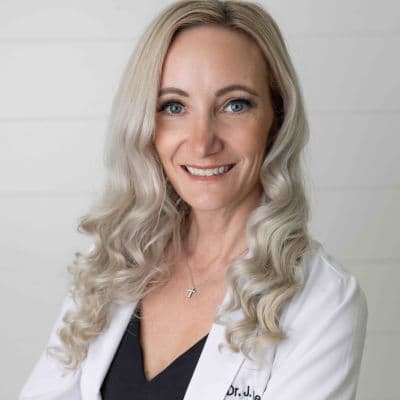
Full Transcript Introduction to Longevity Medicine 0:00 Most people wait until the symptoms show up to take action, meaning they have a chronic disease already. 0:06 But by then, a lot of the damage has already been happening at the surface. 0:10 This is even symptoms like a headache or energy decline. 0:13 We want to be proactive. 0:14 So early intervention, addressing these pillars before you feel unwell gives you the best chance to stay strong, energetic, 0:22 and independent for decades. 0:25 Prevention is always more effective than waiting for the disease to disappear. 0:29 This is Dr. 0:31 Talks, real talk from real doctors on the issues that matter to you most. 0:38 Hi everyone. 0:39 My name is Dr. 0:40 Jen Flegar. 0:41 I am so excited to be here and I'm going to talk to you today about longevity and the basics of longevity medicine. 0:51 Here's the thing. 0:51 We hear this as a buzzword so much, but why does it actually matter for your health span and your quality of life? 0:59 Longevity medicine is an approach that focuses on extending not just the lifespan, but health span. 1:06 And this is the number of years you live in good health. 1:08 And this is free from chronic disease and disability. 1:12 Being a board certified emergency medicine doctor and board certified integrative medicine physician, I have seen people have lifespan, 1:21 but not health span. 1:23 And it's a big difference.
Hallmarks of Aging 1:24 You don't want to be in the ER with chronic kidney disease. 1:28 having chest pain after dialysis, you know, in your sixties or seventies, because I have seen that all the time. 1:34 And this is why I'm so passionate about longevity medicine and integrative medicine. 1:40 Now, before we can understand longevity, let's break down the processes of aging. 1:45 So scientists now understand that aging isn't just some random thing that happens. 1:49 It's driven by predictable changes in ourselves and systems, our organ systems over time. 1:55 So some of the most important hallmarks and processes of aging include genomic instability. 2:02 This is damage to your DNA, which accumulates over the years from toxins, radiation, and errors in replication. 2:09 There's telomere shortening. 2:11 Telomere are protective caps on the ends of your chromosomes. 2:15 So each time a cell divides, telomeres are shortened, eventually leading to cell aging or senescence, we call it. 2:23 There's epigenetic changes over time, chemical tags on your DNA change and they alter gene expression in ways that promote aging and disease. 2:33 Some of those things we can change. 2:36 This is the great thing about longevity. 2:38 There's also the loss of proteostasis. 2:42 And this is your body's ability to keep proteins folded up and functional decline. 2:47 So this, this declines as you age and this contributes to diseases like dementia and Alzheimer's. 2:53 There's mitochondria dysfunction. 2:55 Mitochondria are your cellular power plants and power houses. 3:01 And they gradually produce less energy and they have more reactive oxygen species. 3:06 And this can happen for many reasons. 3:08 Environmental changes are a big thing. 3:11 Toxins, mycotoxins, all of that. 3:14 There's cellular senescence. 3:16 Senescence cells are known as zombie cells, and these cells, they stop dividing, but they refuse to die. 3:24 And because of this, they keep secreting inflammatory molecules that damage the surrounding tissues and basically make a mess like you think zombies would. 3:34 There's stem cell exhaustion. 3:36 Your reservoir of stem cells gradually depletes, reducing your capacity to repair and regenerate your tissues. 3:43 There's altered intracellular communication. 3:46 These inflammatory signals and hormonal changes disrupt how our cells talk to each other, leading to systemic confusion and dysfunction. 3:54 Basically like a bad game of telephone. 3:58 These processes, they don't happen overnight and they start silently, sometimes decades before the diseases show up.
The Three Pillars of Longevity 4:05 And this is why longevity medicine is preventative. 4:08 And we really care about preventing disease before there is actually disease. 4:12 Let's talk about the key pillars of longevity. 4:15 There are three main pillars that you should know about that impact nearly all of these processes that we spoke about. 4:21 The first is metabolic health. 4:24 If you guys know me or watch my Instagram or listen to my podcasts or watch me on the YouTube channel, you know that metabolic health is so important to me. 4:35 And this is one of the big pillars that I talk to about my patients in their 20s, 30s, 40s, 50s and up. 4:42 Okay. 4:42 And also I practice what I preach, so it's very important to me also. 4:45 So your metabolic drive is how your body uses and stores energy. 4:50 Insulin sensitivity, glucose control and body composition are crucial. 4:55 This is why I love muscle. 4:58 Poor metabolic health, it accelerates our aging, it increases inflammation and contributes to almost like every chronic disease we have. 5:07 And we know that you can't have disease without inflammation. 5:11 So metabolic health should be on the forefront of everyone's mind when we talk about longevity. 5:17 Inflammation, this chronic low-grade inflammation, often called inflammation, damages tissues over time. 5:25 And this contributes to heart disease, cancer, diabetes, and neurodegeneration. 5:30 Managing inflammation is essential for staying vibrant and functional. 5:35 And this is where your integrative physician can find out, do you have chronic low-grade inflammation? 5:41 And I have patients that have this low-grade inflammation, usually from gut health, but sometimes from other things. 5:48 And it might not show up on lab work or even a CRP, but I know it's there. 5:54 I know it's there from their energy levels, right? 5:56 Because their mitochondria are not healthy. 5:59 So there's different ways that if you work with a season-trained integrative physician, they will definitely pick up on these markers and these clues of 6:08 low-grade inflammation. 6:10 And then the third is mitochondrial function. 6:13 When your mitochondria declines, your energy, resilience, and ability to repair damage plummets. 6:20 Supporting mitochondrial health help maintains your vitality, stamina, and cellular repair as you age.
Why Early Intervention Matters 6:28 So why are we listening to this? 6:30 Why do we care? 6:31 Because early intervention matters. 6:33 Most people wait until the symptoms show up to take action, meaning they have a chronic disease already. 6:39 But by then, a lot of the damage has already been happening at the surface. 6:43 This is even symptoms like a headache or energy decline. 6:46 We want to be proactive. 6:47 So early intervention, addressing these pillars before you feel unwell gives you the best chance to stay strong, energetic, 6:56 and independent for decades. 6:58 Prevention is always more effective than waiting for the disease to disappear. 7:03 So there are some tools that we could talk about quickly. 7:06 So what can you do to support this longevity? 7:09 So your diet is so important, nutrient-dense food that is going to stabilize your blood sugar, anti-inflammatory foods. 7:19 So we don't want a bunch of processed sugars and processed flours. 7:23 We want real food, food that doesn't have an ingredient list on the back.
Nutrition, Exercise, and Fasting 7:27 And this food that is micronutrient dense, like meat and eggs, that's going to provide a bunch of key vitamins, minerals, 7:37 and polyphenols. 7:39 Exercise. 7:40 So strength training helps preserve muscle. 7:43 And then we can mix in some cardio from time to time to help our VO2 max, which is also very important for longevity. 7:51 But muscle is going to stabilize your blood sugar. 7:54 It's going to help you be more insulin sensitive. 7:56 It's going to help keep that good body composition. 7:59 And it's a balance. 8:00 You know, we know that bodybuilders that maybe take some stimulants too, but the real bodybuilders that are stimulating mTOR like all the time or workout 8:09 multiple times a day, we do know that that is not good. 8:11 We want this like sweet spot and balance. 8:13 If you need some muscle, but you also don't want to work out hours and hours a day, can stimulate mTOR continuously. 8:19 And this is also where you can throw in some fasting to this. 8:23 And for women, I coach, especially perimenopausal women, totally different. 8:28 And that is really important to me to treat them differently on when they fast. 8:33 Peptides are really helpful. 8:35 These are short chains of amino acids. 8:36 We're going to dig into this a little later. 8:38 The signal repair, regeneration, and immune modulation. 8:43 I love bioregulators. 8:44 They're even shorter chains of peptides, little snippets, a few amino acids discovered by Russian research that balance gene expression and cellular function.
Peptides, Bioregulators, and Lifestyle 8:54 And this really can help restore youthful aging. 8:58 And then our lifestyle, we need stress reduction, high quality sleep. 9:03 prayer is amazing, you know, reading your Bible and maintaining strong social connections. 9:08 That all helps with accelerated aging. 9:12 So I would love you guys to stay tuned and listen for more. 9:16 And thanks for learning about longevity. 9:19 Thank you for tuning into Dr. 9:20 Talks. 9:21 We hope today's episode has enlightened and inspired you on your path to optimal health. 9:26 Each day is a new opportunity to make choices that empower your well-being. 9:30 For more insights and strategies, subscribe to our podcast and visit our website, www.doctortalks.com. 9:39 Stay connected, stay healthy, and join us next time on Doctor Talks. 9:44 Real talks from real doctors on the issues that matter to you most.
Comments