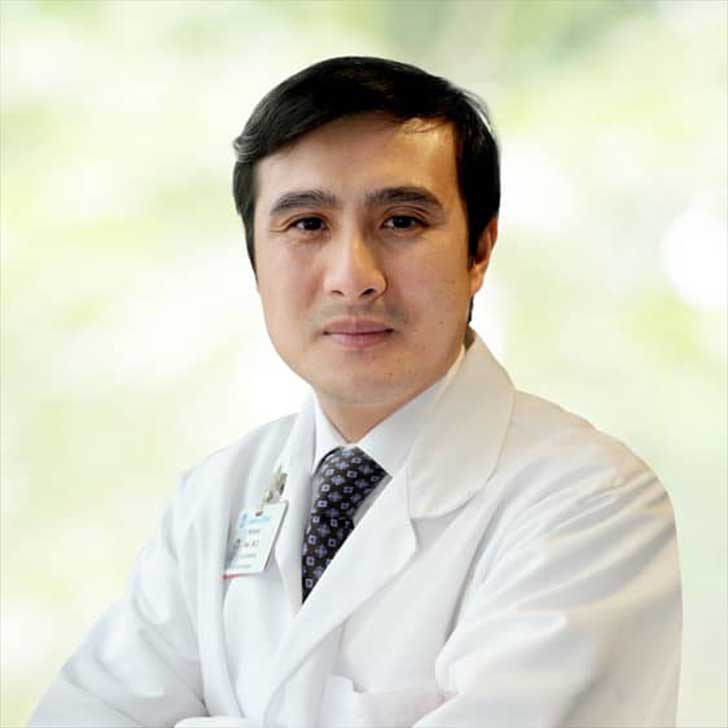
Full Transcript Introduction and Guest Background 0:00 Our healthcare is not designed in a way that we deal with these issues in the beginning but we rather make them flow towards the end of diabetes and that's 0:07 when we start worrying about like bringing the sugars under control rather than preventing them from progression to diabetes. 0:14 This is Doctor Talks. 0:23 Welcome to another episode of Reversing Type 2 Diabetes Summit 2.0. I'm your co-host, Dr. 0:29 Will Hsu, and today I have a wonderful opportunity to speak with Dr Shansi Mardana, an endocrinologist. 0:37 And without further ado, I wanted to jump into this conversation with Doctor MARDANA. 0:43 Can you tell us a little bit about your practice and who you are so that our listeners have an appreciation for your background and the experiences that 0:52 you care. 0:54 Thank you for providing me with this opportunity, Dr. 0:56 Shroo, definitely. 0:57 So my name is Jhansi Maladana. 0:59 I'm a practicing endocrinologist at Wentworth Douglas Hospital. 1:02 We have a robust community practice of endochronology where majority of our population is, of course, type 2 diabetes, the most challenging and critical 1:11 condition right now in the United States. 1:13 And we also take care of other patients with type 1 diabetes and other endoprenological conditions, but a majority our of population, 1:20 is type two diabetes. 1:21 Can I call you Shanshi? 1:22 Would that be okay? 1:24 Yeah. 1:26 And it called me Will as well. 1:28 So Shauncey, you know, being kind of a fellow endocrinologist as you, we all came into this discipline with a certain degree of passion, 1:36 right? 1:36 And maybe you could tell us a little bit about what drew you to the practice of endocannology and specifically to this health condition called diabetes 1:48 that now affects up to 15% of US adults. 1:52 That's a good question. 1:53 And that's always been a passion because my grandfather was practicing traditional medicine before.
Why Diabetes and Endocrinology Matter 2:03 We all grew up eating healthy food, making sure that we follow good lifestyle. 2:08 I have seen that once I transitioned to my med school and then when I started my residency in the States, I noticed that there's lot of population that 2:17 is getting affected mostly because of the lifestyle, And that diabetes, the treatment of diabetes lies mostly on the changes of your lifestyle. 2:27 So I am somebody who likes to maintain a trust relationship with my patient, just like how we used to have family doctors before. 2:36 That trust actually helps heal the diabetes is what I feel. 2:40 and I like the statement in ADA which says that type 2 diabetes remission is possible which is not discussed in majority of cases and i thought i should 2:50 bring that movement forward and that is my goal with this journey of being an endocrinologist practicing diabetes. 2:57 Well, thank you. 2:58 And a lot of people know that, or in some way, there's been a criticism of kind of the Western medicine in the lack of focus in addressing the root cause 3:10 of type two diabetes, right? 3:11 So do you think that's fair? 3:13 I think the The accusation really came from the angle that we as physicians, we just give medicines. 3:19 We don't talk about how do you reverse, how you treat underlying root cause. 3:24 Is it a fair statement from a practitioner such as yourself? 3:29 So honestly, when I was doing my fellowship, the first thing that my mentor addressed to any of his patients, even his type one patients was that he always 3:37 used to ask their occupation and then he went into their personal details. 3:41 And the next thing he said was, Always remember the foundation of treating diabetes is diet and exercise. 3:49 Anything comes after that. 3:51 So that was how I started my training and I truly believe in that and honestly everything comes with some side effects like any medicine that we have. 4:01 Why do we need to take some medication? 4:05 to manage a disease and have the brunt of the side effects and not forgetting the cost of medications that's involved. 4:11 When we can choose something which is more natural to the body, more physiological, and then use that as a tool to cure diabetes. 4:21 Now, one of the root cause, as you said, that arose from maybe inadequate exercise and maybe poor diet was the occurrence of insulin resistance.
Understanding Insulin Resistance 4:33 That's been called kind of that. 4:36 I don't want to be, I think the people say that it's the mother of many of the cardio medical conditions. 4:42 We can also call the father of it, if you will. 4:45 And what is insulin resistance? 4:48 And it has been talked about so much. 4:50 Can you help our listeners to understand what it is and why is it so common? 4:57 So insulin resistance has basically decreased response of your body to insulin. 5:04 So usually whenever we eat any carbs, you need insulin for your to absorb. 5:10 And the major organs in the body that absorb insulin is your liver. 5:14 and your fat, which are mostly dependent on insulin to absorb the blood sugars. 5:19 Those are the storage organs, right? 5:21 But it could be genetic or lifestyle, but if we have visceral fat mass which is deposition of fat around the liver, what happens is that the sensitivity 5:32 or the response to insulin decreases so much. 5:37 So in general terms, fat is the most influent resistant organ in your body, let's say. 5:44 and you have the same fat wrapping up around your liver, what happens is your lever, which was before sensitive, now it is more resistant to the similar insulin. 5:56 So the way I explain it to my patients is, let's say you needed two units of insulin to absorb one slice of toast before. 6:03 When you had resistance, you would require 15 units, maybe let say, to observe the amount of sugar by your level. 6:12 because of the fat around the liver. 6:13 So that's what we call as insulin resistance. 6:15 And also now we are seeing it in patients who are so young, like, you know, they have this acanthosis nigricans, which is this line around your neck that 6:22 you see in some of our female patients, who were slightly overweight or obese, if I would call them. 6:29 Yeah, so those so the decreased response is the driving factor for the burden on your pancreas, Which burns out at some point, 6:38 and then you would end up requiring insulin. 6:41 and the sugar starts floating in your blood and you'll see all these microvascular complications like heart attacks, stroke, 6:47 amputations. 6:49 So the goal for us with the diabetes would be to cut back on insulin resistance and our dependence on insulins. 6:57 It sounds like a terrible causes for many of the conditions. 7:02 Would you say that one may see instant resistance even before glucose start rising or only occurs after glucose starts rising? 7:11 No, we can see it before. 7:13 That is why we have this pre-diabetes and diabetes. 7:15 So the first thing to form is to start with is insulin resistance. 7:20 And then you progress to pre diabetes and then your progress diabetes where you see the sugars are already floating in your blood. 7:26 When we check your, blood we noticed that your A1c is higher than 6.4% or your fasting sugars and more than 126 or you're two hours are greater than 200. 7:36 and that's when we call it diabetes, but like you said, You know that it is a progress. 7:43 How do our listeners find out if they have insulin resistance? 7:47 What are the signs? 7:48 Are there symptoms? 7:49 Or are there blood tests? 7:58 Like I said, weight gain, obesity, especially the studies that have been done so far have shown that abdominal obesity is, 8:08 people who have abdominal, are much more prone to have diabetes in the future than patients who will have their obesity centered in their,
Signs, Testing, and Early Detection 8:16 around their hips and thighs. 8:18 So that's a first sign. 8:19 If you're accumulating your fat mass and there's an increase in your waist size, that the first time that you might be. 8:25 So let's go there a little bit. 8:27 Is it just a measurement of your waist? 8:29 Are there some other tools to know that there's fat inside your body? 8:36 Yeah, the visceral fat mass, which is like body mass analysis, where you have visual fat and there is a separate component called lean body. 8:44 So yes, definitely yes. 8:46 We have this component. 8:48 And so just to clarify for our audience, many of the middle-aged men have what we call love handle. 8:55 Are those visceral fats, are they related to insulin resistance or that's a separate compartment? 9:00 That's separate compartments. 9:01 Visceral fat is mostly about the position of fat around your liver, like I said, which decreases your response to insuline, 9:09 leading to high blood sugars, the sugars floating in your blood. 9:13 Mm-hmm. 9:14 I see. 9:14 But it doesn't seem to be routinely talked about or routinely assessed, right? 9:19 That component of that. 9:20 And I know, for example, there are CT scans and ultrasound that can look into that, but it's not a routine clinical test. 9:28 Correct. 9:28 That is never considered to a screening tool, unlike what we have for cancers and all. 9:33 Yes, true. 9:35 So we should breathe a sigh of relief that it is not the love handle that's giving us resistance. 9:40 Yes, but we don't want them to either. 9:44 But yes, yes. 9:45 Okay. 9:46 Fantastic. 9:47 And so now the relevant part, right? 9:50 The most relevant parts our listeners are going to have is what then can we do? 9:55 If there is more fat in the trunk rather than in their hips, if they're overweight and their BMI is elevated, they know they probably have insulin resistance. 10:06 What can do about that? 10:08 Again, we're going back to the foundation of trying to help them with their diet and their exercise before they progress to diabetes. 10:16 But unfortunately, our healthcare is not designed in a way that we deal with these issues in the beginning, but we'd rather make them float towards the 10:24 end of diabetes, and that's when we start worrying about bringing the sugars under control rather than preventing them from progression to diabetics. 10:34 And so as a clinician that are working the trenches every day, what do you tell your patients when you notice that they have central obesity? 10:42 What are some of the treatment you will recommend to your patient? 10:47 So that's a good question. 10:48 So first of all, we need to understand the social barriers as well. 10:52 Because some patients, when I bring up about diet, let's say, and we want to talk about diet in detail, we would get some sort of a resistance because
Lifestyle Treatment: Diet and Exercise 11:04 of the socioeconomic status sometimes. 11:06 But then I always offer them a visit with our nutritionist because I feel like nutrition is a big part of playing a major role because You could always 11:16 have the option of choosing good versus bad, right? 11:20 So my first counseling with them would be a little explanation of what insulin resistance is and how the insulin resistances would affect them in the future 11:28 because they might not have knowledge of how that would effect them the in future. 11:32 And then what are the ways we decrease insulin resistant in first place before progress as to diabetes. 11:38 and the foundation diet and exercise and how they can inculcate that into their daily lifestyle without having to pay more or like without you know sometimes 11:50 they don't understand that it is possible so we need to give them that hope and options that they could include in their lifestyle. 11:59 So let's go there. 12:00 Exercise, right? 12:01 Let's talk about that. 12:02 What kind of exercise are helpful? 12:05 Is it one type? 12:07 What do you recommend in terms of the intensity or the types of exercises for your patients with insulin resistance? 12:14 Moderate intensity for 45 minutes, at least five days a week. 12:20 And what does that look like, moderate intensity? 12:23 Does it involve running? 12:24 does it involves weightlifting? 12:26 There's been a lot of discussion around that, right? 12:29 Is it more aerobic that's more important or is it the stress resistance exercise? 12:35 I would feel that stress-resistance is much more with the time that they have. 12:40 to help with visual fat mass than aerobics. 12:43 But honestly, whatever they could, let's say they have only some time for them, then I would say if walking is the only thing they would do, 12:51 that I will just say, just start with that and then progress. 12:55 Yeah. 12:56 Strength training, I feel like is much, much more important to reduce this. 13:01 That's a very pragmatic approach, right? 13:03 Yeah, we could debate about what's most optimal, but the reality is just get started, so that's very important point there. 13:11 And you mentioned 45 minutes, is that in one sitting or is it in multiple sitting? 13:19 What is pragmatic? 13:21 Whenever they can. 13:22 So I say that some of my patients, while they're at work, Sometimes when they have some time at work where they're working on the laptops, 13:31 they use the resistance bands for the legs so that they could just do the rest of the exercises. 13:35 So somehow they can incorporate to combine to a 45 minute. 13:40 But if they would do at least 20 minutes at a stretch, that's good. 13:45 And just just a quick poll here of your patients. 13:48 How many percentage of patients actually you think are actually following these advice, these exercise advice? 13:56 To be honest, in general, maybe 20%, I would say. 14:01 And why is this so difficult, you think? 14:03 Because everybody knows these knowledge, right? 14:05 So how do you actually motivate your patients to do this? 14:11 Everybody knows diet and exercise is just the everyday implementation that's challenging. 14:17 With your experience, what are some of the tips and what is some the insight you have to motivate Fortunately, we have a health coach program in our practice 14:31 where the patient sets goals for themselves and the health course makes them drive them. 14:36 So let's say the patients say, okay, from now on, I'll invest 15 minutes of my time into exercise. 14:42 The health coach follows them in a week and asks them, like, how did you do with your goals? 14:47 Some patients like it because they feel they're more accountable. 14:50 And we'll schedule frequent visits with the patients, which sometimes is not possible always, but we try to stay in touch with them frequently. 14:58 And number three would be, I don't know if this is a good thing, but sometimes we discuss about the bad complications that they would see at the end of
Motivation, Accountability, and Coaching 15:05 the day. 15:06 So it's sort of, the negative motivation, saying that, hey, we are not doing this for ourselves at this point. 15:15 This is what we're looking at in the future. 15:17 Do you want to be dependent on someone because you have amputations and all of that? 15:21 So it's both a push and a pull, right? 15:25 So you wanted to draw them to good things, but at the same time, you want to push them, nudge them a little bit towards those lifestyle modifications. 15:33 Okay, now let's move on to even a bigger topic of diet. 15:37 There are just so many controversies, so different types, and so difficult to do it on a daily basis. 15:47 What are some of your general big takeaways after seeing so much patients? 15:54 What do you advise to your patients. 15:56 So honestly, most of the patients do well when it's more regimented than me discussing saying, hey, you have to swap these things with this, 16:04 You have stop doing this. 16:06 Instead, they feel like having a regiment routine or following something actually helps them lose their weight more or follow something like, 16:14 for example, weight watchers, some patients to it. 16:18 because they feel like they're more accountable. 16:19 And some of my patients, they want to meet up with the nutritionist because some patients like skipping things. 16:26 Let's say they have soda in their diet for the next three months before I see them. 16:29 That's their goal, skipping thing. 16:32 Some patients come with some fad diets that sometimes I don't even have a clue about. 16:37 So we basically discuss options of what would suit their lifestyle. 16:41 some patient's like intermittent fasting and then eat whatever they wanted to eat. 16:47 during the break, fast break. 16:50 Some patients like ketosis, some patients don't like keto, so it's a myriad of options right in front of them. 16:56 But I think I feel like it has to be tailored, supervised, and sustainable in the long run. 17:04 So you think that medical supervision is actually important. 17:08 Why is that? 17:09 Because when you follow a diet and then you lose your electrolytes sometimes, right? 17:14 Sometimes you might have low blood sugars. 17:17 So somebody supervising you to assess because all of this is medical, right, you do something and then you have no blood sugar or condition requiring you 17:26 To have your visits or admissions to the hospital is dangerous sometimes that low sodium, let's say. 17:33 So you take away this that you should always discuss with your healthcare provider before jumping on certain type of diet.
Intermittent Fasting and Diet Strategies 17:41 Now I was really caught up by you mentioning intermittent fasting. 17:44 That is actually the latest survey that talked about, this is one of the most common eating habits of Americans right now. 17:52 More than 10% of American's are doing some sort of fasting for their health. 17:57 What's been your experience with that? 18:00 Like I said, it is very good. 18:01 People follow that for a certain amount of time, but they feel that it's not sustainable long term. 18:08 But otherwise intermittent fasting is great. 18:11 It has been shown that the results are good, we lose weight on that and the insulin resistance comes down. 18:19 At the end of the day, how sustainable it has for you to follow for lifelong routine. 18:26 Now prior to this interview, you were mentioning one of your patients is on a specific type of fasted mimicking diet. 18:35 Can you tell us a little bit about that experience? 18:38 So this fast mimicing diet, honestly, I came to know about it from a patient of mine. 18:45 wanted to do that and he wanted my help because it is a medically supervised diet. 18:51 So I got to learn more about it after meeting some of the experts in the field and learning more. 18:57 And I felt that maybe this is the one that might help my patients. 19:01 One of my She also has fatty liver disease, right? 19:09 And she was poorly motivated at that time to maintain her blood sugars. 19:13 Her A1c was around 8.3% when I saw her. 19:18 And, she's already on metformin and GLP-1 agonists, which are the treatment right now, the GLPs, but she is not motivated. 19:27 And she doesn't want to be on the medications because of the side effects. 19:30 She has bad nausea and vomiting, but she's tolerating them because off the hope that that might help her blood sugars. 19:36 So I thought she might be the candidate and we discussed about this fast mimicking diet, how your body when you're fasting for five days would push her, 19:46 push it into a shock. 19:48 That would help reduce insulin resistance and the benefits of reducing your weight, your blood sugars and coming off of medications. 19:58 the goal of diabetes remission, right? 20:01 So she was very interested and she started the diet. 20:05 It's a five-day diet, so five days for a month, for six months, and then the maintenance phase is five these for every three months for the next six month. 20:13 And she can choose to do it for rest of her life. 20:16 The catch for her is, oh, it's just five day in a out of it, and also she gets help from a dietician whenever she has any questions. 20:28 So she started it and thankfully I just saw her yesterday. 20:33 She finished four cycles of that. 20:35 she's off of all her diabetes medications.
Fast-Mimicking Diet and Diabetes Remission 20:38 All of the diabetes medicine, wow. 20:40 Four cycles, that's five days for four bottles. 20:44 That's 20 days of effort there. 20:46 Yes. 20:47 And she lost 26 pounds. 20:50 and heroin C is 6.2% now. 20:53 So with four cycles, it came down 8.3% to 6,2%. And we are still waiting on her liver numbers. 21:00 She's following with her hepatologist next month, but I'm hopeful that's going to get better as well. 21:05 And the more than this, what I liked about this is her husband who does not have diabetes and is not following this diet also lost 15 pounds because of 21:17 the way she changed her lifestyle. 21:19 I see. 21:21 That's amazing. 21:22 The way that she got motivated and even her Husband who was with also got motivated and lost 15 pounds. 21:30 That's collateral benefits, right? 21:32 In the family. 21:32 It's fantastic. 21:34 Yeah. 21:35 So, this Fasting Libre Can diet program, I think you mentioned earlier, it's one of these innovative approach to diabetes remission, 21:44 but maybe the concept of diabetes is remissing is still a new one for our audience. 21:48 Can you speak to that a little bit? 21:51 So the ADA guidelines mentioned that if your A1c is less than 6.4% for more than three months and you're off of any diabetes medications, 21:59 then we can safely call you to be in diabetes remission. 22:03 Honestly, I never knew about it throughout my first year of fellowship. 22:09 And I got to know about when I was working on this project of where the bariatric surgeon who does the sleeve gastrectomy is looking into diabetes transmission. 22:21 What is diabetes remission? 22:23 I'm like, oh, it isn't the ADA first page of ADA if you go into that. 22:28 So it is possible and you don't have to have surgery and having options like this where you do not have go through surgery. 22:35 And being free of medications and not having diabetes is it's a mirror. 22:42 Yeah. 22:42 That is really news that many of our listeners have not heard before. 22:47 I think the program, it's called L-Nutra Health, or LNUTRA Health is the name, and you could go to l-nutrahealth.com. 22:58 Again, L dash nutra, that's N-U-T-R-A health dot com. 23:03 Dr. 23:04 Maradona, thank you so much for just giving us a really a in-depth look at insulin resistance, what it is and how to treat it. 23:11 And you ended up discussing this case, patient case that you have. 23:16 Anything else, maybe your conclusion for our patients or our audience looking to combat insulin resistant? 23:25 Is there a short last minute kind of summary that can give to them? 23:31 What would you say to that? 23:33 Start working now. 23:35 Do not delay.
Closing Advice and Episode Wrap-Up 23:38 So don't wait. 23:39 Don't. 23:40 It is now or never. 23:41 Yeah, do it. 23:44 Dr. 23:45 Maridona, thank you so much for this wonderful interview. 23:48 I hope to see you again. 23:49 Thank you, Dr. 23:50 Shro. 23:51 It was a pleasure. 23:52 Thank You for tuning into Dr Talks. 23:55 We hope today's episode has enlightened and inspired you on your path to optimal health. 24:00 Each day is a new opportunity to make choices that empower your well-being. 24:04 For more insights and strategies, subscribe to our podcast and visit our website, www.DrTalks .com. 24:13 Stay connected, stay healthy, and join us next time on Doctor Talks. 24:18 Real talks from real doctors on the issues that matter to you most.

Comments