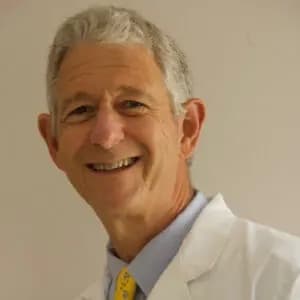
Full Transcript Introduction and Sponsor Message 0:08 Welcome to the Art of Medicine, the program that explores the arts, business, and clinical aspects of the practice of medicine. 0:15 I'm your host, Dr. 0:17 Andrew Wilner. 0:18 I've planned a great program for today, but first, a word from our sponsor, locumstory.com. 0:24 Locumstory.com is a free, unbiased educational resource about locum tenants. 0:30 It's not an agency. 0:32 LocumStory answers your questions on their website, podcast, webinars, videos. 0:37 and they even have a Locums 101 crash course. 0:41 Learn about Locums and get insights from real-life physicians, PAs and NPs at locumstory.com. 0:49 And now to my guest. 0:51 Today, I have the pleasure of speaking with Dr. 0:54 Edward Condrot. 0:55 Dr. 0:56 Condrot is a homeopathic ophthalmologist who devotes his practice to traditional and alternative therapies for the treatment of eye disease. 1:05 He is the author of five bestselling books and now has an active sub-stack question and answer program. 1:13 I'll just mention for those interested in ophthalmology, please check out episode number 124 with Dr. 1:19 Daniel Labbe, a sports vision specialist. 1:23 And now to our guest, welcome Dr. 1:25 Condrite. 1:27 Well, it's a real pleasure to meet you, Dr. 1:30 Wilner, and happy to be a guest on your show. 1:34 Yeah, thanks for joining me. 1:35 And I know we're having some internet issues, but we're going to push through it and see if we can get to the end, OK? 1:43 So why don't we start with why eye disease? 1:46 How did that happen? 1:48 Well, I wasn't smart enough to become a neurologist, so I had to look at something else. 1:54 My goodness, you really have to have a brilliant mind to go into neurology.
Dr. Condrot's Ophthalmology Practice 1:58 But to answer your question, when I was in medical school, I loved all the rotations that I did. 2:04 I like psychiatry, I like pediatrics, I like surgery, internal medicine. 2:11 I discovered that ophthalmology would enable me to kind of combine all those specialties into one. 2:18 There's three aspects to my practice. 2:21 One is the, the part that I have my most passion is my mission work. 2:26 But unfortunately I don't get paid when I do my mission work. 2:29 So I had to look for the source of income to support my mission. 2:33 And that's when I started doing locum, locum tenums, which I love. 2:37 I did some work for a company where I did disability exams for the VA, that disability eye exam, which I love. 2:46 And I'm doing some local work with Kaiser Permanente here in California, which I really enjoy because you kind of put the hours in and you work whenever 2:58 you're able to. 3:00 And then the third wing of my practice is my private consulting work. 3:04 I have a passion. 3:05 for helping people that are going blind. 3:08 So when the eye doctor tells you, I'm sorry, there's nothing else we can do, get your affairs in order, that's when they usually find out about me. 3:17 And then they begin exploring homeopathy and alternative treatments. 3:21 And I think it's so important that a patient never gives up hope. 3:27 There's always something that you can do. 3:30 And so that's my passion is, helping people who are going blind to actually restoring their vision and getting them back to a level where they can function. 3:44 Now, just to clarify, you mentioned California, but I remember something about Florida on your website. 3:51 Where are you physically located? 3:53 Well, at one time we had an active practice in Florida. 3:55 That's where people would go to my practice and stay for three to four days. 4:00 Then when COVID hit, We kind of changed the whole method of my practice, and that's when we developed the home program. 4:09 And now with technology, with Zoom, communication, our home program, I kind of, I'm a consultant with the patient. 4:19 I kind of advise them on alternative treatments. 4:23 And then I get a feedback from their eye doctor when they go back for their periodic eye exams so we can know exactly if we're having an improvement. 4:33 and then either continue or we'll make some adjustments to help them continue to have a movement in a positive direction. 4:45 That's great. 4:46 As an ophthalmologist, I think I practice more psychiatry than I do actual physical medicine. 4:52 And one of the greatest fears is going blind. 4:55 And a lot of it is giving people hope and reassuring that there's alternatives to save their sight. 5:02 So I love ophthalmology. 5:04 It's been a real passion of mine. 5:07 You know, I was very interested in neuroophthalmology. 5:11 And whenever I examine a patient, I always look at the eyes. 5:15 I've diagnosed hundreds of cases of latent strabismus.
Discovering Homeopathy Through Personal Illness 5:20 Because the first thing I notice, if there's not conjugate vision, then that's a tip off that it might be a neurologic problem. 5:29 Oftenly, it's just something that the person's had for a long time, but we have to get that sorted out. 5:36 So yeah, the eye is, well, the window to the soul and also to the brain, among other things. 5:45 I'm quite interested in eye issues. 5:48 So you did medical school, you did a residency in ophthalmology, and then somehow you got interested in homeopathy. 5:57 I saw you have a diploma in homeopathy. 5:59 Now that's not the usual track. 6:01 So tell us about that. 6:03 Well, when I went into practice, I thought there wasn't one eye problem that I couldn't cure with surgery. 6:10 I was a very good surgeon. 6:13 And I developed severe adult onset asthma. 6:18 And because of three medications that I was taking, one of the side effects was a bad tremor. 6:24 And you can't be a good surgeon with a tremor. 6:26 And I had to take Inderol, which is a beta blocker to calm my nerves, but it made my asthma worse. 6:31 That was my life. 6:33 I was miserable. 6:34 And I said, there has to be a cure for this. 6:37 I mean, I was an athlete. 6:39 I was doing marathons. 6:41 I had healthy lungs prior to the asthma. 6:44 And so I began to look at alternative solutions. 6:49 And I thought, well, maybe homeopathy could help me. 6:51 And I know it wasn't a placebo effect because the first homeopathic remedy I took didn't do a thing. 6:57 Second remedy maybe helped a little bit. 6:59 But the third remedy, it was like somebody turned on a light switch. 7:04 My asthma went away. 7:06 mentally and emotionally I changed. 7:08 I became a little calmer, more open-minded. 7:11 So I began to really look at homeopathy, and I said, why didn't they teach us this in medical school? 7:16 Interestingly, I went to Hahnemann Medical College, which at one time was the top homeopathic college in the United States. 7:24 But of course, I didn't learn any homeopathy then. 7:27 So I discovered that there were many ophthalmologists in the 1800s and early 1900s who combined homeopathy and ophthalmology. 7:37 And so that became really a passion of mine is studying some of the old textbooks. 7:45 And that led to me getting a degree in homeopathy. 7:47 And my goal was, let me use this modality to help my patients, especially when I would see an individual that I really didn't have a solution. 7:56 You know, macular degeneration, end-stage glaucoma, optic neuritis, maybe homeopathy could help. 8:05 And there was a case after case in the old homeopathic literature using homeopathic remedies to treat these conditions. 8:16 This is really fascinating because just for our viewers, homeopathy is not taught in medical school. 8:22 It's considered to be not science-based. 8:26 Is that fair? 8:29 Yeah. 8:30 When I was in medical school, we would joke about a dosage. 8:34 If it wasn't effective, we'd say, well, that's a homeopathic dosage. 8:38 In other words, too small to have any effect. 8:42 Right, so this is very, it's a little unusual for a traditionally trained physician to branch out into homeopathy. 8:49 But I'm very sympathetic, you know, my, when patients come to me with, oh, can I try this vitamin or this or that, as long as it's not harmful, 8:56 it's like, well, you know, whatever works, if it works, okay. 9:00 You know, don't spend a fortune on it for the next 10 years if it's not working. 9:04 But I'm very open-minded in terms of helping my patients. 9:08 If they find something that works, And it's not in my book. 9:12 That's OK, you know, if you see results. 9:14 So you've been doing this for a long time. 9:16 So you must have seen positive results. 9:18 Amazing. 9:19 Amazing. 9:20 One of the first patients I treated was a medical doctor who had a stroke in his left eye and a central retinal artery occlusion.
How Homeopathy Is Applied in Eye Care 9:29 It was blind as a bat. 9:32 And he came to me. 9:33 He was Indian in India. 9:35 Homeopathy is really popular. 9:36 He came to me for treatment and I told him, you know, I was taught that homeopath, nothing can help a central retinal artery occlusion. 9:44 It's a stroke in the eye. 9:46 And so I took his case and prescribed a remedy and told him to get back to me and let me know. 9:53 And it reversed his vision. 9:55 He brought back to me. 9:55 So he recovered. 9:57 Recovered. 9:58 That's like a case report. 10:01 Yeah. 10:01 Well, I did publish it in the homeopathic literature, but the traditional ophthalmology literature, they wouldn't even look at it. 10:08 Interesting. 10:10 And so I have hundreds of cases like that, miracle cures, if you will. 10:17 Now the only problem with homeopathy, which I think is really interesting, homeopathy doesn't treat the disease, it treats the person with the disease. 10:26 And we're always looking for a causative factor, some event, whether it's mental, emotional, which might have triggered that disease. 10:37 Now with this Indian guy, talking to him, he told me he loves to argue. 10:45 And he said, he even even if he knows he's wrong, because just where the person down to, he admits that he's right, you know. 10:56 And then so I was asking him, well, what was going on? 11:00 Right around the time he lost the vision and left I and he told me he lost an argument to his wife. 11:06 Now, A traditional ophthalmologist would say that has nothing to do with you losing your vision, but to a homeopathic doctor is like, 11:15 you know, my antennas go up. 11:18 That was the case. 11:20 So we look at homeopathic remedies that have that particular aspect. 11:25 The other thing about homeopathy, if you begin to study it, it is an exact science. 11:31 our homeopathic remedies that we use have been proven more extensively than any pharmaceutical drug, any pharmaceutical drug. 11:41 So every homeopathic remedy that we take has a wide variety of effects, mental, emotional, physical. 11:50 And so that's essentially what we do. 11:53 It's kind of like a combination of medicine and psychiatry. 11:57 We're looking at the mental and emotional component related to the disease. 12:04 And then we prescribe a remedy. 12:06 So, you know, I tell my patients, you know, I wear two hats. 12:08 I'm a board certified ophthalmologist. 12:10 I do surgery, but I'm also that homeopathic doctor. 12:16 And I want what's best for the patient. 12:19 And many times, you know, ophthalmologists rush into surgery or they're using toxic petrochemical eye drops, which may cause more side effects. 12:31 So I believe there has to be a balance. 12:33 And in most cases, I like the homeopathic approach first. 12:37 Let's try to find out what is the underlying disturbance and take care of that. 12:45 And I think we're gonna make that particular person a more healthy individual than just addressing, oh, you have a cataract, 12:53 let's operate on you. 12:55 So would the treatment for cataracts, for example, be different for each individual, depending on their individual circumstances, 13:05 or is there just, you know, treatment A that you pull out, you've got a cataract, you get treatment A? 13:10 No. 13:11 How does that work? 13:12 That's the traditional medical model. 13:14 You know, you have blood pressure, high blood pressure, you take Losartan, you start off with that, or you have a tremor, 13:22 you know. 13:23 Homeopathy, we treat the person. 13:25 So if I treat 100 people with cataracts, each one may need a different homeopathic remedy. 13:32 So you look at the individual. 13:34 When did you begin to have problems with your vision? 13:37 What was going on in your life? 13:39 How is your vision limiting you? 13:42 What is it you can't do? 13:45 And it becomes very, very fascinating because you're treating the person, not so much the the disease state or the cataract. 13:56 And that's one of the big problems I have with ophthalmology now is that, you know, somebody comes in, they diagnose cataracts and time to do surgery and 14:05 the patient is not really having any vision problem. 14:09 You know, why operate? 14:10 God gave you a good functioning lens. 14:13 Why remove it if you're not having any difficulty? 14:16 Now it's much different If your cataract is advanced and you're not able to function and you're limited in your activities, 14:23 then I'm all for having surgery. 14:27 But unfortunately, you mentioned earlier that you have early cataracts. 14:31 Well, everybody after the age of 50 starts to get early cataracts. 14:35 Part of the age you're from. 14:36 I think the stressor in my case, they told me it's old age. 14:41 So, you know, that's hard to avoid, you know. 14:44 Hey, no, you have to embrace old age. 14:47 know, the wisdom. 14:48 Samuel Hahnemann, the most famous homeopath, did his best work at age 83. 83, okay. 14:53 Well, I got a long way before then. 14:57 I'm 75, so I have eight more years to go. 15:02 You've got a lot to look forward to. 15:04 Okay, stay tuned. 15:07 Hopefully we'll still be doing episodes in the future. 15:12 Yeah, so every time I go to the eye doctor, they tell me, well, you've got early cataracts. 15:18 As far as I can tell, they don't bother me. 15:21 But at some point, I guess they will. 15:23 Is there anything I can do in the meantime to kind of slow that aging process down? 15:29 I think there's no question that cataracts are related to nutritional deficiencies or toxins in our environment. 15:38 You know, I do a lot of mission work and when I go to Africa, I see young people, 20s and 30s with cataracts so advanced they're blind. 15:47 And it's clearly related to nutrition. 15:50 I think in particular, vitamin C deficiency. 15:57 There was a book written by Dr. 15:59 Levy on vitamin C, and he feels that there's an epidemic now of focal scurvy. 16:06 You know, you don't hear about scurvy in the US, and the reason for that is, my goodness, they put vitamin C in fruit loop cereal, 16:14 so nobody's completely deficient. 16:17 But when we're under stress, we certainly need more vitamin C. 16:21 And as humans, we're not able to produce any vitamin C. 16:25 We have to take it as a supplement or adjunct with our food. 16:29 So I think vitamin C deficiency is part of it, and also heavy metal toxicity, all the contaminants in our food, poor water. 16:41 The old doctors in the 1800s felt there were three causes for cataracts.
Cataracts, Nutrition, and Aging 16:48 hard water, too much salt and too much sugar. 16:54 And so if you think about it, our food is heavily salted, we're over consuming sugar and our water supplies are contaminated. 17:03 So they're contributing factors right there. 17:06 So I believe I tell my patients, I think food is our best medicine. 17:13 I believe what Thomas Edison said, the doctor of the future would, not prescribe any medication, but instead advise the patient on diet and nutrition. 17:21 And unfortunately, very few doctors talk to their patients about diet and nutrition. 17:26 I think that's part of the biggest causes of the poor health in the US is that our poor diet and nutrition. 17:37 We did do a program that you're following up on actually about with a functional nutritionist who talks to people about their diet. 17:45 People have, you know, cramping or unexplained GI symptoms. 17:49 They go to lots of doctors. 17:50 They still have the problem. 17:51 And she meets with them and they try elimination diets and they try. 17:56 They do a lot of fancy testing that conventional doctors don't do. 18:00 It was a very interesting program. 18:03 But I keep it simple for my patients. 18:06 If it has a label on it, don't eat it. 18:10 Right, we talked about ultra-processed food, and what does that even mean? 18:14 And she said, well, processed food is anything that has a package. 18:18 If it comes in a package, if you can't grow it or pick it, it's processed. 18:24 And you don't have to avoid all of it, according to her. 18:27 But the more you can avoid, the better. 18:31 Now back to your patient, his story, I do lose a lot of arguments with my wife. 18:39 So do you think that could be a contributor? 18:41 That could be a contributor, yeah. 18:44 No, I'll tell you the biggest factor, I believe our body has the wisdom and symptoms are developed based on homeopathic philosophy to protect the body. 18:56 Like for example, you get a cold, you have an elevated fever. 19:01 That elevated fever is to protect your body. 19:04 For some reason, you have to increase your metabolism, maybe to fight the virus. 19:08 Now, the traditional doctor treats with opposites. 19:12 You have a fever, let's lower the temperature. 19:16 Interestingly, what does the homeopathic doctor do? 19:18 Well, if the body has an intelligence, let's give you something which causes a fever. 19:23 Now, you may think, hey, Dr. 19:25 Chandra, that's crazy. 19:27 You're going to kill the patient. 19:29 But actually, if the body has a wisdom and it's trying to do something, give the body a medicine to help what it's trying to do. 19:37 So in homeopathy, we actually give a medication which causes a fever in a healthy individual. 19:44 Now, when I was cured of my asthma, I was given a homeopathic remedy which actually causes asthma. 19:52 That's fascinating. 19:53 I do remember reading about that. 19:55 It's the law of similars, like treats like. 19:59 COVID changed my whole practice. 20:02 Before people would come to my office and stay for three to four days and I would treat them and try different treatments. 20:10 Now we have a home program where I would do a Zoom consultation. 20:15 I'd review your eye records. 20:17 to see what's really going on in your eye. 20:20 And I do a homeopathic intake. 20:21 I talk to you about, you know, when your vision problem started, how is it limiting you? 20:29 What other physical problems do you have? 20:31 Well, you know, your stage in life. 20:33 But to back up, I think one of the biggest reasons why people get vision problems, they're afraid of aging. 20:41 So if the body has a wisdom, it makes sense that when you look in the mirror and you have cataracts, you don't look as old as you do. 20:51 So it's a filter for the wrinkles. 20:54 Yeah. 20:54 So I'm, I'm, I'm 75. And sometimes I look in the mirror and I go, who is this old guy? 21:00 That's not me. 21:02 And maybe the body will protect by me developing macular degeneration or cataract. 21:07 So I look in the mirror and I go, Hey, you're still looking good guys. 21:12 Well, Dr. 21:13 Conrad, I want to thank you for joining me on the art of medicine. 21:18 Thank you. 21:19 And now a final thanks to our sponsor, locumstory.com. 21:23 Locumstory.com is a free, unbiased educational resource about locum tenants. 21:29 It's not an agency. 21:31 LocumStory exists to answer your questions about the how-tos of locums on their website, podcast, webinars, and videos.
Closing Remarks and Sponsor Outro 21:41 They even have a Locums 101 Crash Course. 21:44 At locumstory.com, you can discover if locum tenants make sense for you and your career goals. 21:52 What makes locumstory.com unique is that it's a peer-to-peer platform with real physicians sharing their experiences and stories, 22:01 both the good and bad, about working locum tenants, hence the name locum story. 22:08 locumstory.com is a self-service tool that you can explore at your own pace with no pressure or obligation. 22:17 It's completely free. 22:19 Thanks again to locumstory.com for sponsoring this episode of the Art of Medicine. 22:27 I'm Dr. 22:28 Andrew Wilner. 22:29 See you next time. 22:35 This program is hosted, edited, and produced by Andrew Wilner MD, FACPFAAN. 22:42 Guests receive no financial compensation for their appearance on The Art of Medicine. 22:48 Andrew Wilner MD is a professor of neurology at the University of Tennessee Health Science Center in Memphis, Tennessee. 22:56 Views, thoughts, and opinions expressed on this program belong solely to Dr. 23:01 Wilner and his guests and not necessarily to their employers, organizations, other group, or individual. 23:09 While this program intends to be informative, it is meant for entertainment purposes only. 23:15 The art of medicine does not offer professional, financial, legal, or medical advice. 23:22 Dr. 23:22 Wilner and his guests assume no responsibility or liability for any damages, financial or otherwise, that arise in connection with consuming this program's content. 23:34 Thanks for watching. 23:35 For more episodes of the Art of Medicine, please follow on YouTube or your favorite podcast player. 23:42 Please share with your friends and subscribe. 23:46 www.andrewwillner.com
Comments