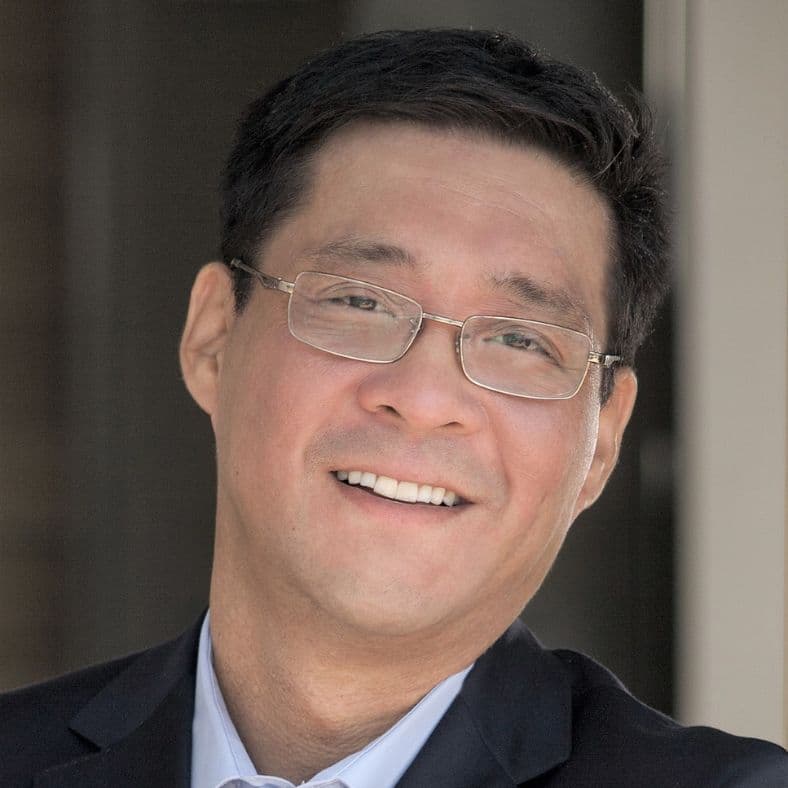
Full Transcript Opening Anecdote and Podcast Introduction 0:00 I said, give me a treatment, which is a, um, which is 25 vials in a box, which I can actually show to the people here. 0:08 Cause I have one here. 0:10 This here is one treatment. 0:14 Now I'm, I hold the box like this and take one vial out. 0:17 This is a vial of medicine right there and there are 25 vials. 0:21 So they gave me a box. 0:23 I went to my mom who lives in Los Angeles and I treated her. 0:27 And three days later, my mother, who was almost babbling incoherently, said she felt like a cloud had lifted out of her head. 0:38 Hey there. 0:39 Welcome to the Recharged Biomedical Podcast. 0:41 I'm Dr. 0:41 Edward Park, and if you're curious about regenerative medicine, you've come to the right place. 0:46 We're diving into the latest breakthroughs in telomeres activation, stem cell exosomes, and all the cutting edge science that's shaping the future of healing 0:53 and longevity. 0:54 Let's get started. 0:57 So welcome to another episode of the Recharged Biomedical Podcast. 1:00 I'm your host, Dr. 1:01 Ed Mark, and today we're very lucky to be joined by Dr. 1:04 William Gale. 1:06 Dr. 1:06 Gale, thank you for joining us. 1:08 Sure. 1:08 I'm glad to be here. 1:09 Thanks for having me. 1:10 So he's got a patient he has to attend to, so he might have to bug out soon. 1:14 But I met Dr. 1:15 Gale when he was giving a lecture. 1:17 One of his many lectures is a key opinion leader for True Binding Corporation. 1:20 And so what they're doing is treating neurodegenerative disease, specifically Alzheimer's mainly, With an antibody called TB true binding zero zero six. 1:31 Can you tell us how you got involved with that? 1:33 Sure. 1:33 It's a pretty interesting story about 2010 I was doing mainly aesthetic dermatology And I started my first meds bond the year 2000, but that was 2010. 1:49 And I saw a conference called stem cells and aesthetic medicine. 1:53 And I thought, wow, this would be great. 1:55 Uh, so I took that course and it allowed me to meet people who were PhD scientists.
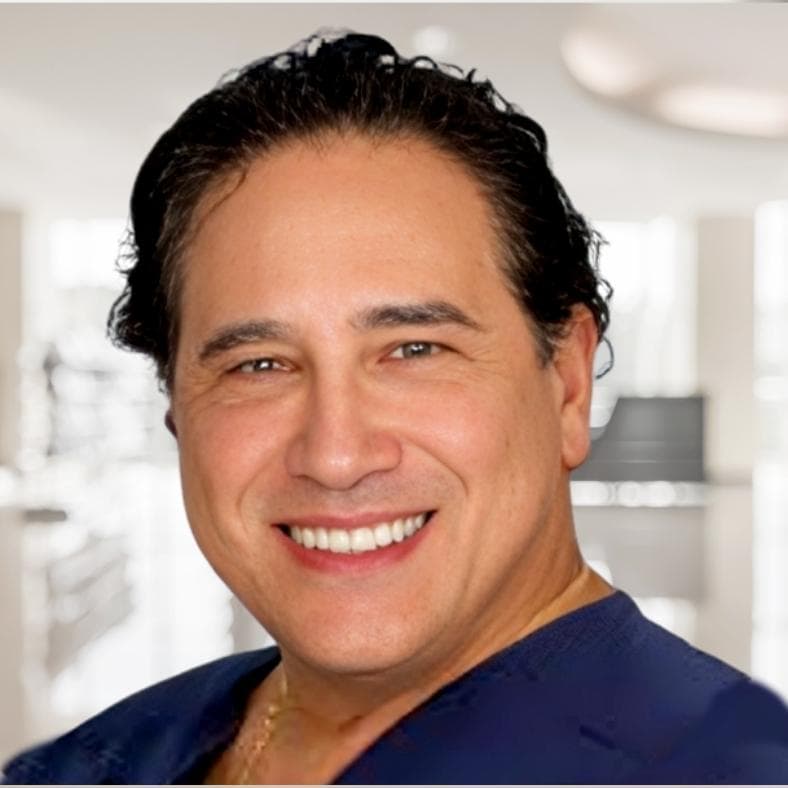
Dr. Gale's Background and TrueBinding Connection 2:01 And I started doing research for a couple of biotech companies using stem cells and actually getting stem cells from people's fat. 2:09 This is like 2012 through 15 and using what we call stromal vascular fraction. 2:15 And during one of the meetings that I had with a group of doctors who were doing research with stem cells, I met a fellow who eventually became the head 2:27 of the expanded access program for true binding. 2:30 Now he and I became friends in about 2015 or somewhere around then, and he found out about true binding and he lives outside of San Jose in a town called 2:42 Los Gatos, California. 2:44 The true binding headquarters is located only about 15, 20 miles from where he lived. 2:52 So he called me and he said, hey, Bill, you need to come to the San Francisco airport. 2:59 I'll pick you up because you have to see the data that this company has on treating dementia with their drug called TB-006. 3:08 Now he knew my father died of Lewy bodies dementia and he knew my mother had dementia. 3:14 So, I was very interested, and I flew to San Francisco. 3:18 He took me to the facility. 3:20 I met the people at TrueBinding, the CEO. 3:23 I met the CFO. 3:24 I met the chief scientist. 3:26 I wanted to make sure that the facility was on the up and up. 3:30 In other words, I don't ever use anything on anyone unless I see the facility. 3:34 I meet the people who work there. 3:36 I wanted to meet the technicians in the lab. 3:39 I even checked out their cafeteria to make sure they treat their employees well. 3:43 And I said, well, everything was brand new. 3:47 The stainless steel equipment was sparkling. 3:49 It looked like you could eat off the floor. 3:51 Everything looks great. 3:53 I had a presentation given to me. 3:55 The data was amazing. 3:56 And I said, well, the proof will be in. 4:00 the actual to use the word putting the proofs in the pudding. 4:03 But I said, give me a treatment, which is a, um, which is 25 vials in a box, which I can actually show to the people here. 4:12 Cause I have one here. 4:14 This here is one treatment. 4:18 Now I'm, I hold the box like this and take one vial out. 4:21 This is a vial of medicine right there and there are 25 vials. 4:25 So they gave me a box. 4:27 I went to my mom who lives in Los Angeles. 4:30 And I treated her and three days later, my mother who was almost babbling incoherently said she felt like a cloud had lifted out of her head. 4:42 And I saw her on the couch using the remote controls and she had forgotten how to use the remote controls to change the TV channels. 4:49 And she was incredibly better. 4:53 I would say a month later I treated her again and she was even better. 4:57 And now my mother is like someone, any normal person that you can have a conversation with. 5:04 So it's really incredible. 5:06 No, I mean, I think that's great that you did it on your own family and now you're prescribing it. 5:11 So let's just back up a little because not everybody knows what we're talking about. 5:16 Let me give a little context here. 5:19 So as far as you correct me anytime I'm wrong, but as far as I know, TB 006 is a humanized antibody against Galactin 3. And what that means is that it's 5:33 got some mouse parts, but it's mainly human. 5:36 So it doesn't react a lot with your immune system. 5:38 So it's a protocol that was developed through the FDA. 5:42 In other words, they did safety testing, some efficacy testing, but it's not FDA approved yet. 5:48 It's in the EA or expanded access. 5:51 Which are the consumer means that they need to pay out of pocket, but it's not like it's FDA unapproved. 5:57 It's in a gray area. 5:59 So what is keeping it from being FDA approved? 6:04 I'll expand slightly on that company completed a phase one. 6:08 Trial which means that the drug is safe. 6:11 Yes. 6:11 Okay, then they started phase two and phase two can be divided into two parts a and B B is really just getting the dosage correct for whatever client like 6:22 if you wanted to use it in a child or but weighs 50 to 100 pounds, it's going to be different than an adult like myself, 6:28 the dosage. 6:29 So they haven't completed phase two, but they did phase two A, which phase two means, does the drug work? 6:35 So we know that the FDA knows that the drug is safe and that it actually works. 6:41 So that's that's your face to a now get the dosage right you finish face to be and then you move on to phase 3 when people ask me what's holding it up. 6:51 The answer is usually about 350 million dollars sharp is it's yeah it takes a lot of money to continue on to phase 3 but. 6:59 What the company has done is applied to the FDA to get approval to use the drug while the study has been halted, while they're raising money to complete
TB-006 Expanded Access and Treatment Protocol 7:09 phase three. 7:10 So for the person out there listening to us, they have a family member that's affected. 7:16 Somehow they have what is it like 20 to 40 thousand dollars to shell out? 7:22 So it's a protocol what like once a month for how many months well, I'm the first Clinician at the expanded access program, 7:30 which is also known as compassionate use so there are people that would like to have access to the medication even though the trial is closed, 7:40 and that's why it's called expanded access to those people. 7:43 So each person has an individual application that has to go to what's called an IRB, institutional review, and to the FDA and approve each individual to 7:57 have access to the drug. 7:58 So it's very much within a data collecting FDA schema still. 8:02 So, it's not like I just write a check and I'm getting my diffusion? 8:05 No, every person has to be applied for individually. 8:09 But now, over the years, you were the first. 8:12 Right, I was the first. 8:13 Now, how many people do you estimate are doctors? 8:15 I hear there's about somewhere around 170. Yeah, it's really expanded over the last two years. 8:21 Yeah, it's really gone up. 8:22 I've been lecturing for true binding for three years now. 8:27 So, over those years, people have seen me lecture, they've learned about it, they want to be a doctor or clinician that participates in the expanded access 8:36 program and then treats clients. 8:37 So, I'm going to tell you exactly what it costs to the patient It's $6,300 per treatment. 8:44 Our initial protocol three years ago was to treat each client once a month for four months in a row, and then we would see how is that client doing. 9:04 In my opinion and my experience and having treated more people than anyone, it depends upon the severity of the dementia when you start so that if your 9:14 dementia is moderate to severe, you're going to need to have more treatments than someone who has mild dementia. 9:22 Now, true binding will tell you that you need a treatment once a month. 9:28 But I have found out that after the first four, I'll give you a very good example. 9:32 I have a patient with Lewy bodies dementia who didn't need a treatment for over a year and a half. 9:37 And then he started to have nightmares come back and a little bit of hallucinating, which comes along with Lewy bodies, along with Parkinson's type syndrome, 9:47 Lewy bodies includes that. 9:49 And he noticed the nightmares coming back. 9:52 So he came back a year and a half later. 9:54 Sure. 9:54 I also have severe dementia on someone who has Alzheimer's, who has had strokes, who had anoxic encephalopathy secondary to emergency surgery. 10:05 He needed, didn't get enough oxygen to his brain. 10:07 So almost three strikes. 10:09 Now he needs a treatment once every month. 10:11 If he goes more than a month, he starts to decline. 10:14 Now my mother, who I talked about, who is between, I'd say moderate to severe, but really close to moderate dementia, she needs a treatment every other 10:23 month to stay where she is. 10:24 So this is not a cure. 10:25 Let me get this straight. 10:26 So let me just dumb it down for the listeners. 10:30 So anecdotally, This is an FDA approved under expanded access. 10:36 So once the patient gets approved, they can actually, if they move, they can have another doctor as long as they're doing the same protocol under the FDA Aegis. 10:44 Absolutely. 10:44 Which happens all the time. 10:45 So in your experience, it's not a cure, but it does in many cases, if not most, improve symptomatology through mechanisms which we'll get into. 10:54 But it is something that is expensive and that last 350 million, I guess the companies that have done the historically failed, 11:03 you know, Alzheimer's drugs, they have no interest in adopting this because it cannibalizes their revenue stream. 11:09 But isn't there anybody that might want to step in and push this over the goal? 11:15 Well, they have been raising money and actually started a Parkinson's trial and an adult autism trial. 11:23 And they're starting to do the trials in other countries. 11:28 So they are raising money. 11:29 I can't tell you being on the outside how much money they've raised, but they are raising. 11:35 Okay. 11:36 So you show us a box of 25 miles. 11:38 So that's like, is it room temperature stable? 11:41 No, we keep it in the refrigerator, and as long as you keep it in the fridge, the box, which I was holding here, is good for a few years. 11:52 Great, great. 11:53 So it's an IV. 11:55 It's an ID or infusion. 11:57 No infusion. 11:57 It goes into, I use a bag of 500 milliliter normal saline. 12:02 And so now people will say, um, you know, that IgG, which I assume it's IgG doesn't really cross the blood brain barrier that well. 12:10 Do you do anything like mannitol or low intensity focused ultrasound or anything? 12:16 Oh, wouldn't that be great? 12:17 It's just not part of the protocol that's been applied to the FDA. 12:22 There, there are people. 12:24 that have the ability to increase the amount of drug through the blood-brain barrier. 12:29 That's not part of the protocol that we are doing right now. 12:33 My colleague Shelly Jordan has been doing that a lot. 12:35 Exactly. 12:37 Well, let's shift gears a little bit. 12:38 You mentioned Parkinson's now, so let me just dumb it down. 12:43 For people that don't know, decades of research and drug development has gone into the idea that Alzheimer's is a disease of the amyloid alpha beta and 12:55 then there's talcangles inside the cells, but if you really kind of ask yourself what caused Alzheimer's?
How the Therapy Works and Clinical Experience 13:03 The answer is we don't know. 13:04 It's probably multifactorial. 13:05 It's not all genetic. 13:07 What we can say for certain is that if you have two mutated ApoE4s, then your inflammatory type tends to give you a higher risk lifetime. 13:17 We know that poor sleep, you know, they taught us in med school that old people don't need sleep. 13:21 That's probably not true. 13:22 During sleep, the glymphatic system rinses away a lot of the trash. 13:26 So, but it's also a vascular disease. 13:28 Like, I don't know if you think that people are conflating or wrong about COVID, but some people have small vessel disease. 13:35 Maybe it's contributing to some vasculopathy and reactivation of COVID immune systems, but it's probably nutritional. 13:43 Now these people are coming out with those mitochondrial theories, so it's a lot of things. 13:47 It's multifactorial, you're absolutely right. 13:50 But you don't have a great animal model. 13:52 They have these kind of mouse models where they knock out the genes involved with pre-amyloid and and what have you and that's how the proof of concept 14:01 was done for TB 001. So we know that basically the premise is that Galactin 3 is this protein you make and it helps to form these tangles which gums up 14:13 the system and activates the microglia or the immune system and it causes this mess. 14:18 So your, your experience as a clinician, as a scientist is that if you can bind up this Galactin three, that's less of a mess and the brain washes out 14:26 and the function is at least better for awhile. 14:29 Is that roughly the case? 14:30 Well, I would say a hundred percent true what you said. 14:34 And I would. 14:35 Say that because it seems that all neurodegenerative disorders improve from this drug that it is one secondary to inflammation and once those microglial 14:45 cells start going back to work and reduce inflammation, which collected three seems to help them. 14:51 I'm sorry, that TB-006, which binds the elected three, seems to help those microglial cells get back to work. 14:58 That seems to be a big part of reducing inflammation, which gives people back their function. 15:04 My mother, in fact, is microcirculatory. 15:07 That's her problem. 15:09 So let's pivot because I was walking by the booth this year at A4M and I saw Sharon's thing, IntelliX DNA. 15:17 Now, I gave him a lecture two years ago. 15:18 I trained them in exosome clinical use. 15:21 And when I talked to her a couple of years ago, she was like, yeah, we've been doing the TV zero to six, but there are some non-responders. 15:27 So I noticed that you've incorporated genomics into it. 15:30 Now explain to us, I know that 6300 includes all the lab testing. 15:35 I don't know if it includes the IntelliX DNA. 15:37 It does not include the intellect's DNA. 15:40 But tell me if you think the premise is correct that some people with variants of Galaxin 3 will be less responsive. 15:47 There's supposedly 5% of the people have a mutated Galactin 3 protein that will not respond to TB-006. 15:59 I personally have not had a non-respondent. 16:03 Okay, so it's not as common as she was thinking. 16:05 Yeah, but I've heard That of all the people treated there were a few non-respondents who tested to be non-respondents. 16:12 So typically the infusion is what like an hour? 16:16 Untoward reactions, can they get fevers or is that relatively uncommon? 16:19 We've never had anybody have an adverse reaction or even a side effect. 16:25 The worst that's happened is Is, uh, some redness at the IV side of someone. 16:29 Do you pre-medicate with the antihistamine or a steroid or anything? 16:33 No, no. 16:34 And, and no one's, no one's had a reaction. 16:37 I heard in a, in a phase one or it could have been a phase two way many years ago that someone did have a little bit of. 16:44 blood on an MRI, but it was deemed not secondary to TB 006, and they were asymptomatic. 16:53 Also, the Parkinson's has another bad protein called alpha-synuclein. 16:59 Have you also used it in cases of advanced Parkinson's? 17:03 Yes. 17:04 And we've seen great results. 17:06 We've, we've seen, uh, not me personally, but I know a couple of doctors have seen tremors disappear during the IV infusion and seeing that people walk 17:16 in with a shuffling gait and walk out with a much improved close to normal gait. 17:21 Wow. 17:22 But really incredible. 17:23 I, I personally do have a client who has Parkinson's also of course, uh, dementia with the Parkinson's. 17:31 who went from a mini mental status score from about 18 or 19 to 29 and walks well and says that he's no longer falling anymore. 17:42 Yeah, I mean, listen, I mean, I listen to you guys on the stage and you know, we hear some good anecdotes from patients. 17:48 So I do think there's promise for this, you know, a lot of people out there probably can't afford it. 17:53 But for those that can, obviously, you are the original, you have the most experience based out of Manhattan. 17:59 But if they're more difficult for them to travel, does TrueBinding website have a list of referral doctors that are in the FDA?
Broader Uses, Costs, and Patient Access 18:08 That has just started that you can go to a website, a TB provider website and put in a zip code and see what doctors and actually it even shows, 18:18 I believe it shows the amount of clients that that doctor has or how many treatments that doctor has done. 18:24 Yeah. 18:26 Someone told me they, they got in touch with me because they saw that I had treated, you know, like I'll just say many, many more than the other people 18:36 that were located. 18:37 in Manhattan, New York City. 18:39 Yeah. 18:41 No, I think it's all good. 18:42 I mean, hopefully you'll be able to help a lot of people with a lot of neurodegenerative things. 18:46 So for those that can't afford it right now, I know that they can be tested for APOE4 or whatever, but what are some general free things that people can 18:57 do in terms of diet, nutrition, sleep, whatever, exercise? 19:01 I tell everyone, if you can, avoid gluten, right? 19:05 reduce your sugar intake, and even dairy seems to influence. 19:10 Those are all very inclinogenic, yeah, for sure. 19:12 Exactly, right. 19:14 Because let's remember, the lectin 3 protein is a pro-inflammatory protein, and it's involved not in just neurodegenerative disorders. 19:23 One of the slides I show in our lecture is I show all the different organs, lectin 3 is involved in inflammation, which is heart failure, 19:30 lung, liver, kidney failure, arthritis, asthma, irritable bowel. 19:36 So just about any inflammatory disorder, Galectin 3 seems to be elevated in. 19:41 So you might see systemic effects. 19:43 Have you ever seen incidental improvement in like, I just had a consult about cardiac amyloidosis. 19:49 Have you ever seen that be improved? 19:51 Yes. 19:51 Yes. 19:52 In fact, We've seen cardiac functions, especially people with hypertension. 19:58 We've seen that improve. 19:59 We've seen people get off medications. 20:01 We've seen diabetics improve and lower their medications. 20:06 So I've even seen one person said that he's not peeing as frequently at night because of his prosthetic hypertrophy. 20:13 So we do see inflammation reduce throughout the entire body, including kidney function. 20:18 I just treated a fellow from Australia. 20:21 And he said, oh, I'm peeing like a fire hose now. 20:23 I'm like, OK. 20:24 So yeah, I think like you know about Exosomes, obviously you have your own cosmetic brand. 20:30 I think that's also one way to get into the anti-inflammatory. 20:34 But yeah, I think it's really interesting and promising. 20:36 A lot of people may be despondent about the cost, but maybe there's a path. 20:40 I'd say that's the largest hurdle is the cost. 20:44 Yeah. 20:45 Yeah. 20:45 But it really is. 20:46 I think of it as a game changer because is the only drug in the history of our lifetimes to actually reverse symptoms. 20:55 We're not just halting progression. 20:57 Absolutely, no. 20:58 Halting progression is a pretty low bar, but yeah, my good friend...
Closing Remarks and Podcast Outro 21:01 Well, that has been the bar. 21:03 I know, but my good friend Cat Tubes, who I'm sure you know, she spent decades trying to find the magic bullet, and it turns out it's much more complicated 21:11 than that. 21:11 So I see your nurse hovering in the back, so we'll let you go. 21:15 But if they want to contact with you, you're the Gale Center? 21:20 I'm the Gale Center and I'm also drgael.com. 21:26 And on Instagram, I'm Doc Manhattan NYC, D-O-C Manhattan NYC. 21:32 But this is a game changer, which is why I got into it. 21:36 And I have personally seen it change family's lives and of course the client's lives too. 21:42 So it really is amazing. 21:44 I hope you can help the lady waiting or the person waiting. 21:47 And thank you for your time and they'll get in touch with you at the Gale Center. 21:50 Okay. 21:51 Okay. 21:51 Great. 21:51 Thank you. 21:52 I'll see you soon. 21:53 Okay. 21:54 Bye. 21:54 Thanks for tuning in to the Recharge Biomedical Podcast. 21:57 If today's episode got you thinking, you'll love my book, Exosomes, Songs of Healing. 22:02 It's packed with cool analogies, full color illustrations, and all the science you'll need to understand how exosomes are changing the game in aging and 22:11 regenerative medicine. 22:12 You can grab it in paperback, ebook, or audiobook, whatever works for you. 22:17 Now head over to www.rechargebiomedical.com to check it out. 22:23 And don't forget to like and subscribe so you never miss another episode. 22:27 See you next time.
Comments