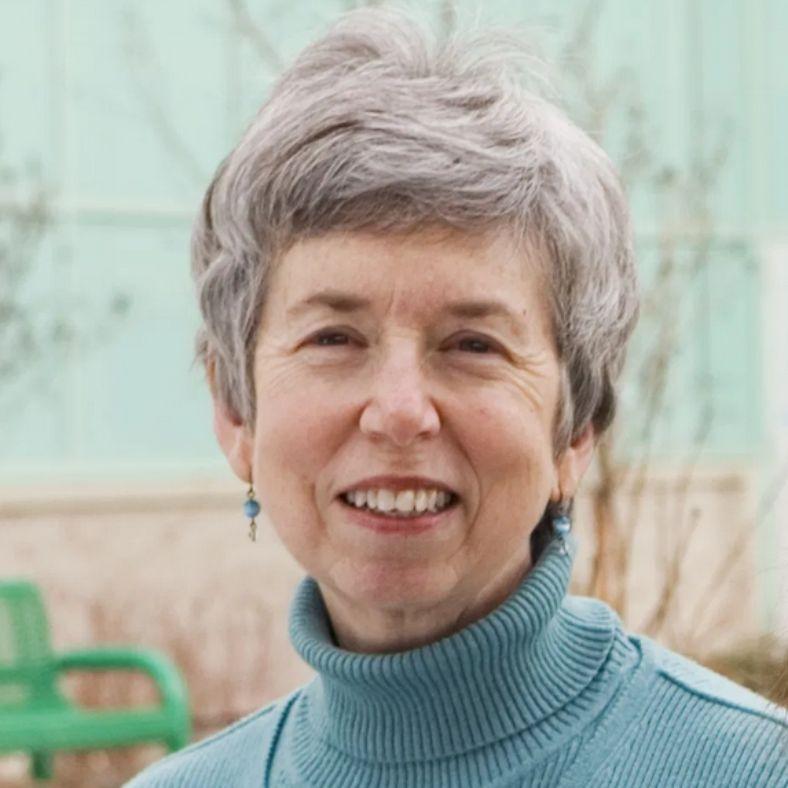
Full Transcript 0:00 So, your brain is the most metabolically active organ in your body. 0:06 It is two percent of your weight, but even at rest, when you're not doing anything that is lots of intellectual activity, 0:14 it is absorbing at least 20% of the oxygen and the minerals and vitamins that are coursing through your bloodstream. 0:22 If you are very active, that could be 50%. This is basic physiological knowledge. 0:28 Welcome to the Nutri-Talk podcast hosted by Hardy Nutritionals. 0:32 What if mental wellness starts with nutrition? 0:35 Join us for insightful conversations with researchers and clinicians exploring the science of nutritional psychiatry and broadspectrum micronutrient therapy. 0:44 Let's learn together. 0:50 Welcome to the Nutri-Talk podcast powered by Hardy Nutritionals, home to most researched broad-spectrum micronutrient formula in the world. 1:00 I'm the executive producer, Dr. 1:02 Z, here with our host, Loan Hardy, the managing director of Hardy nutritionals and Dr Kaplan. 1:09 Today, we're diving deep into real science and real stories that are transforming thousands of lives through the power of micronutsrients. 1:17 Let's get started. 1:18 Thank you, Lowen. 1:19 Thank you so much, Dr. 1:20 Z and Bonnie. 1:23 It's really great to have you on here. 1:25 So we're going to start. 1:26 Bonnie Kaplan is a professor emeritus in the Cummings School of Medicine at the University of Calgary. 1:33 She has published widely on the biological basis of developmental disorders and mental health, particularly the contribution of nutrition to mental help. 1:42 Her efforts to educate about the role of nutrition and brain health resulted in her selection in 2017 as one of 150 Canadian Difference Makers in Mental 1:55 Health in honor of Canada's 150th birthday. 1:58 In 2019, she was honored with the Dr. 2:01 Rogers Prize for Excellence in Integrative Complementary Medicine. 2:07 In 2021, she was chosen as one of the top seven over 70 in Calgary, Alberta, partly for her book, The Better Brain, written with Professor Julia Rutledge 2:18 and published by Harper Collins, as well as her two charitable funds supporting research by junior colleagues who study nutrition and mental health. 2:27 Her primary goal is to bring nutrition, education, and treatment to the forefront of mental health care. 2:34 So Bonnie, how did the University of Calgary do at capturing you? 2:39 Oh, of course, that's not me as a person. 2:42 But, you know, the emphasis is on degrees and awards and so forth. 2:47 You did fine, Lowen. 2:48 That's fine. 2:49 And I can update you just in a sentence about the fundraising. 2:54 One of the things I did when I was retiring, which was almost 10 years ago from academia, was I decided I would try to raise money for my junior colleagues. 3:04 who've always had difficulty getting grants to study a broad spectrum of micronutrients. 3:10 Even the granting agencies just don't want to support that. 3:14 And when I put out the word to lots of people and started mentioning it, money started dropping out of the sky. 3:21 So I had established two charitable funds so that people could get charitable tax receipts, one in the US and one Canada. 3:32 And in fact, they were very successful and I raised, as you said, over a million dollars and distributed every penny of it. 3:40 None of what was for me because I was retired. 3:42 But now I am in the midst of doing additional fundraising, especially because of the lack of, what? 3:49 Right. 3:50 unsettled situation in the U.S. 3:52 with respect to scientific research, there are some wonderful young scientists like postdocs who need additional money. 4:00 So people should feel free to contact me. 4:04 Will you put my email address at the end of this or I'll just mention it briefly? 4:09 Absolutely. 4:10 It's kaplan, K-A-P-L-I-N, at ucalgary.ca. 4:16 I'm happy to hear from donors. 4:18 Yeah, that's great, Bonnie, and we'll definitely share that address around. 4:22 And I just want to thank you for taking the initiative to start those funds and collect the money. 4:28 We've talked to researchers from all over the world, a lot of them referencing you as their inspiration, getting into this. 4:34 And funding always comes up. 4:36 It's always part of the picture. 4:38 They have to get over the funding hurdle. 4:39 they might be really excited about researching what we have or something else. 4:44 And they have have the finding, otherwise their ideas aren't going to come into fruition. 4:48 So I just feel like your foresight here is really valuable. 4:53 Sorry, I didn't mean to interrupt you there. 4:55 You always have to get used to the little time delay when you're online. 4:59 So the otherwise really is, otherwise they change their careers. 5:03 That's the really sad thing that triggered my interest in raising money is that young scientists were interested in studying nutrition in relationship 5:13 to mental health, but without funding, they had to look at another topic area. 5:17 Yeah. 5:18 Exactly. 5:19 So Bonnie, I want to rewind quite a few years and just have you reflect on what you were up to in your career before broad spectrum micronutrients came 5:31 onto your radar. 5:32 What were you up too? 5:33 Well, I've always been interested in the biological basis of human behavior, and I trained in experimental psychology. 5:40 I'd never been a clinical psychologist, but in behavior and mental health I knew a bit about that. 5:46 And then I did postdoctoral training in neuroscience. 5:50 Although we didn't even have that word then, that shows you how long ago it was. 5:55 So I was interested in understanding what was causing the problems that we were seeing in children, especially when I hired here in Calgary at Alberta 6:05 Children's Hospital. 6:07 I never believed that it was nature or nurture, but it's a combination of both of them. 6:13 And you can't always do something about a complex family, that if we understood better what is causing emotional problems in young children from a biological basis, 6:25 then maybe we could prevent some suffering. 6:28 So that's what I was studying. 6:30 So my father, David Hardy, connected with you, I believe, in the late 1990s. 6:36 I remember meeting you. 6:38 It was in our childhood home you came to visit. 6:42 You just came by to say hi or something. 6:45 And I remembered you really made an impression on us as kids. 6:49 We felt like it was a big deal to meet someone from the university coming into our home. 6:55 But before that meeting, what I understand, and again, you're going to have to help me, Bonnie, because You'll know more than I do on this story. 7:03 So I believe that my father was working with Anthony Steffen as they were starting to track some of the people that they we're trying to help with the 7:16 micronutrient treatment. 7:18 And they were starting to collect data. 7:21 They took some of this data to Dr. 7:22 Brian Kolb at the University of Lethbridge, which is just a stone's throw away from where both these men were living. 7:28 And I believe that Brian gave them some time. 7:32 which is very good of him to do, and then he kind of referred them on to you. 7:37 But can you help me out? 7:38 I think I might be missing some details. 7:40 Help me with that story. 7:42 You're missing the funniest details! 7:44 Good! 7:44 Sure, go there. 7:46 Okay, so first of all, I met your father in September of 1996. And the reason I meet with him and Tony and Autumn in 1996 was because they had approached 8:01 Brian Cole. 8:01 I always say that the only reason I got involved in this work is that Brian cole was a better human being than I was, because when he first told me what 8:10 they were doing, I said I have met with every flake in Alberta. 8:16 better you than me they've got to be I mean why did I think they were flaky because even though I was studying and interested in the biological basis and 8:25 of human behavior and I had published in 1972 when I still a student an article on malnutrition and mental deficiency I was taught that nutrition had nothing 8:39 to do with treating mental disorders and I believed it. 8:43 I had no reason not to believe it because I didn't look into it At any rate, when Brian Cold contacted me and said there are these two guys down here in 8:53 southern Alberta who think that they're helping people with vitamins and minerals, that's when I said, don't send them to me, 9:00 okay? 9:02 And I say, but, you know, Brian was a basic neuroscientist, so he mainly did studies in rats, in live rats. 9:09 lab animals. 9:10 And so I said, if you want to help them track some behaviors in some children, I can send you down a simple questionnaire. 9:18 We were faxing a lot in those days. 9:20 I sent him the faxes of a questionnaire that he could use. 9:23 So Tony and David took that questionnaire and they went out and collected data on a small group of people. 9:30 And the next thing I knew, and this was in August of 1996, I got a fax from Brian. 9:38 And on the x-axis at the bottom, it said vitamins, hyperactive kids, or something like that. 9:46 It showed the children on and off. 9:49 Now, it wasn't just vitamins. 9:51 It was vitamins and minerals. 9:52 Very important. 9:53 Your father taught me that. 9:55 And anyway, then I picked up the phone and I said, what are they doing? 9:59 I mean, I did an analysis of the data that was on that page and it was very impressive. 10:06 And it's called an analysis of variance and I said, this is statistically significant. 10:11 What are they doing? 10:13 Brian said I'm telling you, you should talk to them. 10:17 So that's why they showed up right here in the room I am sitting in, our living room, because it was after hours, I'd come home from work. 10:25 And this was where we sat and talked. 10:27 So that was in 1996, that first meeting where you met them in Calgary. 10:31 Okay. 10:32 That's right. 10:32 Yeah. 10:33 And I wonder just for our listeners, if you could just, cause you mentioned that Brian Cole was a better human than you. 10:39 I don't know if I'd leave that, but I've met Brian as well. 10:42 For anybody, any Canadian researcher, they probably heard of his name, right? 10:46 I'm wondering if he could help our listener understand who Brian was and why it might've been unusual for him to give them any time at all. 10:55 Well, I don't think it was unusual because he really was a very, or is, a really kind person. 11:01 He's retired, but he listens to people. 11:04 I mean, he's just, He is a kind of person, But he is in fact, well he retired. 11:09 So I'll use the past tense. 11:10 Sure. 11:10 he was one of the leading neuroscientists in all of Canada and he deserved that reputation. 11:16 And he did some very very fine work and was quite well known for it. 11:21 So that's how they ended up on his doorstep. 11:25 And then Brian knew that I had an interest in nutrition. 11:29 In fact, I'm still, the only research psychologist in all of Canada doing any work on nutrition, people are not catching on yet here. 11:39 Yeah, so I think it was Dr. 11:41 Kolb and maybe Brian, not Brian Wishaw, trying to remember. 11:46 Ian Wischaw. 11:47 That's right. 11:48 They were the ones that founded the Canadian Center for Behavioral Neuroscience. 11:52 Some of the leading researchers that kind of started that. 11:55 So that's very impressive. 11:57 Yeah. 11:58 And what I meant by, you know, maybe it being unusual that Brian would meet with them just like on paper, if you have someone with these types of credentials, 12:06 meeting with a couple of laymen, literally lay men who didn't have any academic training, really, I think that's kind of unusual that Brian would give 12:15 them some time. 12:17 But because of the type of person that he was, he gave them time, which is, we can all be grateful for that because At Hardy Nutritionals, 12:25 the work that we're involved in here, we are just continuing to kind of ride on the coattails of what David Hardy, those initial meetings that he had with 12:34 Brian and yourself. 12:35 What were your initial impressions of David Hardee and of Tony Stefan as well? 12:41 What did you think of these men? 12:44 Well, the adjective that always comes to mind when I think of your father is earnest. 12:53 Your father was determined and earnest and sincere, and it's just an adjective we don't use very often. 13:05 But it's just like his determination overrode everything. 13:09 I mean, he proved to be very, very smart, Very intelligent, and very knowledgeable about nutrition, as you know. 13:18 And so I learned a lot from him over the years. 13:22 One of the things I've learned is possibly the minerals are a little more important even than the vitamins when it comes to mood dysregulation. 13:31 We've got to get some research on that particular question. 13:34 But it's best that people take them all together, which is what your formula does. 13:39 Yeah, we'll cover this in another podcast episode. 13:43 I remember as a child, our garage was often full of these feed supplement bags, not for humans, but for pigs and cattle. 13:53 Mostly mineral supplements that he had formulated with his business partners and states. 13:59 providing cattle and pigs with the proper nutrition that they need to be healthier and for the ranchers to make more money actually have better yields, 14:08 that kind of thing. 14:08 So I remember we used to climb on these feed supplement bags and some of them were leaking all over the place and there was mice getting into them, 14:16 probably really healthy mice or whatever. 14:17 Anyway, I just remember that. 14:19 The mineral emphasis is really, it really comes from his background in animal nutrition. 14:25 That really informed his insights. 14:27 largely, I think, and his training in biology. 14:30 He did have a bachelor's degree in Biology. 14:32 So he knew some things, but he just had the academic training that, you know, a master's or a PhD program would give him, 14:43 right? 14:43 So coming from the field. 14:45 Right. 14:47 Yeah, coming from the boots on the ground perspective. 14:49 Anything else you'd like to share with the audience about your impressions of David and Tony, that first meeting, your meeting with them? 14:57 Anything you would like share? 14:59 Well, I think what I would share is, mean I could talk about Tony and how what a different personality he had, but I'd rather mention something about Autumn who, 15:08 as you know, just recently passed away. 15:12 But she had a huge impact on me that day because she described what her illness, her mental illness had been like, postpartum psychosis. 15:24 She described her symptoms. 15:28 you know her reaction when her father said um i want you to take some vitamins and minerals yeah and then as she recovered you and i had met a lot of people 15:40 with psychosis when i was in training i did some practicum work etc i have never heard anybody talk about recovery like that and you couldn't listen to 15:52 her and not believe her. 15:53 I mean, you knew she was authentic, that what she is describing was very, very real, and that somebody needed to study it. 16:03 Yeah. 16:04 So Autumn came with David and Tony to that initial meeting. 16:08 They happen to be driving up from where you guys lived and down around Raven and all. 16:14 And Autumn needed to driven up north to Edmonton. 16:17 Right. 16:17 so they stopped in to see me. 16:19 they didn't bring her to me, they just happened to have her with them. 16:23 and I was so glad because it really taught me a great deal. 16:28 Yeah, it sounds fortuitous knowing them. 16:31 I think they probably secretly hope that something like that could be written. 16:35 That's right. 16:36 Yeah. 16:36 But I really think it's appropriate that you bring up Autumn. 16:38 Um, I have always had a lot of respect for her. 16:40 And so Tony's initial experience with his own children, Joseph and Autumn, That really was kind of the catalyst that kicked this whole thing off, 16:50 right? 16:50 It's the thing that put this on my dad's radar. 16:53 The autumn was just such a special, such as special advocate for, you know, health, freedom and access to nutrition across Canada. 17:03 I just really admire her for the work that she did. 17:06 So I'm really glad you brought that up. 17:09 Perhaps for your audience, we should mention that she passed away recently, but it was not related to her mental disorder. 17:16 She had another health problem of great significance. 17:20 Yeah, thanks for mentioning that. 17:22 I was thinking of the same thing. 17:25 That's a good point. 17:26 So how would you describe your professional relationship with my father David and the role it played in helping to shape the nutrition research that's 17:37 been conducted to date on broad-spectrum micronutrients? 17:40 Well, of course, I'm laughing because as you asked the question, what immediately comes to my mind is my failure. 17:49 I mean, they just wanted me to study 14, and I am not exaggerating, 14 different disorders, do 14 placebo-controlled randomized trials and just get it done. 18:03 You know, it's just there, Bonnie. 18:06 You know, make it happen. 18:07 I'll never forget the day that they came to my office with this list and I'd already been trying to do some research and we'd had some problems. 18:17 That's when, you know that led to them deciding to make their own formula actually. 18:22 And I had these problems and they just, your father was very impatient and it was like, just get her done. 18:31 And of course then I was shut down by health care and I get nothing done for a number of years. 18:36 Yeah. 18:37 I just want to make a point here because I think it's important for our audience to know that throughout this entire professional relationship that you 18:46 had with my father, so he's coming to your office in Calgary and meeting with you and encouraging you to do this research, 18:53 but at no point are we talking about like You know, paying you to do the research, it's just encouraging you like, hey, you're an independent researcher. 19:02 We would really love it if you could like research this so that people can know more about it, right? 19:06 So maybe you can just comment on that, just the independent nature of that relationship. 19:13 Yeah, well this is where my age I think contributed something. 19:18 I was already old enough that I had lived through a revolutionary change in mental health research. 19:25 i remembered a time when, I'll use the word physicians because it was mostly physicians, would not consider taking any money from any company. 19:36 And that gradually shifted to them only doing research funded by pharmaceutical companies. 19:43 And I saw the corruption that resulted from it. 19:46 If you went to an American Psychiatric Association meeting the disgusting display of pharmaceutical money, it was just so gross. 19:56 but you know they had just sold their souls for money in my opinion and so a lot of academic sciences not just psychiatry really got into a place where 20:08 they were beholden to the funding companies and when I saw in some anecdotal examples the kind of magnitude of improvement that we could get with the broad 20:23 spectrum formulas, I just didn't want anyone saying, oh, they're just doing that for the companies. 20:29 I mean, it would just be so tainted. 20:32 So I told them that I would find students and so forth. 20:36 We would do some research, but I wouldn't not want any affiliation with them. 20:41 And if I saw them in a meeting, kept up with it and the other researchers coming after me have pretty much kept the same rule. 20:53 And yet, nobody believes it. 20:57 Yeah, I'm really glad you went there, Bonnie. 20:59 I've been at conferences with other researchers that you've helped to kind of mentor. 21:04 And yeah, they won't let me buy them lunch, not even a little something. 21:09 No, i'll pay for my own lunch. 21:11 So I know that, you encouraged my dad to take this approach, but I think that he had a good way of looking forward and seeing how You know, 21:20 the work that was being done was kind of a foundational work and it was laying the groundwork for something that Was really important long-term like well 21:28 beyond his life even that it would outlive him and so he really You, know I remember him talking about how critical it, was To maintain the integrity of the, 21:39 work so the independent nature of that you know the company has a product that's great but the research on the company's product needs to be done in an 21:48 independent way so that it doesn't taint the credibility of the researcher and it does not implicate the researchers. 21:54 So I just think that was a really important step, a very important decision in setting this broad-spectrum micronutrient research Off on the right foot 22:05 and I can say that to this date we've continued to. 22:10 Decide that that's how we're going to approach it. 22:11 It's not easy to do that, but we continue to that and it's really just based on what you encourage my dad to, do and what he decided. 22:20 Yep. 22:21 This is how are going approach this research song. 22:26 You talked about, you know, getting this fax from Brian Cold. 22:30 So in that first faxe that you got, what kinds of results were you seeing? 22:36 And then after that faxis, like what kind of result were people reporting in the data that collected? 22:43 Well, the facts with some children I never met and I didn't know the validity of it. 22:48 So why don't we move to some of the cases I became aware of. 22:52 And because I'm not a clinician, I wasn't treating anybody myself. 22:57 But I remember a woman who your father and Tony Stefan helped, who had spent a number of years just in bed because of her psychosis, 23:11 living in a rural area. 23:13 Her husband was a farmer and he took care of her and they put her on a broad early version of the broad spectrum formula and she became well enough to function. 23:28 And then these data are plotted out. 23:30 I used them in a grant application but they've never been published. 23:35 And then the husband and wife, she was well enough, they went to travel into BC to see some family who hadn't seen her in years and years, 23:46 and they ran out of formula and she regressed. 23:50 Now, in science, we call that an ABA design. 23:53 And when you can show on-off control of symptoms, serious psychosis kinds of With the availability of the bra spectrum formula that's very very convincing 24:05 and then they brought her back to alberta they got her bag on the formula and she was much better so it's a bb but now there is a sad end to that story 24:17 but an educational one. 24:19 That particular woman, she was deemed well enough that she could undergo some abdominal surgery that they've been putting off because she just wasn't well-enough 24:28 to cope with it. 24:29 And she went for it and had complications and ended up passing away. 24:34 So it was very tragic from her point of view. 24:37 But listen to what happened in the academic side. 24:40 When they brought her back from BC, I found a psychiatrist, very junior, newly minted, because they I thought would have a more open mind, 24:52 who agreed to see this woman. 24:54 and evaluate her and then see her again when she, you know, on off control kind of thing. 25:01 And the psychiatrist said to me, she was completely convinced. 25:05 So I said, well, let's write it up and let us do some research. 25:11 It is just humiliating to her, not me. 25:17 what she said. 25:18 She said, Bonnie, I'm a new academic psychiatrist. 25:23 I can't have my name affiliated with something like this. 25:26 Of course. 25:27 But I am not going to write it up, but I will not publish it, and I won't study it. 25:33 No backbone. 25:35 Yeah. 25:37 And that's probably the only person that ever said that to you. 25:42 There were no others after that, right? 25:47 Uh, right. 25:48 Yeah. 25:48 No, I, there were lots. 25:49 I was just going to say that the saying that I got more recently is it's not in the clinical practice guidelines yet. 25:57 Not going touch it. 25:59 People who just have no courage, no thought, know intellectual curiosity is very disturbing. 26:05 Anyway, go ahead. 26:07 I knew you were being sarcastic. 26:09 No, that's good. 26:09 But I do think someone in your shoes, and especially these new people coming up, I think for a lot of them, it does take a lots of guts, 26:17 to consider putting their reputation on the line to go off into a territory that might be viewed as fringe. 26:25 And at the time that you are doing it, It was probably more so than that. 26:31 I want to chime in. 26:32 Your story is reminding me of a time I was in a medical conference and there was a researcher on stage who just gave a profound presentation on how there 26:43 were a group of disabled people that showed lower butyrate bacteria in their gut. 26:49 And then I was so excited to share how the Daily Essential Nutrients product had shown an increase in beta-rate producing bacteria. 26:59 And I thought that she would be highly interested in this and maybe want to research it. 27:04 So I went up with this assumption that there would that intellectual curiosity. 27:10 This is my first experience as well doing this, going up to researcher asking, and her response to me was, That will be $50,000. I was like, 27:23 oh, wait, what? 27:25 She's like my starting price is $50000. Oh, no, this company doesn't pay for research. 27:31 It's independent research only. 27:33 And she's, like yeah, I'm not going to look at it. 27:37 So I learned through that experience. 27:39 I didn't even know that that was a thing, but I learnt through it. 27:45 Yeah, so I just wanted to share and acknowledge how different you are from even my own experience in that regard. 27:53 So thank you. 27:54 Thanks for sharing that, Dr. 27:54 Z. 27:56 I wonder if we can have you talk, Bonnie, about some of the barriers. 28:01 We don't need to dwell on this, but I think that it's important for the audience to hear from your perspective because you've been around the block for 28:09 quite a while in this micronutrient research space. 28:12 What are some barriers that you faced as a researcher trying to validate this? 28:17 Trying to, you know, bring it to light, share it, publish on it. 28:23 Well, a big one was the media. 28:25 The media just kept dragging us through, you know, ridiculous articles belittling our work, belittle your work your company's work. 28:37 And so that made it very hard to convince my professional colleagues that I was trying to do legitimate research. 28:45 So that was a big one. 28:47 Funding certainly was an issue. 28:49 A bigger one was Health Canada. 28:51 I mean, the Canadian people think that HealthCanada is there to protect their health, and that is not the case. 28:59 The majority, more than half of Health Cananda money, I'm pretty sure, comes from pharmaceutical companies and agribusiness. 29:07 And they are no longer Mostly a taxpayer funded agency and they blocked our research and shut us down for over four years and forced me to take out of 29:23 a trial that we were and send them back to their psychiatrist and medication. 29:28 I was told to do that. 29:30 That's a letter that I've lost for some reason. 29:34 So they were a big obstacle. 29:36 And, you know, when the media and Health Canada are not on your side, and when you finally get something funded and moving forward, 29:46 then the clinical settings will not refer their patients. 29:51 That's what happened to me. 29:53 After HealthCanada let us proceed, most of the money was gone for various reasons. 30:01 Anyway, we couldn't get referrals. 30:04 Yeah. 30:04 Is that enough of a list? 30:06 That's quite a bit. 30:07 I think you did a good job of summarizing that. 30:09 And I sometimes think Health Canada and the media kind of teamed up and it felt like kind a full-court press against the research effort. 30:19 A media piece, I remember it was on TV, on the nightly news, just raising concerns that this might not be safe, that these micronutrients might be dangerous, 30:29 like phalidomide or something like this. 30:33 you know, talking with my father about how ludicrous that was that they would even consider going there. 30:39 I wonder if you could just for our audience, maybe just give some context to the, the maybe relative safety concerns that sometimes the media overstates. 30:49 Like even today, like in different jurisdictions recently, you now they're overstating somebody. 30:54 Well, that might be dangerous. 30:55 It might, You know. 30:57 Maybe just put that in context for us from your perspective. 31:01 That was a really big deal. 31:03 There was Health Canada warning against taking this multi-nutrient formula. 31:09 And if you didn't read the warning, that would sound scary, right? 31:12 But what the morning was, was that some people who took this formula didn' t take their psychiatric medication. 31:20 Well, they didn t need it anymore, you know? 31:23 That's why! 31:24 So it made them feel crummy. 31:27 So if I were to take some of these antidepressants or something, I don't suffer from depression, and I would feel terrible. 31:35 So that's the kind of thing that was going on. 31:38 I think I've lost my train of thought a bit. 31:41 You were focused more on... 31:43 No, that wasn't really... 31:44 That was good. 31:45 Really appreciate mentioning that. 31:46 And I was just asking about relative safety compared to maybe... 31:50 Safety. 31:50 What else they could be taking, right? 31:52 Like what are the alternatives, So that was relevant, but I also do want to say that all the people who've been studying the various multi-nutrient formulas 32:02 are meticulous at keeping track of adverse events, health, heart rate, blood pressure, you name it, and there has never yet been a serious adverse event 32:12 in response to a multi nutrient formula. 32:14 And whenever I tell people this, I'd also like to point out, look, if we had terrible adverse reactions to vitamins and minerals, 32:22 our species would have died out. 32:24 We have adapted to need them. 32:27 So why are you surprised that vitamins in minerals are not causing adverse events? 32:32 Yeah. 32:33 No, that's really good. 32:34 I think that's good. 32:35 We've covered some safety concerns and some of the barriers that you faced. 32:39 I want to maybe shift to a more positive. 32:41 So, I've got a copy of your book here. 32:43 Okay. 32:43 Ha-ha. 32:43 … I was in London, England a few months ago with Julia and she gave out some copies of book to some the health professionals there. 32:53 They did a little drawing and I thinks six or seven people want a copies the book. 32:58 Anyways, the people were lining up to get a picture and it was just really fun to stand there with them and to see Julia interacting with him. 33:05 But, you know, Julia has been a very prolific researcher and she is one of your former students. 33:13 So maybe, maybe just because she's out there, and TEDx talk and. 33:18 She's very well published. 33:19 Maybe just talk about your relationship with Julia and how she has kind of taken this micronutrient research to a new level. 33:28 I would be delighted to because she's a really bright light. 33:33 So Julia was one of the best, maybe the desk graduate student that I ever had the pleasure of supervising. 33:40 She was born in Ontario, went to McGill University, came out to University of Calgary to do her master's and PhD. 33:49 But I wasn't studying nutrition yet. 33:53 We were just trying to get started. 33:55 So she was studying ADHD and developmental behavioral problems and so forth. 34:01 and then she went back and did another postdoc, no, a post-doc at the Hospital for Sick Children in Toronto. 34:08 And then, she saw this ad for a job opening at The University of Canterbury in Christchurch, New Zealand. 34:17 When she was in Alberta, She had married her husband, Will Harvey, who's from Alberta. 34:23 The two of them thought, well, that would be a lark. 34:25 Let's go see what it's like to live in New Zeeland. 34:28 And now, what, 25 years later, I think they're still there and their two sons were born there, and so forth. 34:36 But her only mistake was she sponsored me for a visiting fellowship to come out to University of Canterbury in 2003. And then I was getting really excited 34:49 about doing research on broad-spectrum micronutrients. 34:51 So I showing all of our pilot data and talking up a storm and saying, Julia, you've got to study this. 34:58 It's more important than anything you have been doing. 35:01 And of course, she had a full plate. 35:03 She was a new young academic, She had lots of studies on the go, lots students, and so it took her a few years. 35:09 Her first publication was six years later, 2009. But then, you know, seeing is believing, scientists, physicians, all of us are also human beings. 35:20 And when you see a life transformed, I don't know how you walk away from it. 35:24 That young psychiatrist who I told you about, she walked away form it, but not many people with a conscience anyway can walk from away it and so Julia 35:34 has been, as she runs a factory there turning out clinical trials. 35:40 on the broad spectrum micronutrients. 35:42 So it's been a pleasure to see who grow that way. 35:45 And she trained Jenny Johnstone, who now is on faculty of Oregon Health and Science University in Portland, Oregon. 35:53 Yeah. 35:54 Yeah, the researcher maybe taking a life of its own. 35:57 But I think that we should acknowledge here for our audience that Bonnie, you were really the leading pioneer behind the effort. 36:05 Like you're kind of the one that, Brian kind got you interested a little bit, but then you are the ones that really took it on as a researcher and then 36:16 inspired these younger researchers to take it and I've been really humbled to meet some of these younger researchers and to see how excited they are about 36:25 following in your footsteps. 36:27 And they're just inspired by the way you've approached the research. 36:30 They're inspired, by, the ways you overcome the obstacles that you faced as well. 36:33 So it's just really cool to this next generation of researchers come up and hopefully, together they can break this thing open a little bit more and help, 36:44 in the world of academia anyways, help it to be more acceptable as an option for people. 36:49 Well, they have done that, but we're worried about the next generation. 36:52 Yeah. 36:53 The ones who are not getting funding in the oil and fundraising. 36:57 Exactly. 36:57 No, exactly. 36:59 Yep. 37:00 I have a few sticky notes in book here, The Better Brain. 37:05 Just for the audience, this is one of my favorite parts of the book, the cauliflower head. 37:09 Isn't that a great brain? 37:10 The better brain. 37:11 If you want your brain to look like that. 37:13 Anyways, I just have to mention this. 37:16 So there's a bunch of recipes in here. 37:18 We're going to have you go into more of the other content in there, but I'm assuming this is your Bonnie's classic granola. 37:26 It's probably your recipe, right? 37:28 I think we originally got it from a cookbook 50 years ago. 37:32 Yeah. 37:32 My husband makes it now. 37:34 Cool. 37:34 I'm going to try it. 37:35 And then the part that made me really smile, so we were talking about Julia. 37:39 So underneath Bonnie's classic granola, this is on page 202, got Julia's suggestions for additional sweetness. 37:48 Well, she had two young boys. 37:52 So we've got two line items on this one. 37:54 So Bonnie's got the rolled oats and the pumpkin seeds and sunflower seeds, and chopped almonds, the coconut flakes and ground cinnamon and avocado or canola 38:04 oil and honey. 38:05 And then Julia has got suggestions for additional sweetness. 38:08 Half a cup of dried fruit and a quarter cup dark chocolate chips. 38:12 That sounds great. 38:13 Sounds really good. 38:14 I just had to point that out. 38:17 Got to kick out of that. 38:19 Okay. 38:19 So Bonnie, Bonnie in chapter five of your book that you co-authored with Julia Rutledge, you talk about the chapter title is treating psychiatric disorders 38:28 with supplements. 38:29 Can you just give our audience, what's the take home message of that particular chapter? 38:34 Well, the take-home message is that there is no magic ingredient and nobody should be taking a single nutrient. 38:42 You should get all of them together. 38:45 And by them, I'm really talking about minerals and vitamins because there are so many other nutrients that We know, we don't know enough about, 38:54 like the phytonutrients. 38:55 There are over a thousand of them. 38:56 They don, most of the don have names. 38:58 We don know what they do in the brain, et cetera. 39:01 So, but of though, the really critical minerals and vitamins that we know about. 39:06 You should be looking for a broad spectrum formula. 39:09 That to me is, is really the major message that's novel. 39:15 People need to learn. 39:17 Yeah. 39:18 Yeah, that's really good. 39:18 And then the subsequent chapters, you talk about some of the other areas that have been researched to some degree, even trauma and stress, 39:28 resilience, like kind of thing. 39:29 So I'd highly recommend to our viewers, if you haven't gotten a copy of Julia and Bonnie's book and read it, You should read, 39:37 it's a great read. 39:38 You'll be better off for it. 39:39 It's great thing to share. 39:42 Go ahead and get a coffee of that, If you're able. 39:46 So, Bonnie, I listened to an interview with you quite a few years ago. 39:50 You were talking about what's in our brain's bathwater. 39:54 I just found it really intriguing. 39:56 And I wonder if you can just summarize that concept for the audience. 39:59 Sure. 40:00 So a lot of people don't think about their different body parts, as I've discovered. 40:05 But you've got to think of your brain. 40:10 When your brain is at complete rest, and anybody listening to this right now, hopefully their brain it's very active and they're thinking and thinking critically. 40:18 But when you're just zoned out, maybe you are watching TV or knitting or whatever, your brains is punching way above its weight in terms of its metabolic activity. 40:30 It is only about 2% of your body weight, like a human brain you can hold just in your hands. 40:36 So 2%, but even at rest, it is taking up 20% of the nutrients and oxygen and everything that are hopefully going through your bloodstream. 40:48 So you have to be very careful to feed your brain. 40:52 And then if you're very actively listening, probably your brains is accounting for 50% percent of your metabolic activity. 41:00 This is from basic textbooks of biochemistry will tell you this. 41:06 Your brain is the most metabolically active organ in your body. 41:11 It is 2% of your weight, but even at rest, when you're not doing anything that is lots of intellectual activity, it is absorbing at least 20% percent of 41:23 the oxygen and the minerals and vitamins that are coursing through your bloodstream. 41:27 If you are very active, that could be 50%. This is basic physiological knowledge. 41:36 What are you doing to feed your brain? 41:37 So I sometimes think of it as the bath water. 41:40 I know it's not a very perfect analogy because a lot of people think about is the CSF fluid, but it is not. 41:47 The point I'm trying to make is that we can influence the nutrient environment of our brains. 41:55 Yeah, that's really good. 41:56 I love that analogy. 41:58 So just before we wrap up, Bonnie, I just want to flash up another publication that you're involved in putting together. 42:04 This was Dr. 42:05 Julie Rutledge and Dr Charles Popper from Harvard. 42:10 There's a chapter, chapter six in this APA textbook. 42:14 It was published in 2017. What was the main takeaway that would give our audience about? 42:20 If they haven't read that, what would you summarize that for people? 42:23 I think you should read the title to our audience because I don't think it says it all. 42:28 Okay, that's great. 42:29 The title of our chapter, not the book. 42:31 Okay, here we go. 42:33 The title, hey, Single and Broad-Spectrum Micronutrient Treatments in Psychiatric Practice. 42:40 That's a good title. 42:41 Very good. 42:42 There is a literature going back to the 1920s, which my colleagues and I reviewed and published an article on, showing that single nutrients can sometimes 42:52 have an effect, some benefit. 42:55 But as soon as you switch to multi-nutrients research that really began around the year 2000, then you start having really big effects. 43:04 Yeah. 43:05 That was a really good publication. 43:06 It summarized a lot of what you already knew, what your colleagues already know, but a of your peers out there in the field didn't know that, 43:15 and they still don't that. 43:16 So they should give it a read, right? 43:17 Yes. 43:19 All right. 43:20 So how does it feel, Bonnie, to you're kind of getting into this retirement phase? 43:24 You're phasing out of being an active researcher. 43:26 How does that feel to see the work that you helped to pioneer continue to grow, kind take on a life of its own? 43:34 Oh, it's wonderful. 43:36 It's very gratifying. 43:38 I haven't done much active research since I stepped back from the university because University gives a structure and a lot of supporting things that enable 43:48 you to do research. 43:49 So it's almost 10 years since I was really a principal investigator of research, but it is great to see what Julia and her team have done. 44:00 It is also great see some of the good European research that has come out, especially from the UK. 44:06 Yeah, I watch it all. 44:07 Yeah, there's some great stuff out there. 44:10 Bonnie, I just want to thank you from the team at Hardy Nutritionals for all of your work in this field over the years and for being willing to come on 44:17 this podcast, even though you're into those retirement years, just really appreciate you sharing your insights, your memories of David Hardy and the things 44:25 that you've learned. 44:26 And over years it's been really great. 44:28 So thank so much for coming on. 44:31 Good from my end too, Loan. 44:32 You know, really interesting. 44:34 Thanks. 44:35 Yeah. 44:35 I really enjoyed it. 44:36 Thank you. 44:37 It was amazing to be able to meet you live, Dr. 44:40 Kaplan. 44:41 Absolutely. 44:42 And for your work and hearing this background is such a gift to us all, actually. 44:46 Thank You. 44:48 Thanks for listening to the Nutritalk podcast. 44:50 If you found this episode valuable, please follow our podcast and share it with a colleague. 44:54 To join our growing community of health professionals, visit heartynutritionals.com slash health dash professional. 45:01 We'll see you next time.
Comments