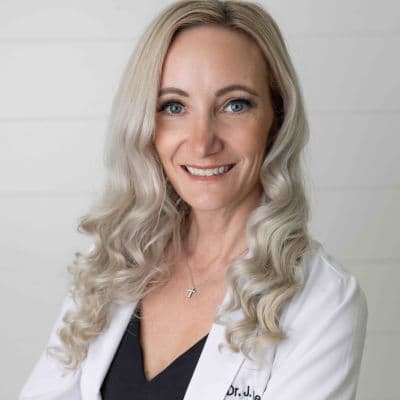
Full Transcript Introduction to Heavy Metals and Detox 0:00 You're telling me a stainless steel is bad? 0:02 If it's lined with metal alloy, so it might have nickel in it. 0:06 How do we find that? 0:08 I would look it up online. 0:09 They will tell you. 0:10 So we're all getting nickel from our stainless steal now. 0:13 I think one of the ways you can check, it is like your refrigerator. 0:17 You know how some people have refrigerators and the magnets don't stick very well? 0:20 Yes. 0:20 It's because there's a bunch of metal alloys in there that are conjugated with the stainless deal. 0:25 And so there is less steel in their so the magnet don's stick fairly well. 0:28 Same idea. 0:35 Hi, it's Dr. 0:35 Jenn. 0:36 Welcome back to the Healthy by Dr Jenn podcast. 0:39 Today we're going to be talking about heavy metals and chemicals and how to detoxify from them. 0:58 and the co-founder and executive director of Ireland's Dream, sharing board certification in integrative medicine through the American Association of Integrative 1:08 Medicine and his fellowship trained by the America Academy of Anti-Aging Medicine, or A4M. 1:13 Most of her clinical practice is dedicated to hormone replacement with the use of bioidentical hormones, thyroid treatment, 1:19 tick-borne illnesses, and IV therapy. 1:23 She also has a background in OB-GYN, which gives her a unique insight in women's health and menopausal symptoms. 1:30 Welcome. 1:30 Thank you for having me. 1:31 Excited to have you here. 1:33 So very interesting because you actually trained board certified OB-GYN and then you decided to go and start taking these A4M courses. 1:45 What prompted that? 1:46 My mom. 1:48 I know she actually said to me when I was still a resident that she had read Christine Northrop's book, and I remember it sitting on the table next to
Why Integrative Medicine and Bioidentical Hormones 2:03 her bed when I was probably, I don't know, a teenager, you know the wisdom of menopause. 2:07 And I remembered her reading that and thought, it was a teenage, dumb book. 2:12 Oh mom, geez. 2:18 she, when I was in my residency, she started asking me, you know, where do I get bioidenticals from? 2:24 How do we, how do, like, I want to know how to do this. 2:27 And I remember asking one of the drug reps that came in when i was a resident about it, and he's like oh they're the same as synthetics. 2:34 Like you don't need those, just tell her to take synthetix. 2:38 I think she's pretty adamant that she wants bio identicals. 2:42 Good for her. 2:43 i'm pretty sure she is not going to And so as I neared the end of my residency, my husband actually started looking around online for me, 2:53 and he found some different conferences. 2:55 And he's like, you know what? 2:57 Go to these conferences and see what you find out. 3:00 As you now, bioidentical hormones lead into all the other integrative medicine things. 3:04 It's a gateway. 3:06 Everything kind of is. 3:07 No matter what, it is always... 3:09 It is great, though. 3:10 it's this little tunnel. 3:11 I remember sitting there in my first conference going, Wait, what? 3:16 Vitamin D does what. 3:18 Oh, well that's pretty cool. 3:20 Yeah. 3:21 I loved it. 3:22 Yes. 3:22 And I came back and I told my husband, you know, I really think this is what I'm supposed to do. 3:31 And so I completely changed my path. 3:35 I never practiced OB-GYN. 3:37 Wow. 3:39 Um, I just went right into an integrative medicine practice, which is very unusual. 3:43 It is. 3:44 That's why I was like, wow. 3:46 Well, and I don't know if people listening know, but the OBGYN residency, it's It's heavy surgical. 3:54 It is. 3:54 Like, it's very surgical, which was that hard for you to give up? 3:59 I do miss it sometimes. 4:00 Okay. 4:00 I was going to say, yeah. 4:02 There are some procedures in my office. 4:04 Keeps that going. 4:06 Yeah, I won't lie. 4:07 Sometimes when I pick up a scalpel, But you're preventing people needing surgery. 4:14 Correct. 4:14 Like that's because there's no way you would be in there doing like hysterectomies. 4:18 And you were like, well, this could have been prevented five years ago. 4:21 Agreed. 4:21 Yeah. 4:22 Yes. 4:22 One hundred percent. 4:23 So I'm OK with that. 4:25 But what I do is so much better, I feel like than what. 4:30 I trained in because, like you said, you know, i can put people on natural hormones and prevent that hystrectomy. 4:39 A lot of times that heavy bleeding gets better. 4:42 that, you know, the sleep issues, just all the things that you take care of with hormones that these people didn't realize either existed or their friend 4:51 told them and they want to know is it true? 4:54 Can I sleep at night? 4:56 It's so rewarding. 4:57 I also like how you mentioned that the drug reps said that the drugs, the synthetic hormones are the same as the bioidentical. 5:09 I kid you not, I was at a conventional medicine that I speaking on, integrative medicine, tried to bring that in. 5:17 And the person, she even made comments. 5:19 She's like, no one likes electron hormones, so I got to do it. 5:22 Then she sat there and she told everyone that progestins act the the projesterones and CEEs act same. 5:31 And someone was taking notes and I'm like, do not take notes. 5:34 That is wrong. 5:36 I will send you resources. 5:38 But the problem is because that drug rep put that seed in their brain that this is the same and these are residents that are attending, 5:46 they're exhausted, their on call, doing surgeries, waiting for babies to come out.
Heavy Metal Exposure Sources 5:51 Then it's like a game of telephone. 5:53 They're going to keep repeating that. 5:55 It's like a campfire story and they believe it. 5:57 And it's just, you know, they don't have time to go through the actual studies that prove that this is wrong. 6:03 Then we end up with surgeries and chronic illnesses. 6:08 Yeah, it is so frustrating. 6:10 Agreed. 6:11 Well, one cool thing. 6:12 You like to talk about detoxification and heavy metals and that can sometimes cause hormones to try. 6:20 Absolutely. 6:21 It is all connected. 6:22 Like you said, like the segue. 6:24 So tell us a little bit about heavy metals and what you've been seeing in your decades of practice. 6:30 So it's really interesting and kind of funny because it came full circle. 6:35 I remember when I was a resident, there was doc, he's retired now, but there is a doc in town that did chelation and the other residents are like, 6:45 oh, is weird. 6:46 Yes, they're like, oh, you have to rotate with him and he does that chelation thing. 6:51 And they were just, have fun with that. 6:55 I remember sitting there and going, Oh yeah, okay. 6:58 Now fast forward all these years later and I'm the weird one, whatever, doing the stuff. 7:04 I think that all doctors should be doing it, but that's another story for another day, right? 7:08 Yeah. 7:09 So the interesting part about heavy metals is that people will tell me all the time, there's no way I'd have them in my body. 7:17 I don't work at, you know, I work in a heavy GM you know, town, where a lot of people who come to me have either worked in the factories or whatever. 7:29 But the ones who don't always tell me, oh, there's no way. 7:32 I don' have any of that stuff in me. 7:34 And I mean, even being in Flint with the lead crisis that happened, they still don''t think. 7:43 No, that's still an issue. 7:44 It's not completely solved. 7:46 That's another story. 7:47 Because the problem is they fixed the main waterways in the the people would have to fix the lead pipes going up to their homes, 8:03 because those are still leaded. 8:07 So when people come into me and say that they probably don't have heavy metals, I have oftentimes talk them through it and explain to them, 8:15 we have a very, very heavy arsenic presence in our water. 8:21 And usually well water, obviously, more so. 8:25 And it's because we had some chemical dumping from plants decades ago. 8:31 Before the EPA came in and said, yeah, no, you can't do that. 8:36 It was decades of it seeping in to the groundwater. 8:39 So we have a lot of arsenic. 8:42 some lead. 8:43 You'd be surprised how many people eat tuna fish all the time, and they don't get the kinds of tunafish that have been batch checked to make sure they 8:50 have mercury in them. 8:51 Yeah. 8:52 So I get mercury. 8:53 And sea bass, because it's a delicacy. 8:55 People are like... 8:56 Chilean, yeah. 8:57 I look at it like I'm like, ugh. 8:59 Well, I used to, before I was woken to it all, you know, think sea-bass was fine unless I pregnant. 9:06 Right. 9:06 Especially because this is expensive. 9:07 It can be good. 9:08 When we moved, 15-year-old sea bass still frozen that I've never thrown away in my deep freezer, and I'm like, well. 9:20 Well, if my parents are listening, which my family doesn't always watch this stuff, but stop eating sea But yeah, mercury in the fish, 9:29 and people think that there's... 9:32 So just avoid it during pregnancy, you know? 9:35 And it's like, why wouldn't you just have to avoid mercury all the time? 9:39 Why just pregnancy? 9:40 If you shouldn't have it in pregnancy you probably shouldn' t have at all. 9:44 So, it' s just amazing. 9:46 I get tin, I got a lot of nickel. 9:48 Yeah, I get a lot of nickel. 9:50 So tin though, that's kind of, from what? 9:53 I know the nickel, and I've looked this up trying to figure it out, because tin you would think would be in the older generation, 9:59 where they ate out of tin cans before it was lined with plastic, which is still a problem. 10:04 It's not any better, but I think that some of them, the Nickel for sure, it's a metal alloy, so it is actually conjugated in stainless steel, 10:17 you know we all use stainless-steel water jugs now.
Nickel in Stainless Steel and Cookware 10:20 You're telling me a stainless steels bad? 10:22 You gotta check for if it's lined with metal alloy so it might have nickel in it. 10:29 How do we find out? 10:30 I would look it up online. 10:31 They will tell you. 10:32 So we're all getting nickel from our stainless steal now? 10:36 One of the ways you can check, it is like your refrigerator. 10:40 Some people have refrigerators and the magnets don't stick very well. 10:43 It's because there's a bunch of metal alloys in there that are conjugated with the stainless steel. 10:48 And so there is less steel in their so the magnets don't stick very well. 10:51 Same idea. 10:53 So every time I'm opening my refrigerator, because the handles are stainless steel, but magnets aren't sticking to it, then it probably has nickel in it. 11:00 It has, yeah. 11:01 So can you do just a simple magnet test on your... 11:04 I wondering. 11:05 Now that we're talking about this, I wonder. 11:07 We'll get back to you guys. 11:08 You got to get a magnet and try to stick it on the inside. 11:10 I am so annoyed about the nickel. 11:14 For cooking, obviously throw your Teflon pots out. 11:17 Oh gosh, yes, anything like that. 11:19 Cast iron, like in moderation. 11:21 There's debates on cast iron. 11:22 But every day you just have to check the stainless steel. 11:26 Yeah, and see if it's how, there's a percentage on it, how much of it is stainless. 11:31 No, I think you're, so what's the percentage you need to have it not have nickel leaching in I wonder. 11:35 You would have read up and some of them don't have Nickel. 11:39 Food grade. 11:40 Very, very little Nickel in them at all. 11:42 Ours are Costco. 11:43 Costco, I feel like, if it's not good, you just return it 10 years later. 11:49 So that's what we cook in stainless. 11:52 What do you cook then? 11:53 I actually use cast iron. 11:55 I have a little bit of stainless steel. 11:57 And I also have ceramic coated. 12:00 If you check those Some of the ceramic coated, you have to like kind of read into and make sure that there isn't like a Teflon with the ceramics coated. 12:10 So you to make but some of cleaner ones don't. 12:13 And I think that those are a little more inert. 12:16 But I do, I use probably more cast iron. 12:19 I feel like out of all the possibilities, that's probably my safest bet. 12:24 And I use a lot of, I used avocado oil when I cook because of like, we could talk about that for hours. 12:31 Why? 12:31 But a little bit of butter sometimes depending on what I'm cooking. 12:35 But, you know, There's no perfect and we have to always, you know, remember that because we'll drive ourselves crazy, right? 12:44 We'll dry ourselves, crazy. 12:45 But we know at least to stay away from the Teflon and all the likes, non-stick garbage coatings. 12:51 We know that. 12:51 So that's good. 12:52 Well, okay, I guess that brings us to the point that we are going to be exposed to heavy metals. 12:57 So how do we, what's the best way of testing and what is the way to eliminate? 13:03 So people can calm down and be like, ah. 13:06 Absolutely. 13:07 Here's thing about it. 13:09 I see people who come into my office who are tested in ways that I actually am not a big fan of. 13:14 My favorite way to test is provocation, provocated urine. 13:19 And what does that mean exactly? 13:21 So, provocative urine means that you're given some sort of chelation, whether it's injectable or you give it orally. 13:29 I use oraly just for E's in my office. 13:31 What do you use? 13:32 Um, kelox. 13:33 Mm-hmm. 13:45 That's the oral that I've used for a million years. 13:48 You can do IV also, some of my colleagues, which is just as effective. 13:55 They'll do like a push of IV chelation, and then what it does is it helps to pull it out because heavy metals like to sit in your tissues. 14:08 And if you just do a simple urine test without the provocation, you won't necessarily see what is truly inside that patient.
Testing for Heavy Metals and Chelation 14:16 On top of it, some people do things like hair analysis. 14:20 The problem with hair... 14:22 So common with like health coaches and stuff. 14:24 Yep, because they can't do the provocation and things that. 14:27 They sometimes can get their hands on those tests and whatnot. 14:30 So I prefer that you do that urine with the propagation. 14:34 You'll get a better reading. 14:36 And the hair analysis has external exposure too. 14:39 You have to, because they're like, oh, take hair, you know, we take it closer to the root. 14:44 They, they can't have their hair dyed for X amount of weeks, blah,blah, Blah. 14:49 It's just there's too much out there. 14:52 Too much exposure. 14:53 So I just like I like provocation better. 14:55 Do you do a pre without any provocations and then after? 14:59 Because that could get expensive. 15:00 I don't do that. 15:00 Okay. 15:02 Why? 15:02 There's two reasons why. 15:03 Because one of them, who cares? 15:05 I mean, it's funny, we actually got together years ago, this group, and talked about that. 15:11 And, you know, there's just these two different camps. 15:13 In my campus, they want to prove to them that chelation actually brought out the heavy metal and that they did have it in them. 15:23 They're like trying to prove it to the patient. 15:24 I don't need to proof it the to patient, I explain it them verbally. 15:28 This is why we're doing this. 15:29 And make it their choice. 15:30 If they're, like, oh I want to see pre-imposed. 15:33 ever does. 15:34 In my entire 20 years, I have never had someone say, let me pay for that test twice. 15:38 I'm going to do it pre and post-provocation and show you because they know what I am saying is true and they understand it because I explain it. 15:47 And so you get their heavy metal testing back. 15:52 You know, it's always, and I know this sounds weird, but it is one of my favorite tests to read. 15:55 Oh! 15:56 I will sit there and look at it and just intrigued by the things that I see in people. 16:01 What people have to understand too, and I always explain this to my patients, is when it comes to heavy metals, when you start chelating them, 16:11 I kind of make a decision based on my patience, what I think they're going to do. 16:14 I'll use IV and use oral. 16:16 It just depends. 16:17 What do you have inside of you? 16:19 How far away do live? 16:22 Just all the demands of doing IV. 16:23 Because IV in my office, But IV in my office, you know, I have patients that come to me from two hours, three hours away, 16:32 and that's going to become difficult. 16:36 Yeah, so they'll usually take the oral, but the oral will take longer. 16:41 But to see what they have inside of them and then to explain to them, listen, you're going to see your numbers. 16:50 If I could do this test every day, which would be really fun, but not it's cost prohibitive, of course, we would actually watch your number rise. 16:59 Because I'm going continue to pull it out and we're gonna get higher and higher numbers, eventually it is going hit a plateau and then it will start to decrease. 17:07 But where? 17:07 I don't know. 17:09 Um, and it, it's just so, It's kind of to me like satisfying. 17:13 So you get a patient's test results back. 17:16 It was like, Oh, look, your tins gone. 17:18 Look, you don't have arsenic in your body anymore. 17:20 Yay. 17:21 Um. 17:22 And I just, I, its something that I really, really like to do. 17:25 Its one of my favorite things. 17:27 Cause you feel like you're. 17:28 I like to clean too, so maybe that's where, right? 17:30 It's like satisfying, yes. 17:32 It is satisfying. 17:34 You get a clean kitchen at the end of the day. 17:35 Yes, you've cleaned them out. 17:36 They look so much better now. 17:39 But why would patients even care if they had heavy metals in their bodies? 17:42 What kind of things do heavy metal do in a negative sense? 17:46 So many bad things. 17:47 Of course cancer. 17:48 I mean, because right, cancer, like arsenic causes bladder cancer and we all know that. 17:53 Um, you know, many of them cause mental decline, dementia, cardiovascular risk. 18:00 I mean, the hormone disruption, thyroid disruption. 18:04 The list goes on and on. 18:09 What's so interesting about the heart disease, because they used to use IV chelation to reverse heart disease. 18:15 And then when, I think it was even before stents, it just was open heart surgery, then it all flipped like, that's quacks, 18:22 like that doesn't work. 18:24 Because I read this, this was like 15 years ago when I was reading this book, because I just intrigued.
Health Risks of Toxic Burden 18:30 I'm like hey, conventional medicine doesn t work, we're chronically ill, and I found that book and was Oh, they used to this chelation works to reverse 18:41 heart disease and they took it away. 18:43 Yeah, exactly. 18:45 It's mind blowing. 18:47 And that's sad. 18:48 There's so many good, sad rabbit holes to go down when it comes to heavy metals and chelas. 18:54 Very. 18:54 I don't even understand the stigma that exists. 18:58 You know, myself and another doc in our area, when that issue happened with the lead in Flint, we were like, oh, you know what? 19:05 We have a solution. 19:08 Nobody really seemed to care. 19:10 And I told, you know, my colleagues who were like, why aren't you? 19:15 I said, well, we tried, but you can only do what you could do. 19:19 If people don't want to listen. 19:20 I don' understand though, again, Why would you have a stigma about taking heavy metals out of people's bodies? 19:27 You think it's okay to walk around? 19:30 We have plenty, like piles and piles of literature showing what it does to you. 19:38 We ignore it. 19:39 There's a simple solution, and we ignore. 19:41 It doesn't make any sense. 19:43 I mean, it does if we dig down the rabbit holes, right? 19:47 But it doesn' make sense, why wouldn't you want to get this garbage out of everybody? 19:52 And so for me, that is just, in chemicals too, we were talking about chemicals. 19:58 Look at our world around us. 20:01 You know, we have glyphosate in anything that isn't organic. 20:03 And shoot, even when it is organic, it still has some glyophosates in it because it's so hard to get out. 20:10 It definitely does, especially like in the Midwest when they're spraying glyphasate all over crops. 20:15 and it like, cool, you're on property. 20:17 I go with this through my patients. 20:19 They're like we want to move out to where there's more land. 20:22 As long as that land's not next to a field, that's fine with glyphisate. 20:26 That's one thing I liked about Tennessee is everyone has cows. 20:29 Oh, and it's not really crops. 20:30 Corn and soy. 20:32 There's a few and I'm like, ugh, but yeah, it is hard. 20:35 Well, because my son, I remember I tested him for glyphosate and his urine and he was eating all organic. 20:41 It was before, you know, kids go rogue and they pick their own food and you're like ugh. 20:44 Oh it was the worst. 20:45 And it happens. 20:46 It just waits till they get teens. 20:48 Anyway, but he had glyphosate. 20:51 And I remember Mosaic, I called and I'm like, there's no way this is wrong. 20:56 They're like no, even if they eat organic, it's just inert right now. 21:00 Absolutely. 21:01 In the air, in the rain. 21:03 But that's enough. 21:05 Someday we will wean off of glyphasate, and it has taken I hope so. 21:10 Well, but to be fair, like, there was no way it could just be eliminated like that. 21:15 True. 21:15 We would have a fall of food and our infrastructure and farmers. 21:19 So I think it's just gonna be like key lady. 21:22 No, it' just like Key Lady and it takes time. 21:24 Yeah. 21:25 That's a good analogy. 21:26 It's interesting, too, because I do a lot of chemical testing in my office because i find that to b just as interesting as heavy metals. 21:34 Yes. 21:34 And you get their chemical profile back and Do you realize that you, you know what I mean? 21:40 And you tell the patients and they just look at you. 21:42 Where did I get that? 21:45 You know, yes, like I tested, yeah, my son, because I ran the whole talks on him, Styrofoam stuff. 21:52 Styrene, I know styrene. 21:54 And I'm like, what is he? 21:55 Like jet fuel. 21:56 Oh, Yeah. 21:57 Yeah, he elates parabens.
Chemicals, Glyphosate, and Detox Concerns 22:00 I mean, all of it. 22:02 You look at it and you just think, My gosh, this person was even being careful and they had this much in them. 22:07 But you know what's interesting with styroene? 22:10 I'll always tell patients, you know, your styrene in your body, it's pretty high, we need to do some binders and get this out. 22:17 They're like, but I don't drink out of styrofoam. 22:19 Did you before though? 22:21 I mean, when you were 18, did you go to the football game and got a hot chocolate in a styrophoam cup? 22:27 When you are 21 and driving to work, do you stop at the gas station and you get a coffee in the styropoom cup. 22:33 And they're all like but that was a long time ago. 22:37 Doesn't matter. 22:38 I know it was a long time ago, but trust me, some of these things have an 80-year half-life. 22:44 You'll be dead long before they're gone. 22:45 Long before. 22:46 Or they are hanging out in your fat cells to protect you and they just like, hey, we're here. 22:51 Well, and that's what I think is interesting. 22:53 And I would love for you to talk about that with everyone doing Ozempic and GLP-1s with rapid weight loss of fat. 23:00 Yeah. 23:01 And they're not working with an integrative doctor. 23:05 And it was interesting because I know someone that lost so much weight on the GLP-1, she had her gallbladder removed. 23:10 I'm like, that's not a coincidence. 23:12 Your body was like what are you doing? 23:15 I cannot take care of all of this because fat is protecting us. 23:19 So what were your thoughts on that and what you're seeing? 23:21 So as the patient detoxes in, I mean, we do store a multitude of toxins in our fat cells, right? 23:28 So that's why obesity is such a risk factor beyond the obvious things. 23:33 It's such risk a factor for a lot of the cancers. 23:41 smaller and smaller, we know that we never lose them, right? 23:44 They just get smaller. 23:46 As they get small, they release all their toxins, and those people aren't detoxing. 23:51 And so, I don't have a ton of patients in my office that take the GLP ones, I'll be honest with you. 24:00 Because you know, integrative medicine is kind of a different subset of patients. 24:05 A lot of them wouldn't touch that because it makes them very nervous. 24:09 There aren't a lot long-term studies on people taking it for non-diabetic reasons and whatnot. 24:16 But for the few that I do have, we always talk about we need to do detox, because I can tell you right now, everything you had stored in there, 24:25 It's all been released, and we have to make sure it's not traveling elsewhere in your body, getting stored in you organs and things like that. 24:31 Right. 24:31 No, that's good. 24:32 All right. 24:33 Well, awesome. 24:33 This has been a great discussion. 24:35 I'm going to do some rapid fire questions with you. 24:39 What is your favorite biohack that actually works? 24:43 Oh, That is a good question. 24:47 Cold plunge, I do love cold plunch. 24:50 I've had some patients with things like aneurysms, like people who had one of my patients has a surgical threshold aneurysm on his heart and cold plunge
GLP-1 Weight Loss and Toxin Release 25:03 combined with some other things that a lot of other Things he's done, but but it's helped to reduce it and there's some studies on that too So I do like 25:10 cold and it is very popular now. 25:12 Yeah, we live in a cold state So, you know cold plunged they don't most of the year. 25:17 They don' even have to have a cool plunch They just go outside Like in the... 25:21 That is correct. 25:22 They could do some of the cooler plunges around the area and partake in those and enjoy themselves. 25:29 That's great. 25:31 If you could eliminate one toxin from the world today, right now, what would it be? 25:37 Glyphosate, but it would be close to red dye or any dye. 25:41 Yeah. 25:41 Well, that one we're getting close on. 25:44 Yes. 25:44 Closer. 25:45 I know. 25:46 It makes me very happy when I, I don't like packaged foods, it does make me happy. 25:51 When you pick one up and it doesn't say that it's, you know, beet, red beet. 25:55 Exactly. 25:56 Or spirulina or whatever they're using. 25:58 That makes it so much easier. 26:01 And then what is one word you want to leave with our audience for the week? 26:04 Philanthropy.
Rapid Fire Biohacks and Closing Thoughts 26:06 Oh, great. 26:06 We do not have to get paid for everything we do. 26:09 we can be good people and make this world better and do things for people without getting paid. 26:16 Everybody, I feel like, in this word today wants to make a buck off everything they do and we've lost philanthropy and need to back there. 26:25 That was good. 26:26 I like that. 26:27 Some conviction there for everyone listening. 26:29 Well, thank you so much. 26:30 How can everyone find you? 26:32 I know a lot of listeners live in Michigan. 26:35 Where did they find you? 26:36 Um, I practice in Grand Blanc, which is 15 minutes east of Flint and our south of flint. 26:43 Sorry. 26:43 We're just south the Flint. 26:45 And, um, i have a website. 26:47 It's, uh, you can Google my name and it'll come up, but we're natural onus and pain relief centers. 26:52 That's N W P R C.com. 26:56 Um we have Facebook and all those other things too. 26:59 Good. 26:59 Yeah. 27:00 Great. 27:00 Thank you so much for your interview. 27:02 It was excellent.
Comments