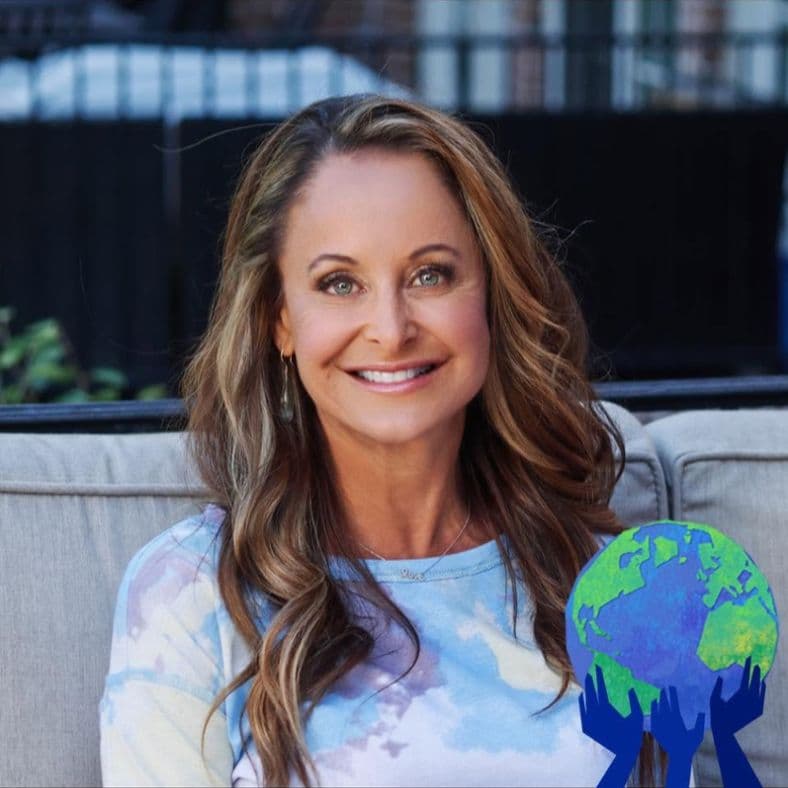
Full Transcript Podcast Introduction and Guest Welcome 0:00 Hi, I'm Dr. 0:00 Scott Stoll and welcome to a regenerative life podcast where science becomes hope, food becomes a catalyst for healing and every conversation explores 0:09 the profound connections between personal health, human flourishing and the earth and future that we will share together. 0:16 But more importantly, we'll explore one of the most important questions of our time. 0:20 What happens when we actually begin living in alignment with the way we were designed? 0:26 Well, hello and welcome back to A Regenerative Life. 0:29 I am Dr. 0:30 Scott Stoll and today I'm really honored to be welcomed by a friend and a guest and I think somebody that you will be really interested to learn from. 0:39 Today's guest, Marcy Zerach, is somebody who spent more than three decades seeing connections that much of the world is just now beginning to recognize. 0:47 We were just talking about this before we started that, you know, I thing one of Marci's gifts is seeing the word through an intersectional lens. 0:55 She is a visionary entrepreneur, an author, educator, and, I believe, one of the true pioneers of a sustainable fashion movement. 1:04 But Marcy's story doesn't begin with clothing. 1:07 It really begins with health, with food, a fundamental question. 1:11 And it's a question that we really like to focus here on our regenerative life. 1:15 How do the choices that make every day affect our own well-being, other people, and the living world around us. 1:23 And Marcy has considered this question deeply and linked some things that I think you'll find very interesting today. 1:30 She helped to create many brands, and she also started the Institute for Integrative Nutrition, for those of you that may have gone through and gained 1:37 a certification there. 1:38 She is one of the co-founders. 1:40 She coined the term eco-fashion back in 1995, Marcy, when nobody was thinking about that. 1:46 she launched groundbreaking organic lifestyle brands, she's helped shape global organic textile standards, cofounded the textile exchange, 1:54 championed regenerative agriculture. 1:56 We've seen each other many times at the Rodale Institute. 1:59 And she spent her career pulling on threads that connect soil, food, fiber, farmers, human health business, and the planet. 2:07 And that's why I'm so interested. 2:09 At the heart of her work is a beautiful and increasingly urgent idea. 2:13 We don't have to choose between beauty and responsibility, prosperity and stewardship, or human and planetary health. 2:21 we can redesign a system around us that actually helps regenerate life. 2:27 So we're gonna go deep into food, fashion, explore larger visions, interconnected relationships today between what we eat, 2:36 what wear, and how this helps us hand off a healthier planet to the next generation. 2:40 So Marcy, welcome. 2:42 I am so glad you're here. 2:43 Thank you. 2:44 Thanks, Scott. 2:45 Thanks for having me. 2:46 And I like listening to all of this and I just smile like in every cell of my body because this work that I do that you do, 2:53 you know, it's just at the root of, really driving that transformation of human consciousness and, leveraging all the vehicles of lifestyle that can help 3:04 us do. 3:05 So true passion in my heart. 3:08 Yeah, thank you. 3:08 I know it's been a passion because you've spent your entire life doing this. 3:12 And so, you know, with that, like, take us back like Marcy Xerox as a young girl and then in college student. 3:20 What were you interested in? 3:21 Were you curious as child? 3:23 Like, I'm always interested an entrepreneur's lives before they started doing what they were doing. 3:28 Like what were like when you were young? 3:30 You know, I always say that my career is this kind of gigantic soup of like all the little pieces of my life when I reflect back. 3:38 So take me back, let's see. 3:40 I got best dressed in high school, so I've always loved fashion. 3:44 And I was also an artist in High School, and so, you know I loved creativity. 3:53 But I also was inspired at a very young age by the founder of Aveda. 3:58 My girlfriend who was a hairdresser gave me a book called Living in the Light by Shakti Gawain. 4:05 When I was 15 years old, I just turning 16. And I read the book and I had this like giant aha of, you know, there's so much more than what we see. 4:15 And I was kind of that person that was always drawn to, I'm a Sagittarius, but I always was drawn like wanting to learn more and wanting travel and just 4:25 wanting open my mind. 4:26 So she kind exposed me through this book to this journey that I really started in my mid-teens where I became a vegetarian. 4:36 I started to read about Eastern philosophy. 4:40 Buddhism, Hinduism, I started to practice yoga in my teens back in the day.
Marcy's Early Life and Path to Integrative Nutrition 4:46 I mean, we're talking in 80s when like the only people doing yoga were like, the hippie, you know, alternative. 4:52 It was one of the new agey people. 4:54 Like, just went down that rabbit hole and I start to read Rachel Carson and John Robbins and Neil Barnard on the medicine level. 5:02 And, everything made sense to me, right? 5:05 Like it was always like duh, how come people don't get this? 5:10 And I never felt like I was a hippie at heart, but I also was mainstream girl. 5:14 And that was the whole best dressed and high school and the artist. 5:17 So I always thought, how can I bring these worlds together and leverage consumer products, business, I was also an entrepreneur. 5:27 I like that quintessential, you know, kid with the lemonade stand, had business cards by the time I 11. Yeah, I'm doing calligraphy, 5:36 private calligraphy for people. 5:38 And so like all these interests kind of came together where I started cooking because I studied macrobiotics and Ayurvedic philosophy. 5:47 I started cooking a lot and learning about energy and how everything just starts with energy. 5:53 And when you start to understand food and you go down that rabbit hole of understanding how it's all connected, then everything starts at the seed, 6:02 at source, right? 6:03 And so I sort of to embed that into my personal life while I then was drawn, of course, to UC Berkeley for college. 6:10 I was a computer science nerd when like in the 80s, when it was first starting, because again, my brain was like, the mathematical, 6:18 analytical mind of me was, like this is fascinating, this could change the world. 6:23 And so I went to UC Berkeley to study computer Science. 6:27 Because I already was living a holistic, healthy lifestyle, it all started coming together for me. 6:32 At the same time my girlfriend, that was hairdresser, introduced me to the brand Aveda. 6:37 And I read the bottles of the first products, and I was like, this makes so much sense to me, you know? 6:44 The idea of leading with that aesthetic experience. 6:49 In Aveda, it was smell, we got drawn in. 6:52 in food, its taste, in fashion, at style, business, that's making money. 6:58 But also in art, It's about what we see, what draws us into the art world, or what hear through music. 7:05 And it all sort of came together. 7:07 And in the early 90s, I started what's known today as the Institute for Integrative Nutrition, which was originally called Gulliver's Living and Learning Center. 7:17 So this was my first business out of school. 7:19 I got a business degree from Haas Business School at UC Berkeley. 7:23 And then I started the school kind of very intuitively where I wanted to take people on this journey, a journey to the lands of health and self-realization 7:33 and discovery to learn about, you know, all the different systems that serve us. 7:38 And we had an Aveda spa. 7:40 It was the first Aveda Concept Salon in New York, which I opened with the founder of AVEDA. 7:45 We had a natural food cooking school inside the school and then we had professional certification program which taught people or trained them to be health coaches. 7:56 And so we just kept, you know, each year just graduating more and more students and it got so big that when I had my first child in 1995, my co-founder 8:08 Joshua Rosenthal actually started talking to me about really scaling down the cafe and the store and this spot and really focusing on the program. 8:18 And so we had a magazine as well called Macrocosm. 8:22 I go back to the magazine back in the day and I'm still saying the same things I was saying 40 years ago or 26 years. 8:31 But what I started to learn is once you plant the seed of consciousness in people, it inevitably will grow, right? 8:39 So when I started to realize this, aha, a horse was doing beauty products and, you know, food was kind of the gateway that got people onto this like, 8:50 journey, it starts to grow that consciousness. 8:54 And then it's what else? 8:55 What's next? 8:56 what more? 8:57 And that's when i coined and trademarked the term eco fashion in 1995 to connect the dots of all these sort of lifestyle choices that I was making But 9:08 that fashion made sense because the more I went down the rabbit hole of the how and the what and when and where and why, 9:14 I started to see how toxic this $3 trillion industry is. 9:19 And I said, ''I've learned in food and I've learnt in beauty. 9:21 I'm going to roll my sleeves up and take on the fashion industry.'' There's a lot more from there, but the last 30 years, 9:27 really, my deepest work has been to unlock that transformation, to start at the source, just like I did in food, and to build up supply chains and understand 9:43 how to built more efficient, more sustainable, regenerative systems that don't deplete, destroy, degrade, pollute, but instead serve us, 9:51 nurture us and heal us. 9:53 And that's what I've been doing in connecting the dots of food beauty and fiber for my whole career. 9:58 Yeah, and I think what you just said there is really relevant to everything. 10:02 It's what are we doing every day? 10:03 What choices are making about the food we put on our plate, the clothes we're putting on the body, what we bring into our home that's serving us and serving 10:12 others and contributing to the system. 10:15 There's really two systems, right? 10:16 Both in food, fashion, everything else. 10:19 And at the root of food and fashion are two system that are really linked back to how they're produced. 10:25 You know, we'll put a pin in food for a minute, because I want to go and talk about eco-fashion and the term that you coined in 1995. So two questions. 10:34 One, what were you seeing at the time that others hadn't seen yet? 10:37 Because you were really on the cutting edge. 10:39 I mean, nobody was talking about Eco-Fashion back in the 90s. 10:42 And then was there a particular moment when you started to realize that the work you'd done in To understand, you know, healthy fiber and food come from 10:53 the same source, soil, sunlight, water, agriculture, farmers earning a living wage versus the kind of ultra-processed food, 11:03 unhealthy food. 11:04 You know CAFOs for animal agriculture and this kind toxic eco-fashion are coming out of the source. 11:12 What was that moment that you had that realization that were seeing things now just two things and through the lens? 11:19 I would say it was three things that converged. 11:22 Okay, so the first thing was Anthony Rodale and I were very dear friends. 11:27 And of course the Rodal Institute, you know, being a leader in regenerative and organic agriculture, I had already been working with from my food side, 11:36 right? 11:36 From the IIN side I was very heavily involved in the natural products industry and going to expo and really being an advocate for healthy eating and So 11:48 we started to talk about the new farm concept, right? 11:51 And so park that. 11:53 And then on the agriculture side, as I started learning about food and fiber, particularly cotton, And I learned that 60% of a cotton plant actually goes 12:09 back into the food stream, right? 12:11 Because you crush seeds when they get ginned out of cotton, when you harvest cotton and they go into animal feed, it's the most nutrient-dense part of 12:22 animal food. 12:22 And also the oil goes into lots of products, breads and snacks. 12:26 So when I learnt about that connection, I kind of went, huh? 12:30 Then I was shopping with clients of mine from IIN who happened to have been members of the Saudi Arabian royal family. 12:38 Kind of a crazy story. 12:40 They found me through Iin, one of The Princess's needed health support for a health condition and I started consulting with her. 12:48 And one day she was like, hey, what about fashion? 12:52 You've turned me on to, I was shopping with actually. 12:56 She was in New York City and she's like hey let's go shopping. 13:00 And she was like, you've turned us on to Aveda, clean beauty. 13:03 You've turn us onto eating organic food. 13:05 And by the way, once she healed her condition, I had a whole group of princesses that I was working with. 13:12 It was really wild and kind of surreal. 13:14 They all loved fashion. 13:18 Wow, you know, we're eating healthier now because of you. 13:21 We're using cleaner skin products because if you... 13:23 What about fashion? 13:25 So I was like, well, if I create it, will you buy it? 13:28 Will you wear it will? 13:29 You give me feedback? 13:30 Yes. 13:31 And then I had the whole Aveda piece where Horst and I became best of friends, the founder of Aveda. 13:38 And we were always talking about the connection of food and beauty and educating at each other's centers. 13:44 And he loved fashion. 13:46 I love fashion because fashion and Beauty go together. 13:49 He created a brand called Anatomy right at the time that I coined and trademarked the term eco fashion, because of these other pieces. 13:56 So it all started like reinforcing itself. 13:59 Of course, other than this little ecosystem that i mentioned, everyone else thought I was crazy. 14:04 like Marcy, come on, that will never work. 14:06 People who are into fashion are not into the environment. 14:10 And people who were into environment and consciousness and humanitarian efforts are no into passion. 14:16 They could care less, right? 14:17 This is the material world versus the spiritual world, and there are two dichotomous worlds. 14:21 I'm like, but I am that person that's in both worlds, like I can't be the only one. 14:26 So that was kind of the you know, really the impetus of coining the term was, I'm gonna style the world of change and I am gonna change the word of style. 14:38 And I going to bridge the tree hugger and the fashionista and tribe and boardroom because I both and that there's a huge market of people who are also 14:50 evolving and on this journey alike. 14:52 Andy, you were right. 14:54 It's been a lot of years in the making. 14:57 It may not have felt that way in the beginning, like most entrepreneurial stories. 15:00 You're usually on the edge. 15:02 How did you deal with the naysayers? 15:05 Sometimes the ones that are most difficult are the one that's closest to you, especially as an entrepreneur. 15:09 And stepping out, just as a quick aside, I think most people that moving into lifestyle medicine, whole food plant-based nutrition, 15:16 eco-fashion, are in that same kind of genre. 15:20 So how do you handle nay-sayers. 15:22 Yeah. 15:23 So I would say even from like the very beginning of my career when I was in food, right? 15:29 Like how many people back in the eighties like thought I Was nuts because I talking about hijiki and kale and tempeh and like they were like, 15:39 what, What is that stuff? 15:41 And when they started talking About organic, you know, they thought it was brainwashed, Right? 15:45 So, I think for me, You know I trust my gut and I always say to entrepreneurs, follow your heart. 15:54 Your heart is 5,000 times stronger than your head, your brain, right? 15:58 In terms of vibration, in terms energy, we're all just made of energy. 16:03 And just logically, would just say the people, look, everything we put in on and around our bodies, is just an extension of who we are. 16:11 So before there was any science about organic and healthy eating and it was considered woo-woo, you know, if you just sit down and you close your eyes 16:21 and reflect on like who are and our desire to be healthy, and we learned this during COVID, a lot of people, if you don't have your health, 16:30 you have nothing. 16:31 I think the reason we all had to stay home was to go back inside where our gut, our truth, or lifeline to what is really exists. 16:40 And that, for me, always was clear. 16:42 So I always felt like, If I can just walk the talk and teach people by example, they'll see that I'm not as crazy as they think I am. 16:52 And I think the real turning point of that was, you know, I had kids very young in my early 20s, mid-20s and decided to raise my kids exactly the way I 17:03 was living my life. 17:04 And they never got sick. 17:06 They went to regular schools. 17:10 You know, really conscious schools with conscious kids, they went to regular schools, but they never got sick. 17:17 They always had tons of energy. 17:19 But they got it.
From Eco-Fashion to Connecting Food, Beauty, and Fiber 17:20 And it wasn't like punishment to eat this way because I lived the lifestyle and I was educating them along the way. 17:28 I had the school on a parallel track and my life and career. 17:32 So what I started to realize is just you know, continue planting seeds and cultivating them because the naysayers, I believed, 17:40 will eventually wake up. 17:42 It's like if you just plant seeds, and cultivate, some will bud and they'll all bud at different times, right? 17:49 Some will but first, Some of them bud later, but eventually we're all part of nature. 17:53 We're going to bud, we are all going grow, We are going bloom. 17:57 And that whole kind of thriving or blooming together is really about, you know, feeding our soil, right? 18:04 And it's like the Rodel Institute says, healthy soil makes healthy plants, makes helping people. 18:10 And, it always made sense to me. 18:11 So, the naysayers, I can see through the lens of my kids because people thought I was abusing my children. 18:20 They were little. 18:21 They would go to school with tofu in their lunchboxes. 18:24 But over time, I think the proof was in the pudding as their kids started to want to learn what my kids were doing. 18:32 And all of a sudden, their children were teaching them. 18:34 Over time my children are millennials, they have grown up where their generation has grown being more open to the point where I'll never forget my, 18:45 you know, my son came home, he was in 10th grade, and he's like, oh my god, mom, everybody's talking about organic and they're calling Acai, 18:54 okay, nobody knows what anything means, but they all think it's really cool. 18:59 And I think that was really when I was like yay, like this movement has gone from like crazy to cool, And when I started taking my kids on college tours, 19:10 you know, that's when i saw the schools, neighborhoods were popping up with organic on the sign. 19:16 And so, I think our kids generation has been really a catalyst to go to help us change that trajectory from being, again, 19:27 not received well or at least very, very niche to becoming mainstream. 19:33 Yeah, we're definitely getting there. 19:35 Sometimes it takes longer, like any entrepreneurial journey and some naysayers, it take longer than we think, but it's amazing that, 19:43 you know, over time, things do change. 19:46 And as you're pointing out, a lot have changed in the time that we've both been doing this. 19:50 I want to dive a little deeper into the idea that food and fashion are really two branches of kind of the same agricultural system. 19:58 And with the understanding that, you know, more than anything, agricultural practices in the food system affect nutritional quality, 20:06 human health, and the planet almost more But also at the same time, as you're pointing out, cotton, flax, hemp, dyes, all of these other materials evolve 20:18 from the system. 20:18 And some of them are actually evolving from a chemically driven plastic system, right? 20:23 So what happens, and what happened for you maybe too, when we begin asking of our clothing the questions that I've always asked about food. 20:31 Where did it come from? 20:32 How was it grown? 20:33 What kind of soil was a grown in and how was the soil managed? 20:37 Who produced it? 20:38 And what was the cost to the ecosystem and what are the outcomes of that food or fashion? 20:46 I'll start with cotton because, well, it's dropping. 20:49 But now I think we're finally hitting bottom where it is going to start rebounding. 20:53 Cotton is about 25% to a third of the world's five fashion, apparel and home textiles. 21:03 So when you look at cotton as a start in agriculture, cotton is one of most heavily sprayed industries in the agriculture. 21:12 It has the most monocropping because there is the misconception of, well, we're not eating it, so we can just grow nothing but cotton. 21:22 We can spray the hell out of it using GMO seeds, and we are just putting it on our bodies. 21:27 Or we put it into clothing, but we aren't eating so it's all good. 21:33 As I mentioned earlier, we actually are eating it because 60% of the plant gets ginned out. 21:40 It's the seeds and the lint and gets pressed, cottonseed oil and cottinseed for dairy feed, right? 21:48 So we are, eating at number one. 21:49 Number two, The livelihoods of the farmers are a lot of times they're spraying with pesticide tanks on their backs in third world countries like India, 21:59 where in the US it's all industrial farming, huge machines of just insane amounts of chemicals. 22:08 And oftentimes, again, in India, you've got mothers wearing slings with babies and pesticide tanks on their backs. 22:14 And the social ramifications and the health conditions that are developed after spring seasons are crazy. 22:22 Somebody's protecting these farmers. 22:24 Then you look at what happens is they get stuck on these pesticides treadmills where They get lured in by the chemical companies and the GMO seeds and 22:37 they end up where they can't really afford them. 22:39 And so they ended up leveraging parts of their farms to banks who are in cahoots with the chemicals cocktails and seeds. 22:47 Now they've leveraged their farms and they're using the chemicals and eventually the bugs build resistance. 22:53 So they need stronger, more expensive chemicals. 22:55 And they get on this treadmill to the point where they depleted their soil so much, their own personal health is suffering. 23:03 They've leverage their farm and every half an hour in India, conventional cotton farmer today is committing suicide. 23:10 because they're stuck on this system that is completely broken. 23:14 You've got degraded soil and it's depleted of all its nutrients, and now you've what was a big spike in yield starting to drop backwards, 23:23 right? 23:24 And that was the whole selling tool. 23:26 So now, you have all the air and the water and all of the pollution through the chemicals that are running off into the systems, 23:34 so the entire thing is broken, One big part of the fashion industry, textile industry that's waking up in terms of this, 23:43 you know, where we are is recognition that old school cotton business as usual can't continue. 23:51 Because if we really want to make an impact and do real work in the Fashion textile Industry, we have to look at natural fiber. 24:00 Everybody's starting to open their eyes and go, what does that mean? 24:03 How do you define sustainable? 24:16 key areas of focus right now is to actually put a stake in the ground to define where we want to drive the industry. 24:22 And I'll speak to that a little more after, because I'm doing work around that right on my own. 24:28 Just want a touch on the other side, when you talk about producers, everything starts with producers. 24:33 So in agriculture, you've got cotton, but you also have, of course, as you mentioned, linen, flax. 24:38 You have animal fibers like silk and wool. 24:41 But then when we talk synthetic, so as cotton has dropped, synthetic use, especially in the proliferation of fast fashion, 24:48 has risen. 24:50 And over two-thirds of textiles today are synthetics. 24:54 Well, what are synthetic? 24:55 Plastic, chemicals, and people haven't stopped to think about the health and environmental ramifications of the fact that we've been supporting basically 25:08 a plastic industry, right? 25:10 And we're wearing that on our skin and then we ask why there's been such a growth in skin conditions and psoriasis and eczema and chemical sensitivities 25:20 and nobody's looked at textiles from a health lens and what we're putting our skin or sleeping in every single night because you know microfiber bedding 25:29 has become all the rage over the last few years it's so cheap and it so soft but it is plastic. 25:34 So when you start to look at now the information getting out on a number of levels, number one, the microfiber pollution in our oceans and our water systems, 25:44 well, a third of the plastic in oceans is microfibers. 25:48 It's textile fibers that have just degraded in washing machines and run off into our systems and oceans, right? 25:56 So you have plastic fiber that we've been wearing now we're eating it, right? 26:01 Because we are eating fish and 90% of fish today have plastic microfiber traces in them, then you also have the fact that there are now tests going on 26:12 about infertility and other health conditions from the endocrine disruptors in plastic that were wearing. 26:18 or that we're using as underwear, or in bedsheets, American Airlines stewardesses sued American many years ago because they were all breaking out in rashes 26:30 when they would put their uniforms on. 26:32 And this just isn't talked about enough, but our health and what we are consuming food-wise definitely touch the fibers and materials that were using, 26:42 and I'll just end with saying 70% of the social and environmental impacts of fashion and textile industry come from the fibers and materials. 26:55 So if we really want to transform this $3 trillion behemoth of an industry globally, we have to go back to source, to where things come. 27:05 Same where food started. 27:06 I just want to take a little bit of a rabbit trail because I'm just curious. 27:10 When we look back philosophically, we made decisions 150 years ago that created this kind of disjointed, compartmentalized system, 27:20 and we've forgotten that everything is irreducibly integrated. 27:24 Where did that start to deviate in the fashion industry? 27:27 I kind of know the history of food, but where did fashion start deviating from organic, that's all that was produced at one point in time, 27:35 natural fibers to the plastic industry and what were the drivers behind that? 27:41 Yeah, it happened relatively quickly, right? 27:44 In the sense that, you know, to your point back in the day, when you look at the materials that were being used in fashion, 27:51 they were all derived from nature, and over time, there were four seasons a year at most in a fashion industry, sometimes even just two seasons here, 28:01 because you would look it like, what are the things that we can work in harmony with our environment? 28:06 in the fall and the winter, you know, and it was the leathers and furs and, obviously not as the way that the, just like factory farming on meat, 28:16 the whole process of even how we cultivated animal fibers changed and became commercial and factory farm, right? 28:24 It was all from natural materials. 28:26 And then over time, You know, money, business, all of the money and you know margin and how do we get things better, cheaper, 28:35 faster? 28:36 And that mentality over time just kept pushing the industry towards fast fashion to the point where there were over 52 seasons a year.
Why Fashion Needed a New Lens 28:46 And it just keep getting faster and faster. 28:47 Well, with that became what are the fastest materials? 28:50 What are cheapest materials, how did we the most materials. 28:54 And that's where the fossil fuel industry started upping the Antion synthetics because you can make polyester really fast and really cheaply, 29:02 right? 29:03 And then nylon and all the other synthetic base fibers. 29:08 The natural fibers were more expensive. 29:10 So naturally over time, you saw this kind of growth in the synthetix because of that. 29:17 And because they're systems and you have to plan for them, you to work into them. 29:22 I mean, this is what I've been doing my whole career, but it is so interesting for me. 29:26 You know, I took a Target Corporation buyer to our farm in India to learn about cotton. 29:36 And she was literally, 35 years, she buying sweaters at Target. 29:41 She's like one of the longest standing buyers who didn't actually have to move around departments. 29:45 she always was in sweater buying. 29:47 And so many sweatters have cotton in them or are made from cotton, even though there's lots of other blends. 29:52 she never realized cotton was a natural fiber grown in nature next to lentils and other crops. 30:02 She never connected that and so she literally was crying as she was learning and talking to farmers and meeting and learning about the seed as life and 30:12 all these things. 30:14 It just changed her entire way she procured. 30:16 But that's the problem. 30:18 You have this inherent tension in the fashion and textile industry because every season you're buying, you buy, and you move so fast. 30:26 And the faster the season, the more seasons, so faster you are moving. 30:29 you don't have time to think about what's in it, how it's made, where it is made and all of that. 30:33 So now here comes Fashion revolution, right? 30:38 Fashion Revolution started when the Rana Plaza tragedy happened and a factory collapsed in Bangladesh that caused 1,133 people to lose their lives instantly. 30:51 And the whole world found out about it. 30:53 Everyone was outraged globally. 30:56 People started to wake up. 30:58 And all of a sudden, the question of, going back to what you said, who made my clothes? 31:03 What's in it? 31:04 Where's it being made? 31:05 How's that being? 31:06 Made was the first time people started really asking those questions. 31:10 And that was in 2013. So from there, we've had some like two steps forward, one step back. 31:17 But the industry is waking up, right, little by little. 31:20 And as, you know, the board of tech soft change is, Lululemon is Nike and it's Patagonia and H&M and its VF Corp and Its PBH and It's patagonian. 31:32 So everyone's at the table now and everybody is asking those questions and realizing to be relevant. 31:38 It is not about staying ahead anymore. 31:40 Its about not being left behind. 31:42 It's about being able to be compliant to policy that is now underway, starting in the EU, but these are global brands, so they're going to have that same 31:52 accountability everywhere. 31:53 To consumers finally waking up that fast fashion, enough is enough. 31:58 all of those toxic chemicals from the waste, water, energy, chemical use, and social justice issues that have just exploded because of all these seasons, 32:09 we just got to stop. 32:10 We've got pull the brakes back. 32:12 And now the kids are looking at thrifting and recycling, right? 32:16 That's sustainable fashion. 32:17 I mean, it's here, so cotton is being talked about, recycling. 32:24 Textile to textile recycling is definitely a huge huge, growing innovation frontier. 32:29 But the industry is finally at 30 years in the making for me, but at its really starting point where I think we're going to start to see the gas pedal 32:39 getting pushed down because you've got corporations that are looking at risk mitigation now of their supply chains because of geopolitics. 32:46 Because of them realizing you need to know where your sources are today. 32:51 And if the sore starts at fiber, you know, we need to know where our fibers coming from. 32:56 So all these things are like converging, policy and consumer demand and waking up and now corporate risk mitigation all coming together. 33:06 And, I think for me, this kind of aha, like, yay, were here. 33:10 When Sorry Night Live did a skit on sustainable fashion, they were making fun of like the shi mu, shian and timu. 33:17 I was like wow, it's hit popular culture. 33:21 Here we are. 33:21 Yeah. 33:22 It only took 30 years from your original idea. 33:26 But hey, it's in your lifetime. 33:27 That's pretty good. 33:29 Better late than never. 33:30 And as you're talking and as I'm imagining that woman from Target standing in the field and having that realization that sweaters, 33:40 cotton is not only from plants, but people actually growing the plants. 33:45 You know, just makes me realize one of the root problems in our modern culture is disconnection. 33:50 And one of the root solutions is reconnection, reconnecting with ourselves, with each other, origins of our food, origin of fashions, 33:59 the impact of buying choices. 34:01 And as we become more and more reconnected, I think there's a greater hope for the future, don't you? 34:07 Yeah, so my book that came out a handful of years ago called Eco-Renaissance, and a renaissance is a rebirth, right? 34:15 So the whole premise of the book is through the lens of design, we can transform the world because we re-connect and recognize that we're all part of an ecosystem. 34:26 So this rebirth is that understanding that art, food, fashion, beauty, business, wellness, each other, we're all connected and the pillars of the book 34:40 are connection, creativity, collaboration, community, and consciousness. 34:45 It's the DNA, it's a framework that helps us wake up and build a new paradigm for the way we are living our lives because the one that we've you know, 34:55 created, right, isn't serving us. 34:57 So we need to co-create a, what my tagline, you now, a sustainable and sexy and, and stylish and more conscious world, we needed to be thinking differently 35:12 about how we're creating. 35:14 And that's where one of the channels that I'm really focusing on right now in eco fashion, which is one the most exciting for me, 35:25 is the music channel. 35:27 Because if you think about how music inspires us, and it's what we always kind of, when you close your eyes and you come back to, 35:34 what we remember and what are drawn to, you know, and, what activates us and energizes us, connects us all over the world, 35:43 right? 35:43 The young, like, real popular artists are all in their 20s and 30s, they're living the lifestyle, waking up to sustainable fashion and healthier eating 35:52 and all these things. 35:54 And so Billie Eilish was a real catalyst for Universal Music Group a couple of years ago and said, I want all my merch to be sustainable and basically 36:03 demanded that. 36:03 And they came to my company, Eco Fashion, and we made all of her merch. 36:07 It sold at Target and Urban Outfitters and Hot Topic and on our website and blew out. 36:13 and I think it was a wake-up call for the music industry. 36:16 And I got to work with Sony Music Group and Universal Music and Warner Music on the Music Industry Climate Collective to develop and design the Scope 3 36:26 emission strategy for music and textiles for merch. 36:31 So I've been working on that the last few years and now the engines are revving and there's all this all this engagement around transforming the music 36:41 industry and why I bring it up is culture is the greatest activator or driver of change, right? 36:48 And I learned that we have to connect agriculture and popular culture. 36:52 and going back to make the farmers cool, right? 36:56 Make these stories really powerful. 37:00 When you say that they're so far down that the consumer doesn't see it, they think their clothing is growing in the department store and their food is 37:07 going in a supermarket. 37:08 They don't understand, but they are starting to, that everything starts at that source and we need to connect them back through social media and storytelling 37:19 and bringing fashionistas to farms and farmers to fashion conferences, right? 37:25 And that's kind of what's happening now. 37:27 Yeah, gosh, you are singing my song, Marcy. 37:30 I've said for so many years, the root problem is culture. 37:33 We can talk about the obesity epidemic, chronic disease, behavior change, lifestyle medicine. 37:40 And at the end of the day, when you do the research, it's a cultural shift. 37:44 It's philosophical, cultural shifts that drove businesses and businesses do what they're created to do. 37:51 They're being in forms they are doing. 37:53 which is to drive profit. 37:55 And you just do that from a disconnected lens and we end up with the challenges that we have. 38:00 But I love that you're connecting culture to the solution. 38:04 As we shift the culture, it becomes cool and it helps bring awareness and people start to wake up and see the connections. 38:11 I believe that inherently humans, when we see these connections, we want to do what's right. 38:17 We've seen that so often. 38:19 We really do. 38:20 And I think that's wonderful. 38:22 I've always advocated for decades that we want the farmer to be seen as a part of the healthcare team. 38:29 But I love bringing farmers to a fashion conference. 38:32 That would be awesome. 38:33 Yeah, and there is a whole effort globally now to drive regenerative agriculture. 38:40 And I don't know if you've heard of the 1 billion acres. 38:43 There's a lot of people at the table right now. 38:48 I've seen it firsthand, but when you bring people to farms, that's why I love the Rodale Institute's farm tours too, right? 38:55 And to reconnect them with who we are. 39:00 We're not outside of nature, we're a part of it, right? 39:02 We breathe out carbon and we breathe in carbon, and nature breathes out oxygen, then we breath in oxygen. 39:12 And we have this symbiotic interdependence. 39:16 I think people just forget that. 39:19 When we start to give them what I call the Yes and philosophy, lead with the yes. 39:26 lead with good tasting food, good smelling and working personal care products, fashion that looks good and is priced right and fits well and bright colors
Culture, Storytelling, and the Rise of Sustainable Fashion 39:39 and the right design. 39:39 If you give them what they want and then it's, and oh, by the way, it also X, Y, Z, A, B, C. 39:47 It's better for you, better, for the planet, you know, farmer welfare, all of that. 39:53 Then it's not about compromising value or compromizing, it is adding value. 39:58 And I think that's the mantra, right? 40:01 That we all have to speak that I know many in our space do, which is how do we bring these worlds together in a way that is about no compromise, 40:10 that isn't this and that, but is value values, right? 40:15 So that it's no longer a choice, it is an imperative and it also one that people recognize if they have that choice. 40:22 and they can check the boxes of what they typically want. 40:25 And they're getting more that, of course, they are going to choose better, right? 40:29 Always. 40:30 I go on QVC, HSN, and that's always my greatest opportunity and dilemma is how do I speak to and activate the mainstream middle America around this kind 40:46 of thinking and just making it fun and making accessible and bringing the right movers and shakers and thought leaders and trendsetters, 40:56 you know, and that's the whole one billion acres we're talking about an event in India potentially at the end of the year with Bollywood and influencers 41:05 and celebrities and you prime minister and like you bring the people who are really the activators of culture, right? 41:12 And that's why, again, I go back to music and I look at, you know, how do I connect the celebrities to the farms? 41:18 and we're starting to talk about that more and more, and so they can be talking about it and look it, the movie groundswell that just came out, 41:26 it had Demi Moore and Woody Harrelson narrating and, You know I think it's really about like making it authentic always, 41:35 but affordable and accessible and connecting these dots because the whole is greater than the sum of its parts. 41:44 So when we tell stories together, you know, we're much stronger together than we are apart. 41:49 I always say one plus one equals 11, right? 41:52 Because we were exponentially stronger. 41:55 That's really good, I love that. 41:57 I loved the yes and philosophy too, which is empowering and the either or is disempowering because it demands a decision. 42:05 So I really think that's the way to go. 42:07 And that is how humans make choices. 42:10 We would be much more likely to make a yes-and choice. 42:14 You said something about regeneration. 42:16 I just want to circle back to so much talk today about sustainability. 42:20 And, you know, at least in my mind, sustainability is really asking us to do less harm, bring things into compliance. 42:29 But the word regeneration is more empowering because it asks, what can we actually do to leave the system healthier than we found it for the next generation? 42:38 And you speak a lot about, you know, today about regenerative agriculture, regenerated business. 42:45 So what does the world regeneration mean to you? 42:48 How are you linking that philosophically between, business, fashion, food and agriculture? 42:55 Yeah. 42:56 So our starting point would be what you touched on, which is sustaining is not enough because we're broken. 43:02 We've destroyed, you know, our health, we've destroying cities, We have destroyed agriculture through the use of these toxic chemicals, 43:11 right? 43:12 So we need to rebuild, and we have to restore. 43:17 And when we look at ourselves, we're in that same bucket, right? 43:22 Again, this is all about nature. 43:24 So, you know, nature being a reflection of us. 43:28 Starting with regenerative agriculture, when you look at, we can remove the chemicals, We can help farmers go from conventional farming to organic, 43:40 but if we don't incorporate the methodologies that are going to rebuild the soil's health and biodiversity and nutrients and rebuild a living breathing 43:53 ecosystem there, then we're not really going the kind of yields, we are not going have the system that we had initially before we destroyed it. 44:03 So it has to work hand in hand. 44:05 Now in agriculture, I've always been a very strong advocate for organic agriculture. 44:11 For as long as I'd been studying, you know, Rudolf Steiner and connected to the Rogel Institute, we're going on 35-plus years for me. 44:20 You know? 44:21 It's always being, for again, that reflection, the mirror of who we are. 44:27 But what the decades have shown is that in any kind of effort, when you start to onboard, more and more, you know, farmers in the case of agriculture, 44:39 they're often going to do what they are guided to. 44:44 And I think we've lost some of the methodologies and principles around what Rudolf Steiner and Dale always was about was biodynamic, 44:54 was organic and regenerative, not one or the other. 44:58 When that happened, I was on the board of the Organic Trade Association for many years. 45:03 You know, did a lot of policy work in Washington and, you know we helped build the organic standard, the NOP and working with the USDA. 45:13 I helped launch the Erganic Fiber Council for the Arganics Trade association and write the GOT standard. 45:18 And I think just through sort of all the work, we realized that We all have to work together, but what started happening is those who wanted that continuum 45:31 and more and More started to form kind of an extension of organic and the first kind Of chapter was we need to get back to regenerating and we Need organic 45:42 And regenerative and then the roc was launched And that is the platinum standard, right? 45:50 But it's hard to get to for the 99% of farming out there because you have to start with organic. 45:57 And if we look at, and I've been in this a long time as have you, we're still too small and organic. 46:03 We've got to be getting more farmers to organic, but guess what? 46:07 The reason that it's so hard is that three-year transition. 46:12 So the way I look at regenerative, the decade plus when the regenerative movement started, right? 46:22 And I was collaborating with the Regeneration International and Vandana Shiva and the beginnings of Kiss the Ground and of course the Rodel Institute. 46:30 And when this all really started to get talked about, it was, why can't we use regeneratives as a lever to get to organic, 46:39 help the farmers have a market during their transition to Organic, where we can say it's regenerative farming and validate and verify that. 46:48 So by the time they get the three-year transition of organic because they got into the system, it is regenerate and organic. 46:56 So instead of going organic and then regenerative, let's go regenerate and organic, right? 47:01 And so for me in cotton, I started a program in 2015, maybe 14, called RESET, which stands for regenerating the environment, 47:10 society and economy through textiles. 47:13 And we work with farmers to wean them off of all the chemicals, GMO seeds, start teaching them about all their regenerated practices, 47:21 bringing in with their animal welfare and, you know, into the system and as well as, of course, making sure that the systems has all the methodologies, 47:31 crop rotation, intercropping, you know, cover cropping green manure and low tillage or no tilled so that they start to build a healthier system in food 47:40 and in fiber because they're growing together. 47:42 And so what we've seen is that there are so many corporate brands out there that are willing to support the transition if they have a story around it. 47:54 And, so, in the fashion textile industry, regenerative has become a much bigger kind of word and demand than organic because there's just this,
Regeneration, Metrics, and Circularity in Textiles 48:05 again, assumption that organic is going to be too hard and too expensive. 48:11 But what we're doing is we are now guiding the industry back into organic, which is where the textile industry and this whole movement, 48:20 when I was speaking earlier about the AHA, it started as the organic industry. 48:26 That was the beginning of sustainable textiles. 48:29 because we were sort of segueing from food to fiber. 48:32 And the first chapter of sustainable fashion was about organic cotton. 48:37 Even the textile exchange, of which I said I'm one of the co-founders, which we started in 2002, it was started as the organic exchange. 48:46 And then we added the synthetics and the recycling 10 years or eight years in, right? 48:52 Because it was all about agriculture. 48:55 So I feel like we're now in this full circle where we want to help the industry move the financial model, because I was talking about the tension in the 49:04 industrial right now, between the economic realities of hitting cost, margin, and all the finance metrics that are needed in business, 49:13 and marrying that with all their desires to transform cotton, recycle and reuse, you know, repair and all the things on the, 49:21 and textile recycling, all of the thing on circularity. 49:25 So they want it, but it has to connect to the yes and, to price and the scalability and commercial viability, right? 49:34 And so all these worlds now are like at the table. 49:38 And that gives me a lot of hope because I think if we're all at the table, we can unlock this and there's your one plus one equals 11, right? 49:45 Yeah, there are solutions that, you know, when you're on your own or you are trying to do this without the interest and as you said, 49:52 the knowledge base of someone else, You can't solve that problem, but together at same table we Can. 49:57 Yeah. 49:58 I love your idea of moving regenerative ahead of organic and creating that as the door that provides the opportunity to learn something really valuable 50:07 for farmers. 50:08 to make a little bit more money and then ultimately get them to organic. 50:11 I've never heard that before. 50:12 That's fascinating. 50:14 And it also helps them start to rebuild the soil health, right? 50:19 Right out of the gate. 50:20 So it's measurable. 50:22 The name of game today, at least in the fashion textile industry, more than I have ever seen in sustainability. 50:29 before in the space is metrics. 50:31 It's data, it's traceability, its MRV, measurement, verification, and reporting. 50:40 And if you don't have that, they're not really going to sign up for that shift or that transformation because the first chapter of sustainable textiles 50:51 and fashion was all about marketing and they were all driven by the marketing departments. 50:57 Like when we launched targets for sustainable textiles, I was working with the CMO and the Marketing teams. 51:02 Then there was so much greenwashing in the industry and so many companies got caught with their pants down and called out that the reverse happened. 51:12 And all of a sudden, green hushing replaced green washing, where they didn't talk about a thing. 51:17 And they swap all these initiatives from being run out of the marketing departments to being ran out the product design and development and sourcing departments. 51:26 So they were starting to roll their sleeves up and do the work and learn about their supply chains so that they could then build different kind of products. 51:34 Eventually, marketing can come back into picture. 51:37 We're right at that crossroad now where I feel like you've got the stories and the marketing department starting to kind of learn. 51:46 And the product teams that are starting demonstrate through these MRV and traceability models and AI and data, right? 51:55 Because technology is really a lever today that is activating, you know, being able to redrive that convergence of source and story. 52:05 And so when I talk about using regenerative as a lever, it's because we can demonstrate outcomes now. 52:12 It's not just a word, right? 52:14 It is something that says, by regenerating, rebuilding, restoring, we show. 52:21 that we're making a difference in our practices. 52:23 So this cotton is actually better because here's why. 52:28 We're moving away from just criteria in certifications, like just check, check. 52:33 I didn't do this and I did not do that. 52:36 Here's what I've done, kind of what you said. 52:38 Not about doing less harm. 52:40 It's about more good. 52:41 And how do we measure and discuss what more-good actually means? 52:46 Because if we can, then we can move people to keep taking those baby steps forward and moving to organic. 52:54 Yeah, and marketing moves from greenwashing to really like invested seed planting, right? 53:00 Yeah, I mean, it goes from like knowing where, going back to that, all those questions, you know, who made it, how was it made, 53:08 what's in it? 53:09 Where was that made? 53:10 You know all, those, questions you can answer them, right? 53:13 Because you have traceability and you of data. 53:15 So that is the new frontier in the whole, this global fashion textile industry now is, What is really driving the transformation? 53:24 Technology is a key part of that. 53:27 And alongside all the things I talked about before the policy and the consumers and corporate risk mitigation because of geopolitics. 53:34 But the enabler now, the activator and solutions are coming because innovation is being driven. 53:41 I've spoken at a couple of huge tech conferences globally that I was like, why am I a keynote at this conference? 53:47 I started my career that way in computer science. 53:50 But that's not where I'm at today. 53:51 And I realized it's because I am at the forefront of such a huge industry. 53:57 There are so many technology innovations that want to connect into the fashion textile industry to reduce waste and reduce chemical use and make things 54:07 more efficient. 54:08 Circularity is where everybody is going. 54:12 We've got to get out of that linear model where everything ends up in our landfills. 54:15 You know, look at the beaches of Ghana, or how many companies were burning their old textiles, it's just a disaster because of fast fashion. 54:25 And everything's disposable, but it doesn't biodegrade because it is synthetic. 54:30 So people throw it away after a couple of uses, then it just sits in our environment as waste. 54:36 Maybe just for our audience, I have one more question for you to go into. 54:39 Just for audience maybe encapsulate for them if they're not aware like what's happening to clothing this fast fashion when it's thrown away. 54:49 Like we forget sometimes we put it in the garbage and then somebody picks it up and takes it away, but that's not the end of the story. 54:55 We kind of talked about the beginning to help people understand what is happening at the ends of this story and how that is impacting people in a world. 55:02 Yeah. 55:02 So I'll talk about the, what's actually happening, the problem, but also touch on kind of some of the solutions. 55:08 Cause also circularity and regeneration really go hand in hand, right? 55:12 So to keep this, when I'm about to share, you know, to shift that and now move that in a different direction, we need to regenerate these textiles and 55:23 we to rebuild them from the beginning. 55:26 And that's what we're doing. 55:29 system has basically been that people wear it and then, you know, over time, like for long periods of time and keep wearing it. 55:38 And over a time that has shifted where people are wearing things fewer and fewer amounts of times to the point where now the average consumer is getting 55:46 rid of something after just a couple of the times wearing. 55:49 Right. 55:49 Or sitting in their closet. 55:51 So there's a massive movement right now on the other side for secondhand, for keeping things in the system. 55:59 circular keeping things in the system that are going to be vintage and reused and remorned and cleaned up. 56:07 And there are, you know, from the real real to rent the runway and rentals, posh marks and, the biggest retail in France right now is the circular retailer. 56:16 But what's happening is all the disposable textiles that, you know, synthetics especially, that just got worn and thrown away have gone into landfills, 56:27 have been burned and or are just palletized and shipped to beaches in Ghana and Africa and third world countries, right? 56:36 And so, as the industry and consumers have woken up to all of this, there's now a movement not only to find fibers that have the properties of synthetics. 56:48 The first chapter of that was we call recycled poly RPET, but most people don't realize R-P-E-T is plastic bottles that are actually broken back down to 57:01 pellets and then turned into yarns and respun because polyester is polyaster. 57:07 Plastic is plastic. 57:09 And it's turned back into polyestere yarn and it is made into textile. 57:12 So a lot of people are wearing RPET thinking, wow, I'm wearing sustainable fashion because I am wearing our PET, but it basically plastic bottles. 57:21 Why are we using the waste stream of another industry in our industry? 57:25 There is enough plastic clothing out there that we need to use. 57:29 Finally, the industry is waking up and going, We got to stop using plastic bottles and start collecting all this old synthetic cheap, 57:39 you know, fast fashion synthetic textiles. 57:42 We need technologies that can break apart the fibers and separate the cottons from the polyesters because there's a lot of blends out there. 57:49 we need to take all that polyester fabric and we to break it back down to pellets the way that we were breaking down bottles. 57:57 And we needed to turn it into new synthetic fabrics that can emulate the properties that are needed in virgin synthetics. 58:06 And so that is where we're at, and there's all this incredible new innovation around that, but it's chemistry, right? 58:12 So you've got these massive factories that're being born right now, like Riju and Cirque, governments are investing into these systems now because the 58:22 waste streams are so out of control. 58:25 And I just came from India where India's sweet spot is agriculture because there's almost 150 million farmers in India alone, 58:35 right? 58:36 Plus you have the whole vertical infrastructure of manufacturing, but now they're also realizing all the wastes needs to be solved for in textile.
Practical Steps for Conscious Choices and Closing Reflections 58:43 So there is a lot of innovation that's starting to born in Indian even around recycling technologies. 58:49 that are going to capture the old and make new out of the Old. 58:52 So I would just say this for consumers who are just learning about this, like stop buying and supporting virgin synthetic fibers, 59:00 you know, all in all, and then start asking for more, regenerative and organic fibers in the natural fibers so that we can move away from those systems 59:09 that also depleting, destroying and polluting our air, water and bodies. 59:14 Yeah, thank you. 59:15 Gosh, that was beautiful encapsulation. 59:17 So finally, I just want to bring this back to the way we started, but also really back, to like the individual listening today. 59:24 You know, we start talking about the decisions we make about what we eat, which kind of is where you got your start in high school, 59:32 and then eventually led you to IIN. 59:34 What we put on our bodies every day, how we dress ourselves. 59:37 How we purchase things, how we use our money. 59:39 And then eventually the bigger question, How do we participate in the world system? 59:43 So for the person watching today, maybe this is all new information. 59:46 I have learned a lot, so I know it's new for me too. 59:49 What would you invite people to do differently? 59:52 Simple first steps. 59:53 If they want to begin changing their daily choices and they more of their choices to become expressions of health, stewardship, 1:00:01 compassion, and regeneration. 1:00:04 Yeah, well, I mean, this is what my book is about. 1:00:08 It's a lifestyle guide, right, to living a cleaner, greener, more conscious lifestyle. 1:00:15 I have resources, brands, thinking points and reflections, and that's literally what it's about, but I will say this, read labels, 1:00:25 don't just believe marketing anymore and advertising. 1:00:29 You know the internet and chat gbt and these are our best friends today find out what's in the products that you're buying who are the brands that You're 1:00:38 supporting and the companies you are supporting And you know and don't be misled by you Know just those who were trying to take shortcuts and do things 1:00:48 that are you? 1:00:48 Know they realize today. 1:00:50 This is where the future is going right? 1:00:53 And so everybody is somewhere in that, you spectrum of the lightest to the darkest. 1:01:01 And I think depending on where you are also, I would say, don't go home and throw everything you own away. 1:01:07 Just start to think differently. 1:01:09 I mean, the journey of a thousand miles begins with one step, right? 1:01:12 It's Lao Tzu and it's enjoy the journey, right? 1:01:18 And we used to say this at IIN all the time, which is, don't believe anything we're telling you. 1:01:23 Try it for yourself, one step at a time. 1:01:27 But always in the right direction. 1:01:29 Because you'll see, just make sure you are mindful so that you understand and feel what it feels like on every level, physically, 1:01:41 mentally, spiritually, emotionally. 1:01:43 when you start to make these slow changes in your life and you make choices that are part of a collective shift, a better world for all of us. 1:01:53 Because it does start at the individual level, that sort of larger change. 1:01:58 And so if you're not a part the solution, you are a parts of the problem. 1:02:01 As Albert Einstein said, we can't solve today's problems with the same consciousness that created them. 1:02:08 So we have to shift our own consciousness, and I think that's the beauty of where we are today and an exciting time to be alive. 1:02:15 Yeah, I do too. 1:02:16 And just kind of the last bow, the bow on this. 1:02:20 If enough of us changed collectively, what kind world could we create? 1:02:26 What's to hope, mercy? 1:02:28 Well, you know, I've been asked this question for like 40 years and I always said I want to make the norm the alternative and the alternatives the normal. 1:02:36 So when you walk into a supermarket, a movie theater, your own home, friend's home. 1:02:43 then it's normal to be served healthier food and see healthier choices that are organic and regenerative. 1:02:51 And, you know, I think, look, little by little, and as I shared about my kids' journey and their friends now, how many of them live this lifestyle, 1:03:00 You can see that shift is underway and it is a generational shift. 1:03:05 I do believe that answer, or that question or answer about the norm and the alternative that I've been giving for all these decades. 1:03:12 We're chiseling away, we're getting there, right? 1:03:15 And I pinch myself when I am in a room and I'm in the back room, and listening to other people preaching the gospel of what I have been saying for 30, 40 years. 1:03:25 And it just makes me so happy that more and more people are drinking the proverbial Kool-Aid. 1:03:32 and joining this incredible party that we're all having. 1:03:36 Yeah, it is really exciting. 1:03:38 The rooms were pretty small back then, so it's nice to see more people in the room, isn't it? 1:03:43 Absolutely. 1:03:44 And every day more and more, I think, are waking up. 1:03:47 I mean, even look, you know, whatever your politics are, It doesn't matter.I think the one thing that bridges us is health. 1:03:56 We all deserve to be the best that we can be and live a quality life. 1:04:02 That really is in our own hands. 1:04:06 And we've let it get out of our hands, but we need to bring it home, you know? 1:04:10 Yeah, that's the exciting, empowering idea. 1:04:13 So many changes are possible through our own hands every day. 1:04:17 And when a billion people start awakening to that kind of new consciousness and making different choices, I think change can happen faster than we might imagine. 1:04:28 Absolutely. 1:04:29 Well, I am- Thank you, Marcy. 1:04:31 I want to thank you. 1:04:33 It has been a delight having you where can people get your book real quick? 1:04:36 Amazon, all the online retailers, it's called Eco Renaissance, co-creating a stylish, sexy and sustainable world. 1:04:45 And marcyzaroff.com or at marcizaruff to follow me on any of the social channels. 1:04:51 But yeah. 1:04:52 Awesome. 1:04:53 Thank you so much for being with me, Marcie. 1:04:54 It has been a real honor. 1:04:56 And I hope to see you in Florida. 1:04:57 We do an immersion in October, so come on down to Fort Lauderdale and see us. 1:05:01 Keep me posted. 1:05:02 That would be great. 1:05:03 I would love that. 1:05:04 Awesome, well, thank you. 1:05:06 Thanks for joining us on Regenerative Life. 1:05:08 See you again soon. 1:05:09 Thanks for listening to a regenerative life podcast. 1:05:11 If this conversation inspired you, follow the podcast, share it with someone you care about, and join us changing the world one bite, 1:05:19 one conversation, One connection and one life at a time. 1:05:23 Please visit PlantritionProject.org or Dr. 1:05:25 Scott Stoll for more information.

Comments