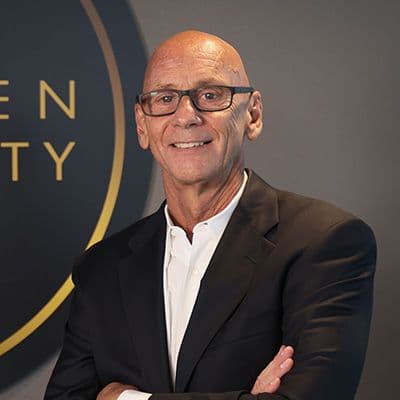
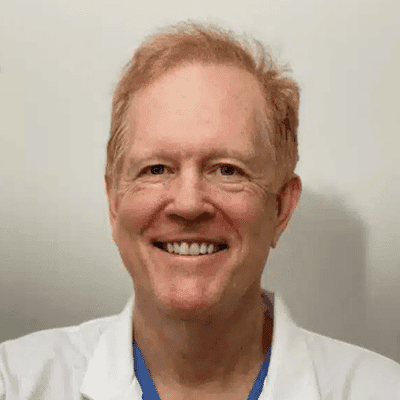
Full Transcript Modern Medicine and Chronic Disease 0:00 The problem is when 20th century medicine, I mean, when modern medicine takes the same pills that were so effective in the 20st century and tries to apply 0:10 it to these 21st-century chronic diseases, they may work for the symptoms. 0:15 They may be very effective, even life-saving in short term. 0:18 But the deeply disturbing part is they don't control the progression of most of these diseases where they continue to progress. 0:25 This is Dr. 0:26 Talks. 0:33 Welcome everybody to another episode of the Exponential Longevity Summit. 0:37 I'm your host, Dr. 0:38 Jeffrey Gladden, and I am here as always discussing how we're leveraging AI to outlive disease and live young for a lifetime. 0:45 And today I have the pleasure of having Dr Robert Lufkin with us. 0:48 Bob, it's good to see you. 0:49 So hey, hey Jeffrey, I'm a huge fan of your work and I really looking forward to this summit. 0:55 I can't wait to hear the other speakers you're having. 0:58 So this is going to be fun. 1:00 It should be very fun Yeah, exactly. 1:01 Appreciate that. 1:03 You know, interesting. 1:04 He's been a physician, a medical school professor at UCLA and USC. 1:08 And he was also a New York Times bestseller. 1:11 He wrote a book, Longevity Secrets, that he learned the hard way. 1:14 And it's really a follow-up to another book that wrote Lies I Taught in Medical School, which is such a great, such great title for a books. 1:21 So Robert, it is really pleasure to have you here. 1:23 We're going to jump into this. 1:25 Why don't you tell the audience a little bit about your story? 1:28 I mean, It's a bit unusual for professor to kind of depart from traditional thought processes around medicine. 1:34 Maybe you can bring us up to speed on that. 1:37 Yeah. 1:37 I mean, my book and my sort of my approach is very critical of Western medicine, but I, you know, unlike many people that have this attitude, 1:47 I have to admit I'm actually part of the problem because I've spent my whole career as a professor teaching medical students and other young doctors in training. 1:59 Also, my lab has received millions of dollars in grants from drug companies and big pharma and food companies, device makers, 2:08 and even the federal government to do research. 2:10 And also, I got to practice medicine. 2:11 So I'm coming at this from kind of an unusual point.
Robert Lufkin's Medical Background and Wake-Up Call 2:16 I am very critical of Western medicine, but I have to admit, I'm a fan of western medicine. 2:22 I think in the 20th century, it's transformed our lives largely through public health and the pills and surgeries that were developed then truly make the 2:32 world a better place. 2:34 But the problem is, In the 21st century, we're facing a literally a tsunami of chronic diseases, which although they were present in the 20th century and 2:44 the twenty-first century they're now in unprecedented numbers even, you know, even correcting for population. 2:50 And these are the diseases that literally determine our longevity because statistically, who else will die of, heart disease, 2:59 cancer, Alzheimer's disease mental illness, it goes down the list. 3:03 So the problem is, when modern medicine takes the same pills that were so effective in the 20th century and tries to apply it to these 21st century chronic diseases, 3:17 they may work for the symptoms. 3:19 They may be very effective, even lifesavingly short-term. 3:22 But the deeply disturbing part is they don't control the progression of most of these diseases when they continue to progress. 3:29 And I came to this. 3:31 I mean, I'd like to say, you know, hey, want to make the world a better place. 3:34 But no, i was dragged kicking and screaming into this when i came down with four of this chronic diseases myself. 3:42 All right. 3:42 Just a couple of years ago and I, at the time I had young daughters that weren't even in middle school yet. 3:48 They're still relatively young. 3:50 And when I went to my doctors, they basically prescribed medicines for me and gave me a prescription for each one of them. 4:00 And I mentioned to him, I said, hey, what about lifestyle? 4:04 And they said it doesn't really work. 4:06 You're going to be on these medicines for the rest of your life, so get used to it. 4:09 Do you mind sharing what the problems were? 4:14 Oh, happy to. 4:15 Yeah, completely open. 4:16 I talk about it in the book and everything. 4:18 So at the time, it seemed like relatively unrelated diseases. 4:22 It was a type of arthritis called gout. 4:25 You know, and then it was elevated lipids, sort of high cholesterol, abnormal blood lipid and triglycerides as well. 4:33 And then high blood pressure, which most people today have high pressure. 4:38 So, you know. 4:38 Good company. 4:39 Finally, pre-diabetes, abnormalities of glucose metabolism type 2 diabetes. 4:45 I knew it wasn't going to end well, so I took it. 4:48 All those are interrelated, quite honestly. 4:50 All those are, they could all be seen as kind of one disorder with multiple manifestations, right? 4:56 So, yeah. 4:57 And that's, you're absolutely right.
Lifestyle Changes That Reversed His Conditions 5:00 At the time, I didn't really think of them that way, and the doctors I went to didn' t think about that, way and many of my colleagues still don't think 5:09 them in that and that' s the problem because the pills and surgery I was given would control the symptoms, but they wouldn't do anything to the root cause, 5:16 which, as we're both talking about, is a common metabolic abnormality that's driving all these diseases that pills really don't work for. 5:26 But there's an even more powerful medicine that that more than any pills or surgery for most of us, and that lifestyle changes. 5:35 And by implementing those, I was able to reverse all four of those chronic diseases and basically get off the medications. 5:42 My doctors thought the, you know, the machines were, or the labs were broken and everything like that. 5:48 That's great. 5:49 So tell us what your lifestyle interventions were. 5:51 What did you actually do? 5:52 Did you lose weight? 5:53 You exercised what? 5:54 Lower stress? 5:55 What happened? 5:56 Yeah, great questions. 5:58 And lifestyle, it comes down to the same playbook really for most people. 6:05 Different things may have different weights. 6:07 Interestingly, of course, is the lifestyle play book, in my opinion, going to reduce our risk of the four diseases I have and even reverse them, 6:18 as well as type two diabetes, of course, As well Alzheimer's disease, mental illness, cancer, cardiovascular disease. 6:27 So it's really the same thing. 6:29 But my interventions were, first of all, I started off with nutrition and made some changes there. 6:34 I wasn't overweight. 6:36 It doesn't take being really overweight, If you have the genetic predisposition, you know, just that abdominal fat is enough, 6:47 a dead body, so to speak, is really enough. 6:50 So, yeah. 6:51 Yeah, and then I took a deep look at sleep, which as a doctor, I thought I used to be on call with a beeper 24 hours a day, 7:01 all the time. 7:01 And I though it made me stronger, thought it was helping my patients. 7:05 When I actually realized, of course it's making me weaker and I'm potentially harming my patience. 7:10 So I looked closely at asleep, not only quantity, but quality. 7:15 Then looked at exercise, both mental and physical exercise. 7:20 Tell us about that. 7:21 Tell about mental versus physical exercise. 7:23 Describe what you're talking about there. 7:26 Both are important and they're interrelated. 7:28 Physical exercise is very important. 7:32 What did you do? 7:34 Well, before I was light on strength training and I didn't have any consistent exercise programs. 7:40 So what I'm doing now is I regularly do about 10,000 steps, which is about five miles when I walk it every day without sobbing. 7:53 And I wanted to get more of a workout. 7:55 I'm not running, but I am walking. 7:58 So I want to more workout, so basically I began rucking, carrying a 20-pound pack around and that increased the load a little bit. 8:08 Rowing, I do 20 minutes a day of rowing every day. 8:13 Nice. 8:14 And you know I hate row, it's boring, What I do is I'd do it as a treat. 8:20 I look forward to it. 8:21 It started with five minutes, you know, only once a day, five, minutes then 10 minutes. 8:25 Then, now it's 20 minutes is probably going to go to 30 minutes but I have like certain TV shows or recordings that I only watch when I'm rowing. 8:36 So that helps it and So I look forward to it. 8:40 You took something that you dreaded doing and turned it into a treat by combining it with something you enjoy, right? 8:46 So that's a good take on the audience. 8:49 Yeah, good for you. 8:50 And then what about the mental exercise where you started playing games or what did you start doing? 8:54 Yeah. 8:54 I mean, mental exercises, you know, it's all about, instead of listening to music, play the music. 9:01 Instead of sing the song, its participation. 9:05 Learning a language is a great thing. 9:08 There's so many apps out there. 9:09 For me, I always wanted to learn Chinese. 9:11 My wife's from Shanghai. 9:15 So I got an app, there's a free app. 9:17 There are many of them out.
Exercise, Learning, and Daily Habit Stacking 9:18 I happen to use one called Duolingo and I religiously again did five minutes. 9:25 It's about five minute a day, every day. 9:27 And I'm now at 1,500 days in a row. 9:31 The next thing you can do with any language, not just Mandarin, Chinese, but when you're learning a language. 9:36 I took my phone and I switched the language to the, language that I'm learning. 9:41 So now, now when I want to set a timer for 20 minutes, I go, Hey, Siri set, a time for her 20. It doesn't do anything because it only understands Mandarin. 9:51 And so I have to say Siri comes out. 9:58 The next level thing, of course, is setting my operating system to Mandarin on my laptop and my computers, which I haven't gotten there yet, 10:07 but that's one more thing people can do. 10:10 That's great. 10:11 No, that is really awesome. 10:12 I think the other thing that strikes me about this is that you figured out a way to actually do these things and kind of incorporate them into your life. 10:21 Right? 10:21 So in other words, you're kind of killing two birds with one stone on many situations. 10:26 Like when you are doing your walking, and you probably thinking about problems that you working on or going into a meditative state at some point. 10:32 When you exercising, your listening to things you interested in or watching something that find entertaining. 10:38 And so I think this idea of kind of stacking activities to where everything doesn't have to be sequential, you can kind parallel process this and you find 10:48 that you have time to get everything done that that way. 10:50 That's really cool. 10:53 Yeah, totally. 10:54 The walking, I mean, it takes a couple hours really. 10:57 And instead of, the other thing I do is I don't, some people like they work out, you know, once a day for an hour in the gym and they kill themselves, 11:04 then they go sit for 15 hours. 11:07 So what I, do I walk for three miles to a Starbucks and then I work there for a few hours and I then walk another couple miles, 11:15 to another Starbucks, and work here. 11:19 And so it kind of spread it out throughout the day. 11:21 And then I row and do the other stuff too. 11:23 Yeah, that's great. 11:25 I think it's really, if you're thinking about this and listening to this, the important thing is to look at your own life, 11:30 look your your day and start to architect it in a way where it makes sense, where you where you ultimately, you find joy in what you're doing, 11:38 but you also have the ability to put these pieces together. 11:41 It's really just like a puzzle. 11:43 And it's very doable if you just look at it like, oh, this is a. 11:46 How can I make this fun? 11:47 How kind of make it joyous? 11:49 And how do I actually feel better and energized at the end of the day than exhausted, wasted and stressed out? 11:54 Right. 11:55 So, yeah. 11:56 That's such a good point. 11:57 And it speaks to the third thing, stress and purpose and, you know, having joy in our lives, kind of looking forward to it. 12:03 Like when I changed the food I ate, I wasn't going on a diet. 12:08 I was eating in a nutritionally healthy way that allow me to live longer. 12:14 I love bagels and donuts and sugar and everything else, but I know that's more likely to cause a heart attack than a steak is. 12:20 Right. 12:21 And I loved those, But I Love my kids more. 12:23 So I gave them up because I'd rather live to see my kid. 12:26 I think that that is another really critical point is that if people are doing this and they feel like it's pointless, like there's no reason to do it 12:34 apart from somebody told me to Do it. 12:37 It's unsustainable, completely unsustainable. 12:39 But if you're actually, if, you have two things, one, If you find joy in doing it, it's an end in itself. 12:45 but the other is you realize there's connected to this bigger purpose, right? 12:49 I want to, I wanna expand my influence in the world. 12:51 I'm going to expand. 12:52 My influence. 12:53 In the, in my family circle, and my friend circle or whatever it is, want. 12:58 Continue to contribute in all these ways. 13:00 Then all of a sudden it was like, Oh, have so many reasons to do this. 13:03 How can I not do that? 13:04 Right. 13:05 So. 13:05 That's such an important point. 13:06 The idea of purpose on why we want longevity is I talk to people about it and I go, Hey, you know what? 13:12 You have the potential to adding an extra 30 or 40 years on your life. 13:17 And it's only going to get more and more as this technology, as his conference is showing is exploding and they go. 13:23 They go wow. 13:25 You know, I've just retired. 13:26 So what am I going do? 13:27 Well, like golf, and go see my kids, my grandkids. 13:31 That great. 13:32 But. 13:33 People start thinking of that and they go, wow, and no shade on golf. 13:37 I'm a miniature golfer myself, but the idea of playing golf for 40 years, it's going to get old.
Purpose, Mindset, and Longevity Motivation 13:42 Even senior dragons, they're going hate you after a while. 13:45 They're gonna grow up, quite honestly. 13:47 Yeah. 13:48 So I think the way we look at this is not just an extra 30 years on the golf course or 30-years hanging around our descendants, 13:57 The way I try and look at it is to imagine the years from 20 to 50, and how we all changed as people. 14:06 We contributed to the world, we grew, We became completely different people, so now let's say you go from 60 or 65, you retire, 14:14 go to 95. So imagine what you could do in those 30 years, not just playing golf or hanging out with your kids, but actually growing as a person, 14:26 reinventing yourself, have a whole new life, a new purpose, and really make the world a better place. 14:31 We can contribute so much by being elders with wisdom. 14:36 There is important knowledge that elders have. 14:40 And we can play a really important role in reinvent ourselves and doing something else. 14:46 I'm not against retirement, but you know. 14:48 Yeah, we're not big fans of retirement because it really is associated with most people slowing down and getting old kind of sort of in their mindset. 14:56 But to your point, making transitions right from one thing to another. 15:00 Now that makes a lot of sense. 15:02 You know, I think it's interesting for me as I'd think about it. 15:05 A lot folks go through life and I was like this at one point where you feel like it your goal in life to actually find your answers. 15:14 And as a physician, as I was trained, I, was basically trained to have a certain set of answers and the doctors that you went to see have certain sets 15:22 of answer and we end up getting married to those answers. 15:25 And yet all innovation. 15:28 Right? 15:28 All innovation, all creativity comes from asking questions, not from the answers. 15:33 Right. 15:34 Answers actually put people into a defensive posture. 15:37 Well, I don't like your answer. 15:39 I've got to defend it. 15:40 Now I got a, now I gotta bolster it now. 15:42 Got to say that you're wrong, right? 15:43 I'm not going to make you wrong so I can be right. 15:45 And when you drop your attachment to answers and you attach yourself to the questions. 15:51 How do I live young for a lifetime, right? 15:53 How did I make 100 to new 30? how do i do these things?How do continue to be vibrant?how do we continue be a creative loving force in the world that's 16:01 creating new ideas and contributing as opposed to getting married to an answer of I like golf and fishing and that is what I'm going to do. 16:08 You see it just changes your whole world. 16:10 All of a sudden it's like the next decade is more exciting than any decade in your life. 16:14 Not to mention the week, so I think that shift in mindset is critical. 16:19 Just the simple thing that the best is yet to come, that we all have our best years ahead, and it's not a downhill course, 16:29 you know, we should look forward to it, man. 16:31 This is going to be so much fun. 16:32 I can't wait. 16:33 Yeah, absolutely. 16:35 Well, tell us a little bit about, so you stopped taking the medicines for your chronic disorders, let's call it. 16:41 But it sounds like you may be still taking some things to advance your longevity specifically. 16:46 Are there things that you're doing you want to share with us, maybe? 16:48 Yeah, of course. 16:50 Well, I think, first of all, all the lifestyle things, that, you know, the you talk about that I talk, about, very, similar themes in my book, 16:59 or the things I did. 17:01 I believe those are foundational and we need to correct those and get those a good foundation. 17:08 And then on top of that, we can build and add things. 17:12 Longevity space is just exploding so much. 17:20 It's hard to keep up with it now. 17:22 And so I mean, I'm not against taking pills. 17:25 I just take, against, taking, pills that only treat the symptoms and don't treat, the root cause. 17:30 So some of the pills I've taken for longevity is, you know, The mTOR pill rapamycin that I take. 17:39 Mectoformin for Longevity. 17:41 Sort of an experiment. 17:44 experimenting with a lot of different things, adding different types of supplements and kind of a longevity stack that I've been working on and trying things. 17:55 And it's great. 17:55 The problem with that, of course, is it is hard to tell the effect necessarily.
Longevity Tools, Biomarkers, and Emerging Therapies 18:02 I'm changing so many things at once. 18:05 It's an N of one. 18:07 But I feel great, I never felt better. 18:10 Yeah. 18:12 I think it's good to feel great. 18:13 This is where we're getting really high quality testing, where you can actually measure yourself across this mosaic of ages, 18:21 as we refer to it. 18:22 What's my telomeric age? 18:23 What is my immune system age, what's the DNA methylation age and what is the glycan age. 18:29 And what does my senescent cell burden actually look like? 18:34 Alternating between basically blocking mTOR, which of course we need mTor for growth and development and cell growth, et cetera. 18:42 And insulin and growth hormone IGF-1 will actually activate mtor. 18:47 Rapamycin will block it because it's been shown that blocking MTOR can improve longevity in rodents. 18:54 I think there's still some question in humans as to how that's going to play out. 18:58 But nonetheless, that's a good strategy. 19:00 But then you don't want to do that all the time because you want MTOR part of the-time. 19:05 When you're taking your metformin, you are activating AMPK. 19:08 AMPk is the other side of teeter totter from Mtor. 19:11 And so activating that is now activating your sirtuins and basically DNA repair and autophagy and things that you need to kind of rejuvenate and regenerate, 19:19 if you will. 19:20 So I think it's important for the audience to understand that what he's doing is actually hitting two sides of the teeter totter. 19:26 And it is best to kind of do that in pulses on either side so that you're either on one side of teether totters or the other, 19:32 but not trying to be on both sides at the same time. 19:34 Right. 19:34 So we find a lot of wisdom in that. 19:36 Then of course, the cardio that he is getting in there is activating his AMPK also. 19:40 It's a good strategy. 19:42 Yeah. 19:42 Nice. 19:43 Yeah, I mean, there's so many things like biohacking things that I'm dabbling in, that so people are involved with, you know, 19:51 plasmapheresis, plasma exchange, stem cells, exosomes. 19:55 Yeah. 19:55 I know you have a lot of work in that area. 19:58 And I, mean the papers coming out are just fascinating. 20:01 The one you may have talked about already with the partial epigenetic programming of chemically induced pluripotential stem cells with a type 1 diabetic 20:10 N of 1. But after a year, they were able to make these island cells under the abdominal wall that basically got the person off insulin with type one diabetes, 20:19 which is the unusual kind with insulin deficiency. 20:22 It was just mind blowing. 20:25 They just reversed type one diabetes with stem cells for the first time. 20:28 Also, there's a paper on that. 20:29 So, you know, the things that you and I were taught were impossible are becoming possible all the time and we see that like with regards to cardiovascular 20:38 disease or insulin resistance. 20:40 I mean, we reverse this stuff all time, and yet people are, still unaware of it, so to speak. 20:46 It's really, it's super exciting medicine to practice. 20:49 Yeah. 20:50 Yeah, and it really bothers me that, you know, that our trusted medical institutions that most people go to for advice, I'll just pick one, 20:59 also the American Diabetic Association. 21:01 Sure. 21:02 When they, their recommendation is to treat type two diabetes, which, we're heading up to half the population getting it before long. 21:12 And it's a gateway for, it is the metabolic. 21:15 It's the gateway disorder, right? 21:16 And to so many other diseases, insulin resistance. 21:19 That's right. 21:20 Yeah, and so type 2 diabetes is their recommendation is to basically, you know, cut down on sugars, but don't cut them out. 21:29 If you eat sugars cover it with insulin. 21:31 And the problem is, in my opinion, there's evidence to show that we look at controlled studies in the book as well that when you treat type two diabetes 21:41 with Insulin, it becomes a chronic progressive disease. 21:44 In other words, we go on to get number one cause of surgical amputations, it's diabetes, number 1 cause renal failure, kidney failure is diabetes. 21:51 Number one, cause retinal blindness in young people's, diabetes on and on, type 3 diabetes Alzheimer's disease. 22:01 people, that's the recommendation to go on these drugs and eventually insulin to manage the type 2 diabetes. 22:07 But what is not emphasized to people is that with a lifestyle change by primarily nutrition, but other factors as well. 22:16 It's possible to reverse type 2 diabetes in the majority of people in controlled studies. 22:21 Virja and others have done this. 22:23 But the interesting thing is when you reverse it with lifestyle, it's no longer a progressive disease. 22:28 In other words, you've stopped it. 22:30 That's right. 22:31 Take two people, put one on insulin, that person on the insulin. 22:34 The insulin is going to save their life. 22:36 They're not going die from hyperglycemia. 22:40 They're going to, you know, what they're looking forward to is amputations, renal failure, blindness, on and on Alzheimer's, 22:48 heart disease, cancer, mental illness. 22:51 It's tragic. 22:53 And why wouldn't everyone do the lifestyle? 22:56 It is tragic that we equate that with treating the disease. 22:59 Right.
Diabetes, Lifestyle Reversal, and the Future of Longevity 23:00 We're just going keep you alive and then... 23:02 We are palliating it really. 23:04 That's right. 23:04 And then once you fall apart, it's really quite tragic. 23:07 To your point, you know, with some of the lifestyle changes around food, diet and exercise, we've done a couple of shows now on the value of fasting and 23:16 five-day mimicking fasting, and doing that for diabetics kind of on a sequential basis and having a dramatic impact, even rebooting beta cell function, 23:25 which, once those are shot, people feel like they're shot. 23:28 But we actually see those start to reverse. 23:31 If you're listening to this, understand that what we're talking about here is not just trivial. 23:35 It's actually more powerful than any drug your doctor can give you. 23:39 So pretty exciting stuff. 23:40 Yeah. 23:41 Yeah, yeah. 23:42 I mean, the other thing I learned going through this journey was even though I'm a doctor, I now believe doctors don't make us healthy. 23:49 Doctors just make less sick and the lifestyle changes. 23:54 The lifestyle choices we make will overpower almost any pill or surgery that we're given. 23:59 And so if we want to make true change in our life, we have to do it with lifestyle because no doctor can fix it. 24:06 With a pill, or a surgery, at least at this point. 24:09 That's right. 24:10 Yeah, and I think lifestyle, just from my perspective, too, is kind of like the gateway to longevity. 24:16 In and of itself, it's not enough. 24:17 It's a gateway into health. 24:19 But true longevity, where we live young for a lifetime, requires more. 24:23 it does require actually doing some of these things where you start to really turn back the clock, whether it is, you know, 24:28 rejuvenation procedures like plasmapheresis or young plasma or stem cells or things like that. 24:33 There are things that need to be tacked on top of that if we're really going to go back in time. 24:38 And it's exciting to see that developing as well, so. 24:41 Yeah, I mean, it just, of all the areas where we're seeing progress, the longevity science is the most amazing. 24:49 It's like every week there's a new paper or something. 24:53 Right? 24:53 It is such an exciting time to be in this space. 24:57 You know, like people talk about longevity escape velocity. 25:01 That's right. 25:01 And certainly it is not unrealistic. 25:04 I don't think it's that far off. 25:05 I think so the next three to five years, personally. 25:08 When you look at all the things that we're currently doing and the rate at which we are learning, and then you throw in AI, 25:14 which becomes artificial general intelligence pretty quickly. 25:19 ASI, which is artificial super intelligence, all of a sudden you have enough horsepower here to actually figure this out, 25:25 right? 25:26 At the end of the day, it's a finite problem. 25:28 It's not an infinite problem, and I think it will have a solution. 25:31 So I'm super optimistic about all. 25:34 Yeah, this is just such an amazing time. 25:37 Yeah. 25:38 Very cool. 25:39 Well, Rob, it's been such a pleasure to chat with you. 25:41 I really appreciate you taking the time to talk with us. 25:43 Thank you! 25:44 Oh, thanks so much, Jeff. 25:46 And like I say, I'm going to be looking forward to hearing the other speakers too in this summit. 25:51 Absolutely. 25:52 You'll enjoy that. 25:53 All right. 25:53 We'll have a great rest of your day. 25:55 Thanks. 25:58 Thank you for tuning in to Doctor Talks. 26:00 We hope today's episode has enlightened and inspired you on your path to optimal health. 26:05 Each day is a new opportunity to make choices that empower your well-being. 26:09 For more insights and strategies, subscribe to our podcast and visit our website, www.doctortalks dot com. 26:18 Stay connected, stay healthy, and join us next time on DoctorTalks, real talks from real doctors on the issues that matter to you most.
Comments