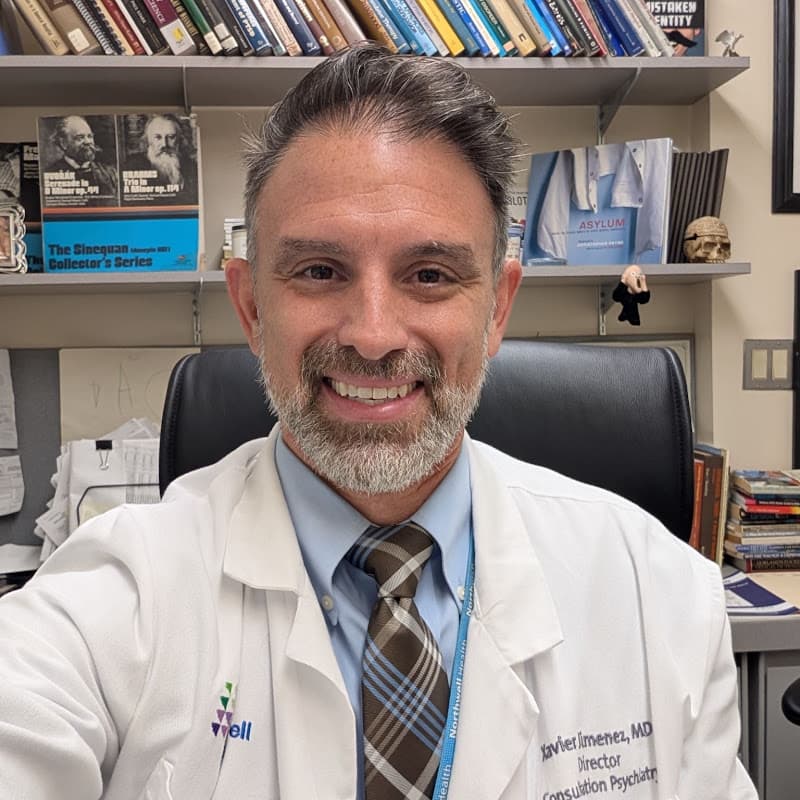
Full Transcript Introduction and Background 0:03 Hi, I'm Dr. Javier Jimenez. You can call 0:03 Hi, I'm Dr. Javier Jimenez. You can call me Dr. X. I'm director of psychiatry and 0:06 me Dr. X. I'm director of psychiatry and 0:06 me Dr. X. I'm director of psychiatry and chronic pain at Long Island Jewish 0:07 chronic pain at Long Island Jewish 0:07 chronic pain at Long Island Jewish Medical Center in Northwell Health. And 0:09 Medical Center in Northwell Health. And 0:09 Medical Center in Northwell Health. And I've spent approximately 20 years at the 0:12 I've spent approximately 20 years at the 0:12 I've spent approximately 20 years at the interface between medicine and 0:13 interface between medicine and 0:13 interface between medicine and psychiatry. And today in this video, I 0:16 psychiatry. And today in this video, I 0:16 psychiatry. And today in this video, I just wanted to talk about person 0:18 just wanted to talk about person 0:18 just wanted to talk about person centered medicine. 0:26 What does that even mean? Most people 0:26 What does that even mean? Most people say patient centered medicine. I think
Why Person-Centered Medicine Matters 0:29 say patient centered medicine. I think 0:29 say patient centered medicine. I think we should step it up a bit and really 0:32 we should step it up a bit and really 0:32 we should step it up a bit and really understand the patients that we're 0:33 understand the patients that we're 0:33 understand the patients that we're treating, not as [music] patients or 0:36 treating, not as [music] patients or 0:36 treating, not as [music] patients or specimens, but as people, right? 0:38 specimens, but as people, right? 0:38 specimens, but as people, right? Understand who they are. And in order to 0:41 Understand who they are. And in order to 0:41 Understand who they are. And in order to do that in our timed, crunched [music] 0:44 do that in our timed, crunched [music] 0:44 do that in our timed, crunched [music] medical settings where we're being told 0:46 medical settings where we're being told 0:46 medical settings where we're being told to see more patients per unit of time, 0:49 to see more patients per unit of time, 0:49 to see more patients per unit of time, we need a system. We need a framework. 0:51 we need a system. We need a framework. 0:51 we need a system. We need a framework. We need a way to do that. [music] And
The Biopsychosocial Model Explained 0:53 We need a way to do that. [music] And 0:54 We need a way to do that. [music] And doctors, nurses in that space really 0:57 doctors, nurses in that space really 0:57 doctors, nurses in that space really need some guideposts. 1:04 One model that I want to talk about 1:04 One model that I want to talk about today is called the biocschosocial 1:06 today is called the biocschosocial 1:06 today is called the biocschosocial model. Now that's a mouthful. It it's 1:09 model. Now that's a mouthful. It it's 1:09 model. Now that's a mouthful. It it's really three or four words combined. 1:11 really three or four words combined. 1:11 really three or four words combined. Biology, psychology, and society, right? 1:15 Biology, psychology, and society, right? 1:15 Biology, psychology, and society, right? Biological, psychological, and social 1:18 Biological, psychological, and social 1:18 Biological, psychological, and social factors all combined into one. [music] 1:20 factors all combined into one. [music] 1:20 factors all combined into one. [music] Biocschosocial 1:21 Biocschosocial 1:21 Biocschosocial model. It's actually not a new model.
Applying the Model to Complex Cases 1:23 model. It's actually not a new model. 1:23 model. It's actually not a new model. It's been around since the 70s. And it's 1:26 It's been around since the 70s. And it's 1:26 It's been around since the 70s. And it's basically the idea that we should be 1:28 basically the idea that we should be 1:28 basically the idea that we should be thinking about everyone's biology, 1:30 thinking about everyone's biology, 1:30 thinking about everyone's biology, psychology, and social factors to really 1:34 psychology, and social factors to really 1:34 psychology, and social factors to really understand them. Now, that's great. 1:36 understand them. Now, that's great. 1:36 understand them. Now, that's great. That's aspirational, but that takes a 1:38 That's aspirational, but that takes a 1:38 That's aspirational, but that takes a lot of time. Some of medicine really 1:40 lot of time. Some of medicine really 1:40 lot of time. Some of medicine really doesn't need that. For instance, if you 1:42 doesn't need that. For instance, if you 1:42 doesn't need that. For instance, if you have a broken bone, should we really be 1:45 have a broken bone, should we really be 1:45 have a broken bone, should we really be thinking about all of the social 1:46 thinking about all of the social 1:46 thinking about all of the social factors? Let's fix the bone. But in 1:49 factors? Let's fix the bone. But in 1:49 factors? Let's fix the bone. But in other instances when cases are really 1:51 other instances when cases are really 1:51 other instances when cases are really complex, it's a useful framework for 1:54 complex, it's a useful framework for 1:54 complex, it's a useful framework for understanding what someone's going 1:56 understanding what someone's going 1:56 understanding what someone's going through. And in my line of work where I 1:58 through. And in my line of work where I 1:58 through. And in my line of work where I see patients with chronic pain, 2:00 see patients with chronic pain, 2:00 see patients with chronic pain, addiction, psychiatric states, sometimes 2:02 addiction, psychiatric states, sometimes 2:02 addiction, psychiatric states, sometimes all three, it's very important to really 2:05 all three, it's very important to really 2:05 all three, it's very important to really understand them not just as patients 2:07 understand them not just as patients 2:07 understand them not just as patients with those ailments, but as people. So I 2:10 with those ailments, but as people. So I 2:10 with those ailments, but as people. So I leverage the biocschosocial model as 2:12 leverage the biocschosocial model as 2:12 leverage the biocschosocial model as much as possible. 2:15 much as possible. 2:15 much as possible. Here's 2:17 Here's 2:17 Here's the issue. As mentioned, we're all
Organizing Patients with the Three Ps 2:19 the issue. As mentioned, we're all 2:20 the issue. As mentioned, we're all crunched for time. We rarely have the 2:22 crunched for time. We rarely have the 2:22 crunched for time. We rarely have the opportunity to get to know patients that 2:23 opportunity to get to know patients that 2:24 opportunity to get to know patients that well. And so, it's difficult to organize 2:26 well. And so, it's difficult to organize 2:26 well. And so, it's difficult to organize all of the information. You have tons of 2:29 all of the information. You have tons of 2:29 all of the information. You have tons of information in terms of labs, studies, 2:31 information in terms of labs, studies, 2:31 information in terms of labs, studies, imaging, all of that physical exam. And 2:34 imaging, all of that physical exam. And 2:34 imaging, all of that physical exam. And then there's other factors that we have 2:36 then there's other factors that we have 2:36 then there's other factors that we have to think about. The biocschosocial 2:39 to think about. The biocschosocial 2:39 to think about. The biocschosocial model, however, can be organized in a 2:42 model, however, can be organized in a 2:42 model, however, can be organized in a simple way. Um, and I've actually done 2:44 simple way. Um, and I've actually done 2:44 simple way. Um, and I've actually done research on this. I've done research on 2:47 research on this. I've done research on 2:47 research on this. I've done research on the biocschosocial model in patients, 2:50 the biocschosocial model in patients, 2:50 the biocschosocial model in patients, for instance, with epilepsy, patients 2:52 for instance, with epilepsy, patients 2:52 for instance, with epilepsy, patients with chronic pain, and patients with 2:55 with chronic pain, and patients with 2:55 with chronic pain, and patients with medically unexplained [music] symptoms. 2:57 medically unexplained [music] symptoms. 2:57 medically unexplained [music] symptoms. Real headscratchers that leave doctors 3:00 Real headscratchers that leave doctors 3:00 Real headscratchers that leave doctors stumped at as to what to do next. I get 3:03 stumped at as to what to do next. I get 3:03 stumped at as to what to do next. I get called for these types of cases, and 3:05 called for these types of cases, and 3:05 called for these types of cases, and it's my job to try to organize it all 3:07 it's my job to try to organize it all 3:07 it's my job to try to organize it all [music] for the sake of the doctor, but 3:09 [music] for the sake of the doctor, but 3:09 [music] for the sake of the doctor, but also the patient who's suffering from 3:11 also the patient who's suffering from 3:11 also the patient who's suffering from that ailment. 3:19 So this biocschosocial model that sounds 3:19 So this biocschosocial model that sounds complex and long can be organized into a 3:23 complex and long can be organized into a 3:23 complex and long can be organized into a grid essentially. I'll show you some 3:25 grid essentially. I'll show you some 3:25 grid essentially. I'll show you some examples. Um I've actually done studies 3:28 examples. Um I've actually done studies 3:28 examples. Um I've actually done studies where I've organized all of the factors 3:30 where I've organized all of the factors 3:30 where I've organized all of the factors that are driving somebody's illness into 3:33 that are driving somebody's illness into 3:33 that are driving somebody's illness into a grid along biological, psychological, 3:36 a grid along biological, psychological, 3:36 a grid along biological, psychological, and social lines. [music] 3:38 and social lines. [music] 3:38 and social lines. [music] I've also paired that up across time. 3:42 I've also paired that up across time. 3:42 I've also paired that up across time. So, it's important to know where people 3:44 So, it's important to know where people 3:44 So, it's important to know where people came from, not just where they are now. 3:46 came from, not just where they are now. 3:46 came from, not just where they are now. We want to know what their development 3:47 We want to know what their development 3:47 We want to know what their development is, where they came from, what 3:49 is, where they came from, what 3:49 is, where they came from, what experiences they they've they've been 3:52 experiences they they've they've been 3:52 experiences they they've they've been through, [music] what their culture is, 3:55 through, [music] what their culture is, 3:55 through, [music] what their culture is, what kind of hardships they've had to 3:57 what kind of hardships they've had to 3:57 what kind of hardships they've had to sustain. And so, we organize that as the 4:00 sustain. And so, we organize that as the 4:00 sustain. And so, we organize that as the sort of the three Ps. what we call 4:03 sort of the three Ps. what we call 4:03 sort of the three Ps. what we call predisposing or very early on, [music] 4:06 predisposing or very early on, [music] 4:06 predisposing or very early on, [music] precipitating meaning recent, and 4:09 precipitating meaning recent, and 4:09 precipitating meaning recent, and perpetuating meaning ongoing factors. 4:13 perpetuating meaning ongoing factors. 4:13 perpetuating meaning ongoing factors. These can be paired up with the 4:14 These can be paired up with the 4:14 These can be paired up with the biological, the psychological, and 4:16 biological, the psychological, and 4:16 biological, the psychological, and social to really get a good snapshot of 4:19 social to really get a good snapshot of 4:19 social to really get a good snapshot of not just where the person is now, but 4:21 not just where the person is now, but 4:21 not just where the person is now, but where they've been prior to [music] now 4:23 where they've been prior to [music] now 4:24 where they've been prior to [music] now to understand all of their risk factors 4:25 to understand all of their risk factors 4:26 to understand all of their risk factors coming up to this moment.
Research Examples and Clinical Use 4:33 It's important that doctors and medicine 4:33 It's important that doctors and medicine at large embrace this approach. The 4:36 at large embrace this approach. The 4:36 at large embrace this approach. The question is how do you do it? How do you 4:38 question is how do you do it? How do you 4:38 question is how do you do it? How do you organize it? Well, [music] my first 4:39 organize it? Well, [music] my first 4:39 organize it? Well, [music] my first study looking at this was with epilepsy 4:41 study looking at this was with epilepsy 4:41 study looking at this was with epilepsy patients understanding all the 4:43 patients understanding all the 4:43 patients understanding all the information from their charts, from 4:45 information from their charts, from 4:45 information from their charts, from their records, from the interviews and 4:47 their records, from the interviews and 4:47 their records, from the interviews and distilling it quickly into this 4:49 distilling it quickly into this 4:49 distilling it quickly into this biocschosocial grid. And it was actually 4:53 biocschosocial grid. And it was actually 4:53 biocschosocial grid. And it was actually very helpful for the next step in care 4:56 very helpful for the next step in care 4:56 very helpful for the next step in care for the doctors treating epilepsy, 4:59 for the doctors treating epilepsy, 4:59 for the doctors treating epilepsy, neurologists, for therapists. If the 5:01 neurologists, for therapists. If the 5:01 neurologists, for therapists. If the patient needed a therapist, they really 5:03 patient needed a therapist, they really 5:03 patient needed a therapist, they really favored this grid approach. It was 5:06 favored this grid approach. It was 5:06 favored this grid approach. It was superior to other approaches like just 5:09 superior to other approaches like just 5:09 superior to other approaches like just describing, hey, patient has epilepsy 5:11 describing, hey, patient has epilepsy 5:11 describing, hey, patient has epilepsy and depression. That's really not a full 5:13 and depression. That's really not a full 5:13 and depression. That's really not a full encapsulation or summary of who they 5:15 encapsulation or summary of who they 5:15 encapsulation or summary of who they are. 5:16 are. 5:16 are. Next, I actually applied this in uh 5:20 Next, I actually applied this in uh 5:20 Next, I actually applied this in uh chronic pain. And in another video, I 5:23 chronic pain. And in another video, I 5:23 chronic pain. And in another video, I actually talked about the psychology of 5:25 actually talked about the psychology of 5:25 actually talked about the psychology of chronic pain and how trauma can be very 5:27 chronic pain and how trauma can be very 5:27 chronic pain and how trauma can be very important to understand early trauma. 5:29 important to understand early trauma. 5:29 important to understand early trauma. That's also a biocschosocial [music] 5:32 That's also a biocschosocial [music] 5:32 That's also a biocschosocial [music] approach to chronic pain. 5:35 approach to chronic pain. 5:35 approach to chronic pain. More recently, I published a study where 5:37 More recently, I published a study where 5:37 More recently, I published a study where the biocschosocial model and grid was 5:40 the biocschosocial model and grid was 5:40 the biocschosocial model and grid was applied [music] to a complex case of an 5:43 applied [music] to a complex case of an 5:43 applied [music] to a complex case of an individual who was scared of eating, had 5:45 individual who was scared of eating, had 5:46 individual who was scared of eating, had what we call fagophobia or fear of 5:48 what we call fagophobia or fear of 5:48 what we call fagophobia or fear of eating. And you can look at the study 5:51 eating. And you can look at the study 5:51 eating. And you can look at the study and the report, but [music] essentially 5:53 and the report, but [music] essentially 5:53 and the report, but [music] essentially she had a number of biological, 5:54 she had a number of biological, 5:54 she had a number of biological, psychological, and social variables or 5:57 psychological, and social variables or 5:57 psychological, and social variables or factors that were all working together 6:00 factors that were all working together 6:00 factors that were all working together to cause this unusual presentation that 6:02 to cause this unusual presentation that 6:02 to cause this unusual presentation that was stumping the doctors and herself. So 6:05 was stumping the doctors and herself. So 6:05 was stumping the doctors and herself. So those are a few examples of where the 6:07 those are a few examples of where the 6:07 those are a few examples of where the biocschosocial model can be employed. 6:10 biocschosocial model can be employed. 6:10 biocschosocial model can be employed. But I'll give you one more factor here 6:12 But I'll give you one more factor here 6:12 But I'll give you one more factor here because the biggest criticism of the 6:13 because the biggest criticism of the 6:13 because the biggest criticism of the biocschosocial model is that it quote 6:16 biocschosocial model is that it quote 6:16 biocschosocial model is that it quote takes too much time.
Making the Model Practical and Scalable 6:23 A lot of doctors, believe it or not, 6:23 A lot of doctors, believe it or not, they believe in this model, [music] but 6:24 they believe in this model, [music] but 6:24 they believe in this model, [music] but then push come to shove, they've got 15 6:27 then push come to shove, they've got 15 6:27 then push come to shove, they've got 15 patients, they're running around, they 6:29 patients, they're running around, they 6:29 patients, they're running around, they feel like they are not equipped to do 6:31 feel like they are not equipped to do 6:31 feel like they are not equipped to do the whole grid exercise that I just 6:33 the whole grid exercise that I just 6:33 the whole grid exercise that I just showed you. Well, in a separate study, I 6:35 showed you. Well, in a separate study, I 6:35 showed you. Well, in a separate study, I actually measured how long it takes to 6:37 actually measured how long it takes to 6:37 actually measured how long it takes to do these things, to do these grids. I 6:40 do these things, to do these grids. I 6:40 do these things, to do these grids. I took a sample of [music] trainees, not 6:43 took a sample of [music] trainees, not 6:43 took a sample of [music] trainees, not even seasoned doctors where you think 6:44 even seasoned doctors where you think 6:44 even seasoned doctors where you think maybe they do it even better and faster, 6:46 maybe they do it even better and faster, 6:46 maybe they do it even better and faster, but trainees. And the average amount of 6:49 but trainees. And the average amount of 6:49 but trainees. And the average amount of time it took them to complete the 6:51 time it took them to complete the 6:51 time it took them to complete the biocschosocial grid for three fictional 6:55 biocschosocial grid for three fictional 6:55 biocschosocial grid for three fictional complex cases was [music] about 5 6:57 complex cases was [music] about 5 6:57 complex cases was [music] about 5 minutes. Think about that. 5 minutes is 6:59 minutes. Think about that. 5 minutes is 7:00 minutes. Think about that. 5 minutes is not an eternity. I don't think we should 7:02 not an eternity. I don't think we should 7:02 not an eternity. I don't think we should be doing this grid on every case like 7:04 be doing this grid on every case like 7:04 be doing this grid on every case like the case of a simple broken bone. We 7:06 the case of a simple broken bone. We 7:06 the case of a simple broken bone. We should just go fix a broken bone. But in 7:08 should just go fix a broken bone. But in 7:08 should just go fix a broken bone. But in complex cases, we should be thinking 7:11 complex cases, we should be thinking 7:11 complex cases, we should be thinking with more complex approaches like the 7:14 with more complex approaches like the 7:14 with more complex approaches like the biocschosocial model. And yet we need to 7:16 biocschosocial model. And yet we need to 7:16 biocschosocial model. And yet we need to do it in ways that are scalable in 7:18 do it in ways that are scalable in 7:18 do it in ways that are scalable in [music] ways that doctors don't feel 7:20 [music] ways that doctors don't feel 7:20 [music] ways that doctors don't feel burnt out in ways that are organized and 7:23 burnt out in ways that are organized and 7:23 burnt out in ways that are organized and favored by the next level of care like 7:25 favored by the next level of care like 7:25 favored by the next level of care like therapists and other doctors. If you 7:27 therapists and other doctors. If you 7:27 therapists and other doctors. If you look at these studies and these 7:29 look at these studies and these 7:29 look at these studies and these publications around the biocschosocial 7:31 publications around the biocschosocial 7:31 publications around the biocschosocial model, I feel like I have a working 7:33 model, I feel like I have a working 7:33 model, I feel like I have a working template here for something that could 7:35 template here for something that could 7:35 template here for something that could be disseminated across medicine um if we 7:39 be disseminated across medicine um if we 7:39 be disseminated across medicine um if we have [music] the right uh throughput and 7:43 have [music] the right uh throughput and 7:43 have [music] the right uh throughput and uh buyin. 7:49 In summary, I think that we need to 7:49 In summary, I think that we need to educate more physicians [music] 7:51 educate more physicians [music] 7:51 educate more physicians [music] including the next generation of 7:53 including the next generation of 7:53 including the next generation of physicians trainees in leveraging the 7:55 physicians trainees in leveraging the 7:55 physicians trainees in leveraging the biocschosocial model which everyone 7:58 biocschosocial model which everyone 7:58 biocschosocial model which everyone feels is very lofty and a good idea into 8:01 feels is very lofty and a good idea into 8:01 feels is very lofty and a good idea into practical terms into this grid that I've 8:04 practical terms into this grid that I've 8:04 practical terms into this grid that I've shared and that comes through training 8:08 shared and that comes through training 8:08 shared and that comes through training programs 8:09 programs 8:09 programs um examples from individuals like myself 8:12 um examples from individuals like myself 8:12 um examples from individuals like myself that work in the interface of medicine 8:14 that work in the interface of medicine 8:14 that work in the interface of medicine and psychiatry. [music] 8:16 and psychiatry. [music] 8:16 and psychiatry. [music] and really showing that a five-minute 8:19 and really showing that a five-minute 8:19 and really showing that a five-minute exercise or endeavor is not going to 8:21 exercise or endeavor is not going to 8:22 exercise or endeavor is not going to break your back. It's going to help
Conclusion and Call to Action 8:23 break your back. It's going to help 8:23 break your back. It's going to help actually somebody with very complex 8:26 actually somebody with very complex 8:26 actually somebody with very complex presentations get the [music] solutions 8:28 presentations get the [music] solutions 8:28 presentations get the [music] solutions that they need. And again, if we're 8:31 that they need. And again, if we're 8:31 that they need. And again, if we're thinking about not just patient centered 8:33 thinking about not just patient centered 8:33 thinking about not just patient centered care, but person- centered care, why 8:36 care, but person- centered care, why 8:36 care, but person- centered care, why wouldn't we spare an additional 5 8:37 wouldn't we spare an additional 5 8:37 wouldn't we spare an additional 5 minutes to really map out all the 8:39 minutes to really map out all the 8:39 minutes to really map out all the factors involved? [music] Follow me for 8:42 factors involved? [music] Follow me for 8:42 factors involved? [music] Follow me for more conversations about the 8:43 more conversations about the 8:44 more conversations about the biocschosocial model and mindful [music]
Comments