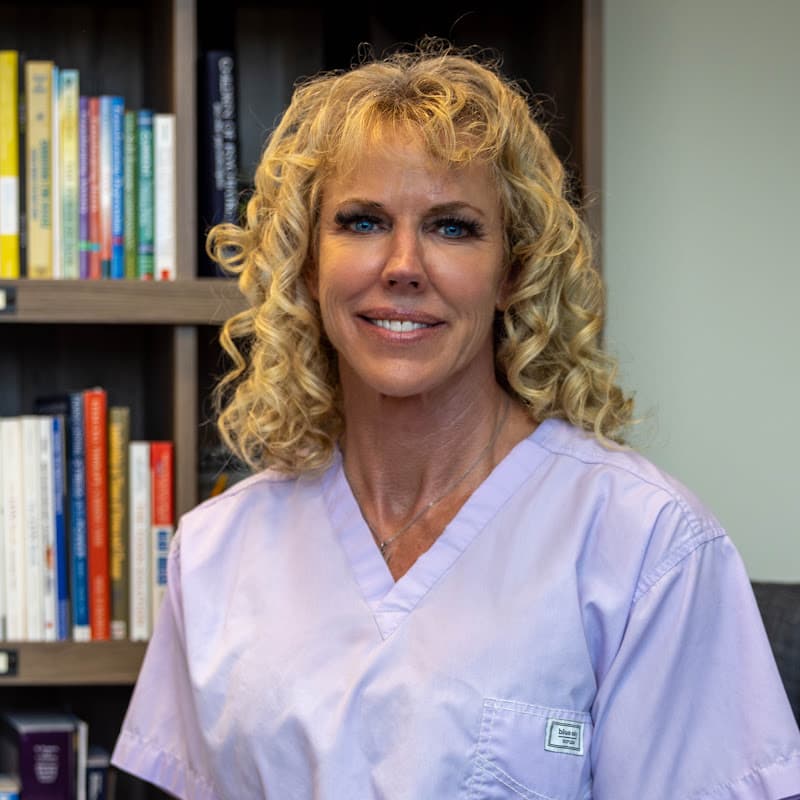
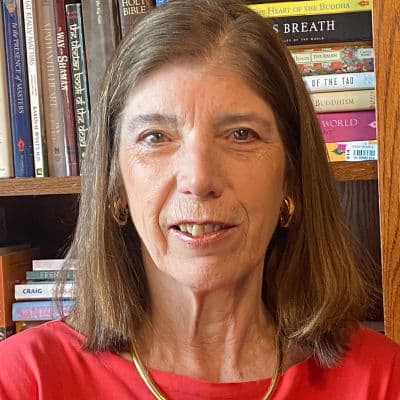
Full Transcript Introduction to Women's Health Span 0:00 cardiovascular disease is still the leading cause of mortality in women and also what we call morbidity, which is people's being unable to do things because 0:12 they get chest pain or their endurance and their energy level isn't very good because their heart isn t pumping effectively. 0:21 So we catch up in that regard and that's the thing that I focus on in a lot of my reading is what can we do to prevent cardiovascular disease in women. 0:33 Welcome to the Functional Edge. 0:35 I'm Dr. 0:35 Julia Ward, and this is where science meets real-world strategies for living healthier, sharper and stronger. 0:42 From uncovering hidden environmental toxins to unlocking peak performance and mental clarity, we cover it all. 0:49 Ready to take control of your health and thrive? 0:52 Let's dive in. 0:55 Well, hello and welcome to the Functional Edge podcast. 0:58 I'm your host, Dr. 0:59 Julia Ward, medical director and founder of Balanced Body Function Medicine. 1:03 Today, we're honored to welcome Dr Pat McShane to show. 1:07 Dr Mcshane is a physician, educator and host of Women's HealthSpan Voices. 1:13 where she's dedicated to helping women understand how to live not just longer, but healthier, more vibrant lives, especially in the post-menopausal years. 1:21 In this episode, Dr. 1:23 McShane will be sharing insights on women's health span, menopause, and the clinical and lifestyle strategies that can help women age with strength, 1:31 clarity, resilience. 1:33 She offers a thoughtful, empowering perspective on the unique challenges women face as they age and what we can do to proactively change that narrative. 1:42 So stay tuned for an engaging and inspiring conversation that will help you rethink aging and take meaningful steps towards lifelong wellness. 1:50 Welcome, Dr. 1:51 Pat. 1:51 How are you? 1:52 I'm great. 1:53 Great to be with you, Doctor Julia. 1:55 Thank you. 1:56 Why do you think it's important to have podcasts specifically focused on postmenopausal women rather than just lumping them into general women's health
Why Postmenopausal Women Need Dedicated Health Conversations 2:05 conventions or conversations? 2:07 Well, general woman's-health conversations are informed basically by a bunch of research often that was done with males and often not with people over 2:20 age 60 or 65. Many of the studies and procedures and medications that we currently use for people in their, you know, 50, 60, 70s were tested on men who 2:32 were younger than age, whatever, sixty or sixty-five. 2:37 And they just have these procedures and agents have worked their way into practice with older people and with women. 2:46 And we now know more and more that women's physiology is different, especially after menopause, and we catch up with men in some ways as far as risk of 3:00 like cardiovascular disease is the best example. 3:03 We exceed men's risk in some ways, apparently Alzheimer's dementia. 3:08 We have a higher rate than men do, but these differences haven't really been studied well. 3:14 So what I found when I started, you know, on my own postmenopausal years was, wait a minute, where's the information for me? 3:23 And there are marvelous podcasts and there's more and more for women in our age range, I found at that time, let's say 10 years ago, 3:32 not so much for women. 3:34 It was mostly for men, guys. 3:37 And, you know, if you're a 50-year-old guy doing a podcast, that's where you are going to put your focus is your friends and relatives similar to you. 3:46 So I just saw that there was a need and there's information out there. 3:51 There's not a paucity of good medical studies necessarily, but they're not the catchy things necessarily that get reported. 4:02 And as I'm sure most of our audience knows, things that are kind of catchy get people's attention, But they may not be the most important information. 4:13 I thought, well, let's go back to those studies and pull out the part that really pertains to women in their post-menopausal years. 4:22 And that's a long-winded answer to how I got to be doing this from my previous background as a fertility specialist. 4:30 So I am a gynecologist, but haven't really practiced medicine with post menopause women so much since my training. 4:38 Awesome. 4:39 Well, from your perspective, what are the most significant health risks facing women as they age, particularly in the post-menopausal years? 4:47 Well as I just mentioned, women catch up with men's risk for cardiovascular disease, and that includes things like coronary artery disease heart attack 4:57 and so on, as well as stroke. 5:00 So prior to menopause are estrogen and maybe other factors. 5:05 seems to protect us to a certain extent anyway, so that a 45 year old woman or a 50 year-old woman has a much lower rate of having a heart attack,
Cardiovascular Risk and Inflammation in Women 5:15 let's say, than a fifty-year- old man. 5:18 But we catch up and cardiovascular disease is still the leading cause of mortality in women and also what we call morbidity, 5:28 which is people's being unable to do things because they get chest pain or their endurance and their energy level isn't very good because their heart isn 5:39 t pumping effectively. 5:41 So we catch up in that regard. 5:43 And that's the thing that I focus on in a lot of my reading is what can we do to prevent cardiovascular disease in women? 5:53 Yeah. 5:53 That's really important, I think, because so many of the studies are focused on men and male patients in these cardiovascular studies. 6:01 So it's different. 6:03 And even the symptoms, let's say, of a heart attack in women can be very, very different, and now we know even that on a cellular level, 6:12 on the level of our heart arteries that women's heart attacks look different than men's. 6:18 So even some of the diagnostic studies looking for calcium around the arteries may not be as predictive for women. 6:28 as they are for men. 6:30 But the treatment part, we haven't caught up with that yet. 6:33 We're just kind of catching up the idea that inflammation can drive heart disease at least as much or even more than cholesterol per se. 6:44 So we're slowly shifting our focus in the main killer of men and women around the world. 6:51 Yeah, yeah, absolutely. 6:53 And wasn't there a study in the New England Journal of Medicine a number of years ago stating that there wasnít a lot of correlation between high cholesterol 7:02 in women and heart disease? 7:04 Iím not sure about that study, but I just saw something from, I think it was the American Heart Association, looking at the marker of inflammation, 7:13 C-reactive protein, CRP. 7:15 that's a better predictor of heart disease risk over time than cholesterol levels, particularly in women. 7:24 So if that New England Journal article is in fact a good recall of yours, it has been confirmed in the current era quite recently. 7:35 So I think we should be asking our docs when we're in, you know, our annual screenings for a CRP level if we haven't had it before to help us know what 7:47 our risk level is and maybe what to do about it. 7:51 Yeah. 7:51 Absolutely. 7:53 So what originally motivated you to focus your work and advocacy on women's health span, especially later in life? 8:00 Well, I just feel like, you know, women have been neglected in a lot of different ways in our culture. 8:07 And I guess I started my OB-GYN training with a very, very feminist bent back when few of the docs sitting on either side of me at meetings were female. 8:20 I thought that a female perspective was good for patients and for the field as a whole. 8:26 So then I kind of slowly migrated that concern. 8:31 I mean, that's certainly true for young women as well. 8:34 But now that I'm in the post-menopausal firmly in post menopause years, I find that we are, you know, ageism is still around.
Research Gaps and Medical Neglect 8:44 So even older men are not regarded as, well as they should be. 8:50 And certainly older women have a double whammy. 8:53 That's kind of a political answer, but I'll stick with it. 8:57 Yeah. 8:59 Absolutely. 9:00 So why do you think so many women are still not getting clear, accurate, or actionable information about their health during and after menopause? 9:08 Yeah. 9:09 Again, I think the foundation of our training as physicians, and I don't know so much about naturopathic doctors or nurse practitioners or PAs, 9:19 but as we're still going by the code, you know, the age old studies that say, oh, cholesterol is the most important thing to be looking at. 9:29 You know it's going to take time to undo some of this misinformation. 9:34 And I think that it will happen and as I, think as more physicians and other practitioners are female that we are going pull everybody else with us kicking 9:46 and screaming maybe, but hopefully start to rectify and Still, I believe about 70% of research dollars are spent for studies involving men. 9:57 So that's kind of a big deal. 9:59 I don't know how you rectify that, but yeah. 10:02 The data are pretty clear that women are still second-class citizens with regard to medical research and therapies. 10:11 And people now, the docs are so busy, you know, they have such a small amount of time, and I think in a holistic practice such as yours, 10:22 it might be different, but in the typical practice, with your annual, primary care doc, you may get, I don't know, 20 minutes, 10:32 maybe half hour if you're lucky. 10:34 And by the time we're 65 or 70, many of us have three or four conditions that, you know high cholesterol, high blood pressure, 10:44 marginal diabetes. 10:47 That's a lot to go through in a small amount of time. 10:50 So I just think it's the tall order to try to be more mindful for women's particular issues, shall we say. 10:59 Yeah, absolutely. 11:01 So some people might assume that women lose interest in health education as they age. 11:07 What has been your experience with women's engagement and curiosity in this stage of life? 11:13 I certainly think there's an enormous interest in the menopausal transition. 11:17 And luckily, I think that piece of the journey is being better addressed now than it was 10 years ago, the Menopause Transition per se, 11:28 a huge variety of symptoms that many women, not all women but many women will go through and the kind of what people call gaslighting, 11:38 you know, they told me everything was fine. 11:41 My labs were fine, it's just all in my head, I'll get over it, or you have to live through it.
Menopause, Engagement, and Preventive Health 11:48 That time frame is for most, you know, for our audience, some of our audiences may still be in that transition, but I think for women who are kind of paying 11:59 attention a little bit, the message is starting to get out there that huge percentages of cardiovascular disease, dementia, 12:08 and to probably a lesser extent, even cancer, are related to lifestyle things that people can change. 12:16 And hopefully that message is going to stick with people as they've had, you know, friends and family members fall and break their hip and, 12:26 or get heart disease and a stroke because their blood pressure wasn't or they're still smoking or obesity obviously is huge. 12:35 It's complicated, but I think a lot of women are on board with doing the best they can. 12:42 They realize the disparity between health span and life span. 12:47 We live longer, so many of us are in a wheelchair or some of are even in nursing homes. 12:55 What can we do to avoid that? 12:57 And I think there's a lot of people out there. 13:00 My experience with this series has been that a lotta people are very interested in knowing what they can do, which is not easy necessarily, 13:09 but at least you can start somewhere, yeah. 13:12 Yeah. 13:13 That's been my experience too, that most women as they're getting into the menopausal, perimenoposal menaposel age, now the kids are grown and they are 13:22 a little more independent and now you can finally focus some time on yourself. 13:26 And, you know, fortunately they've removed the black box warning for some of these, bioidentical hormones, which is good. 13:34 So hopefully more conversations are starting to take place about the safety and efficacy of Yes, yes. 13:42 And more research, hopefully, about what happens to people who do take these for certain lengths of time and so on. 13:48 Because right now, we don't really know much about people, who take it over age 65, you know, not the bioidenticals. 13:56 We know a little bit about the people ,who are taking the older formulations. 14:00 Right, the synthetic. 14:02 Almost nobody takes those any longer, I suspect. 14:06 Not here in the U.S., anyway. 14:09 Yes. 14:10 So when you think about conversations that most need to be happening, what do you see as the most clinically relevant topics for post-menopausal women today? 14:21 Well, I think there's always a little bit of a disparity between things that people are most afraid of and the ones that are actually most likely to occur. 14:31 And again, as I've mentioned, cardiovascular disease is the main killer of women and also tremendous amount of morbidity and restriction in lifestyle. 14:41 Breast cancer gets more hearts pounding and dementia, I think, is a very scary topic for a lot of people. 14:50 And dementia is huge. 14:52 Women make up the bulk of the patients with dementia. 14:55 For one thing, we live longer than men do. 14:58 So that alone would skew the population of people with dementia towards women, but we're also more likely to get it. 15:06 And I don't think anybody knows why that is. 15:09 So those are the topics that I think are kind of get people's interest the most is, you know, breast cancer and dementia kind and cancer too. 15:19 Those are all kind hot button issues. 15:22 But I would add cardiovascular disease in there as a, you know, don't forget about your risks for cardiovascular diseases. 15:29 Yeah, absolutely.
Health Span vs. Lifespan 15:31 You emphasize health span rather than just lifespan. 15:35 Can you explain why that distinction matters so much for women? 15:39 Well, I'll start with saying it's about 10 years on average in the developed countries. 15:44 And what I mean by that is our life expectancy is about 80-something, most women in developed world, in US in particular. 15:55 But we start losing our full functionality in our late 60s on average. 16:01 And again, that might be loss of mobility, loss or strength, inability to walk up a flight of stairs or carry your own groceries or needing, 16:11 as I mentioned, to be in a nursing home, falling and having, you know, severe limited mobility being in wheelchair, those kinds of things. 16:22 To me, I don't really want to be around at 82 years old unable to walk and, you know, not thinking clearly. 16:31 And I think most people would agree with that. 16:34 The average citizen of the U.S., male or female, over age 65 is taking five prescription medications. 16:44 As an example and you know that just tells you what we're dealing with you no blood pressure cholesterol diabetes the list goes on and on arthritis i problem you. 16:56 So this isn't the ideal way to live a life so i'm trying to help women know what they can do. 17:05 and or what they can ask for diagnostically or even therapeutically to have that be a much narrower gap between when they're capable and have a fully functional 17:17 life and when the actually pass on, you know, so that's my view of it. 17:24 Yeah, absolutely. 17:25 That's so important. 17:27 What are some of the most common chronic conditions you believe could be prevented or significantly delayed in post-menopausal women with the right lifestyle 17:36 or clinical interventions? 17:38 Yeah, yeah, pretty long list. 17:41 That's the perfect question. 17:43 I mean, we've been talking a lot about heart disease and certainly I've read estimates as much as 80% of heart diseases and cardiovascular, 17:52 and that includes stroke, are preventable by lifestyle. 17:57 and that includes obviously diet, exercise, sleep, smoking cessation. 18:02 The list goes, there's I think eight things on the American Heart Association. 18:07 Essential eight is what they call it if you want to look it up. 18:11 But these are getting more and more press. 18:14 Again, a lot of what's out there is click bait.
Preventing Chronic Disease Through Lifestyle 18:18 Kiwi is the magical fruit for her constipation or whatever. 18:24 And that's OK. 18:25 If it gets people started, I'm OK with it. 18:28 But I am more keen on people seeing stuff that is based on long-term studies. 18:35 And we have several of those based the nurses population in the US, the NHANES study, and the UK Biobank. 18:44 Again, long term studies in people who were older adults and then have passed into the elderly category in many cases. 18:54 Whatever elderly is, is always 10 years older than I am, you know, so, right? 19:00 That makes sense. 19:02 So those studies are telling us exercise, and I don't like to use the word exercise. 19:09 I like the use of the words movement. 19:12 My sister keeps telling me motion is lotion. 19:15 you know, keeping active and all these things are related. 19:19 You know of course if you're not too overweight it's a lot easier to move and so on and a good diet is the foundation for many of these. 19:28 Things avoidance of a I'd say more and more data that no alcohol is safe completely. 19:37 And then you have trade-offs of why would you drink a little bit if it's slightly at risk for you. 19:45 So those are kind of the main things that I think are lifestyle issues that we can start to employ. 19:53 Often just a tiny something. 19:57 Walk for five minutes after lunch. 19:59 You know, that does wonders for your blood pressure. 20:02 Maybe if you walk with a colleague, you know or a friend or, your dog, it's stress reduction besides. 20:10 So yeah, there's little things, substitute, sparkling water for one of the sodas. 20:17 or put one thing of sugar in your coffee instead of two, et cetera. 20:23 Small steps add up and make a difference. 20:26 And you can pat yourself on the back, oh, I did a good thing, and move along. 20:32 To try to do radical restructuring of your lifestyle, is pretty much doomed to failure. 20:38 But small steps most of us can take. 20:41 Yeah. 20:42 So that just kind of leads me into my last question, which is if you had to highlight one lifestyle change that has the biggest impact on long-term health 20:52 for post-menopausal women, what would that be and why? 20:55 It would be activity, movement. 20:57 You know, it's so foundational to so many other things and it makes such a big impact on our mood. 21:04 There's a lot of material now that is showing that activity is very therapeutic for depression. 21:11 This has not been put into older individuals or women per se, but I think it is probably true for all ages. 21:19 That's just one example. 21:21 Of course, It's not a magic bullet for losing weight, which people wish that it were. 21:27 But it's very helpful for glucose management if you have some muscle to keep the glucose moving into your muscles instead of circulating to your other tissues. 21:38 It's good for so many other things, fall prevention. 21:42 If you do a little balance work or work on a bit of uneven terrain and falls are such a major risk factor for older people and the consequences of falls. 21:54 You know, many people don't survive a fall or they don' come out of it in good shape. 21:59 So motion is lotion and that one may be one of the easier ones to just start doing something. 22:06 I wore a glucose monitor a couple times just for curiosity.
Movement as the Key Longevity Habit 22:12 But it's amazing how even folding the laundry or doing the dishes or just walking around the house when I'm talking on the phone makes a huge difference 22:23 in your circulating glucose level. 22:25 That just shows you what your muscles can do for you, basically. 22:29 Yeah, absolutely. 22:31 I wore a glucose monitor for a few weeks and was surprised at what made my glucose go up versus stay steady high. 22:40 And I did find that even without eating a lot, stress can bump it up and keep that high, so that was really surprising to me how impactful that can be. 22:53 Yeah. 22:53 Yeah, I recommend people who are curious, it's worth it. 22:57 It's great information. 22:58 And you quickly will see the benefits of movement of any type. 23:03 But I mean, yes, resistance training. 23:06 If you're already somebody who's doing your 7,000 steps a day and so on and forth, but haven't made the jump to resistance-training, 23:15 body weight is good, bands are good. 23:18 Gym, of course, is great. 23:19 Weight, ham weights are wonderful. 23:21 So that's kind of another thing, balance. 23:25 And again, it only takes a couple of minutes to do a little bit of balance work to reduce your risk of falls or injury if you do fall. 23:33 Yeah, absolutely. 23:34 That's great advice. 23:36 It's really wonderful. 23:37 Well, thank you very much for joining me today. 23:44 I hope today's episode gave you fresh insights and practical tools to level up your life. 23:48 If you found value in what you heard, don't forget to hit the subscribe button and share the podcast with someone who needs it. 23:55 And leave a review. 23:55 It's the best way to support our mission of bringing powerful health solutions to more people. 24:01 So for more resources, updates, and behind-the-scenes content, visit drjuliaward.com. 24:07 And Dr. 24:08 Pat, please tell us how people can get in touch with you. 24:11 Women's Health Span Voices is my podcast, And womenshealthspan.org is My website. 24:17 So those are a couple of places that they could get more information.
Closing Remarks and Where to Find Dr. McShane 24:21 Great. 24:22 We'll put that in the show notes, definitely. 24:24 Excellent. 24:25 Thanks so much for having me. 24:26 It's been very much fun. 24:28 Great, thank you and until next time stay strong, stay healthy and keep living on the functional edge. 24:34 Thank you for joining me on The Functional Edge. 24:37 I hope today's episode gave you fresh insights and practical tools to level up your life. 24:42 If you found value in what you heard, don't forget to hit subscribe, share the podcast with someone who needs it and leave a review. 24:50 It's the best way to support our mission of bringing powerful health solutions to more people. 24:55 For more resources, updates, and behind-the-scenes content, visit drjuliaward.com. 25:02 Until next time, stay strong, Stay healthy, And keep living on the functional edge.
Comments