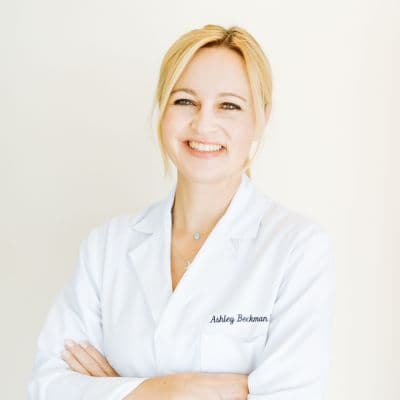
Full Transcript Introduction to the Longevity Leaders Podcast 0:00 The hard part is getting women to get their tests done in the first place. 0:03 And women are better than men in getting their medical things taken care of. 0:09 But again, with hormones, I feel like there's a block where because of the Women's Health Initiative, they're afraid to even know what their results are 0:19 because they don't want to have to even make a decision whether or not to take hormones or not. 0:23 What if aging isn't about slowing down but leveling up? 0:26 I'm Dr. 0:27 Isaac Jones. 0:27 This is the Longevity Leaders Podcast. 0:30 Welcome. 0:30 I'm Dr. 0:31 Ashley Beckman here today with the Longevity Leaders Podcast, and I have a special guest, Dr. 0:37 Yaz. 0:38 Hi there. 0:39 Welcome. 0:39 Thank you. 0:40 So let's dive into one of your specialties. 0:44 Sure. 0:45 So women's hormones. 0:46 Yes. 0:47 I'm always curious because also as a female, we see a lot of things that are often suggested for men, and this is given to women as if it's the same type
Women's Hormones and Testosterone 0:58 of treatment, same dosage, same frequency. 1:01 Can you talk a little bit about how we're different and why it's important to specialize in women's hormones and the women's side of everything? 1:09 Well, first of all, women are the most underserved in the medical research, you know, history of medical research. 1:15 But there's a reason for that is because we have so many hormones and they can't, they were too complicated. 1:20 They just can't keep up with us. 1:21 We're way more complicated. 1:24 So obviously in our brick and mortars, we do hormone replacement therapy. 1:28 We probably see just as many women as we see men specializing in testosterone pelleting. 1:34 And women don't realize they need testosterone too. 1:37 They may not need as much as men, but we definitely need some testosterone as we get older, especially going through perimenopause and menopause. 1:46 So it's very important to. 1:49 Get your testosterone, get your levels checked, making sure that you're balancing your estrogen and your progesterone if you have a uterus. 1:56 And then getting that little dose of testosterone added in there too, it's just a game changer. 2:04 So what are some of the symptoms that women might encounter when their testosterone is low? 2:09 Gosh, low energy, zero motivation, lack of sex drive, libido, they get hair loss. 2:14 Yes. 2:15 And what's interesting is men get hair loss with low testosterone, but it's not on the head necessarily, it's the shins. 2:23 One of the first signs is shin hair loss, right? 2:27 But yeah, women definitely get, I feel like women get more hair loss than men with that. 2:33 But the biggest feedback I get is just that they have more energy to keep up with their kids, with their life, you know, 2:41 everything. 2:42 So this topic is really important, again, because I'm in the age bracket, right? 2:46 So we've been told for so long that this happens a lot later in perimenopause. 2:52 But what we're seeing, and I want to ask for your opinion, what's the age range? 2:57 Because it's a wide spectrum of perimenopause, right? 3:00 So women get these symptoms for so long. 3:03 They're dismissed by their doctors.
Perimenopause Symptoms and Early Signs 3:05 They're told maybe you're anxious, depressed, stressed. 3:10 But you need to uncover and really look at these hormones and the testosterone is a big piece. 3:16 Huge piece, yeah. 3:17 So I know a lot of women are afraid of taking testosterone, right? 3:22 But it is definitely integral to the whole process. 3:25 And so when women start getting these symptoms, what age are you kind of seeing these crop up on average? 3:32 You know, I think that, and I'll tell you from my own experience, I have 15 year old twin girls and I breastfed for two years. 3:41 And at 30, I was about 39, my progesterone tanked first. 3:47 That threw me into perimenopause. 3:49 And that's when I started to do the testosterone pelleting for myself. 3:54 So I was about 40, 41 when I started pelleting. 3:57 So perimenopause can range anywhere from 35 to 55. Every woman's different, right? 4:05 And so, and then you have to look at like, when did your mother go through menopause? 4:11 I'm 50 now. 4:12 My mom was done at 50. So I'm right in there, almost done. 4:17 But it's something that can vary very much person to person. 4:24 But the earlier you do the hormone therapy and supplementation, and one thing women tend to forget is protein and muscle building. 4:35 But the earlier you focus on those foundational things, the better the rest of your perimenopause and menopause journey will be, 4:42 the easier it'll be. 4:44 So, also, let's go into some of those common ones because a lot of us in perimenopause, you start talking to your friends, 4:50 and some are in the medical field, some are not, but a lot of us have so many similar overlapping symptoms. 4:58 And one I think that people I would kind of forget about is the frozen shoulder. 5:01 And every time, yeah, right? 5:03 I had one side, then it went to the other. 5:05 And then I have all the tools, I knew this, and things weren't really working as well as I'd hoped, right? 5:11 With oral progesterone is the first place often people go, or topical, right? 5:16 Start with topical is often what happens. 5:18 But what are some of these other ones that are just hallmark symptoms that we ignore for many years and you just chalk it up to aging, 5:27 but we're still pretty young, right? 5:30 This crazy joint pain, not sleeping. 5:33 What are some other things that you see the most? 5:34 I think one of the earlier signs, for me, one of the earlier signs was brain fog. 5:39 Yes. 5:40 That was huge for me. 5:41 And then my, you know, everyone talks about night sweats and hot flashes. 5:48 That is common. 5:49 Yeah, I mean, they're common, but that's not the worst of it. 5:52 And the cleaner you eat, the more whole food, you know, protein forward diet you can eat, the less night sweats and hot flashes you'll have. 6:02 But for me, the biggest thing has been the bilateral frozen shoulder, right? 6:09 First one side, then the other side. 6:10 And then the joint pain, like when you wake up, you feel like you have the flu trying to stand up. 6:16 Just the intense amount of joint pain. 6:19 There's estrogen receptors in your joints, and when they're not getting quenched, you know, they start to ache, right? 6:26 So that's been the biggest thing. 6:28 But brain fog came first for me. 6:30 And what about sleep disruption?
Testing Hormones and HRT Safety 6:32 Luckily, I'm a really good sleeper. 6:34 So I don't really have that much of a problem with sleeping, but I think it's because I've been, I started off with micronized progesterone so early. 6:42 So that's really helped me maintain my sleep. 6:45 But there are nights where I'm like, why, you know, I look at my oral ring and I'm like, why did I not sleep? 6:50 Well, like there's no reason why my HRV is so low and I didn't sleep. 6:54 But definitely sleep is something that affects many women with, I mean, I probably think that's, that is the biggest complaint that I hear is sleep and 7:03 then the brain fog. 7:04 Yes. 7:06 And that's the thing that's interesting, right? 7:08 When you start chatting with your friends and everyone is in a similar age bracket. 7:13 And some women, again, are getting this much younger, right? 7:16 So I'll have some good friends that are 37, 38, going through the same symptoms that I have at 47. And I'm a Chinese medicine practitioner. 7:26 So we focus a lot on longevity from that perspective of the hormones and nourishing your yin. 7:34 There are a lot of tools, but what we're seeing is these other interventions that are more powerful have a lot of benefit as well. 7:43 And so you see this because you're able to prescribe these hormones in your brick and mortar. 7:49 And I think it's very interesting what you were saying about the testosterone and the progesterone. 7:53 We often don't address these things and go through it for many years, and then you're not getting the benefit of starting earlier. 8:01 And so let's talk a little bit too about the estrogen and progesterone imbalances, because we've read so long about estrogen dominance and all of these things. 8:10 So when we're looking at the labs, a lot of us do still have quite a lot of estrogen, but the progesterone is declining significantly. 8:18 Do you suggest people use any of the home testing where you can test throughout the month? 8:25 Or do you rely on blood testing or Dutch testing? 8:29 If you're a medical doctor, nurse practitioner, chiropractor, or other health expert that's stuck in a broken system, there's a better way. 8:37 The Freedom Webinar shows you a proven five-step system to build a seven-figure virtual health practice or how to modernize your current brick and mortar 8:50 practice without the burnout. 8:51 Learn to create high ticket programs, automated income, residual revenue, and attract clients ready to work with you. 9:00 Book your million dollar strategy session today by clicking the link in the description. 9:10 I think all of them are good. 9:12 I love the Dutch test. 9:14 We draw labs in our clinics. 9:17 At home testing is fine too. 9:18 I don't think there's any bad way to do it. 9:22 I think that blood work is obviously more accurate, but you can get pretty good results with the Dutch test as well. 9:29 But again, if a woman has her uterus still, it's so important to make sure that if your estrogen is dropping, that you're balancing the progesterone and 9:42 the estrogen, you're not just taking one or the other, only if the estrogen is dropping. 9:47 But I feel that any of those tests, the hard part is getting women to get their tests done in the first place, right? 9:54 And women are better than men in getting their medical things taken care of. 9:59 Again, with hormones, I feel like there's a block where because of the Women's Health Initiative, they're afraid to even know what their results are because 10:09 they don't want to have to even make a decision whether or not to take hormones or not. 10:12 So that's a whole other issue. 10:14 But I think, you know, no test is a bad test. 10:18 So that's the bigger issue. 10:20 Yeah, and just living with symptoms for years to decades. 10:24 And that is a big thing too. 10:26 Often they do go into their practitioner and they're dismissed and told, oh, this is way too early for you. 10:32 You can't possibly be in perimenopause. 10:35 Or they say, you know, hormone therapy is bad for you because the practitioner is maybe not progressive and isn't up to date with their research. 10:44 So there's always that too. 10:46 So let's go into that a little bit, right? 10:48 I'm sure you get clients all the time questioning how safe HRT is, and they're worried if their mom had breast cancer or hormone-dependent cancer. 11:00 How do you go about that and navigate the process with them for the optimal choice for that individual? 11:06 Right. 11:07 So I actually tell my mom's story. 11:11 My mom went through menopause at 50, and this was 25 years ago, and she decided not to go the hormone therapy route. 11:19 And her doctors told her that she'd be fine and she'd get through it. 11:22 And she did. 11:23 Everything was fine. 11:24 But then what happened was a few years later, I'd say about six years after she was done going through menopause, She started to get the very first lab 11:36 marker that started to creep up was her triglycerides So her triglycerides start to creep up then a couple years later her cholesterol creeped up then 11:45 a couple years after that her a1c creeped up and Then before we knew it she's in a chronic state of inflammation Yes, and then a few years after that she 11:55 gets diagnosed with cancer and then she passes away ten months later, so When I hear stories about practitioners saying that we don't believe in hormone therapy,
Estrogen Sensitivity and Delivery Methods 12:09 even if it's bioidentical, I read the research and I see that if you do not supplement with bioidentical hormone, and you go through menopause without 12:20 it and you rough it and more power to you if you can, that's great. 12:26 But there's research out there that shows that if you don't use bioidentical hormones through your menopause journey, your chances of getting cancer, 12:34 especially reproductive cell cancer, increases by 40% after the age of 65. Oh, wow. 12:40 That's significant. 12:42 Yeah, and my mom was 69 when she got diagnosed. 12:45 May I ask what kind of cancer she had? 12:46 Uterine, yeah. 12:48 And it took her in 10 months. 12:50 So I tell that story and they're like, okay, that makes sense. 12:55 I understand. 12:55 And then they do their own research and they come back and they are more open to it. 13:03 So in my practice, I have a lot of clients, as well as myself, they're extremely sensitive to estrogen. 13:09 How do you navigate that with if it's possibly creating some mast cell or some issues? 13:16 Is that a case-by-case basis where maybe estrogen isn't a great fit? 13:21 Or again, how do you kind of work on that? 13:23 I guess it just depends on their levels. 13:26 It would be more case-by-case. 13:28 I also feel like some people do better on the patch than on the pellet with estrogen. 13:34 I feel like the pellet is a little bit more, adding estrogen to the pellet is a little harder. 13:38 But then some people don't like the pellet at all. 13:41 I mean, love the pellet, don't like the patch. 13:43 they don't feel the patch does anything for them. 13:45 I prefer the patch for myself. 13:47 And it depends on their symptoms, you know, with mast cell activation and, you know, other symptoms. 13:53 It just depends on, okay, let's look and see what's triggering that mast cell activation. 13:59 Is it just the estrogen or is it something else? 14:01 And then can we put them on a histamine support for that? 14:04 Right? 14:04 So I put them on a probiotic or some sort of histamine probiotic for that. 14:09 But with the patches, I haven't really had a lot of people complaining about that. 14:14 They'll say, I don't really think it's working. 14:15 And then that's when, you know, we move them onto the pellet. 14:19 Okay. 14:20 What about, so this is very popular now in the space using topical facial serums that have estrogen. 14:27 Let me know about your thoughts on that. 14:28 So I've tried it. 14:29 Yes. 14:31 Do I, I don't know if it works. 14:33 I don't know. 14:33 I mean, at this point I'm like, I'm 50, whatever. 14:36 What am I going to do? 14:37 But, you know, and then there's some people who say, well, if I'm putting the topical estrogen on my face and then I have the vaginal cream and then I, 14:45 or I have the pellet, is that too much? 14:47 How much is, yeah, am I overdoing it? 14:50 I don't recommend the topical estrogen for your face, but there's some people that love it. 14:56 You know, I have friends that use it and they love it. 14:58 So I really don't, I can't really say, I haven't used that for my patients.
Sibling RX, Peptides, and Protein for Perimenopause 15:02 I don't know. 15:02 I don't have experience with patients using it to see if, you know, they're getting too much estrogen. 15:08 I guess if a patient is using both and you check their labs and their estrogen's too high, then okay, maybe we need to, you know, 15:16 either dial down on their pellet or patch or, you know, take away the topical. 15:21 I think it's just one of those things, right? 15:22 A lot of people pick up products they see online and it's sold as this magical cure, right, for skin care, especially during peri-menopausal times. 15:33 So it's always important to get good information. 15:36 Again, some people can be very sensitive to the topicals and feel a lot. 15:41 So it's always important to just get their levels checked and maintained and adjusted if necessary. 15:46 And how it's compounded, you know, the topical estrogen. 15:50 You have a podcast, right, with your brother? 15:53 With my brother, yep. 15:54 It's called Sibling RX. 15:56 So what do you guys chat about? 15:57 Everything. 15:58 Okay. 15:58 Everything, health and wellness. 16:00 We even, you know, have some sibling banter on there. 16:03 And we're business partners, too, in our brick and mortar. 16:06 We have 12 brick and mortars in Arizona and two surgical centers. 16:12 you know, we just talk about whatever. 16:14 Mostly my passion is fitness, nutrition, and, you know, women's health. 16:20 And he is, he, he's really good in, in not the women's health, but he knows a lot about the nutrition and fitness as well. 16:29 But he has a lot of, you know, joint repair type of stuff that he talks about. 16:35 So we just kind of bring two different angles and we discover different longevity hacks and stuff. 16:40 I'm kind of more exposed to that stuff. 16:42 So we discussed that and different supplements, all kinds of stuff. 16:46 So it's fun for us. 16:48 We just, it gives us time. 16:50 at least once a week to sit down and talk together. 16:52 Is he a practitioner? 16:54 Yes, he's a chiropractor. 16:55 Okay. 16:55 Yeah, that's a nice congruency. 16:57 Yeah. 16:58 And then plus, I'm sure, working together plus being siblings has its own charm. 17:04 Yes. 17:05 And do you guys use peptides? 17:08 Not in our clinic so much. 17:09 I use them for myself with my menopause journey, which has been wonderful. 17:15 Life changing, right? 17:16 Yeah, it's been great. 17:17 But I am going to start figuring out a peptide program for my virtual practice for that. 17:24 So I need to add that to my program. 17:28 What are some of your favorite peptides that have worked for you? 17:31 So I have a stack that I do. 17:35 I do tessameralin in the morning. 17:36 I do CJC 1295 at night, iprameralin. 17:41 And then I do the BPC 157 at night. 17:47 And then I take NAD, not necessarily a peptide, but I inject the NAD too. 17:52 Okay, and are you feeling energy from the NAD? 17:55 I think so. 17:57 You know, it's kind of hard to tell because I don't know if it's because I have the other peptides in me or if it's just the NAD because I don't just do one, 18:06 you know, but I feel like just that combination for me really works well. 18:11 Plus, it helps me with my workouts. 18:12 I lift a lot of heavy weights to maintain my muscle and so I feel like it just really helps support everything. 18:19 So let's go into that a little bit because that's one of the biggest things in perimenopause is just trying to get enough protein. 18:27 So what's your amount that you suggest? 18:30 So I always say one pound per ideal body weight for your height. 18:35 So if a woman is 5'4 and their ideal body weight is 130 pounds, but maybe they weigh 160, They need to just eat at least 130 grams of protein, 18:48 but that's a lot, right? 18:52 So what I tell people is that in order to get the metabolic effect of the protein and to see a shift, you have to have at least 90 to 100 grams of protein 19:02 a day. 19:04 So that should be your bare minimum as a female to get the metabolic effects and benefits, right? 19:09 So that's what I always recommend. 19:11 I try to, you know, a lot of women don't lift weights. 19:15 And so if they're not lifting weights, then they can get by with the minimum protein. 19:20 But if they are lifting weights, then they need to try to get to their goal of 130 if they can, or whatever the ideal body weight is. 19:28 So do you have some tips? 19:29 Because in general, it's really hard, even getting 30 grams per meal, right? 19:34 I mean, I'm a meat lover. 19:35 I eat a lot. 19:36 And I add in some equipped protein or some other things. 19:41 It can be a challenge. 19:41 Do you have any quick tips? 19:44 I'll get a little extra in. 19:45 Yeah. 19:45 I mean, I always say just stack your mornings and your evenings with protein because lunchtime it's always harder, at least for me to get the right amount 19:52 of protein. 19:52 But I always start my day off with really high protein. 19:56 So I love Nancy's probiotic cottage cheese. 19:59 So I take that, I literally half a container for my breakfast. 20:04 with flaxseed blueberries. 20:06 And then I, I know this is kind of gross, but I put some apple cider vinegar on it for my fermented stuff, but I just love apple cider vinegar. 20:12 So I think it tastes good. 20:13 And I, so that's at least 50 grams right there. 20:16 And then in the evening, I make sure I have at least a big piece of some sort of protein. 20:21 So a lot of, a lot of people, they mix their protein with their carbohydrate and they separate it. 20:26 So I always make sure I separate the protein. 20:28 But just bookending your protein in the day really helps. 20:31 Because then in the middle, whatever you eat is, you know, it's extra. 20:36 Any last tips or suggestions you have to kind of help women navigate this perimenopause time with ease? 20:44 Well, I think the first thing is, like we talked about, is just getting your labs checked on a regular basis. 20:49 People don't do that enough. 20:50 Six months in a year, I think, is at minimum every once a year. 20:55 So I think just making sure you get your lab tests so you know where you're at. 20:58 Because if you don't do that, you don't know. 21:00 Right. 21:00 And you can't tell if things are working that you're implementing. 21:03 And the sooner you're aware of what you're going through and how your levels are, the better you can help yourself.
Final Advice and Where to Find the Guests 21:09 Perfect. 21:10 Where can everybody find you? 21:12 So you can find me on Instagram at Dr. 21:14 Yasmin Rahimi, and then you'll have all that listed. 21:17 And then at Sibling RX is our podcast, Instagram podcast. 21:22 And then, yeah, our website is backfithealth.com. 21:25 Amazing. 21:26 Thank you so much. 21:26 It's a pleasure. 21:27 And again, As women going through this, right, it is really incredible how dismissed, how much gaslighting there is. 21:36 And so getting the information, getting knowledgeable about your own body, where you are with your labs and your hormones will set you up for success. 21:45 Yeah, thank you. 21:47 Thanks for listening to the Longevity Leaders podcast. 21:50 A Longevity Leaders community is on a mission to transform 100 million lives by 2040. If you enjoyed this show, please share this with somebody that you know, 21:59 especially another doctor or physician, but also click that follow button. 22:03 Until next time, stay strong and live life.

Comments