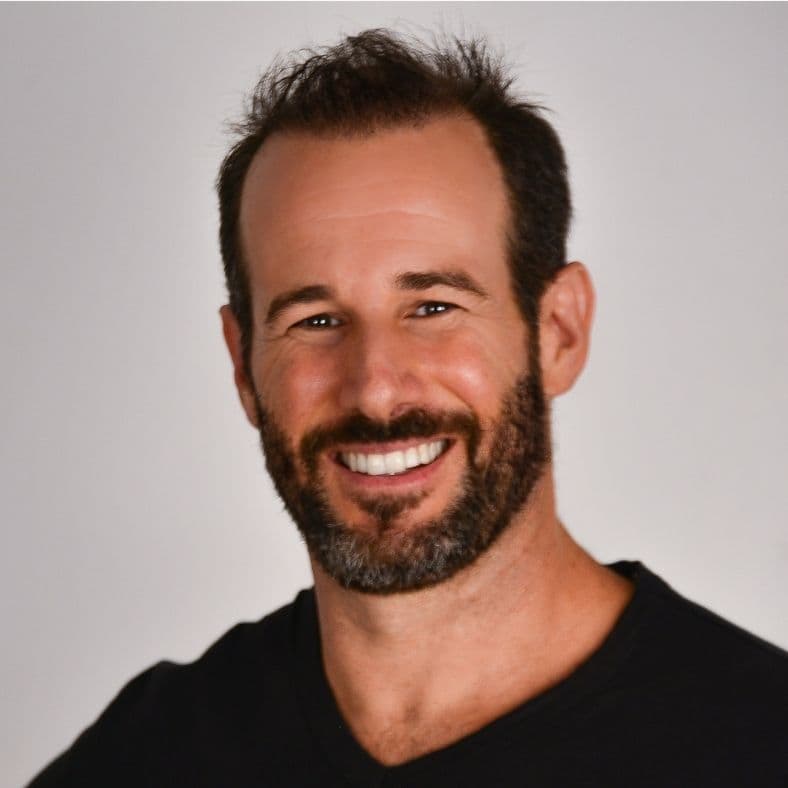
Full Transcript Introduction and adaptation vs age 0:00 Hi everyone, and welcome back to the Future 0:03 of Menopause Medicine Summit. 0:06 Same summit, fifth year. We just changed the name. 0:08 I'm still your host doctor Sharon Stills. 0:10 I'm excited to be here with you all. 0:13 I've got a fan favorite in the house, certainly a doctor stills favorite. 0:17 I've got Yoni Whitten in the house who has been studying 0:21 wellness and human performance for over two decades. 0:25 He is a chiropractor. 0:28 He specializes in kinesiology, nutrition, health and what I love about 0:33 him is we always have these real, humbling, practical conversations. 0:38 And so I said to him before we came live, what are we going to talk about? 0:43 And he said, how about like adaptation versus age? 0:48 And I was like, game on. 0:50 This is such a great conversation for all of us to hear, myself included. 0:54 So welcome back to the summit. 0:58 Thank you so much. 0:59 I appreciate the wonderful introduction. 1:02 Yeah. 1:02 So I think, you know, as women going through menopause or post-menopausal, 1:08 like there's aches and pains and we've been taught, 1:13 well, this is just aging. 1:15 This is how it happens. 1:16 And I was saying before we hit record, like, 1:19 even me, I practice this stuff, I preach this stuff. 1:23 But it's so ingrained in us that I even sometimes hearing myself 1:27 saying, well, you know, I'm, 1:28 I'm only a year and a half away from 60, so maybe this is aching. 1:32 And so today we're going to like myth bust that because we need to fight back. 1:37 That is like societal BS programing and it is not true. 1:41 So take it away. 1:43 My favorite thing was when I preached it. 1:46 You go, yeah, it's such BS and I'm not sure if we're allowed to 1:49 swear, but you actually said the real word and I was like, that amped me up. 1:53 So I love this stuff. 1:55 And it's so funny, doctor stills, because I was at the gym 1:58 this morning with my wife and these two women who I am familiar 2:03 with, their friends of my wife, 2:04 they came over to use a machine next to me, 2:06 and they were loading it up with plates, and they put this very light 2:11 weight on there. 2:11 And I kind of looked at them and they go, oh, we have bad backs. 2:16 They are both in their 40s. 2:18 And I was like, this is like one of them is like a professional dancer. 2:23 And I'm like, you can't, you can't do that. 2:25 Like I wasn't looking at them like judge mentally. 2:28 I was like, I don't think that that is going to do anything for you. 2:31 I think it's going to be boring. 2:32 Like you're going to be on your phone texting while you're doing it. 2:35 And, and they kind of looked at me and, and we had a laugh about it. 2:39 But that's kind of what I want to jump into, 2:42 because one of the things that really 2:47 gets people nowadays is they 2:51 participate 2:52 in certain things, or they fail to participate in certain 2:56 things that lead to outcomes that are not surprising.
Muscle loss, frailty, and resistance training 3:00 Like, we know what's going to happen. 3:03 We know for a fact that every person is losing 3:07 as much as 8% of their muscle mass every decade, beginning at age 30. 3:13 When that goes on 3:16 unabated, meaning you're not doing anything 3:19 to preserve your strength and preserve your muscle mass, 3:23 which means you're not moving, you're not lifting things. 3:27 You're not participating in the struggle against gravity. 3:32 Bad things tend to happen that leads to frailty. 3:35 When that goes on decade after decade unabated. 3:38 And then it becomes, whoa, I can't get up out of a chair easily. 3:44 I can't get myself into and out of my vehicle easily. 3:48 I can't go up that flight of stairs. 3:49 I can't carry my groceries. 3:51 It becomes really debilitating, and it's 3:54 kind of this slow march 3:57 that gets us there and people don't realize it. 4:01 And I'm not going to use the phrase until it's too late, 4:04 because as long as you're living and breathing, 4:07 the research is very clear that everybody can improve. 4:10 And the coolest thing about it is it doesn't even take very much like 4:14 there's some amazing research out there now, like research 4:18 that will really blow your mind if you absorb it. 4:20 That shows that the amount of work that it takes to preserve 4:24 your muscle mass is so small. 4:27 It's like it's like in 40 minutes 4:30 to an hour of resistance training a week, 4:34 not even three times a week, just once a week. 4:37 No. Well, so you can break it up however you want. 4:39 But most people, you know, it's it's 40 4:42 to 60 minutes of cumulative resistance training per week. 4:46 So you could say I'm going to do 4:47 ten minutes a day for five days or however you want to break it up. 4:51 The idea is that's how much the bar 4:54 and you can maintain like up to 80 something. 4:57 It's like low 80s. 4:58 The percentage of of of strength that you can maintain with just that. 5:04 So a lot of people there's kind of like this all 5:07 or nothing mentality especially baked into us as Americans. 5:10 Like we look at like, well, if I'm not going to do 1,000% 5:15 of everything, that I might as well do nothing. 5:17 Like if I have one French fry, I might as well tank the entire meal type of thing. 5:21 Right? 5:22 And it's a lot more productive 5:24 and I think empowering to think about it in terms of, 5:28 hey, if I just do this little thing, it can make an enormous difference 5:34 a few decades from now, like when I go to my next high school 5:37 reunion and I see people who are struggling 5:39 to get out of their chairs and they're going to be like, 5:41 oh my God, like, how are you moving around so easily? 5:45 How is this stuff that is so difficult for such a large portion of the population? 5:50 How is it so easy for you? 5:52 And it doesn't even take that much. 5:54 That's the coolest thing about it. 5:56 That is super cool. So what? 5:57 So if someone's listening right now and there are like your friends at the gym, 6:02 I can't really do much because I have back pain or I have neck pain. 6:09 How do we know? 6:10 Like, did you really enjoy yourself or like you were saying, 6:14 this is just adaptation or lack of use or the wrong mindset? 6:19 What are some things women can know and then ultimately do? 6:24 So number one, I want to just piggyback a couple of things onto what you just 6:28 said. 6:28 Number one, to those women's credit who I saw at the gym today, 6:31 they were at the gym and they were working so awesome. 6:35 Huge thumbs up. 6:36 They didn't say I have a bad back, so I'm not going, which is what 6:40 a lot of people do. 6:41 They said, I have a bad back, 6:42 so I'm going to start very light and I'm going to use in this case, 6:45 they were using a reclined leg press machine. 6:48 So for any of your audience who's familiar with weight training, 6:50 the back is fully supported against a pad and you have handles to 6:55 stabilize yourself. 6:56 And the spine is not involved in lifting that weight. 6:59 So they were making a smart exercise selection. 7:02 So those are both huge thumbs up for those things. 7:06 They didn't stop exercising and they made modifications to work 7:09 with the situation that they were dealing with. 7:12 I'm by no means suggesting that injuries don't happen 7:16 or that people don't have serious physical problems. 7:21 If those people were my 7:23 clients and they came to me and they said, I have a bad back. 7:27 So and I have a goal to improve my fitness, I would say, 7:33 okay, let's figure out what the problem is with your back. 7:36 Let's address that problem and let's work 7:40 towards a correction as we modify what you're doing in the fitness realm. 7:44 And then bring those two roads till they meet. 7:47 So that would be my ideal for your question, which is how do they know. 7:53 So history of injury would would be a very thorough history. 7:58 As you know, as a practitioner, number one rule 8:01 especially I need to add this because it's 8:05 for anybody who's been in practice for a long time. 8:07 When a child comes in, the best information that you're ever going to get 8:11 is from the mom. 8:12 So women are really good at picking this stuff up, 8:15 and a lot of times their solid gold that comes out of their mouths 8:19 when you ask the right questions. 8:20 So thorough history and then an accurate diagnosis. 8:24 And it has to be an empowering diagnosis, not a disempowering diagnosis. 8:29 I'm going to make a quick distinction for you 8:31 because all too often people get a disempowering diagnosis. 8:34 And so let me explain how that works, how my back hurts. 8:38 I go to see a perfectly qualified practitioner. 8:41 I get I go through my full history, I give them, 8:45 they do the full examination, and I get a diagnosis of sciatica. 8:50 Well, that doesn't help me 8:53 because now in my mind I have sciatica. 8:57 It finds me if a person comes to see me and they have sciatica,
Back pain, sciatica, and posture myths 9:04 the true definition, the true diagnosis of what's going on might be okay. 9:10 I have one or multiple discs that are bulging in a certain direction 9:15 that are pushing directly onto a nerve root, and so the answer becomes 9:20 you're having pressure on the nerve root at this level and this level, 9:25 which is causing the radiation in this very specific pattern. 9:28 And the solution to this situation is to get the pressure off 9:32 of the nerve roots at those levels, and then build up your foundational strength 9:36 to keep the pressure off of those nerves you do not have. Yes. 9:41 So that's the that's the difference between so much more like that 9:45 speaks to what we were talking about with like societal beliefs. 9:48 Right. 9:48 Because when you now you don't own I have sciatica 9:53 and that means I'm going to be in pain and have sharpshooting pain down my leg 9:57 for the rest of my life. 9:58 Like the way you explained it, it's like, okay, that's what's going on. 10:02 And this can be reversed. 10:03 And then there's no label. 10:05 Exactly. Right. 10:06 And that's that's you hit it and that's the key. 10:09 And that's in my mind, our role as practitioners 10:13 is to guide the patient through this difficult situation. 10:17 And we need to remove the fear, not enhance the fear. 10:22 Like my sister in law called me yesterday, she was having sciatica. 10:26 We did 10:28 this is this is terrible because it's going to encourage people to do it. 10:31 But I have to tell the story. 10:33 So she tells me if she goes, I can't stand up. 10:36 And I go, what's going on? She explained to me what happened. 10:38 What did you do yesterday? What did you do the day before? 10:41 She had spent some time sitting on a soft couch, sinking into it 10:45 over an extended period of time. 10:46 And I should say, you know, we're talking about age versus adaptation. 10:49 She's not an old person. 10:51 She's in her 40s, 10:52 but you're sitting on a soft couch and we've got research, hard data 10:56 that was done prima post MRIs on the exact same people 11:00 that shows that these physical tissues, the ligaments, the discs, they start 11:06 at adapting to the positions that you're in, in as little as 15 minutes, 11:11 you spend 15 minutes continuously. 11:14 And that's the key word. 11:16 You stay in that position for an extended period 11:19 of time, and your tissues kind of start molding into it. 11:22 So we have certain tissues in our body 11:23 that are elastic in nature, like muscles and tendons. 11:26 And they react like, do I have one here. Yeah. 11:29 Look at this. Like a rubber band. 11:31 Can you pull it apart briefly and it comes back together. 11:34 But if you have plastic tissues 11:37 and plastic is a term that we use in biomechanics, tissues 11:41 that don't have that elastic component in them like ligaments. 11:45 And you hold it into a position long enough, it deforms exactly 11:49 like a piece of plastic wood. 11:51 And I apologize, Norma, 11:52 I didn't realize that I was going to do this example, 11:54 but normally I have a piece of plastic here, 11:56 like an old pen, and I bend it into a position 11:58 and you hold it there for 30s or so, and it'll stay with that curve in it. 12:02 And that's exactly what happens to our backs. 12:05 That's exactly what happened to her back. 12:07 And so it was putting pressure on those nerves. 12:09 The disc started pushing pressure on the nerves. 12:11 She was having radiation down the leg. 12:13 We changed the position, reduced the discs, and her pain goes away. 12:18 And she calls me up like ecstatic, like later in the day. 12:21 And so, like, this is it's all like pretty predictable. 12:24 So you start seeing things, like you mentioned earlier, neck pain. 12:28 Well guess what? 12:29 We have studies that show that roughly 70% 12:33 of the population today has a forward head position, 70%. 12:38 This is across all age groups. It's wild. 12:41 It's like it's like diabetes was when I was a kid. 12:44 So I remember my friend's dad had type two diabetes when I was a little kid. 12:49 And it was called adult onset diabetes because people in their 50s 12:53 and 60s and 70s got it. 12:55 And then they changed it because younger people started getting it. 12:59 And so it was no longer adult onset diabetes. 13:01 It's now type two diabetes. 13:04 And so we see the exact same thing, what used to be called Scholars Neck, 13:08 because it took a lifetime of having your head in the books to get it 13:12 is now called Text Neck because 13:17 it's a little time in their devices. 13:19 So this is a wild thing, but we have reliable research 13:23 that shows that people that have the worst forward head position, the most 13:28 severe forward head position, 13:29 have the highest amount of neck pain, which we would expect because it puts 13:33 a lot more strain on the muscles that are required to hold the head up. 13:36 The had basically becomes heavier to hold the further 13:39 it gets out away from the gravity line. 13:40 In the same way that if I was holding a dumbbell here and my arm went forward 13:45 here, it becomes harder to hold the further it gets away from my body. 13:49 Does that make sense? 13:50 So that same thing. 13:52 And what do we do about that? 13:55 Like well I have so like so many like so you talk about 13:59 like being in a position for 15 minutes. 14:01 So what kind of couches should we be on. 14:03 What should we be doing at our desks? How should we be sleeping. 14:06 Because you could sleep trade hours in one position is like, yeah, yeah, yeah. 14:10 So let me give you let me give you two things based on what you said, 14:14 because you hit on the right thing, which is the 15 minute time time frame. 14:17 So there was a study that they did where they gave people what? I'm 14:21 you can't see it, but I'm on it right now which is set to stand workstation. 14:25 So the key thing is understanding 14:28 that that 15 minute time frame exists. 14:31 And what the body really likes is to move around. 14:34 And it doesn't like to stay in one position for an extended period of time. 14:38 And so the first thing is understanding what the time frame is for those tissues, 14:43 and then understanding that the body really, really likes breaks. 14:46 And this might not even come down to purchasing any equipment. 14:49 Maybe you don't even need to buy it. 14:51 This is one of those inexpensive ones 14:53 that just goes on top of a desk, and then it allows me to use it 14:56 in a sitting position, or I can pull it up. 14:58 You don't have to get a full sit to stand desk 15:01 if you want to spend a little bit less money, this is a good way to do it. 15:03 Another good way to do it, where you don't have to spend any money, 15:06 is to put a timer on your desk, or set a timer on your phone and go take a walk. 15:11 Go take a three minute walk. 15:13 Walk down the hall and walk back. 15:15 Go to the bathroom and come back. 15:16 Go walk up a flight of stairs and come back. 15:18 This is easy stuff to modify, but it begins 15:22 with the understanding of what happens when we stay in a position for too long. 15:26 So 70% of the population has that forward head posture. 15:30 Working to correct that is admirable, but one of the other things that goes into 15:33 chronic neck pain is people who spend the most amount of time on their phones. 15:38 This is like it's exactly what we were talking about 15:41 at the beginning, which is the research is all there on this stuff. 15:45 We're not charting on unknown territory here. 15:49 This is all like well-worn territory. 15:51 Like if you have your head buried in your phone, you, the person who does it 15:55 the most, is going to have the most neck pain. 15:57 If we're going to Las Vegas and making bets, if you make that bet 16:00 a hundred times, you're going to be right way more often than you're wrong. 16:04 So is the answer. 16:06 Get off your phone. 16:07 Or is the answer. 16:08 Have better ergonomics when you're on your phone or somewhere in between? 16:13 I'll take both. 16:14 I'll take whatever I can get. 16:16 The answer is, yeah, it's really nice for me to say 16:19 like, yes, I would prefer it if, you know, say I was working with somebody 16:22 and they were suffering with chronic neck pain. 16:24 I would say, stop using your phone. 16:25 That would be great in a real world that you, as you know, as a practitioner, 16:29 that is not going to happen. 16:30 So we need to find we need to find strategies. 16:33 The main thing is don't stay in a position where you're glued to your phone, 16:38 making a forward head position even worse 16:43 for 15 minutes. 16:44 The other thing that ties into what we started with that ideal 16:49 of frailty and atrophy, which is reduction in in size of a tissue 16:54 for people who aren't aren't familiar with the term. 16:57 As we lose muscle mass, we lose the ability to counteract 17:01 the pull of gravity. 17:02 So maintaining your strength is absolutely crucial. 17:05 Maintaining or rebuilding. 17:08 Yeah. 17:09 So if there's research out there that shows that even for people 17:12 who have lost a significant amount of muscle mass, when they start resistance 17:16 training, they improve and they improve rapidly. 17:19 It works. It works. 17:20 Whether you've done a good job maintaining or whether you've neglected it 17:24 for a while and you're getting back to it, it works equally well. 17:28 So two questions. 17:30 One for the phone question like, should you be like this 17:34 with your phone and like just holding it straight ahead? 17:37 Is that the which is 17:41 then you're holding up like this, then you've got to build muscle so you can. 17:44 But is that the way to do it? 17:46 Like that's a way to do it. 17:48 So you're you're right in what you're saying that the further 17:52 the head comes forward, the more strain there is on the muscles. 17:54 The second part of that rule is the more you angle the head downward, 17:58 the more strain there is on the muscles.
Movement breaks, ergonomics, and active rest 18:00 And the cool thing here is again, like we were talking about, 18:03 it doesn't have to be all or nothing because the more severe the angle, 18:08 the worse it is. 18:09 So a 60 degree down angle, which is about as far as you can bend 18:12 your neck, if you're looking like 18:13 straight down at your belly button, is the most strain on the neck. 18:18 If you bring it up 15 degrees, there's significantly less strain on the neck. 18:22 So the idea here is to reduce the strain and stress on the body 18:29 as much as possible, wherever it's convenient to do so. 18:32 So if it's a matter of instead of being 60 degrees 18:36 down, you're 20 degrees down, that's a huge improvement. 18:39 And that person needs to be added on the back for making that change. 18:43 I think that we would be looking straight. 18:45 It's really having this awareness of like when you're doing it like, oh, 18:50 I can't do that. 18:51 I need to change what I'm doing and not be the 15 minutes. 18:54 That's I don't know that I've ever heard that 15 minutes. 18:57 So that that's often right. 19:00 Like I see a patient for an hour and a half. 19:03 Yeah. And I'm sitting. 19:04 So now I gotta be like, it's time to party. 19:08 Yeah. 19:09 Well, as a, as a practitioner, one of the things that we have at, at 19:14 our disposal is to get up and move around like, okay, I'm going to take a history, 19:18 then I'm going to get up and do some examination. 19:20 I'm going to be leaning, I'm going to be bending, 19:22 I'm going to be doing all these different things. 19:23 And so the constant movement is really like one of the best 19:27 possible things that a person can do. 19:29 I'm going to choreograph my intakes differently now. 19:32 Right. Like yeah, yeah. 19:34 Mean it's all it's all in your power. 19:35 If you wanted to do like 19:37 part of the history and part of the exam and like exactly. 19:41 Yeah. 19:42 And then for like when you're, 19:44 when you're not seeing patients, there's other things that you can do. 19:47 Like I get off camera here, I've got a rebounder. 19:50 And so like I'll get up from my chair and I'll do some rebounding. 19:55 The other thing that I really like is the concept of active rest. 19:59 What does that mean versus passive rest. 20:01 So passive rest that classic example is like a zero 20:05 gravity chair or like a La-Z-Boy or the perfect. 20:09 Think about the perfect ergonomic chair that's molded to your back, 20:14 that has a headrest, that has armrests, and you sit in it 20:17 and your muscles do nothing. 20:20 This is a huge problem. 20:23 The chair that I have is a kneeling chair. 20:25 It rocks forward. 20:27 If I don't engage my muscles, I will quite literally fall on my face. 20:32 So I'm sitting, but my muscles are still working. 20:36 Active rest. 20:37 Another active rest position is what is very common in the Far East, 20:42 which is a resting squat where there you'll see them in that part of the world 20:46 in that position to say do yard work the same way that you would see 20:49 a little kid in our society play with their toys in a full squat position, 20:54 their muscles are still engaged, their tissues are working, 20:58 and they're struggling against gravity, but they're resting. 21:02 So it's it's an active risk. 21:04 We all got to start squatting, ladies. 21:07 Well, that's something that if you haven't done it in a long time, 21:10 this is something that has to be eased into. 21:12 The cool thing about Annealing Chair is that it's very easy 21:16 to weave into your life. 21:17 The kneeling chair. The brands that I recommend. 21:20 They have a rocker bottom 21:22 which allows you to rock forward, which intensifies the pull of gravity. 21:26 You can imagine if I'm tilting like that, or you can sit back on it 21:30 as like a normal chair, but it doesn't have a backrest, 21:32 so you're still required to maintain your stabilizer muscles 21:37 to hold yourself up because you're not leaning back against the backrest. 21:41 And there's no armrests, there's no neck rest. 21:43 So the idea is that your body was made to be, and 21:50 we're kind of debunking myths here. 21:52 And one of the other things that gets inside of our heads here 21:55 is this idea that we're wearing our body out 21:58 by doing stuff, and it's BS in exactly the same way 22:03 that age equals dysfunction and pain is BS. 22:08 The truth of the matter is, and this is so cool, and it's sinking 22:12 in deeper and deeper into my mind as time goes on. 22:15 Because I was had fallen prey to the idea 22:19 that I'm wearing my body out. 22:23 If you took a poll of your audience 22:26 members, this would be a very interesting thing. 22:28 And you asked them, how many of you personally know 22:31 somebody who has had one hip or one knee replaced? 22:36 We would get. 22:37 I have no idea what the answer is to that, but probably everyone, right? 22:41 Or pretty close off a lot. 22:44 And the follow up to it, doctor stills, would be how many of those people 22:49 were high level athletes 22:52 that wore out their joints, or marathon runners 22:56 or this kind of thing, or suffered some kind of severe trauma to the joint? 23:00 Or how many of them were just regular folks? 23:03 Yeah, that's a good that's a good point, right? 23:05 Most of them are regular folks. 23:07 That's the thing. 23:08 And so the BS component of we're wearing our bodies out 23:12 is that joints, all of the synovial joints in your body, 23:16 every joint that has a capsule, the movable joints, 23:19 the ones that give us all this ability to dance. 23:22 Yeah, all of those rely on movement, 23:26 strain, compression and gravity and stretching 23:31 in order to be healthy and maintain themselves. 23:35 Number one way to wear out your joints. 23:38 Number one, go up into space, remove all of the strain. 23:44 Remove all of the gravity. 23:45 Remove all of the pressure on that joint the joints dry out. 23:50 Dehydrate and die. 23:51 If we're looking for a less extreme example, 23:53 we would say put the joint into a cast where it can't be used 23:57 and everybody knows what happens to a joint that's been in a cast. 24:00 It shrinks up, it shrivels up 40 to 60% of the muscle mass is gone in six weeks. 24:06 The cartilage you see actual changes on x ray in the cartilage 24:10 that look just like osteoarthritis changes within two weeks. 24:16 So you gotta you gotta move it. 24:18 Gotta move it. 24:19 Gotta move it. 24:20 There's an amazing study that was done where they compared age matched peers 24:24 in China and the United States, and the incidence of hip osteoarthritis 24:29 was 90% lower in the Chinese age match. 24:35 Same age in the two groups. 24:36 And one of the things that the researchers in that study put forward as an idea 24:41 was that the fact that they use a resting squat every day in that culture, 24:47 if for no other reason than to go to the bathroom on an eastern toilet, 24:51 what it does is it puts the hip into its deepest position, 24:56 which circulates the synovial fluid, 24:59 which is the lifeblood of your joints. 25:03 Through its full range of motion. 25:04 So this really interesting idea is if you only move your elbow 25:10 through this range of motion, that is the only range of motion that will 25:14 be maintained. 25:15 That's the only portion of the cartilage that will be preserved by your body. 25:19 Because body is all about use it or lose it. 25:22 It runs on an efficiency model. 25:24 And anything that you are demonstrating to your body 25:28 that you're not using your body is saying, well, there's no point in me 25:31 putting resources towards this thing that's not being used. 25:35 So I have a question. 25:37 I have so many questions. 25:38 So I bought these really annoying but fun 32nd dance party buttons. 25:44 Awesome. 25:44 So is it enough every 15 minutes to dance for 30s? 25:50 Or do you really need to do it for a couple of minutes? 25:52 No, no, it's awesome what you just said, and I love that you put that together. 25:58 And the coolest thing about what you just said, Doctor Stills, is that it's
Joint health, squatting, and daily movement 26:01 something that's fun, that puts a smile on your face. 26:04 Absolutely. 26:05 That's one of the things where rebounding is a huge winner for people over time, 26:10 because it's fun. 26:11 People enjoy it and you can build strength on a rebounder. 26:14 Your muscles are really working against gravity. 26:17 They're awesome. I bought one for my parents. 26:19 They're fantastic. 26:20 All right. 26:21 And when you're on the rebounder, do you jump up and down or 26:24 are you just moving your body and keeping your feet on the trampoline? 26:27 Such a good question. 26:28 The answer is there are huge benefits to both. 26:32 Okay, so there is no I want to. 26:35 If we could do one thing today, my biggest hope would be 26:39 that we throw out this idea of right and wrong. 26:42 When it comes to exercise, the main thing is to move your body. 26:45 And the body really loves movement. 26:47 One of the best things, one of the best ways to exercise is just to go for a walk. 26:51 Go for. 26:52 So when when you said resistant training, like for someone who's listening, 26:58 who's like, I'm not going to the gym right now. 27:02 Like what could they do around the house? 27:05 Yeah. Great question. Great question. 27:08 So my two young children exercised with me this morning at home. 27:13 So what did it mean? 27:14 It meant we took turns jumping on the rebounder. 27:17 And to answer your question, yes, this is where your feet stay in contact 27:22 with the mat. 27:22 I've actually got multiple YouTube videos where I demonstrate 27:26 entire routines where your feet never lose contact with the surface. 27:32 Okay, of anybody in your audience is saying, hey, 27:34 I want a fun way to work out that's low impact, that has massive 27:38 benefits in terms of circulation, in terms of building strength, 27:43 in terms of improving balance and coordination and body awareness. 27:47 And you don't want to go to a gym. 27:49 Great rebounder with my kids. We also did some push ups. 27:52 We also did some bodyweight exercises just using the stairs at home, like so. 27:58 That's the kind of stuff that I do with my own children. 28:01 And I said a minute ago that I got a rebounder from my parents as well. 28:05 And the coolest thing about the rebounder is it works just like those dance 28:09 buttons that so like, my number one piece of advice for the rebounder. 28:14 Number one is get a bungee style rebounder, not a spring one. 28:18 But my my number two piece of advice is to put it in your living room 28:22 or put it somewhere like where it's like right next to you, 28:25 because the idea is like, I'll get up from my chair 28:27 and I'll just do 30s or I'll do a minute and then I'll go right back to working. 28:31 But I'll do like several one minute bouts throughout the day. 28:36 And it's fun. 28:36 And it actually helps me to think better in my work. 28:40 Well, I love, I think, one of the big take home messages of what you're saying 28:44 that's so powerful is, you know, you kind of talked about in the beginning 28:48 like one French fry 28:49 and then you eat, you know, French fries to the rest of the week 28:51 because you're going to start again on Monday. 28:53 Is that like movement needs to be in your life? 28:58 It's not something you go and do. 28:59 And I think we see that with the blue zones, 29:02 right where these people live to 100, they're walking there, you know, 29:05 they're moving there active. 29:07 And we I think one of our myths is right. 29:10 The only way to be active is to go to the gym. 29:14 But we have this I love the rebounder in the living room. 29:18 Right. 29:18 So I hope everyone listening is really taking this in and digesting it. 29:22 Like we can move and I do. 29:25 I do this in my office like I mix my own herbs 29:27 and our office is large and the shipping is far away. 29:31 And every time I mix an herb, 29:34 I walk it over to the shipping department instead of waiting 29:38 till I have them all done 29:40 because I'm like, I just want to get this extra movement in 29:43 or I'll take an extra lap after I go pee or something. 29:46 But I think that's such an important thing for everyone listening. 29:50 Like, it doesn't have to be all or nothing. 29:52 You don't have to sign up for the gym tomorrow. 29:56 Yeah, just start moving. 29:59 And every 15 minutes, that's like, I have to check myself. 30:04 Do I actually move every 15 minutes? 30:06 Because that's that's frequent. 30:08 So we've got a homework assignment. 30:10 It is. 30:10 But at the same time I would I would stress that we want to apply 30:14 that same all or nothing principle to that practice. 30:17 So if if currently you're sitting 30:19 for an hour straight before taking a break and you start breaking 30:23 it up every half hour, that's already a huge improvement. 30:26 So we want to celebrate the small victories 30:29 and make sure that we're giving people credit for the things that they're doing 30:32 and make sure that they feel good about it. 30:34 Because even if they didn't get to ideal, but they improved their situation, 30:37 that's fantastic. 30:38 And the longer that goes on in terms of months and years, 30:43 the greater the impact that it's going to have on improving their health. 30:47 Well, I love your attitude 30:50 because so many women like to beat themselves up. 30:54 They like to shame themselves. 30:55 And so your attitude of take the wins where you get them, 30:59 and it doesn't have to be all, you know, don't beat yourself up. 31:03 If you only moved every 45 minutes and not every 15 minutes, right? 31:07 Like and that's what a lot of women are prone to doing. 31:10 So like I'm always like, be kind and graceful, 31:13 you know, to yourself, like, treat yourself. 31:15 I asked a patient the other day because she likes to beat herself up. 31:18 And I said, who do you love? 31:20 You know, who do you love most in the world? 31:22 And she said, her grandchildren. 31:23 And I said, well, start talking. 31:25 Would you ever beat your grandchildren? No, no. 31:27 You know, grandchildren can do no wrong. Right? 31:29 So I'm like, start pretending you're your own grandchild 31:32 and be kind and loving to yourself, too. 31:35 So what a great thing to say. 31:37 One of the things that I see in practice, I'm sure you see it as well, 31:40 is what I call supermom syndrome. 31:42 And it's that same idea where these really fantastic, nurturing 31:46 mothers or grandmothers 31:47 take better care of the people around them than they do of themselves. 31:50 And I'm like, hey, you're kind of the glue that holds these families together. 31:54 And if you don't take good care of yourself, 31:57 you can't do as good of a job doing the thing that you do. 32:01 So I like to use the airplane analogy, which. 32:04 Yeah. You know. Yeah. You're not 32:07 too. Yeah. 32:08 Because if you pass out, you're no good to anybody. 32:11 Exactly. Yeah. And, you know, it's 32:14 too like your loved ones 32:16 see, like, even when they're little, they notice that, you know, 32:20 whether you take care of yourself or not or whether you take time or. 32:24 I mean, I used to always tell my kids when they were little, like, 32:27 you know, I got you, but I need to go meditate. 32:30 So, like, for the next 30 minutes, you're on your own. 32:33 Yeah, yeah, yeah, yeah, it's really powerful. 32:36 One of my favorite quotes is the best thing 32:38 that you can do for the people that you love 32:40 is be healthy and happy yourself. 32:42 Oh what a perfect way to because I could talk to you all day 32:46 because I could just keep ramming, you know, 32:48 because what you talk about is so practical and doable. 32:53 And it's just like looking around your environment 32:56 and where are you sitting and all these things and your phone.
Practical home exercise and closing takeaways 33:00 I mean, we've done interviews where we've just talked about the whole phone 33:03 issue for 30, 40 minutes with me and you because it's epidemic 33:08 and it's it's sad and it's scary, but yet it's real. 33:12 And we're not giving away our phones. Right. 33:15 So there's like this finding the middle ground. 33:18 So where can women follow you learn more. 33:21 You mentioned YouTube because you're just, you know, like go follow him. 33:25 He's just such a wealth of knowledge. 33:27 And this is really important stuff. 33:29 And your body is your vessel. 33:32 Like you need it to be healthy. 33:33 So you can step into what I call this sacred second act and really be 33:39 rocking your world and participating and contributing and all the things. 33:43 Yeah, yeah, yeah, I agree with you 100%. 33:46 I've got a YouTube channel where I've got videos on every subject, 33:49 from pelvic floor to improving balance to improving strength. 33:53 A lot of this stuff is simple stuff that you can do at home. 33:56 Almost nothing that I put out is you have to go to a gym to do this stuff. 34:01 So I think hopefully that's something that resonates with your audience. 34:04 It's also something that they like. 34:07 What you just said 34:08 is absolutely what I'm trying to do, which is give people as many opportunities 34:13 as possible to improve themselves and to improve their situation. 34:17 And being able to spot those opportunities is really, really empowering. 34:23 And that's what my YouTube channel is 100% dedicated to. 34:26 The other thing is, I've got a brand new webinar out 34:28 that talks about how to improve the health and longevity of your spine from home, 34:34 and so we can make sure that we send over the link for that. 34:38 It's a really powerful webinar, 34:39 and it's packed with the exact type of information that we just spoke about. 34:43 Awesome. Yeah. 34:44 You cannot go wrong by following Doctor Whitten 34:47 because I always learn something 34:50 when I talk to you and I'm always like, oh, sit up a little straight. 34:55 You know, I'm not perfect either. 34:56 So there's always room for improvement. 34:59 And this is really valuable stuff. 35:02 So thank you for coming and sharing with us again. 35:06 You're always a pleasure. 35:07 One of my favorite talks. 35:08 So and for YouTube do they just Google your name or how do they. 35:13 It's under my full name Doctor Yonatan Whitten 35:17 okay YONATAN perfect. 35:21 And then W H I T T E N that's it. 35:26 Yeah. 35:26 The YouTube channel is something that's been an absolute labor of love. 35:30 And so I really hope they enjoy it. Yeah. 35:32 Go find him there. Okay. 35:34 Well thank you again. 35:35 Thank you everyone for being here. 35:38 I'm going to go hit my 32nd dance party before I see my next patient. 35:42 So go. 35:43 Move your body a little and you know we're in it together. 35:46 And we can do this and we can be viable. 35:50 You know what I always say is, I don't want the 90 year 35:54 old woman who's dancing 35:56 or hiking a mountain to be like, this viral thing on Instagram 36:00 because we're all like, oh my God, she's 90 and she's still hiking. 36:04 Like, I want that to be the norm. Yeah. 36:07 So the work that he does will enable us to all 36:10 be the norm, and then we can go viral for something else. 36:16 Well said. 36:17 Okay, we'll see you soon. We'll be back. Thank you Dr. Stills

Comments