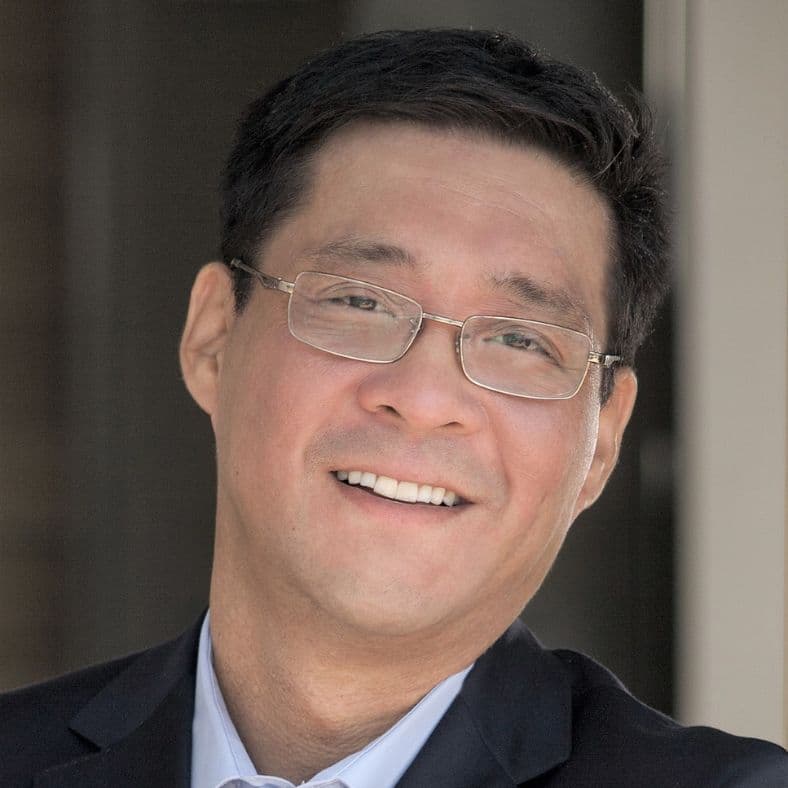
Full Transcript Podcast Introduction and Aging Overview 0:00 Hey there, welcome to the Recharged Biomedical Podcast. 0:03 I'm Dr. 0:03 Edward Park, and if you're curious about regenerative medicine, you've come to Hi everybody, this is Dr. 0:21 Ed Park, the host of Recharge Biomedical Podcast, and today I'd like to take a dive into aging. 0:27 So, I'm going to improvise this and hopefully it will be intelligible. 0:32 Basically, we're going ask what is aging, what causes it, What can we do about it? 0:38 And hopefully that'll be of interest to you because it's a topic that truly applies to everyone. 0:43 So perhaps we can start with the subjective. 0:46 Subjectively aging is something that many people fear because it involves decrepitude, illness, and ultimately death. 0:55 Well, that's a pretty cheery note to start on. 0:58 Sometimes I ask people in the audience where I'm giving lectures, who wants to live to 120 and nobody puts their hands up because the association between 1:07 those is so strong. 1:08 But if you couple it with who wants to live to 120 and feel like you're 20, then the equation is totally different. 1:17 Because we all experience through ourselves and our loved ones, through our pets, aging, I think we should take some time to deconstruct it,
Questioning Aging Theories 1:25 shall we? 1:26 So let's talk about some theories of aging that are not so great. 1:30 One I will be agnostic on, which is that there is a divine plan to cause aging, we really don't have the information to reference that. 1:39 The second, when I got interested in aging was when my dad was sick with brain cancer. 1:44 So I decided to find out what causes aging. 1:47 And in all the theories, the T. 1:49 L. 1:49 and Mary St. 1:49 Tomari's theory, which eventually led to my stem cell theory were the most obvious. 1:54 The theories I don't think are so robust are in use or lack of use. 1:59 So there's this crazy social science theory that says people get old because they don´t remain engaged with their community. 2:06 That just seems ridiculous on the face of it. 2:08 Let's flip it around and ask, well, who doesn't age? 2:11 There are many invertebrates which do not age. 2:15 What does that mean? 2:15 You know, Jules Verne's sub was attacked by a giant squid. 2:19 Well, squid, jellyfish, animals that live in the ocean don't have the container. 2:24 Like, a small goldfish will stay small. 2:26 You now, bigger gold fish in a koi pond will get big. 2:30 And because the oceans is vast, invertebrates have unlimited ability to survive. 2:35 So that's interesting. 2:36 Even though all animals and plants share the same telomeres and telomerase, which we'll get into, Mother Nature has turned off the de-differentiation switch 2:45 or inhibitors in those large marine invertebrates. 2:49 So they are immortal. 2:50 Of course, somebody will come along and eat them for a calamari snack, but nevertheless, there are effectively immortal invertobrate in the ocean. 3:00 Let's talk about the bristlecone pine. 3:03 They have trees that are thousands of years old. 3:05 These have the tendency to have high telomerase activity. 3:09 And although plants use a seven base pair telomere, which is like the wicks on a candle or a fuse, they used to say mechaism to preserve their stem cells. 3:19 Spoiler alert, it's all about stem cell when I get to the what is aging part of this. 3:25 So I saw a wonderful slide by my colleague, Dr. 3:28 Joe Raphael, who compared cross species telomares activity mammals, birds, et cetera.
Immortal Species and Telomere Basics 3:35 And there's a very good correlation with the higher the Tuberose activity, the longer lived the person is. 3:43 So let's focus on what is aging. 3:47 When I wrote my first book, I guess it was like 14 years ago, Tillamere Time Bombs, this was based on a theory I had, which is actually not even a thing. 3:57 It should be common sense to scientists, but they'll catch up. 4:01 Which is that the erosion of telomeres, which is a biological truism, every time a chromosome copies, whether it be in a plant, 4:10 animal, fungus, fungi have like 21, 22 base pair repeating telomeres. 4:16 Every time it copies, the RNA primer can't get to the very end, so you lose 50 to 100 base pairs. 4:22 You do this over and over again, eventually it leads to critical shortening. 4:26 And if you critically short on your telomeres, then chromosome mutation takes place. 4:30 There are wonderful illustrations in these two books of what that looks like. 4:35 It looks two trapeze artists. 4:38 Once the chromosomes are joined as a double chromosome, they can be torn apart anywhere and that's what causes stem cell mutation and usually stem cells death, 4:48 which is okay because we don't want mutated cells to be replicating. 4:55 So therein lies the key to what is aging. 4:57 Aging is Telomere shortening, aging is therefore chromosome mutation and cell death. 5:05 Cell death leads to depletion of stem cells, which leads too weak in immunity, organ dysfunction. 5:12 Every single disease we know is associated with shorter telomeres. 5:16 And so, what can we do about that? 5:18 Shifting to what we can do, Hay House asked me to write the telomere miracle. 5:23 In this, I use an analogy of a six-cylinder engine. 5:27 Your thoughts have been linked to shorter telomares if they're ruminating on stress. 5:33 Diet and nutrition can enhance or detract. 5:36 Exercise, obviously, and then sleep is incredibly important as the cyclical regenerative part of our day. 5:42 And a couple other things too, which escape me. 5:47 Okay. 5:47 Breath, mind, oh, breath, breathing, diet, sleep, minds, exercise, supplements. 5:52 So this is currently out of print, I think, but a great resource, something that I probably forgotten most of what I've written in there, 6:02 but it's all very evergreen and common sense stuff. 6:05 You know, don't overstress, sleep well, et cetera. 6:09 So I attend a lot of conferences, I give lectures internationally. 6:12 I have given keynote lectures at aging conference in Korea. 6:16 We've gone to, uh, invitation in Mexico and all over the country.
Telomere Shortening and Stem Cell Loss 6:22 And I hear a lotta theories and you may have heard them too. 6:26 One is mitochondria. 6:28 So let's visit mitochondria for a second. 6:30 Before I even started taking the telomeres activator T65, I wrote a graphic novel and translated to many languages and it was about a scientist who hacks 6:41 his way out of aging. 6:43 And although no one will probably read it, he actually did something that's quite clever. 6:49 And if you know about mitochondria, you'd know that they have a species-specific signal that talks to the host cell. 6:55 So mitochondrion are power plants. 6:58 They're basically bacteria that were incorporated billions of years ago into eukaryotic cells. 7:04 So the scientist in my graphic novel, Maximum Lifespan, engineers the cells with mitochondria from a different species so they can't share the cell suicide signal. 7:15 So this is all science fiction, but it's actually science fact. 7:20 What happens when your chromosomes shorten is they become spliced together like two trapeze artists. 7:26 And then the counting mechanism says we have, we don't have 23 pairs anymore. 7:31 We got to die. 7:32 And how it kills itself is by poking holes in his batteries, these mitochondria and leaking this acid. 7:38 So the thing melts like the wicked witch of the West. 7:42 So the scientist in maximum lifespan engineers one son with too many foreign mitochondria and he ages prematurely. 7:50 And then the one where he mixes half and half, it gets it just right and is effectively kind of immortal. 7:56 Anyway, I don't expect any royalties for somebody who does that, but that's a great biohack to have. 8:01 non-human mitochondria that can't communicate with the host cell and therefore cannot cause self-suicide. 8:07 But everything is a Faustian barber. 8:09 So let's go up a level and talk about what aging is. 8:13 As I mentioned, it's stem cell attrition through this process of mutation and failure to replenish. 8:20 Well, how do we know this? 8:21 Because the oldest modern lady, Heinrich Van Andelschlepper, something like that, was 160 and about eight years ago they checked her blood and her only 8:31 had two clonal variants. 8:32 What does that mean? 8:33 They only have two types of T cells left out of what you and I would have 10,000 different types black keys to attack new challenges. 8:42 So she was just the last person with a musical chair to sit in. 8:47 You know, whether the music runs eight minutes, 10 minutes or, you know a hundred years is a function of the stem cell ecology, 8:54 which we will get to. 8:56 So there was nothing special about her, her lifestyle, or her blues home. 8:59 It's just, she, was statistically the least person standing, although she barely had literally two white blood cells to rub together.
Lifestyle Factors and the Telomere Miracle 9:08 So if we're talking fast forward, fast-forward to the future, if people really didn't care about bombs and drones and things like that, 9:17 and they want to stay younger for longer, every percent of that is delivered would be frozen and then years from now they would get replacement parts or 9:27 eventually in parallel scientists are learning how to de-differentiate and control stem cell ecology. 9:34 As an aside, this last summer I went to Hong Kong to the international stem cell research and the ability to de-differentiate any cell to a primitive cell 9:45 and then stepwise differentiate to every type of cell is astonishing. 9:49 It's cookbook. 9:50 They know how to do it. 9:51 Their playing God. 9:52 So what does that mean? 9:53 Practically you can see in my blogs at Recharged by Medical they've cured type 1 diabetes. 9:58 That's amazing. 9:59 But they literally at the booths, you know, when you go to these conferences they have recipes, cookbooks, exactly which chemicals or which sequences or 10:07 mRNAs which proteins to make a primitively induced pluripotent cell become any stem cell type you need. 10:15 So in the future, your grandchildren will freeze their placentas. 10:18 They'll have replacement parts that are genetically matching, because that's the problem with getting other people's stem cells. 10:24 And in parallel, stem-cell scientists will learn how to suddenly surge the amount of whatever kind of stemcell you'll need in a controlled fashion. 10:33 Because that's what it's all about, control. 10:35 When we lack control, let's say in the 90s they did these experiments with embryonic stem cells, those are too primitive. 10:41 They cause teratomas. 10:43 In other words, they have too much potential. 10:45 But my experience in last seven years with exosomes tells me that certain cells that these are called niches of stem cell, 10:53 whether they be in your heart, your brain, Muscles, bones, cartilage, they can be coaxed to de-differentiate through these blockers of blocker.
Mitochondria, Cell Death, and Longevity 11:03 And without going too deeply into that, I did a little last week. 11:06 Basically, there is an ecology of stem cells and it's not really understood. 11:10 Nobody really understands it. 11:13 But we know on the face of it that if you give certain Yamanaka factors, you can cause any cell to differentiate. 11:20 So the question, $23,000 question is, how does this happen? 11:27 What are the signals? 11:28 We don't know, we may never know. 11:29 Okay. 11:29 So let's switch a little bit to a three God model. 11:32 The Hinduism has a tree murti, three forms, Brahma, which is the creator, Vishnu, the maintainer, and Shiva, who is a destroyer. 11:42 And then two of my books, I go into that. 11:45 Why is that important? 11:46 Well, brahma is stem cell creator. 11:48 It has multi-potentiality. 11:50 Maybe not omnipotentiality, but a lot of potential. 11:54 So as we lose stem cells, we loose the creators. 11:57 Yeah. 11:57 Vishnu is what I've been taking for 18 years. 12:00 That's TA65 that's been maintaining. 12:02 And that is why I don't have much black hair. 12:04 I do not need reading glasses. 12:06 This is for astigmatism. 12:08 Written by telomere and teloromerase expert Ed Park of Orange County, California. 12:14 So that has been maintaining the telomere length and stem cells, presumably that create clead lens, which is more flexible, 12:21 not like a hard, stale gummy, but like, a soft gummy. 12:24 We age because our telomer is shortened and our stem cell's deplete. 12:28 But what if we could support both? 12:30 I've been taking TA65 for 17 years. 12:33 It's the only supplement I trust to support better mood, better sleep, and exercise recovery. 12:39 And at age 57, I don't have any gray hair, TA65 is available now. 12:45 Go to rechargebiomedical.com slash TA-65 and enter promo code RECHARGE10 to save 10% off. 12:54 So what we're talking about is creation, maintenance. 12:58 It slowed my rate of aging over 18 years. 13:00 I'm turning 59 in July. 13:03 And then finally Shiva, which is a double-edged sword, right? 13:06 So Shiva is the destroyer. 13:07 So when a cell has the wrong number of chromosomes and it mutates, it destroys, that's a good thing.
Stem Cell Ecology and Regenerative Medicine 13:13 Just like in tarot readings, death is good because it brings rebirth. 13:17 But over the course of 116 years, Death without rebirth leads to aging, decrepitude, and you could die from a simple common cold, 13:26 as did Jacqueline with a perfect physique. 13:29 So, what am I really saying? 13:31 This will be standard accepted dogma. 13:33 Right now, people are still reaching and flailing for ideas and theories like mitochondria and, you know, non-social engagement. 13:42 But at the end of the day, it has to do with stem cell attrition from mutation from telomere shortening. 13:49 So what's different about the mitochondrial or the cells? 13:53 in a jellyfish? 13:53 Well, we don't know. 13:55 And if we did know, maybe that wouldn't be even that desirable. 13:58 Because think about it, if blockers of de-differentiation, we would continue to grow throughout our lives. 14:05 It's said that the nose and the ear grow, but can you imagine being eight foot six on your 90th birthday? 14:12 So there is a design feature, not a flaw, in the fact that cells stop becoming primitive and stop allowing us to grown massively. 14:21 Like your magic carp or your little goldfish becoming a giant koi. 14:27 So that's pretty much what I wanted to say. 14:29 Aging is basically stem cell attrition caused by telomere erosion. 14:34 And if you'd like to understand in very simple terms, as I tried here, pick up telomer time bombs. 14:39 That's my first book. 14:41 And one thing I got very wrong about this and even the founder, the guy who named the mesenchymal stem cell says he later made a mistake and recanted. 14:50 The stem cells generally do not go that we can tell into the space and become heart muscle ligament tendon. 14:56 They generally use exosomes to direct that de-differentiation in what stem-cells are in that local niche. 15:04 Or they can even perhaps, and I think we need to be open to this, cause non stem cells like worker bees to become queen bees for a short time. 15:14 So there is a hidden ecology there that people don't really understand. 15:17 If you want to understand more about exosomes, which are songs of healing, if you will, pick up this book, also an audiobook, 15:24 and that will explain it to you. 15:26 Everything I've said to is from 20 plus years of experience. 15:30 This is future dogma right now. 15:31 It's kind of fringe. 15:33 People would argue it's, hey, Park, you're too reductionist. 15:36 Have you even done a Western block? 15:38 What bona fides do you have? 15:40 But I'm basically operating from common sense and available logic.
Three-Force Model of Aging 15:46 So if that's something you are more interested in, yeah, You can mitigate with supplements, lifestyle breathing, maybe light therapy, 15:54 Maybe sound therapy. 15:55 It's all helpful. 15:57 But at the end of the day, the current human system is currently designed to live 80 to 120 years and not much below. 16:04 But who knows what will happen if we have Thomas activators, we exosomes, and most importantly stem cell banking and advancement in these understanding 16:14 of microRNA and the blockers of de-differentiation. 16:18 And on a final note, I have a friend who's battling cancer and my friend sent me an article about veterinarians in Australia, 16:26 allegedly taking $4,500 to look at your dog's tumor, analyze which genes are missing and place them back, which is actually quite attainable goal. 16:39 And it makes one wonder why scientists currently who have to pay for grad students and pharma who has small molecule devices are not at all interested 16:49 in this. 16:50 Because if we wanted to, we could create multi-reentrant ballistic missiles and circle the moon with four humans. 16:59 But we can also easily replace the missing genes in pancreatic cancer, for example, and create bespoke cancer treatment. 17:07 So I think that all this science seems daunting, but it's actually quite accessible and it behooves you to just understand. 17:15 If you want to understand, then pick up my books. 17:17 And if you wanna learn more, subscribe and like this channel, drpark65.
Future Therapies, Books, and Closing Remarks 17:22 And you can engage with me on Substack at DRED Park, Dread Park. 17:28 And I look forward to answer your questions. 17:30 You can contact me and set up a consult as well. 17:34 So thanks for your attention. 17:36 I will post a link to one of the very first webinars I did 16 years ago about premature aging. 17:42 It's like an eight-minute video. 17:44 Basically, it will convince you that Premature aging is basically failure of DNA maintenance. 17:51 And that is a fundamental, fundamental driver of our aging, I believe. 17:57 Okay. 17:57 So judge for yourself, take a look and thanks for your attention. 18:00 This is Dr. 18:01 Ed Park from Recharged Biomedical. 18:04 Have a great one. 18:05 Thanks for tuning into the Recharge Biomedical Podcast. 18:08 If today's episode got you thinking, you'll love my book, Exosomes, Songs of Healing. 18:13 It's packed with cool analogies, full color illustrations, and all the science you need to understand how exosome are changing the game in aging and regenerative medicine. 18:23 You can grab it in paperback, ebook, or audiobook, whatever works for you. 18:27 Now head over to www.rechargebiomedical.com to check it out. 18:33 And don't forget to like and subscribe so you never miss another episode. 18:38 See you next time.
Comments