Full Transcript AIu2019s Growing Role in Healthcare 0:00 Welcome back on this Monday morning. 0:01 You know, we all have seen and we are continuing to see AI's impact on social media, on education, so many areas. 0:10 But it is now making a huge impact in healthcare. 0:14 What if we told you? 0:15 AI could eventually diagnose cancer before a doctor, potentially saving your life or the life of a loved one. 0:24 Well, it is a big conversation. 0:25 And look at this. 0:26 New UCLA research shows an AI tool may spot prostate cancer with an 84% accuracy rate that compared to doctors who had a 67% percent accuracy.
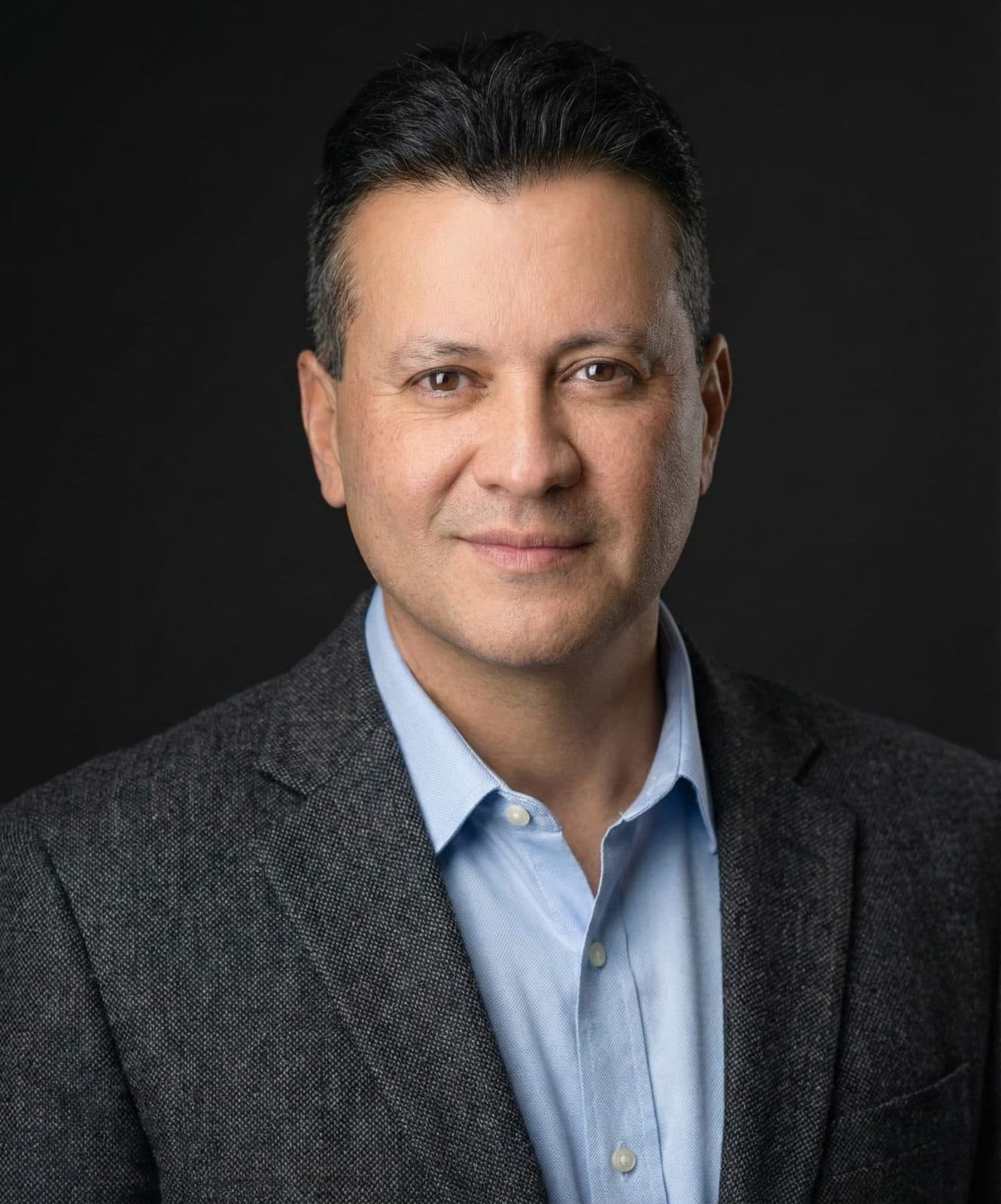
How AI Detects Prostate Cancer 0:42 That's quite a difference. 0:43 So joining us this morning with more insight on this new discovered research is Dr. 0:49 Harvey Castro, who specializes in AI in the medical field. 0:53 Dr Castro. 0:54 Thank you for being with us. 0:57 I want to start by just pointing out to people listening that this right now is in the research phase. 1:02 So you cannot have AI as of yet diagnose prostate cancer, but the findings of this are very encouraging. 1:09 Let's talk about why it's so encouraging and what is different about this method than what a doctor would traditionally use. 1:16 Yeah, great question. 1:18 Think of cancer currently for prostate. 1:20 I need all the data. 1:21 And that data is I need to do blood work on you, then I do a physical exam on, you and then, I needed to imaging, so sometimes an MRI. 1:29 But me, as a human, need take all those variables and say, OK, this is what's going on with you. 1:34 Now with AI, if I take that information and I put it into a 3D model, Now the AI is giving me an exact location where it is,
Expanding AI to Other Cancers 1:43 and it's giving the probability of where the cancer is and how to treat it. 1:47 And so instead of me having to take the person's prostate out, I may only have to treated a small area. 1:53 Now it a different treatment. 1:54 So it more specified in terms of exactly where these cancer cells are being detected. 1:59 That's where that difference in the accuracy rate comes. 2:03 Looking at this research, obviously it very promising. 2:07 Could this be applied to other cancers? 2:11 Great. 2:12 One of the things that we're seeing right now is we are seeing it in skin cancer, we see it lung cancer and breast cancer colorectal and think of it this way.
Study Design and Future Clinical Use 2:20 These models are able to look at these cells and say, wait, there's cancer here and we already using it today. 2:26 So that's really promising because before the human error we would look in the microscope, maybe we were tired, may be we missed some subtle changes. 2:33 Now the AI is able see way more than we can see. 2:36 So when it comes to the prostate cancer, and I don't know if this is exclusive to this research, but it hasn't been tried on people yet, 2:43 is what my understanding is. 2:44 So tell us more about this study. 2:47 What's the next phase in taking it to next level? 2:50 Yeah, this is an interesting study. 2:52 What they basically did is they had tumor cells, they took the surgically removed tumor out, and then they have the AI analyze the margins of the cancer 3:00 and say, yeah,this is cancer-free. 3:01 And then,they had the humans do the same and the human were missing it. 3:05 Where is this going to take us in the future is, if we're more accurate, then we can diagnose things earlier and hopefully we could save some lives. 3:13 And with that being said, looking at the research, how long do you think this is gonna, I mean, obviously AI is a brand new landscape.
Timeline for Adoption in Medicine 3:19 It's gonna take time, but within the next decade, could we see something? 3:23 Is it gonna to take longer than that in terms of really implement and integrating this into our medical care? 3:29 That's an interesting point. 3:30 I think we'll see this in the less than 10 years for two reasons. 3:33 One, there's a big demand. 3:35 If someone's going to be saved, then there is this technology. 3:37 The FDA is going say, OK, this is gonna save lives. 3:40 We need to put this out in flow. 3:42 As far as workflow and culture, There's this still animosity against AI saying, you know what? 3:46 This is not right. 3:48 Is this OK? 3:49 Is it ethically? 3:49 What should we do? 3:50 I was just going ask you about the ethics of this. 3:52 Does this raise any ethical concerns within the medical industry? 3:56 And should be having that conversation about ethics when we're talking about implementing AI into our healthcare. 4:01 For sure. 4:02 Number one, data security.
Ethics, Bias, and Data Security 4:04 Is that data secure? 4:05 The second real big one is it biased? 4:07 Is this information equal to every population that's in the world? 4:11 And the third, is is accessible to everybody? 4:13 Because just because a certain population has access, does the rest of the word have access to this tool? 4:18 You know, if it's saving a life, I would want to make sure I have an access and that everybody else does. 4:22 There is another conversation and concern that comes up when were talking this in a commercial break. 4:26 AI has now been known to be able to go around some of the safety parameters that are put around it, meaning it can become smarter than the humans. 4:36 So if and when that does happen, how do we know that AI hasn't gone past where it should and the information we're getting is accurate or not accurate?
Human Oversight and AI Safety 4:48 That's such a tough question. 4:49 And that's why I say we always have to have a human in the loop, number one. 4:53 I know at some point, like you said, AI will get to the point where we don't know. 4:57 There are some experts out there saying that maybe we should have kill switch ready. 5:01 If something happens where it's not doing to our cultural norms, that may be we just should be able to kill these algorithms right away. 5:07 It's just interesting. 5:09 Well, the conversation will continue. 5:10 There's a lot to consider, but this is encouraging study. 5:13 So we'll continue and please keep us up to date on how this going because there are so many families dealing with cancer right now. 5:18 And like you said, this could be a game changer within reason, of course, in this entire landscape. 5:23 Dr. 5:24 Harvey Cashwell, thank you for your expertise and insight this morning. 5:27 Thank you.
Comments