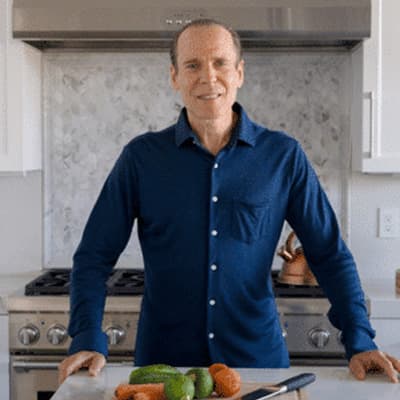
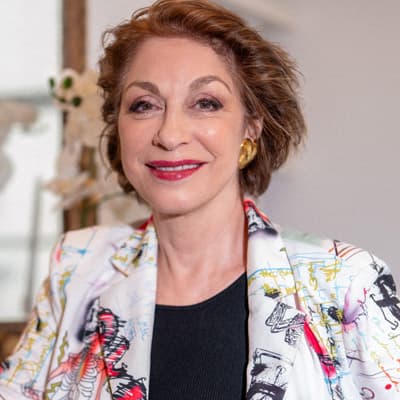
Full Transcript Introduction to the summit and Sylvie Beljanski 0:00 Well welcome back everybody to the Plant 0:03 Based Solutions Pant Based Cancer Solutions Summit. 0:07 And the bottom line is that we are in control of our health destiny. 0:12 And there's so much we can do to try to change 0:15 the trajectory of our lives, to protect ourselves. 0:18 And even if we have a cancer diagnosis, we're not hopeless 0:22 as so much we could do to prolong lifespan to prevent recurrence. 0:26 And that's why today it's important. 0:28 We're interviewing Sylvie Beljanski because she has a lot 0:31 of experience in this field. 0:34 It started out, you know, decades and decades ago with her father's science. 0:39 But let me tell you a little about Sylvie, 0:40 and I'm going to do an interview with her today. 0:43 She's the 0:44 you know, she used to be she was a lawyer and a health researcher and advocate, 0:48 and she became dedicated to continuing the family legacy 0:55 because her father was such a leader 0:57 in this field of natural medicine and natural cancer treatments. 1:00 And so she's continued to do to continue the health 1:04 and environmental research on many of these natural substances. 1:09 And she founded and presides over the Beljanski Foundation, 1:13 which is a nonprofit focusing on natural approaches to cancer. 1:16 And she also serves as CEO of the Mason 1:19 Skin International dietary supplement Company. 1:23 And she's also produces the Beljanski 1:26 Integrative Cancer Conference, which is coming to San Diego 1:30 just in a few weeks right now into my hometown. 1:33 And it's a premier annual event integrating world renowned doctors 1:38 and researchers and to advance integrative and natural approaches to cancer care, 1:42 because it just isn't all about taking chemotherapy. 1:46 So thanks for joining us today. 1:48 Thank you for having me. 1:50 It's a pleasure. 1:51 All right. 1:52 So let's start by transitioning as to how 1:57 I know your father's career and life was so dedicated 2:01 to seeking out the natural world to find some type of herbal 2:05 or substances that might be useful for people who have a diagnosis of cancer.
Her father's research on environmental toxins and DNA 2:10 So go into that from for just a minute. 2:13 And what makes and how he like, after studying 2:16 so many compounds, how he then limited most of his his research 2:21 to just these two compounds after studying so many of them? 2:25 Why these two stood out so uniquely. 2:27 And I know we can talk about those, you know, and how to pronounce 2:30 those fancy names of those two compounds, right? 2:34 Sure. 2:34 So my my father was a PhD 2:38 in molecular biology, was working in the 60s and 70s, 80s 2:43 at the Pasteur Institute in Paris, France, was one of the first scientists 2:49 to look at environmental toxins 2:53 and say that they probably have an effect 2:57 at the cellular level, the affect our health in some way. 3:01 Back as at the time it was, it was a time of crazy 3:07 economic development, industrial development, 3:10 and nobody was really thinking that pollution 3:13 could affect our health and were polluting like there was no tomorrow. 3:18 And everybody at the time was thinking that cancer could only be genetic disease. 3:24 My father was an the first one to said this pollution, 3:28 this growing pollution has an effect on our DNA. 3:32 And that's why we see more and more cancer. 3:35 If it was genetic, there would be a pretty stable number of cancer. 3:40 And he made the observation that 3:43 whether you look at plant cancer, 3:48 animal cancer, human cancer, 3:51 there is always a fundamental difference 3:55 between a cancer cell and a healthy cell. 3:59 In a healthy cell, you have this beautiful double helix 4:04 that was discovered at the time of Watson and Crick, also in the 60s. 4:10 And when you look at the cancer cells, there is always, 4:15 always some kind of destabilization of the DNA, 4:19 meaning the two strands of the DNA are not well kept together. 4:24 They have some big open loops. 4:26 And my father made the correlation that the more open the loops of the DNA, 4:32 the increased the rate of synthesis of the DNA, 4:38 they start to duplicate, duplicate, 4:39 duplicate much faster, which is a hallmark of cancer cells. 4:43 So he had the idea to test a number 4:47 of compounds to see if they would destabilize 4:51 the DNA and increase the rate of synthesis of cancer. 4:56 DNA and EU used this test that he called Orca test 5:01 to to screen for a significant number of compounds. 5:06 Then he had the idea to use also this test 5:10 to see if there could be some compounds 5:13 that would selectively inhibit the 5:17 the synthesis of cancer cells with no effect on healthy cells, 5:23 and the fact that there would be 5:24 no effect on healthy cells was very important to him 5:29 because he was saying, we are playing with fire. 5:32 We don't know what we are inducing with all those molecules. 5:36 So it really was for him. 5:38 This selectivity of action was very, very important. 5:42 And he found further firebombing, 5:45 which was used at the time 5:48 quite widely to lower 5:51 blood pressure, but also had a bad reputation 5:55 because some people were saying that it was inducing breast cancer. 5:59 So he studied as that compound extract, 6:05 and he found that the revolver has two main alkaloids. 6:09 One is called reserve pin, which lowers blood
Discovery of selective plant compounds for cancer 6:13 pressure that is also toxic and can induce cancer. 6:18 And he has a hand services other compound called 6:22 All-Star nine, which is purely anti-cancer. 6:26 No effect on LC cells. 6:29 You can see on the microscope. 6:32 You can see that the the plot, the 6:36 the alkaloid, 6:37 which happens to be naturally fluorescent, stays outside. 6:42 The healthy cells never penetrate healthy cells. 6:45 On the other hand, you can see that they are able to penetrate cancerous cells 6:50 and invade them and induce apoptosis of cancerous sets. 6:56 It felt that absolutely fascinating. 6:58 But purifying fire from its content of pain is a lot of work. 7:04 It's very messy, very expensive. 7:07 You lose a lot of material. 7:09 So it looked in books for molecules that would be close to ullstein, in that 7:15 you could find in nature with a simple extraction, 7:19 and that led him to find the flavor from Pereira, 7:24 which is a plant coming from an Amazon, 7:28 the Amazon rainforest, and 7:32 happens to be just like 7:36 of the Alston nine of Robert Ferro. 7:38 Material totally selective in its action 7:43 makes the difference between cancer DNA and LCD. 7:46 Stays outside of healthy cells, only penetrate cancerous cells. 7:51 So it's a way it has. 7:54 You know, those two plant tracks are kind of universal of cancer cells. 7:58 They recognize the difference between healthy cells. 8:02 Cancerous cells that target cancerous cells 8:05 is something you can absolutely see under the microscope. 8:09 And he 8:12 said okay, if 8:13 it works on all control cells, I'm going to test a different kind of cancer 8:18 cell lines and is one of his last 8:22 was testing power. 8:23 Pereira and 16 different kinds of cancer cell lines, 8:28 and showing that the plot extracts was indeed inhibiting all those characters 8:32 cell lines, but adds little or no effect on the healthy cell line. 8:37 So you mentioned the word apoptosis in Ref wishes the total death of the cell 8:43 and in relation to. 8:45 So of course of cancerous cells. 8:48 Yes. Right. 8:49 So there's and then the pale Pereira inhibits replication. 8:54 So do they. 8:56 So does it concern. 8:57 I'm a little bit confused about whether it goes into the cell and kills the cell. 9:01 Or it's just slows or inhibits the replication of that cell. 9:05 So it turns out that that a part of the researchers 9:09 we have been able to to to conduct through the foundation 9:13 with, in partnerships with different academic institutions, 9:17 that those products tracks have multiple mechanisms of action, 9:22 and they kind of adapt to the situation 9:26 and that do intercalated 9:29 both of them, intercalated between the two strands of the DNA. 9:33 They do induce apoptosis, but they are also able to inhibit cancer cells. 9:39 They have able to have an inflammatory 9:43 benefit that has been demonstrated also, 9:47 for example, regulates five alpha reductase, 9:51 regulates NF capability. 9:53 I mean, it's many different ways to actually to act for good and always for good, 10:01 right. 10:01 What's a different mechanisms? 10:02 Are those mechanisms involved in the you could say immune surveillance at all. 10:07 Also preventing cancer where they only appropriate for people 10:11 who already have a cancer diagnosis. 10:14 I it seems to have I mean the prevention part 10:18 is linked to the anti inflammatory benefit I would say. 10:23 But beyond that no it's not it's 10:26 not an immune 10:29 boost product. 10:31 No no I would not say that okay. 10:34 So and then that and then subsequent to 10:38 to you being in the United States we develop these products now that 10:42 that are available so people can utilize them. 10:44 But they weren't really available in Europe when your father was alive.
How the compounds work and cancer stem cell research 10:48 Right? They weren't really available. 10:51 They were widely available. 10:55 My father left 133 peer reviewed papers. 10:59 He gave a lot of conferences. 11:01 He got the interest of a lot of French doctors 11:04 who started to use widely 11:08 East compounds and got a lot of success to the point 11:11 where at the in the early 90s, 11:15 the French president, Francois Mitterrand, was when he was diagnosed 11:19 with advanced prostate cancer, turned to my father against the advice, 11:26 of course, the official doctor of the French White House, 11:29 and said he wanted to use those plant extracts 11:32 and he was able to finish his second term with terms for seven years at that time. 11:38 What happened is that that gave to 11:41 my father's work a lot of publicity at the time 11:46 where I was, and medicine was not well received. 11:50 So after Mitterrand finally passed away, there was a political backlash. 11:54 There was a Swat team who came to destroy my father's laboratory. 11:59 They really ready for things that destroyed the laboratories, 12:03 indicted my father and the poor man died 12:06 a pretty quick quickly after that. 12:10 And there was nothing left in France. 12:13 I mean, my father was, with the desperation of my father, 12:16 the dispersion of the laboratory, all this knowledge was about to disappear. 12:21 And that my father's funeral, so, so many people came to me 12:25 and said, you know, without your father I would not be here. 12:28 I would not have been able to see my grandchildren grow. 12:31 I would not have been able to to take my my work, my daughter down the aisle, 12:37 all those things. 12:38 I felt that those discoveries were not just, you know, laboratory things. 12:43 There were thousands of people. 12:44 There were thousands of people in France who were utilizing and benefiting 12:48 from your father's work. Exactly. 12:50 And then suddenly the products were no longer available 12:54 to them as a term to me and say, are you going to do something? 12:58 I was like, I don't know anything about that, but I'll do my best. 13:03 I got a lot of support, a lot of support from from people 13:07 coming out of nowhere to make sure that this knowledge would not disappear. 13:11 And it was a lot of pressure. 13:13 But that was 30 years ago. 13:15 And yes, we have been able to 13:18 to bound together to salvage as much knowledge as possible 13:23 to continue to make the products available, and three years later 13:28 to start a Beljanski foundation and restart the research. 13:33 Right, because this is obviously you had to get a lot of funding 13:37 and, you know, through the nonprofit to be able 13:39 to do more research to make it generally acceptable worldwide. 13:43 So now that you've so you've been relatively successful because there's been 13:47 a lot of research been done now on these compounds in the last decade. 13:52 Right. Last two decades. Yeah, absolutely. 13:55 In addition to the one and 33 reviewed paper left by my father, 14:01 I really wanted to confirm this research, 14:04 because one of the things that really pained me 14:08 at the time of my my father was indicted, that they were saying that, 14:12 you know, this is totally the letter that has never been confirmed. 14:16 This is. Woo hoo! 14:18 No laboratory has ever worked with those products. 14:22 That means that of no value. 14:23 And one of the things that I really was important to me is to get academic 14:28 institution, a new peer reviewed papers confirming the work, 14:33 and that has been the gift that kept giving over the years, 14:37 because we have been able not only to confirm 14:40 my father's work and discoveries, but to go 14:44 well beyond that with explanations about the mechanism of action. 14:49 And now, recently we are working on cancer stem cells, 14:53 which are those cells which are resistant to chemotherapy, 14:57 which are sought to be linked to cancer relapse and metastasis. 15:01 And nobody at the time of my father was 15:05 speaking mentioning cancer stem cells, 15:08 but this is now the new frontier of oncology. 15:12 Chemotherapy is not 15:14 on those 15:15 cells because they are slow dividing. 15:18 And it turns out that those little plant extracts 15:22 are able to recognize cancer stem cells and to destroy them. 15:27 And we have done the research in vitro and in vision 15:32 now on a variant cancer 15:34 stem cells, pancreatic cancer stem cells. 15:37 And we are just trapping up a beautiful study on breast cancer stem cells. 15:42 The results are just striking. 15:44 The mice do not develop metastasis. 15:48 Right. 15:49 So just to reiterate what you're saying is that people sometimes undergo chemo. 15:54 It kills some visible cancer cells, but it leaves other cells. 15:58 And mostly 16:00 these slow, more slowly growing cancer stem cells that are resistant to chemo. 16:03 And then years later, these cells then become more aggressive 16:07 and the cancer recurs and the person dies at a secondary occurrence of that cancer. 16:12 And so one of the use of these compounds is that when a person has a diagnosis 16:16 of cancer, that even if they're treated successfully with chemo, 16:20 the use of these compounds could help repress the development and kill the 16:24 residual cells that survived the chemo, and the stem cells 16:28 that can now start replicating and cause a secondary recurrence. 16:31 So that's one of the new uses of these compounds, which were discovering 16:35 in the new research that you 16:37 that you've been able to fund and perform at these academic institutions. 16:40 Yeah, we have been working with Columbia University, Kansas University 16:44 Medical Center, and Concert Centers of America 16:48 here in the States and, and really have been in love with also the 16:55 those partnerships with those academic institution. 16:57 I find that so interesting.
Prostate cancer, prevention, and integrative care 17:00 Since so blessed, I have the opportunity to to continue this research. 17:04 Now, is there any specific unique benefit for that? 17:07 Because breast cancer and prostate cancer have a lot of similarities 17:12 in the sense that they're hormonally fueled cancers. 17:15 They're so related 17:16 to the metabolic state of the person, the dietary sensitive cancers. 17:20 It seems to tell me if it's right that the 17:23 that these two compounds have particular benefits 17:27 to these common cancers, breast and prostate, 17:30 which are the most common cancers now in America. 17:33 Yeah. 17:33 So we have especially on prostate, we have done a lot of research 17:38 at the level of cancer cells from benign prostatic hyperplasia, 17:43 which is inflammation of the prostate, 17:47 to full blown prostate cancer, to advance prostate cancer, 17:51 which does not respond to hormonal treatment. 17:54 And we have already demonstrated the benefits of those plant extracts 18:00 at every stage of the disease. 18:03 So we are really, really excited with this new projects 18:08 that we are currently trying to find about prostate cancer stem cells, 18:13 based on what we have done with the other cancer stem 18:16 cells, we are very, very hopeful to to to see great results. 18:21 And it is important to know that when it comes to breasts 18:25 or like prostate cancer, 20% 18:28 of all those cancer will eventually metastasize. 18:32 So that means also that 100 people concerned with cancer 18:37 are afraid to be the one whose cancer is going to metastasize. 18:42 So if we can help all those patients from day 18:46 one of the diagnosis and prevent those cancer stem cells to grow 18:52 will make a difference for 100% 18:55 of the people concerned with those cancer. 18:59 Right. 18:59 And you know, with me, I'm using an aggressive nutritional approach 19:03 and other protocol. 19:04 And then I add the these I add these herbs onto the approach. 19:08 So it's like we're hitting it from different angles. 19:10 And I do have a lot of experience in utilizing this and seeing people who even 19:15 who had prostate cancer with a trajectory went the other direction. 19:19 And these PSA starts coming down in, the cancer's gone away. 19:22 I have many I have a lot of patients experience with. 19:25 I've seen this happen. 19:26 I can't ascertain which factor. 19:29 And of all the different things could have diet that, 19:31 you know, all the changes which but we know that the whole protocol 19:34 has a lot of beneficial features that can enable even early 19:38 stage or low Gleason score, prostate cancer to even do worse itself. 19:42 Absolutely. 19:43 And we are so much more than a disease, so much more than the tumor. 19:46 So it makes so much sense to to address the entire body 19:51 and start with nutrition and the good detoxification, 19:54 because what made a sick in the first 19:58 place is what we eat, how we feed our body 20:02 with a bad food and bad thoughts, bad bad emotions, bad relationship. 20:07 That's what creates some kind of problem at some point. 20:11 And where we, the body starts to become 20:14 sick as a as it looks at the sickness as a solution, 20:18 actually to escape the reality in which we live. 20:22 So when you build all sorts of this new company, 20:26 the Mason brand, now that you're actually working 20:30 together with the research on now to make these products available. 20:34 So then so how is that working even for those that company, 20:38 even for these, for this mission of helping people with cancer 20:41 and also just being a wellness brand, helping people's health in general. 20:45 How does that mesh together? 20:47 So we did not I mean, most people companies 20:51 in the directory supplement real. 20:54 They start with marketing. 20:56 They start with the idea of a product. 20:58 In our case, I mean, we started with inherited research 21:03 and we started to make the product available 21:06 because you need product to to continue the research. 21:10 You cannot do research on thin air. 21:13 You need to have products. 21:14 And then there in France, there were all those people 21:16 who are clamoring that they wanted to continue to be on the products. 21:20 So the first thing when I started the company was to feed 21:25 the French people, the French clients who and cover their knees.
Mason brand, global availability, and wellness applications 21:30 And after three years, I started to have been able 21:34 to put a little bit of money aside and I was able to start the foundation. 21:41 And from the first in vitro study, hoping that 21:46 to create some kind of interest and, and some kind of movement, actually. 21:51 Oh, so your products are available here in this country and also in Europe 21:55 only, or in France or other countries as well? 21:58 Yeah. We ship all over the world. 22:00 You ship all over the world. 22:01 Yeah. Absolutely. Absolutely. 22:02 Well, you know, we started, but they made. 22:04 But you're still you're manufacturing here 22:07 and you shift from the United States to Europe. Absolutely. 22:09 And for the past 30 years, there have been made in in the here. 22:14 Okay, great. 22:15 So beyond cancer, what other how does it overlap 22:20 to other areas for the areas of wellness that, you know, with what what 22:25 it turns out that 22:27 power specifically has 22:30 artificial benefits and anti-inflammatory benefits 22:34 that have been, well, well demonstrated and undocumented. 22:39 There is also another product which is quite interesting, 22:43 which made up of little RNA fragments, which are specific of the DNA of the bone 22:48 marrow and helps the bone marrow 22:50 create a new generation of white blood cells and platelets. 22:54 That's really those white blood cells are at the core of our immune system, 22:59 and they are very often destroyed also by chemotherapy. 23:04 So we are able to to maintain a decent number 23:09 of white cells and platelets during the chemotherapy. 23:14 And that brings a tremendous support 23:18 to, to the patient and avoid a lot of, 23:22 a lot of secondary diseases and complication. 23:26 What we we have seen also is that we have had recently 23:30 a clinical trial on patients who had were suffering from long Covid, 23:36 and we were we gave them some of those iron 23:40 fragments, and it turned out that they were able 23:44 to recover of many of the symptoms associated with long Covid. 23:50 That's interesting. 23:51 So this is another new area of research that you're now pursuing more with these 23:55 RNA fragments. And they are stable. 23:57 People can take them orally and they're stable and not digested. 24:01 Or it's a beauty of my father's discovery. 24:05 The products that he perfected is that you can all of them take them orally. 24:10 Nothing needs to be injected. 24:12 So that's much easier to to compliance is much better. 24:16 And there is never any toxicity associated with the RNA fragments. 24:21 We had another clinical trial several years ago at Council Treatment 24:25 Centers of America, with patients who had been subjected 24:32 to a lot of chemotherapy that were all at the verge 24:36 of thrombocytopenia, which is a loss of platelets. 24:39 And we and hold them when they were all expected to fall 24:44 into thrombocytopenia thanks to the RNA fragments, none of them developed. 24:51 And you could 24:52 see that their bone marrow at the end of the experiment was in better 24:56 shape and able to produce more platelets on its own 25:00 than it was at the beginning of the the clinical trial. 25:05 Just positive results, never any side effects, never any complication. 25:10 It was an escalation dose meaning the patients started with 20mg, 25:15 40mg, 60mg, 80mg. 25:19 Never any side effect was observed, 25:22 which was something really, really important for my father. 25:25 No, do not harm. 25:26 That was really is so so products that can help people with these issues. 25:32 And they're not 25:33 they don't have the toxicity that drugs do and they're much so good. 25:37 But of course you even though they're safe much safer 25:41 and and inside many cases more effective, but you still are limited by the FDA 25:47 or by the governing bodies 25:48 not to make claims because you don't have the billions 25:51 of dollars behind a drug company 25:52 to do the massive trials that it would take to get the. 25:56 So sometimes how do you the limitation, you know, 25:59 how do you avoid exaggerated claims
RNA fragments, blood support, and chemo synergy 26:01 and still have people know about the products and utilize them 26:04 without coming into conflict with the FDA and stuff? 26:07 It's a big limitation. 26:09 And of course, I cannot say what the final product is doing, 26:14 but on behalf of the foundation, I try to present the research 26:18 and what the ingredients are doing, because the research 26:22 is all about the ingredients and that I am allowed to do. 26:26 And that's what we do at the Beljanski Foundation 26:29 is to increase the knowledge about those ingredients. 26:33 And I know that the that of other companies 26:37 who are now using those ingredients to create new products. 26:40 But if you look at those other products very often, 26:44 because they are not driven by research, they are driven by profit. 26:49 You analyze their products. 26:51 You see there are very, very little active in their products. 26:55 What you see at the Beljanski Foundation is that we always, 26:59 and as a products that used for the research, comes from Mason, Beljanski 27:04 and Mason, Beljanski is always putting the same amount of active in the product 27:11 used for research and the product which is sold to the people. 27:15 This is really, really paramount of the integrity of what we are doing for. 27:20 And for example, when you see a study where we are giving to mice 27:25 20mg of extract 27:29 per 20 20mg of extract per day, 27:33 the equivalent of what one person would take, you know, 27:37 and we just make sure that it is comparable. 27:41 When we do a study with mice, we make sure that the mice are fed orally, 27:46 just like somebody who would take capsules. 27:49 You don't want to keep things comparable. 27:53 It's not a perfect word, but that's the way it is with the FDA is limitations. 27:58 But this is as close as we can get to provide 28:03 real, scientifically rooted information to the public. 28:07 Great. Well, thanks a lot for this. 28:09 But before we close, just have one more question. 28:12 And people who have cancer. 28:14 Are there any parts of the cancer therapy may be getting like 28:18 if they're getting like hormone anti hormone or hormone suppression therapy, 28:23 is there any period where where this product might be not indicated 28:27 or contraindicated in conjunction with some other conventional therapy? 28:31 Or what about the person who has breast cancer getting chemo. 28:35 Do we hold it back during the phase of chemo? 28:37 And then when they're done with chemo, give them the product? 28:39 Or if they just can take this this, 28:41 they're they're not affected going to compete with liver enzymes. 28:44 They're not going to cause any difficulty to continue to take these products. 28:47 Q for this question, actually, my father demonstrated 28:51 the synergy of action between those compounds and chemotherapy. 28:56 They did that with the chemotherapies of his time. 29:00 And we have done that also at concert treatment centers of 29:04 at Kansas University Medical Center with gemcitabine carboplatin 29:09 dossier Taxol to confirm again the synergy of action. 29:14 So those even when there is resistance to those drug drug treatments 29:20 you can see that the of will continue to be effective. 29:25 And what you have even more destruction 29:29 of cancer cells when you take the two products together. 29:33 Right. So you don't have to hold it. Hold it off. 29:35 Absolutely not. It is.
Research access, FDA limits, and closing remarks 29:37 This has been a good documented. 29:40 All the publications are available on the website of the foundation. 29:45 So you 29:45 can look at them and you will pursue them. 29:49 And that will answer many of your questions. 29:52 At Calm, they can see that that's the right website to spend. 29:56 People who want to review the science beljanski.org or 30:00 ask you for the foundation. 30:03 So that's b e o j a n s k i 30:09 b e l j a n ski 30:12 B E L J A N S K I had x right. 30:16 Okay good .ORG or yes. 30:20 And people can also get informed about all the events of the Beljanski Foundation. 30:26 And join us to the conferences and learn 30:29 more about cancer and integrative cancer. 30:32 Well, thanks for joining us. 30:33 And of course, thank you for all the hard work and dedication 30:36 you've done over the decades to help people. 30:38 It's just amazing. 30:39 Thank you very much. Thank you doctor. Take care. 30:42 Bye bye. Thank you.
Comments