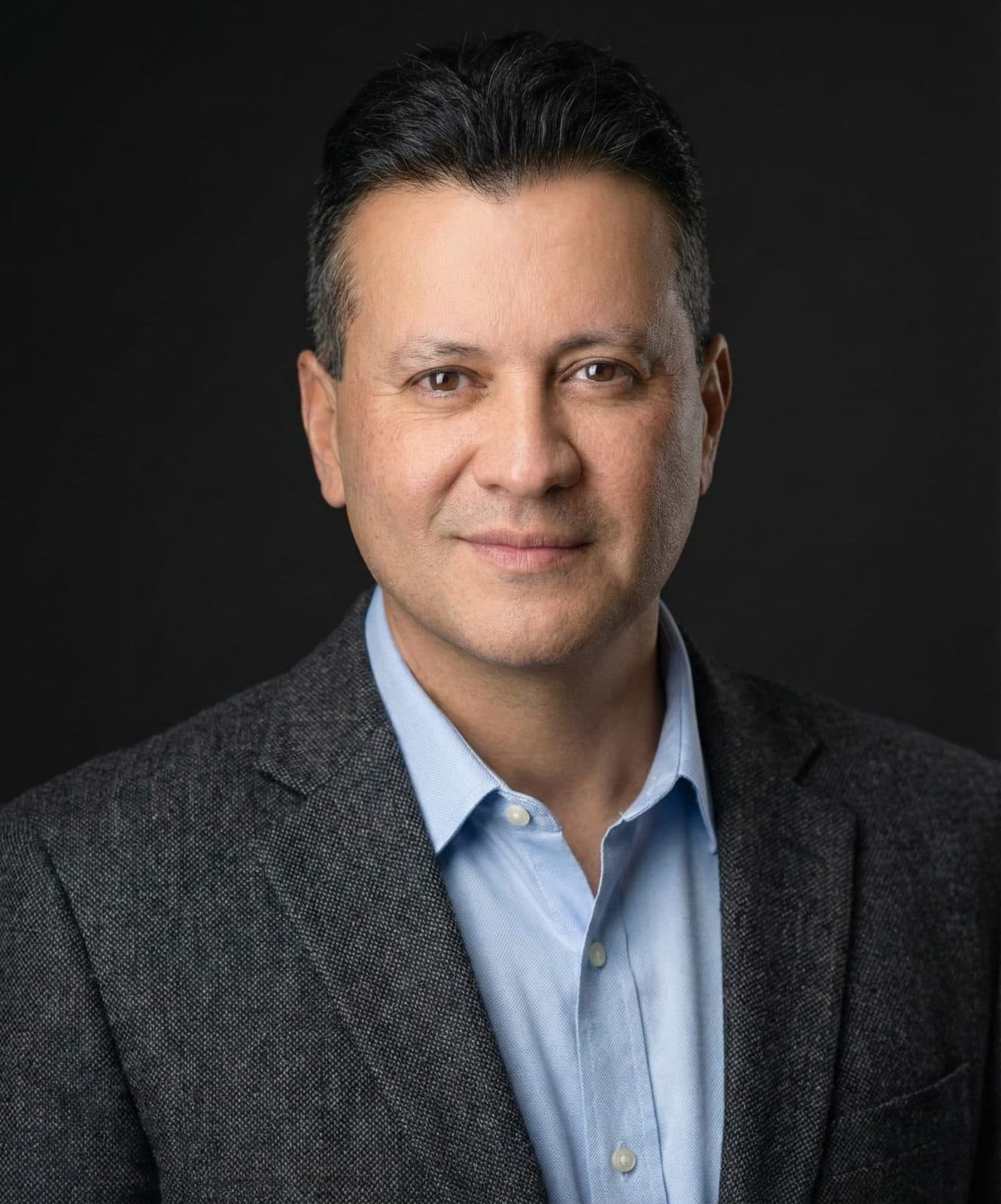
Full Transcript Introduction to AI in Medicine 0:00 AI may become the standard of care to the point where causing no harm, you'll be causing harm. 0:06 You'll actually be violating your own oath. 0:09 Because if you don't use AI, if think about it, I mean if it's really going to a point were human error, your not perfect. 0:17 Your gonna end up making mistakes. 0:19 That could become standard care and when that does, If you dont use it your violating you own Oath. 0:24 Here's a really exciting conversation about post-2020 artificial intelligence and medicine. 0:32 I can tell you a lot about AI, I have next to zero knowledge of medicine, and I've got the fellowship from 2017 at the Institute of Coaching, 0:41 which is part of Harvard Medical School, but I know we didn't cover medicine or healthcare at all there, that was talk therapy essentially, 0:49 coaching for high performers and their families. 0:54 So I brought in an expert that knows pretty much everything about medicine. 0:59 His name's Harvey Castro MD. 1:01 He's led nine healthcare facilities, including seven emergency care locations in the United States. 1:09 And it's not just his medical background. 1:11 It's also the fact that he knows a lot about modern large-language models. 1:17 So he's played with chat GPTs, played GPT-4. 1:21 He certainly knows a lot about the other LLMs around there, Palm and BioGPT, and their applications, the actual use cases in an emergency room. 1:32 I had an absolute blast speaking with my new friend, Dr. 1:37 Harvey Castro. 1:38 Let's start with the most important question, HarveyCastroMD. 1:41 Where did you get your name? 1:42 That's such a good name. 1:45 All right. 1:45 Well, you're in for it. 1:47 Here it is. 1:48 So, long story short, my mom had me when she was like 15 and she went into what's called eclampsia. 1:56 She started seizing and was intubated for more than 48 hours. 2:02 By state law, they had to give me a name. 2:04 And so my aunt was holding me and said, the nurse came in. 2:09 It's like, hey, legally we have to name him. 2:10 What's his name? 2:11 She said oh, it's Harvey. 2:12 That's what the mom said. 2:13 Fast forward. 2:15 My mom holds me and says, that's not his name. 2:18 And then long story short, it took me about 10 years old. 2:22 I finally went to my aunt. 2:24 Why'd you call me Harvey? 2:25 I'm Hispanic. 2:26 Is it short for some Hispanic name? 2:28 She's like, no. 2:29 My best account was this Jewish guy in New York City, and he was the richest person we ever had. 2:35 She was a CPA. 2:36 Long story, short. 2:39 His name was Harvey. 2:40 And so I said, well, why name me Harvey? 2:42 And this was back in the 70s. 2:44 She said well in this world of racism, we wanted to give you a white name. 2:48 So that way when you would apply to medical school, just any kind of college or application, people would think you're half white. 2:56 That's why I'm named Harvey. 2:57 It's got such gravitas though. 2:59 Harvey Castro MDs in The Room. 3:02 People remember my full name, so it worked. 3:07 Awesome. 3:09 So we've covered a bit of your background, including all of you work in the ER, but you've been prolific across the GPT spaces as well. 3:18 A lot of doctors are a big standoffish with new technology, and this is bleeding edge technology. 3:24 It's only been with us for, you know, six to nine months in its current form. 3:29 Tell me about your playing around with the ChatGPT and various other incarnations of that model. 3:37 Well, I have to give this quick background story. 3:39 I'm an ER board certified doctor.
Harvey Castro's Background and Early Tech Curiosity 3:42 And I was playing in the emergency room, like you say, and I had a patient actually came in coding and we I told the nurse, 3:51 hey, we need to start this IV drip. 3:52 We need a start it yesterday. 3:56 And she started flipping through and was like, okay, I got the dose. 3:58 And I looked at her. 3:58 This is when the iPhone 1 came out. 4:00 I said, no, there's gotta be a better way. 4:02 So I literally wrote an app called Ivy Meds. 4:05 It hit the top 10 in the world. 4:07 Then fast forward, and I'm playing with ChatGPT November of last year, And then I thought, holy cow, this is gonna change medicine. 4:13 Let me share and play with this some more. 4:15 and literally started writing books. 4:17 The more I played with it, the more my brain was, my doctor brain, was wow, This gonna make huge, huge ripples in healthcare. 4:25 So then I started writing about it. 4:26 My wife thought I was crazy because she's like nobody knows what you're talking about You know that and say I don't care They're gonna learn and then i 4:32 would tell my colleagues and they would still don' know and even up to a few months ago some of my Colleagues they really don''t understand it and I'm 4:39 like wow like I need to really help my my doctor friends and obviously patients one of the biggest things I keep telling my doctors is The last thing you 4:49 want is a patient to show up with ChatGPT output and they put it in front of your face and you say, I don't know what this is. 4:55 I've never heard of Chat GPT. 4:56 You're going to look really bad as a doctor. 4:59 People are not going respect you. 5:00 So regardless if you use it or not, you need to learn about this. 5:04 I love that. 5:05 And you've been on the very edge of it. 5:08 I remember giving a presentation in Brussels, must have been September, October last year, to the developer community. 5:15 It was 4,000 Microsoft and Google devs. 5:21 who here has used Copilot or any sort of programming interface that uses AI to help you code. 5:29 And only about 50% of the hands in the room went up. 5:33 This is September, 2022. Now, July, 2023, we've got stats that say 70% percent of programmers use a large language model to helps with their code writing 5:46 and EMAD just this morning, from Stability AI said that programming will be over in a few years time, that we won't have software development as it stands. 5:57 I think that's really even more applicable in medicine when we've got some of these stats showing up about just how good these models are. 6:06 It makes sense to put it into the healthcare environment. 6:11 Yeah, it's interesting. 6:13 You would consider healthcare being very conservative to the point where change is rough. 6:20 Like, I always joke that if I want to make a change at my hospital, they have to call the regional hospital and then they call a corporate and they then 6:27 have multiple meetings. 6:28 And then by the time they turn around and do it, its been a year and it doesn't matter. 6:32 We've moved on to something else. 6:34 And so it's very slow moving. 6:35 With that said, there's this big pressure with health care and that the aging population is only getting older. 6:42 They need more care. 6:43 And then this was an interesting stat. 6:45 I read that 50, the average age of a nurse is 54 years of age and 19% of that is nurses that are 65 and older, so I thought, 6:56 holy cow, like, We're in a crunch here. 6:58 So if that's the average age, fast forward 10 years, we're going to average nurse will be 64. And that can be hard on our healthcare system. 7:05 That's just here in the States. 7:06 Yeah. 7:07 Look, I talk a lot about augmentation and amplification of intelligence, and I think that it's going be huge at any age. 7:16 How are you finding the embracing of technology across age groups in ER or in medicine in general? 7:23 Yeah, it's funny you say that actually. 7:25 I've noticed that my older doctors, some of them have said to me, I'm going to retire if I have to use AI. 7:32 Like I don't want anything to do with it. 7:35 Then the opposite side of the spectrum, I have doctors that just graduated residency and they just can't wait to use AI and are trying to already incorporate 7:43 it into their daily lives. 7:45 And what's interesting is the hospital, some hospitals are blocking them saying, hey, you can use this because they're so worried about HIPAA compliance 7:52 and privacy, which I understand, but they are worried that inadvertently this doctor is going to put some sensitive information into CHAT GPT equivalent. 8:01 The fines here in the United States are pretty steep for violating HEPA. 8:06 Yeah, I suppose you're right. 8:07 It's more important in medicine with all of the compliance, but we still see big companies like Apple and IBM banning generative AI because of that. 8:20 Accidental posting of IP, I think, is the major concern, which just becomes huge in medicine. 8:26 There are some platforms already that have played around with ensuring compliance across the board. 8:32 So you've got Carbon Health was the first that's using GPT-4 along the way with Azure medical transcripts. 8:43 And then their competitor is ambience where they listen to the GP appointment, the general practitioner appointment. 8:50 I think you call it something else there in America, but your standard doctor's appointment and then transcribe that. 8:56 And then GPT-4 summarizes that and links that with the patient chart. 9:00 So they've increased productivity massively. 9:03 It's something like bringing a 16 minute appointment down to three minutes because you're able to use this large language model. 9:09 They have complied with everything they need to comply with. 9:12 Obviously Microsoft Azure has got all that built in for HIPAA compliance. 9:17 What challenges have you seen for chat GPTs across the same query? 9:24 It's quite interesting. 9:26 Some doctors don't know the basic stuff, like hallucinations, and some of them are using the wrong GPT. 9:33 For example, you and I know well that 4 is way better than 3.5, but to them, it's just call chatGPT and everybody's talking about it, 9:41 let's use it. 9:42 And so it's kind of unfortunate for us as a profession because it is being used wrong and then the heads of certain hospital systems are using it and saying, 9:51 oh, this is bad, let's not use this. 9:53 And then they're banning it without really understanding it well. 9:57 So I applaud big companies that are able to use it, and figure out the HIPAA compliance, because I feel like they will be the leaders to help other developers 10:06 out there that want to, you know, use APIs, for example, to create new products. 10:12 And I'm really excited because I really honestly think that we just scratched the surface of what these AI models can do in healthcare.
Healthcare Adoption, Compliance, and AI Challenges 10:21 The hardest part for us as doctors, I think, it's going to be what things can AI do that we don't have to worry about HIPAA? 10:29 And then what can we do in AI that, unfortunately, the FDA can't regulate? 10:36 So the minute AI starts influencing the doctor, someone like me, a decision process, well, at that point, that FDA could say, 10:44 wait, this is a medical device. 10:45 Even though it is not the usual medical devices that you think of, but it becomes a So it's a slippery slope because, yes, 10:53 it can be regulated by the FDA and get approval. 10:58 But these algorithms, as you know, way more than I do. 11:01 It's kind of like this black box. 11:02 How does it do it? 11:03 And FDA wants to show reproducibility and explainability. 11:08 And if it doesn't show that, and obviously you and I can ask the same medical question and we'll get two different answers, 11:13 they're probably correct, but they are not the, same and then the F.D.A. 11:17 will flag it. 11:17 So, its kind frustrating. 11:20 Fast forward, I really do think the FDA is going to make some changes here to allow these algorithms to move forward. 11:26 Yeah, it'll be completely necessary. 11:30 Unfortunately the red taping compliance and bureaucracy really does hold us up in the proliferation or at least the integration of artificial intelligence 11:39 through society and in areas, the industries, fields that need it most. 11:44 I say the big three are education, legal and jurisprudence and right here in medicine which I know nothing about but healthcare is is ripe for having this 11:55 AI either as disruption or innovation or just as amplification. 11:58 There's the AMA talking about how these GPTs can support practitioners in the field. 12:05 They're quite open about supporting that. 12:08 So I wonder just how long that's going to take if there are other bodies, governing bodies saying we're a bit scared of this, 12:15 we are a little bit old for this. 12:18 That's interesting because throughout medicine I'll even give you some serious interesting things. 12:25 I remember when I applied for medical school I didn't have a tattoo, I still don't, but I remembered hearing that if you did you had to cover it. 12:32 Because if the doctors that were part of the profession saw the tattoo you'd not get in. 12:38 that doesn't hold true now. 12:39 But that kind of thinking, if they're holding back just for a tattoo, then they are really going to hold back for AI. 12:46 And I think it's going be an interesting thing looking into the future. 12:50 Some countries, I believe, will adapt AI in healthcare way faster, and they will be less stringent as opposed to the United States. 12:59 For example, i see a future where I'm not going pick a particular country, but let's just say a third world country has such a big need in healthcare that 13:08 they're going to say, you know what? 13:09 Our people need healthcare. 13:11 We're gonna allow this AI to be a doctor within parameters. 13:16 Whereas in the United States, that same scenario, That won't happen. 13:19 But I personally think these third world countries are actually gonna lead innovation in a sense that, they are gonna say this is how we're using it. 13:25 These are the models. 13:26 This is the way. 13:28 And it's going to put so much pressure, for example, here in the United States, that the population is going say, I'm paying all this amount of money for 13:34 health care, and here's a third world country that's figured it out. 13:37 Let's see how we can do it. 13:39 That's gonna put pressure on the political leaders. 13:41 And I do think, eventually, it is gonna change things here. 13:44 But it will be a harder journey here, in United State versus third-world countries, which you would think it would be that way. 13:50 Yeah, absolutely. 13:51 I've noticed the same kind of thing, that the smaller countries, the ones that you wouldn't even consider, are able to do things a lot faster. 14:02 It might be the rapid agile versus the slower moving kind of waterfall methodology. 14:09 But certainly in my work with government, you've got these small players who have entire departments of AI, they'll push it through their tourism board, 14:17 push through employment, how they're working around with companies. 14:22 They'll push it right the way through society in their country. 14:25 Meanwhile, you've got these slow lumbering beasts that are really moving very, very slowly or setting up committees and making sure that they have all 14:36 voices heard. 14:36 I think that's going to be interesting to note the difference between a very small country with a small population being entrepreneurial and countries 14:44 that a lot bigger. 14:46 I've already seen a little bit about that. 14:47 Let's talk about models for a second and the differences in the models. 14:51 You mentioned ChatGPT, which has GPT 3.5 as a base, and that came out in 2022. If we compare that with grading on the USMLE, 15:01 the United States Medical Licensing Examination, I know nothing about medicine, but I knew this acronym. 15:07 It scored 60.2%. Not great. 15:12 Along came GPT-4 very recently, March 2023, and it scored the equivalent of about 86.1 on the USM League, which is incredible. 15:23 This is where the model has taken a new test and in its training data, we've spoken about this in lots of different ways with the Life Architect content, 15:35 it's not actually able to memorize anything. 15:37 So it has not got a database, so to speak. 15:41 It's got the equivalent of neurons and synapses like the human brain. 15:46 So it can be given a new medical licensing exam and still score up there in the 86th percentile or higher, 86% with a a test, 15:58 which is mind-blowing to me. 16:01 Last month along comes Google Palm and blows that out of the water. 16:05 So, it scored 86.5 on the USMLE with the fine-tuned version of their MedPalm 2 model. 16:15 Now to me, this is... 16:19 it's in your face. 16:20 It's not even black and white because there's beautiful colored graphs on how all this works, but it is very clear and they write very clearly that it 16:30 outperforms humans. 16:31 Let's leave all the what-ifs and the buts and a the asterisks and clauses that say, look, just be careful because it isn't testing everything. 16:43 Some of the questions are from forums. 16:45 Humans are better. 16:46 They want to make that point. 16:49 Right now, in black and white, it says that current models, GPT-4, MedPalm 2, outperform humans, trained physicians that have been to school for 20 years significantly, 17:03 sometimes 10 times better in empathy, reasoning, and accuracy of diagnosis. 17:11 As an AI expert, I go, well, that's even mind-blowing to me. 17:15 How does that look in healthcare, medicine? 17:21 question there's so many parts of that question but I'm gonna start by saying the reason it's called the art of medicine is because it is a true art. 17:30 The USMLE you gotta remember these are standardized tests that are just testing the physician on a certain vertical so it sets them on cardiology, 17:38 on pulmonology and typically these questions are very strict on that one vertical when they ask the question. 17:45 And so it's what we call textbook presentation, you know, like this is how the textbooks present. 17:51 And the reason I feel like it is called the art of medicine is because unfortunately, if you had it, I'm going to stab at it and I am probably wrong here, 17:58 but I want to say, in a given day, maybe 10 to 15% of my patients present with the given textbook. 18:06 Whereas the other 85 is a combination of the textbook where they present a little bit of this, a lot of that, and then the art of medicine and my what 18:13 I call the gestalt where I go in and say, wait, X, Y, Z, this. 18:17 OK, it's probably this I don't think our models are there yet. 18:23 And I will stress yet But I think it is in a place in medicine where it's a heck of a tool because I'm way into my career, 18:33 probably 20 years out of graduating plus. 18:36 And then I thought, man, I am kind of jealous because if I was a medical student right now I would kill it because there's so many ways of using this AI. 18:45 You know, going a little tandem here and say every person out there learns either visually or listening or a combination. 18:54 What if you use the power of AI and let's just go to healthcare and I can make my own notes, I could create my graphs, put all that stuff and throw it 19:03 into Whisper or some kind of app that will read it to me and then now I'm looking at a Vista board that I have in front of me. 19:10 I, in theory, plug everything there so every day I am memorizing a different equation, a And so the way of learning has just multiplied so much that I 19:20 feel like, you know, as a doctor, I'm responsible. 19:23 Every 30 days, my medical knowledge needs to double. 19:26 That's so many information out there. 19:28 And so if that's the case, why not use AI now to help me in medicine? 19:32 Like you said, how is it being used? 19:34 Well, number one, like you say, education, but let's put that into education healthcare. 19:39 I think as a medical student, I just mentioned would be huge.
Model Performance and Medical Reasoning 19:42 And then let us just say I'm out 20 years. 19:44 It's been a while since I graduated. 19:47 Well all this new information, How nice would it be to use like an auto GPT that has access to the internet that puts everything I'm an ER doctor that 19:56 puts everything in ER and sends it to me every week. 19:58 And regardless of me paying a subscription to one platform or one journal, why not pay one subscription for everything? 20:06 And I think that's what's about to happen in a real way for us physicians. 20:10 I want to pull up this chart from the MedPalm to paper because it's been blowing my mind this week And I want to get your feel from it, 20:22 from an ER doctor perspective, it's the one that shows high quality answer traits. 20:27 It's MedPalm 2 in yellow versus physicians in blue. 20:32 And MedPalm two is outperforming the physician seven to one for reflecting consensus, five to 1 for reading comprehension, 20:41 8 to1 for knowledge recall and about seven-to-one for reasoning versus the human physician. 20:50 Those responses, those results have made an exponential leap. 20:55 So 2020 to 2021, 2021 to 2022, and right here in 2023, I can see this exploding by 2024. And I kind of even imagine what 2025 looks like. 21:11 What's your recommendation for someone who is considering medical school in the next couple of years? 21:16 Great question. 21:18 There's the part of health care is a little different than, let's say, picking a great stock and having AI tell me which stock I should buy. 21:25 You know, if there's a hiccup, If there is, a mistake, even those amazing numbers, is something bad happens. 21:31 People can die or people can suffer. 21:34 And you can make the argument back saying these numbers are so good that they're beating a human being and their error rate is even lower. 21:42 But I still feel like, just like when my little kids, I turn off the wifi in the house, they go crazy. 21:48 I feel the same thing if doctors, and that's what I talk about to young doctors. 21:53 Don't want them to be overly reliant on AI to the point where let's just say we had no way of using AI that suddenly they can't be a doctor. 22:01 I think it's a combination, and I put it in a hierarchy. 22:05 I thin AI is great, but I thik AI plus doctor is better. 22:10 And then I thing doctor alone, as this pendulum changes, AI will beat the doctor. 22:18 when we started adding multimodality and all the other stuff that we've talked about, I think. 22:24 But it's quite interesting what I would tell a medical student or a future-inspiring one would be, still go, because we still have the part of it which 22:32 is obviously empathy. 22:34 Um, I understand that surgeons, you know, there'll be robots that can replace some surgeons. 22:40 But at the same time, There's this trust issue in healthcare and it's not an issue. 22:44 It's just something that's there and I don't see all 100% of the population saying I'll do it. 22:53 I think there's gonna be some exchange of money and this sounds odd, but I Think it'll boil down to hey, I will allow the AI to see me, 23:02 but this is the price. 23:04 And if I wanna see the human, this will be the pricing. 23:07 You can make the argument that the AIs still better than the humans, But there's that intimacy, there is that trust. 23:13 I read about an article of a machine that's able to take blood out of you, and I thought, as much as I love AI, I hate getting blood taken out myself, 23:21 And I don't know if i would trust the machine to do take the blood of me. 23:25 Yeah, that's a good point. 23:26 And that is one of like a hundred use cases that I can think of, Harvey. 23:31 You've mentioned how you could use it for IV meds, you've got use-cases for conversation, You have use case for putting it in the GP appointment room when 23:43 you are with the patient so it can take notes for you and do the charting. 23:47 There's the use cases you've just mentioned where maybe humans might be a bit standoffish. 23:52 And then very recently, you got entire countries who are saying, let's replace our emergency or non-emergency lines. 24:00 Here in Australia, we've got triple O. 24:02 When I'm in the US, it's 911. Then in Portugal, they've said that they're gonna replace their number there, 112, and 311 for Oregon, 24:09 where you actually get the equivalent of a chat GPT or a GPt4 answering your non-emergency call, taking the question, summarizing that and then passing 24:25 that on to a human in the first instance. 24:29 Some of these applications seem concerning when, back to your point about hallucinations and groundedness, we're not quite there with the fact-checking. 24:41 But I love the that we are exploring so many different use cases for this augmentation of intelligence. 24:47 Yeah. 24:48 Well, as an ER doctor, I deal with 911 calls or emergency calls often. 24:57 And I can honestly say we, unfortunately, as a society are bombarding our 911 system, our emergency lines. 25:07 And unfortunately some people don't know what's an emergency and what an an and the people at the front lines have to triage and say, 25:16 okay, this is emergency, not emergency. 25:18 To me, it makes sense from a large language model. 25:23 If you believe it or not, there's always like a top 10 of everything. 25:25 So there are probably a number of reasons why people call the emergency room or call for emergencies. 25:31 If I dissect it out, I'm all about the bell curve, you could probably get all the LLM questions inside that bellcurve and it would answer a majority of 25:41 the phone calls. 25:42 As an ER doctor, and I'll give an example a little bit further from just non-emergencies, In the world of heart attacks, 25:50 every minute counts. 25:52 So the longer it takes to open up that blood vessel in your heart, the more that heart muscle dies. 25:58 And so there's a rule here, and it's usually we wanna open that vessel from the time you get called within 90 minutes. 26:06 What if you called 911 and the algorithm identified that this was a heart attack, person was in CPR and let's just say for argument's sake that it could 26:18 automatically activate the ER and even though I may not be the ER that it's coming to, but I'm technically the closest one, 26:25 so more than likely, again, that bell curve, it is coming me. 26:28 So all of a sudden, I am working in the E.R. 26:31 and I was like, okay, It's happening now. 26:34 The ambulance hasn't gotten there, But I know they'll probably be here within 15 minutes, because the algorithm will say, 26:39 based on average time and traffic, here's the EtA of this ambulance. 26:45 Now, if I'm working on X, Y, or if understaffed, I can start making calls saying, hey, need a doctor, any this, and need that. 26:52 The other parts of this with the heart example is imagine that automatically calling the cardiac team, the team that we have to call anyway. 27:01 Now they're at the hospital even before the patient has even shown up. 27:04 now we can save that person's heart even faster. 27:07 And so I believe AI and the right tools the right algorithm, the vision, and the tools, we can do amazing things. 27:15 For example, not everybody knows basic CPR. 27:19 What about an algorithm saying, hey, I think my loved one is unconscious? 27:23 And then just be able to walk that person and let's just say there's a five minute wait. 27:27 that five minutes is crucial. 27:29 That could be the difference between brain dead and possibly living. 27:32 And so that AI model to say, I believe you're gonna need CPR, we're getting you someone immediately, but start CPR and these are the steps and this are 27:40 things you need to check for, you just save the life. 27:44 So I'm really big on seeing how these algorithms are gonna make a difference. 27:48 Going back to your earlier point about this seamless conversation with AI and you and me, let's say I am your doctor, how nice would be for me to actually 27:58 look at you? 27:59 Instead of me looking away at my keyboard and you say something and me not catch a cue where maybe you don't feel comfortable with saying X, 28:07 Y, and Z in your eyes twitch or something, I didn't catch it because I'm looking way. 28:13 And then the future of AI I love because the camera I am using today can actually take my blood pressure, my vitals, My Hemoglobin A1C is basically the 28:23 average sugar in you body. 28:24 All that with a simple camera. 28:26 And so I'm thinking, wow, you have this camera, You have the AI, instead of me having to document, the other part of documenting is the physical exam. 28:34 What if the camera already knows that I did my eye exam, my ear exam? 28:38 It's able to follow my hands. 28:41 I really think it's going to make me way more efficient, which you already mentioned that one article, but I think with using the Camera to Document the 28:49 Physical Exam, it can even make Me more Efficient. 28:52 You created an entire flowchart on using a GPT for answering non-emergency medical questions. 29:01 Is this something you already use? 29:04 I do. 29:04 You know, one of my public service announcements out there is I'm really worried about patients. 29:11 using ChatGPT, or let's just call it any AI GPT equivalent, and that they're gonna harm themselves. 29:18 For example, I made that chart because I'm worried that obviously healthcare is expensive.
AI Use Cases in Emergency Care 29:23 I know doctors will tell patients, do not use Google. 29:28 Make sure you talk to a doctor, but patients are gonna still use it. 29:32 And so those patients that, they start realizing the power of GPTs, are going to say, oh my gosh, i'm gonna start using it as my doctor. 29:39 And so I made the flowchart mainly as a public service announcement really just to help patients be careful. 29:45 One of the things I stress about is not every output out there from a GPT equivalent can be verified by any doctor. 29:54 Just because I have these initials behind my name that says MD doesn't mean I'm qualified to vet everything out of medicine because again, 30:01 I am an ER doctor because there's so much information out there. 30:04 I can only stay focused and that's why a lot of doctors specialize. 30:08 And so let me give you a quick example. 30:10 As an ER doctor, if you were saying, hey Harvey, I'm having a cardiac surgery and here's the procedure and I go through it as a doctor. 30:16 I am like, yeah, looks good to me. 30:18 The science is sound. 30:19 And I think this is the way to do it. 30:21 But then if we talk to the right doctor to a cardiologist, they go to procedure, and they look at me and start laughing like dude, 30:28 this not right. 30:29 This is not even how we do surgery. 30:30 Like no. 30:32 And so that's my example of how it sounds right from a hallucination point of view from the doctor, but it's not the right doctor. 30:38 And, so I made the flowchart just basically to help guide the patients to make sure that they're doing things safe. 30:44 That's the main goal because the last thing I was going to say is, imagine a patient self-diagnosing and being told they have cancer by AI. 30:52 How traumatizing that is. 30:54 And then imagine going to the pharmacy, going and picking up some places outside the United States, and you just go to a pharmacy and pick up whatever 31:01 drug and then taking the medicine thinking you have some disease and actually giving yourself some bad side effect because you're taking a medicine that 31:07 you weren't even needing. 31:08 Yeah, it is one of the most critical fields and industries, I think, in terms of getting this stuff right. 31:17 A lot has changed in the last six to 12 months. 31:19 You've got Harvard that are playing with intervention or inference time interventions, so they are bringing in more truthfulness and groundedness. 31:27 We're obviously getting bigger and bigger models that achieving higher and higher outperforming humans. 31:34 Where linking them in with robotic surgeons, as in you've this embodied, physically embodied AI, like a 1x NeoBot or something similar where it can go 31:46 and actually be hands-on. 31:48 All of this stuff is really close. 31:49 I say it's a few months away, not a couple of years away. 31:53 What's your feeling on all of that? 31:55 So a model that you can trust completely. 31:57 It's coming up. 31:58 Harvard and Microsoft are doing the work. 31:59 A model, that's maybe 10 times bigger than the current state of the art. 32:04 And it is inside something that can actually help you out in real life. 32:08 So something, it has got some embodiment. 32:11 What does that feel like from your perspective being neck deep in the medical industry? 32:20 You know, honestly, the geeky side of me and the altruistic part of my says this is a good thing because unfortunately, there's a huge healthcare staffing shortage. 32:31 There's lot of pressure, especially in the ER, you cannot make mistakes. 32:35 So I feel like I'm gonna have, let's just call it an aid. 32:38 I wanna have either a robot, I gonna this fancy algorithm that I can talk to. 32:44 And I know that sounds weird, but it's almost like talking to another colleague and saying, hey, These are the symptoms. 32:49 These of the results. 32:50 You know, what do you think and then be able to go through and say, okay, that's a good point. 32:53 And then just having a dialogue to help a patient. 32:57 So I'm actually excited. 32:59 Again, I think it goes to my first example when I was saying, you know I feel like some countries will end up jumping on ship really quick just because 33:07 the risk versus benefits outweigh the risks. 33:10 And they're going to say, let's just do it. 33:12 And I don't think people are just going let the AI go and it's going take everybody's job. 33:17 I think it is going be a combination. 33:19 Again, I thing in the world of legal and regulation and lobbyists, it will be awhile. 33:27 That's the part that gets me a little depressed because I feel like some of the changes can happen in a good way fast. 33:33 But unfortunately, I feel like some of the older associations and groups and lobbyists is not in their best interest and they're going to hold on tight. 33:43 But I'm happy to say that I really, really think third world countries are going promote it. 33:48 They're gonna show it and then the people around the world are gonna say, wait, we need to do this. 33:54 The other thing that fascinates me about this topic is, you know, we haven't gone to the legal and healthcare AI, but I love talking about his particular example. 34:04 One of my colleagues is an ER doctor and he said that anybody at his hospital that has a stroke The AI can actually look at the CAT scan before the human 34:14 and in real time can say, hey, this person's having a stroke. 34:17 And then it pushes that radiology film to be read by the radiologist right away. 34:23 But the ER doctor gets a text and so right way they're able to jump on it and treat them as a And I was thinking, wow, what if a hospital across the street 34:34 decides they have the money, they decide, we're not going to spend the on this. 34:37 And some lawyer says, you know what, my patient had a stroke. 34:40 Had they had this system, it would have saved time. 34:43 They would've had better outcome and maybe they wouldn't have any stroke symptoms today or may have not died. 34:49 I really find it interesting. 34:50 I wouldn't be surprised in the next six months that we start seeing hospitals or stories of hospitals not using AI being pushed and it being called in 34:59 a medical world the standard of care where we're saying no, this is the Standard of Care and I'm going to take it even further. 35:06 to your point, these models are getting so strong, what if you're not using AI, and me as an ER doctor not, I get sued? 35:17 And so I really think we're going to get there sooner than later. 35:20 And I wouldn't be surprised in the next year or so that we started getting to that point because it's just such a strong tool. 35:26 I was going to compare this with self-driving cars because you've got full self driving now, you got level five self drive and the stats behind this are 35:36 just incredible. 35:38 They measure this in crash rate per 100 million miles and human fatalities, I mean the human drivers causing fatalities are just so much higher than the 35:53 AI driven cars, the full fully autonomous self-driving cars. 35:57 And that has not yet made its way through the bureaucracy to say, right, we need to save lives. 36:03 This is a really smart way of doing it. 36:05 But I'm sure it will. 36:08 In medicine, it becomes even more extreme because you've just got a larger population. 36:12 We all have health as a facet or an aspect of ourselves and we have different degrees of being healthy or not healthy. 36:20 So if AI can help us out with that, why would we lean on a human being, a flawed human beings instead to make the analysis, 36:31 to the diagnosis, find the symptoms and then to provide a treatment? 36:36 It doesn't make sense to me and it's really one of the keys, one the key applications for integrated AI. 36:43 Yeah, it's a strong point. 36:45 And I agree. 36:46 I think as a society, we're not there yet. 36:50 You made a great point, you're right, the Tesla cars. 36:53 In fact, I'll add another caveat. 36:56 If everybody was driving an electric vehicle, We would not need these big roads because they would be able to talk to each other and they wouldn't have 37:05 to keep so much distance between cars, It'd almost be like trains in the highway and there'd be less traffic jams. 37:10 So for big cities, there would a big plus. 37:13 But yet we're not there yet and it's staring them right in the face. 37:18 I honestly think the more and more I go through this, I do see the future all over my iPhone is, as I was going to point it, 37:24 but I did see it where I would have it on my phone. 37:28 I don't need a doctor in the sense that it's this assistance on the phone, and I think we're going be far from that. 37:33 And I see coming soon where patients are going like I can't afford it and i'm going sign off on this and allow it because this is better than not having. 37:45 I'm gonna take this, I like the ethics in healthcare and the bias in this a lot. 37:50 And I wanna take it to the next level. 37:51 What if, let's just say OpenAI could prove that you're gonna live longer because you take care of yourself better, you have better education in health 38:00 care and what I call your healthcare IQ goes up. 38:02 And what if your quality of life is better and now you can live, let's just say, 5-10 years longer than you would have had you not. 38:10 But what of all of a sudden, OpenAI says, you know, this GPU is costing too much, we can't afford 20 bucks a month. 38:17 We're gonna jack this up to about 500 bucks per month all of a sudden, all these people that don't have, you know, would make it difficult for them. 38:26 And now they're not going to live longer. 38:28 They're now going have that healthcare IQ. 38:30 That part worries me. 38:31 I'm happy to hear your podcast and all the stuff you're talking about, and the different models, because I think, okay, if that happens with one, 38:38 hopefully there's all those other models that are going start competing and keep those prices low. 38:43 But I was kind of mentioning that and talking that kind stuff. 38:46 There's a lot of controversy about That particular organization, OpenAI, I think to a certain extent their leader, their CEO and their president have both 38:58 got their heads screwed on properly and they've both separately spoken about the cost of everything coming down to zero. 39:08 So that's the hardware for the computers, the making the computer, because it will be made by AI-backed robots and the model itself, 39:19 or the models themselves, given that we brought in 100,000 new models in the last six months. 39:26 That concept of altruism is really important through these labs. 39:32 And your particular example, the OpenAI example is, really well-documented. 39:37 You've got the, Open AI CEO will flash this up, talking about a concept called Moore's Law, but for everything. 39:47 So where Moore was saying, we'll have these, computing hardware, growing exponentially. 39:55 OpenAI's CEO said, well, we'll also have artificial intelligence production growing exponentially to the extent that capitalism, 40:06 economics will have to be rethought. 40:08 If everything can be produced for free, what happens next in the world and I don't have an answer to that, I'm not an economist, 40:17 but it's certainly an interesting path to go down and it is a path we're going down right now. 40:23 What I am noticing next to you is this gap between the technology being available and the technolgy being proven and being accepted by 60 year old dudes 40:35 in white lab coats. 40:38 Yeah, no, you're right. 40:39 You hit it right on the head of the nail.
Standard of Care, Ethics, and Future Healthcare Roles 40:43 I'm really intrigued to see what happens and I love this space and feel blessed that I have medicine and understand AI and there's so many things that 40:52 are coming. 40:58 to how they're using doctors to do reinforced learning. 41:02 You know, ChatGPT, I think it's indirect in that if I call all my ER doc friends and we jump on Chat GPT and help it, we can reinforce the model. 41:12 But here's nothing, and I don't have stock and palm, but here is something that I thing they are doing amazing. 41:17 They are using doctor's, clinicians to go through and it is not just any clinician, it the right clinician to answer. 41:24 And you're right, its going to be tough to beat those models. 41:27 And then from a memory point of view, you know, the older I get, it's not as easy for me to remember stuff. 41:32 So I can't imagine a computer. 41:35 I won't be able to beat it even at my prime. 41:37 And so I got it. 41:38 That's why I say I think it is a combination. 41:40 You got to bring in the art of medicine with the AI, but it to your point again. 41:46 we need to teach our doctors how to use these tools. 41:48 We need teach them the good, the bad, and the unknown. 41:51 They need understand because if not, they're going to be using the model wrong. 41:54 I know you've heard garbage in, garbage out. 41:56 Same thing in the medical world. 41:57 If a doctor doesn't know how use this tool, then they are going use it incorrect and they aren't going get the right output. 42:02 But if they know to how this correctly and really explore, wow, I mean the things that they going do. 42:09 I know this is common on LinkedIn, they always say this, but you're going to not be replaced by AI but it's going be someone that uses AI. 42:19 I'm going take it to another level. 42:21 The doctors that use AI correctly are going beat out the doctors using AI incorrectly. 42:28 Because I think that is the future and I'm excited to see all this new technology and the multimodality. 42:35 I am like chomping at the bit waiting for OpenAI or somebody to let me upload a picture of an x-ray or upload different information so I can take it to 42:44 the next level. 42:49 If I have a patient that's overdosed and say the ambulance comes in and says here's miss Smith She's unconscious and here are some pills. 42:58 I look at the pills and I'm like, okay She overdoses but I don't know what those pills are What if I could take my phone take a picture of it? 43:05 And I say the clinical vignette, which is what she comes in with, and then I take a picture. 43:11 And now it says, oh, she took Tylenol. 43:14 Then simultaneously, my pharmacy knows, Dr. 43:17 Castro has a Tyleno overdose, he pulls up the weight and age and everything and says here's the antidote. 43:24 So within a minute, I'm already having the anecdote into my ER. 43:28 As opposed to the current way, is I have to look up to pill, look at the special numbers, Or I have to call poison control, 43:35 wait for poison to answer, tell them what I think it is, and then going back and forth. 43:41 And then it just takes forever. 43:43 But now, this is just one quick example that I gave you. 43:47 This is going to change the way I work, the ways I do things. 43:51 Again, I'll go back to saving lives. 43:53 When minutes count, it's going save lives! 43:56 Yeah, fantastic. 43:57 And once again, it's a beautiful example because that technology already exists. 44:03 The visual component of GPT-4, which the public does not have access to, and the visual component of Flamingo by DeepMind allows you to grab, 44:14 I've got my iPhone a little bit closer, allows to take a picture of anything and in the public launch they took a pictures of just a drawing of a website 44:23 and it built the website out for them, but it would allow you take photos of the pill and, in theory, to be able to say this is that exact pill of the 44:34 tens of thousands of options, but to be able to both analyze what that is and then potentially to feed that back into the text model and to provide next steps. 44:47 All of that stuff is here, it's not like we're saying wait five or ten years for that technology. 44:53 they've been playing with this, they showed this in public this year, and are using it internally open AI, we're just waiting essentially to get access. 45:02 And then after we have access, there's that pause between are we allowed to use it? 45:06 Does this have to go through FDA? 45:08 does this has to through the board of the hospital or whatever other red tape exists? 45:14 Exactly. 45:15 I like giving this example, I came up with this because everything I'm about to say exists. 45:22 So imagine waking up at 2 in the morning, having some chest pain, and you ask your phone or chat GPT here are my symptoms, 45:30 not that I am advocating, just play along with the story. 45:33 And chat GPT tells you hey you're having symptoms you need to see a doctor but what if that was a tag to telemedicine and all of a sudden a Doctor shows 45:44 up and happens to be your ER doctor that you are going to because it does geofencing and it knows that this is the closest ER and then the Doctor at that 45:51 hospital says oh you need to come see me Well, what if you said a Tesla that's able to drive itself and goes picks you up and then when you get into the 46:01 Tesla the camera is able To take your blood pressure your vitals and in real time sends me that information to me and Then what? 46:06 If in my brain I'm like, oh this guy's having a heart attack Let's give him an aspirin and it prints an Aspirin while you're waiting into Tesla and you 46:15 take you aspirins Then you come in and I'm just going to make the story short. 46:20 I say I diagnose you, I look you up and all that. 46:22 And I use AI to help me get you to that diagnosis. 46:25 But then let's just say it just ends up being bad gas. 46:27 So I send you home. 46:28 Then the next morning I give you a prescription for anti-acids. 46:32 Let's say in the morning you go urinate and then this device is able to look at the data from the urine and send me in real time what's going on in your body. 46:42 We need to change this medicine and I'm gonna change your medicine, and boom it prints in your place, at your home. 46:47 All that exists already. 46:49 You know, that sounds far-fetched, but all of that exist. 46:53 Yet we don't have it, we're gonna have those things coming. 46:59 You know, this is my favorite example. 47:01 I actually get chills and I know that sounds geeky of me, but this kind of cool. 47:05 So this hospital out of England, what they did is they took discharge instructions for a pediatric, a five-year-old that had pediatric asthma. 47:13 And it was the first time this poor child had asthma and what did they do is took the discharge instruction that they would normally give the child, 47:19 obviously the parents, and they fed it into an AI, like let's just call it ChachiPT and said, hey, how do you talk to a 5-Year-Old? 47:26 And so they broke down this adult language to how it would speak to a five-year-old. 47:30 And then they took a dolly that's able to create pictures, and they actually made a coloring book out of it. 47:37 They put it all together and handed it to the child and said, this is your discharge instruction. 47:41 I thought, wow, because five year olds don't get discharge instructions, but this discharge pictures and I thought, man, 47:48 now the kid understands their disease process, why they're having asthma, and why do they need to take their medicine, how to prevent asthma. 47:55 And now, the parents can color and they can talk about it. 47:58 I really think the kids are going to be able to talk it in as opposed to I have had five-year-olds or older now and talking to my child is really difficult. 48:06 So, I though this is the best way to help using AI and discharge instruction. 48:11 AI may become the standard of care to the point where causing no harm, you'll be causing harm. 48:17 You'll actually be violating your own oath. 48:20 Because if you don't use AI, if think about it, I mean if it's really going to a point were human error, your not perfect. 48:27 Your gonna end up making mistakes. 48:30 That could become standard care and when that does, If you dont use it your violating you own Oath. 48:36 I do see, when it comes to healthcare, I see a future where there'll be a new class of healthcare provider. 48:44 We have your doctor, you have physician assistant, your nurse, doctor aides. 48:49 I came up with an acronym and I call it the Healthcare Expert Leveraging Patient-Centered Efficiency Resource, short for HELPER. 48:57 And what I envision is someone that maybe doesn't get a year of training. 49:01 Maybe they get short amount of trainings, maybe two, three months, but then they training on AI and healthcare and they know enough to be able to take 49:09 care of their function. 49:10 And I see that new class of physician, not physician healthcare provider that will come because there's such a need and we need to train individuals, 49:20 but it'll be certain tasks and certain parts of medicine that they'd be able to train them. 49:23 And I thought that would be a great leverage of using AI and the human to get people out there quicker to help patients. 49:32 Oh, this is a big one. 49:33 When we talk about empathy, It's really important to understand, yes, the AI does a great job explaining. 49:42 One of the problems that doctors have is they don't talk to patients, because when they talk patients they use medical lingo, 49:49 and they try their best to break it down to simple terms, but unfortunately sometimes they get stuck in talking medical terms. 49:57 And a lot of patients don' want to correct a doctor. 49:59 A lot times a doctors will say, do you understand? 50:02 And the patient usually says yes but they have no idea. 50:05 And so I think it's important to use AI not only to teach you how to be more empathetic, but actually use it to train you. 50:12 For example, before the call, I was curious. 50:16 I got on ChatGPT and I said, what are the top 10 things I should not say to my patient to show empathy? 50:22 And what more things should I do more of to share empathy. 50:26 And it was really interesting because I've been doing this forever and there were some things in there. 50:29 I'm like, never thought of that one. 50:31 But again, these are the tools that's going to make me even more empathetic. 50:35 You know, as an oncologist, they're always seeing patients that are about to die or horrible news. 50:40 Why not have them go through a training? 50:43 Because you get so much training, but it's real on hands-on. 50:46 So you're learning from your mentor, you going through residency, why not learn it behind doors, not experimenting with patients? 50:54 medicine it's see one do one teach one but why not do all that virtual where you're not really doing it on someone and then later you practice and you've learned. 51:03 Yeah the empathy one is fascinating to me the fact that You know, physicians are humans and they get impatient, but I don't think it's necessarily the 51:14 doctor's fault. 51:15 Like you say, the patient may be hesitant or reluctant to ask clarification questions or to say look, I just don' t get that analogy or I dont even get 51:26 the particular technical term. 51:28 Whereas with ChatGPT it's got infinite patience. 51:30 You can sit there and speak with it for hours or days or weeks or months if you want and it will never get angry or frustrated. 51:39 It's just always providing this endless feedback loop to you, tailored to, you which I think is huge. 51:47 We mentioned education and jurisprudence and now medicine. 51:51 And I, think having a personalised conversational partner is on the doorstep. 51:57 I mean, it's possible. 51:58 It's been possible for three years since GPT-3 came out, but for having one in the home that is a million times better than Alexa or Siri that is based 52:09 on this large language model, that can have these almost coaching or psychotherapy conversations with you. 52:17 Can have this conversations about your hopes and fears, can go, look, you're concerned about artificial general intelligence or just AI, 52:25 talk to me about that. 52:27 And you can, have arguments if you want, but given how patient the chat bot is, it'll be like, an ideal perfect conversation for everyone. 52:38 It'll be having eight billion conversations and can essentially do the work that we've been trying to do through sage on the stage or taught theory or 52:50 read the textbook. 52:51 Instead, you get this completely customized tailored response and conversation to you. 52:57 And to add to that point, which reminds me, as an ER doctor, I used to work close to an airport and I would get people from all over the world. 53:05 I was lucky in that I grew up in the melting pot. 53:09 So I'm really sensitive to different cultures and sexes and ways to talk to people. 53:15 But what about some people that I know, some doctors that haven't left the state of Texas?
Robotics, Drug Discovery, and Personalized Medicine 53:20 They've been on the outskirts and they've always been there. 53:23 And so now you put them in front of different cultures and different beliefs. 53:28 They don't know how to relate. 53:29 I'm not being disrespectful to them. 53:31 It's just they don' understand. 53:33 Why not use ChatGPT to customize? 53:36 We talked about it briefly about how talk to a child. 53:39 But the way I talk to an adult that has diabetes for five years is not the same way that I talked to a diabetic that's had it for 20 years. 53:46 And so why not really hone in on their discharge instructions, really customize it to their age, to the sex, their culture, 53:54 and their beliefs. 53:55 So that way when I speak to that patient, I'm really talking to her language, her culture. 54:00 I am sensitive. 54:01 One of the things that I know you mentioned before, you were going to say, why go back to med school? 54:07 Why should medical students go if AI can do it all? 54:11 We have to be sensitive. 54:12 In medical school, I remember getting taught about Jehovah's Witnesses and you can't give them blood transfusion and these are the different ways to do. 54:19 These are all ethical and very touchy situations that there has to be a trust built before a lot of things are done. 54:26 And so that part of AI and healthcare is going to tough to replace because these are really sensitive. 54:32 Now we're talking religion and beliefs on top of just the science. 54:37 So it takes us to another level, which is quite interesting. 54:42 One other thing just real quick on the biases, we've read in the news about AI, some unscrupulous company using AI to talk with patients for mental health 54:54 and not letting the patient know that they weren't talking to a human being, they were talking AI. 54:59 I do believe in the future, or not in future now, we need to make sure we're using guidelines, especially in health care, 55:04 and that the patient, if that's what's going to happen, that patients are aware that they're talking to AI. 55:10 That way they consented that that happened and not to be fooled. 55:13 So these kind of technical things, I want to We put the rules. 55:18 I applaud OpenAI. 55:21 Personally, when I look at all the things that they're doing in the guardrails, I'm happy to see that. 55:25 When I saw them testify in front of Congress, that was great. 55:27 But I am actually more worried about the small or different LLMs out there that may not put those guard rails. 55:35 Or I remember reading about a kid at a Stanford that I was able to create an L.L.M. 55:40 with like 400 bucks and had ChatGPT train it. 55:43 And I thought, man, If it's not done correctly, a lot of these other companies, they can fly under the radar and who knows what's going to happen. 55:51 Yeah, the safety stuff is so important. 55:54 And OpenAI, again, have talked about people being able to design their own safety models so that they are essentially customizing it. 56:03 So you could customize a physician chatbot, and you can also customize relationship chatbots. 56:09 You could also customise a career coaching chat bot. 56:13 But right now the Safety Guardrails make something like ChatGBT. 56:18 a little bit challenging to talk to compared to the the raw base models that we had in 2020-2021. 56:25 If you had to recommend a book for a patient to read and a doctor to write from your many books that you've written on GPTs and medicine, 56:36 what would you go to? 56:37 I have a book called Chat, GPT, and Healthcare Empowering Patients. 56:41 That one I would give to patients because it really goes through kind of explaining how patients use it and how it can use for like nutrition and stuff 56:49 like that and healthcare and use that safely. 56:51 And for doctors, I'm biased. 56:53 I really like my Bing Copilot and other LLMs, Revolutionizing Healthcare. 56:59 with AI. 57:00 I think that book I spent a lot of time creating, just not talking about just chat GPT, but I've gone into POM2 and Gator and all these other bio GPTs, 57:09 all of these LLMs that are in healthcare. 57:12 And I'm biased, I do a good job explaining it and what the future holds. 57:17 But I know after speaking to you I am going to have to add some of the robots to it because I hadn't thought that far. 57:23 That was interesting. 57:25 They're coming, absolutely. 57:27 They are here in a lot of ways. 57:29 Some of them are really confronting and then some of the even when you put clothes on and make them look like they would actually fit into a home, 57:39 it's just still so jarring, you know, coming as a child of 80s coming out from all the Hollywood movies that we were shown back then to actually have it 57:50 in our houses now in the 2020s is something else. 57:54 It's almost indescribable. 57:56 I'm excited. 57:57 Do you have any idea what the price will be, have they said? 57:59 Well, the Boston Dynamics one, The Spot one has a price against it, and the Atlas one I think may also have a prize against. 58:08 Given that the Apple Vision Pro is about $7,000 here in Australia when it comes out next year, maybe a multiple of 10 for a robot that has for a reception. 58:21 It's going to be, it's gonna be awesome. 58:24 I can't wait. 58:25 Uh, I love technology too much, obviously, but it can be great. 58:31 Are you a reader of the memo? 58:33 Yes. 58:33 Every chance I get, uh, what every other week I would just type in the website in my Gmail to find it. 58:39 And if I saw it was there, read it and then find any links and no, you're doing a great job. 58:45 Love your work. 58:45 Um, and every chance that I read, that always put a healthcare twist in brain. 58:50 So I'm like, I wondered if this was in medicine, how it would change. 58:53 So I was thinking about, you know, there's all this talk about AI helping a new drug for fibrosis in the lung. 59:04 And basically, long story short, it's AI creating drugs. 59:07 I thought, oh my gosh. 59:09 This is going to help people with rare diseases, and let me explain. 59:13 For example, there's some drugs out there that cost $2 million for hemophilia to cure them, but it's $ 2 million. 59:21 So if you don't have it, you're not going get cured. 59:24 What if we used AI to make the process get there quicker, get approved faster, decrease the time to market? 59:34 Now, what if all of a sudden, I'm just making up stuff, instead of it costing $100 million or $1 billion to create, you could create it at 10% of that price? 59:43 Now I see pharmaceutical companies identifying certain diseases saying, hey, this was not profitable, but now it's profitable. 59:51 Let's go ahead and address it. 59:52 And so I'm kind of stoked and I want to take that to the next level. 59:56 What if in the future, and see this coming, if we combine our human genome plus AI creating drugs and now you're able to get a personalized pill. 1:00:05 Lets just say I have diabetes and it is insulin, what if it was insulin specific to my body type? 1:00:10 That's going to be even more efficient. 1:00:12 I mean, my mind just blows up thinking, man, the possibilities, infinity, and it's going to help a lot of people out there. 1:00:18 Yeah, for sure. 1:00:20 So Moderna were doing that with the vaccine a couple of years ago. 1:00:23 The one you're referring to is in silico, right? 1:00:27 Synthesizing drugs for, That's very specific and I love you looking even further out than that because we've already got tailored and custom approaches 1:00:40 with platforms like Vital where you can have vitamins, essentially, or nutrients customized for your body type. 1:00:49 Take that out to maybe it's just a few months and have complete medication customized to your buddy. 1:00:57 Be fascinating. 1:00:58 Less side effects, better efficiency. 1:01:01 Oh, that's unreal. 1:01:02 That's why I wish I was like 10 right now. 1:01:06 was a deep dive into artificial intelligence and medicine and healthcare. 1:01:11 What do you reckon? 1:01:12 Shall we cover another expert in perhaps legal next or down in the weeds of education or something else? 1:01:21 Is there another field that you'd like to see? 1:01:23 I had an absolute blast with Harvey Castro MD And it's really intriguing to see how this sits inside an ER room versus how it sits here in my office going, 1:01:36 well, all of these models are available. 1:01:38 This technology is bleeding edge. 1:01:41 We're making some huge strides. 1:01:45 What does that look like in practice? 1:01:47 Thanks again to Harvey. 1:01:49 I'd love to invite you to jump into the memo. 1:01:52 The editions are sent pretty much every 10 days at the moment. 1:01:56 It was supposed to be monthly, but we've made the cadence a bit more frequent and it goes out to paid subscribers nearly everywhere. 1:02:05 A lot of the major Western governments, we've got Disney, Cirque du Soleil, IBM, Tesla, NASA in there. 1:02:13 We've the big research organisations like Rand, MIT, the universities. 1:02:18 I'd love to have you in as well. 1:02:22 cutting edge what is actually happening in that moment. 1:02:25 So for July, 2023, we're going to catch up on some of the big model releases, as well as the Big Applications of Artificial Intelligence for you. 1:02:35 See you soon. 1:02:42 Did you see the memo about this? 1:02:44 Yeah. 1:02:46 Yeah, yeah, I have the Memo right here. 1:02:48 Love artificial intelligence? 1:02:50 Excited by the explosive progress of integrated AI? 1:02:54 I am. 1:02:55 Join my private mailing list, The Memo. 1:02:59 Did you get that memo? 1:03:00 Yeah, I got the memo. 1:03:02 Get priority access to my articles, videos and behind-the-scenes tips as soon as they're released, with a monthly or annual subscription. 1:03:11 Yeah. 1:03:12 Didn't you lifearchitect.ai. 1:03:16 I have the memo.
Comments