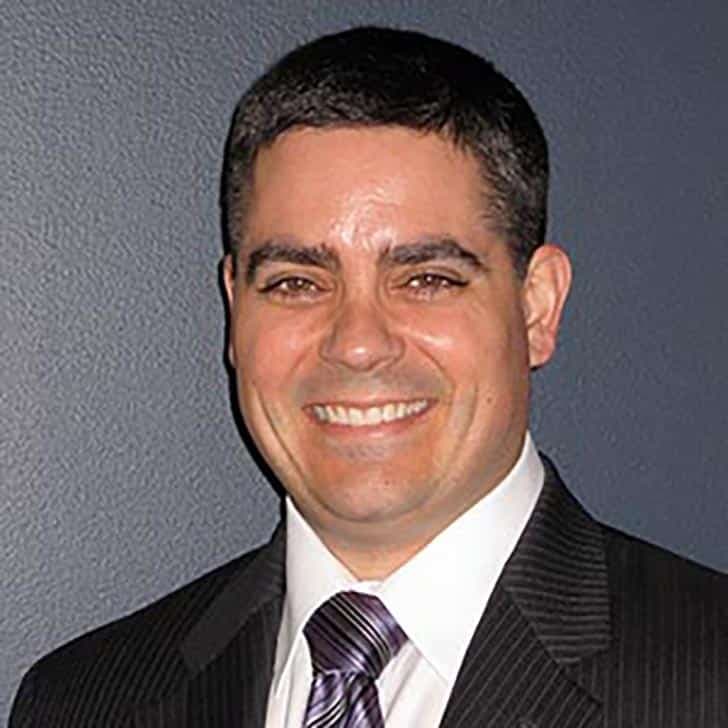
Full Transcript Introduction and Guest Background 0:01 If you. 0:07 Hello and welcome to another episode of the Traveler Summit. 0:10 I'm your host, Doctor Joseph Rafael. 0:13 Today I'm very excited to have Doctor Andrew Hayman on to talk about, 0:17 chronic inflammatory response syndrome, something which I don't know 0:20 as much as I probably should know about and really interested in learning more. 0:24 And he is one of the experts on it. 0:28 Doctor Hayman, 0:30 welcome to the show. 0:31 Andrew Hayman 0:33 is an internationally recognized expert in integrative and metabolic medicine. 0:37 He is currently the medical director of Integrative Medicine at the George 0:40 Washington University, and is responsible for overseeing graduate education 0:44 and multiple degree programs, research and clinical services, 0:48 and managing an interdisciplinary faculty of health professionals. 0:51 Doctor Hayman created the first master's degree in Integrative medicine 0:55 in the United States, with a major within a major academic center, 0:58 and developed additional graduate curricula in nutrition, 1:01 metabolic medicine and performance, men's health, bio toxin exposure 1:05 and neurodegeneration, and administrative health services in wellness settings. 1:10 He holds dual board certifications in integrative medicine 1:13 and anti-aging and regenerative medicine. 1:16 He is also the Director of Academic Affairs, 1:18 the American Academy of Anti-Aging medicine, and oversees the training 1:21 of thousands of medical professionals each year on the topics 1:25 of anti-aging, integrative, metabolic, and nutritional medicine. 1:28 In addition, he 1:30 he has held several leadership positions in the field of integrative medicine 1:35 and is the Editor in chief 1:36 of the Internet Journal of Anti-Aging and Esthetic Medicine. 1:40 Welcome to the Telomere Summit. 1:42 Doctor Hammond, thanks for having me. 1:44 Great to be here. Thanks so. 1:47 Chronic inflammatory response syndrome 1:51 is, Like I said, it's something that is not something 1:56 I know a whole lot about, but I think there's overlap 1:58 between areas of interest, as we were talking about earlier. 2:01 But to tell me a little bit, tell our audience a little bit about what 2:05 that is, and then we'll get rolling. 2:08 Sure. 2:09 So, first of all, thanks for having me. 2:11 It's great to be here. 2:12 And and certainly, to have a platform to share a topic that I think is, 2:18 an incredibly important and one that probably 2:22 almost all of us are seeing in our practices every day. 2:25 We just don't necessarily know it unless we know how to get it 2:29 right, how to evaluate for it. And I was no different. 2:32 I mean, you know, I spent 16 years at University of Michigan, 2:35 and had, you know, feet firmly planted in the world of, 2:39 of both integrative as well as academic medicine 2:43 and, you know, felt like I had this sort of privileged position in that regard. 2:47 Having been on faculty there for a number of years 2:50 in, in our Department of Family Medicine and feeling like I had sort of been 2:54 there, done that and seen everything. 2:56 And then had an opportunity to move out to the East Coast 2:59 and join a small little private practice in the Virginia countryside, 3:04 and was immediately overwhelmed by a type of patient profile 3:08 that was incredibly sick, had lots of symptoms, 3:12 no one really knew what was going on with them, and I was perplexed. 3:16 I met, you know, I felt like my toolkit was already pretty big. 3:19 And, you know, we could do the full functional medicine 3:22 workup in the conventional medicine workup and all that sort of stuff. 3:26 And nothing ever really seemed to click, and nothing and no treatments 3:30 ever really seemed to work, at least not very well. 3:33 And being in Virginia, you think, well, maybe they all have Lyme disease. 3:38 You know, I think that's sort of where your head goes 3:40 when you can't figure it out. Right? 3:41 A lot of us kind of go there at some point. 3:44 And then of course we get scared because we think, 3:46 I don't want to deal with my patients. 3:47 Like, who wants to deal with Lyme patients, 3:49 you know, but, you know, I thought, hey, it's Virginia. 3:53 So, so maybe that's that's what I'm, I'm looking at. 3:57 And for a while, I, I honestly, I tried to avoid it. 3:59 I said, I don't I don't want to tackle this subject. 4:01 I don't feel prepared. 4:03 But at some point, George Mason University 4:06 had approached me and they asked me to help them develop a better line. 4:10 Test was based on new nanotechnology. 4:12 And that, to me, not only opened a doorway into the world,
What CIRS Is and Common Symptoms 4:16 but from a more academic perspective that felt familiar, 4:19 but also now I had a better test and I could figure out that some of these 4:23 people actually did have Lyme disease, but in fact, a majority of them didn't. 4:27 And think, well, wait a minute, know? 4:28 Typically they all have the same symptoms. 4:31 Why is it don't you just just for a second, talk about what 4:34 that constellation of symptoms is so that we can sort of keep our eyes out for it? 4:38 So, you know, by definition, the defining features fatigue. 4:42 So about 80 to 90% of these patients will talk about, you know, 4:46 not having enough energy to get done what they want to do during the day. 4:50 Beyond that, you know, we've identified and actually codified into a, 4:55 a validated symptom scale, 37 symptoms, 4:59 that group into 13 clusters 5:02 and, by criteria, if a patient has one symptom 5:07 in eight of 13 clusters, there's a high likelihood they have Sirs. 5:13 So I won't go over all the symptoms. 5:15 But generally beyond fatigue, it's mood disorders like depression 5:19 or anxiety that's very common in this patient population. 5:23 Sort of dysregulated emotions, lack of stress resiliency. 5:28 But we also see cognitive issues. 5:30 So word finding difficulties, word recall 5:33 problems, memory loss focus and concentration 5:36 issues patients will often talk about I can't do my job anymore. 5:40 I just can't function intellectually. 5:42 Beyond that, they'll often talk about pain syndromes, 5:46 headaches, joint pain, soft tissue pain, Naropa. 5:50 Things beyond that will often see the nervous system involved. 5:54 So, paresthesia is, electric 5:58 like shocks, funny sensation and, disgusting. 6:02 But also just sort of no means. 6:04 So it's very common for patients to have gastroparesis, 6:08 gallbladder dyskinesia, motility disorders. 6:12 Hot syndrome is very common as a feature of this illness. 6:15 So it's a you know, these are nerves that are on fire. 6:19 So basically in the central nervous system, the autonomic nervous system, 6:22 the peripheral nervous system, but also the GI tract. 6:25 So we'll see Sibo and Gerd and bloating and constipation. 6:30 And you know, all of the attendant you know, symptoms related to that. 6:35 There's also a profound impact on the cardiopulmonary circuit. 6:38 So patients will often describe air hunger, shortness of breath 6:43 loss, loss of exercise tolerance in addition to endocrine apathy. 6:48 So they'll be describing a propensity for weight gain. 6:52 You know these patients will gain 3040 5,060 pounds 6:56 in, several months. 6:59 And they won't know why. 7:00 So, you know, so my criteria is if you have a patient 7:03 that comes to your practice and they say, well, 7:06 I have fatigue and depression and I can't sleep at night, 7:10 and I have aches and pains and I've gained a ton of weight. 7:12 And I tried diet and I tried exercise and I tried supplements and hormones and 7:17 exosomes and peptides and this and that, and I nothing is working. 7:21 It starts to sound like surgery. 7:24 And yet if you think about it, these are, these are common, you know, very common. 7:28 But family right. 7:28 What family medicine practice doesn't see this. 7:31 Now from a functional medicine perspective, these people get the label 7:34 of adrenal fatigue and hormonal imbalances and neurotransmitter issues. 7:38 And oh, you must have heavy metals or, you know, leaky gut or whatever. 7:42 They get all the same labels too, and they typically don't 7:45 get better through those usual strategies as well. 7:49 So I think that there is some overlap 7:51 with traditional sort of chronic fatigue syndrome. 7:54 And so I would imagine there probably is. 7:58 Yeah, yeah. 7:59 Under most circumstances 8:01 this sort of chronic fatigue fibromyalgia patient is worse. 8:04 Okay. 8:04 Oh okay. Yeah. 8:05 Yeah. It's worse until proven otherwise. 8:08 Covid long hauler is sirs until proven otherwise. 8:12 Basically this is a group of people that have had a bio toxin exposure 8:16 to the virus, and a portion of them just never recover. 8:20 So that's the difference. 8:21 Now, we know in the past we didn't have necessarily, 8:23 you know, a lot of geologic agent for chronic fatigue. 8:27 So they talked about, 8:27 you know, herpes virus, herpes virus six various other things. 8:30 Right. Right. 8:32 And now what you're saying is that there this is probably from 8:39 most assuredly, I 8:39 guess, in your case, from exposure to a bio toxin. 8:43 And I know, you know, you want to 8:44 you'd like to make the distinction between a bio toxin and a toxin. 8:47 We're talking about those before. 8:49 And so it's it's it's tell us about that. 8:52 That makes it. That makes it. Yeah. 8:53 That's so that's you know, I think one of the core 8:57 features of the illness is that, by definition, 9:00 it it's these biologic processes. 9:04 The pathophysiology is instigated by what I would term 9:08 a bio toxin, meaning an organism, or a fragment of an organism. 9:13 So we've not linked it, for example, to chemicals or VOCs, heavy metals, 9:19 food stress, you know, other things that certainly make people sick. 9:24 But this is a very specific and unique process 9:27 originating within the innate immune system. 9:29 So it's inflammatory in origin. 9:31 Now it becomes more complicated than that. 9:35 You get these sort of secondary tertiary metabolic consequences as a result. 9:39 But it begins with a dysregulated immune system 9:42 that's instigated from a bio toxin 80% of the time. 9:46 Most of the time, it's from what we would term 9:49 amplified microbial growth from a water damage building. 9:53 So basically, microbes that are present in our living space 9:56 that's instigating this inflammatory response. 9:59 Now remember I walk through the lime door first. 10:02 Lime can do it to Covid can do it. 10:04 The actual the origination story of this, started in the Chesapeake Bay 10:09 with actually algae overgrowth, that there was an outbreak of the story 10:12 in the late 1990s, and no one knew it was making 10:14 all these people sick in the back Bay. 10:16 Well, it turns out they were swimming in the water and encountering hysteria. 10:20 And they had all the symptoms that I mentioned know when it was going on. 10:24 And that set off the journey 10:25 of trying to figure out, well, what is this thing 10:28 that how can these people have so many different symptoms? 10:30 How can they be so sick? 10:32 It took our research group, quite frankly, a long time to first 10:36 find the part of the immune system that was being triggered or turned on. 10:41 It was not in the areas that we typically or classically measure. 10:46 So what to account doesn't go up? 10:48 Said rate in CRP does not go up, 10:50 and egg and autoimmune processes do not, you know, are not really features 10:54 of this illness that in fact, it was a dysfunction within the innate 10:58 part of the immune system, which is sort of those early responders 11:02 that should really kind of turn on and turn off. 11:04 But what's happening is in this patient population that's vulnerable, 11:08 the innate immune system turns on and it stays on 11:11 and it doesn't, 11:14 transfer it to the adaptive side of the immune system. 11:17 Technically speaking, what's happening is it's about 20% of the population. 11:22 They're born with alleles, within the HLA and chromosome six that if present, 11:27 there's about nine of these genes floating around in the human genome. 11:30 If any one of these nine genes are present, 11:32 it means that their antigen presenting cells are relatively inefficient. 11:37 So the innate immune system turns on these antigen presenting cells 11:41 should find that antigen and snip in epitope and present it to a T cell. 11:46 But by definition, if those genetic variants are present, 11:49 the antigen presenting cells are not very good at their job. 11:52 So the innate immune system turns on. 11:53 But you don't see a very efficient transition to T cells and B cells. 11:56 So you don't see a big antibody production. 11:58 So what happens is you have this sort of perpetual cytokine storm. 12:02 And over time it's just so okay. 12:05 So the cytokine storm is not the usual il6 TNF alpha. 12:09 That or C-reactive protein. 12:12 Which cytokines is it. 12:14 Was oh so go ahead. 12:16 Basically neurotoxic factors that begin in the brain. 12:20 So basically we're turning on micro glial cells. 12:23 And those micro glial cells are turning on a cascade of cytokines 12:27 that in particular 12:28 begin to affect and quite frankly, injure the posterior hypothalamus. 12:32 So we begin to see changes in leptin receptors. 12:35 And then ultimately, production of melanocytes, stimulating hormone, 12:40 basal activities and peptide production and arginine 12:43 vasopressin as features of production of the anterior hypothalamus. 12:47 So the cytokines are in the brain itself. 12:50 And that begins to create first functional 12:52 and then structural changes in the brain. 12:54 And then you get these secondary 12:55 and tertiary consequences throughout the physiology. 12:59 So are these we also know are these the these is these these genetic tests
Biotoxin Exposure, Genetics, and Immune Dysfunction 13:03 of are available to see whether or not they are I mean you can order them. 13:06 I ordered them every day from LabCorp. 13:08 So they're called HLA. 13:09 And you know it's the DRB one Dxb 12345. 13:14 And we can assemble this, the snips into the aleo, essentially, 13:19 and we can tell if they're in the 20% 13:21 and if they're in the 20%, it means they're predisposed. 13:24 Are they labeled within LabCorp as being for cars? No. 13:28 So you have to now you need to know which one down. Okay. 13:30 You have to know which ones they are. 13:32 Yeah. 13:32 So there's a what we call a Rosetta Stone. 13:35 And it's actually on a website called Surviving mold.com. 13:39 So there's an exercise that you have to go through where 13:43 once you get the HLA report from Lab Core, 13:46 you can go to the survival mode website to the Rosetta Stone 13:49 and use that to interpret and put the ADL together 13:52 to know if you have one of these alleles that's predisposing. 13:55 Oh, okay. 13:56 Very interesting. Yeah, yeah, yeah. 13:59 And interestingly, just recently just to kind of confirm our model, 14:03 there are some separate research groups that showed that 14:06 they found the HLA that predispose to Covid long haulers. 14:09 Well, it was all the same HLA that we found for Sirs in general. 14:13 And it may have been very gratifying for you. 14:15 It was very gratifying 14:17 to see that. 14:18 Yeah. Yeah, yeah. 14:19 So now the physiology of it, you know, these 14:25 the antigen presenting cells are not working correctly. 14:29 And so and then the glial cells 14:31 start producing cytokines that then cause all these other Endocrinol. 14:34 But these, and, and this is 14:39 can somebody get this that doesn't have those, genetic mutations? 14:43 Yes. It's a great question. 14:45 So if you have the HLA, it means a few things. 14:49 Number one, a small dose 14:52 or a small exposure can ignite a large fire. 14:56 It also means that once that fire 14:58 starts, the body has a hard time turning it off. 15:02 So there's a real vulnerability if you're in the 20%, 15:05 if you're in the 80%, the dose response relationship is held. 15:10 But you could be someone who, let's say, lives in a really moldy environment 15:15 and it'll turn on, sirs, even if you don't have the way. 15:19 The other thing that we've learned is that while 15:22 the HLA helps to really get things going in that vulnerable population, 15:28 those inflammatory compounds that are released 15:30 not just in the brain in terms of cytokines, 15:32 but in particular, we're turning on, THC 17 cells in the periphery. 15:37 So there's often very high TGF beta one and diminishment of T regulatory cells. 15:42 So there's discordance there that we see 15:45 as a consequence of that. 15:46 There's overproduction of inflammatory compounds. 15:49 We kind of know what they are. 15:50 They're they're small. They're lipid soluble. 15:52 They're about 1.4 angstroms in size. 15:55 They're produced throughout the tissues. 15:57 Those inflammatory compounds will traverse 15:59 the cell membrane, traverse the nuclear envelope and they'll start 16:03 acting as transcription factors and begin to alter patterns of gene expression. 16:09 So they'll literally change the instruction 16:11 set of the body and how different genes are turning on and off. 16:15 So we have a research lab in Massachusetts 16:17 where we do what we call transcriptomic research. 16:20 We actually, you know, we we're we're experts in mRNA, not the vaccine, but, 16:26 but we measure mRNA because that's how we know 16:29 which genes are being expressed and which are not being expressed. 16:32 So in 2015, we started asking the question, are 16:36 gene patterns altered in this illness, and if so, in what way? 16:40 It took us many years to identify the patterns that are hallmarks. 16:44 And Sirs. 16:45 But there are patterns and there are hallmarks. 16:47 Most of them are actually expressed within in the mitochondrial DNA. 16:52 And so this is really a disorder of the mitochondria 16:55 and changes that occur within the 16:58 either overexpression or under expression. 17:03 Mitochondrial DNA. 17:05 And so we can now tell based on doing that sort of evaluation, 17:10 does this patient have Sirs based on their pattern of gene expression. 17:14 In addition to that, we also found that 17:16 genes that turn on from old exposure, UCLA 17:20 and Johns Hopkins found the genes that turn on for Lyme disease. 17:24 There are other genes that turn on for chronic infections outside of line. 17:29 And so this started to act as a roadmap for us. 17:32 One of the findings that was surprising was that over time, 17:37 the genes that are really negatively influenced are not inflammatory genes. 17:42 They are metabolomic genes. 17:44 And, and and what's happening is when the cell is threatened, 17:48 it will shift from oxidative phosphorylation into a robust glycolysis. 17:53 There's a downregulation of ATP production. 17:56 So now you're only producing two ATP percent of the Krebs cycle. 18:00 So this is the hallmark of the fatigue. 18:03 And the cells are becoming dependent on glucose 18:06 as their substrate of choice as opposed to oxygen. 18:09 You might say well why are they doing this. 18:11 Well, you know, why would the cell change how it burns energy. 18:15 And it's doing this so it can upregulate it's defensive posturing 18:19 that it changes other pathways that are adaptive for cellular threats. 18:24 But it can only do that at the expense of turning down oxidative phosphorylation. 18:30 So we often talk about our cells are going from energy plants to battleships. 18:35 And this is we did not know 18:38 the degree to which the metabolism is deeply affected. 18:42 Now we know why people tend to gain weight and they develop insulin resistance. 18:47 And interestingly, the degree of that metabolic shift 18:50 genomically also parents directly with the degree of injury to the brain. 18:55 And this links in that notion of type three, Alzheimer's. 18:58 Right. 18:58 This this idea that the brain is becoming injured by glucose. 19:01 Well guess what? That's this illness. 19:05 So when the cells are becoming more glucose dependent, 19:08 the brain does not like that. 19:09 And it accelerates injury to the brain 19:12 that we see greater areas of nuclear atrophy. 19:14 The further down the pathway that person has gone in terms 19:17 of the change of their gene expression, metabolically speaking. 19:21 So one of the consequences said differently is not only is the person 19:25 now becoming more dependent on sugar and gaining weight, it's injuring their brain. 19:29 And the mechanism of injury is metabolic as opposed to inflammatory. 19:34 So this is one of 19:35 our recent insights, which we think is fascinating, 19:38 that they have brought us to just talked about toxins 19:40 and as being, you know, increase in, 19:44 risk of Alzheimer's to a certain degree mean some of it was our work. 19:48 Oh, is that right? 19:50 Yeah. 19:50 He smartly is is taking from whatever he needs today to to. 19:54 Yeah. 19:54 Well that's that's his that's his move and something. 19:57 But you know look he talks about measuring some of the markers that we use 20:01 and uncover and the injury to the brain and all that. 20:03 Hey, you know what? It gets the word out. 20:04 So, you know, good for him. 20:06 But yes, the transcriptomics has been an enormous breakthrough for us 20:12 because it allows us to do the deep dive and ask the question, 20:16 how have the genes changed in terms of their pattern of expression? 20:20 And the way I describe this is we've moved well beyond, 20:24 early molecular biology of genetics and asking what snips are present. 20:28 And now I can ask the question, 20:29 all right, that's fine, but what are your genes actually doing. 20:33 And said differently, it's it's, it's it's almost like saying, 20:38 well, you know, you have this whole symphony orchestra 20:41 of genes that you were given that make up who you are. 20:45 Genetics is asking the question, are each of those instruments built properly? 20:50 Does your does the slide on your trombone stick? 20:53 Do you have all the keys on your clarinet in the right order? 20:57 Are those strings on the cello tuned properly? 21:00 That's genetics. 21:01 And the assumption is if you have an instrument that wasn't 21:04 built well, the sound that it makes is probably not what it should be. 21:09 Genomics and transcriptomics is asking, okay, that's fine, 21:13 but what are whole sections of your orchestra doing? 21:16 Are they playing too loudly? 21:18 Are they playing too softly? 21:20 Are they playing at the right time? 21:22 Or is there some sort of discord? 21:25 Now, what's fascinating to me is you could have a whole section, you could have 21:28 a whole brass section of your instruments that they're all built normally, 21:34 but they're not playing at the right time or at the right level. 21:38 So you can get fooled by snip testing 21:41 to set up this whole section of the genome is fine. 21:43 Well, guess what? 21:44 If it's not doing what it's supposed to do functionally, 21:46 you still have disease cure. Yeah. 21:48 So we were talking earlier about, before getting on camera about, 21:52 what role epigenetic epigenetics might play in that. 21:55 But, you know, most of the epigenetics that is available now is to, 22:00 you know, DNA methylation. 22:01 And you're saying it's other transcript, transcription factors 22:05 that are causing this. 22:06 So you wouldn't necessarily pick this up in an epigenetics, stream. 22:11 That's right. 22:11 Because we know methylation doesn't play a large role 22:15 in in influencing expression patterns in this illness. 22:19 Now, don't forget there's really three signaling pathways. 22:21 There's acetylation, phosphorylation and methylation. 22:25 All three act as sort of those epigenetic signal. 22:28 Sure. 22:29 But but but other things also influence genetic expression. 22:33 So the disease process itself the inflammatory story is over time 22:38 what actually changes, you know, gene expression in this patient population. 22:42 And and I'll tell you how powerful the insight has been. 22:46 So so we're starting to build a model, right. 22:48 We're saying, okay, people have an exposure. 22:50 They get really inflamed. 22:51 They get really sick. 22:52 And now we're starting to figure out genomically, you know, from what. 22:56 Right. 22:56 So I can tell the genes that turn on from old 22:58 and I can tell the genes that turn on for a long time. 23:00 And what a powerful tool. 23:01 What's fascinating is, in our last data set of a thousand research subjects, 23:07 when we looked at their gene expression patterns, 23:10 only 7% of them were sick from molt. 23:14 And we said, well, that's odd because most people in this category 23:18 are actually sick from water damage. Building. 23:20 So if it's not from mold, what's making these people sick? 23:25 So we started looking at other genes. 23:27 And sure enough, 23:28 there was this pattern of expression that kept coming up over and over and over, 23:33 and we said, okay, these are people reacting to their environment, 23:35 but it's not so much similar, but not the same. 23:38 So what is it? 23:40 It turns out that as we went to 23:42 some research out of Denmark and Finland and Austria, 23:45 there are research groups that demonstrated 23:47 when you have microbial growth in a living space, 23:50 much of that microbial growth is actually not mold. 23:53 It's back. It's a bacteria. 23:55 It's actually bacteria. What kinds. 23:59 So it's a it's it's 24:00 a it's a, it's a it's a gram negative staph. 24:03 And the most common is called actin a mite since it's 24:06 a mouthful, actually, to my seats, there's 6000 species. 24:11 Some are soil based. 24:13 But the ones that we have found and this is really the I mean, 24:16 this talk about Alice in Wonderland going down the rabbit hole. 24:21 So first off, 24:22 we found that 42% of that research population 24:26 were sick from academic genomics, compared to the 7%. 24:31 It's not even close, right? 24:32 No. Most people who are sick from their living space, 24:35 they're not sick from mold, does not more sick from if they're sick. 24:38 That's not mold. 24:39 It's actually a mixture of bacteria. 24:42 And and and this this further sort of debunks you know, 24:45 a lot of practitioners are doing urine testing for mold. 24:49 And that test has actually never been validated. 24:52 It's not been shown to correlate with environmental exposure to mold. 24:56 It only actually correlates to food 24:59 that people have eaten with a little bit of mold.
Transcriptomics, Metabolism, and Brain Injury 25:01 We know that based on 150 studies, it's not a great way of assessing. 25:07 Now we know for certain because the real culprit, 25:11 the real criminal, it's not mold, it's actually my seeds. 25:14 What's even more fascinating is there are different forms or types of actos. 25:19 Some are soil based, but the one that we figured out 25:23 that makes people really sick colonize is the skin. 25:26 So you can get this so touching. 25:29 Not you can get it by touching and you take your critters with you. 25:34 Oh. Right. Contagious. 25:36 And so we're finding that, in fact, if you have the skin based form, 25:41 you're likely seeding and being reseeded by your living space. 25:46 So the bed, the bedding, the bathroom, the closet, 25:51 the bedroom, the places where you spend most of your time in your home. 25:55 That's where antennas will concentrate. 25:58 Wow. And so now the remediation strategies 26:01 that we're developing are really focused on two things. 26:05 You know, good hygiene of the home but also good personal hygiene. 26:09 You gotta really scrub the skin to get better. 26:13 If you have the skin form of nose, you've got to be clean 26:16 and your living space has to be clean. 26:18 And they're very specific ways of doing that. 26:20 We are finally cracking the code. 26:22 We finally are solving the Rubik's Cube of what really drives this illness. 26:27 And most people, it wasn't Lyme, it wasn't mold. 26:31 It's emerging to be this bacteria that's ubiquitous. 26:35 And, and, and, and is, 26:39 is very good at living on all sorts of surfaces. 26:42 Interestingly, two, you know, when you talk about it 26:45 inhabiting a living space, it doesn't need a lot of water to grow. 26:49 It doesn't need some sort of water intrusion or high humidity 26:53 or a broken pipe or, you know, something that we think about with, with mold, 26:57 actually, the early research shows it will happily grow 27:00 in a home with just dust and certain building material, 27:04 and therefore 27:05 even a new build that was built properly and dry. 27:08 You can still have a tennis present. 27:10 Oh, I was so happy that I have. 27:13 I live in a new building, but I guess there goes that you never know. 27:16 Now you're probably in the 80%, right? 27:18 You're probably in the 80%, 27:19 but there's a bunch of miserable 20 percenters out there. 27:23 And and now with the power of transcriptomics and looking at patterns 27:26 of gene expression, we can identify that patient population. So, 27:32 you know, kind of tying it into at least aging more broadly, if not telomeres. 27:37 You know, we now know this illness reaches into insulin resistance and diabetes 27:42 because of those metabolomic changes and those mitochondrial genes. 27:46 We also have shown 27:48 that, there are a set, there's nine of them. 27:51 There's a set of coagulation genes that can also turn on in this illness. 27:56 As a consequence of the exposure. 27:58 And we've shown that if three or more of these coagulation genes activate, 28:03 there's an accelerated risk for vascular dementia that micro clots 28:06 start to form in the small capillaries feeding the brain. 28:10 So now we have a model that links exposure 28:13 to vascular dementia, exposure to diabetes and insulin resistance and weight gain. 28:18 Interestingly, we also found in 40% of our population 28:22 for those sort of cell activation junkies, there are two histamine genes 28:27 that can also turn on in this illness. 28:29 It means every nucleated cell in the body will be overproducing histamine, 28:33 not just mast cell. 28:35 So I'd love to have Doctor Afrin about sort of raising awareness on histamine. 28:39 And I do think there's a, you know, a small patient population 28:42 that truly have national issues, but I think a much, much greater portion 28:46 of those people who are suffering from histamine, 28:48 it's because they've had an exposure that actually turned on their histamine genes. 28:53 So we've even linked it to that too. 28:55 There's all sorts of tendrils that this illness has. 28:59 And it's, you know, 29:00 it's like that old allegory of the it's a three blind men touching the elephant. 29:03 And you think that's one thing or another. 29:05 Well, it can be any one of those. 29:07 These things are a mixture of, of, you know, 29:10 chronic illnesses and deep symptom findings. 29:13 And, you know, and these patients are very resistant to standard therapy. 29:17 They will not get better with just standard nutrition and hormones and 29:21 and even the fancy stuff, even the stem cells and exosomes and peptides 29:25 and all the regenerative therapies, until you figure out what that exposure is 29:29 and did it and deal with it, these patients won't get better now. 29:33 They're going to remain sick. 29:34 They're going to remain sick. 29:36 So you go about doing that with, I think we have diagnosis. 29:41 You have a whole checklist of things that do to the criteria that you meet. 29:46 And then is this transcriptomic analysis available? 29:50 Is that. 29:50 Yeah, just research it is. 29:52 No, no, no, not at all. 29:53 So, there's no real berry in terms of getting the test. 29:57 So it's it's actually listed on a website. 29:59 It's called Pro Gene Rd project. 30:02 So you can go and you can order that the gene test kit. 30:05 Now it says on the top a health care provider must order this. 30:08 That's not true. 30:09 Anyone could go out and get get the test. 30:11 The challenge is once the test kit shows up at your house 30:15 like it does with all of my patients. 30:17 Now what? Because it's a blood draw. 30:19 In addition to that, because it's transcriptomics and it's a bit fancy, 30:23 the sample needs to be frozen overnight and shipped on dry ice the next day. So. 30:28 So there's a little bit of a rigamarole, doctor. 30:31 Should have it done through a doctor's office. 30:33 Yeah. You should. 30:34 Yeah, well, and also the the results, the report is, 30:39 you know, sort of nearly inscrutable, unless you understand how to read it. 30:44 And it's, it's not a user friendly report. 30:47 I would have to say. 30:49 With that being said, it's an incredibly powerful one 30:51 because of the depth of insight that it that it can give the practitioner. 30:55 It's an amazing tool. 30:57 It's an amazing tool in that regard. 30:59 And that's, that's that's name again is the lab is approaching 31:04 and approaching the website Pro Gene X. 31:07 Yeah. Dot com. And it's the gene test. 31:10 It's funny that the telomere testing the company that is 31:14 it's the 31:16 follow up. Yeah. Yeah. 31:19 So, so, so, so okay, 31:22 so then you have the, the diagnosis and then 31:26 you have protocols for 31:29 attacking this situation. 31:31 Obviously removal of the X and A bases is, is is important 31:36 for treating the Lyme or stop swimming in the algae or get over of Covid or, 31:40 you know, whatever it is. 31:41 But is it a situation where once this sort of set of inflammatory, 31:45 genes have been turned on, even if you remove the offending agent 31:51 or inciting agents, that it's hard to turn it off, 31:55 or is there some therapies for turning it off or there's just removal 31:58 of the, of the, of the exposure, you know, help to remediate? 32:03 You are it's a great question. 32:05 You're smarter than the average bear, as they say. 32:07 So the answer is you can't we we have figured out 32:13 how to turn the genes off, or let's say restore normal gene, behavior. 32:18 We have one quiver 32:21 or one one arrow in that quiver, 32:24 which is one treat, one treatment, which we know works. 32:28 There are probably others out there that do it, 32:30 but there's also a sequence of, of, therapies that we have to go through 32:34 in a certain order to get to that last step where the magic happens and we 32:39 we turn the genes back to normal and, and sort of said differently. 32:43 And this is fascinating. 32:44 When you look at our transcriptomic reports, 32:48 we can now tell based on the patterns, if someone is a new diagnosis 32:53 and really hasn't received any effective therapy, we call that stage one. 32:58 It's a pretty classic set of findings. 33:01 Stage two certain genes start 33:03 to turn off because of the initiation of proper treatment. 33:07 And that means typically a binder of some sort. 33:11 Usually it's a bile acid sequestering. 33:13 We also know, for example, that, 33:17 okra and beets, can act as a proper binder. 33:21 We're firm believers that charcoal and clay 33:25 and Chlorella do not work as a binder, even though lots of, 33:28 you know, I get back to back tears or try that, but. 33:30 But in our data set, we either need to use color star. 33:33 I mean, well, call okra beets, sort of somewhere in that mixture. 33:37 Those really work 33:39 to get people moving in terms of draining the body of inflammation. 33:43 After that, we start dealing with sort of the metabolic disturbances, 33:47 whether that's decreasing inflammation in the gut or balancing or hormones 33:51 or so on and so forth. 33:51 There's a whole protocol we go through. 33:53 So we we deal with the exposure. 33:56 We drain the body of inflammation, we correct those metabolic disturbance. 34:01 But that gets us to stage three, 34:04 that even after we do what I would think of as many functional interventions, 34:08 there's still this is irreducible, nugget of genes 34:14 that will remain abnormal. 34:16 And it's the reason why, you know, you can give these patients all sorts of 34:20 fancy therapies, but those genes just won't go back to normal. 34:25 And the risk is still present for dementia, for diabetes, 34:31 that some of those really important genes that we want to turn off, 34:34 they're still on. 34:36 So stage you see that in the transcript. 34:39 If you did the trend, we can see it in our data sets. 34:41 And it's it's very predictable. 34:43 It's amazing that we can tell what are the genes that typically turn off 34:47 and what order that the body has some sort of internal intelligence 34:50 in that regard, that some genes are great at turning off because of our nutritional 34:54 interventions and, you know, support of metabolism and so on and so forth. 34:59 And that gets us to stage three. 35:01 And stage three indicates the person is ready 35:05 for the magic sauce, essentially, that we've turned off all the genes 35:10 we're going to turn off through lack of a better term, a functional approach. 35:13 But there's still that irreducible nugget. 35:15 And so we give a special neuropeptide called vaso 35:18 active intestinal peptide, or VIP for short. 35:22 And VIP acts as a transcription factor. 35:25 And it will turn off those residual genes and restore normal health 35:28 and basically induce cure. 35:30 We don't we do not have a substitute for that treatment. 35:34 It's the only one that we have found that once you get to stage three, we'll get 35:39 we'll push people over the finish line and get to stage four, which is cure. 35:43 So we we can tell as the person is healing, 35:46 you know, as we do their genomics where they are, what stage are they in, 35:50 are they still being exposed. 35:51 You know, so sometimes, for example, 35:53 like earlier today I was treating a patient 35:54 and I thought she was further along than she was 35:57 because we thought she had fully remediated her home. 35:59 But, you know, but there were still some symptoms that were residual. 36:02 And we were wondering, are you ready for VIP? 36:05 Well, we did a genomic test. 36:06 We did Jeannie, and sure enough, it showed she was still being exposed, 36:09 that that roadblock was still present. 36:11 So we have to go back. 36:13 We deal with the house, do further remediation, 36:16 and then she'll probably be ready for VIP it. 36:19 We can, you know, if you give VIP too early in the process, it won't work. 36:25 Nothing bad will happen. 36:26 There's no sort of side effects or adverse events. 36:28 It just you won't see the magic, you won't get people to cure, you know? 36:32 And, How. 36:34 I mean, I'm just curious, but how does VIP work in this, in this circumstance? 36:38 My, my my memory about what in fact, VIP actually does is is a little bit, 36:44 so it's interesting is. 36:46 Yeah. 36:46 Well, you know, first of all, it was actually brought to market decades 36:50 ago as a drug, as an antihypertensive, and especially for pulmonary hypertension. 36:54 Right. I remember that. 36:56 Yeah. Right. 36:56 I mean, this has been around for a long time, 36:59 but it fell out of favor because it was expensive and you had to inject it. 37:02 Right. 37:02 But there's lots of human studies on, on VIP. 37:05 So it's endogenous, right? Our bodies make it. 37:07 And we have two different VIP receptors. 37:09 They're scattered throughout the tissues. 37:11 You can even look up VIP receptor maps. 37:13 They concentrate in the blood vessels and in certain organs and tissues. 37:17 And so you can begin to guess sort of what, 37:20 you know, effects that VIP might have in the body. 37:23 One of the most immediate, of course, is dilating blood vessels, 37:26 which I'll tell you, is incredibly important in this illness
Diagnosis, Remediation, and Treatment Staging 37:30 because one of the consequences of Sirs is actually constriction 37:33 of the capillaries. 37:35 So it's that's what really contributes to the low VO2 max 37:38 and loss of exercise tolerance and the cardiopulmonary impairment. 37:41 So if we do CPR testing in these patients, we'll see 37:44 their VO2 max tends to be 20, 2122. 37:48 They're like heart failure patients. 37:50 Do they have any dysfunction as well. 37:52 They do. 37:53 Oh yeah. They've got endothelial dysfunction. 37:55 They've got ballooning of the right side of the heart. 37:57 They've got stretching of the trail. 37:59 No, they got the real deal. 38:01 They typically have a mild pulmonary hypertension 38:03 and ethereal dysfunction on top of the micro clotting. 38:07 Right. 38:07 So we can see stroke and heart disease and the rest in this patient population. 38:11 So when we give the IP it works quickly. 38:14 And boom those blood vessels were dilate. 38:16 And the person for the first time in years would go 38:19 I can breathe again. 38:20 Wow. I can't believe I just took a breath and I feel like 38:23 I'm finally oxygenating oxygenating my my tissues. 38:26 And of course, it's opening the capillaries to the brain, right? 38:30 So the brain is finally getting oxygenated to that happens right away. 38:34 VIP has some anti-inflammatory qualities as well, which of course is good 38:38 in this illness too. 38:39 But the magic, how is it getting those genes back to normal? 38:44 We have no idea that it's working as a transcription factor. 38:49 It's clearly restoring those genes back to normal. 38:52 We have tons of data to show that, but quite frankly, how does it know to do that 38:57 at the level of the mitochondria so predictably and reliably 39:02 no one knows. 39:03 And it's, the daily subcutaneous injection? 39:07 Or how long do you have to do it? 39:08 Actually, it's a nasal spray, but it is. 39:11 That's right. It's a it's a nasal spray. 39:12 It's a nasal spray. 39:13 But initial injection, you said. 39:15 Well that's right. Initially for blood pressure 60. 39:17 It was an injection. Now we haven't made it. 39:19 There's only two pharmacies in the country 39:21 that know how to make the ship properly as a nasal spray. 39:26 And it takes time. 39:27 You know, this is basically there's a build up phase, 39:30 but on average, it takes our patients about six months. 39:34 Oh, really? 39:34 Not the main don't. 39:35 Yep. At the main dose to to to induce cure. 39:39 Now that's average. 39:40 So we have some patients that you know take a lot longer than that. 39:43 And others are overachievers. 39:45 And they get there in 3 or 4 months and they go I can't believe it. 39:48 I feel like my old self. 39:49 I haven't felt this good in 20 years kind of thing. 39:52 That's an amazing thing, especially in this patient population 39:55 that is so unbelievably miserable and so sick in so many ways. 39:59 And, and they they're so grateful and thankful 40:02 when they finally feel like their health is fully restored, it 40:07 it's an amazing, thing to bear witness to. 40:11 And, and even though 40:12 this is incredibly complicated and yes, these patients are very trying. 40:16 The other side of it is really, 40:20 you know, gratifying. 40:21 No, you know. Yeah, absolutely. 40:24 Yeah. 40:25 So getting back to what I'm curious about in terms of figuring out 40:29 when somebody's sitting across from you 40:30 with a constellation of symptoms, is this typically, a fairly abrupt onset? 40:35 Because, you know, if you look back, they might have been, 40:38 you know, dealing with for years, but is it an abrupt onset 40:41 where there's that first exposure and then you see this happen? 40:44 Unlike there's something else that's a more sort of gradual degenerative thing. 40:48 You usually pick that up. 40:50 Yeah. 40:51 You know, sometimes in the moment 40:55 when the person, let's say, moves into the apartment or the dorm room 40:58 or whatever, and they, they start to, you know, 41:02 start to feel tired and depressed and gaining weight, 41:06 you know, it's it's often easy to sort of ascribe it to the person circumstances. 41:11 They go, oh, well, I'm in residency 41:13 or I'm stressed from school or I just got married, you know, whatever. 41:16 You know, my job is difficult or it's or that's just life sort of thing. 41:20 But most people looking back when they finally connect all the dots, 41:25 they can pretty much they can pretty much determine when this thing started. 41:30 You know, it might not be abrupt per se, really obvious, 41:33 but there is a starting point where people say, my health changed. 41:38 My health definitely changed when I was living. 41:42 You know, wherever X, you know, and sometimes it is dramatic. 41:46 Sometimes it's, you know, they went on vacation to the Caribbean, 41:50 they ate a fish with sick with Tara, you know, they had a biological exposure 41:55 and they came back and the wheels fell off. 41:57 You know, it was clear there was sort of this before and after. 42:00 But there is a start point most patients can identify, 42:04 either when it's happening or soon after 42:07 they look back and say, you know, six months ago something happened to me. 42:10 I don't know what it was, but I'm not I'm not myself. 42:13 And you can you can reassure them, saying, look, 42:16 first of all, it took us 20 years to figure a lot of this out. 42:20 There's a reason why your typical labs are normal. 42:23 There's a reason why 42:24 no one can sort of really figure out what's going on with you. 42:27 But guess what? 42:28 Your body has changed all the way down to your instruction 42:31 set, all the way down to your DNA. 42:34 No wonder you don't feel like yourself. 42:36 No wonder you feel so sick. 42:37 You have every right to feel the way you do. 42:41 This is not in your head. 42:42 It's not psychiatric. 42:44 You know, we've got to go deeper than that. 42:46 And there's a consequence, you know, there's some damage. 42:49 Your brain, if left unchecked, you know, this is a serious illness. 42:53 This is not we're not messing around 42:55 with just this functional stuff of, you have some magnesium deficiency. 42:59 Like. No, this leads to dementia. 43:02 You know, we I mean, we we take this seriously. 43:04 So what, in terms of, I don't know if you have these figures, 43:08 but epidemiologically, what was the prevalence of this 43:11 this disorder, you think? 43:13 I mean, I'm sure there's some undiagnosed, but. 43:16 Yeah. Is it how do you know? 43:18 I well, if you if you imagine 43:21 20% of the US population is vulnerable because they carry those genes, 43:27 50% of US buildings have water damage. 43:32 So those numbers. Right. 43:33 So we're talking 40 million people or who are at risk just from that now. 43:37 Is it all. No, of course not. 43:39 I mean I plenty of patients who they didn't get sick from mold 43:42 until they were 50 43:44 and you know, they had the gene and of course they encountered mold. 43:47 But but why age 50. We don't know. 43:49 We don't know why the gene might fully express itself later in life. 43:53 There's probably some loss of resiliency. Maybe it's telomere shortening. 43:56 You know, maybe there's just kind of this accumulated effect of, 43:59 you know, loss of metabolic resiliency and, and sort of biological aging 44:05 that contributes to that final expression of the illness. 44:08 It doesn't happen, 44:09 you know, right away with a lot of people, it happens later in life. 44:13 Later. 44:13 Those genes are is there, a reference paper for those particular genes 44:18 so we can sort of look them up and see what they are? 44:20 Sure. So, I mean, 44:23 I would say even though it's a compendium, it's 44:26 probably the best single source of all of this information is our textbook. 44:30 It's called the Art and Science of Sirs. 44:32 And it's, you know, it's it's, you know, it has everything that I'm talking about. 44:37 It has chapters on diagnosis, it has chapters on, you know, what, 44:41 what's the symptoms scale, what are the lab findings? 44:45 What's the genomics, what's the brain scan? 44:47 What are the treatments. 44:48 And it's peppered with cases. 44:51 So it's also very practical in terms of okay fine I you know diagnosis stuff. 44:54 But what do I do. 44:55 Well that's all laid out as well. 44:58 So it's it's all in the texture and, you know, and it's cheap. 45:01 I mean, it's, you know, it's, it's a, it's an e-book. 45:04 So it's, it's really inexpensive. 45:07 But it's got everything I'm talking about in there, you know. 45:09 So the art and science of sirs are great. 45:12 I, I think it's, amazing work you're doing. 45:16 And I'm still trying to think about the overlaps because I think about things, 45:21 in terms of telomere biology, because they're pretty high up on the list. 45:24 But the innate immune system being the starting place for this. 45:27 You don't see, I mean, maybe you haven't looked at. 45:30 I wonder whether you see an increase in senescent cells. 45:33 If you look for them, and maybe so, you know, 45:37 particularly with Covid, probably shorter telomeres. 45:43 But there are a couple of 45:43 papers that show shorter resilience to predispose to more severe disease 45:47 because they don't have the resources to a in results in lymphopenia. 45:51 And also there's more cytokine storm because there's more senescent 45:54 cells producing. 45:55 But you're not talking about that same kind of cytokine storm. 45:57 I wonder, but just also lastly, I'm sure it's in the textbook, 46:02 but the final common pathway is the VIP for the treatment that no matter 46:05 what the area lesion logic is, ultimately, yeah. 46:09 Because as I said, there's always that irreducible negative genes 46:13 that just don't seem to go back to normal until we give the IP. 46:16 Now, you know, are we eventually going to substitute 46:19 and find other therapies that that might work as well or better? 46:22 I certainly hope so. 46:23 I don't like having only one treatment. 46:25 We know this one works, but it's expensive and it takes time, you know? 46:30 Right. Exactly. 46:30 Doesn't work quite as fast as you might like it to. 46:32 Right. 46:33 But who knows? 46:34 I mean, 46:34 with that level of disarray and damage, it's going to maybe take anything a while. 46:39 So then they get back to full exercise tolerance and and all these other things. 46:43 Turn around. 46:44 Right. 46:45 Yeah. Look, can they do to looking at that textbook? 46:48 Well, it's so not all metal. 46:51 Not all mold is mold. Okay, so that's one. 46:53 That's right. That's, That's right. 46:56 And most of the time it might well be a bacteria and affected devices. 46:59 And so and probably most 47:03 of what we in the past, thought of as the, you know, 47:07 diagnosable, untreatable chronic fatigue, 47:10 syndrome, fibromyalgia is this year. 47:15 You will. 47:15 Yeah, I would say probably, under many circum maybe not all, 47:18 but but certainly a portion of those patients that that's it. 47:21 This is it. 47:22 This is what that and and that's a that's a fairly large number of patients. 47:26 So yeah. Absolutely. 47:27 And there's a genetic predisposition which, which makes sense.
VIP Therapy, Recovery, and Future Directions 47:31 And then the change in gene transcription genes load the gun 47:35 lifestyle or exposures, the exposure, 47:39 is what 47:41 pulls the trigger and then. That's right. 47:43 But to put the bullet back in the barrel, with, with the things that you're doing, 47:47 what's been fascinating. 47:48 Talk to me about this. 47:49 Is there anything else you'd like to share with our audience about, 47:53 you know, where you're going with your next steps with this? And, 47:56 you know what the future is for this, 47:59 I would say. 48:00 Yeah, I think it's a great question. 48:01 I would say, a couple of things. 48:03 Number one, if you're in this space as a practitioner 48:08 and, 48:10 you know, your, your, 48:12 you know, seeing patients on a regular basis, 48:15 I think this is, 48:19 a tool that you need in your toolkit that, that, 48:23 you know, 48:23 most practitioners, unless, you know, they're pretty narrow in their focus, 48:27 they're likely seeing these patients every day. 48:31 And they, you know, they go under those labels, right, of of leaky 48:33 gut and adrenal fatigue and metabolic syndrome 48:37 and hormonal imbalance and psychiatric issues and neurodegenerative. 48:41 And, you know, the list is really long and it's common. 48:45 Most of us who are in this 48:46 field of integrative functional anti-aging, 48:49 you're seeing these patients, you might not have recognized them as such. 48:53 But even if it's not something you want to take on 48:56 treatment wise, I would urge people to learn about, 49:00 had at least quickly identifying who these people are. 49:04 There's a few simple things that you can do to sort of pick up on them. 49:08 One is the symptom scale. 49:09 So again, you know, if they have one symptom in eight of 13 clusters, 49:13 in addition to that, there's a visual test that we have people do online. 49:17 It's a contrast study. 49:18 And we know that contrast is lost 49:21 or impaired as a feature of this illness. 49:24 Oh, so that in 49:26 extreme sensitivity testing, that's it. 49:30 Yeah. 49:30 I see, you know, like this, a while ago, 49:32 because it was a sort of a biomarker of aging to a certain extent. 49:35 It just sounds like an accelerated aging syndrome. 49:37 Anyhow. 49:39 It is. 49:39 And we know, for example, that if a person fails the visual contrast test 49:45 and they have those, they meet criteria for symptoms. 49:48 We've got a 99.6% accuracy rate of making the diagnosis of Sirs. 49:53 So if you're just kind of attuned to the symptoms 49:55 and you suggest the patient take the visual tests and they fail, 49:58 you can be pretty much assured you've got a serious patient. 50:01 Now, you might not want to take it on clinically, 50:03 but you'll do that person a service by finally giving them a label 50:07 and hopefully packaging them up and sending them off to someone 50:10 who you know, knows how to deal with this and wants to deal with this. 50:13 So that would be, I think the first thing you just kind of a take away of, hey, 50:17 this is really common stuff, and it's certainly very common, 50:19 I think, in our patient population, because they've usually already failed 50:23 conventional medicine and they're looking for some sort of, 50:25 you know, new insight into why do they feel so terrible. 50:30 The second piece is as we sort of move forward in our, 50:33 in our research and our work, is that, you know, common things are common. 50:38 And, you know, while there's been this great insight 50:43 to say, oh my gosh, you know, it's not Lyme and it's not mold, 50:46 it's this weirdo bacteria that seems to be everywhere. 50:50 And then you step back from that idea and you realize 50:53 if most of these people are sick from their environment, 50:57 I think the great insight is, 51:00 why aren't we using our living spaces as a way of, 51:04 measuring another vital sign in our patient population? 51:08 Very interesting thought. 51:09 Yeah. 51:10 You know, that of so many people are so affected by the quality and health 51:15 of their living environment and their living space in their workspace, 51:18 we just need to take that more seriously, that this is, to me, 51:22 a failure of primary care. 51:24 It's a failure of public health. 51:26 And it to some degree, it's a failure of our community to that. 51:28 We're just not up to speed recognizing, you know, how ubiquitous this is. 51:33 And, you know, it's not always a nutritional deficiency 51:36 and a hormonal imbalance and a feature of aging. 51:39 And, you know, that we have to see as a whole people in whole environments 51:44 and even in our community, I think we've sort of missed 51:47 the role that our living spaces will play that that they play. 51:51 Yeah, it's in our patients health and well-being, you know, system type thing. 51:54 I mean, hooked up with the well building people. 51:57 We, we 51:58 we've had some interaction with them in the Environmental working group. 52:01 And, you know, there are groups out there, but all the I mean, I'll tell you 52:05 our research and I, you know, my sister's a year old, two years old. 52:09 I mean, this is I mean, really cutting edge stubborn. 52:11 This is we're still learning as we go, you know, so so, 52:16 you know, we're starting to gather a community 52:18 of like minded researchers and scientists and professionals. 52:22 But it's still early days. 52:25 It is, even though we're 20 years into it, it's we're still early days. So. 52:28 But yes, we've been in contact with, you know, as, 52:30 as as many groups as possible to sort of spread the word. 52:34 Well, fascinating work and, gratifying, I'm sure when you, 52:38 you make the diagnosis and see the, the, the final stage come to fruition. 52:43 And, I really appreciate your sharing, your expertise and, 52:48 and, your knowledge on this, and look forward 52:51 to continuing the conversation at some point, maybe in a forum or or, 52:55 you know, the next time we I know we crossed paths, 52:58 there's a surprising we haven't, as we do often. 53:01 Yeah. 53:01 Again, thank you very much, Doctor Hammond. 53:04 Thanks for having me. 53:05 Appreciate it. You are. 53:06 You are welcome. Let me stop.

Comments