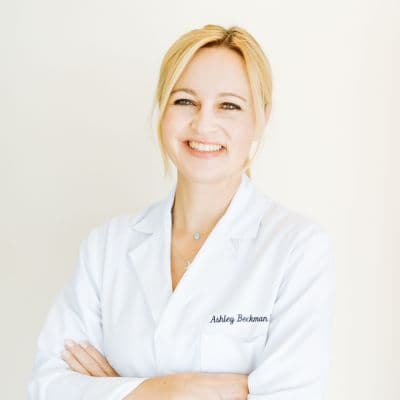
Full Transcript Cholesterol, Heart Disease, and the Plumbing Myth 0:00 We're still stuck in this plumbing model where cholesterol accumulates in this pipe and you have a last cheeseburger and fries, 0:07 you end up with a heart attack and it doesn't happen that way. 0:10 And most people still think that. 0:11 And even the practitioners still think of that. 0:13 They're like, okay, well, just get your cholesterol down as low as possible. 0:16 Well. 0:17 The data doesn't show that. 0:18 And so when you start to look at the data more closely, you realize, okay, cholesterol is not the culprit. 0:25 And it's seen at the sight of a plaque, but it's not the reason why people end up with heart disease. 0:33 And we've got stuck in this model. 0:37 What happened in the 70s is they opened up this cadaver of a heart disease, cadaver artery, and they found two things in there, 0:44 cholesterol and fat. 0:46 Well, guess what happened next? 0:48 Big Pharma jumped on that because they only could jump on the cholesterol, but cholesterol and fat, lower that in your diet, 0:54 and you got rid of everything that had to do with cholesterol and fat. 0:58 What if aging isn't about slowing down, but leveling up? 1:01 I'm Dr. 1:02 Izzy Jones. 1:02 This is the Longevity Leaders podcast. 1:05 Hi, I'm Dr. 1:06 Ashley Beckman here with the Longevity Leaders podcast. 1:09 And today I have Diamond with us. 1:12 And I'm really excited about this topic because you're dealing with all aspects of the heart and cardio care. 1:19 Yeah, it's been really fun. 1:22 I've been having my own clinic since 2007 and been in the space since 1999. So it's been a fun process. 1:31 Understanding what it takes to truly prevent and reverse heart disease has taken me a long time because it's not the same thing as what we get done in 1:40 conventional health care. 1:41 Right, and probably a lot of what we're doing is a bit outdated. 1:45 It is. 1:45 Yes. 1:47 So tell me how you got interested in this. 1:49 Well, I got into the field of cardiac rehab in 1999. My father, he ended up with another, so he had bypass surgery at 42 years old. 1:59 At 38, he had his first heart attack. 2:02 So he was pretty young. 2:03 And I was going through this and I'm like, okay, at 38 years old, okay, I can pass it. 2:08 And at 42, okay, it's in my head because it's this family history of disease. 2:13 And you don't wanna go down the same path as, you could prevent that stuff. 2:17 And so what happened was he was told that he ended up with another heart attack. 2:21 And I remember him telling that, hey, I got a new heart, so everything's good. 2:26 And it wasn't. 2:28 So he ended up getting referred to cardiac rehab. 2:30 And that's where I got into that field. 2:33 And I worked with a group of cardiologists from 1999 to 2005. And I proposed, hey, look, I'm learning this stuff. 2:41 There's more reasons. 2:43 We're still seeing people come back with recurring problems. 2:46 We're not really doing anything here. 2:48 And so that's where it got me into the field of integrative cardiac health. 2:53 And one of the cardiologists would open up a clinic in Dubai.
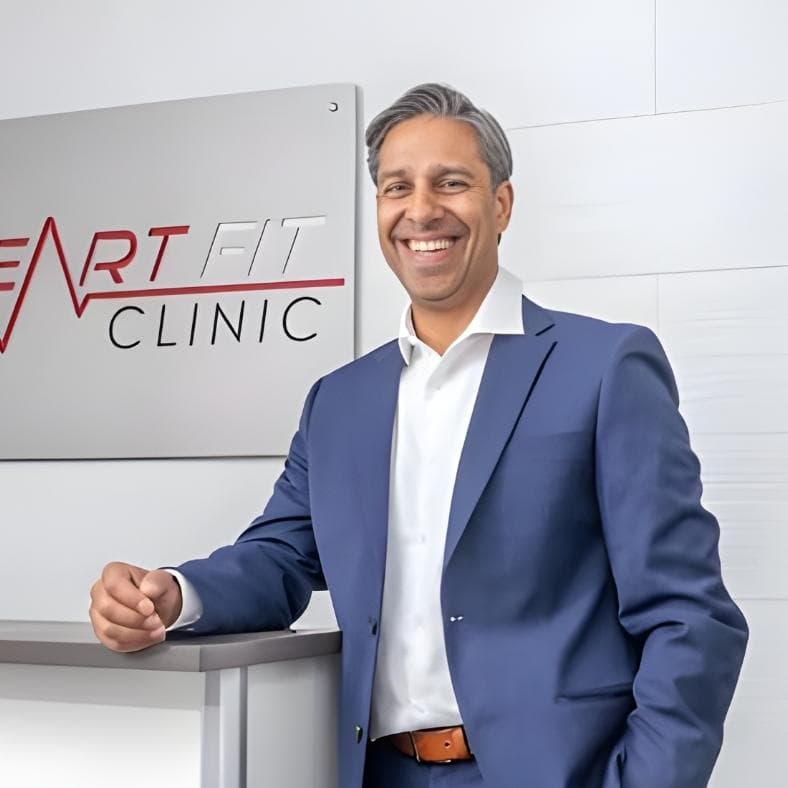
Dr. Diamondu2019s Background and Cardiac Rehab Journey 2:57 So I opened that one up with him and got to learn about integrative cardiac care. 3:04 And I'm like, okay, this is interesting. 3:05 And I came back home to Canada. 3:08 That's where home is for me. 3:09 And I opened up HeartFit Clinic in 2007. And it's been a great journey because it's been a platform for allowing me to to understand what truly puts people 3:21 at risk and how to reverse it becomes more important. 3:24 So we don't see recurring heart events or heart attacks that happen. 3:28 So are your clinics all in Canada? 3:31 Correct. 3:32 OK. 3:33 In a lot of the major cities, or are you spread out? 3:35 We're in Vancouver, Calgary, Edmonton, and Toronto, and then London, Ontario. 3:40 Oh, OK. 3:40 Great. 3:41 So pretty spread out. 3:42 Yeah, pretty spread out. 3:43 Good. 3:44 And so tell me a little bit about the model of care that you provide and how it's different. 3:50 Our clinic's based on three different philosophies. 3:53 So when we look at what gets done at your cardiology level, it's cholesterol doesn't cause heart disease. 4:01 Right. 4:02 And we're still stuck in this plumbing model where cholesterol accumulates in this pipe and you have a last cheeseburger and fries and you end up with 4:10 a heart attack. 4:11 And it doesn't happen that way. 4:12 And most people still think that. 4:14 And even the practitioners still think of that. 4:16 They're like, okay, well, just get your cholesterol down as low as possible. 4:20 So the data doesn't show that. 4:21 And so when you start to look at the data more closely, you realize, okay, cholesterol is not the culprit. 4:28 And it's seen at the sight of a plaque, but it's not the reason why people end up with heart disease. 4:36 And we've got stuck in this model. 4:40 What happened in the 70s is they opened up this cadaver of a heart disease, cadaver artery, and they found two things in there, 4:47 cholesterol and fat. 4:48 Well, guess what happened next? 4:51 Big Pharma jumped on that because they only could jump on the cholesterol, but cholesterol and fat, lower that in your diet and you got rid of everything 4:59 that had to do with cholesterol and fat. 5:00 You know, the whole butter, margarine debate, the whole eggs problem, that everything came from the 80s and 90s. 5:07 And cause that there was a big article that came out and it said, you know, cholesterol is clogging arteries. 5:13 And by the way, we have a solution. 5:15 So if you have high cholesterol here are statins and that's where the birth of statins came into play. 5:20 Now I think there's a place for them and there's a time and place when you can use them. 5:23 But wow, did that ever get over prescribed? 5:26 And so do you run blood, like extensive blood work in your panel? 5:32 We do. 5:33 Yeah, we do extensive blood work that's not covered through our government health care. 5:37 So the first thing when you talk about is cholesterol doesn't cause heart disease. 5:40 Okay, that's number one. 5:41 Number two is if I want to prevent a heart attack, most people think, well, My family doctor's not going to do anything because they're stuck in cholesterol world. 5:50 Well, what about cardiologists? 5:52 Well, hey, I'm going to go see, they're the master of their art. 5:55 They're top of the field. 5:56 And so they're going to help me prevent a heart attack. 5:59 And that's not true either. 6:01 And this is where my next book is coming out in November of this year. 6:05 And it says basically it's death of the stress test. 6:09 Because most people think, well, and the whole, you know, many people use that terminology in stress testing to see, you know, 6:15 what's happening with it. 6:16 Like, I passed a stress test, so I should be good. 6:19 And that's not true. 6:20 You'll miss 90% of heart attacks that way. 6:23 So it's quite, it's not the right tool to use. 6:26 Or what's worse, hey, wait a minute, I failed that stress test. 6:30 I need to do more investigation. 6:32 I need to do more radiation testing and possibly do a heart stent or bypass.
Why Conventional Cardiology Misses Prevention 6:37 And we don't do that anymore either. 6:39 But cardiologists aren't following that data because this is all trials that come from the COURAGE trial in 2005 to even the Schemia trial in 2020. It's 6:49 showing that, but we're still living in an archaic plumbing model. 6:54 And okay, well, where are cardiologists useful is when you're having an emergency problem. 6:59 You know, if I'm having the heart attack, you want to open up that artery as quick as possible. 7:04 If you're having a valve problem or some structural abnormality, you want the heart surgeon to be able to take care of that. 7:11 And if you're having an electrical problem, you know, that's where, hey, it's an emergency. 7:15 I need to be shocked or ablated or a pacemaker. 7:18 So when we talk about heart disease, If you're trying to prevent that, that's not where you go. 7:23 You don't go to the cardiologist. 7:25 And so where do you go? 7:26 And that's where the HeartFit Clinic comes into play. 7:28 And that's where I've built this model where we can help people understand where their risk is and more importantly, reverse it by understanding because 7:38 arteries are not a pipe, they're a muscle. 7:40 You can feel them. 7:41 Expand and contract in different spots in the body. 7:44 It expands and contracts. 7:46 There's a lot of biology that happens to the artery wall. 7:49 And if you're trying to prevent or reverse heart disease, it is so important to look at that biology. 7:54 So what have been some of the most impactful things that you implement in your clinics, do you think, with the clients? 8:02 If you can share them. 8:02 I know that it's probably highly personal and customized. 8:06 It is. 8:07 The idea is to personalize each person when you come into the clinic. 8:10 And so yes, there's extensive testing that we do and blood work that we do and all that is very extensive. 8:19 And then based on that, it gives us a whole bunch of metrics on that person. 8:22 So we know, okay, what happens now. 8:25 If someone's trying to prevent a heart attack, it's a lot easier than someone who's trying to reverse it. 8:30 Because now if they're reversing it, they already have a problem. 8:32 So now we're trying to unpeel the onion to find out what's going on with them. 8:37 And that's what integrative and functional medicine is about, is that unpeeling that onion to find out why. 8:43 And it's no different, but you're trying to get more specific to why the arteries are a problem. 8:49 why I'm having atrial fibrillation or why I have some structural heart failure or whatever it might be. 8:55 So it's getting an unpeeling that onion as to why, but then our treatment modalities we use obviously is cardiac rehab programs and external counter pulsations. 9:04 One of our treatment options that where we grow new arteries, improve that artery health and artery function. 9:09 So we get to any, you, your body can grow new arteries and most people are like, well, what does that mean? 9:15 Well, Inside the artery wall, it's got this lining of skin. 9:19 And when that skin gets damaged, well, we want to repair it. 9:22 So if we can strengthen that skin, shrink plaques, like shrink the consistency of a plaque, grow new vessels around problems that are there. 9:31 Just like if you're stuck in traffic. 9:33 Right. 9:33 You know, you want to find a different, yeah, you got another way to go or a river was narrowing. 9:38 Like you can find different, you know, avenues for that river streams or whatever to go around that level. 9:45 And your body does the same thing. 9:47 So we provide your body and environment to heal itself. 9:51 And it can do that. 9:53 So what does it look like to come to your clinic? 9:57 I mean, I'm sure the severity depends on what's going on with you, right? 10:02 But what's kind of a typical client who maybe has had some not stellar heart results, not a heart attack yet, but is looking to prevent? 10:12 If you're a medical doctor, nurse practitioner, chiropractor, or other health expert that's stuck in a broken system, there's a better way. 10:20 The Freedom Webinar shows you a proven five-step system to build a seven-figure virtual health practice or how to modernize your current brick and mortar 10:32 practice without the burnout. 10:34 Learn to create high ticket programs, automated income, residual revenue, and attract clients ready to work with you. 10:42 Book your million dollar strategy session today by clicking the link in the description. 10:53 Well, we look at what's been done right now. 10:56 And I feel, you know, calcium scoring and CT angiograms are the way to go to understand where risk is. 11:04 And I don't agree with that. 11:05 OK, that's it. 11:06 And that sounds contradictory to a lot of things that are out there. 11:10 And stress tests, same idea. 11:12 And that's where I talk about it in the book is like, look, these modalities are great to look for advanced problems. 11:19 Right. 11:20 Yeah, we're looking at the 90 block Yeah, you know if you have the plumbing problem, right, but you you know, uh A plaque builds up like a pimple on our face, 11:29 but inside the lining of an artery wall You ever have that pimple pop on your face and you know pusses and anyway Not to get gross, 11:36 but that's what happens. 11:38 And so inside the artery wall if that pimple pops there's a heart attack and so that pimple will rupture or or block, most of the time it will never happen 11:50 with a blockage. 11:50 It'll happen less over the blockage that's less than 50%. Oh, okay. 11:56 On a carotid, is that what you're saying about? 11:57 On a coronary artery, any artery, right? 11:59 So when you look at these arteries, we want to look at the risk of a plaque rupture. 12:05 And this is where we get it all wrong, like doing stress testing and CT angiograms and calcium scoring, because calcium scoring shows a high calcium score. 12:14 I've seen people with a calcium score, gosh, under 50 and have had a heart attack. 12:18 Oh, wow. 12:19 And then there are people in the thousands, high thousands that have never had a heart attack.
Plaque Rupture, Inflammation, and Hidden Risk 12:24 We mentioned one. 12:25 And so, yeah, and so we talked about that and it's like, okay, well, how does someone in the thousands not have a heart attack and someone under 500 have, 12:33 or under 50, sorry, have a heart attack? 12:35 Yeah. 12:36 It's because there's, think of it like the pimple again, there is different consistencies of that pimple. 12:42 And calcification is more of a healed pimple. 12:45 It's showing the healed version of it. 12:47 So it doesn't show the vulnerability of a plaque rupture. 12:50 Interesting. 12:53 So the other thing, so in my line, I work with a lot of clients with Lyme and Strep and things like that. 13:00 So some of those play a role in heart attacks, right? 13:03 I've had clients who've had multiple heart attacks in their 30s, right, from these infections. 13:10 Do you see this much in what you're working with? 13:14 So I'll explain the artery in three simple steps. 13:18 And we've already talked about these arteries are a muscle. 13:21 They're not a pipe. 13:22 And most people think of them like a pipe and smart doctors are still talking about it like a pipe and it's not that. 13:28 So inside the artery wall, it's all skin, just like the skin on our face. 13:32 So something has to damage it. 13:34 That's number one. 13:35 Something has to sliver through. 13:38 So that's usually cholesterol particles and that type of thing. 13:40 There's different types of cholesterol particles that you wanna look at. 13:43 And then number three, it gets infected. 13:45 You remember a sliver in your hand and goes in and you're not able to poke it out with tweezers, it gets infected. 13:50 And that infection response is very high in people that have autoimmune problems. 13:57 And that infection response also shows the risk of a plaque rupture very high. 14:01 So this is why we're starting to see a lot of autoimmune conditions having heart attacks. 14:07 And a lot of people that have viral infections or whatever might be, they end up with heart attacks a lot earlier than they ever should because of a plaque rupture. 14:16 Interesting. 14:16 OK. 14:16 So hopefully that answers your question. 14:18 Yeah, I wanted to ask just because we're seeing it more and more, right, with people with complex cases. 14:22 Of course. 14:22 I mean, we're seeing younger people. 14:23 And then they're in their 30s. 14:25 I have one of my clients who's already had three heart attacks, and he's under 40. I mean, it's interesting, from a medical perspective. 14:36 But I know that there are answers, and that's why we need new information to really help. 14:42 I think it's just moving away from the conventional model, because that is shifting. 14:48 And it takes a couple generations to do that, because in the cardiology community, it's like, hey, I have mentors that are now retiring. 14:58 And now there's a new group in there, like, OK, well, that's how I was mentored. 15:02 And I'm going to mentor you the same way, until it gets to a point where you've got to be curious. 15:06 You've got to be like, OK, well, why am I seeing this? 15:10 To prevent heart disease, the last person you want to go to is a cardiologist. 15:15 And that sounds funny, but if you're having that emergency, this is where cardiology is your best friend, right? 15:23 That's what they're trained to do. 15:24 That's what they do very well. 15:25 And they love you, but they're trained to deal with the emergency. 15:29 If you're trying to prevent it, yeah, the cardiologist is not the place to go to. 15:34 Well, that makes it very tricky as a practitioner because people are so afraid not to go on statins, right? 15:40 That they're very afraid to get heart attacks or just have massive cardiovascular events. 15:49 And I mean, this is where you have to critique that side of things, but this is where you have to very individualize it. 15:56 Because if you look at the pros and cons of being on a statin, so the number needed to treat on a statin for someone who's never had a heart attack is 16:03 well over 100. Well, that puts me at less than 1% benefit. 16:07 There is benefit still. 16:09 So let's not ignore that. 16:11 But what really that tells me is it goes beyond cholesterol. 16:15 That's what really that number tells me. 16:17 It's like, okay, if there's a less than 1% chance of me having benefit from being on a statin and I've never had a heart attack, 16:24 Then why am I taking this? 16:26 Well, because it goes beyond cholesterol. 16:28 And we already talked about that. 16:30 But then if I've had a heart attack, we know there is better benefit. 16:35 There's about three times more benefit, but you're sitting at around 3%. Yeah. 16:40 Not really. 16:40 Now, there's these PSA-K9 inhibitors that have been around for about a decade, and they can lower cholesterol and wipe it off as a risk factor to heart disease. 16:48 But guess what? 16:49 We're still seeing heart attacks. 16:51 Right. 16:51 So again, that shows us it goes beyond cholesterol. 16:55 And this is where I feel that it's important to be able to go beyond that marker.
Personalized Testing and Integrative Treatment 17:02 And our conventional healthcare system doesn't do that. 17:05 And again, whether you're trying to prevent a heart attack being your first one or even your second one. 17:11 Right. 17:11 Because most people see, well, I'm seeing my cardiologist regularly every year and they're doing the stress tests and echo and ECG and they told me I'm fine. 17:19 Well, gosh, what a waste of time that is. 17:21 Right. 17:22 Because that's not going to prevent that heart attack. 17:24 It just shows you're not having an advanced problem again. 17:27 And so we've got it all wrong and insurance is covering the wrong problem. 17:31 And we're stuck in this model where people are like, well, what do you mean? 17:35 I just saw my cardiologist like three months ago. 17:37 It just happened to me yesterday or before I came here. 17:41 But it was like, I saw my cardiologist three months ago. 17:44 They told me I was good and I ended up with another heart attack. 17:48 Why is that? 17:48 Because you don't get into understanding the biology. 17:51 You don't get into understanding markers that are showing you advance and things that can keep track of your disease progress in the right way. 17:58 Again, going beyond stress tests. 18:01 And then the third part of our clinic, going through that side of things, is that heart stents and bypass surgeries, they're not cures. 18:08 Right. 18:09 People think, OK, well, I got new arteries. 18:13 My father went through this. 18:15 They barely last. 18:15 So how long a heart stem lasts, how long a bypass surgery lasts, it's vital if you're having that heart event. 18:24 But to prevent it, my goodness, people think they're all cured, and it's not the truth. 18:29 Why? 18:30 Because it comes back to the basics. 18:33 Arteries are a muscle. 18:33 They're not a pipe. 18:35 So then what are a few of the things you have your clients work on then? 18:39 Obviously lifestyle becomes very important and I think it's important that you know Obviously exercise is important. 18:47 Good sleep is important eating the right foods for you addressing your imbalances in your body right from a nutrition to micronutrients that everything 18:56 all that stuff is vital the sugar but sugar like I mean we've moved away from cholesterol and fat, I think it's starting to shift now. 19:08 Finally. 19:09 Yeah, but it's taken us like 20, more than that, sorry, 50 years. 19:13 It's the sugar. 19:14 It's a big impact. 19:15 And it's like, okay, well, we've seen now more insulin resistance and diabetes than ever because, hey, just keep having your carbs and your sugar and you're okay, 19:25 but just stay away from eggs and butter and that's the wrong thing to say to somebody. 19:30 It's about balancing it, right? 19:32 And changing the mindset as to where people are at. 19:34 And then of course addressing where their markers are off, right? 19:37 And so again, going beyond cholesterol and beyond stress tasks and thinking that you've had a heart stent or bypass, you think you're okay. 19:45 Right. 19:45 That's what happens. 19:46 A lot of people feel, right? 19:47 They've been cleaned out. 19:49 Now they can still eat their cheeseburgers and milkshakes because they're all because I'm clogged or, you know, they put in something and I unclogged my arteries. 19:59 Again, I can't stress this enough. 20:00 These arteries are muscle. 20:01 They're not a pipe. 20:02 And people think that I've unclogged my arteries or I bypass them. 20:05 So I'm good to go. 20:07 If that's the case, then why do we see people back in the hospital with the same problem? 20:11 Right. 20:12 Right. 20:12 And then to keep track of that, your cardiologist is not the person that you want to go to. 20:18 And that's that sounds funny, but it's just the way it is. 20:21 Do you have plans to open up in the States? 20:24 I do. 20:24 Okay. 20:24 Yeah, I do. 20:25 And obviously my books are available to everybody. 20:28 And, you know, it's it's really we're trying to operate into a virtual arena to be able to help people that can't be helped, 20:36 that are close to our cities and stuff like that, because that happens often.
Lifestyle, Emotional Health, and HeartFit Resources 20:39 Like even in Canada, we're very vast. 20:42 And we get a lot of virtual care already. 20:44 And so people might fly into one of our clinics, get tested, and then we virtually take care of them afterwards. 20:49 And so there's a little bit of combination, yeah. 20:52 Of a hybrid. 20:53 Absolutely, yeah. 20:54 And so if someone was just starting out to dive into this information, which of your books is best to start with? 21:02 Well, my first book is Beating Heart Disease. 21:05 That's available for sure. 21:07 But the new book, Death of the Stress Tests, is excited to launch that one there. 21:12 In November? 21:12 Yeah. 21:13 Right? 21:13 Yeah. 21:14 So even if someone was new to this, would you start with your new book? 21:17 Absolutely. 21:18 Yeah. 21:19 Absolutely. 21:20 And where can everybody find you? 21:23 Heartfit.ca. 21:24 OK, perfect. 21:26 And all the social that way too, but heartfit.ca is the main website. 21:30 This is great. 21:31 It's extremely helpful. 21:32 The amount of people, either our parents have heart disease, some of us are in our generation are on the way, even with healthy lifestyles, 21:42 right? 21:42 But these are new things that we're looking at in a different way. 21:45 And again, I just find it fascinating. 21:50 Do you guys deal with the emotional side of the heart? 21:53 It's so important, especially like how many people we've seen that have. 21:57 Afib or electrical problems or palpitations, you know, you go see a cardiologist. 22:02 I mean, everyone can do an ECG on their phone now. 22:04 Right. 22:04 And so it's about understanding the connection between the brain and the heart. 22:08 And so when you talk about that sleep, emotions, they play a difference in how you control the autonomic nervous system. 22:14 So that becomes very important for sure. 22:17 So in Chinese medicine, because that's part of my background, we have something called the shen. 22:21 Absolutely. 22:21 And that's your heart and mind as one. 22:23 Of course. 22:23 Right? 22:24 Yeah. 22:25 I would say if you're dealing with the heart, you have to know about the shen. 22:27 Of course. 22:28 Yes. 22:29 And then the same, when you're dealing with these physical manifestations of the heart, we have to look at the emotional side or heartbreak or things like that. 22:38 The heart's a love muscle. 22:39 Yes. 22:40 And the reason why that's called that is because it wants to connect, it wants to be loved, it wants to give love. 22:46 And so when you have those blocks, that's where the emotional side of things comes into play quite a bit. 22:51 So people go through things like life is life. 22:55 Right. 22:55 And so we always go through that. 22:56 And this is where you have to be able to control that side of things, control your autonomic nervous system. 23:02 And that's why meditation is so powerful. 23:05 You said that 20 years ago, people would like kind of whatever, but now it's getting, okay, well, I can say that. 23:10 Like there's metrics that we can look at this stuff and be able to see that aspect of things. 23:15 So that's very important. 23:16 It is. 23:17 I can do a whole power talking about that, but that's so important. 23:21 It is, yeah. 23:22 In my first book, I talk about mindset and I talk about that aspect of it and relationships. 23:27 And so, you get into that side of things because the heart is a love muscle. 23:32 Yes. 23:33 Well, that's a perfect place to end on, I believe. 23:36 So thank you so much for joining us. 23:38 Thank you. 23:38 And I look forward to reading the book and hearing more. 23:41 Excellent. 23:41 Especially as you expand in the States. 23:43 Yes. 23:44 Thank you very much. 23:46 Thanks for listening to the Longevity Leaders podcast. 23:48 A Longevity Leaders community is on mission to transform 100 million lives by 2040. If you enjoyed the show, please share this with somebody that you know, 23:57 especially another doctor or physician, but also click that follow button. 24:02 Until next time, stay strong and live long.
Comments