Full Transcript Intro on Cholesterol, Fat, and Eggs 0:00 Your brain has about 25 % of all the cholesterol, 30 % in your body. Every single cell in your 0:05 body is made of cholesterol. It's called a phospholipid membrane, right? Our cell walls are made of 0:10 cholesterol. All our nerves are insulated with cholesterol. The cover of the wiring is cholesterol. 0:17 So cholesterol's really important for digestion. That's what the bile does in your body and 0:22 your gallbladder. Fat is really necessary in your body. It's an insulator, it's a high source 0:27 of energy. It's not the enemy. I think you guys may have heard of RFK and the FDA. They're 0:33 going to come out with some new dietary guidelines. They're going to actually increase saturated 0:38 fat in the diet. And for years, we've heard that eggs were bad for you or the culprit. 0:43 Eggs are one of the best foods you could eat. The inside of the egg has a lot of omega-3 0:48 fatty acids, most of the vitamins that you need. And of course, the white part of the egg, the 0:52 clear, is albumin, which is one of the main proteins in your blood. I understand. Welcome 0:58 to the Holistic Truth Podcast. I'm Jamie Dorley, CEO of Nutritional Frontiers. And I'm Christine 1:04 Genovese, creator of the Soul Intelligence Method. We're here to help you break through chronic 1:09 disease and dysfunction physically, mentally, emotionally, and energetically. With real 1:14 proven strategies, protocols, and tools you can use in your practice today. Hello, everyone, 1:20 and welcome back. We're live at the Holistic Truth, your favorite podcast. And I am your 1:27 host today, Jamie Dorley. I am CEO and owner of Nutritional Frontiers, where we're breaking 1:33 through nutritional boundaries. And I have my co-host, the lovely and talented, our chief
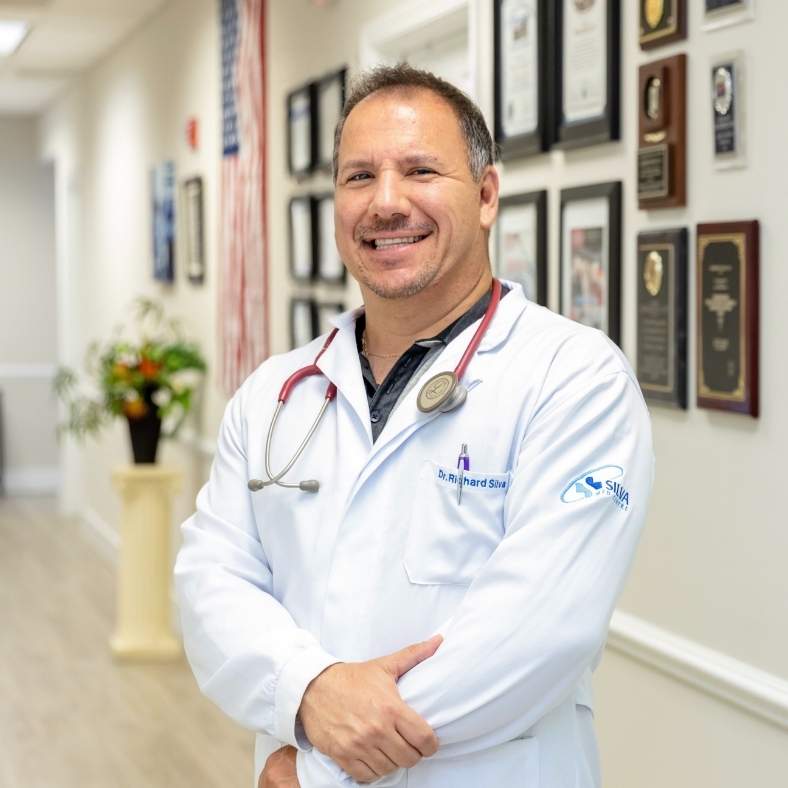
Podcast Welcome and Guest Introduction 1:39 growth officer at Nutritional Frontiers, the creator of the Soul Intelligence Program, and 1:45 award-winning author, healing through the Soul Intelligence Method. And just back from a 1:51 recent Soul in the City book tour, in our hometown of New York City. So welcome back, Christine 1:58 Genovese. Thank you so much, James. It's great to be back and love getting back in the swing 2:04 of things with Nutritional Frontiers. And oh my gosh, every time I feel like I say this 2:09 every time, but I am so excited about our next guest. He is an incredible practitioner, a 2:15 brand ambassador for us and someone I personally adore. Yeah. And you know, it's great because 2:21 we have so many incredible people on our team. When I met Dr. Silva, you know, years ago, 2:26 I loved telling the story because he had uh visions of grandeur. His dreams were just incredible. 2:32 And, you know, he was in his little office on the second floor and he painted a picture of 2:37 what the future of medicine was about. And more importantly, what his future is about. And 2:43 here we are now over 10 years later and all his dreams have come true. And now you know 2:48 what happens? He's got bigger dreams. So we got two New Yorkers sandwiched in here with 2:53 a New Jersey guy that went to medical school in New York. He runs an incredible clinic down 3:00 here in Deerfield Beach, right outside of Boca in Florida with his lovely wife, Patricia 3:06 and his brother. So it's a total family, his sister-in-law, Lillian. mean, they got such 3:12 an incredible team down there and he's one of the most sought after speakers because of his 3:17 journey from allopathic medicine. to functional medicine and not only talks to talk, because 3:23 he likes to talk, but he also walks the walk. He's in incredible shape and I think he's probably 3:29 in the best shape of his life. So let's give a nice warm welcome to Dr. Richard Silver. 3:34 How we doing, doc? Hey, good morning guys. Thank you. It's really great when I think that we've 3:41 known each other for about 10 years already, how time flies, right? And I might have more. 3:48 experience, but less hair. we'll work on that too. We're so much in common. enough from 3:53 both of yous. Okay. We're good. I work in, as you mentioned, I work in, uh, Deerfield 4:00 beach, which is near Boca and Fort Lauderdale, uh, Florida on East coast. And I've been there 4:05 about 18 years in that area. And I did my residency in Miami and Fort Lauderdale way back in 96. 4:13 And I became an osteopathic physician. I'm a DO trained in New York. And then I moved down 4:18 here for the weather and the sports. And what I realized was I wasn't as healthy as I thought 4:25 I was. And I needed some help. So a lot of times the treatments that I were, that I was 4:33 doing even on myself, like for cholesterol and different things, weren't working properly 4:39 and the patients were still having problems. So we, we made some adjustments and that's 4:44 when I met Jamie. I was just learning about. vitamin D3 and K2 and different products, 4:50 looking into different companies to help us with our patients. And even myself, I was the 4:55 first client, you know, learning about hormone replacement in myself in my late thirties 5:01 and playing soccer and not having energy and kind of gaining some weight around the midsection, 5:06 things that I was not accustomed to in my life. I was always an athlete and I met Jamie and 5:13 his crew right around there. And right when I started private practice, I was a hospitalist 5:19 for a while. I worked in the hospitals and then I went into private practice to do prevention. 5:23 And that's when Jamie and I talked and I told him what my vision was to concentrate more 5:29 as an outpatient doctor in prevention and doing treatments and modalities that actually make
Dr. Silva's Practice and Functional Medicine Journey 5:35 a difference in people's lives. We say we do family medicine, so I want to help families. 5:40 And of course, you know, use my faith as well. and kind of align myself with health and not 5:48 disease. And we can talk about, you know, later the definition of disease and what that means 5:54 and how you guys can avoid that and be healthy. And I think Nutritional Frontiers is a company 6:00 that can help both the providers that are listening, know, doctors that want to make their practice 6:04 healthier. You can incorporate that into your existing practice like I did. And also clients, 6:10 you know, we call them patients in my office, but they're really clients. that just want 6:14 to do better. They want to have more energy. They want to have better weekends. They want 6:17 to work more. They want to have good vacations. They don't want to ache. They want to have 6:21 good clear thinking. They want to have a good weight. And so now we have the tools for that. 6:26 Thanks to Jamie and Christine, we have a great company that we can use that you can confide 6:32 in. They're also a family business. And I went there, I've been there to their headquarters 6:36 in Pittsburgh. Super beautiful place. We had a football game and a barbecue and installed 6:42 the facilities, but just an excellent organization overall, excellent people. And, that's the 6:48 kind of people you want to surround yourself when you want success. can tell you that they 6:52 were definitely integral part in my success in my career. Yeah. It's interesting doc, cause 6:58 some of the, said, Christina at his recent speaking event or professional training event in Pittsburgh, 7:03 and you were dynamite as always, you know, the last few times I saw him speak. Something hit 7:09 home was that, know, cortisol, our stress hormone, right, is tied into so many things, blood sugar, 7:16 blood pressure, cholesterol, cardiovascular disease, cardiac events. But, you know, he 7:21 had mentioned cortisol is really this fat storage hormone and you had shared your personal success 7:27 and he looks fantastic. You know, I struggled probably around the same time as you did with, 7:33 you know, blood sugar, weight, blood pressure, all these things. I think the big factor was 7:38 cortisol. So I know Christine's expertise is in managing these types of things. And it 7:45 was just interesting that the connection with cortisol, cause we live in this stressed out, 7:49 noisy, crazy, chaotic world right now. And it even gets the best of healthcare professionals 7:55 and people like ourselves that are practicing this. So can only imagine how the quote unquote 8:01 normal person out there who's not in this is affected by. and stress and Christine's program 8:07 really helps with that a lot too. Yeah. on your book, Christine. Thanks so much. I know it's 8:15 been pretty wild ride. Awesome. You know, obviously soul intelligence is one of the things that 8:20 I can do to help get to the underlying emotional root cause of what's going on. And, you know, 8:26 as we all know, everybody is pretty stressed. Everything that they do these days and a lot 8:32 of things in our environment stress us out, you know, what we listen to. who we surround 8:37 ourselves with, all those kinds of things that we can control from a lifestyle perspective. 8:41 But what are some of the things that you work with patients on when they come in and they 8:46 are completely stressed out, you know, their body is inflamed. What are some of the first 8:53 things that you do? Well, I use something that I learned in medical school. One of my teachers 8:59 in medical school, you know, it's one of those things that sticks in your brain and you kind 9:02 of don't use it. And then later on in your career, it's just like, BAM! It was like, oh my God, 9:07 that's been there the whole time. So my teacher in medical school, way, way, way back, we're 9:12 talking 30 something years ago, told me that stress, because you know, New York is pretty 9:17 stressful, know, crossing the George Washington Bridge and tolls and traffic, trying to get 9:22 to the hospital at six in the morning, then you get there, there's no parking. Oh my God, 9:26 there's so many obstacles in New York, right? A beautiful Sounds like our trip a couple of 9:30 weeks ago. I was just there. feel you buddy. Makes you tough, right? The horns alone just, 9:37 whoa. 30 years ago, I was already paying like $720 a month in tolls, just in tolls. That's 9:46 like a rent from the apartment back then, right? Not in New York. But anyway, my teacher told 9:52 me that stress is not what happens to you. It's your reaction to what happens to you. And I 9:57 never thought about it. said it. I'm like, yeah, yeah, yeah. Right. was just a, you know, a 10:01 line in one of the lectures, whatever. But what I realized is that's a very powerful statement 10:06 because that means you have power over your stress. So you are not doomed with stress. 10:11 So stress, and I think this ties in to what you do, Christine, stress is not what happens
Stress, Cortisol, and the Root of Disease 10:17 to you. It's your reaction or your body's reaction to what happens to you. And there's three reactions, 10:22 right? There's a physical reaction. There's a mental reaction, a soul. And there's a spiritual 10:27 reaction, right? And those happen in different timelines at different times. So for example, 10:33 by you managing your reaction to the stress, then you could actually ameliorate or downgrade 10:42 the cortisol reaction and the stress in your body by having some tools, right? And some 10:47 of those things are sleep, exercise. You know, being in a good relationship, even if it's 10:54 friendly related, it doesn't have to, it could be plutonic relationship, faith, meditation, 11:00 prayer. These are all things, sunlight in the morning. These are all free, easy things that 11:05 you can do to lower your cortisol. Mine was six. Doctors have horrible cortisol. You know, 11:11 you go to medical school, they're immunodepressed. They have horrible cortisol. And like Jamie 11:16 said, cortisol kills everything. Kills your thyroid hormone, kills your insulin. kills 11:21 your vitamin D, kills your testosterone. So you're basically dead in the water. Imagine 11:27 you're in the water and you have nothing, no oars, no rowing, no motor, no sails, you're 11:33 dead. You're out. You're out. You know what mean? So cortisol is definitely the number 11:38 one killer. Heart disease is the number one killer in the United States, probably in whole 11:41 world. But I think the metabolic syndrome, what Jamie was hinting towards, blood sugar 11:48 and all those cholesterol, hypertension. which we call metabolic, it's really one disease, 11:53 inflammation, that's the number one killer. And the number one cause of all these things, 11:58 like we see, know, diabetes rates going sky high in the United States is stress. Yes, 12:05 it has to do with food and sedentary lifestyle and things like that, but stress is the number 12:10 one thing. So I feel like after COVID, we got all stressed out and, know, we got all depressed 12:15 and locked up and, you know, we couldn't play soccer, couldn't go to the beach and we couldn't 12:20 see each other. And we couldn't work. And I think it made things a lot worse. So now that 12:25 we're, finally coming out of the shell, I feel like it's Groundhog's day all over again. 12:29 And we got to reconnect with each other and talk about these things like we're doing today 12:35 and really get out into the outside, into the sun and recuperate from all this crazy stress 12:41 that we've had in the last, let's say four years, especially. Yeah. It's been overwhelming for 12:47 so many people, right? And I think when you start to give up on some of those healthy lifestyle 12:53 things, like you said, relationships, you know, we're a faith-based family-owned mission-driven 12:58 Pittsburgh based company. And our mission is simple, make the world healthy one person at 13:03 a time. Right. So we got to lead by example. And I love what you said, cause we were at 13:08 a retreat recently with Christine and some of our clients with Dr. Joe Dispenza. And he 13:14 showed all of the science with a PhD. showing all the research on how your response or your 13:22 reaction to the same exact stressor can change biochemically in the body. way the genes express 13:29 themselves was to me, it was fascinating and you know, to practice it, right? And it's like 13:37 working out, right? You got to keep doing it. You get better, you get better. People think 13:42 some people are positive and others aren't, but I think it's something you got to continually 13:46 be committed to. consistent and have the discipline of doing it daily because it has profound effects 13:54 on someone's health. And I really want to dive into some of these things that people get jammed 13:59 up with, right? know, Christine came on our team and she had been going to the traditional 14:04 allopathic type of approach. So maybe you can share your story, Christine, because heart 14:09 is presented with hypertension. Mine presented with blood sugar, right? To where my body shut 14:15 down insulin production. Not a fun place to be, but you know, we both chose a different 14:21 path. So maybe Christine, if you don't mind, I've kind of opened up the door for you. let's 14:28 hear your story. And want to talk again, talk about some of these markers because people 14:33 still jammed up with cholesterol or blood pressure. So Christine share your story. Cause I love 14:38 this. It's fantastic. And it's, one of the ways that we make the world healthy. Right. It was 14:43 a simple. conversation with her and the Godfather, Joe Messina, and it hit a nerve with her. 14:51 So I'd love to hear it again. Sure. Well, when I first started at Nutritional Frontiers, I 14:58 was on low sartan, right? About 25 milligrams of low sartan to manage blood pressure. And 15:04 once they put you on a drug, they want you to stay on the drug. So I didn't think anything 15:09 of it. I was like, okay, it's just something I do every day. And you know, when Joe Messina, 15:14 the godfather of at Nutritional Frontiers, found out about it. He like shamed me. He's like, 15:21 don't you know you don't have to take that? I was like, what are you talking about? And 15:25 so he suggested that I try something called seven flowers, which is, you know, those ancient 15:32 wonderful blue flower herbs that's been around, you know, I think since Chinese medicine days, 15:38 like several thousand years. that I take those. also take our product called CircuCore to 15:44 help with circulation and then our Enter CoQ10, which is DMG and CoQ10 together. And my blood 15:50 pressure stabilized. It was better than it had ever been, even using the medication. So 15:57 now I don't take anything. I use supplements just to manage blood pressure amongst my health 16:04 in general. And she forgot one key point doc. She works with me and you now. So that's Everyone's 16:12 telling you. Okay. All right. So let's hear you from a clinical point of view doc. pressure 16:19 is hypertension. high blood pressure, I high cholesterol. Can you bring some truth to these, 16:26 you know, markers? Cause people think they have this disease and then they will think it's 16:31 a medication. So what's your approach and what's your thoughts on that? So cholesterol is actually 16:36 good for you. Your brain has about 25 % of all the cholesterol, 30 % in your body. Every single 16:42 cell in your body is made of cholesterol. It's called a phospholipid membrane, right? Our 16:47 cell walls are made of cholesterol. All our nerves are insulated with cholesterol. The
Christine's Blood Pressure Story 16:53 cover of the wiring is cholesterol. So cholesterol is really important for digestion. That's what 16:59 the bile does in your body and your gallbladder. Fat is really necessary in your body. It's 17:05 an insulator. It's a high source of energy. It's not the enemy. I think you guys may have 17:10 heard of RFK, you know, and the FDA, they're going to come out with some new dietary guidelines. 17:16 They're going to actually increase saturated fat in the diet. And for years, we've heard 17:20 that eggs were bad for you or the culprit. Eggs are one of the best foods you could eat. The 17:26 inside of the egg. has a lot of omega-3 fatty acids, most of the vitamins that you need. 17:32 And of course the white part of the egg, the clear is albumin, which is one of the main 17:36 proteins in your blood. So I don't understand. wait a minute. You just say, on. Cholesterol 17:42 is actually good for you. Yes. Did I hear that? Yes. So we've got to get away from good and 17:48 bad. There's no such thing as bad cholesterol or good cholesterol, just bad ratios and bad 17:53 forms. Like if you have oxidized cholesterol from eating too much sugar, right? So getting 17:57 bad back to the hypertension thing, which is what it's called hypertension, which means 18:03 your arteries are squeezing down. They've done studies like on hash browns from McDonald's 18:10 and people ate the hash browns and they measured their arteries and their arteries clamped down 18:15 after eating the hash browns, which is these bad oils and some of these bad carbs. So we 18:22 really have to look at what we're putting into our body, our fuel and to know that cholesterol 18:28 is actually a good thing. And there's really no such thing as bad cholesterol. Maybe there's 18:33 a bad form like oxidized cholesterol, right? And like Jamie said, we need to start using 18:38 other markers, like for example, high sensitivity CRP or cardio CRP, they call it sometimes to 18:46 measure inflammation in the body and maybe a higher level cholesterol test to check the 18:51 ratios. Like for example, an easy one to remember is your triglyceride, HDL, is the good cholesterol, 18:59 which we're getting rid of that term, but the HDL, the high density cholesterol should be 19:04 in about two to one ratio. So two times the triglycerides over your HDL or even one to 19:11 one, ideally, you know, so whatever your HDL is, let's say 50, your triglycerides should 19:17 be 50. And most people it's not. In fact, the normal value for triglycerides is 150. We use 19:24 a hundred in my office. We're a little prick, but Especially in diabetic. So doc, let me 19:28 just clarify that because a lot of people listening aren't familiar with some of these terms. So 19:34 you want triglycerides over HDL. So whatever your HDL is, triglycerides cannot be more than
Rethinking Cholesterol, Blood Sugar, and Inflammation 19:40 double. That's right. So for example, a good HDL is 50. So then your triglycerides should 19:46 be 100 or less. So those are really good early markers. Blood sugar, by the way, is not a 19:53 good early marker. It takes about 10 to 20 years for your blood sugar to be abnormal. So if 19:59 you're sitting in a doctor's office and your blood sugar is 140, 160, 180, 200, you've had 20:05 that for at least 10 years. So not a very good marker. Hemoglobin A1C, again, good to use, 20:11 but not early markers. Don't really tell you what's going on right away. And you can miss 20:16 a lot of people. And I think that's one of the problems in our country. our markers are not 20:21 accurate for acute disease. And we in our office, we use pre-diabetes, which, you know, is just 20:27 a term to get people in the groove. Really, there's no such thing as pre-diabetes. It's 20:31 all a spectrum of disease, but we get people diagnosed. And pre-diabetes in my office usually 20:37 means you have a high triglycerides, low HDL, and usually you have low magnesium and vitamin 20:44 D3. Those are very good markers. When your vitamin D3 is low, That's a sign of inflammation. And 20:50 of course we can measure cortisol various ways and various times of the day. It's a little 20:54 more tricky to interpret the cortisol results. if you have. vitamin D is one of these, one 21:00 of these variables that's very tricky because it's the range is so big, 30 to a hundred. 21:05 I tell people it's like a test in high school or college. You want to close it or a hundred. 21:10 What number do you like with vitamin D three levels? I start at 80 and I go all the way 21:16 up to 125. So, you know, somewhere between 80 to 100 for a regular person. If you have cancer 21:23 or diabetes, you need a higher dose. That's another thing. We're finding people in their 21:27 30s getting cancer now, which is unusual. I didn't get trained in that in New York, you 21:31 know, for us, cancer happened in your 60s, know, late 50s, early 60s, and which I'm 21:38 getting to now. And now we're, we're diagnosing cancer in 28 year olds and 30 year olds with 21:43 colon cancer. So really the inflammation now has gotten so out of control. that we're starting 21:48 to see cancer develop in young people, which is unheard of, you know? So really alarming 21:53 things going on, I think. So have a below 80 vitamin D3 level, what do you recommend with 21:59 them? Because there's plenty of vitamin D supplements, but I really love the research you presented 22:05 about the importance of K2 and some of the other cofactors. Yes, what I tell the patients is 22:11 the K2, which is made in your gut, daily, We don't have the bacteria to make it. is more 22:18 important than the D3 because it regulates vitamin A, vitamin D3, it regulates these hormones 22:25 so that they, because vitamin D is actually a hormone, it's not a vitamin, and it actually 22:29 regulates it so that it goes to where it's supposed to go. So if you take D3 without the K2, you 22:35 really don't have any direction for the D3 to get to where it's got to go, and it's kind 22:39 of lost. And even though your levels might go up, you're not going to get the optimal healing 22:44 effect of the vitamin D3. which is a huge anti-inflammatory effect. For example, it's been proven that 22:50 vitamin D3 can help reduce your chance of colon cancer if you have optimal levels. And if you 22:56 have low levels, like below 35, you actually have increased risk of colon cancer, you know, 23:02 and diabetes as well. So we use those vitamins almost, I always tell you guys, no matter how 23:07 much I buy, it's never enough, right? It's like one of those things that you can buy four cases 23:12 of vitamin D3. And in a few weeks, I'm out because everybody's on it. Like the whole staff is 23:19 on it. I'm on it. My wife's on it. My kids are on it. Almost every patient's on it. Yeah. 23:24 When we get a patient, I feel like we need a bell in the office because when we get a patient 23:28 that comes in off the street and they have a normal vitamin D level, you know, it's so rare. 23:34 Yeah. Ring the bell like, my God, they get a prize. So rare, you know. You almost have 23:39 kind of crazy because you're in South Florida. You would think people are exposed to the sun 23:44 enough that they would be getting even it naturally and they don't. So yeah, it's kind of nuts. 23:49 I had a pre-diabetes when I started way back when, about 10 years ago. And my vitamin D 23:54 level was 14. Oh my word. And I play soccer outside. I'm tan, but I know vitamin D level 24:02 because my body was burning it, you know, and my magnesium was not optimal. So they kind 24:07 of go together. I call it like the basics. The basics, everybody coming in, they need D3 with 24:13 K2. We only sell, obviously with you guys, D3 with K2. And also we recommend magnesium a 24:20 lot to our patients. That's another one that everybody has really low. And as you know, 24:24 magnesium is needed for D3 production. So when your magnesium's low, you can't regulate, just 24:30 like potassium, when your magnesium's low, You can't regulate your D3. So you really need 24:35 your magnesium to be corrected before. It's kind of an important thing. And the other thing 24:42 is to make things even worse for doctors, to make us more stressed, the ranges on the 24:49 labs, which is something that I want to work with you guys to get our own ranges, the ranges 24:54 on all these labs are wrong. So like Jamie said, You can go to a doctor and have a vitamin D 24:59 level of 35 and he's going to say, great, you're doing great. Your vitamin D is normal or vice 25:04 versa. You have a cholesterol level of two 20, which is normal. And your doctor tells you 25:09 have a high cholesterol and you have to go on medication, which is not really true. Depends 25:14 on your ratios, right? We don't just go by total total cholesterol and LDL had never been correlated 25:20 to show acute correlation with active disease, you know, It's more the ratios and the type 25:28 of cholesterol you have, for example, oxidized LDL that correlate with disease. But we know 25:34 that, for example, diabetics, they normally have really bad ratios and really dangerous 25:40 cholesterol, which is why, you know, cardiologists put them on those medications. They're not 25:45 wrong in doing that, but there's better ways to treat that, which is really the underlying 25:51 thing that you're treating is inflammation, right? So we don't want to... We don't want 25:55 to get to a position, and this is good for you guys as the supplement company, as the providers 25:59 of the treatments to know this. You don't, we don't want to train our doctors and our providers 26:06 to treat lab values, right? We want to treat patients and outcomes. We want good outcomes 26:12 and we want good results. So for example, we were talking about this off camera. You could 26:17 be on all the medications. You could be on a statin, on a blood pressure pill, like an ARB 26:22 or an ACE inhibitor, like you were on. You could be on a medicine for heart and you still have 26:29 a heart attack and die. So just the fact that you're on these meds, they're not, and I think 26:34 there's a misconception in the industry that if you're on these medicines, they're protective, 26:40 especially for primary protection. Like you go on it and you're not gonna have an event 26:46 and that's not really true. So we... We probably shouldn't be telling our patients that, you
Vitamin D, K2, and Magnesium Basics 26:51 know, we shouldn't tell our patients that they have to diet, they have to exercise, they have 26:55 to sleep, they have to eat vegetables, have to cut out all the things, right? It can't 27:00 just be, you have to you just said a golden nugget that I want to pull out and let everybody 27:04 kind of sit with for a second. We need to treat patients, not lab values. That was super impactful. 27:11 And I do know you look at ratios. And so when someone has... a cholesterol ratio that you're 27:17 not liking. What do you recommend typically? The most common thing that we see in our office 27:23 is like a pre-diabetic picture, right? So they're going to have high triglycerides, low HDL, 27:30 right? So HDL, you want to use a CoQ10. I like the circuit core too that helps increase, you 27:39 know, your vascular strength and dilation. put them. We can put them on seven flowers 27:46 if they have a blood pressure issues based on that. And then the other thing we want to use 27:50 is something like a glucolize, which is a product for people that are not familiar that has ALA 27:56 and uh cinnamon, really, really high, high end cinnamon and even berberine to help decrease 28:05 inflammation in the gut, which is, you know, eventually we're going to get to the gut. That's 28:09 where all this action is going on. That's kind of the battlefield. And it's not really in 28:14 the heart or in the brain like we think it's in the gut. And we have to win the battles 28:18 in the gut to be successful in the heart and the brain. And, know, the hormone balance 28:23 has a lot to do with it as well in patients over 40. But I think getting into, you know, 28:29 the basic supplements, vitamin D, and this is where providers and patients can start. You 28:35 don't have to start and, you know, 28 supplements. You can start with D3. magnesium, you know, 28:42 the K2 is in there. You can start with a product that has alpha lipoic acid, is like a metformin 28:48 type, makes insulin more sensitive. You can start with CoQ10 and DMG. And these are excellent, 28:57 excellent products. I always tell you one of my favorite products, kind of a new one on 29:01 the block, but the ones that I love is a neutral glutide. And that's the inflammation product, 29:06 right? It's not even. for blood sugar, but it has so many good things in there like the berberine 29:11 and things that help with inflammation that you can use it for diabetes, you can use it 29:16 for heart disease, you can use it for dementia and brain problems, you could use it for joints 29:20 and muscle problems. And we see, what I see in my office, like in DO school, they taught 29:27 me two things that I really didn't use for a while. And uh that was number one, the body 29:32 heals itself. And number two, the body is a unit, right? And now we see these things coming 29:38 together where, you know, the brain, the heart, the gut, the muscles are all connected. So 29:44 if you have bad muscles, you're going to have a bad brain, you know, and you're to have a 29:48 bad metabolism. You're probably going to get diabetes and you're going to have heart disease. 29:52 So we're seeing a connection in the body, like maybe never before where diseases like heart 29:58 disease, diabetes, and even cancer are kind of linked together under the umbrella of gut 30:03 inflammation. and you know, metabolic disease and, uh, you know, we need, and Jamie always 30:09 says, obesity. The obesity problem in our country is all related. You know, this is like not 30:15 different. If there's one thing I can say today and get it out there to everybody, these are 30:21 not separate diseases. This is one umbrella with all these diseases fall under the same 30:26 category and we can treat them with the same treatment. And, you know, I feel like nutritional 30:32 frontiers has all the tools. for the provider and the client to learn and get all their inflammation 30:39 under control, repair their gut. GI complete, for example, probiotic, like a Probsyme, and 30:46 get these things under control, start healing the body, closing that system down, getting 30:52 lower cortisol levels, and getting back to health. And then you can decide what medicines 30:58 you need to be on. We can do genetic testing, and there may be some outlying patients. that 31:03 have some genetic problems that may need some medications at a low dose. But you know what 31:08 you're going to do? You're going to use a much lower dose, if at all, and it's going to be 31:12 very sparingly. And you probably can get off it in the future if you get your weight under 31:16 control and things like that. So, you know, if you have some risk factors going on, you're 31:22 seeing a cardiologist or a regular doctor, you're on some meds, I would not advise to stop everything, 31:27 but I would advise to add supplements and change your diet. You know, one of the things that
Treating Patients, Not Lab Values 31:32 we need to talk about are all of the powders and the shakes. Because a lot of people- Before 31:36 we do, hold on. I want to expand on one thing. what you're saying is fantastic and really 31:43 interesting for people out there that maybe aren't as silly with nutritional frontiers, 31:48 Christine, myself, and you, Doc. One thing is that Nutri-glutide, when our research team 31:53 led by Dr. Len and Dr. Tracy and yourself and Dr. Bob started looking at what are the underlying 32:00 causes of most chronic conditions. One stress, right? So, NutriGlutide addresses four major 32:08 underlying causes. Number one, stress. Number two, it's working on blood sugar, insulin resistance. 32:15 Number three, it's working on inflammation. And then when those four start getting addressed, 32:21 then you can tap into the natural fat burning without a stimulant. So, NutriGlutide, we took 32:27 seven patented research trademarked ingredients. We put them together, we get the synergistic 32:32 blend. So you get a comprehensive solution that are four most common underlying causes of 32:38 all disease, but especially diabeticity. And then you tie that into the food. So Christine 32:45 is an expert on our shakes. I'd love to hear what her thoughts are. And you know, a lot 32:50 of women say, ah, these don't taste good. I'm like, this isn't 1980 talk. uh The flavors 32:57 are incredible. So Christine, tell us about your experience with the shakes. A lot of our 33:01 female clients out there may be rolling their eyes at me and saying, yeah, well, those guys 33:06 will drink anything. I need something that tastes good. absolutely. know, know, Dr. Silva works 33:12 with lots of patients who like to use, you know, some sort of a semi-glutide to help, right? 33:19 Get their weight loss program started. Right. And we also use Nutri-Glutide to do it naturally 33:24 or to help people transition off and maintain. But what's critical is to always have that 33:30 shake first thing in the morning, the protein. And, you know, for me, I even travel with our 33:36 shakes because they taste so good. And if I don't take a shake, especially paired with 33:42 our Proline Greens every day, I feel it. I feel different. I feel slow. I don't feel like I'm 33:48 giving my body what it needs to get the day started. And the coolest thing is, that we 33:53 have so many different flavors and so many different kinds of shakes. You know, one of my favorites 33:58 is our newer cacao blend, is the wonderful, yeah, the hydro-beef protein. Clean collagen 34:07 protein. Yeah, that's a good one. And that gets me my collagen too, right? So now I'm 34:13 hitting my collagen in addition to get my protein and it tastes delicious. We also have our super 34:19 shakes, which We have a variety of flavors that are vegan and pairing it with our pro colors 34:25 line gives you a lot of variety. know, you know, one of my favorite things to do on the 34:30 tennis court is to have our vanilla super shake with our pro oranges and our power fuel. Cause 34:36 that also gives me our power fuel is the mitochondrial blend, right? That keeps me going. In addition 34:42 to pro oranges, which also gives me cellular energy. So it's great when you can really work 34:48 these into your lifestyle. from breakfast to a snack to working out. And we have kids that 34:56 love our shakes because they taste so good. So if we want kids to be compliant, we gotta 35:02 make sure that everything tastes good. It's good. Yeah, the shakes really help a lot in 35:06 the treatment plan because patients love taking them and they're easy to travel with. we're 35:14 in a weird place in our health in the United States where I just had a client yesterday 35:20 that she came in and she has these metabolic issues, but she's too skinny. So she doesn't 35:25 have enough muscle on her body to be healthy. So it's weird, right? When you think of a diabetic 35:30 patient, you think of an obese patient, but she's what we call a skinny fat patient, right? 35:35 So she's really thin, but she doesn't have enough muscle in her body. So she's flabby and tired 35:42 and out of shape. So, you know, I know Jamie as the athletic guy in the trio today. would
Gut Health, Nutri-Glutide, and Metabolic Support 35:48 jump in and say, you know, you got to go to the gym and work out. And I agree with that. 35:52 That's what we told her. But she also, like you said, Christine, you need some nutrition 35:57 to feel good to go to the gym, right? And, work out. You need that energy. And you know, 36:02 the, the pro colors, they have a lot of veggies and fruit blends in there that are really healthy 36:08 for you. That I feel like the average American is not getting daily in our country, you know? 36:13 So that adding that into your diet automatically increases. Forget about treating anything. 36:19 It just increases your regular health, your baseline of your health. And as Jamie will 36:24 tell you, muscle is really important for health. A lot of the elderly people here in Florida, 36:30 one of their problems that we see is they don't have enough muscle, so they can't move properly. 36:35 And they have difficulty getting out of a chair, getting out of a car, so they lose all their 36:40 healthy muscle. When they're getting older, in their 70s and 80s, they can't play golf 36:44 anymore. They can't go to Publix and buy food. So they need helpers, they need walkers. And 36:49 I feel like you guys have addressed that issue with, you know, the clean collagen, the hydro 36:55 beef. I love that shake, that cacao, that tastes, and I'm Brazilian and that thing tastes amazing. 37:00 You guys beat Brazil in that thing, you know? I can't wait to bring that to Brazil. They're 37:05 going to love that. Yeah. Well, I also love that the ultimate shake and greens give you 37:10 everything you need on the nutritional pyramid, the real nutritional pyramid, The real one. 37:14 Yeah. So, you know, that is like a meal replacement in one. And that is one of the first things 37:21 that Jamie suggested I get my mom on who just turned 78 this week. And she has zero health 37:30 issues other than, you know, needing to use a cane because she had drop foot that just 37:35 won't completely heal itself. But she's healthier than she's ever been. All her labs came back 37:43 wonderful and she feels good. You know, she can't drink a whole one cause she's kind of 37:48 a teat, but he sips it throughout the day. use Dixie cups in my office. We use little Dixie 37:54 cups and we start the patients, you know, tasting the Dixie cups. Cause you know, everybody can 37:58 do a shot. It's basically like a double shot. And so they can taste it and get it inside 38:03 them and, you know, see how they feel. And then you'd be surprised. Then we, we graduate 38:07 up to those big tumblers and the patients love it. You know, they love it. They come in, they, 38:12 they, they rave about it, you know, and the flavors are excellent. The strawberry banana 38:17 is one of my favorites. And although all, you know, the, the cacao one is blew my socks off, 38:23 but I think that's a, know, so everybody always asks me this question. When I go somewhere, 38:29 they're like, why nutritional, even the other reps from other companies, why nutritional 38:34 frontiers? Why do you guys like nutritional frontier so much? I look at the cabinet and 38:38 it's, you know, 90 % nutritional frontiers. What makes them so good? And I said, well, 38:44 number one, I'll be honest with you, cause I'm from New York. So, you know, we're pretty straightforward 38:47 sometimes in a bad way, but, you know, we're straightforward, whether we like it or not. 38:52 Yes, we are. It's the people I'm at the point in my career where I want to do business with 38:57 people that I like. I don't want to do business with people that I don't like. So that's number 39:01 one. could, I would be honest if I didn't say that, but number two, it's the formulas, because 39:06 I feel like you're not really a supplement form a company. You're a formula company. So you 39:12 have formulas for success. For example, the neutral glutide we were talking about to lower 39:17 inflammation in all causes, including cortisol and blood sugar and all that. But it's not, 39:23 I wouldn't say it's a supplement in the term like we think of vitamin C or vitamin D or 39:30 magnesium. It's more of a formula and you take that blend, which is herbs and vitamins and 39:37 different things. And a lot of them are patented ingredients that have a papers that you can 39:43 prove that their efficacy and they really get good results. So even though patients are buying 39:50 the supplements and taking them, there's a big difference between going to a big box store 39:56 and buying a vitamin for $5 that probably doesn't do anything and doesn't, and I think that's 40:02 one of the problems we have in our industry. There's some good players and some bad players 40:07 and the patients are a little confused. So I think that's what's good about doing these. 40:12 talks is try to differentiate ourselves and the stuff that we use, which is more medical 40:18 grade, you know, stuff that actually has a role in improving your health versus, you know, 40:24 fillers and, and ingredients that don't work and, kind of get stuck in your gut and don't 40:30 really do anything. And maybe, you know, and I, be honest with you, I'd rather spend $35 40:35 on something that works than $10 on something that's not going to work. that's great point, 40:40 Doc. The most expensive supplement is the one that doesn't work and even worse may contribute
Shakes, Muscle Health, and Product Quality 40:48 to toxicity in your body. Right. And look, there's plenty of places in your life you can look 40:54 at. I would say the nutraceuticals is not the place because it's not like these costs thousands 41:02 of dollars a month. You know, people may spend a hundred or 200 bucks a month depending on 41:06 the protocol, but you getting the value and. We are trying to change, uh, healthcare, right? 41:13 We're trying to change the results in the body. So people are so nutritionally deficient. you 41:18 looked at the budget, I guarantee I can show someone that they can easily afford you for 41:25 cash and their supplements in a month, just by looking at their grocery budget. You know, 41:31 people don't realize how much you're spending on coffees and lunches and dinners and all 41:36 these things, you know, and this is one of examples where. Convenience is less expensive. We always 41:42 pay for convenience. A gallon of water and a bottle of water costs about the same, right? 41:47 And if you're at a concert or a football game, it'd probably cost you a triple. But this is 41:52 an example where convenience, like the ultimate shake, you can live on this. I challenge people, 41:58 do ultimate shake and greens every day for breakfast for 30 days, and then let me know if you feel 42:03 better or worse after 30 days. I guarantee you will see improvement. We've had some people 42:08 lose as much as 30 pounds in 30 days. They were so inflamed. Yeah. So it even somebody who 42:15 was obese. Well, I can't believe who I always judge a good show by how quickly it goes. Like 42:22 a good party and a good professional training event. Right. And this went super fast. We 42:27 got to do part two, three, four, five, and six with Dr. And thanks so much, Doc. I really 42:34 appreciate your kindness, generosity, folks. I'm sure you're all wondering, are you taking 42:39 new patients? And if so, how do we get in touch with him, Christine? So yeah, Dr. Silva, us. 42:46 We are taking new patients. We see patients every day on the weekdays and we go until 42:52 about six o'clock at night. Our office number is 954-943-9670. I'm sure you can get in touch 43:01 with Christine or Jamie. They also have our contact information. We're located. down in 43:06 Deerfield Beach, Florida, near Boca and Fort Lauderdale, right on US-1. So right less than 43:13 a mile from the beach, which is kind of tempting. Sometimes I want to go play soccer on the beach, 43:17 but we don't. We stay and we see all the patients till they're done. That's what Saturday's 43:22 for. You can see me on the beach on Saturday. you know, we try to have fun. We try to be 43:28 positive. We are faith-based as well. And we try to always, you know, put God first and 43:35 take care of our patients and you know, doctor means teacher in Latin. So we want to teach 43:41 our patients to be healthy. And I feel like that's the message that that's why we melded 43:46 so good with Nutritional Frontiers, because I feel like we have the same goals in terms 43:50 of educating people. You know, I met with Dr. Len and Joe and Jamie and Christine and we 43:57 all have the same goals. We want to teach people to be healthy and we have some shortcuts on 44:03 how you can get better. health easier without breaking the bank and without, you know, going 44:09 to expensive restaurants and spending hundreds of dollars on expensive food. You can add some 44:14 supplements to your regular diet, along with some, you know, exercise and sleep and improve 44:18 your health tremendously. So come visit us in sunny Florida anytime you guys want. And Jamie 44:24 and Christine, it's always a pleasure. Be glad to do this again, whenever you guys want. Well, 44:29 thank you so much. And thank you for your kind words. You know, you're obviously someone 44:34 that we appreciate tremendously. You bring so much, not only to nutritional frontiers, but 44:40 to thousands of patients. And we're really grateful to have you in our life. And if anybody is 44:46 interested in learning more about Dr. Silva and his medical practice and you're interested
Closing Remarks and Contact Information 44:50 in meeting with him, we will have information in the show notes so that you can get in touch 44:55 with him and follow him on social. He's always out there and buzzing around the world in Brazil 45:00 and Mexico. In addition to the United States, he's a global speaker. And if you love this 45:07 episode, I'm going to encourage you to like it and share it and comment on it so that we 45:12 can continue to spread the news about how to make the world healthy. Jamie. Wow. This was 45:17 fantastic. Thanks again, Christine, as always. And a special thanks to our guest, Dr. Richard 45:22 Silva, brand ambassador, Nutritional Frontiers, VIP client and colleague, a mentor and a friend. 45:30 This guy does it the right way. He's helping so many people down there. does telemedicine 45:36 and you know, he's even taken on me and you as clients now. So look out everybody. But 45:42 I want to you so much and people always, I get this probably the number one question I 45:47 get is why do you work so hard? Why don't you sell the business and retire? I said, retire 45:52 from what? And this is why we do this because the amount of people we're helping, the type 45:57 of people we get to work around. And my heart is full, Doc. Thanks so much. We appreciate 46:03 all support. God bless. Thank you. Bye bye. Thanks for tuning in to the Holistic Truth 46:09 Podcast. this episode spoke to you, please follow the show and share it with someone ready to 46:15 take charge of their well-being. And if you can, leave us a review. It helps others find 46:19 our podcast. For more tools and practitioner support, visit NutritionalFrontiers.com.
Comments