Full Transcript Introduction to Conflict in Healthcare 0:03 If you work in health care, you already know this. 0:06 Conflict is everywhere. In the OR, 0:10 in labor and delivery, in committee meetings, 0:14 between physicians, nurses, administrators, and teams 0:19 that are all trying to do the right thing. 0:22 But, here's the problem. Most of us were never trained to handle 0:27 conflict well. We learned procedures. 0:31 We learned diagnostics. But, we didn't learn how to navigate the 0:35 moments when two professionals strongly disagree. 0:40 That's why I developed the SPARK framework. 0:43 SPARK stands for stop, pause, 0:49 ask, don't assume, reflect and respond, 0:54 and create a path forward. It's a practical system designed 0:59 specifically for high-stakes health care environments. 1:03 Through keynote talks, residency workshops, and SPARK master classes, 1:09 I teach physicians, nurses, and health care teams how to turn destructive 1:14 conflict into productive conversations that strengthen teams and improve care. 1:21 If your hospital, residency program, or medical conference is looking for a 1:25 speaker on conflict, communication, and leadership in health care, I'd love to 1:31 work with you. You can learn more in the show notes.
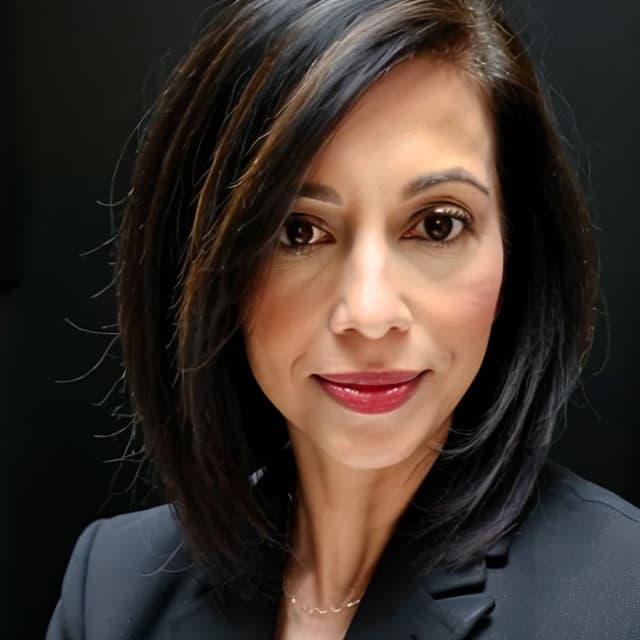
Scalpel and Sword Podcast Opening 1:35 Because in medicine, conflict is inevitable. 1:39 But, handled well, it can make teams stronger. 1:57 In every operating room, in every ward, in every clinic, and 2:01 every team meeting, a silent battle brews. 2:05 Conflict, negotiation, identity. 2:09 Welcome to the Scalpel and Sword Podcast, where I, Dr. Lisa Sharma, 2:14 physician and conflict analyst, explore the hidden negotiations behind modern 2:18 medicine. Let's trade burnout for boundaries and 2:21 learn the art of healing with precision and power. 2:28 Hello, my peaceful warriors, and welcome to the Scalpel and Sword Podcast. I'm 2:32 your host, Dr. Lisa Sharma, physician and conflict analyst. And I'm going to 2:38 ask you a question. You've been practicing, you've been 2:41 working in healthcare, and you see the plight of the underserved patients in 2:46 your community. You've seen them come into your emergency room, you've seen 2:49 them come into your clinic. They need you, they need care, but they have no 2:54 idea how to access it, how to pay for it, and how we can actually work to 2:59 provide resources for them to receive what they so desperately need. And our 3:03 guest today on the Scalpel and Sword Podcast is going to help us explore this 3:07 very topic. I am so excited to have on the show today Dr. Jabril Oyejimi.
Dr. Jabril Oyejimi and Cherry Hill Free Clinic 3:13 He is an award-winning primary care physician who practices full-time 3:17 medicine in Camden, New Jersey. He is on staff at Virtua Health, and he serves on 3:23 various committees, including bioethics, quality, patient safety, and continuity 3:28 of care for complex care patients. He is so passionate about healthcare 3:33 access that he founded the Cherry Hill Free Clinic in 2017, 3:38 which is a non-profit primary care center dedicated to serving the 3:43 uninsured and underinsured free of charge. 3:47 The clinic is staffed by a diverse team of passionate volunteers and generously 3:52 supported by local community organizations and health systems. 3:56 In just 8 years, the Cherry Hill Free Clinic has grown to serve thousands of 4:02 patients, becoming one of New Jersey's largest free centers of care. 4:07 Dr. Olayemi did his undergraduate degree in bachelor's in biology at Lincoln 4:11 University and he got his medical degree at Penn State. He did his residency at 4:16 Jefferson Health, finishing there in 2012. He is also a member of the initial 4:21 cohort of the Physicians Foundation Leadership Institute, which started in 4:25 September of 2025 and is teaching health policy, is 4:30 teaching about development of business ideas and concept models, and I was very 4:35 fortunate to meet Jabril and have him sitting next to me at our initial cohort 4:40 for PFLI. So, Jabril, welcome to the show. 4:44 Thank you so, so much, Lee. It's a tremendous opportunity to get to just 4:49 rub minds and share some of my work with you. 4:52 When we first met and we started talking and really getting into knowing each 4:57 other, cuz I think this is one of the things we realized very quickly that 5:00 this group that we were involved with, this is a very exceptional group of 5:03 doctors. And I think one of the things I felt coming out of that first 5:07 interaction with everyone is I had such hope 5:11 for what medicine could become. And I think a big part of that for me, because 5:15 we were sitting next to each other for that entire cohort, is I really got to 5:20 hear your passion, your intentionality about 5:25 what you've done with Cherry Hill. But there had to have been a starting 5:28 point. There had to have been something that just clicked in you that said, "I 5:32 need to do this." Certainly, Lee. So, you know, it's an 5:36 interesting journey. Part of it has actually been unlikely. And you'll 5:40 understand why I say that, but so my journey actually goes back many decades. 5:46 I was born the reasons Nigeria and one of the reasons I would choose 5:52 medicine as a journey to embark on was that I got to see what a lot of 5:58 just in access looks like. And now that's it. There's a lot of 6:02 amazing things about Nigeria, but my experience growing up was such that I 6:07 saw what that in access was. And the height of that for me would have 6:11 been sometime in my early beginning years 6:14 getting to experience my neighbor's daughter who we loved and just adored 6:18 and was just a spark. 6:21 Just wake up one morning and she passed away. 6:24 And yeah, I remember this it stays with you. I remember this powerlessness of 6:29 how could this have happened? Especially when we found out then that 6:32 the reason she passed away was that she had gone 6:36 through like symptoms, the high fevers, and what I now know to be a febrile 6:41 seizures where she would have had and after she passed away from. 6:44 At the time we knew it, but you look back now and you go, "Oh my god, just 6:48 access to a doctor to recommend bring the fevers down." Forget all the fancy 6:54 stuff, just the recommendation to bring the fevers down might have probably 6:57 would have saved Esther's life. And so anyways, that moment would lead me to 7:00 model me to go, "You know what? I want to go and pursue medicine so that there 7:04 aren't Esthers of the world happening." And so anyways, fast forward graduated 7:10 high school 16, came to the US to write into college. I went for a rapid fire 7:16 college, med school, no residency all straight through. And right after 7:20 training, I joined a local health system here in South Jersey, 7:25 one of the largest ones, as a hospitalist. And what's interesting 7:29 about that choice itself is that unlike Paris spoke about our medical internal 7:33 medicine training, you get a lot of inpatient exposure, a lot of it. And so 7:37 you got really comfortable in the ICU, putting lines in and and just dealing 7:44 with of like these extreme situations. But I did not care for primary care as 7:50 the resident. In fact, I would have done anything to give away my primary care 7:54 clinics as a resident because of all of that exposure residency. I went straight 7:58 to become a hospitalist after joining the largest health system here in South 8:01 Jersey. And as fate would have it, week in week and 8:05 I'm admitting and discharging patients and I would see about 8:11 five to 10 cases of patient situations where, you know, whatever it is they 8:15 were coming in for, when I dug deep to the source problem, it was always an 8:20 lost health insurance because life happened and that life happening was 8:24 usually in a form of divorce, 8:28 loss of job, sick family member, life happened. 8:32 They had no health insurance, couldn't afford to see my doctor, this is this is 8:37 that I've had for years. And so I couldn't get refills of my $4
Finding the Root Causes Behind Patient Barriers 8:41 medicines. And because of that, now I've suffered a second heart attack, a second 8:46 stroke. I've now lost 10 to 15% of my ejection fraction. 8:51 And it was just like week after week, I was just getting pummeled by these 8:54 cases. And I would say to myself like, "Oh man, 8:58 I guess God something." I'm like, you know, cuz a lot of these folks I met 9:01 reminded me of like my old family members. Like they could have been my 9:04 aunt, they could have been my next door neighbor, right? And I'm like, "Man, if 9:08 I just met you six months ago when you were dealing with this loss of health 9:12 insurance and write you a year worth of refills, it would take nothing for me to 9:17 just give you a year's worth of your beta blocker, statin, you know, diabetes 9:21 medicines, right?" And so that would happen so much and the straw that would 9:25 break my back about that would be a 52-year-old retired school teacher I saw 9:30 in the ER. He came in with a second heart attack. Like that got to the crux 9:34 of the story and it was there where again that gut punch of 9:39 life happens. You have to be quiet during the interrogation, the history 9:42 taken, stay very quiet with she made a statement to you and she goes, "Yeah, I 9:48 couldn't get my refill. I went through a divorce, you know, a couple months ago. 9:54 I'm just so irrational in my meds. Can't afford my doctor's visit and now I was 9:58 like, "This is it. We got to do something." I'm like, "I don't even care 10:01 if we have to do something in a parking lot somewhere. We got to do something." 10:06 And yeah, and there was the Cherry Hill Free Clinic would come to 10:10 you realize but then I journey from 2017 until now Lee would be the matter of 10:16 just when it launched, I said to myself, I was like 10:19 "I don't care if I'll have to do the registering the patient, 10:23 answering the calls, seeing them, discharging them from the clinic, taking 10:28 them follow as I got to do everything I got to do all of that, but it's getting 10:31 done, right? But yeah, I've been so blessed that along the journey all these 10:35 incredible angels have just shown up. They're showing up 10:40 and so I think it's one of the amazing things that provide my hope on humanity 10:45 cuz these folks have shown up and so such that I'm not having to do all of 10:48 that. We are a team of about almost 200 people who are making health impossible 10:53 for our neighbors in New Jersey who can't afford health insurance. 10:57 Wow. Oh my gosh. Okay, there's so much I want 11:00 to talk about. So one of the first things that I think really jumps out as 11:03 you're telling that story is that situation you're describing where you 11:07 see people who didn't come in because they couldn't get 11:11 their meds or because they didn't have the financial resources to do this for 11:15 whatever reason. And very often it's not situations of their own choosing. It's 11:21 things that happened to them that they had no control over. 11:24 And I think when those patients come into the ER or in their unit or however 11:28 we encounter them that if we don't dig deep enough to get an 11:33 actual story. Sometimes we're quick to assume that oh 11:38 this patient's choosing to be non-compliant. This patient's choosing 11:40 to do this. No, they're not choosing to do this. And I can't tell you how often 11:44 it happens to me where I haven't seen a patient for two or three years, you 11:48 know, they had an abnormal path or they had something that definitely need 11:51 follow up and we hadn't seen them and then they come in two or three years 11:54 later. This happened to me Friday that she came in and I was like so we've not 11:58 seen you for a while. She says, "Yeah, I lost my health insurance and so I didn't 12:01 come back in to get follow up and I was like we will always work with you. It 12:04 does not matter what you can do. We will find a way. We will get you in and we 12:08 will get this followed up. So I think first and foremost you dug deeper on 12:12 these stories for these patients and digging deeper was 12:16 really a big part of the impetus that encouraged you to take the step because 12:21 you listened to their stories and then you actually went below the stories. You 12:25 went into them and for the patient that's so powerful, right? Because you 12:29 cared enough to do that. And I think it's really a great message for all of 12:33 us as we're hearing these stories to take that one little bit of extra time 12:37 to get deeper into that story because that was such a powerful motivation for 12:41 you. But I think the other thing that's so 12:44 cool about restarting Cherry Hill and having this now 200 strong group of 12:49 people is that to do this and you say it so beautifully, you have 12:56 to be aligned in that mission to do this work. That all of you are 13:01 very much in sync with your why. And that why is a big part I think of 13:08 why Cherry Hill has grown so quickly is because you've been able to do that. 13:14 In terms of having this really wonderful team and having this alignment, is that 13:19 something that happened naturally or was that something that you felt like you 13:23 encouraged or you had other people that encouraged where all of your team is 13:27 very much in that same mindset. Yeah, you make a great point with this 13:32 start with the why. Because one of the things I've learned in this journey is 13:37 that human beings are incredible. And I tell you there is so much to unpack
Building a Mission-Aligned Volunteer Team 13:42 there, but what I mean specifically in this case that I have not met one 13:48 doctor, no matter who you are, no matter where you're from, no matter what 13:53 demographic you belong to who's heard about the mission of the 13:56 clinic and hasn't gone I want to do that. I can't wait to do 14:01 that. You know, what's often the struggle is capacity, right? Folks, you 14:05 know, may be in a place but they don't have capacity, but they almost always 14:08 say, I can't wait to get to do that. And that is such a motivating for me, but it 14:13 also confirms something I know which is what a lot of us 14:16 and that's why you'd spend all these decades, you know, just spend 14:20 it all in pursuit of this one skill. And so I say that because there's a lot to 14:27 go in the continuum of the charity work line to make it happen. But some of the 14:30 what powers that are the volunteer physicians, the practitioners, nurses, 14:35 PAs, non-clinical staff, right? Is that a lot of times these are folks choosing 14:39 to come do this when there is literally a thousand other 14:43 things they could be doing. A Saturday, a Sunday, evening clinics, date night 14:48 time on a day off, drive from ER, dot, like this. You know, and so even in all 14:53 of that the why is crystal clear and I know I 14:58 often think about them, but one of my volunteers is yes, he was telling me 15:01 clinic. He said, "The culture of this place." She was like, "Even just being 15:05 in this place." She's like, "There's something about the culture of this 15:09 place where there's a lot of graciousness. Like it's an arms wide 15:12 open approach." And that arms wide open approach be tied into your first point 15:17 about listening, right? Cuz you're listening differently when you're 15:22 listening like this. Forget all the preconceived, forget all the 15:26 assumptions, you know, there's a lot of assumptions that I've learned is just 15:29 not true. Like one of them you mentioned, this premise that, you know, 15:33 folks who are on the short just are trying to spend their money on other 15:37 things and they just want to buy up the shirt. Absolutely not true. I have not 15:41 found any else to that to have any footing because these are often folks 15:47 neighbors working multiple jobs, right? Caring for loved ones, 15:54 caring for special needs child, sometimes health care workers 15:58 themselves, right? So, you know, that why of 16:02 serving them is just like them know, like this could 16:05 be me. This could be me at any point. This could be my mother, my sister, you 16:10 name it. And so, when that why is clear, it just changes your mindset of being 16:17 there. It changes your experience of the time 16:21 you gave to care for that neighbor. And yeah, you walk away just feeling the 16:26 13th century Persian poet Rumi said that when you practice loving kindness and 16:32 compassion, you are the first one to benefit from that. I have a quick story. 16:36 There's a one of our dermatology volunteers, she runs a very busy 16:40 dermatology residency program at Penn and she's got a young family. 16:45 And so, I was on the phone with her about just tell me about your experience 16:47 at the clinic. It's been a year. She goes, you know, life around me She said 16:51 it's so busy that every time I sign up to volunteer at the clinic, I go maybe 16:55 this is the last time because again, this is a lot that we're doing on 16:58 Saturdays only. But she's like, right, without fail, my time she sees the first 17:04 patient, there's a reminder of this is the why and I can't wait to do this 17:07 again. I can't wait till my next shift at the clinic. So, it's just incredible. 17:11 Yeah. Oh my goodness, that is so beautiful. 17:14 That this idea that when people are coming to Cherry Hill, 17:18 when you're getting people to come and work, and they're giving of their time 17:21 and themselves, that they realize very quickly that the benefit that's being 17:27 given is really the one who's serving, the one who's actually providing that 17:33 benefit in terms of how you feel and what you're gaining from that process, 17:37 not just the fact of the experience that you're giving, but actually having that, 17:41 like you said, the open-armed listening, being able to connect with somebody in 17:46 that way. And I also love how you put this, cuz I 17:49 think this is one of the reasons why conflict kind of can blossom in terms of 17:53 people working and doing the work that you're doing, 17:57 is I think anytime you get into an us and them mentality. I think anytime you 18:02 get into this idea that we are doing this and they are doing 18:06 something different, but the concept of at any point in time, this could be one 18:11 of us. That the circumstances that led these people to being underserved or 18:16 uninsured, this could happen to anybody. And if you look at it as something 18:21 that's a common experience, there's no more us and them. It's we. 18:26 It's all of us. I am providing something that I can provide and I'm grateful that 18:31 I can do it. I'm so grateful, like your doctor, your neurologist that comes on 18:35 Saturdays. She figures out with the first patient, I'm grateful to be the 18:39 one that's here. Correct. Correct. 18:42 >> And when people get into that headspace of gratitude 18:47 I think that's where you start to see conflict evaporate. 18:50 I think you will no longer see people arguing about resources or time or 18:56 anything else. It is just one big pool of this is a common experience and I 19:00 have to be part of it. And you definitely have what you're describing, 19:05 you cultivate that really well. And I also do love the fact that this person 19:09 had worked there for a year and you were following up with her. 19:12 You wanted to know what her experience was and so that was important to you as 19:15 a leader to actually hear what that experience was. So, there's something 19:19 also beautiful in the fact that you even have that story. 19:22 That you were able to do that. Thank you. Before we started recording, 19:27 one of the things that we talked about was as you were going through this 19:31 process of starting Cherry Hill, you looked at pathways 19:37 to avoid conflict and not in the sense of a conflict avoider. Like I freely
Partnerships, Advocacy, and Avoiding Conflict 19:41 admit that I am a recovering conflict avoider. You know, it's amazing to me 19:45 that I actually do this work because I am was a person for so many years that I 19:49 would actually run from conflict because I didn't understand the power of it. I 19:52 didn't understand that it actually had power to be transformative. 19:56 But one of the things that you talked about before we started is that you 19:58 actually looked for ways to start this clinic and to negotiate this process 20:05 where you were anticipating conflict before it could occur. What did 20:10 that look like for you when you were starting that process? Yeah, like so to 20:14 adult into that, it was realizing really quickly that if the clinic is to 20:21 serve the neighbors that we are here for, right? There were some dumb 20:26 problems we needed to help them solve, right? So, in the early 20:30 days, what we had solved very quickly was well, put Dr. Jabril in the room 20:35 with one of the neighbors we serve, right? And they don't have to worry 20:38 about the cost of seeing Dr. Jabril, right? Or the cost hundreds of dollars 20:43 out of pocket for someone who doesn't have it, that part is zero, right? But 20:46 then you realize very quickly that's just one piece of the health care 20:50 problem they got. They still got labs to figure out. 20:55 Say that Dr. Jabril now decides that they need an ultrasound and x-ray, maybe 21:00 even a cat scan or whatever, that's imaging, right? We're back to square 21:04 one. In some cases, we have some neighbors who could not afford the 21:07 critical medicines. So, it's like this was often not seen again the doctor's 21:11 fee covered was often not. And so, that got us to quickly realize the 21:17 existential need for partners, right? Let's say what you will about the health 21:23 care system is the health care system. That was our way of doing something for 21:26 the neighbors we care about, but you still need portions of the health care 21:30 system. You still need It's a put it together to make it work for work. Mr. 21:35 Jenkins, who was now here, who's got heart failure in his 40s and needs 21:41 access to pharmaceutical medicines, needs access to echo, needs access to 21:44 all these things. And so, realizing the need for partnerships meant that we 21:48 needed to approach conversations with those partners 21:52 from a place of looking for okay, all right, we've asked what this meeting 21:56 right? With health care system leaders, with radiology service line leaders, 22:01 with the legal team of the health care system, right? There's this quote by 22:05 Brene Brown that drives this point home, right? And it goes, "Fight for things 22:10 that you care about, but do it in a way that will lead others to join you." And 22:14 what that does is it changes your mindset. Cuz even when you're fighting 22:17 for something that's noble, right? You can't do it alone. You still need to 22:22 pull folks along. You need that mission to become their mission. And you know 22:26 how you do that? It's to do it from a place of openness, 22:32 from a place of water and incentives that would work, 22:36 from a place of a common humanity, from a place of humility, right? Now, 22:42 what's often not talked about is even when you've done all of that, there's 22:46 still patience and perseverance that needs to happen, right? Because just 22:49 because you've done this, you know, you've got this great idea, you've got 22:54 it started, doesn't mean it's going to be taken quite seriously like right 22:57 away. And therefore, you know, in the theory of change means, right? You have 23:00 the early adopters and then there's folks you've had to prove that okay, 23:04 this is actually working. And so we had to be very patient enough 23:07 to go through that phase where everyone in the community is going, "No, this is 23:11 happening. This is not some cutesy little project. This is like a 23:15 full-blown operation. And then you get to pull people along. Anyway, I hope 23:20 that answers that question. Oh my gosh, absolutely. And one of the 23:25 things I do love about this because I think it speaks to so many things, the 23:29 process of what you did in Cherry Hill, but also the process of advocacy 23:34 is the idea that when you are in this fight and you are actively working on 23:40 something that means a lot to you and is going to benefit a lot of people, 23:44 that there has to be some type of alignment or agreement 23:48 within that advocacy group. And that is how you take people with you on this 23:52 journey. Is that you are very clear in your message, you're very authentic in 23:58 your message, and that authenticity resonates with other people, and that is 24:03 where you're going to get them to join you. And I also think like having talked 24:07 to other people about advocacy on the show, 24:09 that is where advocacy efforts can fall down. That you can have somebody who's 24:14 got a really good idea. It's like, I've got a really great idea to start 24:17 something that's going to help a lot of people. That's fantastic. But 24:20 unfortunately, if we're not really clear on that idea or if for some reason we've 24:25 got a disagreement within this group, this advocacy is not going to go very 24:29 far. So, one of the things that you definitely had to anticipate in starting 24:34 Cherry Hill is how can I craft this message? How can I get buy-in from the 24:40 community? This actually going to get people to agree with me and push this 24:43 process forward and not create fighting within the group that I'm trying to work 24:48 through. And so you were very wise in being able to craft that message, but I 24:53 think this is just you, that I think you're very transparent and authentic 24:57 with your motivation, and I think people can really see that. 25:02 And you kind of got into this, and I think one of the things that's so great 25:05 about you checking in with other doctors is that all clinical work is hard. All 25:10 clinical work is challenging. All clinical work is prone to burnout. And 25:14 what you're doing at Cherry Hill is no different. And certainly could 25:19 make the argument that you're doing such important work with that population that 25:23 needs you so desperately that burnout might even be a little higher. 25:28 And your 200 strong team at Cherry Hill. Is that something that you actively work 25:34 on or try to also anticipate with your team? 25:38 It is an interesting paradox that I found actually in this work. And that is
Burnout, Service, and Regrounding Clinicians 25:45 that in healthcare leaders struggle with this when I make this point, but it's 25:50 definitely been my lived experience and nine years of running the clinic. And 25:55 that's sorry by that which is just one of many by the way. That about my 26:00 volunteer ologist, right? But I like that point which is that in a health 26:03 system where burnout is so in your face and it is such a crisis, 26:11 it is interesting that for my 60-something 26:16 providers, mostly physicians, it has been an antidote to a burnout. 26:22 I mean your time. Yeah. Myself I can testify to that fact because there 26:27 is something that is really hard to put to words about working away knowing that 26:35 you're in a space where you've made such an impact and without it your time that 26:40 day, this person who was showing a lot of gratitude was just grateful for 26:45 you've done to them. That care would not have been possible. And I see I've done 26:50 surveys at the clinic. I got service to it. I see there it. I'm again, you know, 26:55 when I brief or providers, especially the ones who do this work like who are 27:00 defiant with these schedules cuz I usually 27:03 you know, we have a few orthopedic surgery volunteers right now, but I was 27:07 the first one, my beloved Dr. Laura Ross Adams. I was at dinner with her last 27:12 week. And I asked her, I said, "Listen." I 27:14 said, "Laura, you work in a practice where a small 27:19 doc running your own practice. So, you're like in a busy practice of 20 27:23 staff doing x-rays on a kidney season about 100 patients Monday to Friday." 27:29 I'm like, "You've got growing kids, a growing family. 27:33 And then you show up here on Sundays. Like 27:35 that's awesome there, but I'm like tell me why. Like why are you doing 27:40 this, right? And 27:43 she answers the question by sharing the story of one of the patients that she's 27:46 followed just that week. And the frequent question she goes well, this 27:50 middle-aged woman works at a diner and a local diner, right? Just washing dishes 27:55 all day with her help kids. Now, it's at the point where they she's unable to use 27:58 her hands. And so, you can imagine all the downstream loss that's happened 28:04 because her arms, which is her means of livelihood. Dr. Laura Ross she sees her 28:08 at the clinic, identifies that after, you know, again being examined hard and 28:11 doing her thing that is she's got really terrible carpal tunnel, but not carpal 28:15 tunnel. So, you know, she tried injecting it at the clinic, didn't quite 28:18 get the right response. So, guess what she does? She 28:22 makes the case to a local ambulatory surgical center that does for both of 28:26 work for the clinic to say, "Hey, listen, we got to take this case on. Get 28:30 her on the schedule, adds the case to her base of the week." But for her, 28:33 she's going, "I just helped this woman who would have otherwise, I mean, that 28:37 might have been it as far as work involved, right? Cuz that immediate 28:40 hours getting just suffocating to a point of just weakness and incapacity." 28:45 And so, my answer to your question dear, is there is this interesting thing we've 28:50 found where we're actually giving of yourself for this cause, it is actually 28:54 a reminder a re-grounding antidote to burnout. And I've been arguing with a 28:59 lot of health system leaders that we might want to look at this here. You 29:03 know, we might want to really seriously look at this because there is something 29:07 that happens here that a lot of our physicians and clinicians are not 29:12 getting in their you know, within the health system which is just a testament 29:16 to there's so many things you can say about that. Yeah. 29:19 Yeah. Oh my gosh, it is so beautiful. And I 29:21 think absolutely and I hear you talk about this when they come to Cherry 29:25 Hill, they get re-grounded. They are then much more anchored into 29:30 their own personal why for showing up for these patients. And it is clarifying 29:36 because you actually get it. This is why I started. This is why I went to medical 29:40 school. This is why I'm here right now is because of this experience I'm having 29:44 with this patient that I genuinely walk away feeling like I can help somebody. 29:48 And I think unfortunately in their daily lives other places, you are so mired in 29:55 the obstacles and third-party payers and you know, 30:00 there's just so many things that can affect that and the fact that they can 30:03 come to Cherry Hill and have this very pure experience of practicing. And that 30:08 very pure experience lights a fire in them. It's like, "Okay, I'm good. I have 30:15 now been reminded of why I'm doing this and now I can go back and I can actually 30:19 fight another day in other parts of the system." And it's fascinating, right? 30:23 Because I think so often we talk about burnout. We talk about treating burnout 30:26 and the antidotes to burnout and all of those things that we kind of want to 30:30 treat. And so rarely do we ever think about well, practicing more medicine 30:35 could actually reduce your burnout. It was like, 30:38 "What?" Yeah, that sounds very counterintuitive. And yet, your 30:41 experience at Cherry Hill Clinic is exactly the opposite. Is that having 30:45 this very beautiful experience of service is actually an antidote to 30:50 burnout. It is cuz of that service with no strings attached. You know, and you 30:57 know exactly what I mean by that. I spent the first decade of my career 31:01 within a hospital. So, I know why those strings are attached. But, it it nudges 31:05 from the experience of service for which all of us, right, endured all of this 31:11 training, is to be able to step away from that and come out to put 31:15 this where you're getting that in its most 31:19 pristine and beautiful form, right? And so, I told him just when I tell that one 31:22 reason I said I struggled finding words for it is that you think about how do 31:26 you describe the sweetness of honey to someone? You can go, yeah, it's sweet, 31:31 but it's not sugar. But, it's sweet, but it's not all these other thingies. And 31:34 how do you do that? Here's a spoonful of honey, right? You taste it, you go, oh, 31:38 this is why it's called honey, you know? That's what I sort of liken volunteerism
Advice for Starting a Free Clinic 31:43 in medicine to is that, oh, this is something else. I came to this with the 31:48 intention to do this. And I'm able to do it in a way where 31:52 that fits the ideals of why I went into this in the first place. 31:56 Yeah. 100%. Oh my gosh, that's so cool. 32:01 So, someone is listening to this podcast, and they are inspired by what 32:06 you have done to the point that they want to start something similar in their 32:10 area. What one piece of advice would you give 32:14 them before embarking on that process? 32:17 First, I would say, start. 32:21 Okay. >> A lot of times, and I say that because 32:25 I mean, you generally just people who will want to get all the facts ready and 32:30 all that, which that certainly has its place, right? It needs assessment the 32:34 community, but we know the health care needed. There is like, doesn't matter 32:38 what corner of the nation you're in. If you ask us in issue in particularly for 32:42 the uninsured in these times. So, I say let's start because I know that you need 32:47 assistance and he's going to tell you, yes, there's a bunch of uninsured people 32:50 suffering and rationing medicine and just deal with that. But, in the second 32:56 thing which goes back to something we touched on, is that 33:00 you need to make friends. You need folk along the way and so those two things 33:04 and then everything else everything else you learn along you lost 33:07 momentum along the way, it's incredibly rewarding journey which we actually have 33:12 been thinking about how I could have find the secret sauce. Mhm. I thought 33:16 the journey of a claim because part of being vested in this mission is not just 33:21 for New Jersey here, it's to be able to do this for neighbors across the 33:26 country. And so we're thinking about how to do 33:29 that because this is reproducible. This is impact. This needed. That's so 33:36 brilliant and I feel like that's such wisdom. It's so easy to overthink a 33:40 process like this. And create obstacles 33:45 not necessarily where there aren't any because I think the process is very 33:47 challenging and I think you've done a beautiful job walking through it and 33:52 asking other people to join you. But I think 33:57 overthinking the process can be a detriment to starting any projects. I 34:00 definitely will testify to that in terms of starting a podcast. You can think it 34:04 and think it and think it and really what you just need to do is turn on the 34:06 microphone and go. And I think the same thing holds true for what you've done is 34:11 that at a certain point you can overthink to the point you talk yourself 34:14 out of it. Don't do it, just go. And then you see your first patient and 34:19 just like your other physicians have experienced that first patient yeah, 34:23 this is why I'm here. This is why I'm doing this. And I think you will 34:27 undoubtedly draw other people to you and with you cuz you've certainly done that 34:32 so beautifully at Cherry Hill. Jabril, if people want to reach out to 34:36 you and if they have questions about Cherry Hill, if they have questions 34:39 about you and your beautiful journey, how would they best reach out to you? 34:44 Thank you for that opportunity. So, cherryhillfreeclinic.org 34:47 is our website. help@cherryhillfreeclinic.org. It's got 34:50 a bunch of stuff. Look in at that email, send us if it's patients, if it's 34:55 partners. We have those two contacts there. We are quite active 34:59 on social media. Yeah, you know, you can tag at cherryhillfreeclinic. 35:02 And you don't have to look into partners, look into serve, to reach out 35:06 to your neighbors, wherever they may be. We've started small. 35:10 This works and we want to get to all the corners of communities that could use 35:16 this type of service. Absolutely and there's so much need and 35:21 I love the fact that you have found such a great way to meet that need. And I 35:26 think people listening are going to be really inspired to take these steps as 35:30 well. It's awesome. 35:33 Jabril, thank you for your time. Thank you for being here. This has been a 35:38 wonderful conversation. >> It's always a blessing to get to share
How to Reach Cherry Hill Free Clinic 35:42 that. And that's funny. My mission officer said to me many years ago, he's 35:47 like, at some point me this is going to get so big that your 35:51 last question is what I'm actually going to be spending a lot of my time doing, 35:54 which is how do we get this, how do we find Jabrils 35:58 in the different communities who want to do this. And at the time I thought I was 36:02 like, I said, "What are you talking about?" I was like, you know, I'm just 36:04 trying to run clinic. I'm just trying to make 36:07 make sure that the next person get what they need. I'm like, "What are you 36:10 talking about?" And sure enough, 9 years later, I had a conversation with one of 36:15 my new volunteers. She's got a mind for like systems level, like he's done 36:20 remarkable work, like strategy work at different national organizations. So, 36:24 she and I had like a two-hour conversation about it. Her asked to me, 36:27 cuz she volunteers at the planet casino visions but she's like listen we need to 36:31 take this to every community she said and so her and I would like to have a 36:36 series of meetings because we want to essentially codify and her saying that 36:40 to me was like oh wow like this was another reminder by the universe that 36:46 this needs to happen because it's not just me thinking we on to 36:50 something here. You want to hear what that's for a 36:53 couple of months she's going we got to codify and we got to spread them so 36:56 anyway sleep thank you so much for the opportunity. 36:59 Absolutely and definitely as you're working codifying this process finding 37:03 the secret sauce that is Cherry Hill I would love to have you back on the show 37:07 and we can talk about that because I think that would also be an amazing 37:11 conversation. Sure did. Awesome. 37:14 For all of the peaceful warriors who have joined us today on the Scalpel and 37:18 Sword podcast thank you so much for your presence and until next time be at 37:23 peace. 37:27 Every episode is an invitation to speak to negotiate to choose. 37:33 I'm Dr. Lee Sharma. Join the dialogue by subscribing to 37:37 Scalpel and Sword. Until next time peaceful warriors may 37:42 your choices be sharp and your voice be even sharper. 37:50 This podcast is a reflection of lived experience and research in conflict 37:54 resolution. The Scalpel and Sword is not intended as 37:58 medical or legal guidance. For personal matters please consult a 38:02 qualified professional.
Comments