Functional Medicine’s Take On Neurodegenerative Disorders
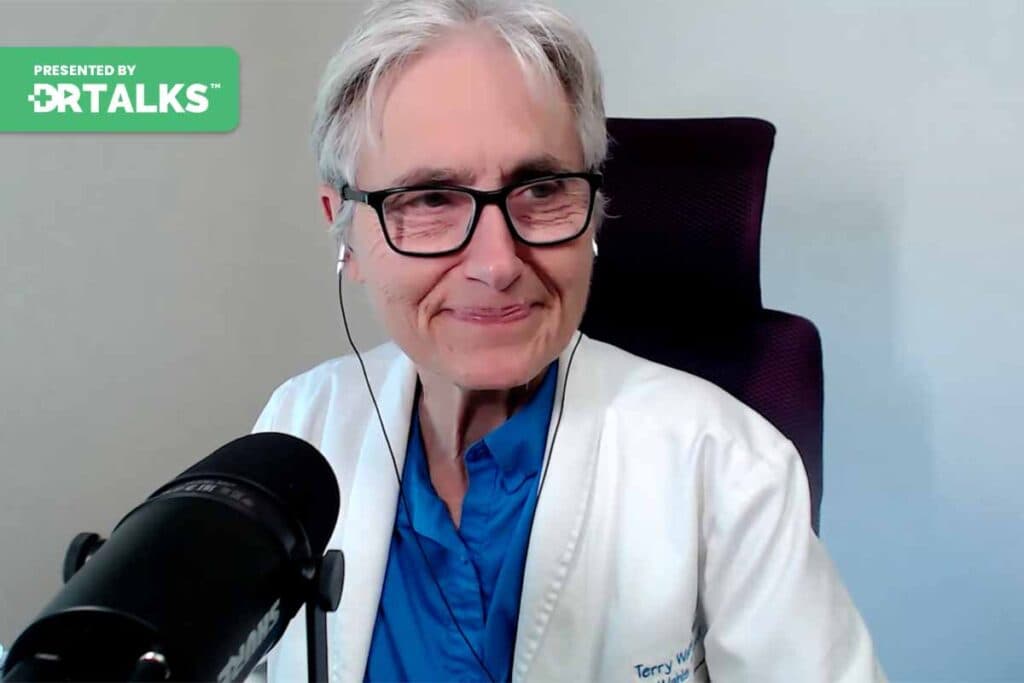
Terry Wahls, MD
Full Transcript
Introduction to Dr. Terry Wahls 0:00
Welcome to The Parkinson's Solution Summit 2.0. Today I have a very special guest and dear friend, Dr. Terry Wahls. Many of you may have heard of Dr. Wahls. Read The Wahls Protocol or visited her website. There's so many people that touch base with me that have been inspired by her individual journey with Multiple Sclerosis, going from a tilt reclining wheelchair to riding her bicycle and really being a world class leader in functional medicine, and what the Wall's protocol has meant to folks with homes with neuro immune disorders and with neurodegenerative disorders like Parkinson's.
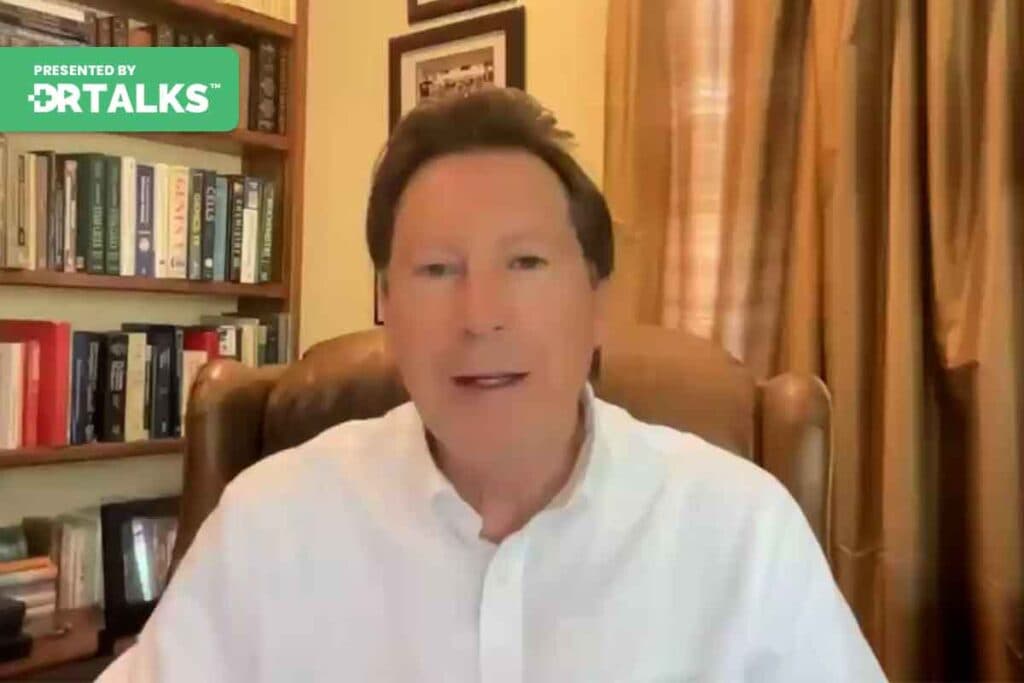
It is such an honor and a pleasure, pleasure and a privilege to reconnect with Dr. Wahls today. Dr. Terry Wahls, welcome to The Parkinson's Solution Summit. Hey, thanks for having me, Ken. You know, I love what you're doing, and I love the work that you are doing to empower the Parkinson's community, that there's a lot that they can do. Absolutely. Dr. Wahls, I think this is really a wonderful segway to just say that when we talk about things like the walls protocol and there's sort of a knee jerk, if you will, a bio from the neuro exam, a knee jerk response to think Wahls Protocol, MS.
but in fact, when we think about functional medicine, we think about The Wahls Protocol. It really goes beyond that disease centered approach where we have to talk about one specific disease. It seems to apply equally well to neurodegenerative disorders Alzheimer's, ALS. Let's talk about Parkinson's and why this all fits together. You know, I think, at the core level, some of the same problems that drive multiple sclerosis and disability come down to mitochondrial function. nutritional quality, toxin exposure, probably also some early life stress and microbiome disruptions.
and then that interacts with your genetic vulnerability. And depending on your genes that you may have more genes at your risk for Parkinson's or Alzheimer's or in my case, multiple sclerosis. and by addressing all those environmental factors, one by one, I help my patients. and the first thing that happens is we stabilize their symptoms, they are no longer getting worse,
Functional Medicine and Parkinson's 2:51
and they're thrilled because at least for MS. and also for Parkinson's, usually it's a progressive downhill course. so the first goal is to stop the decline. And then with continued work, we can see people, steadily improve their function, reducing fatigue, improve their mental clarity, and then they begin to see that their motor function is improving. And it might be that their hand function is doing better, that they can feed themselves much more comfortably again. Or, you know, we heard from, one of my patients who was struggling to do her transfers, wheelchair to toilet, independent, and we've been working with her, and she was so thrilled when she could stand for 30s and she could do her transfers, much more safely.
and and it's three years that she's been working at this. She's now walking with a walker. and so, everyone who's listening here, even if your physicians have said, no, we can't stop the disease. It's a progressive disease. You're severely disabled. I want you to to have hope that by using the principles that, Dr. Sharlin and my good friend Ken is going to be teaching you and talking to you about. There's plenty of reason to be very, very hopeful you can stop the decline. And again, with continued work, steadily improve your function and your quality of life. Well, yes.
I want to kind of do, functional medicine one on one, because I think you've really you've highlighted it and I want to rephrase in a slightly different way, and then we'll kind of expand from there. You know, when when someone comes to see the practitioner, we do something called the functional medicine timeline. And that's so different from what we do in traditional medicine. We take a history present illness. When did you first start to notice a tremor or a change in your gait? Or how did you know something was different?
And then how did it evolve and what test did you have then? Have you been prescribed medicine, you know, etc. that's a typical medical history. But in the functional medicine timeline, we want to really know your whole life story because as you know, Dr. Wahls a very typical question and ask is how did I get Parkinson's disease? What caused it? Right? What sort of has a singular implication? Like there was one thing that did this, but the reality is that diseases like Parkinson's, like Alzheimer's, like ALS, like MS, in fact, have multiple contributing factors.
They have very long incubation periods. when when researching a presentation on, Alzheimer's and ALS, I came across a very important paper that talked about essentially microglial priming, where very early hits, if you will, to the immune system of the brain, really set up that person for things later in life. So when you're talking about things like mitochondria, the gut microbiome, hormones, the immune system and so forth, all of these things are sort of perturbations, aren't they? And they do help tell this narrative of how did I get here?
But then we have to take that narrative and shift it into sort of therapeutic mode as to what do I need to do then to change that trajectory. You know, absolutely that my unique genetics, may make me more vulnerable for a wide variety of health challenges. And then it's all of those life events that adds, fire to the problem or, suppress the fire and, add water. Instead, we grow a wonderfully healthy garden. and so, again, all of you who are listening, you may have genetics that increase your risk a little bit or is it's all these environmental factors, many of which we have control over.
Of course, some we don't. You know, I don't have, control over the fact that around I live in Iowa and there's a lot of roundup that's, being used. and so there's probably roundup in the rain water that's coming down in my garden. That's a little bit annoying. So. So I can't control that, but I can control what I'm planting and put it in my garden. I can, you know, use, watering to be sure that my garden, is adequately hydrated. and so the plants have a good chance to grow. I was just out looking at these birds. Is coming out. Looks great.
We'll have a lovely meal of asparagus tonight and some lamb and some lamb stew and, saw that the collards are coming in. So now we'll, we're going to get some ham shanks and have collards and ham. that'll be the next big meal that, I'm sort of planning, looking at the foods that's coming in the garden. So, yes, there are some elements I can't control, but there's still a lot that we can control. So I, again, all of you who are listening, I want you to think deeply about what are the environmental factors that you can control.
And you can shift from a potentially disease promoting habit and environment to a more health promoting habit and environments. And give the body then what it needs to thrive. absolutely. The missing. Pieces. yeah.
Lifestyle Changes and Recovery 8:42
You know, and I think, when I look at my own healing journey, I have benefited in many years in my interpretation of the vegetarian diet, did not work out so well that I went on the paleo diet. I can still went downhill. I added supplements, it slowed my descent, and I could tell the supplements really helped my energy. You know, a little bit with, MS severe fatigue is a big problem. And when I redesigned my paleo diet focused on what to be eating, I went back to my daily meditation and I was working closely with my physical therapist, to maximize my exercise and my rehab.
That's when the magic happened. It was when I began to put all this together and and I asked myself this really important question, am I doing all that again? And, you know, at that point, you know, I could not sit up anymore. I had severe general neuralgia, you know, intense, electrical face pain. It's really quite, quite horrible. and I'm going to have brain fog. So it was very clear in 2007, I was on track to become better and by my illness, demented, possibly by my illness. And having, increasingly horrific levels of pain.
And now. And so that's 2007. In 2024, I am jogging. I don't have pain. I'm doing research, writing books, traveling the world, teaching clinicians, teaching the public that there's so much that we can do that will, shift our health from profound disability to steadily improving function. And I might add, if it's correct, that in order to do those things, you had to really make some changes in how you approached everyday life. Oh my gosh. Yes, yes. you know, I fortunately had been an athlete before being a physician.
I knew the exercise was really important, so I always exercised, but I kept having to do a smaller and smaller and smaller amount of exercises. As I became more disabled. I had stopped meditating during medical school. I never went back to it. Now that was a bad decision. I should have gone back to meditation, when I was diagnosed with Ms.. but it was that, fall. I thought, you know, I really should go back to meditating. I, and then, when I decided that, well, supplements are good for my mitochondria, but maybe I should look at the food where these nutrients are in the food, because there's probably other really important nutrients in the food.
And so there's more research to figure out what foods I should be stressing, as opposed to just what foods to avoid. And then, the magic began. And the other, you know, the other modality that I added was electrical stimulation. Muscles, and that allowed me to exercise more effectively. And, I've since learned, there's been more research to show that if you exercise and also do electrical stimulation of muscles at the same time, your brain makes a much larger dose of nerve growth factors. And yeah, it was super interesting.
I could tell that, you know, the electrical current, was also quite uncomfortable. but I could control just how much discomfort I wanted to endure. But man, it was clearly doing something great for my brain when I was done. Each time I felt great. Wow. in, my therapist said, you know, Terry, it's the endorphins. the lighter. We all know it. Yes, it is the endorphins, but it's also nerve growth factors. Yeah. And so, you know, I, I'm, I'm walking, I'm hiking and biking. I'm jogging. And I still love doing electrical current an hour a day because it does really great things for my mood.
So nice. So I'm looking at your left hand. Of course. You're wearing a wedding ring. But then there's that other thing on your index. Yeah, yeah. Let's talk about that. So, that's an aura ring. and I've used Fitbits. They're, they're a variety of wearable devices. and the beauty of this, it gives me information, that I can sacrifice to look at in terms of my, minutes of sedentary, low, moderate, high intensity physical activity. it will tell me about the quality of my sleep. Deep sleep, rapid eye movement sleep.
It will tell me about my heart rate variability. And so I get feedback every day. And when I have a great day, a great night, I can think like, what? What were the things that, were associated with that great day and great night. And if I had poor sleep or, less resilience in the day, then I can look back at. So why was that? And one of the things that I learned is I have to have a couple of hours between my last meal and before I go to bed at night. Otherwise it interferes with my sleep. If I'm going to have a drink of alcohol, I need to be a couple hours before I sleep for the same reason, because it will interfere with my sleep.
So it's it's a great tool to help me hit my workout goals. And it's a great tool for learning how to do a better job of my self-care routines. Yeah. And the Parkinson's Solution Summit. We're going to have a couple of sleep experts talk, and I'm really looking forward to that. but I you know, I have these conversations with my patients in the office
Sleep, Wearables, and Self-Care 14:47
and I say, look, if I, you know, come in with my weight cut, I'm the person of authority. the doctor and I sit down, I say, okay, here's the treatment plan. Doctor Wahls, I'm going to ask you to not eat for, let's say, a month. It's a little. Charlene, you're absolutely out of your mind. I'm going to find another neurologist. Right. what do we like to eat? We like to eat. And then, of course, there that we're not talking about, you know, periods of intermittent fasting and all of that. I'm just saying that, you know, I'm using an analogy because, it makes sense to us that nutrition is critical for every aspect of our biology.
And yet sleep is so often discounted to the point that I remember at one point, it was actually sort of almost trendy and a sign of I got this under control to talk about how little sleep a person could get in need, you know, not only need four hours of sleep and do all my stuff, you know, I multitask, but no, you can't. And. Yeah, right. So we do these overnight pulse oximetry studies all the time. They're not formal tests for sleep apnea. But if you are not breathing then by definition you're going to drop your oxygen saturation.
And we see some pretty stunning results that do of course, then lead to formal sleep studies. You know, someone is say, been below 88, 88% or less in terms of their oxygen saturation, folks, by the way, the minimum should be 89, and most people are hovering in the sort of 93 to 98% range. But we'll do an overnight sleep study. an overnight pulse oximetry study, which is a simple study that involves a little clip over your finger that measures your oxygen and your finger. You probably most folks have probably had this done at the doctor's office or other places, but it's connected to a little hard drive or, you know, a digital drive that then picks up all that data and stores it so the, device can then be plugged into a computer later in the data.
Download it. My point is, I'll see folks who, you know, 45 minutes at 88% or less and say, well, hold your breath for 45 minutes. What, like right. But we do this. We do that every day. Folks do it every single day. And that's going to have an impact on the same biological systems that you're talking about. Yeah. You know, I've always had difficulty sleeping ever since I was an adolescent. And, I thought it was fine to have four hours of sleep at night. I thought it was, a huge advantage during residency.
during my, clinical practice, having young kids. And then, fortunately, eventually, I figured out, no, no, no, that is part of my the problem. Why I developed, Ms.. And why it became more aggressive. So when I started realizing, you know, some basic things, go to bed at the same time, get up at the same time, sleep in a cooler environment. in having a particular wind down routine in the evening made a huge difference. And so now, instead of only sleeping about four hours a night, I'm much more consistently, between 7 and 9 hours.
it's rare that I have less than seven hours. but, you know, it took a while, and the first step was realizing sleep is important, and I might need the target of 7 to 9 hours. So, folks, you know, when we talk about traditional medicine, it's often about, you know, you make a diagnosis, you treat the disease, you get a pill, right, you get a drug, maybe you go for therapy, maybe you have surgery. but these are very targeted treatments overall. And we're not neither doctor Waltz nor I discount the importance of some of those traditional, therapeutics.
But what we're really saying is, in that old cliche of food is medicine. Well, it actually really is. And when you go to a functional medicine doctor like myself or I know Doctor Wahls doesn't do one and I don't believe does one on one patient care anymore, but there's an expectation of treat me doctor was. And what treatment are you offering me and what we're actually saying is something a little bit different. Yeah. You know, well, when I was first diagnosed, I did my research, found the very best medicine in the country, the best stock there, and, you know, took the newest drugs.
And that was certainly very helpful. What I didn't do, I exercised. So that was good. But in addition to whatever treatment you may have that may be approved for your disease state, and there are probably several, we need to be sure that we're doing all of our wellness and self-care behaviors, both for that disease state and all of the comorbid problems that are so increased in people with Parkinson's, Alzheimer's, Ms.. And those are the kinds of things that, you know, take care of in your medicine.
High blood pressure, obesity, high cholesterol, developing insulin resistance. And unfortunately, most of my colleagues, we just use drugs for those compounds, as opposed to that functional medicine approach of if we addressed all the environmental factors, we often see those comorbid problems melt away. You know, gradually, whatever prescription drugs you need for those comorbid problems, they melt away. And as those comorbid problems melt away, then the next thing we often see, or in parallel, is that the underlying neurologic and autoimmune problems begin to melt away.
And my patients, I look in the mirror like, gosh, doc, you're right, I am looking younger. And the family and friends, I haven't seen them in a few years. They come seem like, oh my God, you look 5 to 10 years younger than the last time I saw you.
Food as Medicine and Clinical Care 21:00
Joe or Jane. So again, everyone who's listening, I would invite you to take a picture of yourself with your smartphone, make a little video. because if you implement the things that Doctor Charlene is teaching you, I predict that your blood pressure will improve your blood sugar. Improve your mood, will improve, and you'll start looking younger. And your friends will notice that you're start looking younger. And so be sure to grab a photo because nobody will believe like, oh my God, what a big change is going to happen.
Yeah, there's a well circulated picture of you. Doctor was, you know, holding a head of kale. Right. And sort of like, you know, I imagine so said, well, Doctor Wells, I thought you were going to give me something to, you know, fix my mitochondria. I'm like, well, here, you know, that's it. You're sure this is it. Right? This is the Parkinson's Solution Summit, and, well, not all of you viewing this may necessarily come to see myself or Doctor walls. Our plan is that we want to give you those tools.
And those tools start with a solid foundation of sleep, of nutrition, of movement, of that mind body work, and of how, you know, what a lot of our relationships look like. You know? And for many of you, you'll be inspired by this. You'll pick up my book, Ken's book, you'll read it, and you can do a pretty good job of implementing it. Some of you may really benefit from a health coach who can help you, be more successful. And so, of course, some of you will do much better by coming to see Ken or another functional medicine practitioner who can take a more careful history of your environmental factors and do a more extensive, assessment of your nutrition, your toxic exposures, hormones, perhaps genetics.
And then we can design a very precise intervention. So it depends on the earlier that you come see Doctor Sharon or come work with someone like myself, the easier it is to to recover you. The, the later and more severely disabled recovery can still happen, but it's going to be a longer journey. It's going to take a lot more work. Now, a big area doctor, was it that you've really moved into and your work, is helping us understand from a scientific perspective why it is that food is medicine, right.
So tell me about what you're discovering. But what what is your newest research? What are some of the things that you found over the years? some of the things that we've done is as we've done is for our trials, we froze blood. So I had a big freezer filled with blood from our various trials at -80 degrees. And now, through the wonderful, philanthropic support we've had from our tribe, I'm able to begin analyzing that data. Some of the, first round of data that we have is look at the change in the microbiome.
So we collected poop in the beginning, people ate the usual diet for the next 12 weeks, we collected another round of poop. So two poops on the usual that we randomized them to either the low saturated fat swank diet or the modified paralytic diet, the Wall Street and brought them back in 12 weeks, got more poop, and did all the assessments again. Brought them in another 12 weeks. So 24 weeks of intervention. and got the assessments, and now and so we did a analysis of the microbiome changes. So that's called really big data.
and then you have a statistical analysis that looks at the changes in the big data in the communities of microbes that are growing during the observation period and during the intervention period. And we looked at the are there communities that predict a great response to the, swank diet, great response to the, last diet for reducing fatigue or improving quality of life. I'm going to be presenting that at the Ms.. Consortium. Ms.. Centers, and we'll be talking about is that it? It would appear that the critters that are growing in my bowels at baseline predict that I'm going to have a favorable response to adapting the Swank diet or the wall study, and it's a different set of microbes.
And I think this makes sense. Again, the food we eat is further digested by the microbes in our gut, and then those molecules get into our bloodstream. So for the food to have maximal benefit, I need to have the right mix of microbes to have that, benefit, and it's I predict there'll be a time, and this May because you're younger than than me, you may be in a position where you can when people come into your office, collect their saliva, collect their poop, collect some blood, and then you will say, it'll probably take me about six weeks to get these results.
And then I'll be able to tell you that a mediterranean diet is better. A ketogenic diet is better appeal. Diet is better inflammation. Diet is better, intermittent fasting is better. You know, and these are diets that will be, least, helpful for you in that these supplements will be most helpful and these supports will be less helpful. Now for us to do that, we're going to be, utilizing artificial intelligence, machine learning, things are changing very quickly from my point of view. What is super excited about this is, I mean, you and I have known for a long time that it really matters now that we have the basic science that explains how diet is changing our physiology.
My basic science colleagues are like, wow, wow, that's really interesting. and so now they're getting excited and curious about, diet and lifestyle. and I, and you, every week we get alerts on the calls for research proposals.
Microbiome Research and Diet Trials 27:28
So this this year, there are multiple proposals coming out asking about, well, this behavior, research. So for for decades, the NIH only one to fund molecule by molecule by single pathway. Now, we're finally beginning to realize health is created by supporting multiple pathways. It's really all about these wellness behaviors. Well, yeah. And to be clear, it's been well published in both Parkinson's and M.S. that there are changes observed in this microbiome, these trillions of microbes that really make us who we are.
I always think of that word. And here's a who you know, but but live in our gut, live on our skin, actually live in the brain. there's, you know, brain microbiome home. That's, Tanzi and Rudy Tanzi, his work in park, and we have to sort of respect that. Or I'm just curious, because I'm thinking of some of the work that was done at it through. I think it was University of Colorado in Boulder, I think is, Jeff Gordon from years ago, where they were he was going out to Africa and with these hunter gatherer tribes.
what are you saying? You know, they were seeing some shifts in the microbiome. Yeah. So what? It's super interesting. you know, humans have migrated from equatorial Africa, many, many different ecosystems. some of our hunter gatherers actually are carnivores. They eat meat, blood, milk, eggs, honey. no plant products. and and the Arctic again, fish and a variety of animal products. Very, very, few plant products. but the majority of our hunter gatherers have a mix of plant and animal products, and they seem to have sort of negotiated it with their neighbors.
Which animals were going to eat, which plants were going to eat. So there's less, inter-tribal, conflict. We we see that they, the hunter gatherers, have a much more diverse microbiome than we do. They have in general poops, much larger poops than we have. And when they eat, they poop. The carnivores still, their microbiome, is certainly different than the plant eating, folks. Those of us in a Western diet, I believe 70% of our calories are added sugar and white flour based, and that is feeding an unhealthy microbiome for most of us.
Are our grandmothers and my great grandmothers new. You're supposed to eat some sauerkraut, some meat and some vegetables with every meal. And you can maybe have a have a pickle, fermented pickle. and during the winter, there was no refrigeration. you just had sauerkraut and root vegetables, and whatever meat, was available. Is a very different than the ultra processed foods that we have. And and we know that the more of your diet that is sugar and white flour based sodas, tasty breads, cereals, pastas that maybe are paleo friendly, still ultra processed.
The more we eat of that, the higher the rates. multiple sclerosis, Parkinson's, mental health problems, anxiety, depression, psychosis. so replace those foods with meat and vegetables, particularly the non-starchy vegetables. And you've mentioned that in your research. You've done these pre and post stool samples, and you've been able to predict who might be better suited for specific approach. there's really quite a difference in some respects between the swank and the and the and. The. Modified diet.
both, I believe, would still be Whole Foods. You know, in both diets. You, when you adopt either one of the diets for eating less sugar, less white flour, and so in that sense, both diets significantly reduce that ultra processed foods. And I think, there's and we as both diets eat more vegetables. So, so, super helpful. So does what what changes are you seeing in the microbiome over time as as people follow these diets? Well, what I want you to think about is, so the question we're asking is, can we predict who is going to respond?
and this is a matter of the communities, it's not just one microbe those good for you or one microbe that is particularly bad for you. It is the relationship of the microbes with one another. And part of that gets teased out by having artificial intelligence, because we're when you're looking at thousands of microbes whose, frequency is going up and down in response to the diet change, it's much more complicated than one microbe. I'll also say that, you know, shifts and acrobats here, as a group, in pro patella as a group.
that was, super interesting. And then there's several other, bacterial groups and communities, that I never recognized those names before. and so, you know, I had to have my microbiology colleagues in immunology colleagues, help help me understand that this is going to be the power of having artificial intelligence. Help us understand this. What the next step that we're doing, can is, again. Right? Because we have a freezer filled with more blood. We're going back and we're getting, an analysis of the metabolites.
And so when we get that back and that'll be 700 different metabolites that we're looking at. And again, we have all the microbes, and it's because you're doing a DNA analysis. It's all of the microbes. and then we have our clinical outcome. So again, we can use artificial intelligence to say, okay, so how are the microbes change the metabolites. And can we predict again who's going to respond. Well, to which of these two diets, and we we're going to be doing the same investigations with this study that I'm doing now, which is the comparison of the ketogenic diet, the, paleo diet, unusual diet.
And that one we saw that people two years, we'll have MRI's at the baseline and MRI at the end of two years. And we are just now beginning to graduate people. We've I think we've graduated. Well, by the time this airs, we'll probably have graduated about 25 folks. and the whole study will enroll about 160. we'll finish getting everyone enrolled, sometime in July, of 2024. So we'll be graduating everyone probably sometime in July or August of 2026. Cleaning the data, analyzing it. At the very end of 2026.
In early 2027. And then I'll be hopefully presenting or actually, I'll send my postdocs so they get to do the presentation. the Americans Career Treatment and Research in Multiple Sclerosis and the consortium of MSR centers.
How to Follow Dr. Wahls' Work 35:48
So we're probably presented in 2 or 3 scientific meetings. So it'll be it'll be 2027 will be a very exciting year. And then the manuscript, will hopefully come out in 2028. It's, you know, it's there's so many directions. I'd love to go with this. and, and of course, we I wish we had the time to do that, but, I'll be curious to see what happens as time passes and the evolution of these changes in the microbiome and how dependent that is on other aspects of your biology. You talked about your, you know, genetic, uniqueness.
Everyone has this sort of unique biochemical makeups so that, you know, maybe you have to start with one approach, and then as shifts occur, you evolve that even further. But maybe in the end there is sort of a wall or a ceiling where, you know, your genetic makeup is your genetic makeup. So, you know, to go in another direction may not be, where you need to go at all. And so I have some genetic limitations, and I have my microbiome that gets set by the time I was three. So I have that limitation, in then can we shift that what we do know.
So again, some very interesting research. If we eat more fermented foods, if you get up to six swimming today. So that's a cup and a half sauerkraut I love sauerkraut I love kimchi. So for me that's easy. That populates my bowels with new microbes that stay when I sub in sauerkraut. So in my clinical practice, I ask people to start with a little sauerkraut, a little kimchi, a little nut milk, yogurt, kefir and gradually increase that over time. So that we can add more, diversity. That's helpful into the gut.
So it's sort of an evolution. Yeah. and the back to bacteriophage. These are the viruses that infect bacteria. The most diverse form of life on the planet, the most ancient form of life on the planet. Far more ancient than yours. I. It may be that, you know, the, probiotics have been shown to be helpful in many, many different studies. We also know that fermented foods are even more helpful than these probiotics. And is it because the fermented foods have the probiotic bacteria, plus the probiotic viruses that are part of, making the sauerkraut and the kimchi.
All day. When we don't know, but super interesting questions. you know, as we're probably nearing the end of our interview and, we're going to I'm going to encourage and I you're going to give, I know specific information about, folks who might be interested in participating in one of your clinical trials. But I do want to say that even if you're not able to do that, you may not get quite the deep dive that Dr. Wahls is capable of doing in her lab. But on the other hand, I always say that functional medicine tests really serve to tell a story.
And you can have stool studies that give you a lot of information about steps that you can take. So yes, there's one foot in research here, but there is still another foot in more, more traditional, traditionally practiced, functional medicine where you can get your skin and you can learn a lot. We can we can learn a lot. We can give you a lot of suggestions, and you get to take advantage of what will become the state of care in about another 30 years. Oh, my. They will eventually do that. But, you know, come see, can come see, work with me so you can get, this advanced way of thinking about restoring your health.
Well, Dr. Wahls how how do people connect with your work, you know, how do they investigate clinical trials that you have to offer? So. Absolutely. First thing, follow me on Instagram. That's @drterrywahls go to my website terrywahls.com, see what I've got, going there. and if you go to my website, we will have links to our research. you could go to terrywahls.com/trials, and we'll have a link there that will tell you about the trials that are currently, open at that time. Read The Wahls Protocol and check out your Summit coming up, The Neuroimmune Summit. Yes.
so that'll be happening. I believe it'll be in April of 2025. So it will not be long. Be sure to follow me on my Instagram, on my web page. and I am so glad you're doing this Ken. You're doing such wonderful, wonderful work. I want to add one more plug. Dr. Wahls is probably not something people talk about in the Summits, but your research is largely privately funded and. Those. People are really, truly inspired by your work. I, I encourage folks who do have some money that they can spare really, honestly, to, donate to Dr. Dorsey's research foundation.
I used to I don't know why it's not done anymore, but Amazon used to have a thing where you could select a foundation. And just by purchasing on Amazon, I was donating to The Wahls Foundation. I don't think that exists anymore. I'm not really sure why, but, it's it's really a worthy cause. Thank you. Ken. But at any rate, thank you so much once again, for participating in Parkinson's Solution Summit 2.0. Dr. Wahls, it's always a pleasure to visit, and I really look forward to our next meeting.


Comments