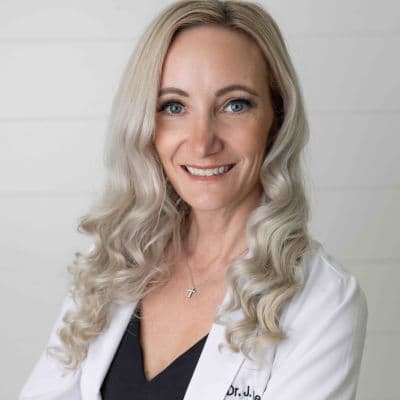
Full Transcript Introduction to Mental Health and Trauma 0:00 Why do we? 0:00 Why does one person have depression and why everyone has anxiety? 0:04 Well, that's very different from person to person 0:07 and how the body responds to things that happen in their life is really where 0:11 mental health gets treated. 0:14 And if we really look at the deeper 0:16 form of that and understand it, 0:20 in that integrative way, but also in the 0:23 developmental effect that it has on the body, 0:26 that's how disease manifests itself in the body and in mental health 0:29 as a condition that manifests itself in the body due to things that happen to it. 0:35 And the brain is not a black box in any organ. 0:40 It actually has mechanisms of action and the pathways, 0:45 you know, chemical changes that. 0:49 Do present is in 0:54 this is PTSD 0:56 present as OCD in those conditions. 1:00 Welcome to Doctor Talks the podcast where every episode leads to a healthier you. 1:05 Join us as we navigate the world of optimal health, 1:08 uncovering groundbreaking strategies to conquer chronic disease. 1:12 In each episode, we'll bring you the latest insights 1:15 from leading health experts, medical innovators, and wellness warriors. 1:19 If you're seeking to transform your health journey, 1:22 or if you're looking for answers to burning questions. 1:25 You've come to the right place. 1:27 Get ready to unlock the secrets of lifelong health and vitality. 1:30 This is Doctor Talks, real talk from real doctors 1:34 on the issues that matter to you most. 1:39 Hi. Welcome back to the Integrative Health Podcast. 1:42 I'm your host, Doctor Jen. 1:44 Today we're going to be talking to Doctor Aliya Ahmed. 1:48 She currently lives in California 1:52 and she does some interesting things. 1:55 She has a brick and mortar. 1:59 She's co-founder and medical director 2:01 of the Shaman's Healing Center in Sacramento, California. 2:05 She opened that in 2021.
Doctor Aliya Ahmed's Background and Career Path 2:08 Before that, she was a pediatric hospitalist. 2:11 And now she's practices integrative medicine. 2:14 And she was former associate professor of pediatrics 2:18 at UCSC and director of the Down Syndrome Clinic, 2:22 an affiliate of the clinic Cleveland Clinic and Dubai. 2:25 Her medical career began 2:27 as a biochemical engineer at the University of Texas, Austin, 2:31 developing biocompatible biosensors for infusion pumps and modeling 2:36 receptivity of a silicone receptors in the hippocampus of the brain. 2:41 There, she completed her medical degree and pediatric 2:43 residency at the University of Texas Health Center Science, 2:47 and then she worked at a hospital at an academic center in Texas. 2:51 She's known for mental health, a public speaker 2:54 and blogger of the Art of healing. 2:57 Doctor Emet is an immigrant and woman of color and remains 3:00 curious as a learner and educator. 3:02 Her journey as a healer has focused on treating the most need for population. 3:06 She's witnessed 3:07 the effect of trauma, complexity, and social disparity, as has on illness. 3:12 So I'm so excited to dig in more and go over 3:17 how you 3:18 went from pediatrics to having Academy Center. 3:21 So great story. 3:22 So welcome, doctor. I'm glad to have you here. 3:25 Thank you. 3:26 Yeah, it's a question I often get asked and happy to answer that. 3:29 It might be a long story, but it definitely is an important question, 3:33 I think, for all of us as we journey in health care 3:37 and what our journey looks like, because sometimes we don't even know 3:39 where it begins and and how we really end up doing the things that we do. 3:44 But I know this much about myself is that now, looking back, 3:49 everything that I have done in my life 3:52 has been brought to me, or 3:56 I have sought it in a subconscious way 3:59 and and everything I have done has aligned with where I am right now, 4:04 including, you know, studying engineering, doing biomedical research 4:09 and studying about the hippocampus, which again, as an engineer, 4:12 I had very limited knowledge about the human by biology and did not know 4:19 enough as what I know now. 4:21 And and working on the same neuron receptor system that I'm working on 4:25 right now in the clinical way for patients who have depression, anxiety, 4:31 trauma, pain, and working 4:34 at that level where we're really working with patients. 4:37 And for in an integrative way as well, supporting their body health 4:41 and mental health, their spiritual health, their emotional health, 4:44 and really allowing for think in that heart brain math 4:48 to kind of attuned to what our natural state is. 4:52 And using ketamine as a medicine, as an anesthetic drug, 4:56 which has been evidence base to really affect 4:59 treatment in the deep need conscious level. 5:02 And doing this with therapy is where we really engage 5:05 with the source of conditions such as depression, anxiety, 5:09 and why they are there as symptoms and not really as a diagnosis as a label. 5:15 But more is a understanding of one reason why things happen. 5:19 Why do we? 5:20 Why does one person have depression and why everyone has anxiety? 5:24 Well, that's very different from person to person 5:26 and how the body responds to things that happen in their life is really where 5:31 mental health gets treated. 5:33 But if we really look at the deeper core of that and understand it, 5:40 in that integrative way, but also in them, 5:43 developmental effect that it has on the body, 5:46 that's how disease manifests itself in the body and in mental health. 5:49 Is is another condition 5:50 that manifests itself in the body due to things that happen to it. 5:55 And the brain is not a black box, you know, organ. 5:59 It actually has mechanisms of action 6:03 and pathways and, and neurochemical changes 6:07 that do a 6:11 present, as you know, and as PTSD 6:16 or present as OCD or present in those conditions. 6:19 But really, there's a there's a cause and reason for how that starts. 6:25 And doing this again with a medicine that allows for one 6:29 to kind of engage at that conscious level can really, 6:33 allow for that deep healing. 6:35 And this is what we witness every single day in our center. 6:39 That's amazing. 6:39 I would like to kind of I probably didn't answer your question 6:44 of why I came from this to that, but maybe we'll get to that. 6:47 Yeah. 6:48 Well, let's let's talk about first, like what you said about 6:53 how anxiety, depression or symptoms, because that's what I say. 6:59 And I preach because these are symptoms. 7:01 These are your your body. 7:03 You know, God designed your body very intelligently. 7:07 And their symptoms are we should like, look at them.
Trauma, ACEs, and Childhood Development 7:12 We shouldn't diagnose them. 7:13 And that's what conventional medicine does, is they put all these symptoms 7:17 and then they make it a diagnosis and anxiety and depression. 7:21 And like you were saying, you know, there's a root cause, 7:24 maybe it's a child for a hood adverse event, you know, 7:28 and we know these adverse childhood events or aces and Ace scores. 7:32 We know that they correlate with chronic diseases. 7:36 And so yeah, I mean, 7:38 and so that's why I think it's interesting and why I wanted to bring that up. 7:41 Because you were in pediatrics for so long. 7:44 Yeah. So I still am. 7:47 Yeah. Okay. 7:48 So you're still you're still in pediatrics. 7:51 And is that what you started noticing is these kids with trauma, 7:56 they were developing diseases more. 7:59 Yeah. 8:00 Well when the Aces study came out and 8:03 when I attended the Academy of Pediatrics, the plenary speaker 8:06 spoke about Aces in early 2010, 8:10 and I was blown away with that talk. 8:14 I it it came it was already known. 8:17 But to have it presented in that light 8:21 that things that happen in utero 8:24 as well, and things that happened in the early part of childhood, 8:27 has an effect that leads to diabetes, hypertension, obesity and the like 8:32 made so much sense because what happens to that developmental fetus? 8:38 Right to that, to that, and even to the child as it's growing 8:41 and developing, has an effect on 8:45 how the body responds to that injury 8:48 that leads to something like the, you know, obesity. 8:52 The why is obesity rampant, more rampant in disparate conditions 8:56 where there is, you know, 9:00 extensive amount of trauma 9:01 where families have it struggle and that developmental hit occurs 9:07 and that child's only source of comfort becomes sometimes food, 9:11 you know, when they don't feel safe, when their body again, 9:14 doesn't know is is in a state of fight or flight. 9:18 It's storing energy 9:21 in case it needs it for later. 9:24 And the body's very intelligent, knows exactly what to do in that state. 9:29 It's a normal reaction for the body to have in an abnormal event. 9:35 So for example, when when a child is 9:38 in an unstable, unsafe situation, the body says, 9:43 okay, in case you don't get food the next day, what are you going to do? 9:48 What are you going to keep? 9:49 You're going to need to keep this. 9:51 So you have a for later. 9:52 And that's a normal response for an abnormal event. 9:55 But what happens over time is that with that toxic level of exposure, 10:00 which is what Aces is, toxic level exposure 10:04 of adversity that happens in the first five years of life. 10:08 If that's a continuous toxic level exposure, that stress level 10:11 state stays constant and the body then becomes conditioned 10:16 to stay in that fight or flight or feign or fall and state response. 10:21 And thus obesity persists. 10:24 That storage, that metabolic effect, that metabolic syndrome 10:28 becomes in a conditioned response. 10:32 And then that 10:34 that abnormal response 10:37 then becomes normal, which is where we work. 10:42 And so yes, I see this I've seen this so much in pediatrics. 10:46 And now that I take care of adults, 10:49 I see also that the effect of trauma that happens early in life 10:53 and now seeing them adults talking about things that happen 10:58 very, very early that persists into a condition we call anxiety. 11:04 And again, it's that same 11:06 trauma response to something that happened early in life. 11:10 And the body can never sleep. 11:11 It can never rest because it's still conditioned to think 11:15 that it is in an unsafe state. 11:18 And so 11:20 that is, you know, the kind of the arc of 11:23 now witnessing and working with patients from all ages and appreciating 11:29 that we actually have a tool that can really 11:32 allow for that 11:35 reconditioning, I would say, of the nervous system. 11:39 Right. 11:40 It's tuning the nervous system back to a place of heart brain attunement 11:46 with a heart can feel and the brain can regulate it. 11:51 That same emotional state, the brain can say, okay, you're okay, you're safe. 11:56 You had this thing that happened, but now your body 11:59 can be attuned to that fight, that trauma response. 12:04 So it's a resuscitation to that disassociate ated state that occurred very early. 12:10 Yeah. 12:11 And we kind of do this to our selves to 12:14 sometimes to say you're always watching the news, which is so negative 12:18 and worst case scenario or you're watching scary movies. 12:22 Like, I remember growing up that I watched this one movie called The Candyman. 12:27 Do you have you heard of that one? 12:29 And then I remember and I think I an older sister, so 12:32 I think I watched it when I was too young. 12:34 So I remember being terrified at night and 12:38 it's like if you condition yourself, I mean, there's one there's one thing 12:43 that's positive about, like, you know, you're walking down a dark alley. 12:47 Well, your sympathetic system is going to kick on. 12:49 You're going to be hyper alert. 12:50 You're going to be more aware, you know, or someone in the military, 12:54 you know, if they're going out and they're fighting, that's okay. 12:57 But we're stuck in that all the time because we're watching scary movies. 13:02 We're watching the news. 13:03 And and I even think in those situations where we let like scary things or we, 13:10 you know, seek scary things or, you know, people that do haunted houses 13:14 that that's actually opening up windows to spiritual like, badness. 13:19 And then that's like making it worse. 13:21 But it's it's very interesting because if you are more aware of this, 13:27 then you can step away from it a little bit easier 13:30 and maybe not overload your nervous system with even more stimulation. 13:36 Yeah. And even like what notifications are there. 13:38 So that is stimulating the brain in a negative way. 13:42 Yeah, exactly. 13:44 I mean, what you mentioned about scary movies, I will definitely say are we are 13:50 we are, you know, the way we're living 13:53 and the way what we expose ourselves to has an effect. 13:57 This I went to a movie 13:59 and I was watching this horror I didn't know 14:02 was going to be a horror movie, but it was. It was just. 14:05 And I sat there thinking, why am I traumatizing? 14:09 I feel traumatized by what I'm witnessing. 14:12 This is not normal. 14:14 This is not what movies should be about. 14:16 This is this is this is not even even possible. 14:21 And yet we're watching this horrible, horrible which is traumatic in real life. 14:28 If we witnessed that, that would be traumatic. 14:31 Why am I traumatizing myself? 14:32 I don't need to be here. 14:34 And what are we watching? 14:36 You know, what do we really, allowing 14:39 and normalizing these things that are abnormal. 14:43 And again, it comes to that, 14:46 idea of exposure, right. 14:48 Some things that happen in life of course, happen and they shouldn't happen. 14:54 But why do we? 14:56 We do have ability to say we don't need to be exposed 15:00 to this in our society, as it is right now, 15:02 with all the things that, you know, exposed in early childhood as well. 15:06 I mean, you mentioned technology. 15:08 That's that's again, a way of the it may not be a big trauma, 15:13 but it's a little tighter when these things have an effect 15:16 and have a cellular effect on the body. 15:19 So I love that you brought big tease and little tease up. 15:23 Can you explain that a little bit more? 15:26 And then maybe nerd out about the hippocampus 15:29 and the amygdala neurotransmitters, because I think 15:33 it's important to understand what is actually going on. 15:37 And then maybe you will make those changes now that you know, right. 15:42 Well, big T and little T trauma, you know, when you get when you watch a movie. 15:46 Well, I was traumatized by watching that. 15:48 And, you know, I think when it has a cellular effect, 15:52 when it's something that, you know, that is real 15:55 and it has an impact and makes that wound on you. 15:59 And big T trauma isn't necessarily 16:03 the trauma that happens, is really the trauma of that event. 16:07 But also what happens after that event and what doesn't happen. 16:12 Meaning if we have if a mother and a child, the child is separated 16:16 from the mother and the child is in an unsafe 16:21 place and doesn't know where the mom is, and 16:25 they reunite, and the mom does not necessarily 16:29 recognize that that child was in a fear state and says, oh, you're okay. 16:32 You'll find that tell still has had an impact of traumatic memory. 16:38 It still felt that fear and that detachment in that sense of, 16:42 you know, being an unsafe state. 16:45 And the fact that if it's not addressed 16:49 and again, if it's to that of degree, 16:52 then that becomes a traumatic event. 16:56 And then there's again.
Big T vs Little T Trauma and Brain Responses 16:58 But if it is, say, even even if there's a traumatic event 17:02 and the mother says, oh no, let's address this, let's recognizes 17:06 that same traumatic event may not necessarily have that direct 17:11 cellular impact because there's there is support, there's dopamine, 17:16 there's oxytocin provided in that in the in the child's brain. 17:22 That gives a sense of resiliency through that traumatic event. 17:26 And there's that there is a difference between why 17:31 in, as you mentioned, about why is it that 17:34 when we're in a traumatic state, 17:37 what was the mechanism of action, that neurochemical action, 17:41 which is again, that, you know, release of epi, 17:44 norepinephrine and epinephrine, you have to get out of that state. 17:48 You fight it, right, or you fight it 17:52 or you feign it or you 17:55 fawn. Right. 17:56 And all the different ways of responding to that trauma, 18:00 which again releases the body releases and neurochemical signaling, say, 18:04 get out of there, move your body and get out of there. 18:08 Or and so the, the, the and the cortisol release 18:13 which activates that cascade effect of movement. 18:18 Access to safety awareness, hypervigilance. 18:24 And then it gets it gets addressed, gets healed. 18:28 Right. 18:28 If it, if it has reaches to that point of safety 18:32 and if there's an attachment in the dopamine and oxytocin comes in 18:36 and there's that sense, okay, I'm, I'm safe now. 18:39 And when that doesn't happen, 18:41 when that sense of safety 18:43 becomes this constant threat, 18:46 then there's no, no, there's no, 18:49 you know, oxytocin, dopamine around that activity or that event. 18:53 And then that becomes again, a state of constant, 18:58 release, which is the body 19:00 stays in the high cortisol state. 19:03 I hope I explain that well enough 19:05 to, to an audience without being too medical. 19:09 Yeah. 19:09 And that's the, the crazy part is that this is all happening up in the brain, 19:15 and you're thinking it's anxiety or depression, 19:18 but it's actually something deeper rooted. 19:22 And antidepressants and, 19:25 you know, SSRI and anxiety meds, it's 19:28 just going to help temporarily and cover it up. 19:31 I mean, I don't know about you, doctor. 19:34 Remember, I have not I haven't seen patients 19:37 on a bunch of psych meds that were doing well or cured or better. 19:41 If that doesn't work, it's not getting to the root cause. 19:46 Yes, exactly. 19:47 I, I see many, many patients in kids included 19:50 who are on a cocktail of medication. 19:54 And we know this from research, too. 19:56 They start trials. 19:57 We know that by the time a patient has been on 20:01 at least four different options of medications, 20:05 the efficacy of that, 20:07 that final fourth change is only going to be about 7%, meaning 20:12 93% of patients are not going to respond after the fourth change. 20:17 So, you know, the first round of medication may temporaries, 20:21 but the cocktail itself, we're treating that symptom that causes, 20:26 the other medication. 20:27 And we're really just dating with different medications. 20:31 Sometimes it's the adverse effects, 20:33 sometimes it's the side effect that we're treating. 20:35 And yes, I wouldn't I also don't 20:37 see patients respond after that. 20:41 They've been on these cocktails. 20:43 And that's why 20:44 ketamine as a medicine really works on a whole different operating system. 20:48 It works on a whole bugaboo allergic system, which is, again, 20:51 the system that I was researching as a as an engineer. 20:55 And it works directly in somatosensory in that hippocampal area, 21:01 and, and in a large part of the cortical structures of the brain, 21:04 which is again in, in terms of processing 21:07 and again where trauma occurs, a trauma occurs in, in in there's 21:11 an effect on the default mode system which also involves the memory part. 21:16 Right. 21:17 Because your body has to remember, it has to remember this traumatic event. 21:21 And it and it stays in that default mode system. 21:25 So ketamine again allows for again that rebalancing of the default mode network 21:32 and allows for 21:33 again that access to the somatosensory. 21:37 To that I'm safe feeling that I'm okay. 21:41 My nervous system feels more regulated, more balanced with my thoughts. 21:46 I can witness an experience and say, I'm okay now, and I can process 21:52 that experience in a much more healthy, supported, 21:55 facilitated way. 22:00 So working in the E.R., 22:01 we used ketamine for procedural sedation. 22:06 And ketamine was actually one of the things 22:08 we would use in pediatrics the most, but it would have this weird phenomenon 22:14 where, where they would randomly vomit, you know, 22:18 like one, it could be up to like, two days after anyway. 22:22 So what? 22:24 When people think of ketamine, they probably also think of like a drug 22:28 that people they abuse, right? 22:31 They party with. 22:32 And you know, so I, I guess can you explain 22:37 what what is 22:38 ketamine and why is it get a bad rap 22:41 and you know, medically what else is it used for? 22:45 Right. 22:46 Yes, I would I was a pediatric hospitalist with and very, very familiar 22:50 with ketamine as a medicine that we used in pediatrics for short course procedures 22:56 and even used in neonates, you know, so it's a very commonly used medication 23:00 for that reason. 23:01 In a low dose sub anesthetic dosing, 23:04 ketamine works as an end in ND antagonist. 23:07 It works to help again reduce the vagal tone, the sympathetic vagal tone 23:14 to be exact, and allow for more of that parasympathetic axis. 23:20 And it works mainly on again, the central nervous system. 23:23 Is it as a cap on the allergic system increases glutamate activity, 23:27 which again, this inhibits that fear state response that 23:32 that comes conditioned. 23:36 What was your other question. 23:39 Yeah. 23:40 So what else are people you know I guess people abusing it. 23:45 Yeah. What does that look like? Right. Yeah. 23:47 Well, it is a medicine that is a dissociative anesthetic, as we know. 23:52 And, in a sub anesthetic dosing, 23:56 what I say to patients is that it allows 23:59 for you, one to access that deep meditative state. 24:02 That deep meditative state is our dream state. 24:05 And in a supported setting, that dream state is what we do every day. 24:10 We dream every single night, and we dream because 24:13 it's a restorative state that we need to have in our brain. 24:17 Our brain requires us to dream so that it can sort through,
Ketamine Therapy and Clinical Use 24:20 it can clear, it can reprocess, it can. 24:24 And when we're constantly in that activated state, we're not going to have 24:29 that kind of restorative state. 24:30 So ketamine allows for that access to a meditative state. 24:34 Now, that meditative state 24:35 is an altered state of consciousness for that brief period of time. 24:39 And yes, ketamine taken, facilitated 24:42 unregulated on street as a street medicine 24:46 can elicit a dissociative state that is unknown and right 24:51 and and supported and yes, when taken as a drug of abuse can be addictive. 24:57 And that is why it should not be a medication that used in 25:01 is a scheduled three DEA regulated medication 25:05 that does require facilitation and appropriate training. 25:09 It's a very nuanced process. 25:12 You're working with people in a state where they need support, where they hold. 25:18 Imagine if you if you and I have patients 25:21 who have unable to sleep because they have nightmares from their trauma 25:27 and their body is again, that nightmare is 25:30 is there body's way of trying to reach 25:35 or resort or process 25:37 this traumatic event, but it's, facilitated. 25:41 And so that's where 25:44 using medicine to help again, that access to that meditative state 25:47 allows for them to process that visual that, that, that experience 25:53 in a way the nervous system can relax into it, just like we do 25:57 when we dream, when we have a good sleep and wake up sometimes with that. 26:03 You know, I had a good night's rest. 26:04 My brain feels healthy. 26:06 I feel more alert. I feel more regulated. 26:09 I'm more present. 26:11 I don't I'm not thinking about something that is taking me back. 26:14 The other thing that we see with ketamine is it helps break 26:18 the negative self-talk, which happens 26:21 when, again, in that same condition 26:24 patterning, which is what leads to that, 26:27 that high degree of suicidal ideation, suicidal thoughts. 26:31 So it really works quite robustly and quite quickly on suicidal, 26:37 suicidality. 26:38 So as a medicine, as an anesthetic, 26:41 it's, it's probably more effective at treating severe depression 26:46 with suicidal ideation, especially in the emergency room. 26:50 Right. 26:52 Instead of waiting 4 to 6 weeks for an asset, right, SSRI to take its effect. 26:57 And by the way, as a surprise, even in that 27:00 treatment indication increases the risk of suicide already in that. 27:04 And so that, so using ketamine 27:07 and I know I have a colleague who said UC San Diego, 27:11 who is, doing research in and work on, 27:16 for using ketamine as a medicine to help 27:19 alleviate the mental health crisis 27:22 that we're seeing, especially in adolescents and young adults, 27:25 where they're coming in with suicidal thoughts, intent and plan. 27:30 And they aborted in the in the emergency room. 27:33 There's no place to go. 27:34 And they remain at that high risk. 27:37 So using ketamine in that setting, you know, has been shown is shown 27:41 to be quite effective, at least clearing that risk of suicidal suicidality. 27:49 Wouldn't that 27:50 be really cool to do in the ER. 27:53 And that takes up a lot of resources in the ER when you have someone 27:56 with suicidal ideation and, 27:58 and then they, they're inpatient and then they're still not getting better. 28:03 I mean I see it all the time. 28:04 It's like, oh about 10% of what we deal with in the ER. 28:08 Now. One thing like when we would 28:11 we had this my attending doctor oh is who, what we call them. 28:14 He was great but he was like the king. 28:16 He was a pediatric emergency room doctor and he was like 28:21 the king of procedural sedation, conscious sedation. 28:25 So when we would put a kid under for ketamine, 28:29 because ketamine was always the agent of choice for kids. 28:33 So propofol is another medication that people might have heard of. 28:37 I think Michael Jackson made that pretty popular, but that causes 28:41 a lot of respiratory depression, meaning, you know, you're not breathing as well. 28:45 So ketamine doesn't come with that as much. 28:47 Just sometimes kids will just salivate more. 28:49 They'll dry mouth and salivate because you're working on that parasympathetic 28:53 synthesis right? Yeah. 28:55 So we would always turn the lights down low. 28:58 We would have the parents right by the kids. 29:01 And really calm voices, you know, talk about, 29:05 you know, if they're going on a vacation, we would like set the scene right. 29:10 When one kid, they were going on a trip. 29:12 So he 29:14 like, was at the 29:15 beach and making sandcastles with his parents, you know, and 29:19 and sometimes the kids 29:20 say really silly things because they're in that disassociated state. 29:24 And then when they wake up, they have good, you know, they had a good dream. 29:29 It's like that. 29:30 The state. 29:31 Yes, but it can also work the other way. 29:34 If you're, you know, if we were using ketamine 29:36 and the kid was very anxious going into the sedation, they did not have 29:41 as good of an experience. 29:42 So that worries me when maybe 29:46 people are doing this like cowboy ish or, you know, 29:49 they're trying to do it on their own and they're getting it off the street. 29:52 Plus, if you pair it with other drugs, then you're going to increase your risk of 29:57 side effects. 29:57 So I mean, how important is it to go to 30:01 a specialist if you're even thinking about this? 30:06 In my view, it's critical in my view. 30:09 We talk about this a lot with patients who are set and setting. 30:13 What is your set? 30:15 You set is your mindset. 30:16 You know what it feels like for that person. 30:19 What does it feel like for them in that very moment? 30:22 Whether that's coming in with anxiety, fear, 30:26 you know, distress, joy, whatever 30:28 that set is, it's it's that moment, 30:31 that state of being right, that state at that very time, time frame. 30:36 And that is important for any type of treatment like this, where 30:40 we're really working at that level and supporting that set with the setting, 30:46 right, the setting of comfort, the setting of safety, 30:50 the setting that they're, 30:53 surrounded by, you know, support and guidance 30:57 and facilitation and, yes, done in the wrong set and setting. 31:02 It can activate and elicit 31:05 things that are could be dangerous and could be harmful. 31:10 And so we do in our setting, we do a lot of preparation, we do a medical intake. 31:16 And we really go through kind of their medical health, 31:20 their sleep health and nutritional how their functional health 31:23 and really looking at their gut health and preparing the body as well. 31:28 Because in a chronic the anxious, depressed state, 31:32 the body is going to be in an inflammatory state constantly 31:35 and the gut is going to know that. 31:37 And the gut communicates the organs are in constant communication with each other. 31:42 It's not an isolated system that the body works in. 31:45 He's communicating, and, 31:49 and so supporting that body, supporting the set of that body, 31:54 you know, the incident 31:55 inflammatory state, the nutritional health, 31:58 the gut health is also just as important to him to that treatment. 32:03 And then comes the the therapeutic safety, right. 32:08 Having that trust in who is going to be there, facilitating that session, 32:13 the therapist or the doctor that they know 32:17 what the medicine, can, may, 32:21 may evoke and are able to facilitate and prepare even for patients 32:26 for those kind of. 32:30 Possibilities of 32:31 what could help or what could be harmful. 32:34 And recognizing that in even before any medicine is given. 32:38 So preparing for the set and setting 32:41 and the patient's point of view is very, very important. 32:43 And the same thing happens. 32:45 And I say in a, in a setting like a treatment center, 32:49 the setting here also has to be one of safety, right? 32:55 And the 32:55 setting, even in the home has to be one of safety. 32:59 We can't you don't want to do these kind of treatments 33:01 when there's an unsafe, unstable situation outside of the treatment as well. 33:07 And so recognizing that and knowing that, 33:11 you know, that can have an impact because on that written nervous system, 33:16 that regulation and as a medicine, 33:19 as you mentioned, the difference between propofol and ketamine. 33:23 Ketamine is quite a safe medication. 33:24 And and because it's got this 33:28 sympathetic effect, meaning increases the heart rate and blood pressure, 33:33 but also relaxes the, you know, the nervous system 33:36 and increases the parasympathetic tone, a sense of safety. 33:41 But it doesn't cause that respiratory depression, 33:43 which is what we often see with other anesthetic medications. 33:46 So it's safe in that way that we don't have to have airway support. 33:51 As you mentioned. 33:53 But again, it's a matter of dosing in 33:56 and again, doing the dosing in a very safe, nuanced way. 34:01 Everybody's different. 34:02 And I say this at our center we work with one medicine ketamine. 34:07 And it has unique effects on each person. 34:11 And that's it's very 34:12 odd to say that because in medicine we get trained in saying that Lexapro, 34:18 you know, 80% of patients who take Lexapro should get better, right? 34:21 Hopefully, if that ever happens. 34:23 But there's that assumption that this medicine works the same on everyone. 34:28 And if it doesn't work on you, well, you're just 34:31 treatment resistant. 34:34 But there's everybody's body's different. 34:36 So how can this medicine work the same for everyone in the same way? 34:42 It doesn't. 34:43 And so I found that 34:46 with any medicine, with any antibiotic, with any, you know, Tylenol,
Set, Setting, and Safe Treatment Preparation 34:50 it's going to have an a different kind of effect on each person 34:54 because the body responds to it in its own unique way. 34:58 And so ketamine is an example of that effect 35:03 and how it brings not just the 35:06 the vagal tone back into a more regulated 35:11 condition. 35:12 It again works the inflammatory level. 35:15 It decreases inflammation. 35:17 It works at 35:20 the, you know, and the we we see patients 35:23 who have a healthier system, healthier gut system. 35:28 We get a deeper response. 35:31 So there's that aspect of, 35:33 of its efficacy as we, as we should expect for anybody. 35:37 Right. 35:38 If I have somebody who's who's hypertensive and they say, I'm 35:41 going to give you this medicine, it's going to bring down your blood pressure. 35:45 Well, it may bring it down ten millimeters or maybe a 20 minute. 35:49 It is it's going to be different because again, that person is going to be 35:54 it's going to have a variable effect because of how healthy 35:59 that vascular system is 36:00 and how sensitive it might be even to medications. 36:04 And we know this too, that epigenetics has a strong factor 36:08 in medical and medicine efficacy as well. 36:12 I mean, what I carry in my genes, epigenetic leave 36:15 from environmental and transgenerational trauma 36:19 is one condition that gives me at high risk for having diabetes, 36:24 because I come from a generation where starvation was a normal state, 36:30 and now having access to food increases my risk for diabetes 36:33 because my body doesn't know how to manage, 36:37 you know, the additional dose loading it gets and insulin 36:42 resistance becomes a a trauma response. 36:47 And because of that epigenetic factor, 36:50 and we see this again in many other conditions 36:53 that show up in the body because of that epigenetic, 36:57 that goes further than just me goes 37:00 to from things I've inherited and generationally. 37:05 And trauma is the same way. 37:07 You know, 37:08 some people I've seen, I've taken care of some patients 37:11 who have had no trauma in their life, but still have PTSD from something 37:15 or another that they have no explanation for until they learn about, oh, you know, 37:21 and this has been even tested on, on, on mice, 37:25 you know, given a noxious stimuli to the to the mice of a great, 37:30 great my grandmother mouse 37:33 given a noxious stimuli, the subsequent 37:37 mice have the same response 37:39 to that noxious stimuli that their great grandmother had, 37:43 even though that that mice was not exposed to that non-existing life, 37:47 as was the great grandma mouse was. 37:51 So why is that? 37:53 Because, again, that traumatic response is stored and 37:58 transferred into, 38:01 the next generation. 38:03 And, and I would say also 38:06 that these epigenetic markers can turn off as well. 38:10 You know, there's ways to recondition the body. 38:13 So and so when we heal one person, 38:18 we heal their next 38:20 their child even before they may be born, because we're reconditioning 38:25 that epigenetic effect on the body. 38:28 And that's why I find that this work is so rewarding and transformational. 38:33 I just had a patient, a very strong Christian 38:36 faith, who has been practicing 38:39 and a veteran and have been in the battle field 38:43 and really came back with a lot of moral injury 38:47 and alcoholism, you know, 38:50 and then really found God, 38:53 through his work and with the church. 38:55 And as basically somebody who 39:00 survived and had to survive, but really didn't even know 39:04 the deep wound he carried until 39:08 doing treatment, 39:10 where only after he became incapacitated. 39:14 But he was able to really connect to his spiritual self 39:19 and his access to, his deep healing 39:23 that now he filters through to his family. 39:27 And he was sharing with me his writings, 39:32 and his practice of morning pages and, 39:35 just that dialog of love and compassion 39:39 that he feels come from God's love. 39:43 And I thought, wow, not only is this patient 39:48 emotionally and physically healing, 39:51 they're spiritually healing as well. 39:55 Thank you for that story. 39:56 I'm glad you brought that up because that is 40:00 it's a big topic among Christians and psychedelics. 40:04 You know, it says in the Bible and Peter, you know, be sober minded. 40:08 The enemy is out there for attack and in the spot, 40:12 you know, alcohol that could, you know, open you up to things. 40:16 But but also, like we were talking about movies, you know, the news. 40:20 So but I think that that is where someone just they need to use discernment 40:25 and pray about it and, and be honest with the person you're going to. 40:30 You know, I'm Christian and, you know, maybe I've tried everything and, 40:35 you know, this came this came in, you know, you pray about it. 40:39 And I think ketamine, it's studied, it's FDA approved. 40:44 To me, it would be mild. 40:46 Then some of the select items and and other things out there. 40:50 It's tough. 40:51 And I remember thinking, so my son he's 12 now. 40:55 He had a cut here. 40:58 It was very deep. 40:59 And when kids are a certain age 41:00 I'm not going to suture them because then they'll look like 41:04 right, I 41:04 mean, I would be associated I've done that the same as well. 41:08 I've done exactly Gunther. 41:10 Like I could easily do this, but. 41:11 Oh, well, come on, they're eight. So my child. 41:14 Yeah, yeah. 41:15 I mean, when he was older, I staple this head at home. 41:18 Right? He talks about it all the time. 41:20 But anyway, you know, and he, he seemed fine from that. 41:25 But it's always a fear, right. 41:26 Like when you are going into a dissociative state, 41:31 you know, are you going to be more susceptible to spiritual attacks, 41:35 you know, and I just how I tell my cancer patients 41:39 to pray over their, you know, their chemo going in, you know, 41:42 I think in that way too, because, you know, a lot of my patients, 41:46 they don't want to do that, you know, they they're like, oh, it's bad. 41:49 It's like, well, yes, it can. 41:51 It's chemo is basically like poison. Right. 41:53 But but it but what is it doing, you know to the cancer cells killing the cancer. 41:58 So let's let's pray. Oh what do you tell. 42:02 You know, 42:03 I guess of any faith, but but from me being a Christian 42:06 and Christian background, this is something that I, 42:10 it's hard, you know, it's hard for me 42:13 and a lot of the new practices, you know, we say no. 42:16 So I mean, I guess ketamine, it's not New Age practice, it's more medical. 42:21 So what do you say to those people that are thinking 42:24 that it's not like you're doing ayahuasca or anything like that, 42:27 like that is totally just out of control in my opinion. 42:30 Yeah, but but ketamine, like, it's kind of like a midpoint. 42:35 Yeah. 42:36 Well ketamine, I mean, be honest, it is considered a legal psychedelic, right. 42:41 It is a medicine that does alter that 42:44 state of consciousness for that brief period of time. 42:47 What it does do, is it increases your brain derived neurotrophic factor. 42:51 It has, you know, increases 42:54 the natural fertilizer that the growth the brain needs. 42:56 Right. 42:57 And for regeneration and regenerative processing
Epigenetics, Spiritual Healing, and Narrative Medicine 43:00 and dendritic growth and making connections and healthier, 43:05 the other thing ketamine does is 43:07 it has a cascade effect of increasing production of other neurotransmitters. 43:11 So, by activating that metabolic system 43:15 internally, even in the, in the neuronal cell, and that again, 43:19 that cascade effect again increases other natural neurotransmitters 43:23 in the brain, there are after even after the ketamine is out of the system. 43:27 So I also call ketamine an anti medication. 43:30 It's a medicine that stays in the effect of that medicine 43:33 stays in the body even after the medicine is cleared out of the body. 43:37 And this is very different than other medications. 43:40 But I think what the the real answer to 43:43 what you may be asking is, well, what else is healing? 43:48 You know, when you're when you're praying, when that chemo patient 43:51 is actually praying, what what is actually healing? 43:56 That prayer 43:57 has a spiritual effect on the body. 44:01 And it cells love that. 44:04 They love to be loved by spiritual healing, 44:08 by that connection, that awareness to something that is a practice. 44:13 That's a ritual, that brings that nervous system down 44:16 to a safe state of being, an awareness that is healing. 44:21 Like I said, dreaming is another state of, you know, psychedelic state. 44:27 I mean, if we look at the brainwave patterns of a dream state 44:30 and some of the inner psychedelic, the brainwave is is very similar. 44:34 There's, you know, the body's accessing that spiritual, 44:39 experience in its own natural 44:41 way, as it does when it dreams. 44:44 And these things. 44:46 I also believe we don't need to only rely on psychedelics to really access this, 44:53 connection to 44:54 family, you know, being able to know what love feels like to have 44:58 a good, strong, supported attachment 45:02 is spiritually healing. 45:05 Prayer is spiritually healing, good sleep, good nutrition, 45:09 and that psychedelic experiences also happen without medicine. 45:15 You know, they can happen when you are fully present 45:18 and you feel something that is greater 45:21 than what you can describe or know. 45:25 And many people have described that near-death experiences 45:29 are a spiritual state. 45:31 And people have come back from near-death experiences 45:34 with that spiritual knowing that, that you can't really describe, 45:39 but you know, that there is something beyond this life. 45:43 And these are things that, you know, we talk about, 45:46 in many, aspects of, 45:51 philosophy and sciences. 45:52 But I think to bring it back into the medical setting is important, 45:58 because what I find in as a hospitalist is that we have 46:03 divided the space of healing, 46:06 and we medicalized it so much and we've taken away 46:11 that spiritual component of what else comes in 46:14 that's more, probably more healing than medicines are. 46:20 Because when a patient knows 46:21 that somebody is holding their hand while they're in a coma, 46:26 they know that they're connected, they're loved, 46:28 and that is probably much more healing than 46:33 in a lot of things we do in medicine. 46:35 And I often, you know, have said, why do we wait 46:40 till Sundays at the end of life to call the chaplain or the minister? 46:44 You know, this should be something we should be talking about. 46:49 As soon as, you know, 46:50 somebody enters into a hospital, that place should be a space of healing. 46:55 It should be a space of wellness. 46:57 It should be like, wow, I feel better here than I do. 47:00 When I was, you know, but instead it's 47:04 white walled in, 47:06 you know, people 47:09 being mechanical in some ways and very stressed and burned out. 47:13 And Covid made that very, very obvious to us. How, 47:19 you know, how the system kind of broke down. 47:22 And where we are today with health care, 47:25 a lot of patients are coming to our center because there is no other place 47:31 or resource, and they've tried everything else. 47:36 And that really. 47:39 Yeah, it's. 47:40 Yeah, it 47:42 like you said it like just white walls, sterile, very cold. 47:47 Like, you know, some doctors don't even touch their patients, you know, it's 47:52 we've lost true medicine. 47:54 But yeah, I, I love the explanation that you gave for that. 47:59 And it's just this is a great modality. 48:04 This is something different. 48:05 This is something that we're looking at. 48:08 Not that you're going to be on ketamine forever, but we're actually going to heal 48:11 what's going on. 48:12 So I'm so glad that you came here to share this with us. 48:17 And I'm sure a lot of people were reading about this therapy and wanted answers. 48:23 So how who can work with you, first of all, and how can they find you? 48:28 Well, I'm in California and I have a practice called it Charmaine's Healing Center. 48:34 And it really is a multidisciplinary. 48:37 We have trained therapists, nurses and doctors who work individually 48:41 with each person specifically to what they're seeking. 48:45 And we take care a lot of the veterans as well. And, 48:50 you know, how can they? I, 48:53 I think this is a movement, I hope, and you're a part of that as well. 48:57 Your work represents that as well. 49:00 You know, integrative practices are really about bringing 49:03 in everything into a whole state, right? 49:07 The whole health, the wholesome part of of healing, 49:11 which is beyond the prescription pad. 49:14 So looking at ways of alternative ways, which I think to me, to me, 49:18 the very traditional ways, I grew up in a in the, you know, 49:22 where we bless the water as we drank it and and that felt good and we believed in. 49:27 So yeah, it's to you know, this is blessed water 49:31 and I so to me this is a very 49:34 east and west 49:35 and bringing all of those components of, of healing into the healing space. 49:41 The other thing that I do practice is, is narrative medicine. 49:44 And narrative medicine is something that I had to get trained in 49:47 and did my master's in at Columbia, which is the art of healing. 49:52 The art of medicine is really about listening 49:55 and being present with and using creative means 49:59 other than the prescription pad, and then talking about poetry and art and 50:03 bringing in those as treatments, tools that can be 50:06 then used in in a place where somebody 50:10 is able to describe their pain. Right. 50:13 I have patients with all kinds of pain, 50:15 and I don't just ask them, oh, what's your pain scale? 50:19 You know, I tell them, tell me more about your pain and what and 50:22 how would you describe that if I had to do a feeling body map? 50:26 You know, describe to me that experience for you in your pain. 50:32 And then it then it's drawn out and represented 50:36 and so that the provider can say, oh my God, is this what it feels like? 50:41 I can't even imagine that. 50:43 And this creative 50:44 tools to really, you know, really create that relationship 50:48 between the patient, the doctor and the healer 50:52 and what heals. Right. 50:55 I call it third space in the, in between the 50:59 the space between the doctor and, and the provider. 51:02 There's that third space of what heals because both people are healing together. 51:08 The doctor is also healing themselves. 51:11 Which is why I went into this work, because, you know, 51:14 and it's it's a relationship of trust and of dignity and support. 51:20 And each person is unique. 51:21 And what they bring to that healing space, 51:25 and that is, is just as important as what the doctor brings in. 51:29 Right? 51:30 It's not just a one sided approach, 51:35 definitely in the patient's hands, you know, 51:38 and I often say that I will just let my patients talk 51:42 and they will tell me they also you can pick up on things. So 51:47 your patients are very blessed to work with you. 51:50 And thank you so much for being here and sharing your heart 51:54 and all your experience. 51:56 Thank you, John, and I appreciate being here. 51:58 And yes, I'm I'm still a pediatrician at heart and I love that. 52:03 I used to say that to my, my residents. 52:06 I used to train. 52:07 I was at UCSF, by the way, University of California, San Francisco, 52:11 and I used to tell them, don't just don't say anything 52:13 because the kids will tell you what they want. 52:17 You just have to kind of listen and watch and listen to the parents and just they 52:22 they'll tell you the answer your inner healer is, is always knowing what to do. 52:28 And and I find that we can empower 52:30 that even more in medicine with our jobs, that we have much easier. 52:35 Oh, absolutely. 52:36 I agree with that. 52:38 Well, thank you so much, Doctor Kate. You 52:42 thank you for tuning in to Doctor Talks. 52:44 We hope today's episode has enlightened 52:46 and inspired you on your path to optimal health. 52:49 Each day is a new opportunity to make choices that empower your well-being. 52:53 For more insights and strategies, subscribe to our podcast 52:57 and visit our website w ww di doctor Talksport.com. 53:02 Stay connected, stay healthy and join us next time on Doctor Talks. 53:07 Real talks from real doctors on the issues that matter to you most.
Comments