Full Transcript Introduction to PEMF and Longevity 0:00 If we get out of the way of, the body's healing process with toxins, pollution, bad lighting, Bad frequencies, lifestyle stressors, 0:10 like travel and relationships and it's tax month by the, way, all of that. 0:15 suppresses the voltage in our cell. 0:17 And so if you can support the body with this better signaling mechanism to help cells communicate better, you not only are addressing today's concern, 0:30 let's say, or the ankle or whatever it might be, but you're also helping the buddy form a foundation for better return on investment, 0:39 I guess, of everything else you are doing for yourself. 0:43 nutrition, hydration, movement, other biohacking and wellness tools that you might be using. 0:50 What if aging isn't about slowing down, but leveling up? 0:53 I'm Dr. 0:54 Isaac Jones. 0:54 This is the Longevity Leaders Podcast. 0:57 Welcome everybody to the longevity leaders podcast. 0:59 I am Dr Rudy Mueller, one of the co-hosts. 1:01 And with me today, I have Joe from Pulse a PMF therapy. 1:05 So we utilize PEMF in our clinic. 1:08 Absolutely love it. 1:09 But I would like to, you know, we have a bunch of practitioners out there that maybe have never heard of it, maybe not been exposed to it? 1:14 So tell me, give me a little background on PemF, what kind of things that you're utilizing it for. 1:19 Yeah, so PEMF is a broad spectrum of devices. 1:23 You have anywhere from a couple thousand dollar mat that you can put people on.
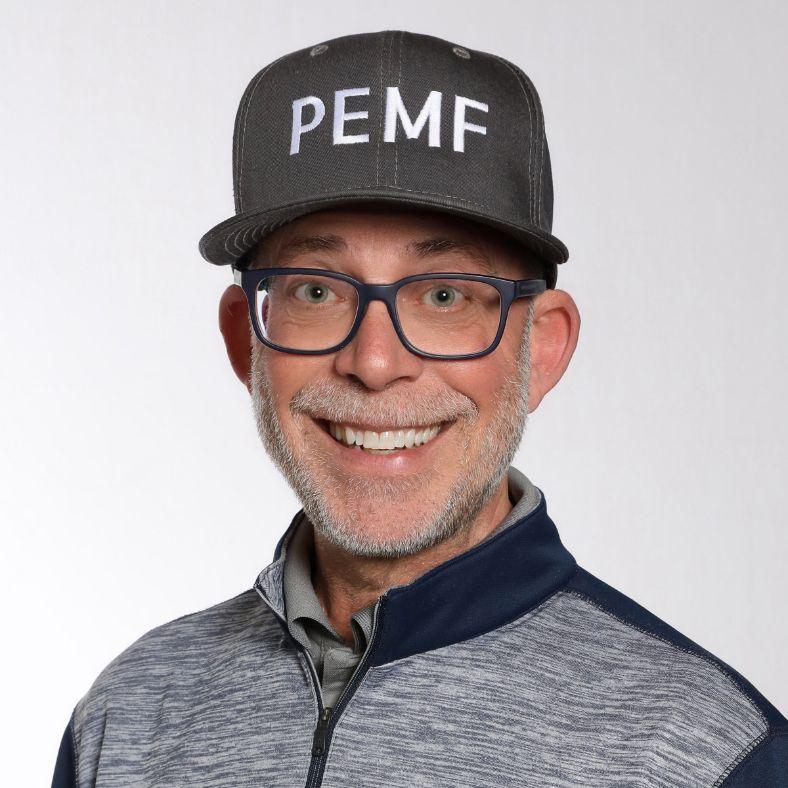
How High-Intensity PEMF Works 1:27 It's not very tactile. 1:29 So there's no really an experience to go along with it. 1:32 Basically uses resonance or more of a frequency based mechanism to sort of induce relaxation, microcirculation, restoration. 1:42 Those types of feelings, well-being in general. 1:46 Pulse, we focus more on the high-intensity PEMF, so sort of the other end of a spectrum where you can literally feel the therapy working into the body. 1:56 Either systemically, if you're on one of our full-body accessories, where we have a full bed or a zero-gravity lounger you could lie on and rest. 2:05 or just a chair, so sitting here like this and getting most of the body sort of energized in that way, all the way down to small pieces that can be applied 2:14 to a specific joint area of pain or any the head, any area the of body where there might be some lower energy or some issue that needs resolved. 2:24 So doing the PEMF over the head too. 2:26 For sure. 2:26 Okay, interesting. 2:27 So I mean, I love your shirt. 2:29 Make mitochondria great again. 2:30 Thank you. 2:31 Obviously Pem impacts the mitochondrion. 2:34 Can you walk us through like a little bit of how that happens? 2:35 Yeah, so basically the main mechanism behind a high intensity Pemp like this would be to Basically induce use electrical induction they call it to induce 2:47 electricity into the body and the cells use Electrical impulses to communicate with each other and that forms the basis of healing and resolution of issues 2:57 whether it's clearing inflammation or delivering more circulation, more nutrients, and more oxygen into an area to affect repair. 3:06 It all requires a level of electric charge. 3:09 Well, we're electric beings, right? 3:10 Totally, to do that. 3:12 And so anything that works inside the cells from mitochondrial production to production of ATP energy, all of that is supported through the use of PENF. 3:23 Yeah. 3:24 Awesome. 3:25 Um, you know, for our practice, we utilize it for lymphatic drainage too, like because of the contraction of muscles that you can get with that high intensity. 3:33 So when you utilize, when we think about PEMF and its integration into practices, what are some different call-outs to practitioners of like, 3:42 When should PemF be considered? 3:44 Is it For everyone? 3:46 When someone walks through the front door. 3:47 All right. 3:48 Yeah. 3:48 Okay. 3:48 I figured that was going to be your answer. 3:50 And I know a lot of people say that with a lotta different products. 3:53 And there are some contras, so you have to be careful of pacemakers and pregnant women and people who've had organ transplants is a contraindication for
Who Should Use PEMF and Contraindications 4:01 our device. 4:03 What about metal in the body? 4:04 That's all fine. 4:05 Yeah, you might have some sensitivity around a specific area, but we find that the high intensity PEMF can actually help with, 4:14 again, with better circulation and more oxygen and with the higher intensity activating nerve and also contracting muscles. 4:23 We look at it as a way to help strengthen tissue as well. 4:27 Okay. 4:27 So if there is an implant, a lot of times the tissue around the implant sort of atrophies. 4:33 It's got nothing to sort live with. 4:36 And there's a foreign object obviously in the body. 4:39 And so you want to do all you can to help provide as much energy and oxygen and circulation into that tissue as possible. 4:48 Because that becomes an issue for a lot of people with implant, with implanted replacements. 4:53 Right, right, very interesting. 4:55 So every person that walks into my office, I'm going to be looking at putting them on PEMF for any number of reasons. 5:01 For me, when I think about mitochondria, immune stimulation, lymphatic, or some sort of detoxification support, When you're recommending for practitioners 5:12 to utilize it, is there a particular protocol or a timing that is best for patients every day, three days a week for, and then, 5:21 then from there, like transition into kind of the business model about how practitioners can bring something like this in and be able to monetize it for 5:31 their practice. 5:31 For sure. 5:32 And so as far as protocols go, we deal more with principles. 5:35 We think of protocols as more medical and we're more wellness. 5:39 So we look at guidelines and principles and when you use high intensity PEMF, it can be very decentralized in terms of preference as well. 5:50 And so my way of thinking, and when I educate on this, with our devices in particular, is I'd rather have the person enjoy the experience rather than go 6:00 by a set protocol per se. 6:04 Because I could have two people who look identical and seem identical in most ways. 6:10 The first person wants it super intense, the second person, if I turned it up, half as much as the first person, they'd be complaining. 6:18 If you're a medical doctor, nurse practitioner, chiropractor, or other health expert that's stuck in a broken system, there's a better way. 6:26 The Freedom Webinar shows you a proven five-step system to build a seven-figure virtual health practice or how to modernize your current brick and mortar
Protocols, Intensity, and Device Differences 6:38 practice without the burnout. 6:40 Learn to create high ticket programs, automated income, residual revenue, and attract clients ready to work with you. 6:48 Book your million dollar strategy session today by clicking the link in the description. 6:59 So this, this is, I'm guilty of this and just, we have a device at home. 7:02 Um, so my wife, she cranks that sucker all the way up and it'll be boom, boom. 7:09 Right. 7:11 And that is as comfortable as I can handle myself. 7:13 That's interesting. 7:14 So you must, and the, way you just described it leads me to believe you might have, a spark gap, um, PEMF because, uh, If you don't have the ability to 7:23 control the pace of the pulsing and the intensity separately. 7:28 And on most machines in the industry, we do have a machine where you can control them independently. 7:33 The XL Pro, which was the flagship machine from Pulse. 7:37 But most PMF in a high intensity realm with the Pulsing, the tick, tick ticks that you just described, you could only control. 7:45 the Intensity. 7:46 and when you turn it stronger, it gets slower. 7:49 Right. 7:49 So with your wife, she's turning it strong and it's going like this versus you, you're turning weaker and its going this. 7:56 Right, right. 7:59 Just an educated guess. 8:00 You have a spark gap. 8:01 Okay, that might be what it is. 8:04 Man, Hugo? 8:06 Yeah. 8:07 Perfect. 8:07 Yes. 8:07 That's what it is. 8:08 Spark Gap device. 8:09 Okay. 8:10 So then talk to me a little bit about like, if you can, the differences between the Spark gap and the. 8:16 Yeah, so the difference, and we have Spark app devices too. 8:19 I'm not dissing Spark App devices. 8:24 The difference between the Spark app and the digital is that, as we said, it gives you more control and more variability of the settings. 8:32 So I can go anywhere from one pulse per second to 10 pulses per seconds at any intensity level. 8:39 So if you prefer a stronger pulse with a faster pulse, you can get that with this one device, the XL Pro. 8:48 So most clinics that look at pulse as an option are usually looking at the XL Pro for that. 8:56 Besides that, it's a maintenance-free machine and the Spark Gap machines tend to have a routine maintenance schedule that goes along with them. 9:04 Got it. 9:05 And then from a monetization perspective, if you're a clinician trying to bring it into a practice, or even we have a lot of virtual clinicians as well, 9:16 just walk me through some of the business model of like how you can help practitioners integrate this as a Sure. 9:23 So we help them ramp it into the business. 9:26 And so that's a key piece at the beginning, because a lot of people don't know what PEMF is. 9:31 If they know, what PMF, is nine out of 10 of them will not know anything about what our flavor of PMS is, the higher intensity device, 9:41 cause there's, as we said earlier, there are a lots of mats out there on the market. 9:45 where there's no tactile sensation. 9:46 So even if someone had been on one of those and they think they know quote unquote what PEMF, they're familiar with it. 9:53 Soon as they get on a device like ours or the Hugo device, if you have that at home, you know there is a big difference in that. 10:00 And the eyes get wide and say, oh, I didn't expect it to do this. 10:05 Big smile comes over their face. 10:08 I say all that to say there a ramp up time for even people know PemF to just We suggest best practice, get everybody on the device for 5-10 minutes, 10:19 focus on an area that's giving them trouble.
Business Integration and Patient Education 10:22 Somebody walks in with a sore knee or a fatigue lower back or something, let's place it specifically there if your system allows for that. 10:31 Some of them don't, some of the do, ours do. 10:35 And let them experience that and see how much you can move the needle on what is bugging them today. 10:42 That will garner that early engagement, that earlier buy-in. 10:46 And then we have a step-by-step methodology for helping ramp into the business to sell packages or memberships, however much somebody might be set up. 10:55 And so the average session, I mean with the Hugo, we're running 12 minutes, is what the standard timing that we do. 11:01 Is that pretty similar, 10-12 minutes? 11:03 Not really, no. 11:04 I think some devices out there will promote a specific time frame. 11:08 Yeah, yeah. 11:08 But I'm not quite too sure on the science behind that, if that's sort of device limitation specific, or if they're somehow applying some type of science 11:20 to it. 11:21 I view hours as use as needed. 11:24 There can be diminishing returns if you're on it, you know, multiple hours a day for some people. 11:32 But I think, again, I, think of this as such a decentralized technology that applying a new way to create energy in someone's body is going to manifest 11:46 differently in every person you can lay your eyes on. 11:50 It makes complete sense. 11:52 And so, you know, somebody, even here at the event, some people are coming in, they're complaining of something. 11:57 Hey, I heard your chair was really good for X, whatever it might be. 12:01 Low back pain, let's say. 12:03 Sit in a chair, we're doing 10 minute sessions. 12:05 We hit the timer for 10 minutes, they get up, walk away halfway down the thing. 12:09 They're looking back at me going, Yeah. 12:12 Yeah, right. 12:12 Right. 12:13 It was 10 minutes. 12:14 For goodness sake. 12:15 Other people, they're using it as more. 12:17 So in that regard, I look at it, as a great aspirin, great analgesic, a way to get yourself out of a specific situation quickly, 12:27 potentially. 12:31 I want to use this thing like I would take supplements each day and think of it as a supplement. 12:37 Like you said, our bodies are electric. 12:38 Well, why not supplement the electricity in our body with an exogenous source when needed or as consistent lifestyle routine, 12:49 part of your routine. 12:50 So we have people using it from 10 minutes a day to a couple hours a night. 12:55 That's amazing. 12:56 And then certainly if you have something acute that is really You know, you just rolled your ankle this morning and now you've walked into an office or 13:04 you have a device at home. 13:06 I would say get on it for as long as you can at a super low intensity, low pulse rate and just let it brisket, y'know, slow and slow. 13:16 Just let's trickle energy into it. 13:18 for a couple hours. 13:20 So clinically, from what we've seen with the use of PEMF, the higher intensity ones, unfortunately, I don't have your one, 13:29 but I'm just going to speak in general around PemF. 13:32 What we have seen around organs, sorry, around joints when we got inflammation that when they lay on these mats, They'll feel it everywhere, 13:42 but they'll it right where that area of inflammation is. 13:45 And then if we can target it, utilizing a coil or a device that goes around that. 13:50 The inflammation flushes out so much faster, their ability to regain mobility is back. 13:56 So it's an amazing technology. 13:59 I do like the framework because initially when getting involved with it was focused on pain points. 14:06 What you're talking about, recharging the body, thinking about it.
Clinical Uses, Stacking, and IV Support 14:10 as your way of getting the mitochondria to start producing more energy, ATP, and you're going to see these results across the board, 14:16 whether it be virtual workout, whatever. 14:18 For sure. 14:19 I think the biggest draw to PEMF, as with a lot of modalities in our space, is pain. 14:25 Yeah, right. 14:25 Pain, number one. 14:27 Number two, some other unresolved health concern that they've been digging at for years. 14:33 I've been to every type of office you could possibly imagine. 14:36 Tried this, tried that. 14:37 So that's number two. 14:38 And then just overall resiliency. 14:42 For anyone into your point, when you help the body obtain more energy, it creates it itself. 14:51 and the body can heal itself. 14:53 If we get out of the way of body's healing process with toxins, pollution, bad lighting, and bad frequencies, lifestyle stressors like travel and relationships, 15:06 oh it's tax month by the by, all of that suppresses the voltage in our cells. 15:12 And so if you can support the bodies with this better signaling mechanism to help cells communicate better, you not only are addressing, 15:23 you know, today's concern, let's say, or the ankle or whatever it might be, but you're also helping the body form a foundation for better return on investment, 15:35 I guess, of everything else you doing for yourself, nutrition, hydration, movement. 15:42 other biohacking and wellness tools that you might be using. 15:45 If you're using a sauna to detox, why not prep the cells and prep body for better extraction of toxins so that the sauna can now be more efficient. 15:57 Sure. 15:57 if you are trying to apply an oxygen therapy like an HBOT or an ozone therapy, let's say, or oxygen nano bubbles in a bathtub, 16:06 we see all kinds of things. 16:08 The point is to help the body be more absorbent, if you will, or assimilate those things more efficiently. 16:16 So why not sort of prep that terrain, make the buddy more responsive to those, whether it's something coming in or something trying to leave the, 16:26 you're helping that process. 16:28 I always say, increase your ROI. 16:31 A lot of people are spending a lot a time going to a lotta conferences, spending boatload of money on whatever they think might be the magic bullet or 16:41 do the trick for them, but they forget that there might something out there that will help support all of the things they've already put into play. 16:49 Right. 16:50 And there's the being a foundational piece that we can utilize all of these other tools, uh, modifiable lifestyle factors that are just a build off of that. 16:57 For sure. 16:58 That's it. 16:58 Some of them you can even stack together. 17:01 Yeah. 17:01 So Pulse ends up being great stack for IV therapy. 17:05 Right? 17:05 That is probably the biggest no brainer. 17:06 Your IVs will run faster. 17:08 A lot of people here we met this week, you know, running IV clinics or they have some form of IV nutrition in their med spot or something like that, 17:16 um, Um, and you know, we've see all the time IVs running in half the. 17:21 And things like NAD plus that usually present symptomology for people while they're on it. 17:27 They're feeling pressure. 17:28 You have to slow the drips way down, do them in three to four hours. 17:32 A lot of times people that sit in a pulse chair or a Pulse lounger when they are getting their N.A.D. 17:37 drip, will do it in an hour to an, hour and a half or, or even less. 17:41 That's really interesting. 17:42 It's been really incredible that way. 17:45 I've seen your devices and they're attractive and look like they can be laid on any type of table or in a type chair. 17:52 For sure. 17:53 So for practitioners interested in seeing and learning more about Pulse, is there a website, Instagram, whatever that you can draw them to or tell them? 18:02 Yeah, you're welcome to visit PulsePMF.com. 18:05 That's the general company website. 18:07 I do a lot on my personal Instagram for education.
Where to Learn More About Pulse 18:11 And so I put out, I try to put a a of content that my clients, my B2B clients can utilize to educate their audiences and just leverage and repost and share my, 18:25 I do a lot of tweet like posts where I'll just post a one or two liner about PEMF and the benefits of that. 18:32 And so I'm at, um, if you just do PMF Joe on Instagram, you'll find me. 18:37 PM F Joe. 18:38 All right. 18:38 I remember that so pulse, uh, pmf.com. 18:43 Yep. 18:43 Yeah. 18:43 You'll fine me on. 18:47 Well, great. 18:47 Well thank you so much, Joe. 18:48 You really like me, man. 18:49 I appreciate it. 18:50 Yeah, I appreciated it, all right. 18:51 Thanks for listening to the Longevity Leaders podcast. 18:54 A Lungevity Leader's community is on mission to transform 100 million lives by 2040. If you enjoyed the show, please share this with somebody that you know, 19:03 especially another doctor or physician, but also click that follow button. 19:07 Until next time, stay strong and live long.

Comments