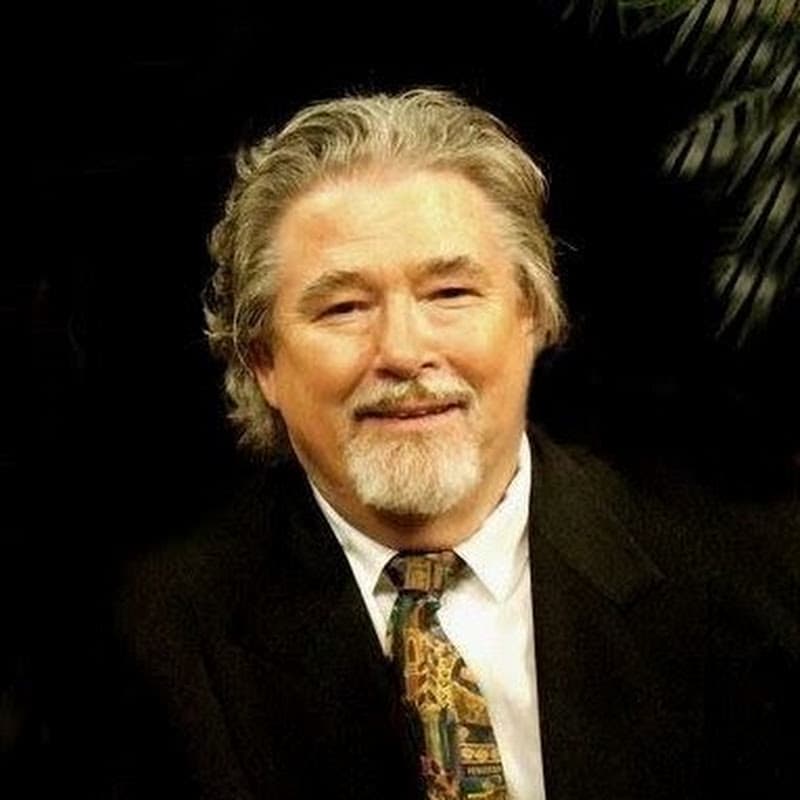
Full Transcript Introduction to Diet and Allergies 0:00 There's no perfect diet for everybody. 0:02 I get asked this question all the time. 0:04 Now, actually, if I had to in the dark suggest a diet or someone, I would suggest the Mediterranean diet. 0:12 It always beats out all of the other diets when they're compared in large scale studies. 0:18 Some people, particularly with horrible gut problems and allergenic problems, do better on a carnivore diet, for a little while. 0:30 But overall, the diet that works the best for everybody is the Mediterranean diet. 0:36 Hi and welcome to The Balancing Point. 0:38 I'm Dr. 0:39 John Needers and I am here to make traditional Chinese medicine, functional medicine and integrative health simple, practical and fun. 0:49 So you can restore balance, boost vitality and enjoy a healthier life every single day. 0:57 Hi y'all, this is Dr. 0:58 John, back here with another presentation of The Balancing Point. 1:03 And you can find these episodes on The balancing Point or at Dr Talks or any of your favorite outlets for podcasts and videos. 1:11 So today's presentation, I will be doing a PowerPoint, but it will also flow nicely if you're just doing it as an auditory file. 1:21 If you're doing it as a visual, sometimes it goes a little bit slow and you might want to pick it up to one and a half times speed. 1:29 That's how I watch almost everything. 1:31 So today I want talk about the combination of traditional Chinese medicine and functional medicine to calm allergic reactions.
Show Intro and Episode Overview 1:39 Here we are in springtime again and we're going to be flooded in my clinic with people coming in with tons and tons of seasonal allergies. 1:49 we always get a significant number of food sensitivities and food allergies, which we're treating also. 1:55 So I'm going to talk about both of those today. 1:57 And again, I am going talk it mostly from a traditional Chinese medical point of view. 2:03 In another episode I'll talk more about it from functional medicine point-of-view. 2:07 Today I will be mostly TCM with a little functional. 2:11 Treating allergies and foods sensitivites. 2:15 So what's traditional Chinese medicine? 2:17 Just to kind of kick us off, Chinese Medicine is well over 2,000 years old. 2:22 And you notice I didn't say traditional, because what is now called traditional is not. 2:28 It's really post Maoist Chinese Madison, and it was made so that it fit better with Western medicine. 2:36 And so there's great value in both, in all of those systems. 2:39 I was trained by several pre-Maoist doctors, and so I got that view also. 2:45 Now, the oldest book on Chinese medicine and health that still exists that we can find is called the Huang Dini Jing. 2:53 And that's translated as the Yellow Emperor's Classic of Medicine. 2:57 The Yellow Emperor is the famous empire that united all of China. 3:02 He caused massive canals to be constructed to link the North and the South for commerce. 3:15 coins and coinage and ways to pay for goods. 3:20 And so he's quite, quite famous. 3:23 So the book, the Huangdi Nejing is a conversation that Huangde, The Emperor, is having with one of the people in his court,
What Traditional Chinese Medicine Is 3:32 who's a doctor, and he is asking him questions. 3:35 You're like, why do people die at 50 years old when I've heard they used to live to be over 100? And so the person he's talking to goes into great detail 3:46 about how to live to be a hundred years old. 3:48 And most of these old Chinese doctors lived into a ripe old age because they followed their own advice. 3:55 Kind of crazy, huh? 3:57 It's extremely accurate, the Huangdi Neijing, and it's still useful for lifestyle and for treatment, for seasonal eating, 4:04 or how much you should sleep at different times of year, etc. 4:08 Now, it originated in China, but China and India, you know, ideas were going back and forth and Japan slipped a few things in there. 4:16 Not so much at the beginning, they were very much influenced by Chinese medicine. 4:22 Now, Chinese medicine, as we call it, or some people call its Southeast Asian medicine is the primary type of medicine that has been practiced in that 4:35 area for 2000 years. 4:36 And it is still practiced today. 4:38 I studied in several medical hospitals that were Chinese medical. 4:45 acupuncture, etc. 4:47 Huge hospitals. 4:49 The largest stroke hospital in the world is in China at that hospital. 4:56 Now hold on to your seats here. 4:58 They treat 10,000 stroke and neurological patients per day. 5:04 10 000 per person that ran that. 5:08 Hospital for many, many years won tons of awards as the highest stroke recovery rate of any hospital in the world by the Edinburgh scale, 5:19 which is comparing all forms of medicine for stroke care, was one of my teachers. 5:25 So the issue of traditional Chinese medicine is we're focusing on balance in body. 5:32 It uses natural and holistic treatments. 5:35 Those terms are often misunderstood. 5:38 They used animal products, they used insects, plants, etc. 5:44 It treats the body, mind, spirit, and it always, always keeps in mind the environment. 5:50 The main goal is to restore balance so the Body can heal itself. 5:55 I've often told patients, there is more intelligence in one cell in a human body than in all the books ever written about medicine, 6:04 right? 6:04 The Body knows how to heal Itself if we simply allow it to be in balance. 6:10 So that's the main goal of Chinese medicine. 6:13 So if you have an overactive immune system, which often happens with allergies, we don't want to shut it off. 6:18 That exposes you to all sorts of other illnesses. 6:22 If you've watched any of the commercials for a variety of skin conditions, et cetera, or colon conditions. 6:29 Crohn's disease, ulcerative colitis, dermatitis. 6:32 Always in those ads, they'll say it can cause death. 6:35 Seriously. 6:37 And all sorts of other problems. 6:38 Well, we want to get to the root of the problem and restore equilibrium and then the body doesn't need those strong treatments. 6:48 So some very core concepts. 6:51 Qi, we talk about Qi a lot. 6:53 Now I'm not going to go into detail because there are so many interpretations. 6:58 If you look at a Chinese dictionary, there's a long list. 7:02 So we often think of it as vital energy or life force. 7:06 can be translated as breath. 7:09 So it is just critical. 7:11 Without qi, you don't live. 7:14 And then this idea of yin and yang, it's the balance of opposites. 7:18 By the way, they're complementary opposits that mutually engender each other. 7:25 One cannot exist without the other, now you can more ying or you could be more yang. 7:31 but they must coexist. 7:33 Now think the theory of relativity by Einstein, where he said E equals MC squared. 7:38 So he's saying energy equals mass times the constant of the speed of light squared, in that equation, the M or mass is the yin, 7:48 it's the solid, its the material, while the E or energy is more yang. 7:54 It's this stuff that you can't really see as well. 7:56 And so it is this balance of y in the solid mass and yang, the vital energy that keeps us moving and keeps alive and keep us healthy. 8:09 Now the meridians, which has many, many different translations.
Core TCM Concepts: Qi, Yin-Yang, and Meridians 8:15 Some people call them channels, some people called them meridian, but basically they're energy pathways. 8:22 This is so misunderstood. 8:23 These meridians, 223 out of 224 points that were dissected lie directly over nerves and generally over nerve bifurcations where nerves bificate or split 8:40 off from each other. 8:42 And by treating at those points, you're affecting the neurology. 8:46 Now, there are many, many other things that get affected, but that's one. 8:50 We can measure those. 8:51 So we have many devices in our office to measure the energy flow, the chi flow the resistance to flow in those channels. 9:01 It's palpable. 9:02 If you've been trained, then you can actually feel that flow. 9:07 Catherine, who works with me and does most of the acupuncture, One of the things she will do is to analyze with her hands the chi flow in the meridians. 9:16 Now, again, the Chinese aren't the only people that discovered this. 9:20 See, they didn't create it. 9:22 That's what people think. 9:23 They made this up. 9:24 they created it, They didn' t. 9:26 It is a system. 9:27 it is in every body. 9:29 Many other cultures have identified those exact same energy systems and describe them. 9:35 Ayurveda goes into great detail about that, The Indian systems. 9:40 The Mayans called them the rivers, I'm sorry, the wind and the channels. 9:44 The Incas called him the light, The Rivers of Light. 9:50 So many cultures knew this. 9:52 Utsi the Iceman, 6,000 years old, they pulled him out of the Alps. 9:57 where he had been buried in the snow for 6,000 years. 10:01 And he has the meridians tattooed on his body and the points that they would treat his problems were tattoo on this body. 10:11 So we're also gonna talk about organ systems and they don't always line up with Western organs, like the heart is a heart, 10:19 but in Chinese medicine has many, many other known functions. 10:25 In fact, the term for heart is sheen, which means heart mind, it's both. 10:30 And so a much better understanding of the interconnectedness energetically. 10:35 Western medicine's coming along, they're kind of figuring it out. 10:39 They're seeing that these meridians are real. 10:41 There's seeing these organ systems really do have a connection. 10:45 So here's how TCM views allergies. 10:47 they see it as an imbalance, not just an immune reaction. 10:52 If the body's in balance, it won't have that immune reaction. 10:55 So in Western medicine, allergies are caused by the immune system overreacting to some influence, right? 11:02 It might be pollens, grasses, molds. 11:04 It may be a food. 11:05 In TCM, traditional Chinese medicine allergies happen when the bodies defenses are either weak or unbalanced. 11:16 Allergies are often linked to these following energetic and organ systems in Chinese medicine. 11:24 Lung weakness. 11:25 For example, the lung system at TCM controls breathing and immune defense. 11:30 Now, if you think about it, likely place for pathogens to attack. 11:39 It is the only organ that comes into direct contact with the environment. 11:44 You're breathing things in. 11:46 And so having an immune defense in the lungs that is very, very powerful is critical. 11:52 So weakness in lungs can lead to hay fever or asthma or any number of other problems. 11:57 Spleen weakness. 11:58 Now spleen, there are two characters for spleen in Chinese medicine. 12:02 One is the spline as we know it, the organ that holds your blood, et cetera, same as Western medicine, but splean otherwise is a functional, 12:13 a function issue. 12:14 And if you look at that function, it's really the function of the small intestine and the pancreas and digestive enzymes.
How TCM Views Allergies and Food Sensitivities 12:23 And so spleen she weakness can lead to digestive dysfunction, food sensitivities, allergies, weight gain, edema, swelling, 12:34 fatigue, right? 12:34 Because what we say in Chinese medicine is that the spleen absorbs or draws upward the pure essence from your food. 12:45 That would be your vitamins, minerals, etc. 12:48 It will then allow the turbid to flow down and that's your stool that is going to come out. 12:55 And so the spleen is responsible in Chinese medicine for that function. 13:00 So if it's weak, You're going to have fatigue, you're gonna be tired. 13:04 You are going gain weight, right? 13:06 You can absorb that which you should not, and you won't absorb, that's what you shouldn't. 13:12 And then we look at external factors like wind and dampness. 13:16 There's a saying that the wind is the leader of the hundred evils. 13:21 I'll tell you, in terms of climate, I'm okay with hot, cold, rain, boy do I abhor wind. 13:30 So, you know, maybe it's the Chinese medicine in me, I don't know. 13:34 But every year I get a little more and more sensitive to the wind. 13:37 Now, food sensitivities in TCM, this is how I got into Chinese Medicine and functional medicine was around food, foods sensitivites and digestive issues. 13:50 And so, Food sensitivities are related to the spleen and stomach systems, which are paired organs. 13:57 We say that the stomach rots and ripens the food, Which is actually what happens, right? 14:03 That's where it's being broken down so that it can pass into your small intestine. 14:08 So there are many schools of thought in Chinese medicine, just like there is in medicine. 14:12 Just like they are in psychology. 14:14 You can be a Freudian or a Jungian, cognitive behavior specialist, etc. 14:19 Or in economics, you know, lots of economic theories. 14:22 Same as in TCM. 14:23 And I am of the school of The Spleen and Stomach. 14:27 My hero is Li Dongyan. 14:30 Li dongyan wrote the Pi Wei Lun, or can be translated as the classic of THE SPLEEN AND STOMACH, in around 1249 A.D. 14:39 And man, he nailed it. 14:40 What we call metabolic syndrome, diabetes, heart disease, overweight, et cetera, cholesterol problems. 14:49 He nailed in 1249. And he came up with profound treatment plans for all of those issues. 14:59 that the spleen and stomach are responsible for digestion and turning food into energy. 15:04 If they're weak, the body won't process foods properly, leading to sensitivities rather than immediate allergic reactions. 15:12 An immediate, allergic reaction, like someone eats a peanut and dies, is a different process. 15:19 Now, poor digestion equals poor energy production. 15:22 You get bloating, fatigue, diabetes, other blood sugar problems and skin reactions. 15:28 Some common TCM treatments for allergies. 15:31 Herbal medicine is the number one form of medicine in China today. 15:37 I studied in hospitals where enormous hospitals that were really primarily herbal medicine and some Western medicine, and a little bit of acupuncture. 15:48 Acupuncture there was more for anxiety and for musculoskeletal injury, sports medicine, et cetera. 15:58 Now, acupuncture helps everything. 16:00 We use it for a lot of different things. 16:02 we use a lots of electro acupuncture, which makes it even more powerful, and we can use certain frequency patterns to treat neurological conditions on 16:12 the brain, etc. 16:13 But still, herbal medicine is primary. 16:16 It is personalized. 16:18 Herbal formulas are often used to strengthen weak systems, but they can also be used a common control excess systems. 16:26 They're very powerful antiviral formulas, very power antibiotic formulas that have been used for 2000 years. 16:33 There are very, powerful anti-fungal formulas. 16:37 In fact, there are over 10,000 well-researched formulas now. 16:42 Most people are not aware of this, MDs, I find, are usually have no idea. 16:47 And there are about 10,000 studies published per year on herbal medicine in peer-reviewed journals worldwide. 16:57 These are the same journals, these are same researchers that are doing the pharmaceutical research, okay? 17:04 These PhDs that doing brilliant research. 17:08 Number three is diet therapy. 17:10 There's no perfect diet for everybody. 17:13 I get asked this question all the time. 17:15 Now, actually, if I had to in the dark suggest a diet or someone, I would suggest the Mediterranean diet. 17:24 It always beats out all of the other diets when they're compared in large scale studies.
TCM Treatments: Herbs, Diet, and Lifestyle 17:32 particularly with horrible gut problems and allergenic problems, do better on a carnivore diet for a little while. 17:39 Some people do it better in a vegetarian diet. 17:42 But overall, the diet that works the best for everybody is the Mediterranean diet and you can see why. 17:49 It's a balanced diet, but in general, we're all different. 17:54 We all have different nutritional needs. 17:56 For example, in children, and menstruating women, I'm constantly trying to get their iron levels up. 18:03 In men and menopausal women I am constantly, trying get the iron level down because it can cause more heart attacks. 18:11 So again, how old are you? 18:12 What's your gender? 18:13 Et cetera. 18:14 What is your genetic background? 18:16 So everybody has different nutritional needs. 18:19 Diet therapies generally avoid foods that weaken digestion, like too much cold or too processed food. 18:28 And then lifestyle, huge, for Chinese medicine and functional medicine. 18:34 Lifestyle style habits like sleep. 18:36 How much sleep are you getting? 18:38 You need a lot more sleep in the winter than you do in summer. 18:41 And in The Wang Bin Ne Jing, it basically said in this summer, go to bed late and get up early. 18:50 In the winter, go bed early and go up late. 18:53 Huge difference. 18:55 At this time of year, which is spring, it's a pretty even balance as we're getting toward the time year where the yin and yang, 19:04 the night and day are more balanced. 19:06 So some examples of dietary advice now generally recommended again everybody's different you know someone that's pregnant may get completely different 19:16 advice than an 80 year old man so generally warm cooked foods cooked food are much easier to digest now smoothies are generally okay because the cell walls 19:31 have been broken down on the vegetables. 19:34 If you don't do something to break down the cells walls, it's very, very difficult to get the nutrition out of it. 19:40 So, Chinese like warm, cooked foods. 19:43 Very easy on-the-gut. 19:46 For food sensitivities, we like a lot of soups, a lotta cooked vegetables and very specific soup for very-specific issues. 19:55 Again, cold foods, ice cream, raw foods weaken the digestion. 19:59 Avoid excessive dairy and sugar. 20:03 Eat according to season. 20:04 And seasonal eating is so critical to health. 20:07 What you eat in the spring should be very different than what you ate in November and December. 20:13 For example, in spring, we should eat a lot of cooked green vegetables. 20:18 A little raw vegetable there is okay because it's very cleansing. 20:22 You're not going to get as much food value out of it as if you, say, lightly steam some broccoli for five minutes. 20:28 you're going get more food-value out if it than if eat it raw. 20:32 But the raw, the fiber that's supplied will be cleansing to your digestive system. 20:38 So spring is the season of the liver. 20:40 And after a long winter of eating heavier foods, The liver will need cleansing foods. 20:46 You've got to clear everything out so the liver can do its job. 20:50 And then we want to identify trigger foods again. 20:53 The goal is to support the body rather than just suppress symptoms. 20:59 In fact, suppressing symptoms will generally make things worse in the long run. 21:04 For example, if someone is having histamine reaction, which is just rampant in our country, mast cell activation syndrome, 21:13 histamines problems which I'm going to do a talk on very soon, are just rampant. 21:19 But if you take antihistamins, what antishistamine do is soak You've got cells called mast cells. 21:27 When they are stimulated, they, in a particular way, break open. 21:32 They release histamine into your system. 21:34 Histamine then travels to the target cells, so you have something in your eye. 21:40 The histamines will cause your eyes to water and tear up to wash it out. 21:44 If you eat something that's causing a problem, then you may have created a lot of mucus trying to wash it out. 21:52 If you get pollen in your nose, the histamine will activate cells in you nose to release fluids to try to watch out the offending particles. 22:03 Okay? 22:04 Now, if you do an antihistamine, it does not block the release of histamines. 22:11 It blocks the uptake of histogram. 22:13 So what happens? 22:15 The longer you're on an antihistamine, the more histamine builds up in your system. 22:20 Histamine is very bad for your systems. 22:23 It increases dementia risk and a variety of other risks. 22:27 And that's why it's so hard for people to get off of antishistamines. 22:30 Because when they do, suddenly all this built up, backed up histamine is going to affect them. 22:36 So what we do is we work on the mast cells. 22:41 We have a variety of formulas and supplements that make the mass cells less likely to break inappropriately. 22:50 Now, we want them to do their job. 22:55 you know, in the mast cells, and so they get broken open too often. 22:58 So we have things that bind the mass cells which is a very, very safe way, much safer than doing antihistamine. 23:07 In comparison to conventional Western medicine, Western is very effective for fast symptom relief. 23:13 You get pumped up with antihistamines, or maybe you do steroids, you're going to get very quick symptom relief. 23:20 I'm not against that. 23:21 There are times when that can be critical. 23:23 It can life-saving. 23:25 However, there is a reaction to that, antahistamine, avoidance of allergens, allergy shots, and antacids if you are having gut problems. 23:36 All of those do have their own problems that they cause.
Western Medicine, Functional Medicine, and Histamine Support 23:40 In TCM, we treat the root cause. 23:44 Now that takes a lot of diagnostic. 23:48 acumen, but we treat the root cause to create long-term balance. 23:53 And so we prevent allergies from happening by strengthening the body over time. 23:59 So that's not as quick as Western medicine. 24:02 Sometimes I'll have people on antihistamines or even steroids and we'll start the TCM treatment to help them get weaned off of the Western medicines. 24:12 We do that with a lot of things, high blood pressure, diabetes, many things we treat side by side. 24:18 Functional medicine, although in something now, we use a lot of enzymes like DAO, diamine oxidase, for gut histamine. 24:27 And so when people have low levels, they have insufficient levels of diamene oxidases in their gut, it's almost like a sponge. 24:36 They don't soak up the histamines that's been released. 24:39 Then if they had any problems with the lining of the gut so that those histamines leak out, then you have allergic reactions. 24:48 So, DAO can be magical for people. 24:52 Functional medicine also has very, very advanced sensitivity and other testing. 24:57 We do a lot, a LOT of functional medicine testing, leaky gut, small intestinal bacterial overgrowth, Fungal overgrowth, tons and tons of things. 25:10 So doing them side by side is fabulous. 25:14 Strengths and limitations of TCM, it's holistic. 25:17 That's a strength. 25:18 It's personalized. 25:24 Follow the motto that doctors swear to follow, which is first do no harm. 25:29 Now limitations, often the results are a little slower. 25:32 You do need trained practitioners. 25:35 The diagnostic process, you really shouldn't be doing yourself, because if you just go on ChatGPT or somewhere else and plug in some symptoms, 25:46 You can get absolutely the wrong treatment principles. 25:49 So you do you need a practitioner. 25:51 It's not a replacement for emergency care. 25:54 But can we use for somewhat urgent care, right? 25:57 Someone has a sinus infection that's horrible, then they could go to urgent or they can come to us. 26:04 So TCM is very helpful, but it's instant and it should not be considered a replace for an emergency treatment for severe allergies. 26:14 And remember, the use of functional medicine with TCMs is powerful.
Conclusion and Call to Action 26:21 So, I want to thank you and in conclusion, remember TCM and functional medicine focus on creating balance. 26:29 They focus getting to the root of the problem and they focus you as a unique individual. 26:35 And we treat allergies as internal imbalances of either weakness or excess or a combination of both. 26:42 We combine herbs, acupuncture and diet. 26:45 It can be used alongside modern medicine and can enhanced with functional medicine testing and supplements. 26:51 So thank you very much for watching and or listening and please come back and see me again. 27:00 In the meantime, be happy, Feeling out of balance? 27:16 Most approaches just manage symptoms. 27:19 Here we get to the root. 27:21 So real healing, real clarity and balance can begin. 27:26 Visit alamedaacupuncture.com. 27:30 That's alamedaacupuncture dot com to learn more, explore our supplements or book a call. 27:37 We'd love to hear from you.
Comments