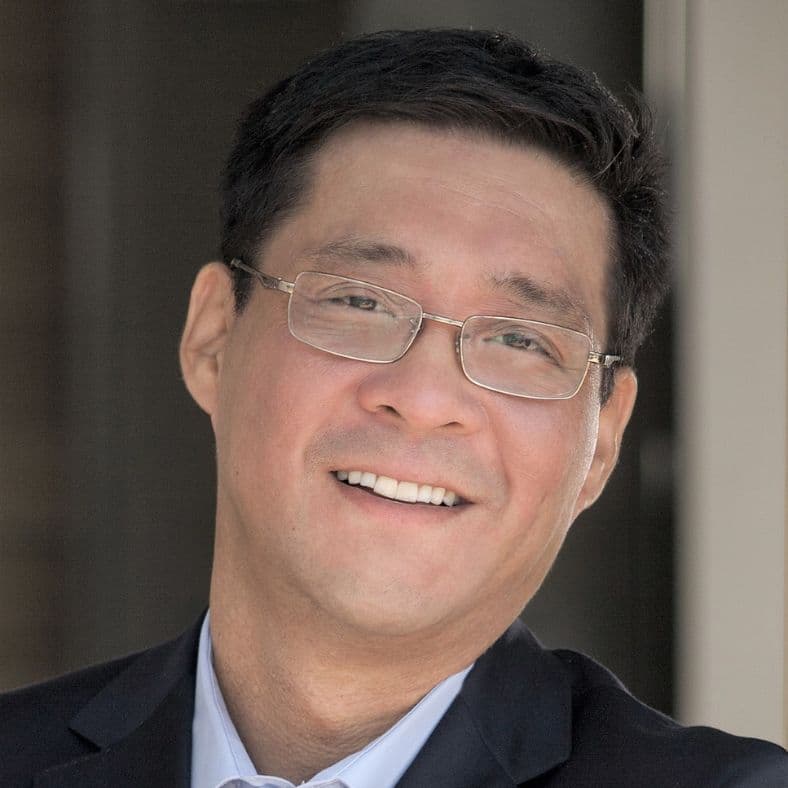
Full Transcript Introduction to AI and Medicine 0:00 I would say that the most important thing that we could get rid of is disease and suffering. 0:06 Because I think that whole future of AI is not going to be so much everything that everybody thinks about, the jobs and all of those, 0:15 because those are going be next to nothing. 0:18 I even the cars or the robots are gonna be the next of nothing, I thing the real contribution for the future in the AI area is going to be in medicine. 0:29 There is no doubt in my mind that it's going make the big, big changes in our future. 0:35 Hey there. 0:36 Welcome to the Recharged Biomedical Podcast. 0:38 I'm Dr. 0:39 Edward Park, and if you're curious about regenerative medicine, you've come to The Right Place. 0:43 We're diving into the latest breakthroughs in telomeres activation, stem cell exosomes, all the cutting edge science that's shaping the future of healing 0:51 and longevity. 0:52 Let's get started. 0:54 Hi, everybody. 0:54 This is Dr. 0:55 Ed Park, your host of the Recharged Biomedical Podcast. 0:58 Today, we're very lucky to be joined by Dr Paul Tai. 1:01 Hey, Paul. 1:02 Hello there. 1:04 Great. 1:05 So Paul and I met about six or eight weeks ago. 1:07 I was watching some videos. 1:08 He said, I need to talk to this guy and see what's going on. 1:11 And so he invited me to dinner with his lovely wife and his twin daughters, and it was an amazing meal. 1:17 Indeed, as advertised, the best Chinese food I've ever had. 1:21 Thank you. 1:21 It's wonderful. 1:23 Yeah, it was really good. 1:24 So today we're going to talk about mu cells at the end. 1:26 That's a topic that's come up a lot lately and people are a little confused. 1:31 Dr. 1:31 Ty is going disambiguate that.
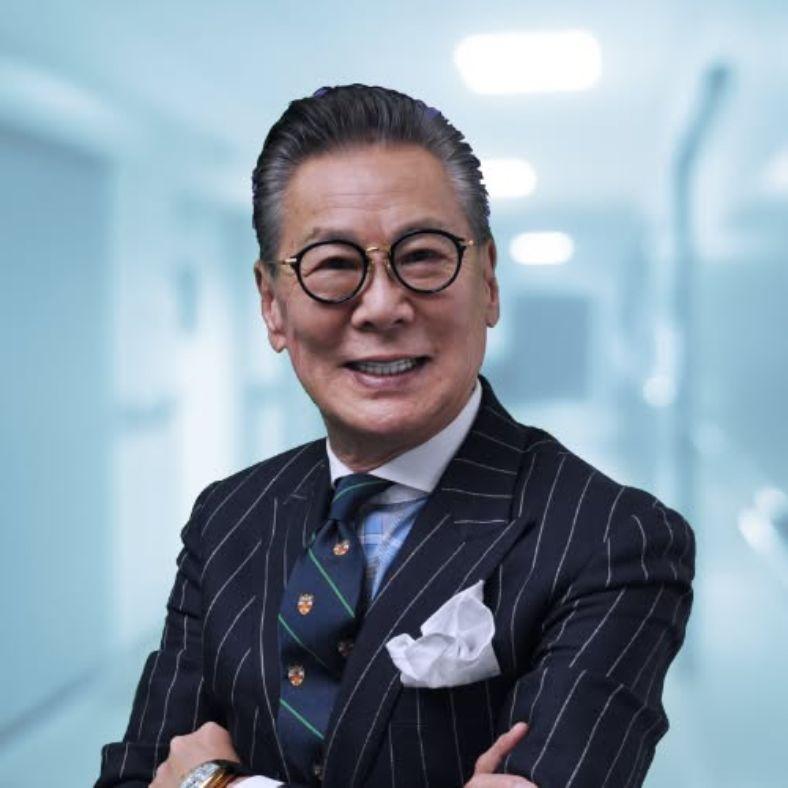
Podcast Welcome and Guest Introduction 1:34 But the first third, I just want to take a look at anti-aging because you've been there from the inception. 1:39 I hope you don't mind me saying you're about 79 years old. 1:42 And so in the old days, Goldman, Klatz, and GM Papa, you helped them set up the A4M. 1:49 So you've seen anti-aging from the very, very rough beginnings to now the sophisticated lectures and accreditation and vendors. 1:58 Can you share some of that story as how you got started in anti aging from a doctor of podiatry medicine, right? 2:05 Yes. 2:06 Well, I was very lucky to have been one of the top podiatric reconstructive surgeons. 2:19 So, i was the largest in the state of Michigan, probably the Top 5 in So, and I taught a lot of doctors surgery because I sat on the board of licensing 2:32 with under two different governors. 2:34 So I really was the resident king of the state of Michigan. 2:38 And so it was very, very good education for both myself as well as the students. 2:47 But however, I developed this huge big practice, but But I was not happy, I, uh, was a very sick puppy, you know, and I wasn't a good camper. 2:59 I had a big stomach, around 40 inches or more and was falling asleep in the middle of the day. 3:10 I couldn't get up in the morning at five o'clock to do my rounds. 3:14 It was just not very happy. 3:16 So anyway, I quit this very large practice of 135 patients a day and 30 nurses. 3:23 And I went back to school and I became a board certified in. 3:28 in anti-aging and started to join Dr. 3:32 Robert and Dr Klatz. 3:36 I was teaching mostly anti aging all over the world. 3:41 Uh, I did, um, did start with the Bali anti ageing, uh, at the medical school as well as in Thailand, opened the Mexico antiageing.
Dr. Tai's Early Career and Anti-Aging Origins 3:51 Open Brazil antiaging. 3:55 So you're you spent a lot of years what at least 12 16 years in Brazil, right? 4:02 Yes, I I grew up actually Brazil. 4:05 You know when you get kicked out of China Yeah, yeah, you know, there's not a very many places to go, so I came to America by myself Yeah when I think 4:19 about your life, the little I know it's like you have many different segments like the Brazil years, the Chinese early years and then Michigan years. 4:29 And now internationally, you're traveling a lot. 4:31 But you built not only hospital systems and your practice and the A4Ms all over the world, but also you were an investment banker, 4:40 which is crazy. 4:40 I don't know how you had time to do all that. 4:43 But now you're kind of settling down as you approach 80. So looking back on the last 40 something years of anti-aging, has the armamentarium improved from 4:53 what it was? 4:53 Has our knowledge improved or are we still kind grasping? 4:57 What do you think? 4:58 Well, I think it's just changing a lot. 5:00 I mean, in the last few years with the advent of the GLP, as you know, you and I have been probably using the original format for over 20 years. 5:12 You know I had GLPs in my refrigerator for 20 year. 5:16 Wow, no I didn't know that. 5:17 It's really been a breakthrough. 5:23 The armamentarium is off-label for weight loss, but it's only been about six years that it has really exploded into the common practice. 5:31 Yes, we have had peptides for over 20 years. 5:35 I've been using peptide. 5:37 Is that how you lost your weight originally? 5:41 No, I did not lose my weight using peptides. 5:49 As you know, I've written 15 books, 14 books. 5:54 So I wrote a book on weight loss and I taught weight-loss all over the world. 5:59 And so I lost my weight through normal dieting and through a normal process, cleaning the system, the toxic liver. 6:08 As the problem with weight is not the weight. 6:11 The problem of weight actually is the liver, right? 6:16 Yeah, before TA65, I was 210 and had a fatty liver, elevated enzyme. 6:22 And somehow the telomeres activator made that go away in eight weeks. 6:26 So it was bizarre. 6:28 But yeah, so you decided to quit your 135 patients a day. 6:31 That probably was stressing you out too. 6:34 And then you kind of branched out after mastering like plastic surgery, all the basket foot is incredibly complicated anatomy. 6:42 Uh, so you decided there's more and always hungry to learn. 6:46 So you became kind almost a naturopath, right? 6:48 You have affiliation. 6:49 Yes. 6:51 Yeah, I have a degree in naturopathic. 6:53 I'm quadruple board certified in regenerative medicine, in anti-aging, and double board-certified in clinical nutrition. 7:04 So I went into a really natural approach. 7:09 You know, so I had a prescription pad, but I don't use it. 7:13 Basically, all natural, only using natural waste. 7:18 And this has been my practice. 7:19 I've been teaching about 20,000 doctors all over the world on the natural approach. 7:28 idea of slowing down. 7:29 I know you just got from lecturing in New York and you're going all over the world. 7:33 Do you want to slow down and enjoy the Hollywood Bowl shows at all soon? 7:38 You are very enticing. 7:40 You're so damn charming about that. 7:42 Arlene and Ava are going to build you a mansion with a brand. 7:49 And I want be there every weekend.I have to pay money to sit in the cheap seats to listen to the concert, so I'm jealous, 7:56 but that's great. 7:57 So you're not going to hang it up? 7:59 You're just going keep on keeping on? 8:00 Like, what's the plan here? 8:02 What's your exit? 8:02 No, I am teaching stem cells, and I teach peptides. 8:08 I continue to teach and am very excited about MEWS, doing more, learning a lot more. 8:13 And I learned a whole lot from you. 8:16 You are one of my great teachers. 8:21 Thank you, thank you. 8:23 That's really generous. 8:24 I can't pale in comparison to you But let's talk about that since you mentioned mu cell so for the uninitiated Can you tell us what mu stands for? 8:34 Well, it's a multi-linage, well-differentiated, stress-enduring, you know, a beautiful piece of new stem cell. 8:44 As you well know stem cells really are quite complex because you have many different kinds of stem-cells, autologous stem, 8:53 allogenic stem. 8:58 you know, mesenchymal type of stem cell.
Weight Loss, Peptides, and Natural Medicine 9:01 But the muse with this latest discovery, which was, you now, it's amazing to me how some of the greatest discoveries are always by accident, 9:12 right? 9:13 Yeah, sure. 9:14 Isn't that great? 9:16 I mean it's really I went to last year in Hong Kong to a stem cell conference and I was really humbled by the humility of everyone there I think the badge 9:25 of honor sometimes they say in Silicon Valley but definitely for scientists both at stem cells and exosomes They start they lead by bragging about how 9:33 they were wrong about something for years right. 9:35 So my chance to brag is that i wrote a book about telomerase called telomere time mobs in 2007 and at the time i said that stem cells can be go and become 9:47 you know endo derm ectoderm mesoderma and i really was wrong. 9:53 And, you know, so even Arnold Kaplan, who named the MSC or mesenchymal stem cell, said their main effect is through these extracellular vesicles. 10:01 But now Mari Dezawa came up in 2010 and said, wait a second, we can give stem cells from any tissue type trypsin for eight to 16 hours, 10:12 and then we'll kill off the weak ones and only these superhero mu cells will survive. 10:18 And that started this amazing like 16 year revolution of thought. 10:22 But sometimes I think, well, maybe I don't have to issue a correction on my book because within that stem cell of MSCs, there are some that can actually 10:32 differentiate trilinerally. 10:32 So it's important for people to understand that the mu-cells are maybe half a percent to maybe 1% of any population of stem cells. 10:41 You can mark them for this SS EA3 something, and you'll say, oh, those are the superheroes. 10:48 Those are Bruce Wayne's or Clark Kent's. 10:53 But I still think that my statement that was wrong, that MSCs can become trilinear, it's actually they can be three types of mesoderm cells. 11:05 Chondroblastic and then the other two, differentiation. 11:09 So you can't kill MSC's, yeah. 11:11 So there's trilineal differentiation from run-of-the-mill MSCs, but then it's trilinear differentiation and from a germ cell perspective for MEWS. 11:20 So it was a little confusing. 11:22 But in the MEWs, it is more triple-blastic. 11:28 It's a different kind of differentiation. 11:31 And it is a very specific, beautiful differentiation that is absolutely gorgeous in its discovery because it has not only the SSEA-3 that you spoke of, 11:48 which really stands for stage-specific embryonic antigen, and it's a beautiful combination of multiple genes. 12:02 They are not driven by a single, it's a complex gene. 12:09 Let's help the person who doesn't know much about stem cells understand. 12:12 So we all started life as one zygote, which is the totipotent stem cell, right? 12:17 And throughout embryonic life, especially the first trimester, there's a lot of potentiality. 12:22 So every step towards being a 79 or 59-year-old guy, we're losing potential. 12:28 But there are certain little reservoirs of these mu cells throughout our body and in the local niches. 12:34 There's like a crosstalk. 12:35 Things can get more immature and regenerate, right? 12:39 So when I think of mu cell, I'm thinking of it as between an adult differentiated stem cell and an embryon cell. 12:46 And we know from the 90s, the Bush era, people were doing embryonic stuff and the problem was always they would form teratomas because they were too early. 12:53 They had too much potentiality. 12:55 And that kind of gave a black eye to stem cell science. 12:58 Now discovered that there's an intermediate category that act kind embryonics in a lot of ways, but they don't have as high telomeres activity and it appears 13:07 that their ability to form these harmful terratomas is less.
Muse Cells Explained 13:11 Is that pretty much fair? 13:12 Like they're in the middle between adult and embryony? 13:15 Yes, in some ways, it is a very specialized, beautiful cell because in the embryonic stem cell as well as the induced pluri-potential stem cells, 13:29 you have something that is very difficult because you had a driver called LIN-28 and the LIN 28 is blocker of the Lat-7. 13:42 The Lat 7 actually is the one that represses the ability of cells to become teratomas. 13:52 So this is a unique one of a kind biochemistry that occurs. 13:58 It is so gorgeous in its ability to do what it does. 14:03 And you know why? 14:04 Because it has the balance. 14:06 because it is a very low telomerase as you already know, but it grows slowly and it has that beautiful balance of being a triple blasted ability to become 14:24 differentiated into all three the ectoderm can become brain, you know, because as you remember in the early Blastula-Glastula stage of our germinatibum, 14:36 we actually invaginates from the EctoDerm into creating the notochord and the brain. 14:43 Right? 14:44 So this is a gorgeous differentiation of the mesoderm, of endoderma, so it has that ability. 14:53 And you know, as we go through this, your audience is going to be absolutely in love with the muse, because the Muse has certain characteristics that are 15:06 so beautifully created, and nature just blows me away. 15:14 How beautiful it is. 15:15 Let's talk about the theoretical potential, right? 15:20 So we're still talking about an allogeneic product, so if we do a sort of semi-shallow dive into this, we have autologous. 15:30 So throughout our bodies, We have stem cells and we our own mu cells, and they're a varying capacity. 15:37 And sometimes if you know, exosomes or whatever, they can trick the cells into being de-differentiated, maybe in the local niche, 15:46 the liver, heart, kidney, but maybe they're also acting via mu cells. 15:51 We don't know. 15:52 But in end, I guess my point is the hope is that these mu-cells will go, in graft they'll differentiate and regenerate what you need. 16:02 And so that I can say confidently of the four people I know that have done mu cells, three were not so happy. 16:08 One was very happy and is leading pretty much a normal life after profound neuropathy. 16:14 And so tell us what kind of numbers you've been talking about because you're one of the only sole licensees for the Desawa protocol in the U.S. 16:25 How many patients roughly have you been treating? 16:28 Not very many because they only became available in the United States just recently in August, September of this year. 16:38 So we have only treated a few, but we are seeing extraordinary results because you have these difficult, very difficult cases of which there are no treatment 16:53 like interstitial pulmonary fibrosis, which are terminal. 16:57 You know, I have patients walking around coughing all day, all night. 17:02 The trials for things like ALS, which is incredibly incredible. 17:09 Incredible. 17:10 Yes. 17:13 Autism, autism, which you of course already know when you have been using autism treatment. 17:21 I have used autism with great improvement, with the great results. 17:27 So we have all been seeing these absolutely fabulous changes. 17:33 But the beauty here, Dr. 17:35 Parks, and which I think not too many people know, is that not only is he is a muse able to become the cells that are dying, 17:47 okay? 17:47 So you have a myocardial infarction, correct? 17:50 Right. 17:50 So, you help cells, that have died, they have exploded, and they are fragmented. 17:57 What happens is, with the muse, Do you not only have that fantastic GPS that's one of a kind, right? 18:07 I mean, it really knows where to go. 18:11 You're referring to the homing. 18:12 Yeah. 18:13 It can detect the gradient of the damage. 18:15 And that homing is very unique. 18:18 It's not a homi like with the mesenchymal cells. 18:21 The homings of mesenchymals cells are more like chemotaxic. 18:28 More like integrins. 18:31 Its a different kind of homin. 18:34 Also the immune system. 18:36 inflammation right the immune system exactly with the homing of the muse you're talking about a powerful universal homin which is the one that's one phosphatase 18:49 which isn't incredible i mean because because you know that you That holy capacity is universal because monocytes use the S1PR1 and in this case, 19:05 Muse uses the s1pr2, you know? 19:08 Okay, Dr. 19:08 Tai, we start to get people to glaze over when we use too much jargon, but the important thing is that you're saying Muse cells can detect, 19:17 they can sniff out a gradient where the damage is through this mechanism. 19:21 and they are clearly a distinct subpopulation that is existing throughout the body and that they can be identified by markers on the surface and also by 19:30 their behaviors downstream. 19:32 But let me for a moment play devil's advocate, okay? 19:36 So I did a little dive into this. 19:39 We're not talking in general about mu cells that come from you. 19:44 Autologous is not really ready for prime time. 19:46 So we're talking about scaled manufacture through licensed protocols of allergen. 19:53 The question is, if you get a donor cell from somebody who's not matched to you, just like a kidney or a liver, there's going to be some rejection. 20:03 Now, they have some cloaking, I guess, and they also don't really express MHC2, which is the more destructive specific fingerprint to kill them. 20:15 So, you know, we see studies showing that they can last weeks to months and in graft. 20:20 My question to you just on a theoretical level is, under stress, they differentiate and start to express those more specific foreign graft antigens,
Therapeutic Potential and Homing Mechanisms 20:31 right? 20:32 So what do you think is really happening? 20:34 Is there a significant engraftment and is that the main part of the mechanism or is the secretome and exosomes also part? 20:43 Well, they have to be part with the Secretome, but let me explain something very interesting about this process. 20:49 Not only does the ability, because of the stress endurance, but also, just remember with the stressing endurance the cells are capable of living, 21:03 as we have now shown on published research, 52 weeks. 21:08 52 Weeks! 21:09 We are still seeing the engrafted material. 21:12 Now let me show you something that is extraordinary out of this. 21:16 In 2015, Marie Dizawa showed and published a beautiful piece of paper on the Bioengineering Biotechnology Journal on duality. 21:30 Listen to this part, which is, I think, extraordinary. 21:33 There is a dualty of the mucous cells. 21:37 Do you know that when they get homing and they engraft, do you what they will do then? 21:43 They will macrophage. 21:46 They will engulf the pieces. 21:49 They would engolf the actual fragments of those cells that died in that environment, in the location. 21:58 What? 22:00 They imitate and replicate exactly the same cells again. 22:05 This is extraordinary. 22:08 It's a superhero that's like a secret agent, but it also has that doppelganger effect where you can mimic the cells and yeah. 22:17 Yes. 22:18 That's amazing. 22:19 And I think the therapeutic potential is being proven by these small trials. 22:24 The question is, there's been one FDA trial of MSCs years ago for graft versus host, and I wonder what you think about the issue of microchimerism then. 22:36 Are we actually inviting, when you have these long surviving cells, could there be a problem with having foreign kind of identities of genetics in us or 22:47 we don't know yet? 22:48 Well, I don t think so because I think that what we have shown so far is that there is no the cells within the muse are what call privileged and they are neutral. 23:03 Therefore, with the HLAG, we do not have to match the immunity. 23:09 So they have no contraindications to that. 23:13 There is no engrafting of the DNA. 23:16 I think this is an extraordinary ability of that mucel to stay independent and replicate out of those fragments that they phagocytized. 23:29 You know, it is one thing to just engraft, but the ability to actually clean up all of that environment and be able to withstand that stress. 23:43 Because most of those environments, if you look into it, as a surgeon, I can tell you that whenever you go into an area that's necrotic, 23:52 your pH is different. 23:54 the whole entire environment is totally against any cells that are living, because you look at it from the regular MSCs, 24:04 they don't live more than a day or two even in those environments. 24:08 They're much more prone to, I guess, as because they're not The s stands for stress or you know into tolerance they're not as strong and not super heroes 24:17 but they try but yeah mostly the studies i've seen on regular msc that you go to mexico and you pay fifteen thousand four they'll be destroyed within days 24:28 cuz they are not a stress tolerant. 24:31 Well, it is actually quite amazing that I hear people going someplace where I only use exosomes from companies that are FDA regulated, 24:44 the FDA oversight. 24:46 We actually can prove the surface CD182, CD8, and CD9s. 24:56 I mean, we can actually show you what we got. 25:00 We actually can show you the actual count where a lot of these companies and laboratories, they tell you that you have a million cells and you don't. 25:13 Absolutely. 25:14 And I've done many videos on this topic, so we're definitely on the same page there. 25:17 I mean, you and I could make exosomes tomorrow and buy machinery to isolate them, but would they be high quality? 25:24 Probably not, you know, not batch after batch. 25:26 So this is an industrial process with really hard, a lot of mistakes that need to be made. 25:32 But so yeah, there are a lotta bad exosomes. 25:35 I tried to do a search on the exostomes from mucels, and basically the AI said that they're quite different actually, which would make sense. 25:46 In terms of their gene expression and whatnot, they are different. 25:50 Does Zawa have a muce cell? 25:54 secretome product at the market? 25:56 Yes, this is wonderful because there's a wonderful research from Alessio. 26:01 This was done in 2017 and he wrote a beautiful paper on the axosome and the secretomes of mues. 26:10 And you know, because they come from this parentage, right, I mean you understand, When it comes from this parentage with extraordinary capabilities, 26:20 the exosomes themselves carry a much stronger ability to be powerful antioxidant. 26:29 The ROS In fact, it's a lower P62. 26:34 It's much more powerful in its ability to engraft. 26:37 Of course, they cannot become cells as such because it will not reproduce cells. 26:49 But remember that you and I are basically using the exosome for functionality. 26:56 And this is where a clinician will separate the proper usage depending on what we are dealing with. 27:03 Because the pathology, if we're dealing a structural problem with their cells dying, then we want, of course, the cells to be replicated. 27:13 But most of our problems are functionality because in a neuropathy is a functionality in the IBS with Crohn's disease is the functionality with with brain 27:26 fog and dementia is functionality. 27:28 All of that stuff. 27:31 That's exciting and I'm glad that you brought up that Dazawa has a Secretone product because you know a lot of the vendors out there, 27:38 they're just selling condition media right? 27:40 They're not even buying to go through all the steps of isolation and characterization but I think the thing that really strikes me is the potential for 27:49 this field and I hope they don't ruin it. 27:50 I know there's one vendor who I met in Dubai and his name is Deal Khan and he is very charismatic, very good lecturer, but he got a black eye a few months 28:01 ago as a hit video claims that he was diluting his product. 28:05 And when I dug deeper into that, I mean, he's really promulgated the buzz and the sizzle and everyone knows a deal con is the mucel guy. 28:13 But it appears that he may not be an MCI licensee. 28:17 In other words, I think he is just copying the protocols and making them himself and then diluting them for profit. 28:23 So this is not a good- Dr. 28:25 Park. 28:26 Yeah, but Dr. 28:27 Parkey, you and I can get the papers.
Engraftment, Secretome, and Product Quality 28:30 I could get you the paper on exactly how to make the new stuff. 28:37 The protocol is given, it's well published by Caruda. 28:43 It's a well-published. 28:44 We have all the steps. 28:46 But that does not make it proper because the C of A that is produced is very specific. 28:54 Do you know that we use fluorescent DNA in order to actually delineate the mu cells? 29:03 We actually use We actually use the antibodies. 29:07 We can tell you that the SSEA is in the high 90 percentile. 29:09 I've seen the COA. 29:21 and I've seen what the markers are and have also done a little dive into like, you know, because I asked and my intuition was right. 29:29 Even if you have isolated them and you're reproducing them, your yield is not going to be 99% at the end. 29:36 There's going be some loss of muse potentiality as they start to double and double. 29:41 And that's normal. 29:41 That's to expected. 29:43 But at the other end, the product that they're giving you for whatever the cost is going to be very high percentage, 90 something percent of pure immune cells, 29:51 which is extraordinary. 29:54 And the viability, Dr. 29:55 Park, they guarantee viabilty of 70% plus. 29:57 We are very careful. 30:07 If you are going for the actual Marie de Zawa's authorized mues, if you're not going to the authorized muse, they can talk about it. 30:18 I was shocked at the price points and I get that. 30:22 Some of these less scrupulous providers that are doing it by their own cookbook, I mean, you can Google whatever the expose video on it, 30:31 but it was being diluted. 30:33 It was so bad. 30:35 So I think it's buyer beware, right? 30:37 So if you have an MCI authorized vendor like yourself, and you're through Axis, then do a Google search, figure out who the actual ones that are. 30:46 Because in this field, just as in Exosomes, It's not that it's hard to make, it is hard do well over and over again. 30:53 There are a number of mistakes and unknown unknowns in the production that I'm sure are big problem. 30:59 But let's just do one more point of differentiation because people don't understand. 31:04 Cells, including stem cells, are BIG and exosomes are tiny. 31:09 So I had a patient I treated over the weekend. 31:11 I did nasal for her ADHD. 31:14 And she's like, why does my shoulder hurt? 31:15 Why is my carpal tunnel hurt. 31:16 Oh, it's gone better. 31:18 It's because they're so tiny, they'll leak everywhere. 31:21 Whereas when we're talking about cells, a lot of it, even with the homing, If you have hip arthritis, you're not going to put it anywhere. 31:30 You're going try and start it where it's needed, right? 31:33 So it is important to go to a trained clinician who can use the mu cells to the maximum benefit, no? 31:38 Because it isn't just the number. 31:39 It's where you put them location wise, Correct. 31:42 But there is an advantage. 31:45 There is a intrinsic advantage to MEWS because MEWs are about half the size of MSC cells. 31:54 Okay. 31:55 And you know that we have, since 1999, we had well-published research that the MSCs has what we call a pulmonary first passage. 32:06 No, it's a pulmonary first passage because the capillaries are only eight microns, okay? 32:14 So the MSC cells are too large to go even through the capabilities. 32:22 But however, as you already know from physiology, when we were in medical school that the RBCs are sometimes 10 micron, so they banned Bend in order to 32:35 go through that Let me let me translate for the layperson when you say first pass It means that these things are too big to Go from capillary artery to 32:46 capillary vein they get trapped in the lungs and we know this a lot of when You radio label a bolus of stem cells and get trap in The lungs liver and spleen 32:54 which makes sense, but you know exosomes are hundreds of times smaller So they go everywhere they cross the blood-brain barrier at Yeah. 33:02 So beautifully, beautifully. 33:05 And this is where I think the muse exosomes will become even more powerful in that sense because it has a greater homing ability. 33:15 It is less, less problematic to cross the brain barrier, as you know, because you are the king of the nasal injection. 33:25 Okay. 33:26 I just crossed a thousand. 33:30 You are my teacher, okay? 33:31 I learned it from you. 33:33 And just as a kudos to you, most people don't know that you can give that injection and it's painless. 33:42 Most people do not know. 33:43 I mean, they are so afraid of it because they think that the nasal injection is going to be extraordinarily painful. 33:49 But it is pain less. 33:51 Yeah I did I just did over a thousand I passed a 1000 and it's funny because I was giving a lecture in Cancun a couple years ago and Joy Kong who teaches 34:01 stem cells was my teacher and she taught me that technique but she no longer does it either because you know it kind of. 34:08 uncomfortable for the patient and their provider. 34:11 But yeah, it's definitely a pretty high delivery to the CNS. 34:14 So we do see that. 34:16 And you know that I use, I don't know if you even appreciate that, but I actually use a 34, a 32-34 gauge with 4 millimeter, 34:28 with four millimeter. 34:30 Okay? 34:30 And do you that know I give myself that shot on a bi-weekly basis and there's no pain. 34:38 No pain? 34:39 Well, I have a 32. I haven't seen the 34. Those are like mesotherapy needles. 34:43 But yeah, mine hurt like heck last week because I didn't have anyone to distract me with pressure and vibration. 34:50 Still, it seems to have helped a lot. 34:52 Yeah, no vibration, nothing. 34:54 Uh, uh, yeah. 34:56 Do a technique. 34:57 And I actually learned the technique from you. 34:59 You are my teacher. 35:03 And I really, really thank you for all that you do for everybody, because it's so much better than, of course, you know that we have, 35:15 I don't know if you'll know this, but there is a well-published new secretome, exosome published on nasal tube burn. 35:24 Did you that? 35:26 There is a well published paper, I can send it to you. 35:31 It is well-published, diesel to brain. 35:37 You know that you can use the sphenoid delivery, right? 35:40 Yeah, and the DART, but I think if you just do the thought experiment, how could the absorption be any higher than going submucosally? 35:49 There is a logical thought because the sphenoid is on the back end side of the nasal passage. 36:00 The sphenoid is an opening directly to the brain. 36:05 And the covering of the sphenoid is not cribiform bone, but it is actually just a membrane that is no more than about two to three millimeters. 36:19 So, it has a much higher absorption, and you know that with the sphenoid we do, I don't know if you are using that or not, 36:28 but you do know with a sphenoid...
Delivery Methods and Clinical Use 36:30 It gives me the heebie-jeebies to thread it that high into the upper turbine. 36:34 No, no, that I will teach you. 36:35 I'll show it to you, okay? 36:38 I've had people wanting to show me about threading a catheter that high. 36:41 It just seems uncomfortable. 36:42 No, but there is a new patented catheters that is self-guided. 36:51 And it's no pain, zero pain. 36:54 Yeah, no, it is very unusual. 36:58 I think we're getting a little into the weeds. 37:00 So basically, I want to just circle back and kind of wrap up. 37:05 Mu cells are special, maybe powerful. 37:07 They're different, but they are maybe a pre-existing cell population, just like there's always going to be a Clark Kent or Bruce Wayne in the population. 37:17 Nobody really understands why they're there or how they get decided, they have much more potential because they were earlier in their behavior differentiation. 37:27 More potentiality, more power, great, and available. 37:31 Although not FDA approved, maybe someday they will be. 37:34 But MCI license is through Axis, which you're one of maybe one or two physicians in the US that can provide them. 37:41 So how do people get in touch with Dr. 37:43 Paul Tai? 37:45 I have a telephone number, it's 313-561-6800. 38:00 Paul? 38:01 We have a website, but it is easier. 38:05 We are very old, so we're not very good at website thing. 38:11 I mean, we do have one, But it's best because we have actually people there to help. 38:18 So if you call 313-561-6800. 38:22 Okay. 38:23 Cause you know, people feel guilty when they call me on a Sunday night and I pick up the phone, but I do have a website too. 38:29 But you're clearly, even though you act young, you look young and you are thinking young. 38:33 You're kind of a boomer, we would say. 38:37 I'm old, I am very old. 38:39 Well, you are very vibrant, let's put it that way. 38:45 You are sort of my model because listen, look at you and your hair, it is amazing that your is naturally beautiful and naturally colored. 38:58 I mean, how the heck do you do that with that astragalicide? 39:01 You use the astrogalicide, which is the one that... 39:05 I told you 30 minutes ago. 39:07 It's amazing. 39:09 20 pounds just by taking that in the first eight weeks is crazy. 39:12 Yeah. 39:12 But thank God I'm here to help and learn from people like you. 39:16 And so you're doing an amazing thing. 39:18 You're still teaching, you are not going to wind it down anytime soon. 39:21 So Dr. 39:22 Paul Tai, what is your general website? 39:24 And your books are on Amazon too? 39:27 Yes, my books are on Amazon and obviously they can Google or they go to AI and find out. 39:35 It's a professor, Dr. 39:36 Paul Ling Tai, and I'm on YouTube also with lots of lectures. 39:42 You know, I lecture all over the world. 39:44 But my real contribution is that we are a nonprofit and we teach doctors. 39:53 We are the doctor's doctor. 39:56 And we primarily are teaching institution. 39:59 I love that. 40:00 Okay. 40:01 So the website, once again, last time. 40:03 Yeah. 40:04 It's DrTai, D-R-T-A-I at A-i-n-h-o dot org, org. 40:14 Okay. 40:16 Einho.org. 40:18 I love it. 40:19 So you speak Portuguese? 40:23 You are the linguist. 40:26 You speak Mandarin and Shanghainese then. 40:27 Both Mandarin. 40:28 Okay, great. 40:28 That's great, amazing.
Closing Remarks and Resources 40:36 Well, it's always a pleasure to chat with you. 40:39 Thank you for sharing what you know. 40:41 It's granted an evolving field, but one that holds a lot of promise. 40:45 So I think that people can trust what your saying and just be aware out there. 40:49 Cause there's a lotta people selling what they say is mucels. 40:52 Maybe it is DIY, maybe they know what their doing, Maybe they don't. 40:56 so it very important to go through the Mari Dezawa Institute. 41:01 And they have a licensing protocol and they make sure people know What the heck they're doing. 41:06 And let's be clear, you're not making this in your kitchenette. 41:08 You're buying it from the original. 41:10 Of course not. 41:11 It comes with a COV from Marie Dizawa. 41:14 And if it's FDA approved, it has to be FDA-approved. 41:19 Under the FDA auspices, they have created that. 41:22 Yeah, and you've got to have an inspected lab in the U.S. 41:25 because I know one of the major brands. 41:27 Inspected by the FDAs. 41:29 One of the major brands I know that's popular for exosomes, I just learned a couple of months ago that it's manufactured in India, 41:37 which I'm sure India is great for regenerative medicine, but it is not like someone can go in there and inspect it and shut it down. 41:46 Anyway, okay, Dr. 41:48 Tai, thank you so much for your generosity of spirit and we will look forward to learning more from you and hearing we'll have you back in a couple of 41:56 years and see how your patients are doing and by then maybe we have something FDA approved as well. 42:01 Both cell-wise and secretome- wise. 42:05 Thank you. 42:06 It's been an honor. 42:12 Oh, if you like this content, then please like and subscribe and join our sub stack at DREDPARK. 42:19 And we'll be back next week with another episode of the Recharge Biomedical Podcast. 42:23 Thanks a lot. 42:23 Many clinicians are getting interested in exosome therapy and they hesitate for good reason. 42:29 Questions like, does this work? 42:31 What forms do I need? 42:32 How much should I charge? 42:33 how do i stay out of trouble? 42:36 All these questions are addressed in my online course. 42:38 That's why I created it to help you get started. 42:41 The online course is your permanent turnkey resource to get started either treating yourself, friends and family, or to expand your practice and help more people, 42:51 as well as increase your revenue. 42:53 Thanks for tuning into the Recharge Biomedical Podcast. 42:56 If today's episode got you thinking, you'll love my book, Exosomes, Songs of Healing. 43:01 It's packed with cool analogies, full color illustrations, and all the science you need to understand how exosome are changing the game in aging and regenerative medicine. 43:11 You can grab it in paperback, ebook, or audiobook, whatever works for you. 43:16 Now head over to www.rechargebiomedical.com to check it out. 43:22 And don't forget to like and subscribe so you never miss another episode. 43:26 See you next time.
Comments