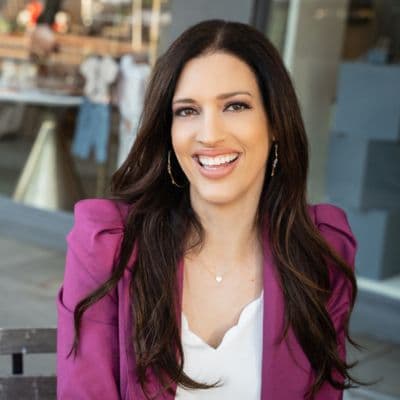
Full Transcript Introduction and Speaker Background 0:09 Welcome back to the conversation. 0:11 Today I have a Dr. 0:12 Stephanie Estima. Welcome, Stephanie. 0:15 I am delighted to be here. 0:17 Thank you for having me. 0:18 We are delighted to have you here. 0:20 Well, we are going to have one heck of a talk about hormones and women's 0:23 health and cortisol and exercise and all the things 0:27 or those of our audience who don't know you. 0:29 You are a women's health educator, an expert in metabolism, and a female body 0:34 expert in female body composition. 0:36 You're a bestselling author 0:37 and a podcast host, and you are the host of Better with Dr. 0:42 Stephanie. 0:42 It's top rated podcast with over 4 million downloads. 0:45 You've been featured on TV Interviews, magazine covers, hundreds of podcasts, 0:49 had millions of people read your articles on Medium.com. 0:52 And underneath all of this is a brilliant woman 0:55 who understands hormones and how to help women with it. 0:58 So shall we dove into this? 1:00 We shall. I can't wait. I'm so excited. 1:03 Okay, good. 1:03 So the first thing I think we need to unpack as we get into this 1:08 conversation is that, you know, hormones shift and change over the menstrual cycle. 1:13 The way that your hormones are at point 1:15 A is different from point B, point C and even as we age. 1:19 So it's not just kind of a one size fits all situation. 1:23 So can you talk a little bit about that if you are, you know, pre-menopausal, 1:27 perimenopausal, menopausal, there's things we need to know. 1:29 And also throughout your monthly cycle, if you're having periods, there's things 1:33 we need to know. 1:34 So I'll let you dove into that. 1:36 Wonderful. All right. 1:38 So obviously, as you were alluding to, our sex hormones are our capacity 1:43 for reproduction and our capacity for menstruation is one of the 1:48 easily, most easily distinguishable blessings of being a woman. 1:51 Right. 1:51 Every single month from about call it 1:55 11, 12, 13 years of age up until somewhere 1:59 51, 52, 53, roughly. 2:02 We are going to be creating a new organ every single month. 2:05 So we're building out an endometrial lining
Menstrual Cycle Basics and Hormone Shifts 2:07 in anticipation of a fertilized egg. 2:10 You know, whether or not that's what you desire, your biology doesn't care. 2:15 That's kind of what your body is designed to do. 2:18 And so when we're thinking about some of the unique distinguishing 2:22 features of women, we've often and I'll say this is 2:26 although it's changing, I still think that there are some major gaps in literature 2:30 and research. 2:30 We're often just looked at as sort of smaller archetypes of men, right? 2:35 With this like pesky thing called a period, right? 2:38 Yeah. Yeah. 2:39 And so I want us to pay attention to the menstrual cycle 2:44 in particular, because for women it's a vital sign. 2:47 So when we think about 2:49 temperature regulation, when we think about heart rate, 2:52 respiratory rate, oxygen saturation, blood pressure, 2:55 menstruation is also as important as those other vital signs 3:00 as a key insight into our hormonal balance. 3:03 So how your symptoms play out 3:06 through the month, how heavy your bleed is, the quality of your bleed. 3:09 We have like tons of clots. 3:11 How long you're bleeding for the color of your bleed. 3:13 You know, all of these different factors that we're thinking about 3:16 every single month that you menstruate and you go through a full, complete cycle 3:21 in your menstrual cycle, you're basically getting a report card 3:24 in your bleed week in terms of how well you did last month 3:27 in managing your stress hormones, in managing or in the in the relative 3:31 balance of sex hormones, which we'll talk about today. 3:34 And then your overall your overall vitality. 3:37 So your question was, how do the hormones I think 3:40 one of your first question was how does how do the hormones change over the cycle? 3:44 And we can think about the cycle. 3:47 I always like to distinguish when we're talking about men and women. 3:50 Men, I always call men. 3:52 Men are like the sun and women are like the moon, right? 3:54 So men will go through their sex hormones over the course of a day. 3:59 Kind of like the sun, right? 4:00 So the sun rises in the morning and then sets the, you know, that evening 4:04 and then the same thing happens day in, day out, right? 4:06 Men are very much like that in terms of how they cycle through their sex hormones. 4:11 Women will, you know, if men are like 4:15 the sun, women are like the moon, where we will cycle through our entire 4:20 we'll say 4:22 a crescendo, if you will, of sex hormones over the course of a month. 4:26 Right. 4:27 So the entire symphony of hormones, we process over about 29 and a half days, 4:31 which is about the lunar cycle right after the moon cycle, we know 4:35 is about 29, 20 to 29 and a half days. 4:38 And so the cycle itself can be broken down into approximately 4:41 four weeks now, all cycles are not the same, right? 4:45 So some I'm like a 29 day girl. 4:48 You know, there's going to be women here that are 26. 4:51 There's going to be some women that are 30 to, you know, normal range for 4:56 your cycle is somewhere between 25 and 34 days. 5:00 So there's some variance. 5:02 And obviously every month we're alternating ovaries. 5:04 So the health of the right ovary and the health of the left 5:06 ovary is going to dictate how long that cycle is going to be. 5:10 So somewhere between 25, 26 to 34 days is considered normal. 5:14 But just for the purposes of our discussion here, it's generally four weeks 5:18 in length, right? 5:19 So we can generally chop up the cycle into four distinct categories. 5:24 So the first two weeks we call the follicular phase, 5:28 or if you're in the UK or in Europe, you'll call it the proliferative phase. 5:32 So the follicular phase all about the follicle, right? 5:35 So it's all about developing a follicle. 5:38 The second half of the phase of the cycle 5:41 is going to be called the secretary phase or the luteal phase of the cycle. 5:44 So just depending on your nomenclature, we're talking about the exact same thing 5:47 in the first two weeks of the cycle. 5:49 We have your period, right? So this is bleed week. 5:52 This is Shark Week, right? 5:53 So we all know when we're on our periods, right? 5:55 Because we're wearing caps or we're wearing tampons or pads or what have you. 5:59 And when we think about the hormonal composition 6:01 that week, most hormones are low. 6:04 So estrogen, when we think about sex hormones, specifically, estrogens are low 6:08 testosterone, low progesterone is not around really. 6:12 Luteinizing hormones quite low. 6:14 The only sex hormone. 6:16 And we don't have to go into this one too much that is high 6:19 is something called follicular stimulating hormone. 6:21 And if you just think about the name of that, 6:23 it's designed to stimulate the growth and development of the follicle 6:26 because we are in the follicular phase normal bleed week. 6:31 Again, there's there's a range of what's considered normal. 6:34 So 2 to 7 days. 6:36 So bleeding under two days, maybe there's not enough hormones 6:40 to have produced the thickness and the robustness and 6:43 and quantity of the endometrial lining over seven days. 6:47 And we might be talking about excess, we might be talking about things 6:50 like estrogen, excess fibroids, maybe endometriosis, 6:54 adenomyosis, which are maybe beyond the scope of this conversation. 6:57 But just for the listener to understand normal bleed can be anywhere 7:01 from 2 to 7 days 7:04 when we move into the second week. 7:06 This is the pre ovulatory week. 7:09 So this is the week prior to ovulation which I will 7:12 just say is the main point of the cycle. 7:16 So the period gets all the attention, right? 7:19 We're like, are you clotting? What's the color? 7:21 How long are you bleeding? 7:23 You know, how often are you changing your pad? 7:25 But you know, I always think about like the period 7:27 is sort of like the popular girl in high school. 7:29 She gets all the attention. 7:30 Ovulation is actually the point of your cycle if you. 7:34 Don't love it. 7:35 Yeah, I love this distinction. 7:36 Yeah, we get the noisiest thing, gets attention and that's the noisy phase. 7:40 It's like the loudest person gets the attention and totally 7:44 it's like the it's like the annoying miles loud. 7:48 Yeah. 7:48 Obviously she's like the nerdy girl with the glasses studying in the library. 7:51 She's really, really important. 7:53 She's really like, she's kind of the point, right? 7:55 But we ignore her because she's not loud and she's there's no obvious, 7:59 you know, physical signs that that's happening. 8:00 Maybe some people 8:02 there are some people that do experience something called middle SMERSH, which 8:06 if you're German, you might be able to figure out what that means. 8:08 Middle meaning middle and submerge, meaning pain. 8:10 So sometimes women will feel some pain, some cramping with the release of an egg. 8:15 But other than that, there's no real salient symptoms. 8:20 Now, we might someone might argue, but what about cervical fluid? 8:24 Yes, that's that would be another salient clinic. 8:26 If you are familiar with your cervical fluid. 8:29 Certainly the cervical fluid, let's say, in your underwear 8:33 might be very low, shiny egg, weighty, 8:36 creamy, sticky. 8:39 That's also another clinical like a salient physical sign that you are 8:43 either at ovulation or about to ovulate. 8:48 And so we so in that week in that week to right. 8:51 So we're leading up to the main point, which is like ovulation. 8:54 We have a peak of some really important 8:58 anabolic hormones, so namely testosterone and estrogen.
Ovulation, Libido, and the Luteal Phase 9:01 And more specifically with estrogen, we call that estradiol. 9:05 So testosterone obviously famous for libido, right. 9:08 It's you may find in that week prior to ovulation that your husband 9:13 or your partner or your whatever kind of relationship you're 9:16 in, what if you are in a relationship that your partner just looks 9:19 a little bit more delicious and a little bit more scrumptious, 9:23 you may find? 9:24 And when we think about sort 9:25 of reproductive wise, you know, with that bump in testosterone, 9:30 orgasms tend to be stronger, 9:33 the clitoris seems to be more sensitive. 9:35 And our desire and our receptivity to sex is much, much higher. 9:40 And that's that's not all by design. 9:42 It's all by design. 9:43 I took the words out of my mouth, girl. 9:45 Exactly. It's all by design. 9:47 Because Mother Nature, she's a wily minx, right? 9:49 She knows that there's an egg that is about to be released. 9:53 So if you have sex in the 5 to 7 days, let's say prior to ovulation 9:59 and there's sperm that is deposited, let's say 10:03 that sperm can live up to seven days in the womb. 10:07 So they like package picnic, they have food, 10:09 they have backpacks, they have all the things. Right. 10:10 They have all the you know, they have all the equipment that they need 10:13 to find their way up for the eventual you know, if they're finding the egg 10:17 and the egg sort of picks, we now we used to think that it was like 10:20 the sperm kind of fight for each other and then the strongest one wins. 10:23 It's actually the egg chooses the one that she wants. 10:26 Oh, amazing. 10:28 I would also add that the man knows it. 10:31 Like we're secreting pheromones and we're doing things that they're 10:35 they're they're picking up the signal we're putting out because 10:39 after being married to the same man for 23 years, 10:43 he knew he I mean, I'm I'm perimenopausal now. 10:46 So that's not happening anymore. But he knew 10:50 when I 10:50 was obviously waiting for sure they were cyclical. 10:53 And so I think actually what your you know, your husband or your partner 10:57 knowing about when you're obviously dating, 10:58 I think that that's such powerful 11:00 information as well for him to be like, oh, okay, like maybe 11:03 we'll go out on a date or, you know, that kind of thing. 11:05 I love that when you're in the long term or short term doesn't matter 11:09 relationship that your partner can actually get in on gas, maybe 11:13 get in on the action is what I was going to say. 11:14 But, you know, kind of understand your cycles 11:18 and how your mood and your affect and your relationship, let's say, to sex 11:23 changes. 11:24 Now, you know, our relationship to sex is very complicated. 11:27 It's not just as simple as testosterone goes up. 11:29 And we want to like there's there's history. 11:31 There's, you know, for women, a lot of times there's trauma and there's 11:35 there's sort of all of these other competing factors that can and our 11:38 our cultural will say 11:42 opinion or views on sex and a woman enjoying sex. 11:46 That's a whole maybe other conversation that we can have 11:49 when we're done this, when we're done and stuff. 11:50 But I feel like in for the purpose of understanding our hormonal milieu 11:55 and the hormone like that ever changing landscape of our hormones. 11:59 If you are feeling a little bit more sprightly, you know, 12:01 you're feeling a little bit more like, Hey, baby, what's up? 12:04 Like, you look so cute today. 12:05 Know that that's under the influence of testosterone. 12:08 The other anabolic hormone that I mentioned was estrogen. 12:11 So estrogen is working again to help like 12:14 finalize and develop that follicle prior to ovulation. 12:18 Estrogen, as we know for women, is involved in development 12:21 of our secondary sex characteristics. 12:23 Right. So breast and hip development. 12:25 So in this week, you're going to see your lips plump up. 12:28 Your skin is going to be I like eyes. 12:31 The whites of the eyes are going to be brighter. 12:33 You know, you're going to be a little fuller 12:34 maybe in the breasts, a little fuller in the hips. 12:36 It's sort of like a natural bell, you know, like a natural sort. 12:39 Of natural, sexy appeal. Totally. 12:44 Totally. 12:45 And then we and then so that's sort of the characteristics of that week. 12:49 We also see another hormone that comes in. 12:51 It's called luteinizing hormone comes in after that peak of estradiol 12:54 that is going to help with the release of the egg from the follicle. 12:59 And then we ovulate main point of the cycle and then we move into 13:02 kind of the second half of the cycle where the entire hormonal landscape changes. 13:08 Now we see the introduction. 13:10 If we've ovulated, we will see progesterone 13:13 start to increase, which is a hormone. 13:16 If you think about the word pro gestation, pro pregnancy, 13:19 progesterone is the pro pregnancy hormone. 13:23 So it is going to it is going to be helping. 13:27 Now, the egg that was released, we are now going to start to see that 13:31 follicle is going to start to release, 13:34 is going to start to release progesterone. 13:36 And we're going to start to see things like we're going to get warmer 13:40 because progesterone is very warming. 13:41 You'll start to see a core body 13:43 temperature increase over the second half of the cycle. 13:46 We'll start to see things like bowel movements slowing down. 13:50 So digestion not generally is slowing down. 13:52 We may also see more sleep disturbances 13:56 because you're because of your core body temperature changes. 13:59 So when we are warmer, 14:01 it's much more difficult for us to sleep, let's say, through the night. 14:04 And this is the part of the cycle, the second half, these last 14:08 two weeks of the cycle, where there is the most opportunity 14:11 for us to feel imbalances in our hormones. 14:15 So if you are someone, let's say, who classically feels 14:20 those symptoms of premenstrual like those premenstrual syndrome or 14:24 symptoms, the tender breast, the water retention, the bowel, the back, like 14:29 the slowed bowels, as I was mentioning, the mood and the affect changes 14:33 like you may feel a little bit more emotional, a little bit more weepy. 14:37 These are also very normal changes. 14:40 It is a sign of inflammation, right? 14:42 So we shouldn't necessarily feel like 14:45 we can't get our rings on our fingers or that our breasts are tender. 14:48 Those are those are signs of abnormal, we'll say hormonal composition. 14:54 So the tender breast, 14:56 the water retention, usually we're talking about too much estrogen, right? 14:59 So the golden rule of estrogen is use it and then lose it. 15:02 We don't want it hanging around because estrogen, at least for breast tissue, 15:08 we know that it can be proliferative to cells in the breast, meaning that there 15:13 we are promoting cell growth, which we never want in the breast all the time. 15:18 And then in the bones, for example, we know that the effect 15:22 that it has is to shut down 15:25 bony growth. 15:26 So as we age, of course, this becomes a very big concern for us as well, 15:30 because we want to keep our bones nice and thick and dense as we're aging. 15:35 So if we are constantly in this estrogen dominant 15:37 like state where we're experiencing those symptoms of perimenopause, 15:41 sorry, of PMS, as I was mentioning, and that happens in perimenopause 15:45 because progesterone tends to lower as we age, 15:49 we certainly can start to feel some of these effects 15:52 of this estrogen dominance in the luteal phase of the cycle. 15:55 Okay. Dr. 15:56 Stephanie, I want to so you just unpack the book 15:59 full menstrual phase and what we feel as we go through it. 16:04 The other things I want to make sure we touch on, 16:06 so we have a lot of perimenopausal menopausal women viewing this right now. 16:10 And so we want to make sure that we are loving up on 16:12 what happens with the hormones at this phase in life. 16:15 And then we want to connect this with mitochondria energy production 16:19 because there is a huge connection between our menstrual cycles, 16:23 our hormones, and even when we're no longer menstruating 16:26 and what happens with mitochondria, energy production. 16:29 So in terms of the woman now whose periods have slowed down, she's perimenopausal. 16:35 There's some shifts and changes here as well. 16:36 And then the menopausal woman who's no longer menstruating. 16:39 So can you share the changes that are happening there as well? 16:42 Sure. 16:43 So first, let me say I am also in perimenopause. 16:45 I'm 45 years old. 16:47 So perimenopause, at least by my definition, starts 16:50 in your mid-thirties, right where we start to see this slow 16:55 or this lowering or this attenuation will say 16:57 of progesterone secretion, it's kind of a stepwise reduction. 17:01 So year over year, we just get a little less, a little less, a little less. 17:04 So in your thirties, you may not necessarily feel any changes, 17:08 but certainly in your forties, if you are not strategic 17:11 and we're going to talk about some solutions today, 17:14 you certainly can run that estrogen dominance. 17:17 So I have a particularly soft spot in my heart for perimenopausal women. 17:22 One, because I'm going through it myself and I'm navigating 17:25 some of the changes, let's say hormonally that are happening in my own body. 17:28 But also I feel that perimenopausal women are often forgotten about, right? 17:32 It's like, Oh, this is just a function of aging. 17:34 Oh, here's the birth control pill for your now your seemingly irregular cycle. 17:38 The birth control pill will fix it, which I don't know 17:41 if you want to go down that rabbit hole, but we certainly can. 17:44 Or maybe another. Time. 17:45 But I think we can just say 17:47 it's going to cause nutrient depletion, it's going to cause problems. 17:50 Yeah. 17:51 Lipid derangement, all the things. 17:53 Okay, so so I love perimenopausal women and generally what a perimenopausal woman 17:58 needs to understand is there's actually several different phases to perimenopause. 18:01 So we have that first phase of perimenopause, which is where I think 18:05 I am. 18:06 I am about to sort of qualify for where the menstrual cycle starts 18:10 to shorten a little bit. 18:11 So you're still quite regular. 18:12 So for me, I'm like regularly a 29 kind of day girl. 18:16 You know, last month it was 28 and I was like, Oh, okay, this is what it is, right? 18:21 So the menstrual cycle itself starts to shorten a little bit. 18:25 The second phase of perimenopause, we start to see that the cycle starts 18:28 to get irregular. 18:29 So you're not regular every month anymore.
Perimenopause Stages and Hormonal Changes 18:31 You're not obviously eating every month 18:33 anymore, so you're skipping periods because in order to have a period, 18:37 you need to ovulate. 18:38 You don't just bleed every week or bleed every month. 18:40 You need to ovulate in order to build that endometrium lining up 18:44 under the influence of progesterone like we just talked about. And then to shed 18:48 the third phase is now where we are seeing cycles 18:50 that are longer than 60, longer than 60 days. 18:53 Right. 18:54 So now we're starting to see hot flashes, maybe the sleeplessness. 18:57 Yeah, you're like. 18:58 Oh, that's me. 18:59 And then some of those other classic menopausal symptoms. 19:03 And then the fourth phase just very quickly 19:04 is what I call the waiting room, right? 19:06 So it's like you're just you're just waiting, right? 19:08 Because in order to qualify for menopause, it's a retroactive diagnosis. 19:12 You need to have not had a period for a year. 19:15 So in that waiting room, that fourth phase, 19:18 you may not have had a period for four months. 19:20 And you're like, okay, I have eight more months of this to go to see if I qualify. 19:25 So one of the things that I, in all phases of perimenopause just 19:28 I wanted to kind of go over those phases just so a woman 19:31 who might be in her forties doesn't misinterpret her experience as abnormal. 19:36 Perimenopause is a norm. It's not a disease. 19:38 It's a normal state. 19:40 We are not disease. There's nothing wrong with you. 19:43 But there's a reason why you are not able to be fertile. 19:46 Like, do you really want a kid when you're 60? 19:49 Do you still want to have a period when you're 70? 19:51 Like the risk of getting pregnant when you're 50, 60, 70. 19:54 Like, think about like I was just asked, I was talking to a friend last night 19:58 and he's like, Are you going to go? I have three boys. 20:00 And he was like, Are you going to go for the girl? 20:01 I'm like, 20:02 If I had a girl now I'm 45, so I'll be 46 by the time the baby's delivered. 20:07 Like by the time that baby's 20, I'm going to be 66. 20:11 Yeah. 20:11 So, like, that's a big age differential, right? 20:14 So anyway, so like 20:16 the whole point is like there's a reason why you're not fertile forever, okay? 20:19 Because you don't want to be raising a child when you're 66. 20:23 So but one of the things that we have to understand in perimenopause 20:27 is there's a couple of important changes that happen. 20:30 One is that we naturally, as a function of age, become more insulin resistant. 20:36 So what that means is that we are the cells in our body, 20:40 muscle cells, bone cells, all the cells just naturally 20:44 don't listen to the same amount of insulin that they once did. 20:48 So what has to happen by necessity, in order to do the same thing, 20:53 is that the beta cells of your pancreas now have to pump out more insulin right. 20:57 It's kind of looking if we think about a diabetic, that's what happens, right? 21:01 So they're insulin resistant and they have to take insulin and usually 21:04 more and more and more and more insulin over time because the body habituate, it's 21:09 so understanding that we become more insulin resistant. 21:13 And the other thing I'll talk about and this will kind of link in the 21:15 cortisol piece that you were mentioning earlier, is perimenopausal. 21:19 Women are sort of at a unique stage in their life where we have 21:23 environmental constraints. 21:25 I usually call them environmental constraints from above and below. 21:28 So maybe when you're in your forties now, you have children 21:33 that are maybe in their teenage years, in their twenties, 21:36 depending on how early you had your children. 21:39 And there's a whole host of, you know, problems 21:42 that like I really think the parenting starts 21:44 when the kids are about 12 or 13 years old. Right. 21:46 They're a little bit more lippy. You know, they know everything. 21:49 And then we've just all collectively gone through a pandemic. 21:53 So maybe there's delays in academic you know, maybe they've been delayed, 21:58 maybe there's mental health issues, maybe they haven't been as social. 22:01 So their peer groups are changed or socially delayed. 22:03 I mean, I'm seeing this right now with my my daughter's 22:06 18 and I'm we just went through prom and, you know, we just did this. 22:11 And almost none of the kids had dates. 22:13 They just went as a group like they are. 22:16 They're they're socially delayed. 22:18 Yeah, I'm seeing this for sure. 22:20 That absolutely breaks my heart like I was. 22:23 I mean, my prom, I had a date. 22:25 I was so petrified with my, you know, like for the date and for the whole night. 22:29 But it was such a big moment, you know, to sort of be picked up by your 22:33 by your guy and the rose and all the you know. 22:35 None of that none of that is happening. 22:37 It's a big party bus where everybody jumps in together 22:40 and they're not experiencing kind of like that brick wall to adulthood. 22:44 Right. 22:44 Like prom is almost like a prequel to Act Two scene. 22:47 What it's like to actually be in the 14 scene 22:52 when it's when if our whole purpose is to re 22:55 procreate and, you know, keep life going on this planet. 22:59 Prom is like one of those safe places to experience all the feels. 23:03 And it's not happening like that anymore. 23:05 Yeah, yeah. Well said. 23:06 Oh, fascinating. 23:07 I mean, that's a wormhole we can go down. 23:09 Oh, goodness gracious. 23:10 Yeah. Yeah. 23:11 So we have so we have the pandemic 23:12 and we have our teens and our you know, our tweens. 23:16 Even so, 23:16 those are sort of the pressures from below and then the pressures from above. 23:19 When you're 40 or 50, you have aging parents or caregivers. 23:24 Right, that are now requiring maybe more trips to the doctor, 23:28 making sure 23:29 that they're taking the medications that they've been prescribed or getting, 23:33 you know, assisting them in ways that they 23:35 you know, they previously were independent. 23:37 And now there's more of a dependance, let's say, on on that perimenopausal woman 23:42 who is let's just be honest, women are usually the caregivers. 23:45 They're the nurse. 23:46 They're the ones that, you know, 23:47 you wake up in the middle of the night, you go to mom, right? 23:50 You have a nightmare. 23:51 You go to mom. And the same is true when you're a daughter 23:54 and you are seeing your parents age, it's usually the woman who's taking them 23:57 to those appointments, right? 23:58 It's usually the woman who is taking care, 24:00 making sure that they're not mixing up medications 24:02 and the dosage is right and all the things. 24:05 So a perimenopausal woman has these like constraints 24:07 from above and below, which is incredibly stressful. 24:11 Right. 24:11 So not only do we see her own physiology changing with the insulin resistance that 24:16 we were talking about, I didn't mention which I will quickly add in as well. 24:20 Her muscles as a menopausal woman. 24:23 Your muscles also become more resistant to growth as well. 24:25 So it's harder for a woman in her forties, fifties and sixties and beyond 24:30 to put on muscle versus when you were in your twenties and thirties. 24:33 It's not impossible. 24:34 You certainly can, but it takes more work. 24:38 So now we have these sort of this recipe 24:41 for body composition changes, right? 24:44 She's running more insulin resistant. 24:45 Maybe if she's not working out or not doing resistance training, she's starting 24:48 to lose muscle mass at about a rate of 1% per year. 24:52 If she's not doing anything. 24:53 So 10% over her forties. 24:55 Like if you think about a decade, you're not doing anything until you're about 50. 24:59 You've lost 10% of your muscle mass or your lean body mass, I should say 25:03 more accurately, which also includes organ weight and bones and things like that. 25:07 And then we have these stressors in her life where she's 25:11 dealing with children that need extra support, parents that need extra support, 25:15 and that's going to drive up her sympathetic her sympathetic 25:19 nervous system, which is just to say she's way more stressed. 25:22 So she's going to her output of cortisol is going to be higher. 25:25 Her output of adrenalin and noradrenaline is going to be higher. 25:28 So she's constantly in this sort of fight or flight, that sort of you know, when we 25:33 when we talk about the sympathetic, it's like fight or flight freeze, right? 25:37 It's like you're either running from the bear, fighting the bear, 25:40 or you're the deer in headlights. 25:42 We've all heard 25:42 that sort of saying where that, you know, the deer sees the oncoming car 25:45 and it's just like it's it's it's frozen, right? 25:49 And that's where we get stuck. 25:51 And so that leads to things like weight 25:53 loss resistance that leads to weight gain, especially through the belly. 25:57 So if you're a woman that's listening in her forties, it's like I, 26:00 I don't know what's going on, but I'm 45 and I just have all of this belly weight 26:04 that I didn't ever have before and I can't get rid of it. 26:08 I think that when we sort of piece apart her life, we'll probably find 26:13 that she's not weight training the movement that she's doing. 26:16 And I know we'll get to this in a moment, 26:17 but I just wanted to let up on my perimenopausal ladies. 26:19 But the movement that she's doing is probably cardio. 26:22 Mm hmm. 26:22 Which there's nothing wrong with cardio, but if you're not lifting weights 26:25 more than you're, then you're doing your cardio. 26:27 We have a problem. 26:29 And then we have these environmental or these sort of life 26:33 stage of life 26:34 stressors that are going to now drive up her cortisol output, 26:38 which just naturally makes you more insulin resistant to naturally makes you 26:42 you have a propensity 26:43 to put on more adiposity so your fat mass like you're going to be, 26:46 it's easier for your body to pack on fat mass because your body's like, 26:50 we have to run away from a bear. 26:52 If the bear gets us, we have to be able to survive this. 26:55 Right? 26:55 So you're just going to be packing on the pounds, let's say, 26:58 as as a survival mechanism. 27:01 Okay. 27:01 So now can you talk about the menopausal woman? 27:05 So now she's completely done with her periods, 27:08 what's happening with her hormones. 27:10 So now we have just a lower I really want I think menopause needs a rebrand. 27:15 That's my that's my little shtick. 27:17 I think that I feel like it's, you know, in Hollywood and sort of culturally, 27:22 we look at a menopausal woman and say, oh, you know, not washed 27:26 up is not the word, but sort of like done, you know, like finished. 27:29 Right. 27:30 Like there's no she's not she's not she's a mother or maybe she's a grandmother. 27:34 So no sexuality like no sex life for her. 27:37 You know, all of these she has to dress a certain way. 27:39 She has to look a certain way. 27:42 So I think that we need to 27:43 really rebrand menopause as like the second spring in a woman's life 27:47 where the first spring is like men are right starting into this 27:51 into this journey of womanhood and then passing through this portal 27:56 through menopause as a as a journey back to oneself. 27:59 Because we've probably spent the last 20, maybe 30, 28:02 maybe even more years tending to other people. 28:07 So it's now time to kind of 28:08 get back to what's important for us to live a well-lived life. 28:12 So in terms of hormones and that's just my that's my own philosophy. 28:16 So I hope that that lands with. 28:17 You lands and as as someone who's passing through the portal 28:21 right now, like going nine months without a period, I'm there, right? 28:25 I'm essentially menopausal. 28:26 I'm just waiting for that one year label tick, you know, 28:30 and it's around the corner. So yeah. 28:32 Tell me about it. 28:33 I want to be I want to be on the other side of this 28:35 in my second spring 28:37 and I feel more powerful than I ever did in my thirties or forties at this point. 28:41 Like, I know a lot of stuff 28:43 and I'm still, you know, vibrant and sexy and all of it. 28:46 So I want to make sure. Yes, you are. 28:50 I can tell you I'm sitting across from you. 28:52 Yes, you are. 28:52 And so I think that that I think that it's such a beautiful time 28:56 for us to say, okay, what actually really matters to me. 28:59 Right. 29:00 So I've spent the last 20 years raising children, maybe 29:05 helping my husband or, you know, 29:06 being in service to others as women, we naturally do. 29:10 But how can I now turn some of that attention to me? 29:13 Because now we don't have to worry about optimizing for our fertility. 29:16 We don't have to worry about this this lunar cycle anymore. 29:20 We don't have to worry about this ebb and flow of estrogen and progesterone. 29:23 It's kind of just sort of flatlined, like it's kind of all the same. 29:27 And in some ways 29:28 and I don't mean this in a derogatory sense, 29:30 I actually mean this in like an empowering way. 29:32 We actually behave more male, right? 29:35 So now we have that circadian rhythm that daily cycling through 29:41 hormones that, you know, men and women cycle through. 29:44 And we don't have to worry about this lunar cycle anymore. 29:47 So in many ways, we can actually push it like we can say, okay, 29:51 so now what I really want to do is I maybe I want to work on my body 29:54 composition, maybe I want to do a pull up, maybe I want to do a push up or, 29:58 you know, whatever it is. 29:59 And you can you don't have to worry about some of the the, 30:03 you know, effects that may be estrogen, high levels of estrogen might have 30:06 on your ligaments, let's say, because now that estrogen level is kind of low. 30:10 So as a woman in menopause, 30:13 we have all of her sex hormones are kind of low. 30:17 And then we also want to keep in mind, I was mentioning in perimenopause 30:21 that tendency towards being insulin resistance 30:25 is at its high in menopause if you are not strategic about it. 30:29 One of the things that we know about menopausal women
Menopause, Metabolism, and Muscle Health 30:33 also prior to 30:34 menopause is that under the influence of estrogen, 30:37 we do have a lot of cardioprotective benefits. 30:41 Right. 30:41 So estrogen, 30:42 there's receptors all over the body for, you know, the brain in the heart. 30:46 And one of the things that one of the reasons why researchers 30:49 think that women have a later onset of cardiovascular disease 30:54 and cerebrovascular disease is because of the protective effect 30:57 that estrogen had in our fertile years that men just don't have. 31:00 So in some ways, we're sort of like metabolic superheroes up until menopause. 31:05 And then once we enter that portal, if we are not if we don't have 31:09 a healthy amount of muscle mass, our cardiopulmonary system is weak. 31:14 Then we have with that lowered estrogen environment, 31:17 we are more vulnerable to it kind of. 31:22 It almost equates to the guys to that development of cardiovascular disease. 31:27 So it is very important 31:28 for a woman in menopause to be thinking about her movement program. 31:31 So is she walking? 31:32 Is she getting sunlight and walking is great. 31:35 But there are 31:36 you know, I have a I'll state my bias I think resistance every woman should be 31:39 resistance training irrespective of age but particularly in menopause. 31:44 We want to be lifting heavy and lifting often 31:48 with the 31:48 goal of becoming stronger because it's going to protect your bones, 31:51 it's going to drive hypertrophy like it's going to drive muscle 31:54 mass, which is going to keep you like keep your heart protected. 31:57 It's going to protect against osteopenia and osteoporosis, 32:01 all of these different things. 32:02 So I would say that's generally the hormonal environment and some of the 32:06 concerns that we think about as a woman is in her fifties and and beyond is like, 32:10 can we keep her heart and her lungs really healthy? 32:13 Can we keep her bones dense, and can we keep as much muscle mass, 32:17 at least at the very minimum, maintain what she has, but ideally add 32:21 to her muscle mass as she ages so she actually gets better as she ages. 32:26 Like a vintage wine. Right. 32:29 Versus sort of deteriorating. 32:31 Yes. Okay. 32:32 So now we've unpacked all the phases of being a woman. 32:36 And let me tell you, we accomplished a lot. 32:40 Yeah, we're complex and we're just tipping the iceberg here. 32:42 So we've covered all our stages in terms of how hormones fluctuate. 32:46 Now, can you connect it to mitochondria energy production? 32:52 And why is this important? 32:54 Why are we having a hormone discussion on a mitochondria summit? 32:59 And I'll tell you, it's not. 33:01 The summit wouldn't be complete without not a women's hormone discussion. 33:05 So can you share with our audience 33:07 that connection there between hormones and these little mercury? 33:11 Yes. These little mitochondria that we love? 33:14 This is and our our mitochondria are our bacterial lineage. 33:17 Lineage, right. We get this from our mama, right? 33:19 We get this from mom 33:20 through the privilege of hopefully passing through the birth canal. 33:25 We take in some of the bacteria from the vaginal microbiome. 33:29 We inhale that as we're kind of passing through. 33:31 And then that starts to colonize our own eventually. 33:34 But first the gut and then, you know, throughout the body. 33:37 So we have to thank our mamas for this mitochondrial lineage that we have. 33:41 It is it is passed down through women. 33:43 So first, 33:45 before I connect and I know that this has been discussed already, 33:49 but what we want to do is we want to just define what energy is. 33:52 And then I'll 33:52 and then I'll kind of piece together how the how the hormones come into it. 33:56 So essentially when we're talking about energy, 33:59 which is produced by the mitochondria, we need substrate, right? 34:03 So we need basically like a precursor in order to get into 34:07 and I'm sure you've had other 34:08 experts on the show and PhDs and all all the sort of, you know, world 34:12 renowned experts, the show talking about what that what that ATP cycle is. 34:17 But we we basically get substrate from two sources, exogenous and endogenous. 34:21 So the exogenous exterior 34:24 outside sources of food are going to be our dietary carbohydrates, 34:27 our dietary proteins, our dietary fats, fiber, that kind of thing. 34:31 And then the internal will or endogenous, if you will, food sources 34:36 are going to be things like glycogen, which is the stored form of glucose. 34:40 It's going to be our trace of glycerin, which is the storage form of fat. 34:44 And so I wanted to just start there because 34:48 if we think about the scenario of a woman, I'll give you a scenario. 34:51 So we have a woman in her. 34:54 Let's call her 45 years old. 34:56 She's had two pregnancies. 34:58 Let's say she's working. 35:00 Maybe she's sleep deprived because her kids are. 35:03 Well, we'll just pretend we'll just talk about me for a moment. 35:05 So we we talking about yourself, right? 35:09 I'm asking for a friend. Yeah. 35:10 So it's I well, my 12 year old and my ten year old, so I've had, you know, 35:15 like several years of sleep disturbed. 35:18 Like I've been sleep deprived in one way or another. 35:21 Right. And then the other. 35:23 And then the other piece I'll say is women I mentioned before that, 35:27 you know, we are typically typically caregivers. 35:29 We also generally do a lot of the what's called 35:33 the non paid work at home, meaning she goes to work 9 to 5, 35:38 she makes bank and then she comes home and she's still continues to work. 35:42 So she does the laundry, she does the school work with the kids. 35:45 She's the soccer mom. 35:47 She's the, you know, the meal planner. 35:49 Like nobody would eat if it weren't for mom. 35:51 Even if it's takeout. 35:52 Nobody would if it weren't for mom. 35:54 Exactly. Exactly. 35:56 So we have all of this. 35:57 This is and this is a very typical scenario. 36:00 And then you have a diet where maybe she can't get going in the day without coffee. 36:05 So she has to kind of 36:06 stumble down the stairs or whatever, you know, from her bedroom to her car. 36:10 Yeah, but I'm showing my coffee cup. 36:13 Yeah, this is. A yeah. 36:15 So we have coffee off to the side. 36:16 And so you're describing me to like we're, 36:18 we're, we're entrepreneur working mommas, like we're talking ourselves here. 36:22 Yeah, exactly. 36:24 So you can be an entrepreneur, 36:25 stay at home, like or, you know, someone who's kind of gone back to work after her, 36:29 her babies are grown up, and so maybe she is living on coffee. 36:33 Maybe she is, you know, at lunch time, if she's really good, she's packed a lunch. 36:39 More likely she's going to get some fast food with some colleagues 36:43 or she's getting some processed foods or maybe she's getting a salad or whatever 36:47 and she's not moving. 36:48 Right. 36:48 She's probably what I like to call a desk jockey. 36:51 So she's like sitting at her. 36:52 She's sitting at her desk for six, seven, eight, nine, ten, us, right? 36:55 This is us. It's 10 hours a day. 36:58 And then she kind of gets to the gym. She can. 37:00 So we have that physically, right. 37:02 So these are some of the physical and chemical ways that she's living mentally. 37:07 She's probably we all like hands up, if you know what, mom, guilt is. 37:10 Right? Like you're beating yourself up for not being able to do it. 37:13 All right? You're not good enough, smart enough, worthy enough, pretty enough. 37:16 You're not doing. 37:17 Not a good enough mom. Not a good enough, not some. 37:19 All of those things. 37:21 Now and then your teenager will accuse you of working too much. 37:23 And that really hurts. 37:24 It's like, okay, but you want all that stuff. 37:27 You you want you want to live the high life. 37:29 Mama's got to work. 37:31 Yeah, Mama's got a mama's got to make bank, right? 37:33 And they and teenagers, they know your butt. 37:36 They know which buttons hurt the most. 37:38 They know where the dagger goes and the easiest right and how to turn it. 37:42 So God bless them. 37:43 But, you know, teenagers can be can be difficult, you know, emotionally 37:47 for sort of not ready for the pushback that sometimes we don't get with them. 37:50 Yeah. So all of that, that life. Right. 37:53 Which is probably 80 to 90% of the women that are listening here. 37:56 Right. There's going to be like 10% that like that's not me. 37:59 I totally do everything perfectly and like, honestly, good for you, bless you. 38:02 But for like the 80 to 90% of the rest of us, 38:06 this is sort of an environment for this low grade stress or low grade 38:10 inflammation, right? 38:11 So we're kind of chronically sub clinically inflamed. 38:15 Right. 38:16 And the reason why this matters with mitochondria is 38:19 this is going to now induce a metabolic switch. 38:23 So when you are living this way, you have this low 38:26 grade chronic inflammation, you're not waking up refreshed, refreshed. 38:29 You're doing all the things the superwoman syndrome that I was just describing. 38:32 You're going to move from what you know, the way that we produce 38:36 ATP in the most abundant and efficient way for the cool cats 38:40 listening, it's oxidative phosphorylation or oxidized if you're super cool. 38:45 So this is like big amounts of ATP. 38:48 This is the and this is produced inside the mitochondria. 38:50 This oxidized is energy efficient oxidative phosphorylation switches. 38:55 When you were in that low grade kind of chronic inflammation too, 38:59 it's less efficient 39:02 but fast acting. 39:03 So you're going to get more. 39:05 It's going to be quicker, but going to get less of it. 39:07 And this is called aerobic glycolysis. 39:10 The problem with glycolysis, of course, is that it increases 39:14 something called reactive oxygen species, which are oxidants. 39:17 It's going to reduce insulin sensitivity. 39:20 So for that perimenopausal woman that's kind of already insulin 39:24 insensitive, it's going to further 39:28 augment her insulin insensitivity.
Mitochondria, Stress, and Energy Production 39:31 And the net effect, of course, now is that she has less glucose 39:35 availability for her cells to make cellular energy. 39:40 So this is this is the connection, right? 39:42 So when we when we are thinking about a woman 39:46 as a whole, we sort of want to start off with her stress levels. 39:50 Like what are your stress levels? 39:51 What's your cortisol output? Right. 39:54 And we also what we want to be thinking about 39:55 adrenal health, which is essentially what that comes down 39:58 to in that sympathetic hypothalamic pituitary adrenal axis. 40:03 And that is what 40:04 kind of starts off the cascade side of now. 40:08 And that will, you know, when we are in this sort of hyper caught Islamic State 40:11 that is now going to bleed into, pun intended, into our menstrual cycle. 40:16 We are now going to see derangements with estrogen derangements 40:19 and progesterone derangements and testosterone, 40:21 all the things that we've been talking about. 40:23 We'll also see circadian rhythm changes, sleep disturbance, SES and 40:27 I'm sure you're going to have 40:28 other individuals here that are going to talk about sleep, 40:30 but sleep in and of itself, poor sleep in and of itself is also going to switch 40:36 you into that inferior fuel partitioning so that OCS, faster 40:39 glycolysis is going to bring you into efficient, to not efficient, 40:43 it's going to lower your insulin sensitivity again. 40:46 You're going to probably eat more crap. 40:48 Like you're probably going to want to go for the Haagen-Dazs 40:51 or the cookie or the protein bars and most protein bars. 40:54 Let's just be honest. They're like candy bars with a bit of protein in them. 40:58 Your motivation, 40:59 let's say, to go to the gym and even work out is going to tank. 41:03 Right. 41:03 And your emotional regulation is also. 41:06 I feel like you're describing me right now. 41:07 I mean, full disclosure, I let all my clients know 41:11 that I'm not perfect, right? 41:12 I'm human just like everybody else. 41:14 And I've got the same stressors. And you to Dr. 41:16 Stephanie, you've got these stressors, the same thing. 41:19 We happen to know how to support ourselves, 41:22 but we have the same 41:25 cravings, the same like our bodies are doing the same thing 41:28 and the struggle is the same for us to not eat the sweet thing to even though 41:32 I don't feel like exercising to do it anyway, I mean, it's it's real. 41:36 Yeah. Yeah. 100%. 100%. 41:39 We all in sort of our forties and fifties are dealing with the same thing. 41:43 So I really, you know, my, my hope with talking to you and, 41:47 you know, doing the podcast in the book and all the things is to educate women 41:51 so that they don't misinterpret their experience. 41:53 They don't because what do women do when something doesn't work? 41:55 Oh, it must be me. I suck. I'm the worst. 41:58 I can't ever get anything together so that we understand 42:01 what's happening physiologically, so that we can. 42:03 That it doesn't affect our belief structure about ourselves, 42:06 that we can maybe give ourselves a little bit 42:08 like in the same way that we give our children 42:10 grace, love and forgiveness that we can maybe impart some of those 42:14 virtues onto ourself as well, 42:17 so that we can kind of get through it and maybe get through it together, right? 42:20 Like maybe we can also come together in circle we have for thousands of years 42:26 and we can start talking about what it's like to go through perimenopause 42:29 and share best practices in the way that you and I are doing. 42:31 My gosh, I love this. And to do it in community. 42:33 So this is this is also something that you bring up a point 42:37 here that doing it alone is very difficult. 42:41 And so for those of you watching this interview right now, 42:46 I want you to find the 42:47 people on this summit who are speaking, who resonate with you, 42:51 who can support you in your journey, because you cannot do it alone. 42:54 You must you must put community around you. 42:57 And fortunately, the world's become a little smaller. 42:59 I mean, Doctor 43:00 Stephanie, you're way up in Canada and I'm down here in Southern California. 43:03 And we are we can be in the same community 43:07 because virtually we can connect, even though we can't physically. 43:10 So you can be in virtual circle with women. 43:12 And so this is what I'm going to encourage everyone to do. 43:15 I mean, even me recently I finally said, I can't do this alone anymore. 43:20 I know everything to do, but I got to hire somebody to keep me accountable. 43:23 So, you know, every doctor has a doctor. 43:26 Every coach has a coach, every practitioner has a practitioner. 43:28 I've got an army of them that I answer to to help keep me going. 43:33 So so Doctor Stephanie and I don't have some magic 43:36 inside of us that makes us different than all of you watching. 43:39 We need support, too. 43:40 We need circle to we need women support also. Yes. 43:45 I love that you said that all the best doctors have doctors. 43:47 All the best coaches have coaches. Yes. 43:50 That's just how it goes. 43:51 And, you know, I think that if you surround yourself, 43:53 you know, if you surround yourself with women who have the openness 43:57 and willingness to grow and you can do that together, 43:59 and maybe it's facilitated by a coach or facilitated by a physician, you know, 44:03 your experience is just going to be that much better. 44:05 Yeah. Okay. 44:06 So final words here as we close and I want to make sure our audience knows 44:10 where to find you talk a little bit about your book, too. 44:13 We didn't we didn't go into that yet. 44:14 But you have a really great book and talk about your podcast. 44:17 But final words of wisdom for women that are 44:20 now seeing a glimmer of hope hearing this discussion. 44:23 What are some things they can do to move the needle here? 44:26 I would say off the bat, so I've stated my bias before, 44:30 but I would say, first of all, I actually say my philosophical premise 44:34 around healing and wholeness is that your body knows what to do. 44:39 You just have to give her the signals. 44:42 You have to put her in the environment that she is going to thrive the best. 44:46 And you are an agent for your body. 44:48 So the more that you learn and the more that you know, 44:51 like from this conversation, you're going to be able to best 44:54 serve your beautiful body and she will heal, right? 44:57 So let's start from a place of love. 44:59 Not I'm disgusting. I can't believe I put on £10. 45:02 I don't like my stomach. 45:03 Whatever that looks like. 45:05 Start from a place of reverence for the incredible body that's 45:09 probably birthed some humans, that's probably recovered and breast fed 45:12 and has dealt with sleepless nights and maybe a divorce and aging parents 45:17 and all the things. 45:18 So that's the first thing. Some 45:22 actionable items 45:24 that we can maybe talk about is resistance training. 45:27 We've I've already sort of 45:28 I've sprinkled that into our talk, but if you are not resistance training, 45:32 you are going to have weak bones and you're going to have weak muscles. 45:34 And these are the things this is the currency that we really need to be built. 45:38 We need to be building up, you know, like a 45:40 you know, they always talk about like a nest egg, 45:41 let's say, with your finances, like the golden egg or however they say it. 45:45 The same is true with your bones and your muscles. 45:47 You need to have thick bones. 45:48 You need to have dense and thick muscles as well that are strong. 45:52 You need to have joints that are signaling properly to the brain 45:56 so that you don't trip and fall on an icy day. 45:58 Or if you live in Southern California, 46:00 you don't just trip and fall on an outstretched, outstretched hand. 46:03 We call that like a foot injury where you're maybe fracturing the wrist 46:07 or the arm or you fall on the hip and crack the hip, that kind of thing. 46:10 So resistance training and load bearing activity 46:15 and I would say prioritize that over the cardio walking. 46:20 I will say one of the most underrated cardio activities. 46:24 You don't even realize that you're doing it. 46:26 And if you just let's say 46:27 you're going to Costco or Walmart, you could park at the back
Practical Strategies for Womenu2019s Health 46:30 of the parking lot, get a little bit, you know, a few more steps in. 46:34 And that's usually my cardio actually is just kind of walking. 46:36 At the end of the day, I like to take a walk with my family 46:39 or I'll take sort of movement snacks through the day. 46:41 So if I need, you know, for me 46:43 it's like around 2:00 my time where I'm like, Gosh, 46:46 I just need to get up and move a little bit. 46:47 I'll take a little lap around 46:49 the neighborhood two or 3:00 before I go and get the kids. 46:53 So that's that's kind of one thing. 46:54 The other thing, of course, we've talked about starting from a place of love 46:57 and then Whole Foods 46:58 so we can get into all the debates around food and the protein 47:03 and the macros and the fad and keto and carnivore and vegan, all that stuff. 47:08 I would say if you're eating whole Foods 47:10 and you're getting a full complement of protein in your forties, certainly it's 47:15 very important to prioritize protein again to drive that muscle protein synthesis. 47:19 And you tell us how many milligrams you recommend per day for women. 47:24 Yeah. 47:24 So I would say one gram of protein 47:28 per pound of ideal body weight. 47:32 So let's say you want to be. 47:34 I don't I'm just pulling a number out of the air here. 47:36 You want to be £150. 47:37 That would mean that you're consuming 150 grams of protein a day. 47:42 Well, 47:42 so even if you're overweight, even a 150 is still overweight. 47:45 You would suggest that. 47:47 Correct? Yeah. 47:48 So you really want to prioritize protein. 47:50 And the reason for that, 47:51 I mean, there's many one is that protein is highly filling, right? 47:56 So it's satiating. 47:57 So you're going to feel fuller for longer. 48:00 The other thing is that there's 48:01 there's something called the thermal effect of food. 48:03 So when we are consuming protein, let's say we consume 100 calories of protein 48:08 in order to break down the protein into their constituent 48:11 amino acids, your body actually has to expend some energy in breaking 48:15 some of those bonds up. 48:17 So if you take in 100 calories, the thermal effect of food, A 48:20 for protein, depending on the protein source, you're probably only going 48:24 to be able to digest 70 to 80 calories of that one calories of protein. 48:28 Whereas if you take in fat, there's like whatever 48:30 fat calories you take in is kind of what you're getting. 48:33 Same is true for carbohydrates, more or less. 48:36 So there's this kind of caloric deficit, 48:39 if you will, that kind of comes into play when you're consuming proteins. 48:43 And, you know, proteins are all over like skin, hair, nails. 48:46 You want good skin, hair, nails. We need protein. 48:48 We need good, strong bones. 48:50 We need good strong muscles. You need protein for that. 48:52 So whatever, let's say weight goal you have let's say you want to 48:56 if you're a £160 now, you want to be 150 or you know, 48:59 you will consume the same amount in grams of that protein. 49:04 So. Right. 49:05 And my bias, of course, is animal based proteins. 49:07 I do think that they are full. 49:09 We get the full complement of amino acids, but certainly it can be done. 49:14 If you're a vegetarian or vegan, you just have to really make sure you do 49:16 your like jurisprudence and making sure you're getting 49:19 the full complement of amino acids there. 49:20 Yeah, I am. Your advice? 49:22 Just eat real food, eat whole food, eat unprocessed food. 49:26 So important. 49:26 So you're winning 49:28 no matter what side of the diet spectrum you're on, if it's real feeling. 49:32 Yeah. 49:32 And this is kind of one 49:33 the last one of the last one, I'll say if I can, is just have orgasms like, 49:37 you know. 49:39 If I can just. 49:41 Have like just had lots of orgasms. 49:43 We are designed to have pleasure. 49:45 We have a clitoris for a reason. 49:47 It has no other function in the body other than pleasure. 49:51 That's the only function of your clitoris is to make you feel good. 49:56 So please use it. 49:57 It helps to balance out the hormones as we've been talking about ourselves 50:01 with all the things. All the things. 50:02 I love this. 50:03 Yeah. 50:04 I was like, I expecting that to be your last point. 50:07 So that's amazing. 50:10 An exclamation point to end of our conversation. 50:12 100%. Okay. 50:14 Where tell us about where our audience can find you. 50:18 How do they get in touch if they want to learn more from you? 50:21 Sure. Yeah. 50:21 So we put out a podcast every week. It's called Better with Dr. 50:24 Stephanie, and we explore a lot of the conversation 50:26 that we've had today hormones, diet, exercise, sex, 50:30 parenting, guilt, shame, forgiveness, all the things. 50:34 So you can find that anywhere where you listen to podcasts. 50:36 I have a book, as you 50:37 mentioned, it's called The Betty Body, named after the Better podcast. 50:40 It's basically How to Get Your Best Body. 50:42 Talking about, again, some of the concepts that we've talked about today. 50:45 There's a program and there's a plan in there to help you heal. 50:47 It's a female centric ketogenic diet. 50:49 And then we move into I sort of have two phases. 50:52 One is keto, which is sort of improving in some sensitivity. 50:55 And then we move into a higher protein diet, 50:57 which we've talked about today and some some of the benefits there. 51:00 So Betty body and then I try to be as active as I can on Instagram. 51:04 So Doctor, first name, last name Dr. 51:06 Stephanie Edema and you'll see me post a couple times a week on Instagram. 51:11 They're just so good, so good. 51:12 Thank you so much for this wonderful talk. 51:15 This has been so much fun. 51:16 And also, I want to thank you for your contribution 51:20 and what you are creating here. 51:22 I mean, the the struggle is going to be real. 51:25 We are not out of the woods in terms of women 51:30 kind of being lumped into the whole category of same same as men. 51:35 And we're not we are very different. 51:37 We have different needs. 51:39 And and I want to thank you because it's it's an uphill struggle. 51:43 It's an uphill battle to fight for 51:46 what women need to heal. 51:49 So this is why these conversations matter. 51:51 So thank you for putting putting an event on like this one. 51:54 Absolutely. Until next time. 51:55 Everyone take care bye now.

Comments