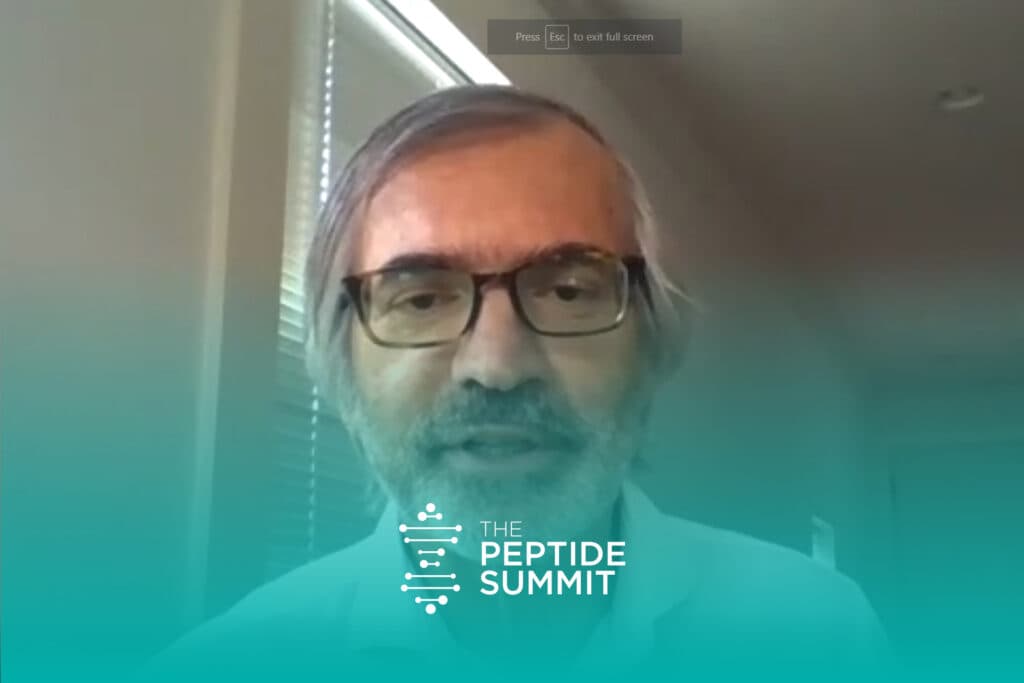
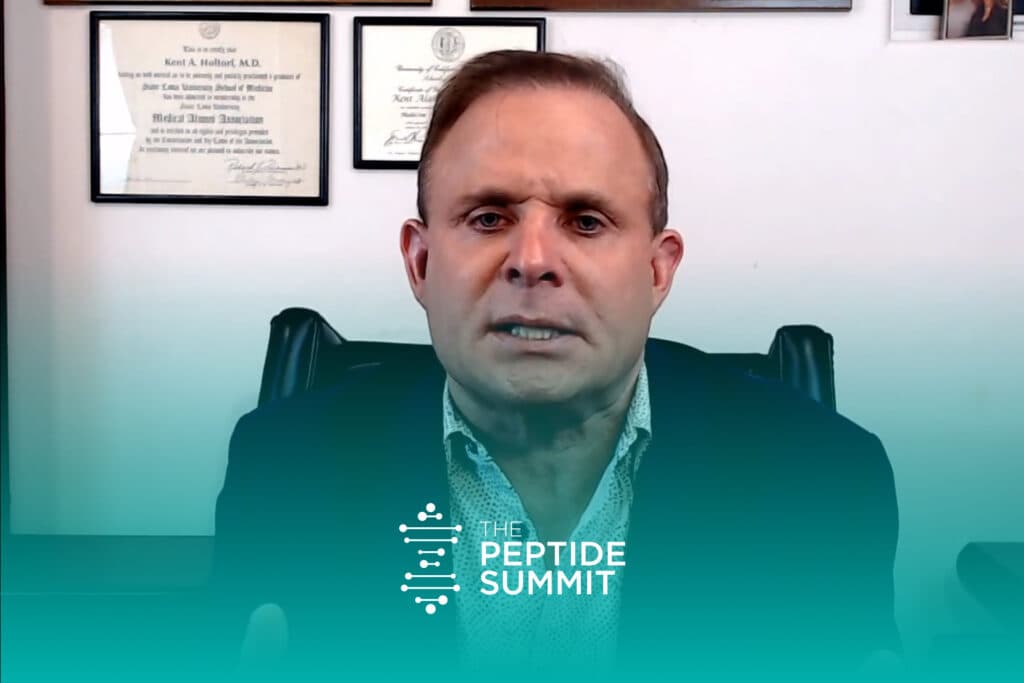
Dr. Joseph Raffaele, M.D. – Slow Down the Aging Process: Telomere Biology in Age-Management Medicine

Medical Director, Holtorf Medical Group

Co-Founder of PhysioAge Medical Group
Slow Down the Aging Process: Telomere Biology in Age-Management Medicine
Dr. Joseph Raffaele, M.D
Full Transcript
Introduction to Telomere Biology and Longevity 0:00
Doctor Ken Holter for another episode of the Peptide Summit. Today we have, the luxury, when having Doctor Rafael, and he's will be talking about the role of telomere biology and age management medicine. Doctor Rafael, thank you so much for being on and taking the time. I know you're busy, guy. Extending people's lives and, So it's great to have you. I'm looking forward to, learning a lot about longevity and ways to do that. Well, thank you, Doctor Holdsworth. I'm happy to be on and, happy to talk about one of my major passions in life, which is keeping people healthy, and doing what they love to do as long as possible.
And I love the fact. And we'll get into this. How you, You don't just do this. Have you show the people and document that they are actually younger? Yeah. I mean, we measure. Well, one of my major focuses is to measure the aging process in people at baseline to see what their strong systems are. Because we all are a mixture of weak systems and strong systems, and you have to focus on the weaker ones and try to shore up the stronger ones. And we really want to, to sort of know once we start therapies, whether they're effective.
It all started back in. It was 2001 when Bob Butler, if you remember him, he was the founder of the National Institutes of Aging, convened a roundtable. And I had been practicing, what was going under the rubric of anti-aging medicine at that time? Doing hormone replacement therapy, testosterone for men, and then, growth hormone replacement therapy. And patients were doing well, fairly well. But, at the same time, the NIH was looking at studies, looking at biomarkers of aging to see whether there was any way to measure whether or not to use these therapies were being effective.
And he invited me to a roundtable with a number of, relatively, illustrious, gerontologist. And it was sort of like being invited as a sacrificial lamb to this thing where they're going to tell me, why are you doing this stuff? You're killing these patients. And, and what came out of it really was it wasn't quite as bad as that. But when he said, look, you're a smart guy, Joe. What you're doing seems to be helping your patients. They feel well. But, how do you know if you're actually, you know, calling yourself an anti-aging doctor?
How do you know if you're actually altering the aging process in sort of a little light went off in my head. I've been doing this about four years, and I thought I was doing pretty good stuff for my patients. But that started me on this journey of looking at the literature for what was available to measure how people age, whether or not we could see whether these things that we're doing for them are actually altering their aging process. You know, either you know, a good or a bad way. That's been one of my passions since then.
And I think Bob has since passed away, for for getting me started on that because it's so fascinating, because of so much literature out there about it. In one of the areas, that then later and probably about to, you know, I see standard medicine moving very fast in this area, you know, about acute, but, just a little formal, stuff. But Doctor Rafael, he, received his BA in, philosophy. Pretty nice in Princeton, no doubt. His MD from Drexel University Medical Center, he trained at the New York University, hospital, Cornell, University Medical Center was formerly a clinical assistant professor of medicine at Dartmouth Medical School.
Like practice the at the Hitchcock clinic. He's a member of the Endocrine Society, is board certified internal medicine and as defined by the American Board of Anti-Aging medicine. Or are you an endocrinologist or. No, no, I do a lot on terminology, but, I'm not an internal ologist. Yeah, yeah. That's I've been I'm a member of the society, but I stopped going to their conferences because it's the same stuff over and over. It's just like they're arguing the same points that they were 15 years ago.
I would agree with the other guy. I went for probably between 1995 and 2015, I went to virtually every major meeting, every every, every annual meeting. But I think that and there's a lot of good science that takes place there, but they're stuck in not thinking about optimization, but about disease. And that's really not what we're about. And, you know, biological variables are continuous. A testosterone of 301 is not different from a testosterone 299. Yeah. Your cutoff is 300. Yeah. No arguing what the TSX normal should be.
It's like. But even though with all its flaws and I went because the top guy in terms of thyroid replacement and pregnancy was there, and I said, I can't find a status that T3 crosses the placenta. You know, I don't know if you know. Yeah. And that, which we know it does. Do we have people on straight down three that have great babies. But anyways, so what about Doctor Rafael? In 1997, he co-founded the Physicians Medical Group, or exclusively practice age management medicine, with a focus on personalized performance optimization, physiological aids, age assessment in 2007, he co-founded the Physio Age Systems, a web based biomarker data collection reporting system now used, used by age management.
Functional medicine practices around the world to assess, monitor and communicate to patients effects of a treatment. So we'll get into that about, you know, really testing people's age, not just giving a message. It's good for you. You know, you can take 10,000 supplements that people say are good for you. So 2009 is involved in clinical telomere biology research is published three studies on the effects of oral, telomerase activators on normal aging adults. He's lectured nationally, internationally, because of application telomere biology.
In 2015, he's out of the Rafael Medical Group and blogs review
Biomarkers, Systems Biology, and Hallmarks of Aging 6:00
about telomere biology optimization and biomarkers of aging. UN Rafael medical.com Rafaela a medical.com and physio age.com sio aging.com. Yeah well again welcome and can't wait to kind of get into the meat here and and pick your brain and, share with our, our viewers and, physicians and some of the, intelligent lay public about, all the stuff that, you know, and that you've been doing, so, so you've been practicing by 25 years, kind of like me. It goes by so fast. Really goes. Yeah. It's crazy.
And so you've been doing you've been focused on this age management, just the whole time or. Yeah, I mean, I when I for five years I practiced, I've been practicing for 30 years, actually, for five years I practiced internal medicine, as you mentioned, in the Hitchcock system up in New Hampshire when I, when I moved up there right after residency and sort of got my doctor legs, taking care of, shut my eyes and, you know, pneumonia and all the things you do in a primary care internal medicine practice while I was also, you know, on the assistant clinical faculty.
So, but at the end of the five years, I had kind of aging parents. I was a little bit, my parents a little older when they had me. So they were starting to age significantly, and I sort of, wondered what I could do to help them to, to age better. And, that started me thinking that, you know what? This isn't really the thing to do is putting Band-Aids on all these things, waiting for the diseases occur. So that really made me sort of open up, a practice, moved back down to New York City and open up a practice looking at how to slow down the aging process and, keep people as healthy as long as possible.
Interesting. And just a side note, have you found, like. Well, I found some of these, like, elite athletes who you think are the, the ultimate in health, and they actually turn out to have lower, higher biological ages than normal. Yeah, I see that. Absolutely. I mean, there's there's, you know, I hear about these people that do things like, you know, a marathon a week or a marathon a weekend, like every state, you know, and in 50 in a row in 50 weeks, I'm like, that's just not good for you. There are people who have some in, you know, some genetics that can get them through that.
But that's in the end, just too much of a stress on the body. And you see that kind of stuff. Oxidative exercise is great for you to the extent that you that allow yourself to recover. There's damage during the exercise and the recovery builds you back stronger. But if you're breaking yourself down all the time, and this gets back to, you know, to, to really into, into telomere biology, where, you know, your stem cells have to replenish those degenerated tissues. And I keep on they're being asked to divide a much higher rate because the damage is occurring at a higher rate.
Then at a certain point, their telomeres get too short and they can't do it anymore. So I think that, I absolutely see that kind of stuff. You know, I have a guy will come in and, well, his cardio age away. We measure their central arterial pressure and give them an age for how healthy they are. The elasticity of their arteries is might be great. Something like their immune function or their telomere length won't be as good because they're putting a lot of stress on their body with training. And it varies.
Some, some people have we'll talk about the heritability of telomere. Some people have a lot more reserve. They have more money in the bank, and they can get away with that and others don't. And there's a wide variability in what you inherit in terms of your telomere, like, so, giving them that kind of information is really actionable. Yeah. And that's it's almost harder to have them reduce their exercise than people to get them to exercise, like so it does it seems like it makes sense that they become like a chronic illness if it's just constantly under stress and right and break it down.
Yeah, absolutely. And so in terms of telomere biology, how long have you been releasing that? You, you published on that? And what's your thought on telomere versus other methods? And I know you use a lot of things, which is the way to go. And that's like the way we assess, let's say a sick patient line kind of figure. We love to get a ton of labs, and it paints a picture like no one marker can just lead you astray, you know? Oh, you're fine. This is good. You know? So I can totally see that. I can see where your software program could be a big benefit to.
Yeah. So it really, I think, when I first started looking at biomarkers, and I think when the Nia and other people, you know, gerontologist started looking, they were looking for a single biomarker that could encompass the aging process in toto and sort of predict who was going to die younger or older based on this biomarker. And in fact, the NIH, at the NIH, after ten years of looking for that in, identical strains of mice, said they couldn't find one like that. And I think they were just setting the bar too high.
And then since then, what you see is the newest kid on the block coming out, and then they say, well, okay, it's telomere biology. And then so you want to measure killer length and then the epigenetic age people come in, they say, no, this is more correlated with age. And so telomere biology doesn't make any difference. And then you see, you know, the proteome people coming in or the microbiome people coming in. And the truth is they all give information that's important and, and is useful. And as you say in painting a picture of what's going on, I mean, I think what's really happening is, is that we're understanding for aging in particular, that systems biology is what has to be applied.
And that means looking at multiple markers, in multiple systems from many different angles and then applying, you know, deep learning, artificial intelligence to it to try to really understand what's happening and to think that a single biomarker is going to tell you, you know, what's going to happen and who's going to have, you know, who's going to die at a certain time, much less what state of health they're going to be in between now and then is, I think, kind of silly, really, when you think about how complex the human body is and how it ages.
So, you know, I got introduced, you know, we were all doing hormone optimization. We had the big kick up of the Women's Health Initiative that then actually was very good for my practice because of all the misinformation out there. So I was helping women sort of navigate that for a lot. That was the biggest disaster. Poorly designed, like. Yeah, cost. I think there's estimated cost 50,000 deaths of women because of, from cardiovascular disease for not being put on hormone replacement therapy. So it was even lingers today, which is just insane because it's been, you know, we hear it all the time.
Don't you guys get breast cancer? Yeah, exactly. So, so where was I going with it? So we started. I just started to, to to to get into theater biology when I, was, introduced to it by Nopat in the, start the, founder of Two Sciences who came to my practice and said, what would you what would you take? What would it take for you to sort of recommend this to your patients? I said, look, you know, I'm I'm I'm an evidence based doctor. I have these biomarkers of aging. The biology is fascinating. And I think the telomeres, you know, and subsequently have, you know, they're one of the, the four major hallmarks of aging.
There's nine of them. It's one of the top four. And so I said, look, if you're willing to have patients come through and get all the biomarkers, we'll track them for a year and see what happens with them. And that's what we did. And that was, that was the, the beginning of the first publication that we had for, for to sciences. The, the effect of the summer is activator to 65. So that got me started in looking at the biomarkers. See what what agent that has the tropic effects because it affects stem cells and immune system.
What that has on the rest of the body. And you know, so that's I think I got started in that way. Nice, nice. And so you mentioned kind of nine hallmarks of aging. Can you talk more about that? Yeah. So the the you know, so I think aging, the aging field has been, you know, I think at one point it was papers published that there's maybe 200 different theories of aging. I, I remember War Dean was one of the fathers of this sort of back in, back in the late 80s, early 90s. And everyone was trying to figure out what exactly, you know, was what was going on with the aging process.
Is there a single underlying aging process? And in 2013, I believe there was a paper published, by Lopez or teen, and, and Maria Blasco and other people are major figures in the field, which, had been predated a little bit by Aubrey Debray. The, the, the Gray's paper about, the hallmarks of aging as well. But I think that the field now, the sort of, gerontology field agrees that there are sort of nine major hallmarks of aging, you know, genomic instability, telomere attrition, epigenetic. You can can you go slower on that?
Oh, okay. Yeah. So, so the, the nine, when you get to all right. Now the top four are the first one is genomic instability. That is we all know about what happens. The genome gets attacked by free radicals and the copying is is, you know, there's 10,000 hits per day to to the DNA in every cell. And then, hardens sort of free radical theory of aging kind of thing. And then there is, telomere attrition because telomeres are what allow cells to divide. We know remember the Hayflick limit. There is tumor attrition occurs because the cells can't continuously divide forever.
Up until 1961, most biologists and, believed that cells could divide indefinitely in vitro and in the body. And, you know, Doctor Hayflick should know that's not the case. It was little cells slipping in in the medium into the into the petri dish. And then they were doing these things. And that's why they're able to continue propagating. So eventually they figured out that the clock for this, Hayflick limit was the telomere. So telomere attrition is a key key component. Epigenetic alterations. But the next one, which are occurs with, you know, when the DNA methylation changes and then the access to, to, to DNA, changes.
So Eugene expression changes. You know, Michael Fossil, who is one of the smarter guys that I know, is, you know, one of the preeminent telomere biologists, likes to talk about, the fact that the the genes in your nose are the same as the genes in your toes. But you know what makes it toto on the nose and nose? It's gene expression. And so obviously, gene expression changes during development, but the same gene expression takes place, changes during aging. And, and, you know, Steve Horvath has shown in his elegant series of studies that, in fact, it's so tightly, you know, when you look at certain CPGs, it's so tightly, correlated with age that you can use it in forensics on those, but, to, to figure out what what the.
Yeah. I think it's very interesting point. It's because, yeah, you do have the same genes everywhere. Right. But yeah, all the different parts are doing different things. And, and you know, the basically epigenetics and that's like where a lot of peptides will show they'll turn on 45 genes and turn off 2016 that they know of. And, a lot of very upper flavonoids, you know, which I love, but yeah, keep going. Yeah. I mean, so I mean, that's I think the same thing that takes place doing development takes place in aging.
And, and so there's an aging useful gene expression, and there's a more aged. And then there's an old gene expression. And, you know, that shows that there is malleability to the aging process. If you can turn back and there's, you know, there was a early study or a recent study looking at turning back the epigenetic clock with growth hormone DHEA. At Foreman, the Trim trial. So I think, that obviously gene expression is a major marker. And question for you just about, you know, growth hormone, the anti-aging people use growth hormone.
But, shown now, I know studies shown giving rojiblancos cancer, which I wasn't, brings up. But the longest live people seem to have like low IGF one. How do you reconcile that? Yeah, that's a very complex area. I mean, I think that, you know, if you look at if you, if you talk to, and those are, those are very good points. There's a, I think there's a little bit of a trade off between function performance and potentially aging. And some of these, you know, the old, old that they study in the shows, some of them have lower IGF one.
I mean, I don't necessarily want to be like that one on that age. I mean, I think that, the animal models that they look at where ITF one is a growth hormone way overexpress these transgenic mice. I mean, we know what happens when you have way too much growth or when it's acromegaly. Most people don't live long. They they get big hearts, big jaws. They have other issues. So we don't want that. The real study is no one is rich enough to have that happen to them. Right? Right. Exactly. You need a lot of growth hormone data.
And you know what? That, I think but then they do look at these studies, in the mouse models and they and they say, you know, the IGF one turns up is a pro aging form. It's also a pro performance. I mean, we know that higher levels of IGF one are associated with better levels of cognition. So the question is, is, is, is in the aging adult is keeping growth hormone and IGF one levels in the more youthful physiologic range in the aggregate beneficial? There's no study that speaks to that. We just you know, the NIH did short term studies and there wasn't any increased risk of cancer.
And I can see that in in a year long study, there was some, improvement in lean body mass, but there wasn't long enough to know whether overall it's going to affect the aging process. One of the reasons growth hormone is because as long term is approved for, long term therapy and growth hormone deficient adults, it because of the 2 to 3 fold increased risk of cardiovascular disease that you have. If you are if you have a very low IGF one for a long time. So the, the growth hormone story and IGF one story, aging is just another is sort of evidence that you have to look at the whole picture.
You have to look at what's like, like look at all the studies and sick patients and just AG when you look at even evolution of the thymus,
Growth Hormone, IGF-1, and Hormone Optimization 21:00
I it you know, everyone has hypothalamic pituitary dysfunction. So really in the modern world toxins pesticides, stress, chronic infections. You know, gut dysbiosis is going to suppress that. You know, we have now, you know, kids coming in at, you know, 25 and their testosterone levels like 200, which like that of a nine year old growth hormone, is super low, you know, so like, how can that be healthy? You know, and it's not I mean, if you look at them, and, you know, I would treat objection to the growth hormone for, like I said, 25 years.
And you know, you have to look at each patient individually. And you have to you say, look, okay, if your IGF one is, is below 150 and you're having trouble with abdominal fat, you know, your exercising, giving growth hormone fixes the abdominal fat, brings the IGF one up, then you're set into motion a whole bunch of beneficial things that insulin resistance reduces. And so, it's it's got a lot of hype, both in the negative and in the positive. And the truth is, it's just another one of the hormones that's important.
Not everybody needs it. Some people do, some people don't. And that's the way I practice. The problem too, is you look at, you know, reference ranges. So I'll take 95% of people, like, take testosterone, for instance. It's like you, a decade ago, ranges were higher and decade for that. They were higher. So now it's like being led especially with growth hormone like the lower limit of normal is like the person would be. Seems like they're going to be dead. You know. Yeah. I mean it's crazy. Yeah.
So but to sort of bring it back to telomeres, I mean that growth hormone is important because it you know what it does. It muscles, it stimulates muscle satellite cells which have stem cells and muscles to divide, which then can be worked on by testosterone to get it to get bigger for hypertrophy, hyperplasia and hypertrophy. But if you're stimulating the muscle stem cells to divide more rapidly with growth hormone, you got to make sure they got telomeres. You can do that. So that's what I think that telomere biology dovetails very nicely with hormone optimization.
And knowing whether or not someone has adequate telomere reserve to be able to take the, the increased stimulation. And for cell division that the hormones give you is, is important. I mean, I haven't done the study, but hypothesis is that perhaps, you know, some of the risk which I did in aggregate is either none or very, very, very little of increased risk of breast cancer may be localized in those women who have very short tumors because very short telomeres, unequivocally associated with increased risk of, of cancer, of, of many different kinds of epithelial cancers.
So, so that's why I now when I measure hormone, telomere length of all my patients that I want to know what's happening because to deliver. Let's get to short the cells then. Then the genomic instability and they become much more likely to become cancer cells. Interesting. And yeah, BPC 157 actually increases growth hormone receptors on the cell. And now in terms of telomeres is the what's more important, the average length or the percent of short telomere hairs or it can you just guess that's a good question, a great question.
I mean, the vast majority of the data on tumor length and health and disease is using mean tumor length. And so that's still a useful, a useful, measure for, for looking at where somebody is. But it is pretty well established that it is the shortest telomere within the cell that causes the cell to go to become senescent. Or to go into apoptosis, into crisis. And, and it could you have, it can be 2 or 3 short telomeres within the cell that causes that. So and we know that telomerase preferentially goes and tries to, to lengthen tumors that are shorter.
So in in the actual biology, of, of tumor of telomere length, it is the critically short ones. But we have to remember when we're measuring telomere length in blood, we're measuring telomere length in the in the white blood cells. And depending on the technology, it's, you know, PBM, or, or if you're using, the technology that I use, we can break it down to the gray oocytes and lymphocytes. That's, a surrogate marker for what's going on in other tissues. And, and there's, there's concordance between what's happening in the white blood cells and what's happening in other tissues with because of, you know, that's been studied.
But you want to look at the data, which shows that, I think that looking at the average telomere length does help, you know, whether or not a person is at risk. And also whether or not the Flubber is activator is working. There isn't a really good commercially available short telomere assay. Life length does have, you know, they give a 20%, for 20%, but that's really more correlated with the mean telomere length than it is. But the critically short telomere length, which are under three kilo bases, just to give you sort of an idea for your listeners, telomere length, by by what we call flow fish is usually somewhere between 8 and 12 kilo bases or 8000 to 12,000 base pairs in length at birth.
And then you rapidly lose some during the growth phase. And then after that it's about 0.05 kilo bases or 50 base pairs per year. So that is kind of just sort of an idea about about where you are with, with, with telomere length, when, when, when you're, when you're when you and you kind of answer the question I was going to ask you, like, you know, you're checking telomeres and, you know, white cells like what's going on with whatever all the tick of all different cells in the brain, heart, whatever.
They tend to correlate. Is that. Yeah. Studies on that. Yeah. The minute studies, I mean, not as extensively like because as you can imagine, it's not easy to get biopsies of liver and lung and brain. But the studies that have been done show that there is pretty good coordination. And the reason for that is because, one of the major determinants of your telomere length in all your tissues is what you, what you inherited from your parents. And so that's about 70%. That's a, that's a very highly heritable trait, which we call it, you know, type.
So, you know, when it comes to telomeres, lifestyle is very important. Everything else you're doing. But you really want to choose your parents wisely. That's really what happens there. I mean, the difference between eight kilo basis and 12 kilo basis of telomere length inheritance is about equivalent to the amount of loss that occurs between young adulthood and death. So if you start out, you know, at eight, you're like pretty far along as compared to somebody who starts out at 12. And that's why people have quibbled about whether or not telomere length is a useful biomarker of aging, because a seven year old can have the same telomere length as a 40 year old.
And so why is that useful? Well, it's useful because we still know that when you get down to a certain telomere length, all hell breaks loose and that's around B below five kilo bases. So, you know, it's a matter of what you inherited. And then what's your attrition like. Because you can't change what you inherited. But you can change the attrition like by that's why telomere length is is length is so interesting. Is that pretty much every healthy behavior, from lifestyle to exercise to diet to supplements, etc., has been shown to slow down telomere length loss.
And pretty much everything that you do is bad smoking, high fat, being being overweight, not exercising. All those things are associated with shorter telomeres. And so it's kind of an integrator of many different, what we call Alice Allostatic load or on the body. And so if you're doing all the good things that are healthy, you might have a slower attrition. But if you start out with really short telomeres, it's still going to be a problem. Maybe you can have a healthy person. And I have people that do everything right.
And and I see that because track them over time. They're not losing telomere length at a very but they didn't start out with very good tumor links. And so they have to be more careful. You know, don't smoke. I mean, and it's very behavior modifying as well. When you tell somebody that, you know, you're stealing arrows, you're 40 and they're more like a 50 or 60 year old, then they're more likely to be more proactive about healthy behaviors because they know that 400 1KI like to call it the biological 401 K.
Yeah. Or, you know, the biological IRA is just not as full for their retirement of healthy aging as they get older. And the sleep effect. Tell me. Yeah, it does. And it's same way in which, I mean, I would say that it's not a good biomarker of aging if sleep doesn't affect it. So epigenetic aging, DNA methylation has been shown to be highly affected by poor sleep because that's when your body gets into, reparative state, and it's this thing. So, it's definitely sociopath. Like, do as I say now as I do.
And I know I stay up all night to get projects done. That's what I work well, and I feel like it's aged me, you know, and, I don't know, the studies on, like, night shift workers, until imagine. Is there anything like that? Yeah. There's shorter. And also, nightshift units in and of course, would make sense of nature. Night shift workers have increased risk of cardiovascular disease and cancer. You know, and it's probably not solely because of their tailor like, but, certainly, there's other things that are occurring.
Vitamin D is associated with telomere length. And so if you're a night shift work, you're probably not getting as much vitamin D in your body D levels low. It's really a it's a very good integrator of many different things, but also with the caveat that it depends on what you inherited. So one one telomere length measurement gives you some information, particularly if it's very short or it also is very long. But what really gives you information is serial measurement. Over time you want to see where you're going.
Yeah what you where you're going. And so how much of an increase can you see with like T 65 or what period of time or with other interventions. What are some of your like major things say like this is the number one thing I can say about is what they're also people are dealing like what's the worst thing they're doing? But like let's say we give someone T 65 when do you recheck? And what type of response have you seen? Yeah. So let me start with, the, the clinical studies that we have. The in the cohort study that I mentioned, we didn't see an actual increase in DNA length.
But we saw all sorts of improvements in immune system function that, the reduction senescent cells, which we think had to do with decreasing the number of shortest telomeres within the cell. But that spurred the company on to do a randomized control trial looking at the effect of T 65 in C a B positive patients. And we found, that there was a 533 base pair increase after a year of 65 five. So that's that's a pretty big one. Now, that was using the technology that is, where the average human length is about 40% longer using that technology.
So we have to take that 533 and make it more like about 300, a base pairs or point three, which is still quite a significant increase. And it was highly statistically significant in comparison to placebo, which lost to litter length, which of course, you would consider. So we do have randomized controlled trial data showing that, that there is an increase in telomere length, 50 to 65 at the doses that are normally used, 250 I use 2 to 500. I use, now in my practice, I've seen patients have actual increase in telomere length over time.
Going up, as much as, half a kilo base or 500 base pairs, over a couple of years. But what I see most often is, is that the law stops, and you get, you know, so I myself have had telomere length of about 6.4 kilo bases for the last 13 years. Which is, you know, I would expect over that time period to have lost about 0.8 kilo basis, have gone down to below five. And, and that's and if you can maintain your jewelry length, as I said, this is when they get critically short that it's a problem. Then that is really, you know, it's quite good.
It's just like a quarterly calcium score. I mean, you don't want, cornering calcium score of too high, but if it stays at 200 or 400, you're unlikely to have a coronary, because and and debate to see me infected patients kind of like to speed up that aging. The telomere loss to, like, get a better like. So you can do a shorter study. Not wait 20 years. Yeah. So the reason, I mean, CMV is a whole nother fascinating thing that, that there's whole conferences that are convened on CMV just to, for the, for everybody knows, CMV is herpesvirus five and can in immuno competent individuals, most doctors are like, you know, it's not going to do anything to you.
Don't worry about it. And about 60% of the US population is CMV seropositive, and it goes up 1% per year starting, at ten years of age. So by the time we're in the eighth or ninth decade, virtually 90 to 200% CMV positivity, it doesn't mean active, right? It. Well, so that's the interesting thing. As with all herpes viruses, they sit latent. You know, it's the gift that keeps on giving. Doesn't ever go away. And to the extent that there are reactivation, there's a problem. So when you get a culture that comes out,
Telomere Length, Inheritance, and Lifestyle Effects 35:00
that's herpes virus one, you feel systemically kind of crummy. It's not just the culture because there's a whole reactivation of it. And that makes your immune system have to rev up to then make it latent again. That causes your white cells to have to divide, more lymphocytes to have to divide more, and that shortens their telomeres. Same thing happens with CMV, except when those reactivation occur, there's no real symptoms. You might feel a little crummy, maybe a little something, but most people don't have any idea that they're having a reactivation.
And if that occurs over and over and over again, that accelerates telomere loss, increases the accumulation of senescent cells, which, you know, are bad for you because they secrete the, what's called the senescence associated secretory phenotype. All these inflammatory markers like il6, TNF alpha, they reduce the production of interferon gamma to fight off viruses. So it increases what we cause, causes the state of what we call inflammation. So CMV, even in an immuno competent adult, I it causes over time and acceleration of aging of your immune system.
And we think most other tissues in your body as well. You know, there might have been some benefit to it in our ancestral environment because it allowed us to, to potentially have a more robust immune response to pathogens. And nobody lived long enough to have the adverse effects, something called antagonist, a trophy where something is good for you when you're young but may have other, adverse effects when you get older. That's that's true of CMV. We chose CMV for that, for that trial because, there is a more acceleration of of of loss of telomere length in that.
And because we saw in our cohort that a lot of the benefit was in the individuals that were CMB positive within that cohort. So, subsequently there, you know, we there is a trial that is pending right now, submitted to OBM geriatrics to look at the effect of 65 on senescent cells. And that's, you know, in both, CMV positive and can be negative. And we see a beneficial effect in whether you see any more seem to be negative. Yeah. Because I rarely see anyone and like, well, what test is good. You see I, you know, IgG they don't make even a reactivate idea.
It's not a new infection. And the pcrs from Standard Labs are so insensitive. It's like having six. You know, at least Montoya showed a little bit of a good study where, you know, the reference range is like 1 to 20, but really a positive is like 1200, you know, right. That's what it doesn't mean. It's reactivate, but it's more likely the higher it is. Is that what they did or they do a PCR or what they do with for, for looking at the CMV? No. What. So it's just whether you're seeing CMB positive or negative, that's Okay.
We didn't look at the titer when you're talking about it is the titers and and yes those in actually in CMV, if the higher titer you ha you have, the more you have, senescent cells because there's more reactivation is taking place. I mean, I think the CMV is is not unique, but it is probably the most immuno dominant in terms of stressing your immune system. But pretty much anything that causes you to have to mount a response, intracellular pathogens like Lyme and the because it's the other things that you're mentioning.
I have patients who come in that are being treated by Lyme doctors and for chronic Lyme and their telomeres are shorter. And what's interesting is there's something called the lymphocyte, the granulosa and telomere length gap. So gray oocytes which are neutrophils or come from the bone marrow circulate for a day. And then they're gone until they don't divide again until they just don't get any shorter. They're a good reflection of your bone marrow stem cell telomere length. And if your inherited telomere like the lymphocytes however, has, you know, fight off results from bone marrow, then, fight off the infection that they need to or the tumor that they need to fight off.
And then memory cells are left behind. And if that they're challenged again, then they come out again. And that's what's happening with CMB. That's happening with other herpes viruses. And that's what's happening with, with other chronic infections. And so any time you have a chronic infection that is asking the immune system to keep it at bay, you are going to cause telomere attrition. And in fact, a nice study was done looking at the number of of herpes viruses that you have in addition to CMV from one through four EBV, HSV two, HBV six, which I think is a big immune stressor.
And I know you work with that in chronic fatigue. The more they have, the much shorter the much faster the telomere attrition is. So there's a slope that's relatively shallow, about 2.05 kilo bases for one herpes virus infection. It gets steeper for two, even steeper for four and four. It's very steep. So it's like a 50% steeper slope. So you want to try to avoid these, these things? That's what I tell patients. You know, the way we're treating Covid right now, you should try to keep other pathogens away from you when you're young and you're trying to teach your immune system, maybe getting a few things to help tolerance.
But when you're older, you want to stay away from these things. Yeah. And these are like, you know, at the one, you know, herpes virus one. Okay, you get a cold sore, but they find it travels up the, nerves into the brain. And we see those with Alzheimer's. And, and so these things are not benign, you know, they're not. No. Yeah. That's a nice series of studies. That's, I think, just starting to get the recognition that we should get that, that HSV one herpes human herpes virus one, is, is a bad actor for increasing risk of Alzheimer's disease.
So, yeah, I mean, everyone's chronically infected, and I think it's so much higher than, you know, 20 years ago. No, I can't go to a party. Where alone, you know, I'm so sick or, like, brother's so sick or family. It's. And he didn't hear that 20 years ago. Everyone's. He's chronic illnesses that just standard medicine just doesn't know what to do with. And everyone's immune system is shot, you know. Yeah. So and that's where you know some of the peptide therapies you talk about. You know I was in one alpha and that kind of stuff.
And I think even potentially growth hormone which can rejuvenate the thyroid. But if I was in, you know, some smaller studies, you know, the focus when you're talking about these chronic, immune stressors should be on the host, on, on shoring up their defenses through immune system, rejuvenation and, and through and maintaining telomere length so the cells can continue to survive, because once they become senescent, they can't do their job. And not only can they not do their job, I kind of liken them to an old watchdog, which not only doesn't go after the burglar, but bites the owner and snarling all the time, causing problems.
So I think that, that keeping your immune system youthful, is is, I think not only for fighting off, infections and cancers, but, for chronic, the general disease like osteoporosis, cardiovascular disease and Alzheimer's because of the reduction in inflammation. You know, I follow C-reactive protein and everybody IL six and everybody, people that have a lot of inflammation give a good lab for iron six. You I mean quest does a good job in LabCorp. They they they have a good assay for that. Because we find it that and I think it matters a draw station, you know, you know, they, you know, they hold it and a lot of these like, key tests, like they'll come out zero, you know, and and they, you know, hold, much less to be, you know, frozen or whatever immediately.
And there's that. Now, we find that's a big problem, but yeah, FDA is coming after I, thymus another one because people are using it for Covid and it's such a great, Covid, you know, and it's reversible quickly and but God forbid they don't want that. And so they're coming after it. Yeah. Well you can't get you can't make those claims that's visible without going through the trials. But but I mean, you know, look, we know treating patients and that's why we're allowed to do off label stuff. It, you know, things work.
That's how medicine progresses through doctors treating patients and you have to look at the risk benefit equation. I mean, what's, what's the risk benefit equation here? It's it's you know, we know it's highly in favor, benefit because the risk is so low. So, yeah, it's not the same thing with Covid. Why aren't we giving everyone, you know, vitamin D and zinc? And I can see if I have annoyed, you know, I even I remember that even hydroxychloroquine, all the black helicopters are coming after me, you know, and we don't even need vaccine.
I no one should be dying from Covid. The hospitals aren't giving people anything like the study, just showing people on ventilator. They gave them half vitamin D, 5% mortality, the other half without it 50% like. And there's no downside. Yeah. Isn't that what speaks to I mean, look, I just did a talk, for the Institute of Functional Medicine on, on the, the, the virome killer biology. And the effect and what you need to do is to shore shore up the host, because Covid has shown us that, you know, the age, association of Covid is so strong that it's it's it's the aging process that debilitated host that's the problem.
And the cytokine storm coming from the, from the, the senescent, associated secretory phenotype. But the fact that it happens to younger people is the really interesting thing. And what markers of, of, of risk are there. And I believe that and other authors that are in telomere biology that probably these people have short telomeres, the younger people that are getting really sick, they either have short telomeres or they have much, higher accumulation of senescent cells. And it may be that that's what's putting them at risk.
Now, we don't have the data for that, but I bet you're right on that because ecology works out. I would I would bet a lot that that you're correct. Is there a racial difference in telomere length? There is it in, African-Americans has slightly longer telomeres. And but that's that's the only major one. But then on top of that, there is, the senescence T cell stuff, comes in because there's a higher incidence of CMV in, in, in nonwhite ethnic populations in the United States. And so that stresses the inheritance that they got, and, over time, I think their risk increases have become so difficult to, you know, so many things.
They are these people have theirs. But why is the real reason, you know, and so there's other things like, you know, DNA methylation, protein omics. What? So just going back to the, to the, to the biomarkers, the hallmarks of aging, the mitochondria dysfunction. You know, it's all linked, you know, well, I found it fascinating when a paper came out in 2011 which looked at the effect of short telomeres on, mitochondrial biogenesis and mitochondrial efficiency, and it's through that master regular, those master regulators, the PG one, alpha and beta, they are turned down when telomeres get short, so that you get less mitochondrial biogenesis.
So keeping children longer helps your mitochondria and vice versa, because having efficient mitochondria decreases reactive oxygen species, which then don't attack telomeres as much. So, dividing cells lose about 100 base pairs per year. But then while you're dividing, if you have a lot of oxidative stress, you know, a telomere, which I didn't, you know, say for the audience is to get to the repeats of those of those six, nucleotides
Chronic Infections, Immune Aging, and Senescence 47:00
and the jig is very susceptible to free radical damage. You maybe, maybe you use in your practice or have heard of the, the DNA damage test, which looks at eight hydroxy two deoxy. What, is he in the urine? That's those base pairs getting repaired because they've been attacked, in the DNA, and end up in your urine, as a good measure of it. So. So it's all. You know, what I like about where the field has gone is we now have sort of a unified, the equivalent in physics of a unified field theory in, in aging, where we're really starting to put all the pieces together.
You know, it's not just this or just that. It's like the free radical damage affects telomeres, that affects epigenetic, DNA methylation. And then, you know, we're just learning it's all coming together. And it's a really fascinating field. And then, you know, then we have other hallmarks of aging. Cellular senescence, stem cell exhaustion, and the list goes on of all these things that you look at as the major things. And I actually my, in my practice, I target the hallmarks of aging. I look at ways to measure them.
You know, we have DNA methylation, we have telomere length. We have, you know, plays look at DNA damage. You can look at senescent cells. And I focus my therapies on, you know, certain things like flavanols, flavanols can have a beneficial effect. Hormone replacement therapy can have another kind of effect, to try to make your whole blocks of aging as healthy as possible. And then put it all together. That's at the molecular level. Then you look at things like, arterial stiffness, pulmonary function.
These are tried and true biomarkers that are that your heart endpoints for mortality and cardiovascular disease. Most people don't know that, that fev1 they mean they know it's associated with age, but they don't know that it predicts mortality 25 years later from all causes, not just pulmonary and respiratory causes. If you have a lower fev1 relative to others, in your age group. So, so looking at all these different biomarkers, we get, we get a feeling for what's happening to the aging process.
And, and, you know, things like to 65, which helps keep telomeres longer. Is has effects in pretty much every system. I, I've talked about cardiovascular disease. There's a trial going on right now in the UK looking at the effect of T 65 on, senescent cells in people who've had an MRI and whether or not through reducing senescent cells and, the inflammatory response of T regulatory cells, will we have a reduction in repeat mice because we think that, that, and there's very good data showing that short telomeres are associated with, cardiovascular disease as well.
So, you know, that's what I like about it is that you're, you're fixing many things when you're, when you're fixing the telomere length. We we all know the power of hormones. A male, post-menopausal and postmenopausal women comes in and you fix your hormones. And she, you know, feels a lot of different. And it's very gratifying. Comments here you can and I don't want to offend anyone, but a woman is not on estrogen. You can pick them out like yeah, I mean it's it's you know and I I've been doing it for 25 years.
I have patients have been going along and they tell me, you know, my girlfriends are saying, you know, they're just looking different and feeling different from me. But, but, you know, so but then you want to make sure that their telomere lengths aren't getting shorter. So you want to, you know, optimize all aspects of their aging process. And do you, have a test and test for mitochondrial dysfunction? I don't really have a great one right now. I think that, you know, your, you know, your, VO2 max might be a beneficial one to a certain extent, but that a lot of that is built in, in genetics.
I've been looking for one. And if anybody. Yeah, I've been looking for a long time. There was the Midas swab, but I don't think it. Yeah, it's, you know, it's it's pretty hard. Yeah. We'll, we'll we'll check people's, basal metabolic rate, which I think, you know, correlates that on mitochondrial function. But because so many diseases are associated with mitochondrial dysfunction, you know, so, yeah, most everything causes of aging, especially, and then, let's see with my other, oh, Emfs you know anything about Emfs and telomeres?
You know, I don't I mean, I've, I've looked for data on that and off the top of my head right now, I can't tell you that I found anything, but one would think that there's. I mean, look, low level EMF could be beneficial, potentially. You know, some people use it therapeutically. We get my screen opened up again. But, but I don't have any. Yeah, I'm almost there. So I, I started looking into it very skeptical, like, oh, it's got to be safe and, and dramatic increase. And I, I owned, six and I, they activate the calcium voltage gated channels and, you know, the calcium this is in vivo in vitro, right?
Both. And then they also once they, they put just the cell phone in the middle of a box of rats for nine days, and then they sacrifice them, they look and they got hippocampal degeneration. Wow. It's it's crazy. I'm I'm I'm worried the more you dig into it, the more you're like, oh my God. But that's a whole nother. Another topic. What what were some pearls? Like, what are your favorite treatments? I know you know, 65, of course. Other things. What are your, like, top five things or. I mean, for for me, in my practice, I do a lot of hormone optimization.
I don't think that, that that people without sort of more optimal hormones are going to enjoy life as much as people that don't have optimal as people that do tend to have optimal hormone levels. I mean, I do use to 65, a lot. I have a whole pack of, of, of, supplements that I think, you know, the omega three fatty acids, I think are very, very important is, a lot more coming out of that, particularly in Alzheimer's disease. And then, you know, the plasma allergens, which, you know, you may have seen some of that work that's been done.
Where, by doing good. Now, where, you know, you're looking at, you know, happily genotype and risk being abrogated or almost completely, mitigated by, by having good plasma levels. So I try to I mean, I saw your Boston heart up there in the corner. I do the Boston heart, that essential fatty acid analysis. And I have everybody want to get their omega six index, you know, optimal range. So I use I use them, but they don't get it through fish. You know, I get it through, through the fish oil. And the margins.
I mean, I have some here, I like to say. And then I've also heard, though. Oh, they get broken down in the, no. So plasma genes do. But but what what you're seeing there is, a precursor that then makes it through the gut and then is it is used to build plasma allergens. At least that's how it's been explained to me. I've done my first baseline. I have to do some the follow up once to see, you know, whether or not it's effective. But I'm just that's an area just in general fatty acids. I think, and plasma allergens are, you know, an area that I think is really up and coming for data supporting, you know, optimizing those levels for, for healthy aging and disease prevention.
I would say, you know, we've talked about senescence, the immune system, you know, for people that can't necessarily send, their stuff to UCLA, where I send it for looking at naive T cells and senescent cells, which are specific markers, CD 95 and Cd28. If you have a CD4 to CD8 ratio, which is available at, you know, Questar lab or any lab at us, you know, lymphocyte subset panel, if it's less than one is a there's a there's a good body of data that shows particularly in older individuals, those are 80 and above and then even 60 and above that they're starting to collect.
More senescent cells because the denominator is the CD8. And it's the is the suppressor of cytotoxic T cells that get senescent, not necessarily the helper cells as much. So the top stays fairly stable this the CD4. But you get this accumulation, they don't die and go away. And it's not because you have a lot of healthy senescence, a lot of healthy suppressor cells. You have the accumulation, you know, of them. And if that gets below one, then you really want to look at, you know, trying to I would that measure the telomere length in that patient.
And if they're not you know, they're doing they're not doing everything that you can do for a lifestyle standpoint. Then do it. Quit smoking, make sure, because they're it's significant increased risk of, of disease and mortality. When that ratio gets inverted, it's normally around 2 to 2. And a half. You know, when it gets below one things, things get really pretty bad because I'm thinking of the line patients. We see their CD age drop much more than they're seeing for drop. Oh, it's, you know, the total CD8 population.
Yeah. I'm not sure, but I mean, that I, I can kind of be sure. I'm not sure about that because what would happen, I would think, is that you would increase the number of senescent cells because the livers try to be put off by that. But, and the patients that I have come in, I see, like I haven't the number that they have large accumulations of senescent. So just to give you an idea, I mean, you typically have zero, six and T cells when you're born. And then, you know, they thought that you used to accumulate that with just the aging process.
But it's really whether it's really your viral load in particular CMB that caused that. And also other as we talked about other immune stressors. So I have patients that are in their 60s who have, you know, 20, 30, senescent cells, you know, on, on, on a, on a measurement. And then I have patients who have 800, and that's like 75 to 80% of their, CD8 compartment is senescent and secreting all sorts testes. But yes. So that's the that's the, that's the Cd28 negative is the senescent cells that you can get at UCLA and you can get it through, physio age.
You know, if you go to fisher.com and you have a licensee, you can get it through that or to Sciences also offers that@sciences.com to to to get the test through UCLA as well. But as I said the less the you know the one that can go through insurance and is less expensive is to just look at the CD4, CD8 ratio. And if it's if it's under one that you, you almost assuredly have a high accumulation of senescent cells. And how about CD 16?
Clinical Tools, Therapies, and Personalized Age Management 58:00
You mean that's a there's not a CD 16 or CD 19, which is the B-cell. I remember because I haven't done my labs in a long time, and I was a solo when I was sick. Next CD 16 you're talking about for the natural killer cells that are. Yeah. No, I don't see any 56 or C 57. But anyways, it's what I also, so the immunosuppressants suppress for auto immunity, but they tend to be really low. But, in some patients, as weird a subset of patients. Yeah, I, I don't measure that one. We look at it, we look at the natural killer cells, which is the CD 56 C 16 positive.
And then we look at, the, the before CDs. And did you measure function? Well, it's, it's the lymphocyte subsets because there's a, there's a very large body of data showing the association between those and autoimmune disorders, viral load mortality. Functional assays would be interesting. There haven't been as many studies with those. But, you know, you get very good information. And just looking at the markers on the, on the. Yeah. And and for instance like natural course of function, you know, it's a hallmark of chronic fatigue syndrome.
And like that about 70% are low natural killer cell function. About 30% are low sickle cell number. So a lot of them like Gerd. Yeah. So that's not working. The problem is a quest. Does the, the function and quest so difficult to deal with? They they're all messed up. LabCorp is much easier to deal with, but they're that other tests, a couple other key tests that we like. Quest does a better job, but overall quest is a pain in the ass. But, yeah, let me go to the last two years and try to become a true national lab.
And they're just not they're not there. All right. Yeah, yeah, yeah, I'd love to see someone else. Come on. You know, come on. Line. And let's see. Wrote number of papers on the 65. And so that's, that's, a core treatment and, you know, like hormones, you do thyroid, by the way. You. Oh, yeah. Yeah. That's fibroids. I mean, what you were talking about with, getting women pregnant, with the T3, I mean, it's it's very gratifying when their, you know, their, their fertility doctors. I mean, if I were a test normal and, and, you know, the done three rounds and you get your T3, you know, about 3.8 and all of a sudden they're pregnant.
So I do, I do, I do a fair amount with thyroid. It's I find it to be, yeah. And that's like, I spent most of my medical career convincing people that it's not reliable, you know, because all these sick patients, they get suppressed. You know, hypothalamic pituitary thyroid axis, and they're not making PSA. And, but that's just the way it's an easy test. And, you know, a controversial someone working on an assay, that will show that. But out for 15 years, I get to a certain point that something happens.
So now I'm going to some big guys and, see if I can get that. But, kind of prove that all these people normal TSH is, you know, and they come in and normal teenage in there. We check their basal metabolic rate and super low and their, their basically relaxation phase or of their reflex super low, and their pulse is like 50 and they're gaining weight like crazy. And then you get some thyroid and it's a surprise cuz it's like, oh, they're hypothyroid. And like, oh, they can't get out of pulses 48 and the freezing cold and yeah.
Anyways, but there's another thing I mentioned. Thyroid has lots of the increased mitochondrial function and, and does there's so many things. Yeah, absolutely. I mean, it's just, you know, it needs to be optimized as well. I mean, I've the thyroid analogs, I've been looked at the lower cholesterol. I mean, we all know the cholesterol shoots up when you're hypothyroid. And patients that are, that are have good thyroid function, and their cholesterol can come down quite significantly. So yeah, I mean, it's like the safest way or the star report, largest study ever done an antidepressant showed that T3 was a better person than any of the left side of it, but it didn't make the abstract because they didn't pay for part of the study.
Yeah, you have to deal with that in our field. Well, there's so much bias. And so that's this, you know, basically driving me crazy. But, yeah, their your whole program sounds very interesting. And, and looking at all these things I think is the key to so many ways of approaching so many illnesses. And I think that's the problem with modern medicine is you get sent, you know, gas or allergies. But as you neurologist and you don't go until something's really bad, right? You know, and, and people say, well, I can't, you know, out of network, that and, you know.
And how much is it worth not being in a nursing home for 20 years, living longer, being longer with your kids and your grandkids, and they're having a better quality of life. You can't put a price on that. And, you know, when I had Lyme and was bedbound. Yeah. I would trade everything for. Just take everything, just want to be healthy because you can't. Doesn't matter how money you have when you don't have your health. And so I think you're doing some amazing work and helping so many people because we take it for granted that we're healthy until we're not.
And shit happens, you know? Yeah. And the key, the key thing that did up what drive home is that you can measure how healthy you are, you know, and you may not be as healthy as you think you are even though you feel good, because a lot of this stuff smolders at a subclinical level until it breaks through. And the idea is to pick it up 10 to 15 years before then. And that's why we look at. Yeah, because when you can do something about it. Yeah, exactly. It was all praise, is it? You know, at first the disease is easy to, cure but difficult to diagnose.
But as time passes, it becomes easy to diagnose, but difficult. Difficult to cure. And, like, your belly. And, that's a good a good summary right there. Hey, I think this is fascinating stuff. I think you're doing great work. And, you know, I think the way showing people all these different, you know, markers, I think is, is just huge. And you're very obviously evidence based DNA. And as patients, you're proving to the patient this therapy works, not just. Hey, take this, one question I want to ask.
What's your thought on statins? You know, I think that, statins, interestingly, look, there's the world. There's kind of it's it's gotten really divided, and there's are people that have approached that and people are anti-state. Everything becomes like a political argument, right? Yeah. I think that the statins, my quick take on it is that in certain correct populations, they save lives. I don't think there's strong data for that. They're overprescribed in people that don't need them. And, you know, most people tolerate them, but a lot of people don't tolerate them.
Interestingly, statins do have very mild telomerase activity. And maybe one of the reasons that they're effective by turning on telomerase and likely is that's part of the work that's being done by Kim Spear adopted this out in the UK. In the same way that's running that trial that I talked about with telomere biology. But, I think that the problem is, is that the cardiologists, in turn, this sort of don't give patients a chance and say, look, you can get your cholesterol down if you make these changes in your diet, get exercise and do all these things.
And I have patients with cholesterol 300 because everything else is working well. They got clean coronaries and they're 75 years old. So, you know, that person doesn't need a statin person with a cholesterol of 200 with the coronary calcium 1000. I think, you know, you probably it's malpractice not to give them a statin at that point if they're not doing everything else because of the anti inflammation, probably doesn't have that much to do with the cholesterol. Yeah. And I think the whole cholesterol they're your heart disease is you know it's getting its legs knocked out over and over.
And it isn't that inflammatory. But also it's a it's a mitochondrial inhibitor you know. Right. Yeah. So yeah. And that's the problem. Exactly. So I think there's a better way, you know, to, to do it. You know, in certain patients, you know, for instance, the study came out and showed basically it seems the ideal patient diabetic patients with heart disease. He showed it increased mortality, like, okay, it doesn't work for these people. Why? And I think any time you try to give it to everyone, you know, they want to put it in the water.
That's when you get into trouble. That was the big problem with the polypill back in the back in the day when they when to put a beta blocker, a statin, an Ace inhibitor, aspirin. I think one of the thing in in a pill that's the opposite of personalized medicine, you would probably get an overall beneficial effect on mortality, but you'd have a lot of people being treated, don't you'd be treated to have side effects. And if one is really, you know, the where medicine is going, because we're all very different in many different ways.
And unless you're exactly like the average person in that large clinical trial, the data may not be applicable to you. Yeah. And it's totally true. And I tell patients, look, we go by the studies, but you're not a study. You're a person. And and they usually take people that don't have anything else and which so they're a rare breed, you know, find those people and and so we're, you know, doing studies and thinking like, how do you find a healthy person, you know, and it's everyone's exposed to toxic pesticides, plastic stress, you know, all this stuff and like, you know, BPA, you know, and all the pollutants.
But, chronic infections, like, I don't know, there's healthy people out there to do that control. But yeah, a, fascinating stuff. I, I, I, I think this is great. I think you're doing such a great service and, happy to help get get the word out. I'm going to give you a buzz, this week and and, about your software involved. Sure. Yeah, I'll be around. Absolutely. Great talking. You. Thanks for having. Thanks for having me on. Right. Thanks so much. All right. Take your day.
Comments