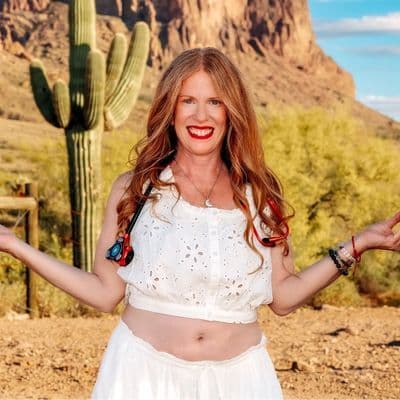
Full Transcript Introduction to the Menopause Summit 0:00 This is doctor talks. 0:01 Real talk from real doctors. 0:03 Only issues that matter to you most. 0:08 Hello and welcome back to mess during the Menopause Transition 0:12 Summit 3.0, our third year, my third year with you. 0:16 I'm your host doctor Sharon Stills. 0:19 It's truly an honor and a privilege to be here with you 0:22 all, to be sharing these conversations that really have the power 0:27 to change your life in such marvelous ways, and to really 0:32 flip the conversation, to really embrace this perimenopause, 0:37 menopausal hormonal journey, for it to be, 0:41 you know, hormonal harmony rather than hormonal havoc, 0:44 which so many of us are taught to think that's what's going to happen 0:48 when we start going through this time. 0:50 So I'm really excited to have my guest today, 0:55 Jessica Barac She is a registered nutritionist. 1:02 She's the personal trainer. 1:04 She is the woman behind what the Menopause, which is a platform, 1:09 an Instagram that has like close to a million followers. 1:13 So we're going to talk about community because I think community, 1:16 especially for women is so crucial at this time. 1:20 We're going to talk about all the things that I know all of you are interested in. 1:24 You know, how do we get your metabolism to work? 1:27 How do we lose weight? How do we decrease inflammation? 1:29 And so Jessica is in the house to share all that lovely information with us. 1:35 So welcome to the summit. 1:36 I'm really excited to meet you 1:38 and have this conversation and share with all the listeners. 1:42 Thank you. I'm so excited to be here too. 1:44 And so to meet all of your beautiful listeners and just to share and share 1:49 my knowledge and just, help as many people as possible. 1:54 So I always like to ask, you know, how did you what the menopause. 1:58 Like what? How did why did you get into perimenopause? 2:01 I know you're a nutritionist. 2:02 You're a personal trainer. 2:04 There's lots of things you could do with those credentials. 2:08 Why women's health? 2:09 Why perimenopause? Why menopause? 2:11 Yeah. 2:12 So, I mean, like so many women, perimenopause took me 2:15 by complete surprise. 2:17 I actually thought I was having a nervous breakdown. 2:20 It was, for me, crippling anxiety and panic attacks and, 2:24 and after being so motivated and confident my whole life, it really just kind of 2:28 flipped my world upside down without me even realizing what it was. 2:33 And so after finding out that it was perimenopause and, you know, 2:37 kind of putting those pieces together, 2:41 I decided to navigate that online basically, 2:46 through humor, through education. 2:49 And that's really how what the menopause, the the community, it was born.
Jessica's Perimenopause Story and Community Building 2:53 It wasn't I didn't go out to build a community, 2:56 but I it's just one of those things that, you know, just happened. 3:00 So as a registered nutritionist, I work with women. 3:04 And I just started focusing 3:05 on perimenopause and menopause and more specifically in that way. 3:09 I love that. Yeah. 3:11 I think the best things in life happen when you don't push, right? 3:15 When you just start doing it from the heart or from service, 3:19 it's like the universe just goes, yeah, 3:20 we're going to we're going to support you on this. We're going to make this happen. 3:23 And you bring up such a good point like your own personal story 3:27 about feeling like you're having a nervous breakdown. 3:30 I have so many patients who have the same experience 3:35 and to really, like, understand this is your hormones. 3:38 This doesn't mean you are deficient in a pharmaceutical drug is really important. 3:44 I think just hearing that can really relax. 3:47 So many people, so many women listening to go, 3:51 oh wow, you know, I'm not going crazy because that is such a common symptom. 3:56 That's not you know, we talk about hot flashes, but yeah, 3:59 feeling like you're losing it is not something that's talked about. 4:02 So I'm so glad you brought like that knowledge out there. 4:05 Like just to be like it's it's not you. 4:08 It's your hormones kind of thing. 4:11 Absolutely. 4:11 And to be honest, it was such a relief to me 4:14 because my thought was, oh, this is my future. 4:17 I'm going to be feeling, you know, this apathetic and, 4:20 you know, unmotivated and just, that disconnection that I had from people 4:25 and my friends and my work and my husband, 4:28 I was afraid that that was going to be forever. 4:31 And I guess what I see is that the importance of and speaking 4:36 to women on a, on a day to day basis is that women feel so alone and isolated 4:42 and they're feeling ignored and unseen and unimportant. 4:46 And that's why it's so important for us to stick together and create space, 4:50 as you're doing here with this beautiful summit, for people 4:52 to talk about what they're going through, how they're feeling, 4:55 to share their experiences. 4:58 And, one thing I hear every day is, oh my goodness, 5:01 I'm so glad I found your page, because I thought I was going crazy. 5:04 And just reading the comments has made me feel so much better. 5:07 So for me, mental health perspective. 5:10 Women in this age group are at the highest rate of suicide, 5:13 as I'm sure you know, and it's really no joke. 5:16 But we need to connect with each other 5:18 to be there for each other, even if it's just online. 5:21 So what I always say is, you know, check in with your friends, 5:24 check in with your colleagues, open the conversation around 5:27 perimenopause, around menopause, just around aging in general. 5:31 And, and honestly, you don't know whose life you can be impacting by doing that. 5:37 Gosh, that is so, so true. 5:39 And yes, just knowing it's not like we, you know, we it's not like we get happy 5:44 because you're suffering too, but just knowing that, like someone else is 5:48 going through what you're going through just really takes it down a notch, right? 5:52 You're like, oh, it's not just me. 5:55 This is like that thing. 5:57 And and then connecting and sharing it just makes you it 6:00 settles the soul a little and then connecting. 6:03 And I love what you do because you're doing it through education. 6:06 You're doing it through humor. 6:07 I mean, there's so many funny things and and it's like we have to be able to 6:12 to laugh and all these things raise 6:15 oxytocin and yes, 6:18 and oxytocin. 6:19 Maybe you can talk a little bit 6:20 about oxytocin for anyone who is not sure what oxytocin is. 6:25 Yeah. 6:25 Well, it's that, you know, it's that love chemical, isn't it? 6:28 That's that feel good. 6:29 Chemical in our bodies that that we get when we, 6:32 you know, we have a newborn baby and, and so how can we do that? 6:36 Through play and through laughter and, and, you know, through through 6:41 finding light and life and things, and, you know, it is so important at this time 6:46 to try and think about ways we can raise oxytocin and even hugging somebody. 6:51 And, what do they say that kissing your kissing your partner for? 6:55 I think it's like 20s or something or a 16 second hug actually 7:00 raises oxytocin in your body. 7:02 Yeah. 7:03 And I, you know I it's something I measure on all my patients and it's 7:07 typically really low, especially 7:10 once we get into our 50s, 60s, 70s beyond. 7:14 It's something that we, we need to really consciously work on. 7:19 And sometimes just balancing the hormones, the estrogen and so forth will raise it. 7:22 But certainly I'm always like, go do what you love, right? 7:26 Hug your hug your loved one. 7:28 Hug yourself, play with your animals, dance naked,
Mental Health, Isolation, and Oxytocin 7:31 get a massage like whatever is going to bring you joy. 7:34 Like do more of that doctor's orders. 7:36 Like we have to bring the joy and laughter is such a great way to do that. 7:42 And if we can't laugh at ourselves, then, you know, we're we're missing out. 7:47 So it is humor really is medicine. 7:50 So let's talk about 7:52 weight gain, because I know as a nutritionist and a personal trainer, 7:57 like you've got both aspects and, you know, 8:02 women in perimenopause, menopause, it's probably, you know, when patients 8:06 come to my office and chief complaints weight gain is always in the top five. 8:11 Right. 8:11 And you know it I'm doing the same things I've always did. 8:15 Weight was never an issue. 8:17 And now I walk by the cake counter and I gain an extra 5 pounds just by walking by. 8:22 So speak to that please. 8:24 As to why that's happening and what advice you have for the women. 8:28 Yeah, absolutely. 8:29 So I mean, I see perimenopause 8:31 as really the ultimate kind of metabolic turning point. 8:35 And the decline in estrogen and progesterone really trigger 8:38 this melting pot of changes in the body because of the role that estrogen 8:43 and progesterone play in the body, as you know. 8:46 Well, and what I like to think about estrogen, like, 8:49 is it's like the ultimate mother molecule where it's nurturing and protecting 8:54 pretty much every aspect of our body and our systems and nervous system, 8:59 metabolic health, blood sugar balance, controlling cholesterol 9:02 and blood pressure, protecting our heart and bones and muscles. 9:06 Playing a role in protecting our gut, lubricating our skin and our hair 9:09 and our eyes. 9:10 All of this stuff. 9:11 And what happens is that as we lose estrogen, we, 9:17 we lose also skeletal muscle, which is really our metabolic organ. 9:22 And really the key to aging. 9:24 Well, so you can think about what I like to think about. 9:28 Muscle is like kind of a glucose sink where it's burning glucose 9:32 and clearing it from the body. 9:34 So clearing those carbohydrates from the body 9:36 without the need for insulin, which is, you know, the, 9:39 the hormone required to balance blood sugar levels in the body. 9:42 So if you are a woman in midlife, you feel like you put on weight 9:46 just by looking at carbs. 9:47 Or if you've changed nothing about your diet, 9:50 and you know, you've, you've put on weight probably usually around the belly. 9:54 Then part of it is that as our muscle declines 9:57 and as our estrogen isn't supporting glucose metabolism in the same way, 10:02 we do become more insulin resistant 10:04 and the glucose and get gets stored as fat in the body. 10:08 And because your body hasn't been able to utilize 10:11 the energy in the same way that it once did, so metabolism 10:16 really is the body's ability to access and use energy. 10:20 So when women feel really fatigued and tired and exhausted in perimenopause 10:26 and menopause, not only is 10:27 the body having to learn how to function without estrogen, but it's. 10:31 Which is exhausting, obviously. 10:33 But on top of that, metabolically we're not able to access fat 10:37 for fuel as efficiently as we did before. 10:40 And so this is making us exhausted, craving for carbs, craving for more sugar, 10:45 and all of this contributes to weight gain. 10:49 We see a big change in our appetite. 10:51 Hormones and estrogen actually also plays a role in dampening our appetite. 10:56 At the same time, leptin, our satiety hormone, decreases 11:00 so we don't feel as full well. 11:02 Ghrelin, our hunger hormone, it increases so we feel more hungry all the time. 11:07 We get more cravings and hunger, and we're more stressed 11:10 in perimenopause and menopause and across this transition, 11:13 which can lead to comfort eating and stress eating and all of this 11:18 kind of melting pot just accumulates as weight gain. 11:23 And at the same time, one of the most important things is sleep. 11:28 And, you know, estrogen and progesterone play a role in our circadian rhythm 11:32 and helping us sleep. 11:33 And when this is disrupted, which further impacts our energy,
Why Menopause Causes Weight Gain 11:36 our insulin resistance increases inflammation. 11:40 And lack of sleep just makes everything a thousand times worse. 11:44 And we eat model following day and mood and anxiety and, 11:48 negatively impacted, you know, has all of these kind of knock on effects. 11:53 At the same time, women are also becoming less active. 11:57 And this can be, you know, because our bodies eggs, you know, women's 12:01 bodies are aching, the joints are hurting, 12:03 they're feeling tired, they're feeling apathetic. 12:05 And so this can result in being less active and more sedentary. 12:11 So this all really works together 12:14 to equal the weight gain that we see in perimenopause and menopause. 12:20 You describe that. 12:21 Very lovely. But it's also very like, whoa. 12:24 It's like, a tornado of all these things. 12:27 So you set the stage beautifully for women to understand what can they do. 12:32 Right. 12:32 Because that's like, I'd like to opt out of that. 12:36 And so what are the things you recommend, 12:40 to start, you know, turning that around 12:44 and to not have the men overly and things. Yes. 12:49 Yeah. Absolutely. 12:50 It does. It all sounds like doom and gloom doesn't it. 12:52 But I'd love to get across is to, to these beautiful women attending 12:57 this summit is that there is so much that you can do to support yourself. 13:00 And really the key to reversing menopause weight gain is restoring 13:05 our metabolic function, reclaiming our amino metabolism. 13:10 And so how do you do this? 13:11 So I've kind of broken it down into three steps. 13:14 So the way that I look at it is three steps. 13:16 So the first step is nourishing the body. 13:18 So we're looking to balance our blood sugar. 13:21 And we're looking to de flame. 13:22 So eating to reduce the inflammation in our body. 13:26 And we can do this by really concentrating on 13:29 what we're adding to our diet. 13:30 And I like to think of the powerful three, which is protein, 13:34 colorful plants and healthy fats. 13:37 And protein is so important in midlife, it helps us to build muscle. 13:43 It helps us to stay full. 13:45 If we have more muscle, we burn more calories at rest. 13:48 It increases our satiety, prevents hunger and cravings. 13:52 So protein is really important. 13:54 We can get this from animal sources such as chicken, beef, fish, lamb, eggs, dairy. 13:59 We can get it from plant sources, legumes, tofu, etc.. 14:04 And then to focus on colorful plants which are very fiber 14:08 rich and phytonutrient rich, and, you know, these beautiful polyphenols 14:12 and antioxidants. 14:14 And this all works together to reduce inflammation in the body, which 14:19 inflammation is making our symptoms worse, and it's making our weight gain worse. 14:24 So anything we can do to to tame that inflammation in the body 14:28 is really, really helpful. 14:30 And at the same time it's supporting our gut microbiome. 14:33 So that's also crucial at this time. 14:35 We need anti-inflammatory fats at every meal. 14:38 And that really supports with, creating hormones. 14:42 So encouraging the hormones that we do have, especially in perimenopause 14:46 that, you know, supporting that hormone, creation and production. 14:51 And also it helps to keep us full. 14:53 We do need to eat also some starchy carbs on a daily basis. 14:57 So I, I'm not a personal believer in a low carb, diet at this point in time. 15:02 I think you have to be careful and moderate in your carbohydrate consumption. 15:07 But we want to, we do want to eat some. 15:10 And that's because the research around, preventing Alzheimer's disease and, and, 15:16 and cognitive function, you know, that shows that whole grains 15:20 and, you know, good starchy carbs, a very important for that. 15:23 So that's what I focus on with nourishing the body and nutrition at the same time. 15:29 We need to look at movement. 15:32 And so as I said, you know, women do tend to move less. 15:36 And we want to really start to try and live life in motion and move more daily. 15:42 And walking is a great fat burn. 15:45 I say, even if you just go for a walk every day, 15:48 especially after a meal, to help to flush out the 15:53 glucose from the body, it can be really helpful. 15:56 You also don't have to walk all in one go. 15:58 There's good research around doing smaller walks throughout the day, 16:01 which is also highly beneficial for burning fats. 16:05 On top of just moving more every day, we really want to focus on building muscle. 16:11 And for me, strength training is a non-negotiable in midlife, 16:16 and this is because we need to build that muscle, but also build the bone 16:22 and because by losing muscle and we're losing bone 16:26 each year from our 30s, you know, from 40, we lose a by 1%. 16:30 We lose muscle 1% each year. 16:31 And we're also losing strength and power. 16:34 So it's key that we're compensating for this by lifting weights. 16:39 And we want to work on lifting heavier weight. 16:42 So getting stronger not just staying the same. 16:44 And we do this by using progressive overload strength training. 16:48 On top of that my my secret sauce to fat loss 16:52 and what really helps my clients is sprint interval training. 16:56 And this is very short sharp intervals. 16:58 So this isn't kind of long. 17:00 Half an hour 40 minutes, one hour hit sessions. 17:03 This is very it's like eight minutes long, with rests all throughout. 17:07 And this has been shown to increase 17:10 brain derived neutrophil factor helping with brain fog. 17:14 It blasts visceral fat and it also reduces inflammation. 17:19 So that is that in itself is a really really powerful tool 17:23 for losing weight in, in perimenopause and menopause. 17:27 At the same time, we need to focus on getting good sleep. 17:31 As I mentioned 17:32 earlier, sleep is is really key and really crucial to all parts of health. 17:36 So if we can get 7 to 9 hours, which can feel impossible for, 17:40 for many women in perimenopause and menopause, but it is possible. 17:45 So if you can get some good sleep and just work on combating stress, 17:50 that's really the key to, you know, improving metabolic health, 17:53 improving mood, improving satiety, keeping full insulin sensitivity, longevity. 17:59 They, that's those are my three steps. 18:01 So nutrition and nourishing the body movement 18:04 and restoring and restoring is sleep and stress 18:09 I love 18:09 that I want to just go back and ask a few questions. 18:13 And I love that you like give a shout out for complex carbs because you know, 18:17 a lot of women just, you know, we've been taught like they're so evil. 18:22 Stay away. 18:23 But then these women are destroying their thyroid and their adrenal. 18:27 You know, it's compounding. 18:29 So yes, I love what you said. 18:30 It's like, you know, not a carb fest, but, you know, a little bit 18:35 and good sources and so forth, so important.
Three-Step Strategy for Metabolic Health 18:38 So the training you talked about, I was trying to write down, 18:42 you said progressive overload and you can 18:45 you just talk a little bit like, what is that look like. 18:49 Yeah, absolutely. 18:50 So progressive overload strength training is basically training 18:55 to with the intention of getting stronger as we go. 18:59 And that might sound super basic, but it's not actually 19:02 because a lot of people will pick up, say, a 10 pounds pair of dumbbells, 19:07 and the next day they'll still be using the same set of dumbbells. 19:11 What progressive overload strength training does it? 19:14 It intentionally works to build up your strength over time, 19:19 so you're looking at increasing the load as time goes on 19:23 and getting stronger, building those muscles, which you would 19:27 imagine would be, you know, a given, but it's actually not. 19:32 So we want to intentionally go about doing that. 19:35 And so are you doing more reps 19:38 or is it's still the same amount of reps and just heavier weights? 19:43 Yeah. So there's a number of different ways you can do it. 19:45 I personally prefer to keep the reps down. 19:49 So around eight reps, 8 to 10. 19:52 And the way that you can tell 19:54 if your weights are heavy enough is that by the final two reps. 19:58 So if you're doing eight when you get to six it should be like, oh, can I do this? 20:04 So you should be really challenging yourself so that like, 20:08 you shouldn't just be doing like one, two, three, four, five, seven, nine, ten. 20:10 You should it should be a struggle for the last two. 20:13 And you keep doing that until you know it gets easy and then you move up. 20:18 So you're just. Yeah. 20:19 So that's the that's kind of the that's an easy way to do it. 20:23 And do you recommend doing this twice a week. 20:26 Three times a week. 20:27 Yeah. 20:27 So I so I recommend three times a week of resistance training. 20:31 And you don't have to go and spend an hour at a gym. 20:35 You really don't. 20:37 You can do a workout in 30 minutes and it can be at home. 20:41 And it doesn't have to feel like this huge life undertaking. 20:46 You know, you can do a very efficient, good workout in 30 minutes or less. 20:51 So, you know, don't be scared off 20:53 by having to join a gym or any of those things. 20:56 Awesome. And then the sprinting. 20:59 What did you say that was called? Yeah. 21:01 So sprint interval training is it's amazing. 21:04 So you can either do it say 30s on 20s rest. 21:10 I generally do it. 21:11 22nd is on 10s rest and you do it for eight sets. 21:17 Okay. 21:17 So it's like 20s on 10s rest. 21:19 20s on 10s rest for for eight. 21:22 Then you have a 2 to 3 minute rest, 21:26 and then you do it again and you do that three times. 21:29 And this could look like sprinting as in actual sprinting, 21:33 like running as fast as you can. 21:34 It could look like punching a punching bag as fast as you can. 21:38 It could look like kettlebell swings. 21:41 It could look like, rowing on a rower. 21:44 It could be on a bike. 21:45 Any, anywhere where you can just go all out and really sprint 21:49 as hard as you can. 21:50 An all out effort for 20s counts, 21:54 I love that, and then you get to rest. 21:58 Yes, exactly. 21:59 And the thing is, though, that, it sounds like a an all out effort, 22:03 but I do it a lot and it, it will shift your mood, 22:08 your anxiety, you know, it will shift things like this and. 22:12 Oh sorry. Okay. 22:14 Sorry. Do you do it every day? 22:16 I don't do it. No, you don't need to do it every day. 22:18 I'll probably do it three times a week. You can do it. 22:21 I think the science is twice a week is actually enough to get to 22:25 to get visceral fat, reduction benefits. 22:28 So, the way that I program it for my, 22:32 my actual program is we do strength training three times a week. 22:35 And then on the in between days, it's training. 22:39 So it's like three 30 minute workouts of weights. 22:42 And then, like a Tuesday in a Thursday is an eight minute workout. 22:46 It's just eight minutes and then, you know, set it off and then the rest. 22:49 And then every day walking though. 22:52 Yes. Everyday walking. 22:53 Yeah. Okay. 22:54 What do you think about the ten. 22:56 Like are you walking to get to ten k steps or is that not necessary. 23:01 I'm curious. Do what you think. Yeah. 23:03 And so there's such there is great research here. 23:06 I'm getting to ten steps and 10,000 steps. 23:08 And you know, 23:09 the benefits have on brain health and weight loss and all of those things. 23:12 But I don't want that to be a reason to not walk my in. 23:18 The way that I look at it is if you only have ten minutes, 23:21 just go and use the ten minutes. 23:23 Don't worry about you know how much it is. 23:25 Go and do what you can because it all adds up, even if you only do ten minutes. 23:30 But you do that every day of the week of the month. 23:32 You know, that's a lot more minutes than just not doing anything. 23:36 So move when you can, don't and and try to make it fun. 23:40 But don't put pressure on it. 23:41 You know just just do it and make it because it makes you feel good. 23:45 But my biggest message really is that 23:49 this time of a woman's life, it's it's 23:52 such an invitation for a real reawaken ning of what we want for ourselves 23:57 and our hopes and our passions and our dreams and desires. 24:01 And so many women come to me wanting to lose weight, 24:04 but I find that as we work together, a real shift happens where they go from 24:09 just wanting to lose weight to wanting to build a body to grow old in, 24:15 you know, wanting to age well and to be going on holidays 24:20 when they're 70 and hiking mountains and, you know, lifting their being able 24:25 to lift up their luggage into their overhead compartments and, and,
Strength Training, Sprint Intervals, and Daily Movement 24:28 you know, having, having a shift to having goals for themselves going forward. 24:33 Because so many times we're told, you know, you're past 24:36 your prime, etc., but we're not. 24:39 This is such a beautiful opportunity 24:42 to reprioritize ourselves because women in midlife, 24:46 they've spent the whole time putting other people before themselves. 24:50 And now it's a really good opportunity 24:52 to just to take a look inwards and think about, okay, 24:56 what do I want my life to look like for the next 30 years? 25:00 How do I want to be, and what do I need to do to get there? 25:04 So, you know, eating more protein, 25:07 feeling vibrant by eating more fruits and vegetables. 25:11 Doing a strength training workout so that you can take a trip 25:15 when you're 70 with your friends and go hiking up a mountain, you know, 25:18 maybe go skiing with your grandkids if you're really adventurous. 25:22 Then it's just I think this really important message 25:25 to get across is, is that we can age really well and it starts now. 25:32 So it starts in midlife where we can we can pave the way to a 25:35 to a beautiful, fulfilling old age. 25:38 And if we put the if we put the steps in now. 25:42 Absolutely. 25:43 I, I always say menopause with the parentheses around the pores 25:47 because for just that reason, it's this time to pause and, 25:52 you know, if I was like, oh, 25:53 I'm like listening to myself, what you were saying, like, exactly. 25:56 It's, you know, this time to really pause and recalibrate and, 26:01 you know, see where what we've done and where we want to go. 26:05 And yes, we, we're a force to be reckoned with. 26:10 And I plan on hiking and, you know, climbing mountains is actually my thing. 26:14 And I plan to be doing it well into my 80s and 90s and the mindset. 26:20 And I love what you said about diet because you didn't, 26:22 you know, you said nourished. 26:24 And when you think about it, right, when we think about our food is this is 26:28 this is our way of that that gets a love note to ourselves 26:32 what we're eating and taking the time and caring about it and all these shifts. 26:37 And yeah, at this point, 26:39 you know, typically if you had kids, your kids are older and you can 26:44 but you know me first, right? 26:45 Like it's not selfish 26:47 to be self-centered at this time and really thinking about ourselves. 26:51 And so all of that is so, so beautiful. 26:55 I just, so good. 26:57 Any other last words? 26:59 I mean, that was such a beautiful bow on all this great stuff. 27:03 You were talking about, but any other last words of wisdom you want to share? 27:07 No, no, that's I mean, that's really my that's 27:09 my desire is to just women know that they are powerful beyond measure. 27:14 You know, we're we're so powerful and, 27:18 and what I love about becoming physically strong 27:21 is that often we find that as I become physically strong, 27:24 I become more resilient as well, you know, in my life. 27:27 And so the benefits of nourishing ourselves, building our muscles, becoming 27:32 fitter, becoming stronger, it actually overflows into every area of our lives. 27:36 So there's just so many benefits. 27:38 So that's the our message to go and get started. 27:40 Do what you can, 27:41 feel good, be vibrant, be powerful and just go and live an amazing life. 27:47 I love that. 27:48 Well, it's it's no question to me now why you have such a huge community 27:52 because you're beautiful spirit. 27:54 You have such beautiful things to say. 27:55 So where do the ladies go find you to hang out with you? 27:59 Where can they learn more and be with you so they. 28:02 Yeah, I so you can find me at what? 28:04 At the menopause on Instagram. 28:06 That's my main platform. 28:08 Yeah. 28:09 Love it. 28:10 Well, thank you so much for, I mean, I, I'm not a statistics girl, 28:15 but I know by 2030 it's like there's going to be 28:18 the number is like so large of how many women 28:22 are going to be in menopause and yeah, like a billion or something 28:26 like, yeah, I think I like a billion women. 28:28 Like we are going to be this huge section of the population. 28:32 And like I always say, it's our time. 28:34 Like when I thought of my elders growing up,
Aging Well, Mindset, and Final Takeaways 28:39 when they were in their 50s and 60s, they were old, right? 28:43 They they were they didn't have this and they didn't have summits, 28:46 they didn't have Instagram. 28:47 They didn't have knowledge, protein and exercise and diet and all these things. 28:52 And so we have this really unique opportunity 28:55 to change the definition of aging for our, 28:59 our younger generation tends to change what they view about aging. 29:04 So that of course it's like, oh yeah, of course when I'm 80 I'm going 29:08 hiking with my girlfriends because that that's what you do when you're 83. 29:12 Yeah. 29:13 Let's give them something to aspire to. 29:15 Yeah. 29:15 So we get to be a part of that, which is just such a sacred place to be. 29:20 So thank you so much for coming 29:22 and sharing your wisdom and for all you do in the world. 29:26 And this is just a pure joy. 29:28 So thank you everyone for being here. 29:31 And if you didn't take notes, listen again. 29:34 Take notes. 29:35 Jessica really broke it down. 29:37 These three sections, which we cannot overlook. 29:41 We have to like lay the foundation, lay 29:43 the house of which we're going to live in, and go check her out on what? 29:47 The menopause on Instagram will see you there, 29:51 Thank you for tuning in to Doctor Talks. 29:53 We hope today's episode has enlightened 29:55 and inspired you on your path to optimal health. 29:58 Each day is a new opportunity to make choices that empower your wellbeing. 30:02 For more insights and strategies, subscribe to our podcast 30:06 and visit our website w ww dot. 30:09 Doctor Talksport.com. 30:11 Stay connected. 30:12 Stay healthy and join us next time on Doctor Talks. 30:16 Real talks from real doctors on the issues that matter to you most.

Comments