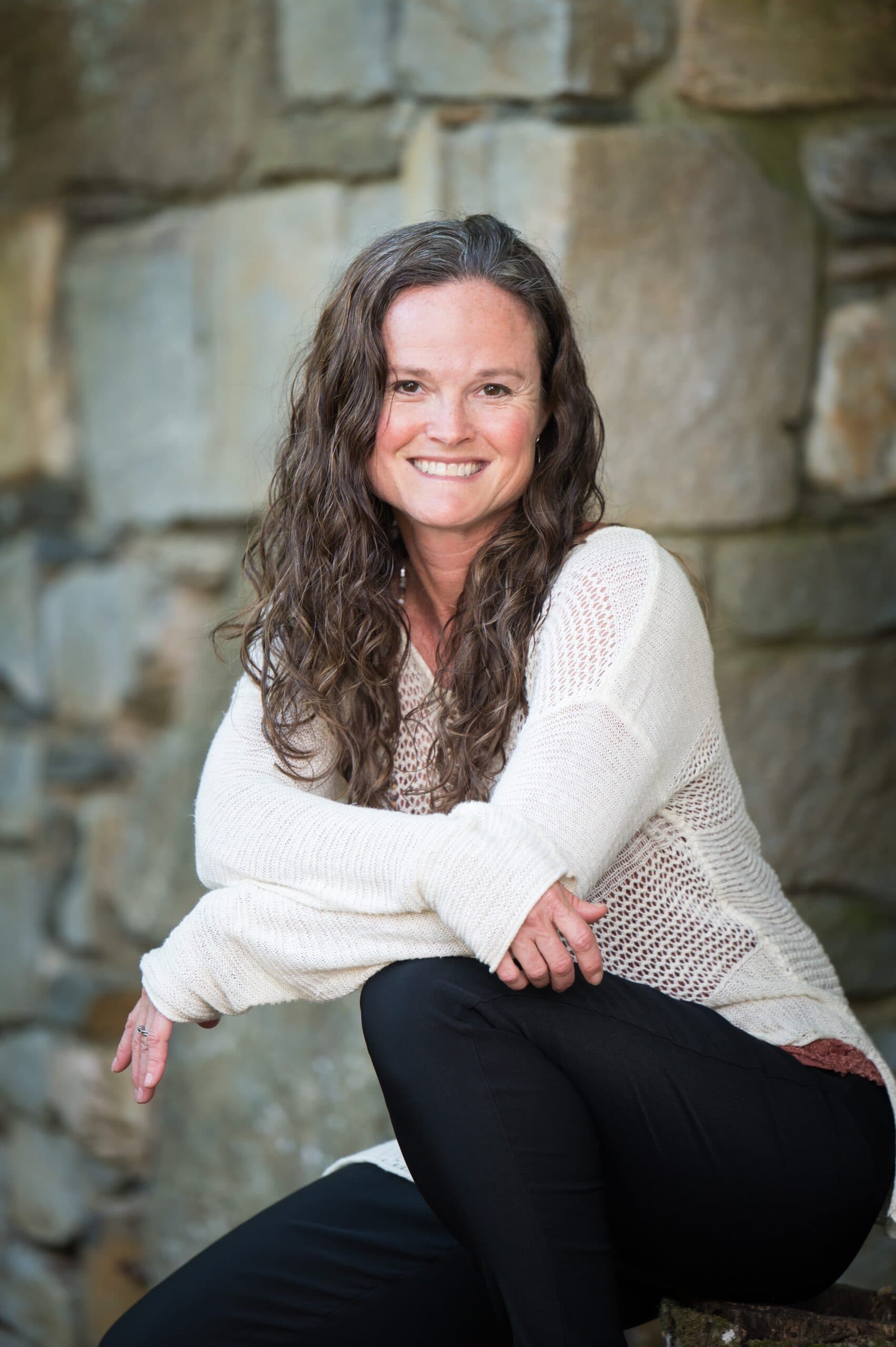
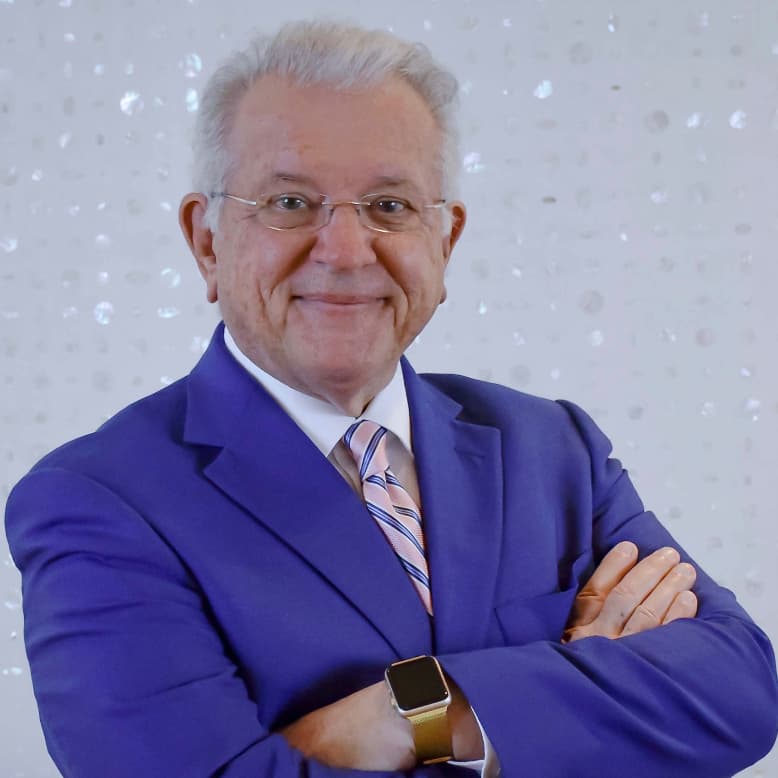
Full Transcript 0:00 There's been a hundred and twenty six plus thousand studies on mycotoxins. 0:06 So if people say, oh, they start rolling their eyes, I'm so sorry. 0:12 Hundred and 26,000 studies in the National Library of Medicine under the auspices of the national institutes of health. 0:20 Right. 0:21 Then you really haven't read anything, have you? 0:25 Welcome to the Integrative Medicine Roundtable, where practitioners lead, brought to you by the North Carolina Integrated Medical Society, 0:32 join integrative health care leaders, clinicians and innovators as they share practical insights, emerging research, and the conversations shaping the 0:40 future of patient care. 0:44 Welcome to the Integrative Medicine Roundtable, where practitioners lead. 0:49 I'm Dr. 0:49 Lisa Broyles, MD with North Carolina Integrated Medical Society, and I have such a treat for you today. 0:55 We have Dr Andrew Campbell, M.D. 0:58 He is the expert of experts when it comes to mold and mycotoxins and Lyme disease. 1:04 he has cured the cases that no one else cured. 1:06 And he stands beside evidence-based medicine. 1:09 Imma let him introduce himself and we're gonna chat for a few minutes. 1:13 Dr Campbell. 1:15 Yes, I've published over 100 studies. 1:18 I have lectured at medical schools in the United States and other countries, including Oxford and England. 1:28 And I speak at many, many conferences all over the world and I see patients from all Excellent. 1:37 Well, I wanted to ask you, i heard a rumor that in 2025 the National Institute of Health admitted that mold and mycotoxins were actually more important 1:46 to our health than we were previously led to believe. 1:50 Well, I don't look at it as an admission. 1:53 I look as more finely recognized that this causes cognitive issues, brain issues anxiety, depression. 2:04 It's not just asthma and skin issues. 2:08 So yes, i'm very glad. 2:10 And they cited 16 studies. 2:13 The eighth one is one that I and a group of doctors published 20 years ago. 2:19 So it takes time for some of these institutes to carry. 2:24 And then when they admit it, we can count on it. 2:27 Sure. 2:28 Well, their recommendations are so powerful and have such profound results that of course they don't want to make a recommendation that isn't validated 2:35 by extensive research. 2:37 That's right. 2:37 Some of which is your own. 2:38 So I would like to know as a practitioner that treats patients with mold, what do you recommend for what kind of mold testing I should be doing? 2:49 There's two kinds of testing for molds and mycotoxins in the body. 2:57 So for mycotoxin, one is a urine test, which measures what's left the bottom. 3:06 And that it's not a test of the actual myco toxin. 3:09 That's a tests for the metabolite of mycoptoxin And we eat foods that have mycotoxins, very small amounts, and our body's getting rid of these things. 3:22 Just like when you walk into a recently cleaned bathroom or kitchen, you're inhaling all those chemicals. 3:28 Our body gets rid those. 3:30 Same with this. 3:32 The blood test is well known and it's been established for almost 30 years now that it is the most accurate, precise, and sensitive test for microtoxins 3:45 affecting a human being. 3:47 So that is gold standard for testing in patients, pediatric patients starting at age two all the way to 98. So would I test IgM levels for acute exposure 4:04 and IgG for more chronic, or does it not work that way for mycotoxins? 4:07 It's a little bit different. 4:09 And mycotoxin are molecules. 4:13 They're not living organisms. 4:15 So Igg tells you if you have, that's the body burden. 4:22 How much of each of 14 myrotoxines are currently inside your body? 4:28 The IGE test says, are you exposed now? 4:34 Yes, if it's elevated. 4:36 If it not elevated, it means what you have now, this body burden is from some previous older exposed. 4:44 And that's a way to say, is it recent or is a recent and now or it is just now. 4:51 So if I have elevated IgE's and IgG's, I know that there is an acute ongoing exposure that could have been going on for a long time. 5:00 But if have normal IgEs but high IgGs, then their home has probably been remediated, but they're still struggling with the chronic health effects. 5:11 That's exactly right. 5:12 Okay, that makes sense. 5:15 When I'm treating a patient for mycotoxin toxicity, is there an average of how long treatment lasts? 5:22 Sure. 5:25 On the average in general, in a normal patient, it's about six months. 5:32 If this is treating children with ADD, ADHD, autism, PANS, pandas, It might take a couple of months longer than that, eight months, 5:45 If you're talking in the neurodegenerative disorders like Alzheimer, Parkinson's, amyotrophic lateral sclerosis, especially for Parkinson and dementias, 5:59 it's about eight months. 6:01 Okay. 6:02 And when you say eight month, is that eight of being on an antifungal or rotating it with something else? 6:07 No, it's basically eight months of an antifungal. 6:11 Then to help the body restore itself to good, to normal health, you need eight specific supplements at specific dosages that have been shown in medical, 6:24 published studies and medical journals that that's what you mean. 6:29 And lastly, You have to have the right nutrition. 6:33 Basically it say anti-inflammatory nutrition, With those three things, you keep that up for that long and at the end you're back to where you were before 6:46 and you are normal again. 6:47 See, this is what I love about your approach. 6:49 You are saying, yes, there is validity to certain supplements and those are included in your treatment plan, but you also say there's validity in this 7:00 prescription antifungal and we have studies to show that both work together in synergy to make our patients better. 7:05 And also what we eat, you have to be low histamine. 7:08 You have be anti-inflammatory. 7:09 you can't be out eating sugar while you're taking your Atriconazole and that's unexpected to work as well, right? 7:15 Correct. 7:15 So the molds, when they're growing or they are in indoor environment, they produce mold spores. 7:23 And those spore carry the mycotoxins. 7:26 so by taking the antifungal, You're killing that mold Spore. 7:30 and then there's no more mycotoxin. 7:33 As long as you're not still living in it, right? 7:35 There's the kicker. 7:36 Right. 7:37 Okay. 7:38 So what do you do with your patients that you've treated for the amount of time that they should but they don't seem like they're getting better? 7:46 The most common number one cause is somewhere in their environment, there is mold. 7:54 It could be their home, their car, or workplace. 7:58 Maybe if they go to a yoga class or a Bible study class, some sort of place they got to on a regular basis, that's the most commonly reason. 8:08 Okay, so somewhere they're getting re-exposed. 8:10 Correct. 8:11 All right. 8:11 And so how would you, as far as testing to see if they are getting exposed, could you recheck their IgE levels then? 8:18 And if there were normal, would they? 8:20 I treat for six months. 8:22 Okay. 8:22 At the end of six month, you repeat the test. 8:25 Because it takes the immune system a long time to respond. 8:30 It's like asking an aircraft carrier to make a quick U-turn. 8:33 That takes a while to show up in blood. 8:38 in the blood testing. 8:40 So at six months, they're saying, you know, I'm not really seeing much progress. 8:47 Yeah, got some better, but not too much. 8:49 There's something in their environment. 8:52 That's not, that's moldy. 8:54 Okay. 8:56 I had a patient and she wasn't getting better. 9:01 so they tested the home. 9:03 It was fine. 9:05 And then Her husband, unbeknownst to her, put a Petri dish on the front seat of her car. 9:15 When she got in the next morning to go to work, that Petre dish was covered with mold. 9:22 So it was not the house. 9:24 It was her car. 9:26 Wow. 9:27 And do you want to speak for a minute about other like VOCs, any other types of airborne bacteria? 9:34 When a person smells moldy musty somewhere inside, molds or moisture will make molds grow, but it'll also make bacteria grow and other substances. 9:51 And that produces what are known as volatile organic compounds. 9:55 That's that musty odor. 9:58 Volatile organic compound in and of themselves are toxic to the brain. 10:04 So that's why the first rule of toxicology is get the patient away from the toxin or the toxins away form the patients, otherwise they will not get better. 10:13 Wow. 10:14 Well, and circling back around to what, can you tell us a little bit more about, most of us know that mold tends to cause your sinus infections, 10:23 maybe a bit of brain fog in some people, may be a rash, but can go into some of the other proven things that mould can cause? 10:31 Sure. 10:32 Dr. 10:33 Ponica, chairman of the Department of Ear, Nose and Throat Surgery published a study, his chairman, of ear, nose and throat surgery at the Mayo Clinic, 10:43 published the study on 210 patients with chronic sinusitis. 10:49 Took them to the OR, cleaned out the material and sent it to a laboratory for analysis. 10:53 For what organism do they find? 10:56 96% had mold. 11:00 He actually asked that the name chronic sinusitis be changed to chronic fungal sinusias. 11:07 Oh my goodness. 11:08 In another study published, done at Rutgers University School of Medicine, New Jersey. 11:14 They did a study on patients with MS, multiple sclerosis. 11:20 70% of them had a mycotoxin known as gliotoxins in their blood. 11:28 So nicotoxins increase the risk of developing multiple sclerosis? 11:32 Correct. 11:33 Then another medical center treated those patients with multiple Scleroses with an antifungal and they got well. 11:41 Wow. 11:43 It's all published to studies. 11:44 What about cancer? 11:47 Well, that's a good point. 11:49 There was a study published in the journal cells on 17,400 patients from 35 different cancer centers, MD Anderson, Sloan Kettering, 12:02 et cetera, all over the country. 12:05 On 35, different cancers, they had tissue and blood. 12:10 They tested them. 12:12 All had fungi. 12:14 Wow. 12:16 they treated them with antifungal. 12:20 Okay. 12:21 The cancers went away. 12:25 So cancer, we saw a book came out recently, Cancer is a Parasite, but you know, cancer is from mycotoxins as well. 12:33 Correct. 12:34 There's a surgeon in Rome, Italy, a cancer surgeon, oncology, and he wrote a, book and the book is Cancer Is a Fungus. 12:47 And he shows in his book, MRIs before and after treatment, X-rays before an after-treatment. 12:56 It's that simple. 12:57 So you can't argue against 17,400 patients with 35 different cancers, esophagus, uterus, breast, bone and brain, all kinds of cancers. 13:10 Skin. 13:11 The evidence is there and that's what you're all about is examining the evidence. 13:15 Yeah. 13:15 And they have pictures that show the cancer and at two months, the difference. 13:22 So that's an amazing study. 13:24 This is so refreshing. 13:25 I remember in medical school and in my training when I asked about black mold, I got the eye roll and told that there's nothing wrong with mold. 13:35 You might be a little bit allergic to it. 13:37 And I look back at the patients that I repeated that rhetoric to before I knew better. 13:43 And I think that it's so refreshing now to say, I have personally treated many patients with nicotoxin toxicities and to be able to speak to someone that's 13:52 an expert. 13:52 You've been doing this for years and years. 13:54 you have research, you books, and you know the studies. 13:57 To say indeed, MDs are recognizing that nicotine toxicity is real. 14:03 So thank you so much. 14:04 Is there anything else that you would like to tell our audience? 14:07 Well, in the last 10 years, No, let's say it's at 2020. Well, that's six years. 14:16 And if you want to take it back, Let's go to 2000. There's been 126 plus thousand studies on mycotoxins. 14:26 So if people say they start rolling their eyes, I'm so sorry. 14:32 12,000 studies in the National Library of Medicine under the auspices of the national institutes of health. 14:41 then you really haven't read anything, have you? 14:43 That's right, and the research is there. 14:45 And now with AI tools, we can find that evidence even better than we could before. 14:49 So I really appreciate your expertise and coming to talk to us today. 14:53 Thank you so much. 14:59 Thanks for joining us on the Integrative Medicine Roundtable where practitioners lead. 15:03 If you found value in today's conversation, follow our podcast, share it with a colleague, or visit us at ncintegrative.org and join our community today. 15:13 We'll see you at the next roundtable.
Comments