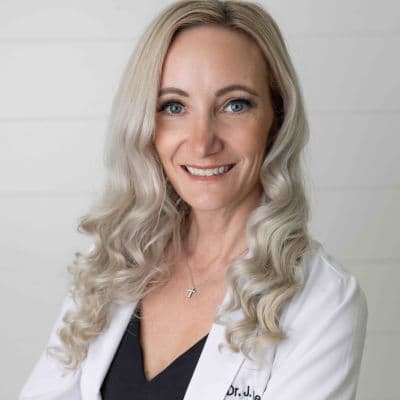
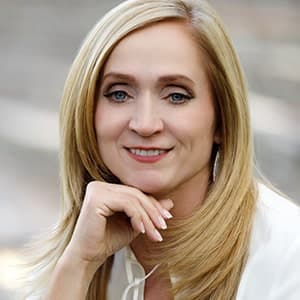
Full Transcript Introduction and Guest Background 0:00 She sat in her home for five days one time with a broken wrist before she called anyone because the pain became unbearable. 0:07 And she was definitely in agony. 0:09 I said, well, what can we do? 0:11 I implemented a peptide protocol that I use for recovery, particularly post-operatively, and got her pain free. 0:20 But sadly, that was after so many years of decline. 0:24 So I thought, What if we just started a whole lot younger and prevented the decline? 0:30 you Hi there, it's Dr. 0:35 Jenn. 0:35 Welcome back to the podcast. 0:37 Today we have Dr Rekha. 0:39 She is actually a good friend of mine, she's so sweet. 0:43 I've known her for a couple of years, so only the best on here. 0:47 So Dr Rehka is a leading functional medicine MD. 0:50 she is an award winning speaker, She's a best selling author, a mentor to practitioners, and an expert in longevity medicine, 1:00 anti-aging, and nutrigenetics. 1:03 She has helped thousands of high-performing executives, entrepreneurs, and celebrities recover their energy and performance so they can have the biggest 1:12 impact in their lives. 1:13 And she's known as the go-to doctor for other doctors. 1:16 she sees patients one-on-one in her clinic that she founded, Simply Health Institute outside of Chicago. 1:22 and she also trains other practitioners on peptides in our program, Peptide Practice Mastery. 1:28 Welcome. 1:29 Thanks. 1:29 So excited. 1:30 Why have we not done this before? 1:32 You know, I don't know. 1:33 Maybe because we're having so much fun as friends. 1:36 We never like set aside the time to work because, we work so, much right as women and mothers running a house and a business. 1:43 Yeah, we do, and we talk about that a lot. 1:45 We voice memo each other a lots on being physicians and being mothers and wives. 1:52 And it's a a and you actually still see real patients, which a lotta people don't realize. 1:59 sometimes people aren't seeing patients. 2:01 So this is why I value our conversation so much because you actually know what is going down. 2:08 Seeing patients for over 30 years. 2:11 See that you look amazing. 2:13 People probably don't think you have that much experience. 2:15 Well, I have a funny story about that. 2:17 Can I share? 2:17 Yes. 2:18 I had my daughter really late in life. 2:21 It was just shy of 40 and that was the infertility that we resolved naturally using very similar approaches to what I use now. 2:28 And something come up in a topic of conversation with my daughter.
Personal Motivation for Longevity Medicine 2:32 She was 10 years old at the time, so I'm 50. And I was telling her how a patient thought I looked amazing and she wanted my secret sauce. 2:40 I said, well, work with me and you'll have it. 2:42 And she goes, mama, I think you look a lot younger, too. 2:46 And I said, oh, well, thank you, Living. 2:47 She's like, i'm glad you don't look your age. 2:51 I say, why is that? 2:53 She says, because then you'd look like my grandma and that would be embarrassing. 2:59 out of the mouths of babes, right? 3:00 I love it. 3:01 Well, and you have the energy because a lot of times people might look good and maybe they get some work done, but they don't have that energy and that glow. 3:11 So that's really important too. 3:12 What got you interested in longevity medicine and functional medicine? 3:19 Functional medicine was my journey with fatigue. 3:22 I became the stereotypical patient over many years. 3:25 And I always joke and say, I have more energy now at 58 than I ever did in my 20s and 30s. 3:30 But then I really started looking at what does healthy aging look like after my mom's kind of downward decline over And, 3:42 you know, one thing you and I are passionate about is hormones for women. 3:45 And she was never offered that. 3:49 It was just really sad to see the biggest cheerleader in my life who showed up at every step of the way. 3:56 We lost our caregiver for our son when he was three or four months old, and she stepped in. 4:02 I'll move there. 4:03 And I ran the marathon. 4:05 She was there at the finish line. 4:07 Every city I moved to across the US and world, she was in a heartbeat. 4:12 And, you know, the last really four years of her life were without much quality at all. 4:18 And at one point, she'd be like in the hospital, in rehab, back home, and one of the instances she was really short of breath. 4:28 I'm trying to assess her by phone. 4:30 It was clear. 4:31 My sister was on the other line with her. 4:33 that she needed to go in, and then I came home shortly after. 4:38 She had actually re-dislocated her shoulder. 4:40 They call that acute on chronic. 4:42 And we begged and pleaded and the orthopedic surgeons put it in. 4:47 But they had her so sedated on narcotics that, she took her arm right out of that sling post operatively. 4:52 Because she's, you know, off her mind on these meds that never takes. 4:57 It dislocated. 4:58 So I arrived to spend the week with her advocating for her rehab. 5:03 And she's just in agony. 5:04 And this is a woman that, you know, she is Eastern European. 5:08 She is tough as they come. 5:09 she sat in her home for five days one time with a broken wrist before she called anyone because the pain became unbearable. 5:17 and she was definitely in Agony. 5:22 implemented a peptide protocol that I use for recovery, particularly post-operatively, and got her pain free. 5:30 But sadly, that was after so many years of decline. 5:34 So I thought, what if we just started a whole lot younger and prevented the decline? 5:39 And I just don't want anyone, I'm sure there are people in the audience that know someone or have a friend or a neighbor that they've seen gone downhill, 5:48 there's nothing more. 5:49 So it's very heartbreaking. 5:50 Yeah, and starting that younger and younger. 5:53 And I really do think for women in their 30s and 40s is kind of the secret sauce time. 5:59 I agree with you, I feel better in my 40's than I did in 20s when I had Hashimoto's. 6:06 Hindsight's 20-20, but that's why we're so passionate. 6:09 We wanna help people, women particularly, You know, on social media, everyone's making fun of women and feeling fatigued, 6:18 and you know they make fun at it, like Misery Loves Company. 6:21 And I'm like, no, you can feel good. 6:23 So let's talk about something that's really popular right now, peptides. 6:27 I remember when we've been in the same groups and stuff, the physician groups on Facebook, we'd been on the peptide group.
What Peptides Are and Why Foundation Matters 6:35 for like eight years and and like you know you're one of the OGs for using peptides and now they're kind of uh it's just it''s not right. 6:46 So first of all explain what are peptide because people don't even know because that term is just thrown around now. 6:53 Peptides are naturally occurring in the body and I say the most well known is insulin. 6:58 outside of Ozempic and Wigovia. 7:01 And we have 7,000, they decline with age, just like everything else. 7:05 Hormones decline or muscle mass declines if you're not paying attention or you are not replacing. 7:10 I always say they are a direct cellular signal. 7:14 The way to think about it is like a text message. 7:17 Remember back in the olden days, you called someone on the phone and who answers their phone at any time unless it's like someone really close to you. 7:24 Nobody answers there phone. 7:26 And if you're busy, you won't answer. 7:27 But we have our phones next to us at all times. 7:30 If you send a text, it exerts that effect almost immediately. 7:34 So it is a quicker onset of action. 7:36 but it isn't the magic bullet. 7:38 It can be the amplifier, but you really gotta lay that foundation. 7:42 Yes, exactly. 7:43 I always say that we need to prep the body before peptides. 7:47 And right now, people are using peptide as a fix-all. 7:51 You know, I'm gonna use this stack and they'll feel a little bit better, But they're still not working on the root cause. 7:56 So what do you say to people before starting on peptidetrends? 8:02 Well, I have a whole protocol I wrote about in my book, and I call it the Executive Edge Protocol. 8:07 And the first part is laying the foundation. 8:10 It can be easily remembered by the three Ds. 8:12 So it's diet and nutrients, digestion and detox. 8:17 Optimize the second, well then thereafter optimize the third and you know doing it out of order and I always say it's the right steps in the Right order, 8:25 and we have coaches to support all our patients with the amount of support that gets you a whole lot of game so I tell them we can do them simultaneously 8:34 but You know, how many of us know people who haven't lost weight on these weight loss drugs? 8:39 And I'm like, you know it's because their foundation hasn't been laid. 8:42 So that's only the first step in that protocol. 8:47 And now I am going to allude to something and I was super excited about there. 8:50 I really passionate. 8:51 My second step is leveraging a patient's genetics. 8:55 This comes into play two times. 8:57 So one is the chronically unwell, and two is a high performer who wants to mitigate risk and doesn't want to spend their wealth on their health as they 9:07 age and enjoy every last day on this earth with the highest health. 9:10 Well, I've now have started working with a company that can identify which peptides work better in certain patients. 9:18 And so I'm excited to roll that out. 9:20 So it's not, don't be buying these black market or what they call them gray market peptide from someone selling them at the gym or out of their basement. 9:31 We can get into the whys on that, but I'll do it simultaneously with the commitment that they're going to walk the steps, 9:39 walk through the step. 9:40 Yeah, it's really hard, I think, in a world of instant gratification to tell people that they have to do foundational things. 9:49 And I that comes with when we work with patients, we're like, this is a partnership. 9:55 We have do the steps because we know what works and what doesn't. 10:01 Like you said, a lot of people will go on peptides and they won't have the results. 10:05 Some of them will, but then they can't get off of that is another problem, or they're losing muscle. 10:11 I've had a patient say to me where we had to fix her years of mold illness and mold colonization, and then she lost the inflammation, 10:21 she still had some insulin resistance, so we added in really low GLP-1 and she said, thank you for not going too fast.
Growth Hormone Secretagogues and GLP-1 Synergy 10:29 Thank you, for making sure I'm lifting and eating protein because she has friends that just get the GLPs ones from a med spa and they look like a bag of bones. 10:39 But that for longevity, if you're losing all that muscle, it is really, really bad. 10:45 People don't know the consequences of using peptides incorrectly. 10:50 I mean, we could talk another thing about, could you explain growth hormone secretagogues and what happens if you're not cycling them correctly and that 11:01 kind of stuff? 11:02 I've had to educate some people on that because people are just plugging, thanks Jim bro, I'm going to inject this. 11:08 Yeah, so growth hormones secretogogues. 11:11 There's two categories, the growth hormone releasing hormone and the Growth Hormone Releasing Peptide. 11:15 Essentially the two of them signal the pituitary to release more growth hormones, and unlike growth hormon, which is illegal in the United States unless 11:24 you have a deficiency, and signal the release. 11:28 So it doesn't cause that down regulation of receptors and what that means if you stop it abruptly, you're gonna be in a world of hurt. 11:36 And then because the growth hormone is our cellular signal to work more efficiently. 11:43 What I say is I always measure something in the blood called IGF-1 and there's a sweet spot and I pulled all the literature because I trained the practitioners 11:53 and anything below 120, or over the 180 mark, people do less well. 11:59 They have a higher risk of death and dying, what they call morbidity and mortality, and it's actually worse to be lower. 12:05 And so you wanna keep them in that sweet spot, 120, 160, maybe up to 180. I know everyone has their different parameters. 12:13 You wanna cycle, first I'll share the results my patients report, is that they lean out a little bit, they sleep better, 12:23 the recover better. 12:25 And at the end of a month, I've been hearing from my patients that The libido gets better and that's kind of a side benefit. 12:33 So it's a pretty good thing to add, especially over 40, but I'd want to have a baseline and I also want a level a month into use. 12:43 And like you had said, you want cycle on and off. 12:46 It's like seasons of peptides. 12:49 We cycle people through peptide and we see them quarterly so we can decide the next steps and whether they even need them. 12:55 Yes, and their plan might change. 12:58 So you haven't used growth hormones to create a gut? 13:00 I have. 13:01 I was going to say that. 13:02 What do you mean you're a patient? 13:03 What are you like? 13:03 what's your favorite about it? 13:05 My favorite, so for the whole side effect profile or the symptom benefit, I do like the CJC 1295. But the tessameralin targets, 13:16 and what do we all women complain about, is that belly fat. 13:19 And it does take eight weeks or more of that, but I definitely saw more I feel really even better. 13:29 And you can combine that with epimoralin too. 13:31 Correct. 13:33 That's what I'm cycling. 13:35 It's been like a year since I've cycled it. 13:39 You sleep well, you just like it, but okay, so here are some things. 13:43 If you're using a growth hormone secretagog, a late night snack and then take it. 13:49 That will negate it, you're just wasting product. 13:51 Because my husband, so sometimes we'll do the stack together and I'll just give him, I'd be like, do you want some? 13:57 And he's like sure, but then some nights he had a brownie sundae with my son and like no, like you don't get it because it wouldn't do anything. 14:09 I joke with him. 14:09 But anyway, it's also a really nice one to pair with a GLP-1. 14:14 Can you explain why? 14:17 It's a synergistic effect, so you're going to need less of the GLP-1, and it's going promote preserving the muscle mass and exactly what you are going get. 14:27 You're gonna have muscle loss, but the shocking thing that some of your viewers may not know about, it is not just muscle lost, 14:34 if you have rapid weight loss and there is a certain percentage over so many months, you'll lose bone. 14:41 Yes, yeah, we've been seeing that more with the studies. 14:43 So you almost, I'm wondering, gosh, do we get a bone density at the start and like three months later? 14:50 But I think more important is making sure they're not losing more than a pound max two a week. 14:54 Exactly, yes. 14:55 And a lot of the times it's inflammation with GLP-1. 14:58 They feel less inflamed because it does have those anti-inflammatory properties. 15:02 It's really interesting. 15:03 What's your least favorite peptide to take that you've tried? 15:07 Because I have one that, I've a funny story, but what's you least favourite? 15:11 Oh, see, I've loved all the ones I tried. 15:14 Now, have not dabbled in Melanotan yet. 15:17 I'm a little nervous. 15:18 Right, haven't either. 15:20 Have you ever taken injectable PT-141? 15:23 No, and the reason is I know the side effects. 15:25 So I like ... I am more partial to oxytocin when it comes to bumping the libido.
Pineal and Thymus Glands in Longevity 15:30 Yes, yes. 15:31 And I heard, here's the thing with PT 141, for men it seems to be less. 15:36 invoking of the nausea. 15:38 And for the listeners that don't know, the PT-141 boosts libido so that you're ready to go when it's time to. 15:46 I love it for perimenopausal women. 15:48 So the nasal spray combined with oxytocin is a chef's kiss. 15:53 But I love it. 15:54 Yes, but I have a funny story. 15:56 So this was just like two nights ago, because I knew I'd be out of town and stuff. 16:01 And we're trying to get the kids to bed. 16:03 I'm like, let's do a shot of the PT-141 for Chip and I. 16:07 By the time the kid's are in bed, it will be good timing. 16:12 And because we usually use the nasal spray, but I just wanted to try the injection, just so I knew. 16:16 I know what people said, you know, we got to tried ourselves. 16:21 And I was like, I walking around the house trying to get the kids to bed, and I'm like I really need to go to the bed. 16:26 Like I feel sick, like all flushed. 16:29 Because I had forgotten that I gave myself the shot. 16:32 My husband's like Jenny. 16:33 Jenny, like remember, and I'm like, oh, I am flushing from the shot. 16:39 And I don't even want to use the rest of it. 16:41 I do not like it, but yeah, oxytocin, lozenges are nice, or like I said, the nasal spray is great. 16:49 Okay, let's switch topics a little bit to the two glands that no one cares about and that are foundational to longevity, 17:01 Yeah, I'd agree they're foundational. 17:02 And the thing is, do you remember learning before we tell the audience what they are? 17:06 Do you really remember really learning about these two glands? 17:10 Like, is it really from a mind? 17:12 No, because what's the point of medical school to have people in the hospital? 17:17 I mean, we all wanted to go into medicine to help people, but the whole longevity thing, it's just not taught about. 17:26 So the first is the pineal gland. 17:28 It's a little acorn-sized gland that sits in the brain, and its job is to produce melatonin and to bathe a part of the bring called the letter ventricles 17:36 with stem cells. 17:37 And the pineapple gland calcifies pretty quickly in life, I'll share clinical outcomes in myself and in patients, so I cycle that twice a year. 17:46 I was using a lot of melotonin, because I'm over 50, my melotone production's gonna be naturally down. 17:53 About two weeks after I did a cycle, I was like, God, why am I so groggy? 17:59 I'm like I can't, I am out of it. 18:00 Like I had a, you know, a bottle of wine and I have no such thing. 18:05 And I went, oh, it's the epitalon. 18:07 It kicked in, so I didn't need melatonin. 18:09 That's kind of my tip off. 18:10 I know I need another cycle. 18:12 And it really correlates with longevity if you look at the studies and a lot of those, of course, out of Russia, but they're repeating it here in the United States. 18:19 And the second gland is the thymus gland, sits behind our breastbone. 18:23 Its job is to fight, protect us against infection and to get us to childbearing age. 18:28 So guess what? 18:29 When you're past child bearing, and we're talking mid-20s, it starts to infiltrate with fat. 18:34 So you got one calcifer and in blue, and the other one's going away. 18:38 And you're not going to healthy age if you can't fight infection. 18:41 That's why a lot of, it's usually the elderly, if they get an infection, they can go to a full body or bloodstream infection like sepsis. 18:50 They call that, there's a fancy term, the immunosenescence. 18:52 So, you want to preserve both those two glands. 18:56 There are various peptides you youcan use. 18:59 Of course, as you know, with the legal landscape they go on and off the market and fingers crossed with the latest FDA hearings or the proposal by the 19:12 advisory committee on compounding pharmacies that one of the main ones will come back in. 19:17 into the forefront, thymus and alpha 1. Yes, that is my favorite. 19:21 Well, we just got to the tip of the surface, I feel like, for all of this. 19:26 So how can people take your listeners, take you course, who's it for, your peptide course? 19:33 And then if anyone is around Chicago, how they can become a patient? 19:38 Yeah, so for practitioners, prescribing practitioners it's peptidepracticemastery.com. 19:44 It's an open enrollment. 19:46 We do bi-monthly Q&As with eight foundational modules that we keep adding to.
Courses, Practice Access, and Rapid Fire 19:52 And, you know, the feedback I've gotten is really good. 19:55 I had a few participants say they've taken up to three other courses and weren't able to apply. 20:01 So I like to say I make it Monday morning applicable. 20:05 For patients that are interested, at the moment we're going to be expanding our, my licensure and the clinical licenure. 20:12 I can see patients virtually in state and out of state, and I'm licensed in California, Washington and Massachusetts. 20:19 The other one's TBD coming soon. 20:21 Yeah, I didn't know that. 20:23 So I don't about those two, so I could refer. 20:25 Okay, rapid fire question. 20:27 Just two questions to wrap it up. 20:29 If you can eliminate one toxin from the world tomorrow, what would you pick? 20:36 mold. 20:37 Yes, that's a good one. 20:38 I know it's in Leviticus, it is in the whole testament, like tear it down. 20:42 Anyway, okay and then second one, what is your favorite biohack that you personally do? 20:50 That I personally deny yourself food, how dare you? 20:58 How dare I? 20:58 We deserve everything at all times, you know? 21:02 And it could be, it's great. 21:03 It's a dopamine reset. 21:05 You know, that's self denial. 21:07 Yeah, and even just the 20, I like going dinner to dinner. 21:10 And of course I liked the fasting mimicking diet too, so I cycle through that if I need a little reset and I'm so mentally clear. 21:17 If I am going to do what I call a work-cation where I spend a week working on the business every month is I'll take two or three days to reset. 21:26 And then when I'm working, I do a fast because then I don't have to cook. 21:30 I did the five day fast. 21:31 It's all right there. 21:32 Then I mentally sharp. 21:33 Yes. 21:34 Running on ketones. 21:35 Yeah. 21:36 Got to love that. 21:37 That's great. 21:38 Well, thank you so much. 21:39 You're a great friend and a source of knowledge and I can't wait for my listeners to connect with you. 21:45 Thank you, Dr. 21:46 Jenny.
Comments