Reversing Alzheimer’s And Parkinson’s Through Lifestyle Changes

Founder/CEO

Founder, Solcere Health Clinic and Marama
Reversing Alzheimer’s And Parkinson’s Through Lifestyle Changes
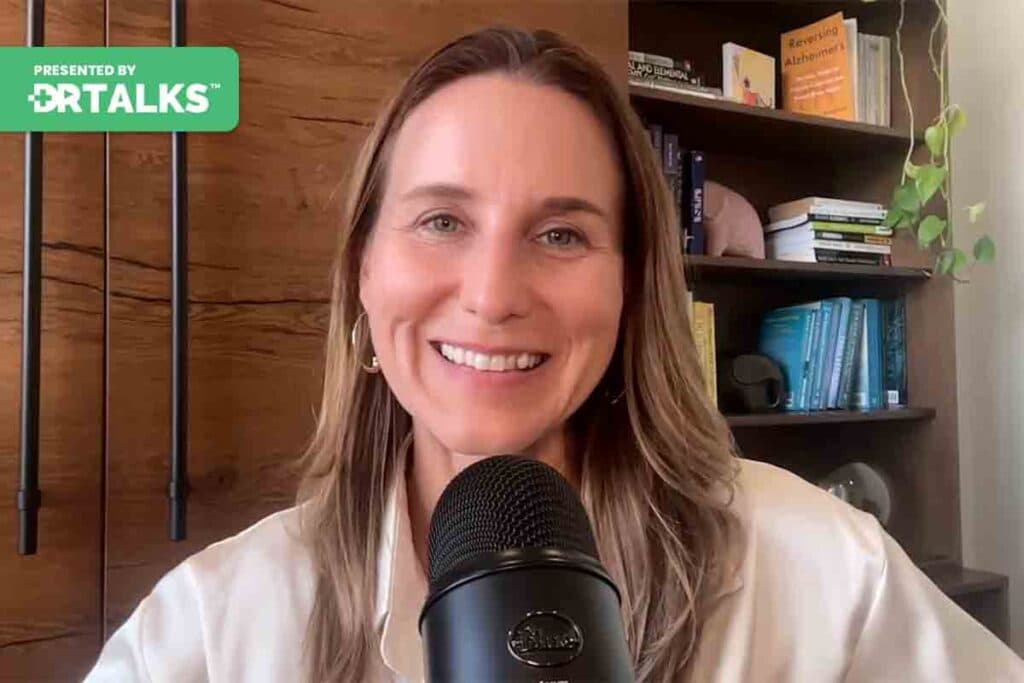
Heather Sandison, ND

Full Transcript
Introduction and shared mission 0:00
Welcome to The Parkinson's Solutions Summit. I'm your host, Dr. Ken Sharlin. Today's special guest is Dr. Heather Sandison I've known Heather for a couple of years now. I've been honored to be a guest on her Reversal of Alzheimer's Disease Summit. And we're going to bring those subjects together as we talk about Alzheimer's and Parkinson's and cognitive decline and really empowering those affected by these diseases to know that, hey, you know, it's not all genetics. It's not just, you know, something that you just going to have to buckle up and, and suck it up, as it were, because you are empowered to make changes that ultimately will change the trajectory of your condition.
So without further ado, Dr. Heather Sandison welcome to The Parkinson's Solutions Summit 2.0. Thank you so much for having me. It's really a privilege to be here. Well, I want to start off with something I know that's exciting to you personally. And then we'll kind of dive into things. But you just got off a big book launch, and I think that's so important. you wrote a book. I have a copy of it here. It's also in the background I see Reversing Alzheimer's. Tell me a little bit about the book, how it kind of came about, your passion for this subject, that these diseases that we had been told for so many years that there's nothing that you can do about it, in fact, that you can.
Hey, you know, Dr. Sharlin, that I came to this as a skeptic. I was trained by my mentor, Dr. Dale Bredesen, back in 2017, because I heard him say at a conference that you could reverse dementia and Alzheimer's. And I was like, wait, what? No. You can't. I've been heard by well-meaning, well-educated people for years through my training that to suggest you could treat Alzheimer's or do something for someone struggling with Alzheimer's was to give them false hope. Well, now I feel exactly the opposite.
After what I've seen working with patients in my clinic, coaching clients residents at Marama, we have watched the impossible happen. We have watched miracles happen. And at this stage, I think that anyone suggesting there's nothing you can do for dementia or Alzheimer's is actually there providing false hopelessness, as Dr. Bredesen would say. And so it's really important that we arm people, as you mentioned, and how are people to make the decisions, the critical decisions, particularly the behaviors or the trajectory of our brain health, as you well know, is determined by the small habits that we have every day.
Those small decisions that we make about what we put in our mouths, how much movement we get, what time we go to bed, the people we engage with, how we manage our stressors, how those decisions that we make every day that feel so small and inconsequential those add up to change how we age. Oh, such a huge message. You know, so often there's that perception that, well, you know, it runs in my family. It's in my genes. This is going to happen. It's inevitable. But we we know across the board whether we're talking about cancer, heart disease, neurological, neurological disorders, that the vast majority of the factors that tours, of course,
Reversing Alzheimer's and the six pillars of brain health 3:34
that contribute to these diseases involves lifestyle and environment. Right, exactly. So with the book, what we were trying to do was make this feel really accessible. I wanted to share these stories. There's really incredible, heartwarming stories of people had taken the bull by the horns. They jumped into the pool, you know, had, first of all, have not just dipping their toe, but really taking advantage of doctor reticence work. And it made sense to them conceptually. It made sense intellectually it made sense.
They wanted to get the benefit of it. And what I saw was that the people who got benefits, they were able to do it, and they felt that empowerment. But a lot of people got tripped up because they felt overwhelmed. And so the goal of the book is to break it down, systematize, create, reflection questions. How does this apply to me? Where do I get started really applying kind of a coaching lens to how to take this information and make it implementable, actionable, so that you get the benefits that we see in the clinical trials.
And so one of the ways that we do that, and with any neurodegenerative disease process, whether we're talking about MS. or Parkinson's or, you know, all of the dementias, the Lewy body or the the, excuse me, the body or the vascular dementia or the frontal temporal dementia, whichever dementia flavor you may be faced with. And regardless of your genetics, in fact, hopefully empowered by your genetics, we can take the root cause level pieces imbalances in these six components of brain health, and we can systematically go through them and look for too much, too little in the wrong place or at the wrong time, and then help support the body to get back into homey or dynamic balance.
And so the six components of brain health that I talk about in the book and I take you through addressing are toxicity, nutrients, stressors, structural issues including molecular structure like genetics, signaling and infections. And when we can balance each of these components, we get optimization of neuronal health or that cellular function in the brain. Oh, that that's very, very good. So the folks who are watching this, let me say, well, I have Parkinson's, I don't have Alzheimer's. But in fact, first of all, the data tells us that statistics tell us that 20 to 50% of people with Parkinson's develop some form of mild cognitive impairment, not necessarily dementia.
But what's really striking is there is an expectation that the mild cognitive impairment associated with Parkinson's, something that comes later. And in fact, we recognize that mild cognitive impairment and Parkinson's actually can be early in the expression of the disease. So we have to be especially proactive. But as time goes on and we're now in discussions about how to properly stage Parkinson's, there's been a lot of interesting developments in those areas. we now know that perhaps up to 80%, 80% of people with Parkinson's will eventually develop dementia, where they're losing their ability to participate in instrumental activities of daily living.
They really become much, much more dependent. So we want to head this off at the pass. And again, I think the message that doctor Heather and I are both sharing is it almost really doesn't matter whether we're talking about Parkinson's or we're talking about Alzheimer's, because the the basic principles, the six tenets that she's referring to, really underlie both of these disorders. And with Parkinson's in particular, are toxins, toxins, toxins, toxins. And when I find toxins in an elderly person, most of my patients are over 65, as I'm sure yours are.
But we have to assume you've been on this planet long enough. You've accumulated some heavy metals, some potential mold toxins, and some chemical toxins. certainly because you've just been around long enough, and we live in a toxic world, unfortunately. And so when we can get some of that out now, the brain can go from attacking and defending. As Dr. Bredesen talks about the brain being like, my brain is darn, a country. If your country is spending all of its resources fighting and defending against infections or toxins, you don't have the resource for neuro regeneration, right?
It's going to go in the direction of neurodegeneration. And so when we can free up that resource, then we can get better function, better, optimal neuronal function. And with Parkinson's, although the pathophysiological process is different, it manifests differently. We still have the same triggers. And so going back to that root cause, yes, we're interested in the diagnosis. And there are treatments that are slightly different. there are certainly things that we want to prepare for in terms of gait, gait changes and the tremors.
And in this presentation, we want to treat it differently and have care partners who are aware of what to expect with disease progression. However, the underlying cause is it comes back to the same imbalances in toxins, nutrients, stressors, structures, infections and signaling. So there's this system that you've developed. And if I'm coming to you as a patient and that system is being applied, what is step one? I mean I want to have some sense of organization here. So yeah I need to pay attention to toxins or infections you know.
But how do how do we move through this space. Yeah. Maybe people ask, do I start with the gut? Do I start with toxins and with neurodegenerative diseases? You know, these are incurable. And I would stand by that. I still believe that this is not a cure. This is about a lifestyle that maintains the healthiest, optimal neuronal function for you as an individual. And we see that when people fall off the wagon, they go backwards. They get more cognitive decline, their Parkinson's symptoms get worse.
So it's really about adopting a lifestyle. Now, the being said, if someone is already experiencing symptoms, if we don't have the luxury of prevention, then we want to do everything at once. We are asking for a miracle. We do not want to dip our toe in, right?
Parkinson's, cognitive decline, and shared root causes 10:03
We want to be like my patients who have gotten these miraculous results and dive in fully. And so we test the first step I saw a patient today and we do a 90 minute intake. So by the time you get to over 65, you got a lifetime of medical history. Then I want to learn about I'm curious about potential toxic exposures. I'm curious about diet and exercise and sleep and stress management and relationships and of course, your experience. What are you experiencing from a cognitive perspective or from, you know, with a Parkinson's, how is your gait changed?
What are you able to do? What are your constraints? What is how is this affecting you in your day to day life so that we can understand what does success look like? What is getting better look like? What is getting worse look like? We have a we have a baseline, of your experience. And then we do the testing. So the testing includes all of those six components of brain health. So we're looking at all of the toxins I think of them in three flavors mycotoxins metals and chemical toxicity. We're looking at nutrients. We're looking at the gut.
So are you able to digest and absorb? I'm asking for a 24 hour diet recall. What have you been eating? What are you choosing to put in your mouth? And then when we do the stool testing we see can you digest it? Can you assimilate it? Can you then release what doesn't serve you? Can you? Are you having those regular bowel movements. So that's important for nutrition. Are we able to assimilate the foods that we choose to eat. And then I also look at nutrient panels to see if genetically you might require more methylated B vitamins than your neighbor.
And so we want to look into that and see if there's something we can do from a micro nutrient perspective. To get you more balanced with dementia, we tend to recommend an organic ketogenic diet. Now when it comes to other neurodegenerative diseases, we don't always like with ALS that we tend to do maintain the carbohydrates, but add ketones. Ketones are very helpful for the brain because the brain prefers to use them as fuel. And as we age, we all become somewhat, glucose and insulin resistant. We're not as good or as efficient at turning glucose.
carbohydrates, sugar. You can use those interchangeably into ATP or the fuel. Our neurons, every cell in our body uses to, to, have energy. And so when we can flip the switch metabolically and actually use ketones as fuel, we get more energy, more resource for the brain. The brain only makes up 2% of body weight, but 20% of energy expenditure day to day. And so we need plenty of resource that we can actually put to work, that we can actually turn into ATP and utilize. you know, one of the things we find in our clinic, and I certainly agree with everything that you said, is that when it comes to nutrition, sometimes we have to we certainly have to eliminate those highly processed foods.
Those foods, quickly become sugar in the body, those foods that are really very, you know, commonly associated with food sensitivities that may be driving inflammation, at least some of those initially and some of those permanently. Obviously, the very sugary processed foods go away altogether. But the point that I'm getting to is that, what we've also observed is that, as much as the ketogenic diets have scientific validity, sometimes we need to step in to them, sort of sequentially. Because my observation, my team's observation often is that nutrient density sort of comes first.
And we want to make sure that if you're, you know, very often to too often a ketogenic diet can even go hand in hand with caloric restriction or food restrictions, where the patient, yes, you're in ketosis, but you're really actually starving yourself at the same time. And so, it becomes a little more of an advanced strategy, where first we have to lay the foundations of, let's make sure you're eating real food. Let's make sure you're getting the right nutrients in your body. Let's eliminate those most inflammatory foods, and then we can begin to dial it in toward a more, ketone dependent diet.
Yeah. And maybe adding exogenous ketones by doing that can help kind of get the best of both worlds, where there's not significant or severe carbohydrate restriction, but adding those extra ketones that the brain can then potentially use, or even just adding coconut oil, which has medium chain triglycerides that turn into beta hydroxybutyrate, or the ketone that the brain likes to use for fuel. That alone can be helpful for many people. Now too much too fast can lead to disaster. so just one tablespoon at a time.
as you're getting started with coconut oil. But it's very simple, easy, accessible way to help your body, start to create ketones and burn those while you're while you're changing up your diet. Now, about a third of the population is, you know, carries a gene called ApoE e4, which places a person, at least Caucasians. It's different for different ethnicities, but people of European Caucasian descent at about three times risk for developing late onset Alzheimer's disease. There seems to be other implications with that.
And I wonder if you've observed changes in people of high saturated fat diets, in the people in those 48 belief where positive. Yeah, this is such a great question. And there is disagreement. There's controversy in the fields around this. So in my clinical experience, I have seen people with April 3 or 4, April 4th for a ApoE4 before for and so just to kind of break this down for people, the general population take the entire planet about a 13% risk of developing Alzheimer's in your lifetime. If you with ApoE, you get one copy for mom and one copy from dad.
So you have a two, 3 or 4, and you get one of those for mom and one of those from dad. Some people want to call this, like it's a ratio or it's out of four. It's not that. It's that you get one from mom and one from dad. So you might have a two to a three, 3 or 4, four, three, four. And if you have one copy of four, you end up with instead of a 13% chance of a 30% chance of developing dementia in your lifetime. Now, if you have two copies of AP 4 or 4, you are well over 50%, at risk for developing dementia in your lifetime.
And there was a recent nature paper that essentially suggested that you inevitably will get dementia in your lifetime if you live long enough. And so this is terrifying for people, but I hope also very empowering because there's so much that you can do.
Testing, nutrition, and ketogenic strategies 16:48
Now. It's your question, which was what about saturated fat? So ApoE e it has to do with lipid metabolism, but also it means when you have a belly for you, it trigger the production of amyloid faster than your neighbor or your spouse who does not have any for who's a three, three or a 2 or 3. And so what that means is that we want to certainly restrict saturated animal fats. Now, when it comes to MCT and medium chain triglycerides or the coconut oil, the question is, do those saturated fats have the same detrimental effect that the longer chain saturated fats do?
And some people say yes, that they do, and that people who are actually three four, four, four positive should avoid MCT and coconut oil. Now, Mary Newport, who has extensively studied this, you probably come across her in your work. She, was a neonatologist by training an MD, but her husband was diagnosed with dementia and she worked very hard to help him and found that coconut oil in just 24 hours helped his cognitive decline. He's since passed away, but she's dedicated her life to finding out more about ketosis for dementia because she saw how powerful it was for her husband.
So what she had found and published research suggesting that those the saturated fats found in coconut oil are not at all detrimental to those with 3444. And that's been my clinical experience. So what I recommend to anyone listening who is able, if you know you're equally for positive 1 or 2 copies, get an advanced cardiometabolic workup. Right? I do them through Cleveland Heart Labs or Boston Heart. and we look at the LDL and LP little and LP plates. You and we're looking at April B, of course, and we're looking deep into the fractionated lipids to understand your risk and try it.
But it's a where you what happens when you add coconut oil and saturated fats and get into ketosis. In the clinical trial we did we had 17 we had 17 participants. I don't remember the exact numbers, but we had a lot of the participants who had maybe 3 or 4 and 4 or 4, and we did not see detrimental effects on their cardio metabolic panels when we added the saturated fats that were coconut specifically. So I think that it you can safely do that and get the benefits of ketosis and, and the coconut products, even if you are equally for positive.
Now I know that that's controversial and you will find other people who disagree. Well, I'm wondering if you've, looked at just using the ketone salts or ketone esters in butyrate, directly ingesting butyrate basically. Yeah. So I think I have a personal bias against them because they taste terrible and I think they taste like gasoline. Now, there's ketone salts and ketone esters, and it turns out they do come in powder form. That's what I tend to like because I don't have to taste it. But some people like the taste. It's quite sweet.
And so you can use it, particularly when you're getting into ketosis if you're going in the direction of carb restriction, or if you've decided you're not going to do carb restriction, you can add the exogenous ketones as an extra fuel source, and you can drink that in between meals as a snack. Now the ketone esters. So that's ketone salts. And if you have salts instead of hypertension some people are on salt restriction. And so that can be a challenge. But the ketone esters they don't have salt.
And they are fantastic at really increasing that ketone level. A lot of special athletes will use them as an extra fuel source. So bikers, you know, long distance bikers, all kinds of professional athletes will use them, but they'll get your ketones up to like five millimeters at where is it metabolic ketosis. Usually you're going to be between one and maybe maybe three at the high level. And that's where you're going to go with ketones salts as well. But those ketone esters, although they taste like gasoline, they also can be fuel like gasoline.
You can turn that into know gene. Yeah. That's that that's the mindset you have to take when you're consuming stuff. oh. Well, that's very good. It's very helpful. And, you know, in our brain tuneup program here in Ozark, we, actually test it both for status on all our patients, because this is not just relevant to Alzheimer's disease. And we know that people who carry this particular gene variant, ApoE4, if they have Parkinson's, they're an even greater risk for developing, dementia associated with their Parkinson's or Lewy body dementia.
And it applies to Ms.. It applies to ALS. And, you know, I think Doctor Bredesen, for me, really was the person who emphasized that, you know, knowing your ApoE4 status isn't necessarily, you know, a bad thing. Now it's available by, consumer health testing. Again, I think what doctor Heather is saying here and I'm saying Doctor Bredesen says all of us is that, you know, knowledge is power and knowledge is empowering. And so if you understand that this gene seems to respond more robustly to inflammatory signals in the environment, then it should empower us as individuals, our patients, to pay attention to those inflammatory drivers and make extra effort to really double down and address them. Exactly.
And if we know this, gosh, when we're in our 20s, we can start making those lifestyle decisions that will benefit our health and our brain health in particular for the rest of our lives. If we fought for status or 3 or 4 status, anybody for it? The positivity. It also is at risk for heart disease because of this, dysregulated lipid metabolism. And so it is something that I think is very empowering to know. Ten, 12 years ago, when I was first starting out in my practice, I would discourage people from getting it because it caused anxiety and it felt like there was nothing they could do.
Now it's exactly the opposite. There's so much that we know about how to mitigate the risk associated with those genetic markers. Well, so we've kind of touched on toxins. I don't know that we've gotten into sort of the detoxification dimension of it, but we've certainly talked a little bit about the exposures that are relevant here. And maybe we can talk a little bit about detox. And I don't know if we'll get to all six components, but maybe we can touch on some of the other ones as well. Yeah.
And sleep is one I think in the Parkinson's conversation we can't necessarily keep but but yeah toxin. So with toxins I like to start with the among trees is the big fancy word that we use for organs of elimination in the naturopathy community. And this is our bowels, our liver, our skin, our lungs and our kidneys. Lungs get forgotten a lot. But so we want to make sure we're having a daily bowel movement. At least one daily bowel movement if you're not. That's where I start with every patient. We've got to get your bowels moving.
Number two is liver. Liver needs its phase two liver detox is so crucial. and having enough nutrients for that is key to maintaining phase one liver detox. And the body's divine design and its ultimate wisdom. It will slow down phase one liver detox if you don't have enough nutrients for phase two. And this is because some of those intermediate metabolites are actually more toxic than the thing that you consume. And so we want to make sure that the liver has I think of every supplement company has a multivitamin for the liver.
Phase two detox support. These are things like methyl donors and maybe some milk thistle and NK and all kinds of there's glutathione and certainly can be helpful for the liver as well. Phosphate or choline to keep the bile moving. There's a lot we can do to support typically nutritionally the liver and even eating things like potentially beets if you're not in ketosis. But artichokes and things, cruciferous veggies, your cabbage and cauliflower and broccoli and kale, those can really help to support what the liver needs to detoxify.
ApoE4, fats, and ketone supplements 24:58
So the, among trees, again, bowels, liver, skin, sweating at least a few times a week for ten minutes to get your skin is your biggest detox organ, and you can get a ton of toxins out through sweat. Now, you want to make sure you rinse after and replace your electrolytes and make sure that you're safe and not alone in the sauna. But that's a great way to move toxins out of the system. And then fourth is lungs. Lungs get forgotten about. But this is why policemen can do a breathalyzer, right? Is because we breathe out toxicity.
And I don't know if you've ever been to a detox breathwork class, but you can start to smell chemicals in the room after a few accident. People are in there. like, who's painting? Nobody. It's just people breathe, breathing out the chemicals that we absorb. It is wild. So this is a very underutilized organ, in my opinion, for the lungs help us maintain acid base balance. And in the body, they're doing so much and we kind of don't think about it or acknowledge it enough, but it's something that we can put into practice that also helps the nervous system to get into a rest, digest and heal state.
When we put these these detox breath practices to work. And then lastly, as a kidneys and here, you know, just maintaining maintaining healthy blood sugar levels, high blood sugar. It's very hard on the kidneys. and then drinking plenty of clean filtered water, making sure you're not drinking out of plastic, but drinking out of ceramic, glass or stainless and keeping, you know, things your water soluble toxins moving out of the system as much as possible is what we're aiming for there. Oh yeah. I want to add a couple of things because you used the word, but we didn't dive into it too much.
And that is sleep is relevant to detoxification, the lymphatic system of the brain that is most active while we sleep. So really, when you're detoxing both the brain and the body, of course. but sleep is so critical. But, circling back around to Parkinson's, one thing that's especially common in Parkinson's, probably my guest mention would be, you know, 80 to 90% of people with Parkinson's suffer from chronic constipation. And in fact, I saw a patient today in clinic who, was recently hospitalized for a bowel impaction, you know, multifactorial, of course, but the underlying and I'll use a medical term, pathophysiology, if you will, of Parkinson's.
And what's happening with the gut plays a major role in why people develop constipation. You know, I explained to folks that, you know, again, there are multiple factors. There's microbiome changes. Of course there is dietary fiber, hydration, movement in general that helps keep the bowels moving. But if we think of Parkinson's stereotypically as a movement disorder, that slowness and movement, the shuffling gait, I want people to think that the same thing is happening in their digestive tract. And so we really have to employ strategies for effective detoxification through the bowels that promote movement, that promote motility.
Now, one of the things that I commonly see, because folks can go to the, you know, the their Walmarts or CVS or Walgreens or whatever, their favorite, you know, store and buy all kinds of things that are largely stool softeners and that may be somewhat helpful. But again, if we think about motility, that's really not going to address motility. there are medications that can improve motility. But doctor Heather, I'm wondering from your perspective as a naturopathic doctor, can you share some natural path strategies that may improve motility?
Yeah, I tend to start with the osmotic laxatives. Magnesium, particularly magnesium citrate, magnesium oxide is another one that can be very helpful. It tends to be a little bit more explosive. So I tend to start with magnesium citrate. And then vitamin C is another one. And when we put those together, you can't do a gram of vitamin C at breakfast, lunch and dinner and have it help with your bowels. You really need a lot all at once what vitamin C and magnesium are doing, or the clean water into the bowel so that you can get your bowels flowing more regularly.
And so I, like you, think that is crucially important to brain health. General. You know, full body health. and have seen that in Parkinson's patients as well that it comes with constipation quite commonly. And so, you know, all of the bowel training habits and everything we can do life from a lifestyle perspective to with exercise and water and, fiber, everything we can do there and then adding magnesium and upping the dose until we get that regular well formed daily bowel movement. Are there any, herbal supplements or herbs that you're aware of that specifically improve the movement of the gut, the natural motility.
So certainly senna, cascara and then aloe, the latex, the outer leaf of the aloe plant can also be helpful. They tend to be more, dependance forming. And so if you don't have if you don't have Parkinson's or if you're not working with a provider, I don't recommend starting there. They can also cause more cramping in the bowel and be quite uncomfortable. So I recommend starting with magnesium. Absolutely. It's a fine line. and chances are the if you have Parkinson's and suffer from constipation, we're really going to have to have a long term plan.
Detoxification and supporting elimination pathways 30:48
but starting with the basics of magnesium and vitamin C and just hydration and making sure you're eating lots of veggies for your insoluble fiber and so forth is certainly going to put things in the right direction. And maybe. What are your thoughts about adding a, some sort of probiotic or at least living foods and fermented foods? Yeah, I'm a huge fan. You know, also, as we age, our digestive enzymes can sometimes, not be as robust as when we're younger. And so adding some broad spectrum digestive enzymes, proteases and life phases.
And all of that is, is like some hydrochloric acid or some NaCl that can be helpful for digestion and also prevent the bad bugs from growing in the wrong places in the gut. And then adding fermented foods and probiotics. Getting the as we talked about before, getting the sugars down so that we the off, the candida and the bad bacteria can also be very helpful. I like using things like glutamine and the aloe. The inner leaf of the aloe can be very soothing for the GI tract. So glutamine aloe declassified.
Licorice, slippery. these can be great herbs to use for gut repair and healing. But that combination of killing off the bad guys, adding some support to the inner lining of the gut, the inteiro site. So that's the fancy word for the cells of the gut. And then getting the right bugs moved in and adding those digestive enzymes. That tends to be and of course, magnesium to keep the bowels moving. That tends to be a good kind of gut reset plan for most people. That's excellent. Now, I think you mentioned one of the other components that's really key.
And I'm kind of I'm going to tell you I'm cherry picking just a little bit because I know our Parkinson patients, you know, these are things that really tend to affect them the most. and I think you touched on stress as one of the major components, if I recall. Yeah. So stress is absolutely, you know, it goes in both ways. That way what we want is balance. So we don't want too much stress because too much stress becomes toxic to the brain. Cortisol itself will become toxic to the brain when it's too high for too long.
But if we don't have purpose and meaning, right, if we don't have a reason to get up and out of bed, that can also be detrimental. We need something to rub against, right? We need a challenge. This is very much a use it or lose it situation. And so at this we have this conversation when it comes to exercise, when it comes to engaging the brain cognitively, we want to be in gauged. So we don't want to sit back and relax and indulge all the time. That will become harmful. Too much of a good thing.
Now, sleep is another one that comes up, and we can talk more about stress and how we do for point cortisol testing. And if somebody has too much stress at night, that can keep them from sleeping. So we talk about fast. All serine five ACP potentially. Some people have trouble getting to sleep falling asleep because of stress. But the reason I want to talk about sleep so much here is because I. I really changed my tune on this. I used to wait for someone to tell me that they snored, or c that they were overweight, or that they were male, and then test them for sleep apnea.
But I have had so many thin women who either don't have a partner or their partner where it's hearing aids they take out at night so they don't hear them snore. Who wouldn't know? Wouldn't think that they're at the top of the list of someone that might have apnea. And sure enough, they come back for severe obstructive sleep apnea when we when we force the test on them and they respond so well to CPAp. Now we want to get a minimum of seven hours of sleep per night for the vast majority of people, minimum of 90 minutes of REM sleep and a minimum of 60 minutes of deep sleep.
And, you know, don't lose sleep over those numbers. This is just ballpark, right? So don't get too attached to that. I wear an aura ring. Interest me. as we get older, those numbers tend to go down. That amount of time tends to go down. So don't get too hung up. But that's like a ballpark. What we want to be aiming for now. Parkinson's. And you can speak to this. You're more of an expert than I am. The REM sleep disorders that basically are the mnemonic for, eventually they destine you for Parkinson's.
At this stage is my understanding that these sleep disorders, detecting them earlier on and treating them as aggressively as possible, working closely with neurology to get, your sleep dialed, even when it's challenging, I think is is worth I criticizing because I personally in the dementia space, in the Alzheimer's space, even in the mental health space, sleep is crucial. We cannot function without it. It's not a wait till we die. We can sleep when we die kind of situation. This really is something that we need to protect and prioritize wise, as, as we age.
But even before that. Oh, yes. No doubt about it. we know that REM sleep behavioral disorder, constipation, mood changes. We often call these premotor premonitory, symptoms, appearing, in some cases, decades, before the onset of that unilateral tremor or shuffling gait, blank facial expression that those motor symptoms are probably not the start of Parkinson's. so recognizing these early and then taking those proactive preventative steps to address the gut, to address inflammation, all of the things we've talked about may hopefully, kick the can down the road or in some cases, prevent you from developing full blown Parkinson's all together.
You have this against solutions. Yeah. I think the sleep piece and getting a sleep study, one of the best things that came out of Covid, in my opinion, as a clinician, was the advent of more technology around at home sleep studies. They're not perfect. They don't. You know, it's even better to do an in in clinic. overnight sleep study. But for anyone that struggles, whatever the constraints are with getting that in-person sleep study done, or in clinic sleep study, then do the at home ones. We do the watch part.
We connect people with watch part to do that at home. And I think the technology is such that at least we can rule in sleep apnea. And then get that treated a lot quicker for people.
Constipation, gut health, and motility support 37:18
Most definitely. I would say a huge percentage of my patients and certainly all that are engaging me and more of that functional medicine therapeutic lifestyle approach are going to at least start with an overnight pulse oximetry study. And that can be extremely motivating and say, look, you know, your oxygen saturation got to 88% or below for a total of X number of minutes. Let's say it's even five minutes might seem like, well, you slept for eight hours. There's only five minutes. Okay, well, I'll tell you what.
I'm going to look at my watch, and I want you to hold your breath for five minutes. Right now. Oh. No way. Right? No way. Well, guess what? You did that while you were sleeping. And your blood is bringing. You know, you breathe, you oxygenate your blood. That in turn, brings that oxygen to all the organs of your body, including your brain. So imagine what is happening night after night after night after night. Essentially, it's mild brain damage. Yeah. And I not as a brain doctor like that is not okay with me.
We even if it's a mild sleep apnea, we need to be aggressively treating and mouth tape not tape is something that can help a lot of people, particularly if it's mild sleep apnea. You can treat that with mouth tape. people will tell me, well, I'm not going to wear the CPAp anyways. That's not the only option. There are, you know, there are oral devices. There's a pump, there's the travel version. There's so many different types of, math. You can often find one that will work for you. And it is so worth it to get that good restorative sleep at night.
No doubt. You know, and I tell my I'm very much interested in transparency and honesty because it's easy to come to the doctor and to, well, you're taking your medicine. Oh, yeah. I'm taking my meds. Are you guys you see? Oh, yeah. Use this. See? Seem like, you know, look, it's in the. Well, I don't mean to sound in, you know, cruel or sarcastic, but, hey, it's no skin off my back. If you're not using your CPAp or taking your meds or your supplements or doing your, you know, therapeutic lifestyle plan, but it's for you.
And my goal is to help you. And what can we do to navigate this together? Because sometimes it is really hard. Sometimes we, you know, it's easier to not wear the CPAp than wear it. But where are the challenges? Where are the hurdles? What can we do together to navigate this so that you can be successful in the long run, right. Communicating with your doctor. What are your constraints? What's keeping you from doing it. Because there's they we've discussed, right. There's this overwhelming amount of things that we can do to optimize brain health.
So we're bound to find one thing that you can start doing that's going to make a meaningful difference. So it's a matter of communication and letting us know so that we can work together to collaborate, to get you the best possible outcomes. Now, we I wanted to just quickly circle back around to stress before we wrap up, because stress, certainly affects every disease you and I know of. stress modulates, memory and Alzheimer's disease. Stress has a very special role to play in Parkinson's for a couple of different reasons.
Our patients are very aware of stress. They will say, my tremor is worse, my gait is worse, more likely to fall. I have more trouble speaking clearly with Parkinson's, but stress and anxiety and dopamine, you know, the the core neurotransmitter, part of that sort of defines Parkinson's are all wrapped up together. And while we may experience stress in our lives due to circumstance, is, you know, whatever they might be a bill to pay. family member Hazel, those are very understandable, but it's important to understand that there's sort of a biological stress, a biological anxiety that is very much part of the Parkinson's disease itself.
And so helping folks to understand that, first of all, and then how to harness, what dopamine we can. Because if you have stress, you may find yourself just like I'm, I'm frozen, right? I, I don't want to do anything. I can't, you know, it's that fight flight or freeze. But then with Parkinson's as well, you have those lower dopamine levels that not only affect what we call the extrapyramidal, system that's involved in automatic movements, but it's frontal lobe, too. It's so it's I don't have the motivation.
I don't want to do a lot of things. And so it becomes very, very self-defeating, especially when you're talking about lifestyle factors. So finding ways to stimulate that motivation we have to dig down a little deeper. Just curious if you have discovered some ways that people can stimulate
Stress, sleep, and dopamine-supporting habits 42:08
some dopamine response in their brain when their tank is running a bit low. So drumming is one that comes up often. I don't know if you've talked to anybody about that on this summit, but that's one that comes up over and over again that people go into a drumming circle or drumming class with Parkinson's and walk without a shuffle, on out of the class, and it naturally stimulates, dopamine production. even in those with Parkinson's. I mean, just really miraculous. And then also the intentional walking.
I'm sure you're familiar with this. It's in Norman Doidge's book, The Brain's Way of Healing and there are these approaches to very intentional, slow walking that people with Parkinson's can practice. It's a very mindful way of of walking that I think can modulate stress, but also can help with the manifestation, the gate, and the manifestation of Parkinson's symptoms in both gait and tremors. So I don't know how much you're talking to your, this audience about that, but what we see with dementia, your time Kriya is a form of meditation that can help with stress management.
but also helps with the length of telomeres, inflammation, with pain, with glucose and insulin resistance with I mean, just pretty much any of the causal factors that we talked about. Cure time, create just 12 minutes a day, totally free. You can, you know, stream it on YouTube has significant benefit for cognition. You know, especially so that's a great quick, easy, free way with a ton of data. I mean, meta analyzes suggesting how profoundly impactful this interventions of meditation can be. Yes.
you know, exercise, exercise, exercise and find the one that, you know, ultimate. You can be passionate about that you enjoy doing that. You can make, a daily habit. and drumming is certainly wonderful. there's boxing, there's cycling, and all of these things have data behind them, and they all stimulate the release of dopamine in boxing. You just said boxing. As long as nobody's hitting your head. No. Right? Right. You're not allowed to spar. There's a branded, boxing program called Rocksteady boxing that a lot of our patients, participate in, and it's with a punching bag.
Great fun. You know, it's like Rocky, you know, climbing up the steps of the, Philadelphia, public library. So, it can be very empowering. And then of course, the cold water plunges, things like that. Love. I mean, personally, that is something that I love. Well, Dr. Heather Sandison, you know, 45 or so minutes goes so quickly. And I really, really appreciate you spending your time with us. Enlightening us and some strategies to help the brain, whether we're talking about Alzheimer's, dementia in general and Parkinson's, it's all the same message.
It's the same message. We want people to know that there are steps that they can take to improve the trajectory of their lives, even in the context of these diagnoses. I'm just curious, so I know people will want to find you, learn more about you, read your book. tell me a little bit about how we do that. So drheathersandison.com You're welcome to follow me there. Get our newsletter research updates. notices of what we're doing, what we're up to, how we are hoping to reduce the suffering associated with Alzheimer's and dementia worldwide.
And then my book, Reversing Alzheimer's, is out now and available wherever books are sold. That's wonderful. And congratulations. It's a wonderful book. I've enjoyed reading it. I keep it in my library and and turn to it from time to time for reference. So you've created a great resource for folks. I highly recommend folks purchase that. Thank you so much for having me, Dr. Sharlin, it's such a privilege to be here with you. I look forward to reconnecting soon.
Comments