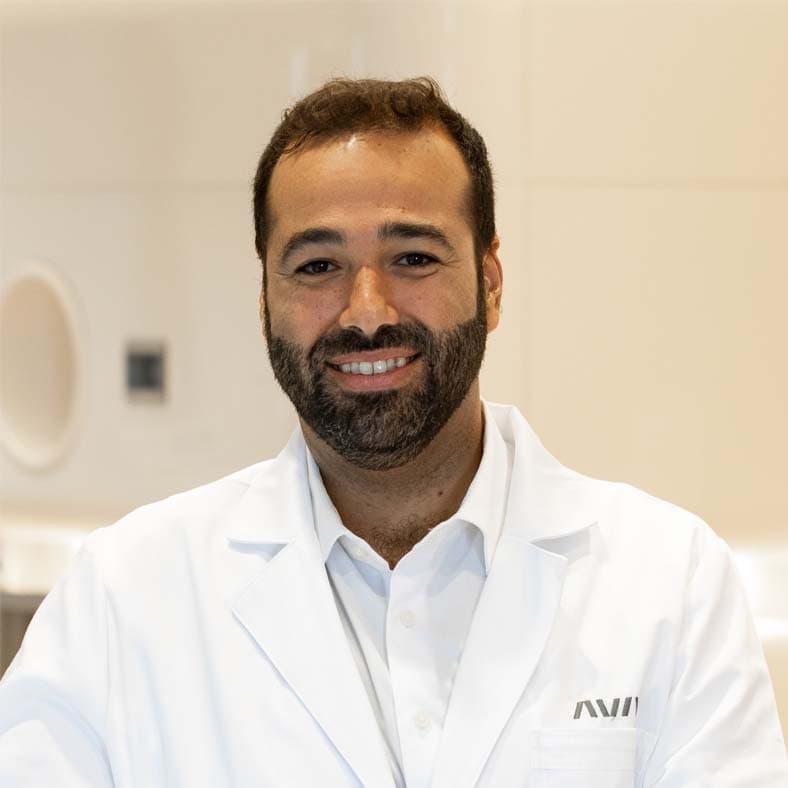
Full Transcript Introduction to Cognitive Decline and Hyperbaric Oxygen 0:00 When we think about cognitive decline, In the end, the brain is an organ, just like anything else. 0:04 It needs blood and it needs oxygen. 0:06 And whether it's aging, cognitive decline with aging, or vascular dementia, or even Alzheimer's, it really comes down to lack of blood flow over time. 0:16 And in some cases, that lack of blood flow to the brain causes cell death. 0:20 When you apply the principles of hyperbaric to any organ, in this case, the brain, we know, hey, we have this technology that can help. 0:27 We can address the causes of the cognitive decline. 0:30 This is Doctor Talks. 0:38 Hi, everyone. 0:39 We're continuing on with the Reverse Alzheimer's Summit, and I'm thrilled to have Dr. 0:44 Mohammed Elamir here. 0:45 And we're going to talk about hyperbaric oxygen and the exciting results they've had. 0:49 Of course, just a few years ago, the idea of a, quote, Reverse Alzheimer's Summit, you know, would have been laughed at. 0:55 And I'm sure that there are still some mainstream doctors that are laughing at the concept, but Published data again and again are showing improvements 1:04 in patients, including a very exciting paper on hyperbaric that we're going to hear about today. 1:09 And there is now a paper coming up that was showing over 10 years of sustained improvement. 1:15 So we're really breaking new ground. 1:17 And I think this is an exciting time for all of us to be seeing people with cognitive decline have some hope and have some real improvements. 1:24 So Dr. 1:25 Elamir, welcome. 1:26 Great to have you. 1:27 Yeah, thank you for having me. 1:28 It's a pleasure. 1:30 And talk a little bit about the initial work. 1:32 How did you guys decide? 1:33 I know you've done some work with diabetes and things like that. 1:37 How did you decide that this was a good idea for cognitive decline? 1:41 And then tell us about some of the results that you're getting, even beyond the paper, of what you are seeing. 1:48 Absolutely. 1:48 So, you know, hyperbaric oxygen, as you mentioned, has been around for a long, long time. 1:52 And traditionally, wound care, diabetes, scuba diving accidents, the bends, for example. 1:57 But, you know, when you take the principles of hyperbaric, it involves breathing 100% oxygen in a pressurized environment. 2:03 And taking us back to high school physics, Boyle's law, Henry's law, it states that a gas under pressure can increase the concentration of that gas delivered 2:12 to the cells of the body, for example. 2:14 So when we talk about diseases, for example, a foot wound from diabetes, it's lack of blood flow, lack of ability to heal, 2:23 of course, lack of oxygen because of lack of blood flow, and it's a wound. 2:26 There's necrosis, there's cell death. 2:29 Well, when we think about cognitive decline, In the end, the brain is an organ just like anything else. 2:34 It needs blood and it needs oxygen. 2:36 And whether it's aging, cognitive decline with aging or vascular dementia or even Alzheimer's, it really comes down to lack of blood flow over time. 2:46 And in some cases, that lack of blood flow to the brain causes cell death and you don't have it suddenly like a stroke. 2:52 You have it gradually. 2:53 And if it's vascular dementia, you're having shrinkage of the brain or atrophy.
How Hyperbaric Oxygen May Support the Brain 2:57 You're having that loss of brain tissue and that causes cognitive issues. 3:02 So when you apply the principles of hyperbaric to any organ, in this case, the brain, we know, hey, we have this technology that can help. 3:09 We can address the causes of the cognitive decline by hyperoxygenating and more specifically over the last 15 years. 3:18 And through our research, we've discovered if we fluctuate these oxygen levels in a specific protocol, we can trigger the body to grow new blood vessels 3:27 and actually grow new cells in the brain. 3:28 Once was thought impossible. 3:31 Great point. 3:32 And your colleague presented, as I mentioned before we got on here a few years ago, actually at an Amazon summit where he and I were both there as well 3:41 as others and talked about the idea of the relative hypoxia being essentially normoxia. 3:48 And in fact, I've really taken from his work the idea that how low do we really want to go? 3:53 So here's my big concern. 3:55 We often use, for example, EWAT. 3:57 exercise with oxygen therapy as another way to get more oxygen into the brain. 4:02 And some groups like to create hypoxia as well as hyperoxia. 4:08 And my concern is always, these are people that, as you just indicated, they're already suffering from too little. 4:14 We're trying to improve them back toward normal. 4:17 So your colleague then pointed out that, well, just coming cycling for five minutes to normoxia and then going back to hyperoxia seems to do very well. 4:28 So my question for you then is when do you worry if you go too low, especially in people where that's the problem to begin with, 4:36 as you pointed out, and when is it enough to just to go to normoxia as a relative hyperoxia in order to trigger these trophic factors and the support that 4:48 you want? 4:49 Correct. 4:50 And you're absolutely right. 4:51 In the work of Dr. 4:52 Shaya Faradi and Dr. 4:53 Amir Hadani, my colleagues that have been doing this for the past 15 years, you have to go back to human physiology. 5:00 The human body wants to repair itself when it's in duress or distress. 5:05 And hypoxia is a dangerous state. 5:07 The body knows if there is low oxygen, cells will die. 5:11 So in that anticipation in a low oxygen state, it will release factors to grow new stem cells to replace the cells that will die from this low oxygen. 5:20 It will trigger growth of new blood vessels to help usher better blood flow to the organs that might be starving of oxygen. 5:25 But to your point, we don't want to put you in a low oxygen state because then you're actually going to have cell death. 5:31 And if you're already compromised before, then that can worsen your condition. 5:36 So it turns out that these factors get released in a relative hypoxia, as you mentioned. 5:41 And what that means is let's get you to a very high oxygen level and then get you to normal. 5:47 That normal oxygen is of course safe because it's still normal oxygen, but is perceived by the body as a low oxygen state relative to the high. 5:56 Now, it took 15 years of research to figure out, okay, what is that delta of oxygen to sustain enough trigger for those factors to be released? 6:05 And you would think, okay, maybe I just get an oxygen tank at home. 6:08 I'll put that oxygen on and take it off. 6:10 Well, unfortunately, that's not enough of a delta. 6:13 You need to go back to those physics principles. 6:15 You need that oxygen under pressure. 6:17 So when you're breathing oxygen in a pressurized hyperbaric chamber, your oxygen level is up to 17 times higher, for example, 6:23 if you go to 2.0 atmospheres. 6:26 Now, that's good in some ways. 6:27 You're getting high oxygen to the cells that need it. 6:30 But more importantly, you can just take the mask off after 20 minutes and you keep it off for five minutes. 6:35 And again, it's a normal oxygen state inside these large multi chambers. 6:40 And you put the mask back on. 6:41 So our protocol is 20 minutes on, five minutes off. 6:44 20 minutes on, five minutes off. 6:45 And we do that two hours of the day, five days a week for up to 12 consecutive weeks. 6:51 Is that two atmospheres? 6:53 That's at 2.0. So that's what's discovered. 6:59 And by the way, the Nobel Prize was awarded for the discovery of this molecule hypoxia induced factor. 7:04 This is the factor that gets released, whether it's in a low oxygen or relative norm state. 7:10 And it takes that degree of delta of oxygen concentration to trigger. 7:15 So thereby you don't have to worry because I share the same concern. 7:18 I don't subscribe to going into a low oxygen state. 7:21 I think that can be dangerous in different ways. 7:23 I think you really need to trick the body, so to speak, get it high, get it normal. 7:28 And it takes that protocol to be enough to trigger the body. 7:32 Yeah. 7:32 I mean, I've always thought, you know, if you're a 35 year old Olympic cyclist and you're going to want to go through the Alps or something, 7:38 or, you know, you're going to the, uh, uh, you know, some, some major race, that's one thing. 7:44 But for someone where, you know, we're seeing people who have cognitive decline. 7:48 So as you indicated, there's already something wrong. 7:51 And so we, we want to be very careful about making them even more hypoxic, but here's the thing that When I heard Dr.
Treatment Protocol and Safety Considerations 7:58 Afrati, your colleague, present this several years ago, the thing that really fascinated me was, you know, we think of, okay, 8:05 here's someone that's got this chronic state there. 8:08 They are literally, we think of in a synaptoclastic state. 8:11 They are pulling back. 8:12 Their signaling is pull back. 8:14 We're going from connection to protection now in the signaling. 8:18 We're making amyloid beta to deal with various insults, et cetera. 8:23 The surprise to me was you're doing this, as you said, for two hours a day. 8:29 How is it that the other 22 hours aren't needed? 8:32 In other words, that seems to be enough. 8:34 I would have thought you would have to live, you know, in the machine to have this improvement. 8:40 And yet, as you guys very clearly showed, it seems to be enough to have a burst for, you know, one 12th of the day. 8:48 And then somehow the rest of the day seems to be better. 8:51 So these people are getting improvement, even though they're not living in that hyperoxic environment. 8:57 Why is that? 8:59 It's a great question. 9:00 You know, in the end, the body needs that trigger and it needs time to respond to the trigger. 9:04 I have two young children and I noticed if I'm yelling at them all the time, it kind of loses its effect. 9:08 But if I save it for those moments, it works. 9:11 And it's the same principle. 9:12 Your body needs time to respond. 9:13 It needs time to gather the resources to rest, to have enough energy to produce those new stem cells those new blood vessels and that's it's been studied 9:22 okay what if we do four hours a day you do two hours here two hours there is it does it compound the results it doesn't if anything It tapers it down. 9:30 Interesting. 9:31 And we even do our protocol where it's two hours a day, five days a week for 12 consecutive weeks. 9:36 Some people say, okay, why can't I just work through the weekend too and do it through the weekend? 9:40 It's the same principle. 9:41 You're not giving your body a chance to respond and have the appropriate energy reserves to actually produce those cells. 9:47 So it's critical. 9:48 It's that give and take. 9:49 Often many athletes will tell you, hey, that rest period in between your workouts is critical for muscle growth. 9:54 And it's the same principle for everything else. 9:57 Yeah. 9:58 Very, very interesting. 10:00 And it's interesting. 10:00 Okay. 10:00 So for, for people then who are doing this or who are, who are setting up to do it. 10:05 So you're saying two hours a day, 20 minutes on five minutes off, do it five days a week. 10:10 And how many total sessions do you want? 10:12 60 dives, 60 total dives. 10:15 Gotcha. 10:15 Okay. 10:16 So really you're talking about 12 weeks or 12 weeks in a row. 10:20 In a row. 10:21 Ideally, it's consecutive. 10:22 Of course, you know, flat tires happen, weddings happen, funerals happen. 10:25 If you miss a day here or there, we can make those up, but it should be possible. 10:29 Gotcha. 10:30 And then once you've finished that, so now you've finished 12 weeks, how long do you wait before you repeat that? 10:37 So that's a good question. 10:39 So before anybody even starts a treatment, we do a full assessment first. 10:43 We'll do advanced brain imaging, both functional and structural imaging. 10:47 We'll do the cognitive evaluations. 10:49 We'll do the whole medical and cardiovascular workout. 10:51 So we have that baseline before we start because we want to know where that baseline is and how hard we need to push. 10:57 In addition to the hyperbaric, we will also do cognitive training and physical training and medical follow-up. 11:02 So after they do the full 12 weeks, and of course we're following them clinically along the way, we'll repeat that assessment. 11:10 That's our first checkpoint. 11:11 We see those improvements in the brain and it manifests clinically in the cognitive testing and it will follow up month after month. 11:18 Now, depending on the condition, if somebody already has the diagnosis of early dementia or Alzheimer's, for example, that's a progressive disease. 11:27 So we want to get ahead of it. 11:28 If we see an improvement, a stabilization, the stabilization continues. 11:32 Well, it's a progressive disease. 11:33 Eventually it can still progress and we want to catch it at that point. 11:37 So often, whether it's a six-month follow-up or a one-year follow-up, we want to catch as it's plateauing and perhaps declining, 11:43 and then we can do it again. 11:45 It might not necessarily need to be the full 12 weeks. 11:47 It could be an eight-week protocol, depending on the individual scenario. 11:51 Gotcha. 11:52 Okay. 11:52 And then some people will say, well, now what about superoxide? 11:55 Are you increasing the superoxide? 11:57 Are you increasing other free radicals in the brain? 12:01 Is there going to be some potential damage? 12:03 Are you looking at this as some degree of hormesis? 12:06 Or what is, what's your sense about that given this hyperbaric oxygen? 12:12 Correct. 12:12 You know, hyperbaric oxygen is a medical treatment. 12:15 It's not completely benign if it's done incorrectly. 12:18 And so oxygen toxicity, free radicals, et cetera, those are all considerations. 12:22 And that's another reason why. 12:24 Two reasons. 12:25 One, you're on the oxygen for 20 minutes at a time and you have that five minute air break that mitigates that potential of oxygen toxicity. 12:31 Another reason why we do it two hours a day, not four hours a day. 12:34 Another reason we have those breaks in between on the weekends. 12:37 So that's something that was considered, looked at, and that's how we got to this protocol. 12:41 It was both the most effective kind of dose without a compromise or risk medically. 12:48 Very interesting. 12:49 And then the other thing that comes up is, with all the experience you now have, it's important to know, you know, where are you seeing the best results? 12:57 Where are you seeing less results? 12:58 So let's go through these because I think, again, for anyone who wants to do this, they want to know, when is it likely to help? 13:04 Because there are many people publishing lots of things. 13:07 You know, you probably saw the combined metabolic activators. 13:09 They get some nice results. 13:11 work on, you know, various lipids that people have used and other approaches. 13:16 So let's ask first about various approaches here. 13:19 So for people who have a vascular-related cognitive decline, I assume that that would be high on the list. 13:26 Is that fair to say? 13:27 Correct. 13:28 Because whether it's aging process, I mean, there's a vascular changes, everybody who gets an MRI of their brain, if they're an adult, 13:35 assuming you're okay, we'll say no stroke or bleed, no mass or cancer, but you have microvascular changes consistent with aging. 13:42 So that is definitely the highest on the list. 13:43 And the earlier you intervene, the better, of course, the results could be. 13:47 Is there a time when you say it's too late? 13:50 You know, if somebody has significant atrophy as a result of that vascular change, you know, for example, I've seen brains where they lost a third of their 13:57 mass and cognitive testing deems where their MOCA scores are in the single digits, for example. 14:02 Those are cases where I say, I wish I met you yesterday.
Who Benefits Most: Dementia, FTD, and Parkinsonian Conditions 14:06 That's a good point. 14:07 And that's one of the things that always comes up. 14:09 Is there hope for people with single digit mochas? 14:12 So it sounds like what you're saying is you'd like to catch things before that. 14:16 And do you see this for people who come in and say, my mother died of Alzheimer's. 14:22 I'm now 45. I feel fine. 14:25 I'm scoring pretty well. 14:26 But I know I have, for example, two copies of APOE4. 14:30 I know I'm at high risk. 14:32 And, you know, maybe even, you know, my p-tau 217 is borderline high. 14:38 How early do you start? 14:39 You know, a favorite statistic that I like to quote is the process of Alzheimer's disease can start in the brain up to 15 years before you notice your 14:50 first symptom. 14:51 And I tell people my favorite Alzheimer's patient is the one that doesn't have the diagnosis that has a family history of it. 14:57 That's when I want to treat you. 14:58 So you really that 45 year old is having the right time to have that discussion of should I do this treatment now? 15:06 Gotcha. 15:07 You need to get ahead of it. 15:08 And do you have evidence that the person who's 45 who actually is there for prevention actually did get a preventive effect? 15:16 So in the end, those are the studies we have to do those long-term follow-ups. 15:21 I've had 45 year olds do the treatment. 15:24 two years ago, four years ago and we're following up and so far so good. 15:27 I always say that the best study is if I had a cloning machine and I have one person go through it and whatnot and then see what happens in 30, 40 years. 15:35 But when you see those vascular changes on the scan, when I see angiogenesis, I see growth of new cells on the DTI, on the MRI, 15:43 I know that is significant physiologic change that will clinically make an improvement. 15:48 That's a good point. 15:49 So what is your preferred approach to looking at these sorts of outcomes? 15:54 Is it functional? 15:55 Is it DTI? 15:56 Is it PET? 15:57 What sorts of things do you like to see? 16:00 You know, as you know, every clinician loves to have as much data as possible. 16:03 But for me, you know, you want to get the data that will give you the real evidence without the noise around it. 16:09 So functional imaging, the preferred consistent method that we use is SPECT, CT SPECT. 16:14 That's a great way to see those metabolic changes. 16:17 And then on the MRI with the DTI, that DTI sequence tells me density changes. 16:22 I can actually see new cells, new improved density within the fibers of the brain. 16:26 And then also the strength of signal going up and down the nerve fiber tracks. 16:30 So the combination of those two types of scans along with the full cognitive testing is a great way for me to kind of assess, 16:37 track, and predict outcomes later on. 16:41 Great. 16:41 And so we've talked about vascular as an important one. 16:44 We've talked about especially early Alzheimer's, not so much the single digit ones. 16:49 Let's move to frontotemporal dementia. 16:51 That's one that, as you know, has been really tough in terms of medical approaches. 16:56 Do you see such patients and do you see improvements in them? 17:00 We do. 17:00 We do see those patients and you're absolutely right. 17:02 I agree. 17:03 Those are tough cases because of course, with frontotemporal, in addition to the memory, there are a lot of personality changes. 17:08 There's often spouses that bring a man say, hey, my spouse isn't the same person that I married. 17:13 And it's the same principle where the earlier we can intervene, the better. 17:16 You know, with frontotemporal, It's almost a similar physiologic process that we see with vascular where we see those vascular changes, 17:23 we see volume loss, it just tends to stay in that frontal temporal range. 17:27 We see improvements and often in addition to the memory improvements and cognitive improvements, we see some personality improvements as well, 17:33 speech as well, auditory processing. 17:36 But again, it's the earlier you intervene, the more impact you can have. 17:40 Okay. 17:41 And then what about Lewy body disease? 17:43 Lewy body, the Parkinson-like syndrome where there's specific proteins growing but the clinical manifestations are similar to Parkinson's. 17:52 I say the class of Parkinsonian diseases is one class. 17:56 If I go to Parkinson's itself, that I see less. 17:59 potential outcomes and less improvements. 18:02 But the Parkinsonian, again, it's better outcomes, especially, for example, if it's a result of traumatic brain injury, because then there's a specific 18:10 wound and a specific injury I can point to. 18:12 If it manifests on its own, the wee body, it's kind of in between, not as bad as the Parkinson's outcomes, but not as good as some of the vascular dementias. 18:20 Gotcha. 18:20 When that brings up, of course, CTE, chronic traumatic encephalopathy, what sorts of results do you see with CTE? 18:27 So we've had a retired NFL players come through people with car accidents. 18:32 It's a phenomenon, you know, we're having more and more press about, unfortunately, all these children that have played peewee, 18:39 you know, my day, for example, are now going to succumb. 18:42 And we're seeing more and more earlier, you know, evidence of CT and young children and teenagers and young adults. 18:48 And it's, it's a process as we're learning more and more about, but it really. 18:52 also comes down to those sheer forces destroying the axons, but also the vascular changes as well. 18:57 So they almost present as a hybrid of vascular dementia and some of these other protein, you know, proteinopathies. 19:03 So we are seeing improvements in those ex players, but the best results I've seen are in those younger adults where we intervene early. 19:11 And I must say, I'm proud of some of these athletes that they know, they've heard, they've been educated and they say, okay, 19:18 I want to get ahead of this. 19:18 I don't want to end up like that. 19:20 Those are the cases we have the best success. 19:22 Yeah, and I think often it really points us in the right direction to listen to what they say after a treatment, whatever your treatment happens to be. 19:30 Tell us a little bit about some of the things that people have said, whether it's the CTE people or others, to say, here's what I can do, 19:37 or here's how I feel different, or here's... 19:39 what I can now do that I couldn't before. 19:41 Talk a little bit about the experiences, because I think that's something that teaches us so much. 19:45 When you're going in the right direction, you're hearing the right feedbacks. 19:49 And when you've got people who are just kind of, maybe there's a little placebo effect, but it's really not a striking change, 19:55 you know, you have to kind of recalculate. 19:57 So talk a little bit about the outcomes from these patients subjectively. 20:02 For sure. 20:03 And you know, of course we're in the scientific field, data is important, research is important, studies are great. 20:09 But I'm a clinician, you know, number one, you know, we spend our time every day with the clients, talking to them, seeing how they're feeling. 20:15 You know, my mentors always told me, treat the patient, not the test. 20:19 And those examples come all the time. 20:21 For example, I had somebody with early Alzheimer's where when we assessed her, if you told her something today, she would forget it tomorrow. 20:28 Uh, now midway through her treatment, she was talking to one of the nurses on a Friday and the nurse looked a little distraught. 20:35 So the client asked, Oh, Hey, what's going on?
Patient Outcomes, Imaging, and Biomarkers 20:38 And the nurse said, how are you now? 20:39 My son has a football game over the weekend. 20:41 We're a little stressed about it. 20:43 The following Monday comes and the client comes to the nurse and said, oh, how did your son do in that football game? 20:47 And when the husband heard this, he was ecstatic. 20:50 The fact that she could remember something over the weekend midway through the treatment, we knew we were in the right direction. 20:54 So that always gives us a smile when we see those moments. 20:56 That's fantastic. 20:57 There's nothing better than hearing improvements in people who are told they had a terminal illness. 21:01 So that's fantastic. 21:03 And then let me go on to another one. 21:04 So we think of this whole panoply of neurodegenerative conditions. 21:09 And of course, macular degeneration is yet another one of these. 21:13 Do you treat people with macular degeneration? 21:16 And if so, what kind of outcomes have you had there? 21:18 That's a great question. 21:20 It's something that affects so many of us as we get older. 21:24 Being in central Florida, in the villages, it's something we see a lot of as well. 21:27 Physiologically, It should work better than we've actually witnessed and what we've seen. 21:32 In the end, angiogenesis creation of new blood vessels, whether it's the optic disc or the retina, we see some improvements in that, 21:39 but for whatever reason, the data hasn't backed it up as much. 21:41 That is something we're ongoing and we're still doing more studies. 21:44 Maybe it needs to be a slightly different protocol. 21:46 Anecdotally, I've had a lot of clients go to their ophthalmologist and see improvements, but the clinical studies and data haven't shown the same effect 21:53 as cognitive decline, for example. 21:55 Yeah, important to know. 21:57 Okay. 21:58 And then, have you seen any patients, for example, with PSP, progressive supranuclear palsy? 22:03 Obviously, you have things like upgaze problems, and you did mention Parkinson-like things don't respond as well. 22:09 Would you include PSP and CBD in that group? 22:13 I would. 22:14 We've had quite a few clients, and we tell them we don't have the data to back it up, that we can help as much as some of these other conditions, 22:20 but they still see the value in coming through the full treatment, and they've gone through. 22:24 They've had some improvements. 22:25 I have actually some coming through testing, post testing now. 22:28 And so far the preliminary results are promising. 22:31 The PSP is still there and they still have some of those restrictions. 22:35 But if we can make any impact in their quality of life, it still might be worth doing. 22:39 Gotcha. 22:40 And what do you tell people who have at home, you know, a soft shell, which I guess they can go up to what about 1.3 atmospheres or something. 22:49 Do you tell them, look, this is preferable, but that's better than nothing? 22:53 Or do you say really that doesn't do anything or what are your data showing? 22:58 Yeah, it really depends on the condition we're treating. 23:02 If somebody has some kind of systemic inflammatory process, it could potentially help a little bit with that. 23:08 If they are using it for workout recovery, for example, we could see some improvement there. 23:13 If we're really talking about cognitive decline, vascular dementia, those kind of things, I say you might be putting yourself more at risk to outweigh 23:22 any benefit you could get. 23:23 In addition to the lower atmosphere level, sometimes these soft chambers don't have that ability to fluctuate the oxygen. 23:30 And then if they can't do the protocol, they're really missing out a lot on oxygen. 23:34 Gotcha. 23:35 And when you look at inflammatory parameters, do you see these go up or go down or remain the same during and after these treatments? 23:43 So we do a thorough blood and other imaging to kind of assess for inflammation. 23:48 We see a significant reduction in CRP, ESR. 23:51 A lot of these inflammatory markers do go down after the treatment is complete. 23:55 And the best thing is we try to correlate that with 3C reduction in size of inflammation in another organ or another form of testing. 24:03 And we often see that correlation between the two. 24:05 Fantastic. 24:06 And of course, you know, I think, you know, we're all now living in a world where for the first time we can get a very accurate blood test, 24:13 p-tau 217, GFAP, NFL. 24:16 I think that's going to be the gold standard for, you know, following people in the future. 24:20 Did you make their p-tau go back to normal or go down toward normal? 24:25 Whereas, you know, it continue, tends to continue on up as you are progressing. 24:29 have you had yet had time to look to see whether you change or whether you improve any of these new blood parameters? 24:36 We've had a few clients have them done before they come in and have them done after, and they've seen some improvements in lowering those values. 24:43 We are definitely looking into, okay, what can we implement across the board on all of these clients? 24:47 Stay tuned, that data will be coming out soon. 24:50 Yeah, that's exciting to hear. 24:52 All right, great. 24:53 For someone who, first of all, I guess for how to get to you. 24:56 So you're in the villages in Florida. 24:57 It's a fantastic place. 24:58 I've been there, beautiful place and a great place to be treating many people in need. 25:03 So how do people get to you and do you only take people who are in the villages or do you take people that are referred from outside? 25:10 So we take people from anywhere. 25:12 Surprisingly, half of our clients are outside the villages, whether they're somewhere else in Florida or Even internationally, 25:19 one of the newest disease processes that we treat is long COVID. 25:23 People are cognitively and physically affected by the complications of COVID. 25:26 And we've made a big impact on people in the Netherlands, for example. 25:30 We have a huge group of people from the Netherlands coming to treat their long COVID. 25:33 So because the villages is a retirement community, a lot of these houses are vacant and up for rent. 25:37 So people will rent a home in the villages. 25:39 They'll take the golf cart that comes with it to come to the clinic, do their treatments, and live here for three to four months. 25:45 And we treat anybody that's willing to come. 25:48 We do Zoom consultations all the time. 25:50 So if you're not in the area and you want to speak to us, if you go to our website, aviv-clinics.com, contact us and we can set up a Zoom appointment that's 25:59 complimentary with one of our physicians and see if we're right for you. 26:03 Got it. 26:04 And it's, I guess, important to tell everybody. 26:06 So if someone comes and signs up for, you know, 60 of these treatments, what can they expect to pay for this? 26:14 So we have different prices for different aspects of the program for some people that want to do just our full thorough assessment.
Access, Cost, and Practical Treatment Details 26:19 So that includes the specs, the MRI, DTI, cognitive and physical testing. 26:24 It's a three to five day assessment. 26:25 That could be $12,500. If they want to do everything, everything all included, the pre-assessment, the 12 weeks of treatment, 26:32 In addition to hyperbaric treatment, they're getting physical therapy, psychology follow-up, medical follow-up, physical training, 26:38 cognitive training. 26:40 They do the post-testing, the monthly follow-ups, and the six-month re-evaluation. 26:45 So that's kind of everything, excuse me, included. 26:47 That is $55,500 for an individual, and that could be discounted if you do it with a spouse or family member. 26:54 Hey, I heard you on the podcast together. 26:55 Let's do this together. 26:56 You could get a discount if you come with somebody else. 26:59 Right. 26:59 So about half of what it costs for one year in a nursing home. 27:03 So again, if you can, if you can keep people out of a nursing home for years, you're going to save them a lot. 27:08 And that's, I think that that's critical for people to know. 27:11 And of course you're also going to save their interaction with their family, et cetera. 27:15 So that's important. 27:16 So the other issue again, then I guess would be in terms of, of the negative side effects, are there any. 27:23 negative side effects that you worry about. 27:25 You mentioned a little bit about oxygen toxicity. 27:28 Are there other issues that concern you? 27:29 And I guess perhaps if you could also discuss, what about the people who have Lyme disease or who have underlying drivers? 27:38 We see so frequently that a pro-inflammatory state is part of cognitive decline. 27:44 You know, you see it with leaky gut, with chronic sinusitis, with changes in the oral microbiome, with tick-borne illnesses, 27:51 so many of these things. 27:53 Is there any concern for doing hyperbaric therapy in those patients? 27:57 That's a great question. 27:58 The process of the inflammation is always important to figure out what is causing it. 28:06 A lot of these tick-borne illnesses are actually phobic of oxygen. 28:10 For example, Lyme could create itself in a biofilm and protect itself from antibiotics or other immune modulators. 28:17 But being in a high-pressure, high-oxygen environment, that can actually penetrate and destroy the biofilm. 28:21 But that Herbst fire reaction that we see sometimes when you treat Lyme can happen as you do the treatment because you're destroying the spirochete, 28:28 you're disseminating what it has. 28:30 So I tell my Lyme patients that you could get worse before you get better. 28:33 You could get that reaction, but it is a sign that you're destroying the organism. 28:39 Now in terms of general side effects, the most common side effect with any hyperbaric treatment is barotrauma, trauma from pressure. 28:44 So if you've ever been scuba diving, you know you have, when you're diving, you have to equalize. 28:47 Or if you're on the airplane and descend, you feel that popping sensation in your ears. 28:51 The first 10 minutes of our treatment, we are building pressure up to get to 2.0 atmospheres. 28:57 So it is imperative that you're able to equalize. 28:59 As long as you're able to pop, chew gum, swallow, valsalva, you're going to be fine. 29:04 If you don't pop, you're going to have stretch of your eardrum and that will be painful. 29:09 And there are different levels of perforation or stretching of the eardrum that we see. 29:13 To mitigate that, we have these large multi-place chambers and inside there's an inside attendant. 29:17 So it's usually a nurse, pain and hyperbarics. 29:20 And they will make sure you're equalizing. 29:22 As long as you can equalize or if you tell us you can't, we just stop building the pressure up, lower it, give you a chance. 29:28 The problem comes when somebody's a brave soul and doesn't want to tell us they can't pop it, they just push through it. 29:33 Those are the ones that have issues. 29:35 But those events are very rare, few and far between. 29:38 And for all of us who've been diving, the 2.0 atmospheres would be equivalent to how deep of a dive? 29:45 Great question. 29:45 33 feet. 29:47 So if you're an open water diver certification, that's the level we go to. 29:51 Oh, so that's not so bad. 29:52 You're not talking about 80, 90 feet or more. 29:55 So that's actually very helpful. 29:57 So 33 feet, that's not a bad... 29:59 Correct. 29:59 All right. 30:00 And how many people simply cannot do that equilibration and really have to stop? 30:06 You know, since we've been open here in Florida, June of 2020, we've had over 800 clients come through. 30:12 I've only had four clients where we weren't able to train them and equalize where they had to see an ENT and get a temporary Meringotomy tubes. 30:20 Only four out of 800. So it's very, very rare. 30:23 And if you can't, we still have a solution. 30:25 It's temporary tubes. 30:26 They come out when you're done and no damage to your eardrum after that. 30:29 but it makes it seamless, so it keeps the pressures equal the entire time, so you don't have to worry about it. 30:33 Gotcha. 30:34 And if you take, let's take you a hundred people with cognitive decline, let's say none of them have single-digit MOCAs, 30:41 they're still relatively early, that would be, say, similar to what leukembi has used, for example, which is the MCIs in early dementia patients. 30:50 In those patients, about what percentage would you imagine can expect to see some improvement with this treatment? 30:58 For sure. 30:58 I would say at least 65% of those at that stage will have improvements. 31:03 The 35 that are left, I'd say half of those will see stabilization. 31:07 Basically they will not, not really improve but not decline. 31:11 And then the other half of those We'll probably still have some decline, but it'll be a slower slope of decline, depending on exactly where they are, 31:18 other comorbid conditions, but majority will improve at that stage. 31:22 Gotcha. 31:23 And for those with claustrophobia, as I understand it, yours is nice and open, which is great. 31:28 What's the size of this chamber that you have people in? 31:32 So these are large multi-place chambers. 31:34 We have four of them and each one can hold up to 14 people. 31:36 I'm six foot three. 31:38 I could stand with plenty of headroom. 31:39 These are like a first-class seat on an airplane. 31:43 Most people say, yeah, it's like sitting on a first-class cabin in any airline. 31:47 Very, very comfortable. 31:48 We have little tablets inside. 31:50 We're actually the only company that has electronic tablets inside the hyperbaric chamber. 31:54 And we do brain training exercises, but There's a Spotify app if you want to listen to music. 31:59 You can learn a new language with the Duolingo. 32:01 Read the New York Times. 32:02 So we have different ways to kind of entertain you while you're in there. 32:05 Fantastic. 32:06 All right. 32:06 That sounds great. 32:08 All right. 32:08 Well, this is a delight. 32:10 Thank you so much, Dr. 32:11 Mohammed El-Amir. 32:12 Great to talk to you. 32:13 As I mentioned, I heard Dr. 32:14 Afrati speak several years ago. 32:16 Very exciting to hear the developments and very exciting to hear always that you are actually making people who have cognitive decline who for so many 32:25 years have had no hope that you're actually making them better. 32:28 So great to hear. 32:28 Thank you very much for taking the time to talk with us. 32:32 I look forward to future data. 32:35 future publications and future discussions. 32:37 Absolutely. 32:38 It was an honor and a pleasure to speak with you today and I'm looking forward to future conversations to come. 32:42 Thanks very much again, Dr. 32:43 Elamir. 32:44 Thank you for tuning in to Doctor Talks. 32:46 We hope today's episode has enlightened and inspired you on your path to optimal health. 32:52 Each day is a new opportunity to make choices that empower your well-being. 32:56 For more insights and strategies, subscribe to our podcast and visit our website, www.doctortalks.com. 33:05 Stay connected, stay healthy, and join us next time on Doctor Talks. 33:10 Real talks from real doctors on the issues that matter to you most.

Comments