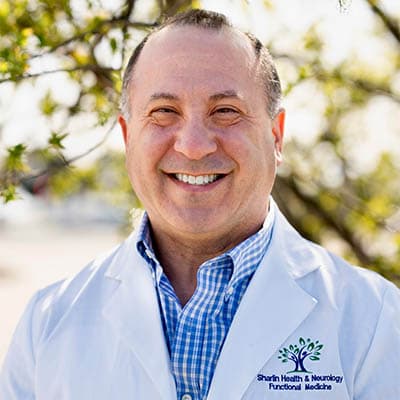
Full Transcript Introduction to Brain Span and Reversing Cognitive Decline 0:00 We are here in the sense now because myself, Bredesen group, others, Isaacson down in Florida have all reported on cases of Alzheimer's reversal, 0:11 complete reversal. 0:12 Or when we use terms like reversal of cognitive decline, we're also saying that you can improve somebody's cognitive function in face of the disease that 0:22 we only assume is just downhill from here. 0:26 And I'm not just talking about giving them a drug called Aricept or Denepazil that squeezes out a little bit of cognitive function. 0:33 I'm talking about really taking the steps that address the underlying causes of the disease. 0:39 Welcome to the TBD Fit podcast on Dr. 0:41 Talks. 0:44 And I will be guiding you through this wellness journey in terms of optimizing health and longevity, where we unpack the science, 0:52 the dos, and everything in between. 0:55 Come join us. 0:56 Look forward to seeing you inside. 0:58 Welcome back to another episode of the TBD Fit Podcast, where we challenge outdated medical thinking and focus on what actually drives long term health 1:06 performance and longevity. 1:07 Today's conversation is one I consider essential, especially as we see cognitive decline being accepted as normal aging. 1:15 My guest is Dr. 1:15 Kenneth Charlin, a functional neurologist and one of leading voices redefining how we think about brain health neurodegeneration and what he calls brain span. 1:25 Dr. 1:26 Charlin is known for his work on reversing and assisting with healthy neurology, precision diagnostics and cognitive longevity. 1:34 He challenges the idea that conditions like Alzheimer's and Parkinson's are inevitable or irreversible and backs it up with science and clinical results. 1:44 Eager to unpack that today. 1:46 Today we're diving into the cognitive longevity blueprint, what truly drives brain decline, and what can be reversed and how listeners can protect and 1:55 optimize their cognitive future starting now. 1:59 Dr. 1:59 Charlin, welcome to the show. 2:01 Thank you, Dr Dan. 2:02 Pleasure to be here. 2:03 So you use the term brain span rather than lifespan. 2:08 Obviously that's going to be the hot topic for today's discussion, but I love opening every episode in terms of understanding the origin story of my guest 2:18 so we can understand why you're doing what you do today. 2:22 Well, it really has been a kind of a multi-step process. 2:26 I actually started out just geeking out in the sport of triathlon many years ago. 2:33 And because I like the science and all that other stuff, I took my training plans to heart and learned that sleep and my, 2:42 what I call the biological stress response system were just as important, of course, my nutrition. 2:47 to success out in the field, whether it's the swim, bike, the runner, or the whole combination. 2:53 And so as I started to change my own biology by figuring out exactly what nutrition I needed, not just to perform on race day, 3:01 but to make it through the long training period leading up to race, I eventually finished a few Ironman triathlons and lots of halves and all that other stuff. 3:11 But I was still going to the office and seeing my patients being a very traditional neurologist, making a diagnosis. 3:17 Here's your pill. 3:18 And just watching my patience get worse and worse over time. 3:23 And I thought there has to be another way. 3:25 Unfortunately, because I was trying to learn about the science of fitness and health and optimization, which is I'm sure a term used quite a bit, 3:35 I stumbled upon the work of David Perlmutter, who had his breakthrough a New York Times bestseller as Grain Brain.
Dr. Charlinu2019s Origin Story and Shift to Functional Neurology 3:45 And that really hit home to me because a lot of, you know, that was largely about metabolic syndrome and its relationship to brain health. 3:54 I sort of said, yeah, this makes so much sense. 3:57 Why aren't we approaching patient care this way? 4:00 And I learned that he was part of the Institute for Functional Medicine. 4:04 So I quickly looked that up and long story short, eventually got certified in functional medicine. 4:11 That was the beginning of the journey. 4:16 I'm glad I did. 4:18 And I would say to anyone interested, if you have a life goal like that, a marathon, do it. 4:30 It's good in certain ways, maybe spiritually, mentally, but it's very hard. 4:34 I think among other things on our mitochondria and our immune system. 4:38 So I did enjoy it. 4:39 And if I went back, I'd probably do what are called sprint distance events, which are much more, you know, executable and you don't destroy yourself in 4:48 the process. 4:49 Now, in terms of this medical landscape, for decades, neurology has treated cognitive decline as something that's irreversible. 4:59 How has science changed? 5:01 What scientific and clinical evidence has convinced you that this assumption has been largely disproven now? 5:06 You know, I think, first of all, some of that mythology is driven by a whole marketing system that creates sort of the customer for life when it comes to, 5:17 say, pharmaceuticals. 5:19 And I don't, in this case, at this point, even consider myself an integrative neurologist rather than simply saying functional neurology. 5:28 I that functional and regenerative medicine and systems biology really sit very nicely together in the toolbox. 5:35 But this idea, if I convince you that there's nothing you can do about it, but take a pill, that's a pretty potent sales pipeline. 5:44 That's really a problem. 5:46 I really think in so many respects, my own colleagues who are incredibly talented and well-educated, that all of that skill is really being compromised 5:58 by these algorithms that say, well, you have this diagnosis, so you take this medicine and I'll see you in six months. 6:04 So it has to change. 6:06 And I think what you and i know is when you start to explore And I'm sure we'll get into more deeply systems biology and, 6:14 and really the science of why is it we get sick in the first place, then it makes so much more sense that even if we're not quote curing everyone, 6:24 there is so more that we can do and we really truly change the trajectory of these illnesses. 6:31 And yes, in some cases, completely reverse them. 6:35 Let's perhaps. 6:36 provide some context here. 6:38 So looking at Alzheimer's or looking Parkinson's, right? 6:42 To me, that has largely been treated end stage in terms of the brain and neurodegeneration. 6:47 But where ultimately does this start? 6:50 Well, I'm so glad you asked that question because folks need to realize that at the moment someone becomes aware that they're having some trouble with 7:00 their memory, Maybe they're still functioning normally otherwise, and it's just what we call subjective cognitive decline, 7:07 something that they know of. 7:08 They're having to work a little harder to do things that came a lot easier to them, but it not like someone's going, hey, 7:14 you know, we had that conversation already, or you seem to be having trouble is something normally would have been very second nature. 7:22 But the reality is that the diseases, whether that's Alzheimer's, Parkinson's disease, probably ALS, they have very long incubation periods, 7:33 if you will, very non subclinical periods in which there are changes happening in the brain as many as 10 to 15 years before the person even ever start 7:45 showing symptoms. 7:45 And so I do want to credit a colleague of mine, Dr. 7:48 Dale Bredesen, who coined the term cognoscopy, much like we would go in for a preventative visit with our primary care physician, 7:59 my annual checkup, whatever. 8:01 You know, at a certain age, we need to be screening folks for cognitive changes. 8:06 really even Medicare itself or Centers for Medicare and Medicaid Services has a CPT code that is a cognitive evaluation code, 8:15 that can be used exactly for this reason. 8:18 It even allows for labs. 8:20 They're not the most extensive, but at least even at the level of the federal government healthcare system, they're aware that, 8:29 you know, brain decline can prevented if we screen and identify the problems. 8:34 Yeah, the stage is set early and I think it's our modern environment that often is pulling the trigger coupled with our microbiome, 8:41 which has largely been my focus for the last decade. 8:43 This is an example, that to me is a barrier, integrity disruption at the level of the gut and then the olfactory bulb at level the nose, 8:53 sinus cavity where We're now inhaling these intoxicants that are then largely being stored in the brain. 8:59 Some of the most fatty tissue that prevails and looking at Alzheimer's as an example, I know some key findings that you had presented when you said, 9:07 you know, integrative regenerative medicine, trying to regenerate the body. 9:10 I call it practicing also restorative, medicine restoring function. 9:14 So when I see amyloid, we find similar evidence as you presented with HSV1, the herpes simplex virus.
Why Cognitive Decline Starts Early and the Case for Screening 9:20 I See this translocation of bacteria like polysaccharides that very easily cross the blood brain barrier that then is lodged in the brain. 9:28 And now we have this amyloid plaque, which to me is largely antimicrobial. 9:33 How interesting because we were once treating it as the problem and yet the The body, I believe, doesn't make mistakes. 9:38 That's the solution. 9:39 And then you have the tau tangles and neuroinflammation and then decrease brain function. 9:44 So should we be going after the end stage result or should be be after, the initial assault, which is the virus or the bacteria or this barrage of environmental 9:56 toxicants like glyphosate, what we see correlated with Parkinson's. 9:59 Well, I don't know that it's necessarily an either or, right? 10:03 It's potentially even the answer is both. 10:06 You're right that amyloid protein has some protective effects in the normal healthy brain. 10:13 I think that the way I've formulated integrative neurology, and I think it was part of that presentation, is to think of the fact that, 10:23 you know, in the end, we're sort of brains housed in a body. 10:26 It's our brain that gives us our reality, it's are brains that give us consciousness, our brains make everything about the world that we know. 10:36 And why would that be? 10:38 Well, among other things, the brain is trying to protect us at all times. 10:42 And I say, it's taking in information from all five senses. 10:45 It's evaluating that information. 10:48 I'm going to quote from one of my favorite old movies with Laurence Olivier and Dustin Hoffman called Marathon Man, where Olivier is a Nazi dentist and 11:00 torturing Dustin Huffman, drilling through one his teeth to get information and keep saying, is it safe yet? 11:07 If you haven't seen that, you must at least look it up on YouTube. 11:11 So is it safe yet? 11:13 If it's safe, that's okay. 11:15 That's good, because that is time for nourishment. 11:19 It's time, for rest. 11:21 And that time is for healing and repair. 11:24 Time for lovemaking or friendship or connection. 11:28 But if it is not safe then we are going to switch into that fight or flight mode. 11:34 There are all kinds of biochemical and genetic and epigenetic things that happen downstream from that, where systems get shut down and ultimately sort 11:46 of in succession, meaning, hey, if it's a little bit of a threat, maybe it'll just go away. 11:51 We don't really need to go into four alarm fire mode. 11:55 But as you know, what we deal with in our modern society is the chronicity of inflammation. 12:02 so that these protective responses like the accumulation of amyloid may ultimately turn out to be detrimental. 12:10 So the amlyloids proto-fibrils are toxic, but maybe for a reason, right? 12:16 I don't think we even need to thinking about, you know, disease is inconvenience. 12:21 Disease may inflict, not only morbidity, obviously threaten our very lives. 12:28 But in the end, it's sort of an I'll quote, I quote lots of movies, you know, the character from Monty Python and the Holy Grail. 12:35 You can keep chopping off limbs. 12:38 It's this very slapstick. 12:39 I don't mean that, reference hurting somebody who's saying, You know I'm not dead yet. 12:44 I'm not dead yet. 12:45 You know, I can lose an arm, lose a leg, but I hop up and down on the other leg and I am not yet dead. 12:52 So the brain is making decisions all along the way to say, hey, if I need to sacrifice, gut. 12:59 For example, as you know, you get into that fight or flight situation, not only there are shifts in the microbiome and perhaps arguably those shifts lean 13:09 towards supporting the body's fight-or-flight response, but the whole gut nervous system just shuts down, right? 13:16 Gastroparesis. 13:18 Why eat if you're being chased by the saber-toothed tiger? 13:22 So as we shift those resources towards survival, We're going to think about Alzheimer's disease and Parkinson's and all that as really maladaptive responses. 13:32 They don't serve us as total human beings, as unique beings. 13:37 But they may have some role to play when we look at the brain's role in the context of survival. 13:44 It's almost better to say, Hey, you know, You don' have to remember that conversation we had 10 minutes ago, if You still know how to eat, 13:52 right? 13:52 If you still knew how do other things, I'm willing to prune off certain connections if it means your survival. 14:00 Yeah. 14:00 Survival above all else. 14:02 I think that's how we're hardwired, we want to stay alive. 14:05 The reptilian brain of the limbic system, unfortunately, sometimes to our detriment when we were stuck in that fight or flight and difficult to make the 14:15 shift into parasympathetic. 14:17 And it's that kind of balance or that. 14:19 that shift that is key in understanding sometimes within the most sick among us. 14:24 It's almost this constant state of fear internally that then is expressed externally or potentially exacerbated in the modern environment. 14:35 When I'm looking at the microbiome as an example and neurodegenerative disease, to me, my question for you, I guess, ultimately is how much starts there 14:47 that's potentially making that shift. 14:49 I mean, you mentioned the digestive process and how to me that is actually largely controlled in part by our vagal nerve turning, 14:55 the vagus nerve, which innervates every segment of the digest system. 14:59 When I'm looking at the microbiome, how that contributes to systemic inflammation, blood barrier disruption, and then the deposition of amyloid plaque, 15:09 alpha synuclein and PD and TDP-43 and ALS and both alpha-synuclean and and TD-P43 have been found in the gut before the onset of neurological symptoms. 15:23 I know you're looking at the whole picture when you mentioned systems biology, but where do you see that maybe the problem begins to start that's often overlooked? 15:31 Well, I think that really is at heart of what we all do as more nuanced practitioners because Now we can shift our thinking away from the idea that Alzheimer's 15:44 disease or Parkinson's Disease or ALS or multiple sclerosis, all the big conditions that we see as neurologists, it's as if to say, 15:53 well, if there are five people in a room who happen to have this diagnosis we call Alzheimer disease, they're all exactly the same. 15:59 They should be treated with the the drug, right? 16:03 And that, we should expect the outcome. 16:05 And we know just empirically that's absolutely not the case. 16:09 I mean, even if you don't know anything about systems biology and perhaps we could spend a little time on that, we all realize as practitioners that everybody 16:18 who has this diagnosis of Alzheimer's disease has a different sort of trajectory, right?
Gut-Brain Axis, Amyloid, and the Brainu2019s Protective Responses 16:23 Some people do kind of okay for a long period of time, too, to dad and others sort take a much more downhill slope and There's a lot of psychosis and agitation and, 16:36 you know, they don't really thrive at all. 16:39 And we have to ask, why is that? 16:41 So I certainly embrace the concept that the gut is critical to the story. 16:47 As you said, everything from the microbiome itself to gut permeability and lipopolysaccharides, and that drives chronic inflammation of the blood brain barrier. 16:59 Then the connection between the guy and the brain via The vagus nerve being another critical connection, it is important. 17:06 But I look at things like a symphony rather than sort of linearly. 17:10 I mean, how often do you and I see headlines in sort, you know, the news, apps on the chart? 17:18 Scientists finally figure out what causes Alzheimer's disease. 17:23 Really. 17:24 Great. 17:24 But what's a symphony or an orchestra? 17:28 It's the horns, it's percussion, the strings, all the different sections. 17:34 And in order to hear some wonderful Mozart concerto, and I'm not a classical music buff, so I am kind of making this up, 17:43 but the point is that every section, every part has to be in harmony and synchrony And we use the term homeostasis, right? 17:51 That means balance. 17:53 And so to disrupt that balance, that harmony, the homeo stasis. 17:57 If the percussion is too loud, if the horns are too soft, and the violins are off tempo or whatever, you know, it throws everything off. 18:07 It's the conductor's job to try to bring everything back, everything, back into harmony. 18:14 And so I don't, you know, I'm going to challenge you, Dr. 18:17 Dan, a little bit and say, yeah, absolutely. 18:20 The gut is critical here, but does it always start in the gut? 18:23 Maybe it starts somewhere else. 18:28 mess because this balance we call homeostasis has been thrown off for so long and in such a persistent manner and there's hit after hit, 18:38 after, hit. 18:39 After hit and then there is that tipping point, right? 18:42 So the conductor, we are the conductors. 18:44 We come and say, okay, bring this down. 18:47 Bring this up. 18:48 Let's be in, let's, be, in synchrony. 18:50 let us recognize that there, is a tempo here, you know, and, then the body says, That's how things are supposed to work, 18:57 right? 18:58 And everything gets better. 18:59 Challenge accepted. 19:00 And I love that you said that, and I want to underscore perhaps your notion of system biology, because that to me, I guess, 19:07 is integrating this holistic health model that we have adopted, largely in part of understanding that. 19:13 We are not one pathway, we are just our gut. 19:18 that are in concert with each other. 19:20 And that's how I usually describe to my patients our hormones right there. 19:23 If one is off, the whole family is also, it's this kind of synchronicity that is key and interesting looking at the role of dementia in that previous example 19:33 that started largely with a sexually transmitted disease. 19:36 So did the problem start in the gut? 19:38 No, definitely not. 19:39 Is the got at some point implicated? 19:42 Yes, as we largely see in a lot of our Um, immunology confers, same thing with Parkinson's through the olfactory valve, you know, 19:48 direct impact right to the brain. 19:52 My curiosity is, have you seen specific patterns though, in terms of Alzheimer's or Parkinson or EBV and MS as an example? 20:04 So I assume you mean sort of clinically if I'm seeing a patient in the office and they're coming in say with Alzheimer's but they have significant gut 20:15 issues then I am going to focus on let's not just make sure that your brain is working better which you know the traditional neurologist of course would 20:24 say well You can go to see your primary GI doctor for your DUD issues that, you know, they wouldn't see that as being connected, 20:30 but you and I obviously would. 20:33 So that you, those kinds of patterns, the complaints of fatigue that may be related to mitochondrial function or hormonal imbalance, 20:43 or a little bit of both. 20:45 I do think we need to recognize that. 20:47 Now, having said that when I take a dive into labs, so I start with a traditional medical history. 20:54 And then I perform a neurological physical examination. 20:58 And. 20:58 Then I usually take that what we call functional medicine timeline for the viewers is more or less like your life story, 21:06 or even your pre-life story. 21:08 You know, tell me about your mother and your father and their health. 21:12 What was your, do you know anything about her birth history? 21:14 And you were born by vaginal delivery or cesarean section, and then all the way up, you. 21:20 Illnesses as a child and injuries. 21:23 particularly head injuries and surgeries where you're exposed to general anesthesia and infections as we talked about in a moment ago. 21:32 All of those things are important in this timeline to begin to construct the unique narrative of drivers for that person. 21:41 Because if we can understand how they got here, then we begin formulate a unique and personalized plan of what things we need to be focusing on to do about. 21:54 In the context of, what I do then is I have a panel of labs that focuses on key areas. 22:02 So they would be things like patient's apolipoprotein epsilon status. 22:07 I want to know if they're a carrier of the gene APOE4, which is a high risk gene, but it also just confers on the individual a susceptibility to inflammatory 22:18 signals at the cellular level. 22:19 They're sort of hyper responsive, right? 22:22 And then I'm looking at something called methylation, I am looking a chronic inflammation, oxidative stress, hormones and metabolic controls of your fasting insulin, 22:33 things like that. 22:35 Toxins of course, so I have these broad categories, all my labs fall into these categories and what that then allows me to do is to paint an even more 22:46 detailed picture of what are the drivers of that person's condition and then we work on rebalancing the system and correcting things. 22:54 Yeah, I love that you just said an appropriate timeline and that actually encompassed transgenerational, the impact of where our parents grew up, 23:03 what their environment looked like, their nutrition looked, like what the microbiome looked obviously confer specific immunity or lack thereof within the child. 23:12 I wanted to touch on the AQOE and just in general, any genes that you see that are largely implicated here, what are maybe some other genes or is this 23:22 kind of the big one that is largely implemented in what you've seen in this neurodegeneration profile of your patients? 23:30 APOE or APoE4 status, there's APoe2 which has a modestly protective effect, seen in about 10% of the population. 23:38 APoi3 which is considered neutral risk, maybe we would call it the wild type, it's the most common manifestation or code for the apolipoprotein epsilon gene. 23:50 It's thought to have a neutral, although there is certainly plenty of people who are 3-3 and develop Alzheimer's disease. 23:57 That APOE4 present in about a third of the population, which to me is quite substantial to the point I used to give talks and I'd say, 24:07 hey, look to your right and look your left because one of you guys carries a copy of APoE 4 and it really felt to be like that hit home. 24:16 But again, it does vary by ethnicity.
Systems Biology, Personalized Workups, and Key Lab Markers 24:20 But if you happen to be of Caucasian European descent and carry one copy of the gene, triples the risk of developing late onset Alzheimer's disease. 24:29 And if happen have two copies, that risk is been estimated. 24:33 to be between 12 and 15-fold. 24:35 Now, that genetic status is very commonly screened or tested for even in conventional medicine, especially with the anti-amyloid therapies now because 24:48 ApoE4 status increases the risk of what are called amyloids-related imaging abnormalities. 24:53 Definitely, are there, yeah, there are other genes. 24:56 There are genes that certainly can be relevant here. 25:00 Some of the very practical considerations are, you know, where are you going to go to screen for those genes? 25:08 What lab will make those genetic information available? 25:12 And then as you and I know we're looking not just for deterministic genes, but we really want to understand the mechanisms. 25:19 What are these genes doing, at least at the cellular level? 25:23 Can we exert influence over whether or not those genes are turned on or turned off? 25:29 Or maybe if there are, say, mitochondrial genes, maybe we can do things that support mitochondria function to try to offset the effects of that genetic status. 25:38 So that is a challenge. 25:40 Getting insurance coverage for genetic testing outside of ApoE4 has been challenging. 25:47 And even the out-of-pocket, I only know of a few companies out there that do a more extensive Are you assessing somehow for mitochondrial dysfunction and 26:01 how that impacts cellular energy in the production and increasing of this oxidative burden which obviously then leads to chronic inflammation which we 26:10 understand is kind of at the root of all disease and obviously persistent within neuroinflammatory state? 26:14 Are are you looking somehow at mitochondria through a specific lens? 26:17 Mostly yet from a micronutrient perspective, you know, vitamin C, glutathione, enzyme Q, copper to zinc ratio, things like that, 26:26 known players in the antioxidant. 26:32 arena that need to be corrected. 26:35 You know, you can do organic acid testing. 26:38 There's some other tests out there in the commercial space you could do. 26:45 I've had a little bit of an issue with how organic, acid, testing is used in a context of functional medicine, because it tends to focus on this idea that, 26:55 we all learned in high school biology, the citric acid or the Krebs cycle, for example. 27:00 It's part of how this mitochondria generate energy before the electron transport chain. 27:06 And the basic principle of organic acid testing in this context is, well, there are several steps as you go around the citric acid cycle. 27:14 So if you have one substrate that's higher than it should be and the next substrate, that is lower than should it be, it implies that you a deficiency 27:24 of the cofactors or the vitamins that are responsible for taking that substrate from step A to step B. 27:32 I'm like, well, why don't you just measure their levels? 27:35 Or maybe you could do both. 27:37 You say, I want to increase their level of that nutrient and see if I can improve the outcome on organic acid testing. 27:43 So I am not entirely convinced that the narrative that organic testing is telling us in the context of the way it's used in functional medicine because 27:54 it has roles in developmental neurology. 27:56 That's a whole different arena. 28:00 that it really tells the right story. 28:04 As a side note, I believe that a lot of the tests we do tell stories that are really important because that's what teaches us about our health and ultimately 28:14 motivates folks to make changes. 28:16 Obviously, you know, connecting all the dots, taking the timeline. 28:20 You're looking largely probably at immune function. 28:23 And you're, looking at digestion, your looking, at mitochondrial function, cardiovascular and lymph and definitely hormones, 28:30 structural integrity, the musculoskeletal system, starting with sleep in the glymphatic system. 28:36 How are you discussing that with your patients or how are, kind of, underscoring the impact of sleep and its role in neurodegeneration? 28:44 So I would like to offer this as a bit of a clinical pearl. 28:48 Don't know how many, uh, you know, traditional providers will view this and we can't teach them, of course, everything about functional medicine and one 28:58 podcast or the sum total of all of your packets. 29:01 It's a much. 29:03 gets folks much further along the way. 29:05 My point is that even if you're not necessarily familiar with systems biology, you can do one very basic thing when you are taking medical history, 29:13 which is tell me about your sleep, right? 29:15 Do you go to bed at a particular time? 29:21 Do you feel rested? 29:22 How many hours do you track your sleep? 29:24 Do your snore? 29:25 Has your bed partner observed you to stop breathing in your asleep? 29:29 Are you getting up 15 times to urinate? 29:32 Just get a really, really detailed sleep history. 29:36 And these days, in the last year, I've been very focused on remote physiological monitoring, RPMs, meaning, hey, I've got an oar ring. 29:47 I think I noticed you were wearing your oaring or something similar. 29:50 So, you know, everyone has the ability to track their physiology on a moment to moment basis, whether they're at the doctor's office or not. 30:00 Right. 30:01 And then we do the same with nutrition or food. 30:04 Tell me about, you know, do you eat breakfast? 30:06 What do eat? 30:07 what do like? 30:07 Do you don't like to eat fish? 30:09 Eat nuts and seeds? 30:10 To use olive oil? 30:11 to try to avoid, process foods? 30:14 do have any food sensitivities or foods allergies? 30:16 And I always link that to do, have you any digestive issues, right? 30:20 and then I go down and talk about movement and I talk, I ask people do they have a stress resilience practice? 30:27 I prefer that than saying, are you stressed out all the time? 30:31 I like to know do you take time every day to unwind and just be right and and if so, what do You do and that could be anything from I read or I meditate 30:42 or do yoga or breathe or read the Bible you know these are all forms of mindfulness and meditation. 30:48 Uh, and, I like to know that where I'll ask people, they'll say, Hey, you know how you, when you just start a car and it's just parked in your driveway 30:56 and its idling and has to idle at a certain speed or it'll stall. 30:59 But if it idles speeds too high, it kind of hard on the engine. 31:02 I said, where do you think if that's stress, Where are you? 31:06 Are you kind like kind balanced out? 31:08 You know, are your idly real high or you're just so laid back that, nothing gets to you at all, which may not. 31:16 necessarily serve us as humans all that well either, right? 31:19 So I'll ask it that way. 31:21 And then I ask about connections as well in relationships because loneliness really is a major risk factor. 31:28 We know from the Superagers studies that a strong sense of purpose in life is one of the key characteristics that keeps the superagers' brains young and 31:40 allows them to live a very long time with a brain span that is different than the average American. 31:45 Yeah, so it starts again with what I call my foundation five. 31:49 You got to eat right, sleep right. 31:50 Move right talk right poop right right and so you're you ensuring this within your patient population and I think sleep to me is one of the most that's 31:58 often overlooked because while we set an alarm to wake up, we don't set alarm we go to bed. 32:02 and ensuring that our glymph system is really cleaning out the metabolic waste that is accumulated throughout the day is critical. 32:09 In our population of go, go go we try to caffeinate to go even more instead of figuring out how do you unwind? 32:17 prep for, for healthy sleep so that we can mitigate some of these risk factors, especially that as myself, as an example, 32:24 I have APOE-404, APoE3-4. 32:26 And so I do acknowledge certain risks, but then I want to understand what are some these environmental triggers. 32:33 So now as we segue into that, looking at environmental toxins, whether it's heavy metals, pesticides, air pollution, how do you see this impacts this whole degradation?
Genes, Mitochondria, Sleep, and the Foundation of Brain Health 32:45 Well, greatly, of course, and to your point about the glomphatic system, we do need to educate our patients that sleep is more than a time of rest. 32:54 It is a times of clearing of toxins and repair. 32:57 That's when testosterone and growth hormone are also released. 33:01 memory consolidation, things like that. 33:04 And then environmental toxins, many of them are correct mitochondrial toxins. 33:10 There was a really fascinating, maybe really sad in a way paper that came out in the last year in The Journal of the American Medical Association, 33:18 simply looking at people who lived within a mile of a golf course and the risk of developing Parkinson's disease. 33:27 And I mean, how many folks live within a mile of a golf course in the United States or in Europe and developed countries? 33:36 It's just a tremendous number. 33:37 It is very concerning. 33:39 This probably has to do with the poisoning of the aquifers as we spray all these herbicides and try to have these beautiful fairways and putting greens 33:52 and all that. 33:53 And then it's killing people. 33:57 Yeah, starting to inject obviously at the cellular level and impacting the mitochondrial function and dysfunction, this chronic exposure, 34:04 leading to the risk of Alzheimer's, dementia, Parkinson's cognitive decline. 34:09 And too often, at least maybe initially, we weren't making those connections, right? 34:14 The use of organophosphates and pesticides disrupting neurotransmitter function, particularly acetylcholine and causing this kind of dopaminergic neuronal death, 34:24 exposure being linked to Parkinson and various accumulation of this alpha-synuclein protein as you spoke about previously and and how that blood-brain 34:33 barrier is so kind of fragile in respects and so thin and yet we're constantly just ushering in it's I think an estimated 200 million pounds of chemicals 34:44 and circulation in the US alone. 34:46 I mean that's a remarkable statistic even if this Let's say it's even half of that, right? 34:51 Which is still grossly inadequate for us to find resilience so much a way that we live mindfully and with intention, but the susceptibility is just becoming 35:02 more and more grave. 35:03 And my curiosity is, is are you seeing that more in your practice? 35:07 I mean, are seeing this happen earlier on? 35:09 Are you seen people come in when you're doing some of these testing and painting the picture and connecting the dots with exposure to heavy metals or other intoxicants. 35:19 I definitely see the heavy metal because I directly test for them. 35:24 More recently, there are some lab companies out there that have developed microplastics tests if you want to do that. 35:30 And I think in no way do I want diminish that because it is a critical issue right now. 35:36 But it's also going back to our discussion about the gut. 35:40 For example, there's a way to test someone for gut permeability. 35:44 You could look at zonulin antibodies and things like that, depending on which test you choose. 35:50 Stool study, for example. 35:53 But my point is, if we all assume that everyone we see has leaky gut, that to your point, you know, disease starts in the gut. 36:04 Do we need to test for everything or can we say, We are immersed in a soup of toxins. 36:12 If we want to ultimately change the trajectory of the disease, we need to really clean up our environment. 36:19 I can test for it, but it doesn't make it better or worse. 36:25 Maybe we just need to focus on clean water and clean household products and not dousing yourself. 36:31 And personal care products are full of chemicals and eat as much organic as you can, at least the so-called dirty dozen and Clean 15. I think there are 36:43 practical ways to do this. 36:44 Then there were times where, hey, if my patient comes back with a very high lead level or mercury level, I might even give them essay or something like that. 36:54 So there's going to be a very targeted intervention there. 36:56 I think a lot of it is, you know, just what motivates the people that we work with and hopefully inspire a little bit to make those critical changes in 37:06 their lives to say, I can no longer live in this toxic Yeah. 37:09 I mean, I want to echo what you had suggested. 37:11 It's difficult to heal an environment that keeps us sick, right? 37:14 And so we have to take a look. 37:16 Okay. 37:17 Yeah, what is the quality of our nutrients, our water? 37:20 It was interesting. 37:20 And I was visiting my family who reside in Eastern Europe and I would buy produce in the morning and the next day it's full of mold. 37:29 When I go to, spend a premium here in organic and yet it stays on the shelf for several days, if not a week. 37:35 So it just begs the question, right? 37:37 Even within our healthy quote unquote lifestyle that we're trying to uphold, what's not visible. 37:43 Right. 37:43 And that's the problem is so that that to me is reflected in some of the power of that test. 37:47 But as you said too, a lot of foundations are met with a of our patients. 37:51 So in terms of practicing lifestyle medicine, the goal isn't to run every single test, but the implication with neurodegeneration to, 37:59 it's largely a consequence of our lifestyle coupled with some of these things that perhaps we weren't connecting the dots previously. 38:07 And that's why I was curious if you're seeing very specific patterns within Alzheimer's or MS or Parkinson's more so than not. 38:16 Well, not necessarily. 38:18 It's hard to say. 38:18 I mean, unfortunately, and this is just a lesson learned for me from the early days of trying to figure out how to bring this stuff into the clinic is 38:28 that it's just human nature. 38:34 And folks say, well, I eat healthy. 38:37 If someone were to say well I don't eat health, and of course we have, there are plenty of folks that say I admit my diet's not the best, 38:43 right? 38:44 But a lot of us will sort of say but I, eat, healthy and the problem with that is What does that mean? 38:52 And so I prefer to look at it from a micronutrient especially perspective. 38:58 When I start to see the profound imbalances in various micron nutrient levels that drive that system's biology, whether it's severe depletion of antioxidants, 39:11 severe of those B vitamins that are critical for methylation, or severe of DHA and EPA, the two key omega-3 fatty acids that help not only sort of offset 39:27 the drive toward inflammation in the body, but you know, as you I don't even know how this person is alive. 39:39 And they are, but obviously they're not thriving. 39:42 It's just so important that people see that these things are connected. 39:49 Now I do talk about you don�t know unless you test. 39:53 We use terms like anti-inflammatory diet or anti inflammatory lifestyle. 39:58 because that catches people's interest rather than just the word healthy. 40:02 So I encourage folks, I mean the opportunities to sort of have to check your labs these days is greater than ever. 40:09 I don't use a lot of function health, for example, but you know, it's out there and it is pretty darn cheap and you do get a lots of labs for very low price. 40:19 So there are ways to look into this a little bit, but make sure that you don't just get knowledge, right? 40:27 That you're willing to take those action steps, get guidance, work with people who have experience in knowing how to get things corrected and to monitor 40:37 and track and ensure long-term success. 40:39 Yeah, well said. 40:41 Systems biology is super relevant. 40:43 And one step further, what I'm trying to take a look at too is I call my unlucky seven. 40:48 Where in this breakdown or bottleneck is it being caused by something bacterial, something fungal, parasitic, viral. 40:54 Now in our modern environment, we have obviously the concern and proliferation of more heavy metals, environmental toxins, 41:01 and then stress. 41:03 So let's unpack maybe the impact of stress and how that's shrinking the brain or making us more susceptible and leading to this cognitive decline or neurodegeneration. 41:14 And I was going to say when you're kind of going through those things, and the answer is yes, because it's kind all of them,
Environmental Toxins, Heavy Metals, and Lifestyle Exposures 41:21 right? 41:22 And that is what we need to embrace. 41:25 Yes, there are certain areas for each individual and that why when I present the labs, I don't just have, you know, it's not just Quest or LabCorp and 41:33 here's your reference range. 41:35 I actually have a template that I put my labs into where it categorizes things in terms of, greater degrees of oxidative stress or inflammation is driving this. 41:46 And of course, another big one that you've alluded to a few times is hormones. 41:50 Whether we're talking about the stress hormones of epinephrine, norepinephrin, cortisol, or whether we were talking Postmenopausal women are twice as likely 42:00 to develop Alzheimer's disease. 42:02 And, you know, it took 20 plus years from the Women's Health Initiative until today when FDA finally came out and said, oh, 42:10 and by the way, women's health initiative is a bunch of nonsense. 42:13 Women should be on hormone replacement therapy to protect their brains. 42:18 How many generations of women have suffered and will continue to suffer because there's plenty of doctors out there that still think that hormones are 42:26 going to cause cancer and heart attacks. 42:28 So, we have a lot of work to do, right? 42:31 But they're all important. 42:32 I don't know that there's one single pattern. 42:35 Stress is huge, and the talk that I gave at A4M framed all of integrative neurology around this idea of stress, but that stress is really our survival mechanism. 42:48 And how we embrace that, I mean we can't deny it, We need to be able to run from the saber-toothed tiger when the sabertooth tiger is actually there, 42:57 but on the other hand, you know, we get so many inputs that represent that saber tooth tiger from the toxins you were talking about earlier to gut, 43:08 dysbiosis and gut permeability issues to hormonal disruption, mitochondrial dysfunction from toxins, et cetera. 43:18 All of these are coming at us. 43:19 It drives us to an adaptive response. 43:22 And this is quoting, you know, the work of Hans Selye and other people really helped us understand that these changes to the stress response system are 43:33 just adaptive changes, but they have enormous downstream consequences to our health and the function of our brain. 43:41 We know that brains shrink. 43:43 over time that are under persistent stress. 43:47 And I like the term biological stress because weird stress, we kind of can get a little defensive about it at times. 43:54 I'm not stressed, right? 43:55 But on the other hand, you know, is it reasonable that, gut permeability due to say no ultra-processed diet and all that is a form of biological. 44:06 Stress, sends the same fire alarms off in the brain and these things. 44:11 There's other theories. 44:13 that really to me overlap cell danger response. 44:16 It's just another way of saying the same thing. 44:19 To me, at least, you know, we're going to shut down. 44:22 In the end, if we have to preserve, it's the bear going, the bears goes into hibernation to survive. 44:29 That's a pretty normal adaptive response, obviously, but if the bare didn't come out of hivernation in the spring, they would die. 44:37 And that's the problem that we can shut down for a little while. 44:40 I had a terrible respiratory illness this week, and I didn't slow down. 44:45 That's my fault. 44:46 But you pay the price. 44:48 You have to say, okay, I'm sick. 44:54 guilty as charged. 44:56 But yeah, these things are very, very serious. 44:58 And there's papers that look at people who are in chronic pain. 45:01 Then you can do quantitative MRIs on them looking at brain volumes and their brains actually shrink after a while being in a chronic Their brains, 45:12 you could have chronic foot pain, conflicts, regional pain syndrome or whatever, and your brain will shrink. 45:18 What does that tell you? 45:19 Can't grow, can't repair. 45:21 Yeah, certainly it's interesting. 45:22 Again, everything being connected. 45:24 what is the impact or metabolic consequence of insulin resistance in the brain? 45:28 It's an energy failure. 45:30 You know, my friend Austin Perlmutter talks about dark matter and I didn't get it. 45:37 see his talk the first time, but you know, if we do a PET scan, which is positron emission tomography using a tracer that is radioactive glucose, 45:48 because the brain takes up glucose very readily for fuel and you're in insulin resistance and metabolic syndrome, that PET-scan will look dark, 45:57 right? 45:57 And that's not a good sign. 45:59 Your brain is the most metabolically demanding, metabolical active organ In the entire body, you need oxygen, nutrients, 46:08 and fuel. 46:09 It will use glucose if it's available and it can shift gears to things like fat if necessary. 46:16 And it will even take protein if you're truly starving and that's when you more or less start digesting yourself. 46:24 That's true starvation. 46:27 It's a crisis. 46:28 We recognize now, I'll go back to referencing the superagers, because in that study, or it's really a number of papers that have been published around 46:38 that studies, it was found that the Superagers whose brains were around 50 to 60 years old, even if their chronological age was 80 or 85, typically had 46:49 a blood sugar of 92 or less. 46:52 So if you go to the doctor and you have your basic metabolic panel done as a preventative, you know, like your annual checkup and your blood sugar is 98 47:01 or 101 and hemoglobin A1c is, I don't know. 47:03 Let's make up the number 5.6% and doctor says, well, everything looks okay. 47:14 not okay metabolic syndrome is a problem you need to get your blood sugar down to 92 or less your insulin level down a you know 4.5 to 5 range I don't 47:25 even know how informative hemoglobin a1c really is because by the time that's elevated So, you know, we're already in crisis. 47:34 Yeah. 47:34 The good part is we can make that shift. 47:38 When patients come to me and ask you, what's the best stack for the brain, right? 47:41 What are the supplements to protect the. 47:43 How can we reverse cognitive decline? 47:46 And I tell them four kind of top points of the totem pole here for me are. 47:51 Number one, it's going to be nutrition. 47:53 So we discussed micronutrient status. 47:55 Number two, is going be movement, which is largely overlooked as well, right? 47:59 We dictate what we put into our mouth. 48:01 We dictated how sedentary we are. 48:03 number three, It's gonna be learning. 48:05 so I always suggest I'm going stay a student for life. 48:08 No. 48:08 four is connection. 48:10 The quality of our peers, of relationships, even that of which are within ourselves. 48:17 Obviously we talked about some of the other pillars, balancing hormones and sleep, but to me, there's no nutraceutical that's a substitute for that, 48:23 right? 48:25 That to be has very high leverage. 48:27 Anything else that you're considering or discussing within your patient population? 48:32 Well, I certainly think those are all valid. 48:35 And when you're using the term stack, of course, many of us even think about things like supplements or potentially peptides,
Stress, Hormones, Insulin Resistance, and Brain Shrinkage 48:43 things that. 48:44 I'm not in any way dismissing the value of supplementation or the role that certain peptide might play in supporting brain health. 48:52 But to your point, if we're not doing the foundational things, then probably those other things are really not going to be helpful. 48:58 There are supplements out there that support or aid in memory. 49:03 But I like your, you know, learning, right? 49:05 Learning. 49:06 That's learning is there are neurophysiological equivalents to learning. 49:11 They use terms like long-term potentiation, but it's really how nerve cells network together. 49:18 And I tell a lot of my patients a corny old joke about the guy who hails the cab in New York City and the CAB he slows down and guy sticks his head in 49:27 and he says, Hey man, he said, how do you get to Carnegie Hall? 49:30 You know, the cabbie pauses for a moment and looks at him in the eye and says, practice my man, because neuroplasticity is not going to come and it's not 49:42 gonna come in a head of kale. 49:44 It's going come from avoiding a toxin in an environment. 49:50 you know, sleep you could argue plays a critical role in neuroplasticity, I suppose. 49:55 But in the end, you also have to say, okay, we're gonna deliver the widgets that the factory needs to build whatever the Factory builds, 50:03 then you have To build the stuff in The Factory, right, Learn musical instrument, learn a language, you know, do things that are novel and different. 50:14 You know neuro fitness is movements that engage the brain in novel ways, cross body movements, integrate multiple systems are not just, 50:24 I'm going to do a curl right over and over again. 50:27 So all of those things are critical and. 50:30 You know, maybe sleep is the most important for learning and neuroplasticity, but all the other things are supportive, of course. 50:37 If we don't get the nutrients we need, if we're constantly in stress mode, for not moving our bodies, that will also interfere with learning. 50:46 But you have to do things that actually trigger neuro plasticity. 50:50 I think a lot of purpose in life really revolves around that. 50:55 Because if I'm going to get up in the morning because I have grandchildren that are the center of my life, I want to go out and do things with them that 51:04 engage my. 51:05 Where are we at in terms of reversing cognitive climb, reverses Alzheimer's or Parkinson's, MS, ALS? 51:13 Where we add in term of pharmacology or? 51:17 nutraceutical peptides, stem cells, exosomes, where have you been able to move the needle in order to make a shift positively in terms of arresting or 51:26 better still reversing and regressing some of this degeneration? 51:30 Yeah, I think, well, we are here in the sense now because myself, Bredesen group, others, Isaacson down in Florida have all reported on cases of Alzheimer's reversal, 51:44 complete reversal. 51:46 Or when we use terms like reversal of cognitive decline, we're also saying that you can improve somebody's cognitive function in the face of the disease 51:56 that we only assume is just downhill from here. 51:59 And I'm not just talking about giving them a drug called Aricept or Denepezil that squeezes out a little bit of a cognitive functioning, 52:06 I am talking really taking the steps that address the underlying root causes of the disease. 52:12 So we are here. 52:13 I use biological markers, percent P Tau 217, the amyloid beta 40 to 42 ratio, I used cognitive metrics in my clinic to really get a handle on are we actually 52:30 sort of tapping into the brain's cognitive reserve, the resilience, if you will, or are we actually reversing the disease, 52:40 the underlying pathology itself. 52:42 A friend of mine, James Hammett, I want to tip the hat to James and he has a company called Vistim, V-I-S-T- I-M Labs, where you put on a cap, 52:53 it's like an EEG cap and through some really sophisticated bioengineering, he can get scans of the brain He can produce scans of the brain that look like 53:04 pet amyloid, pet scans in a matter of minutes that don't involve a pet scanner at all. 53:10 And so you could actually track those kinds of changes in the brand over time as well in your clinic. 53:16 So we are there now. 53:19 Are we there for everyone? 53:20 No, we're not there. 53:21 For everyone. 53:23 Definitely the people who are. 53:25 you know, most mildly affected tend to do the best, but that's not the only measuring stick. 53:31 As we get into more personalized precision medicine, we begin to figure out what exactly is driving this person. 53:37 And it's a what, or let's just say what things, what specific unique things. 53:42 So I'm clear that it is never going to be just one thing that is striving their Alzheimer's disease, and then we need to systematize it. 53:51 and bring in more tools of anti-aging medicine, some of the, you know, the new forefront of senolytic therapy. 53:58 You can do a fasting-mimicking diet and that's senlytic, but there are drug combinations like desatinib and quercetin or fisetin that are promising in 54:10 addressing that other piece of this. 54:11 Yeah, I think we're there, but we are not there in the sense that not everyone is adopting this toolbox. 54:18 And I don't know that we figured it out so well that can provide that outcome to every single person that comes knocking on the door. 54:26 But I have a stack of patients on my desk that I'm tracking, a spreadsheet of people that have had complete reversal of what I call the neuropathological 54:37 changes of Alzheimer's disease. 54:38 That's the goal within this show too, to provide hope. 54:41 The promise that there can be change under the right circumstance. 54:45 And I understand as you had alluded to, it's certainly contextual. 54:48 Every patient is different, everyone kind of presents with a different case. 54:52 I'm always kind looking for patterns. 54:54 Obviously when you had presented and what I had referenced earlier on, you know, with EBV and MS or HSV1 and Alzheimer's, 55:02 obviously there's a clinical implication with stress and how that kind of cripples the entire system or Parkinson's that we see now with glyphosate or 55:12 then heavy metals and that impacts the blood brain barrier and the neurodegeneration, the cascade that follows. 55:19 There are definitely ways to assess the root cause medicine or the underlying drivers in terms of cognitive decline and neurodegeneration. 55:30 Outside of some of the things you had mentioned, are you guys using any specific bioregulators to support this process that you've seen to work well clinically? 55:39 Cerebral Lysen is one example. 55:42 Yeah, I don't, uh, peptides that I've used in my practice would be things like GLP one drugs that you and I would both uniformly think of when we think 55:52 that the word peptide, um, Oxytocin is considered a peptide, but I use some oxytosin.
Reversing Cognitive Decline with Nutrition, Learning, and Connection 56:00 I'm very interested in the data that has been circling around with phosphodiesterase inhibitors, the sort of Viagra type medications, 56:10 because there have been a number of studies that have identified the fact that when men take drugs like Viagra, their risk of Alzheimer's goes down quite dramatically. 56:21 Now, there was one attempt to have more of a controlled trial, and over 18 months, the investigators couldn't show that there is a difference, 56:30 but I personally think there were also really issues with the way that data was interpreted. 56:36 And I was honored to be a principal investigator on a trial with a Korean pharmaceutical company that has their own version of Viacra that's being tested 56:46 in Alzheimer's. 56:47 And now we're just waiting on the final report for all the data from the large phase three trial. 56:53 So I think, I mean, there are definitely things out there and things that I have used more with sildenafil certainly being one of them. 57:03 And I am more recently interested in disatinib with quercetin. 57:08 There's been some challenge in identifying a compounding pharmacy that will produce that and produce it at a cost to my patients that they're willing to 57:18 pay because this is off-label use of a drug, disatinib. 57:22 It's a cancer drug. 57:24 But in the context of the way it's being used to clear out these old worn out, so-called zombie cells that are pro-inflammatory, 57:32 it turns out to be very safe and well tolerated, but still it is very expensive. 57:36 We could legally use it at any time as prescribing physicians, But we also want to make it accessible, reasonably accessible. 57:44 And I believe I finally found a pharmacy that can provide that. 57:48 I was about $200, I think, a month, which is about 10% of the cost that I looking at before. 57:57 So I'm going to be integrating that sort of thing as well into my toolbox soon and see if we can continue to move the mark. 58:05 Yeah. 58:05 I mean, it's interesting because you mentioned GLP-1. 58:07 So we don't largely think that of the impact on the brain, but we have GLB1 receptors in the rain and that's going to impart obviously better blood sugar stability. 58:15 We mentioned insulin resistance. 58:17 It's gonna help the pain become less insulin resistant, which helps with obviously preventing its cognitive decline, reducing neuroinflammation, 58:25 calm inflammatory pathways in, in their brain and through the microglia. 58:28 So that was interesting that, that you had mentioned that because we don't see some, again, going to the systems biology, 58:35 everything was connected and we, we understand sometimes how we're trying to just treat one pathway, but it's not so simple, 58:42 I guess, which speaks to kind of the breadth of conversation today. 58:45 I want to applaud that. 58:46 You guys are, are staying kind on the cutting edge to try to implement whatever you can in order to regress. 58:51 And obviously, as you said, what's happened, What we see in, in our Alzheimer's patients, anything in particular, that you have found very promising or 59:00 rewarding in terms of Parkinson's? 59:01 Well, I would say not a magic bullet. 59:04 When we do practice this more root cause medicine, we're really using the same principles, whether it's Parkinson or Alzheimer's. 59:11 But I will say I also am interested in what autologous bone marrow derived or even fat-derived mesenchymal stem cells can do in term of repair. 59:22 and being anti-inflammatory and so forth and play a really critical role in ultimately helping the brain to heal areas that are really under attack. 59:33 And I have treated quite a few folks with MSCs from their own bone marrow. 59:37 And they think it has improved the situation. 59:40 At the present time, I've done it as a sort of what we call an N of one, meaning it's not part of a large clinical trial. 59:48 I have quite a few patients I treated, but we're now getting to the point where as soon as there are really reliable, blood-based biological markers who 59:59 are Parkinson's disease, we can then do these stem cell treatments and track their biological markers and show that not only is their tremor better, 1:00:08 their gait better or what have you, but actually what's happening is the disease itself, as we understand it, is regressing. 1:00:15 Yeah, makes sense. 1:00:17 You mentioned looking at how our vascular system is imparting any sort of issues within cognition and to me there is such a huge connection in terms of 1:00:27 the oral microbiome. 1:00:28 Obviously again going back to my bias but more further still the production of nitric oxide and that now becomes relevant globally. 1:00:35 So we see how specific medications treated for one thing actually in parts benefit globally, specifically in the brain. 1:00:41 And if you're not producing enough nitric oxide, because you are stressed, you have poor nutrition, your oral microbiome is corrupt of just unhealthy now 1:00:52 commensal species. 1:00:53 which we see largely correlated with some of these Alzheimer patients with Fusarium and Tenerella and other such pathogens in the amyloid plaque that's 1:01:03 being derived in, in their brain. 1:01:05 This to me is a huge dysfunction that starts at the level of the oral microbiome with the poor production of nitric oxide. 1:01:13 Given what we're eating or not eating, given what were mouthwashing or mouth washing. 1:01:17 So again, so much that is often overlooked. 1:01:20 Last couple of questions, anything that you want to leave our audience with in terms of mindset, obviously, ideally thinking about this sooner rather than 1:01:30 when you said if you're already having memory issues, that's one step too late, but where can people start taking action right away? 1:01:39 Preventative tips that we discussed about, what any sort of specific clinical takeaways that do you wanna leave your audience? 1:01:44 Well, I think the grand opportunity, and it kind of mentioned it earlier, that's available to everyone right now, very easily to measure and track. 1:01:54 I Think, you know, the age of biometric devices is here. 1:01:59 It's only going to get better.
Emerging Therapies, Prevention, and Final Takeaways 1:02:01 Every generation of the Apple Watch adds some, new feature, a new something. 1:02:06 And I'm not promoting Apple watch exclusively. 1:02:08 They're all fascinating. 1:02:10 The ability to know ourselves. 1:02:13 And, you know, look, we all like contexts that make us feel good, meaning I can go to my local health food supermarket and or my, 1:02:23 farmers market. 1:02:24 And it's wonderful just to walk around in there. 1:02:27 But if I'm just the casual observer of everything that's on the shelf versus, I actually getting the data and I am utilizing and being honest with myself, 1:02:37 like, hey, foundational health. 1:02:39 It actually works. 1:02:41 I have an Apple watch that's fairly new, but I've had one going back to the earliest versions. 1:02:50 My point is when it first came out, and I don't know why it doesn't do this by default anymore, it used to once an hour say, 1:02:58 you need to stop and breathe for a minute and have this sort of mandala that would go like this, you know, and for a minute and I'd have patients say, 1:03:06 hold on, I got to do my breath one minute, You know? 1:03:09 And, And I think that, yeah, what happened to that where it's probably buried in there and you can reactivate it. 1:03:15 But my point is those simple things that are at our fingertips. 1:03:20 Right? 1:03:20 Are so powerful, you know, and we can pay attention to it every day, monitor it, track it. 1:03:27 Adjust it and those simple investments in oneself will pay off many times over and along. 1:03:34 I've seen your background a lot of green, right? 1:03:36 Creating an environment that's going to help us heal. 1:03:38 This conversation reinforces what we often say that, decline is not destiny and your diagnosis is now your identity. 1:03:47 Once you make a shift people, you will get better ultimately. 1:03:50 So Dr. 1:03:51 Charlotte, thank you so much for your work, your leadership, and your time today. 1:03:55 Obviously when I hear you speak, it's both riveting and very, very informative. 1:04:00 I appreciate what you have been able to contribute. 1:04:02 Where can people find you, reach out to you and learn more? 1:04:05 On all of the social media channels, they want to connect with the clinic. 1:04:10 The URL is functionalmedicine.doctor. 1:04:15 So it's not dot com. 1:04:16 It's just functional medicine dot doctor. 1:04:19 We also have the podcast, the healthy brain toolbox, and that's available on all the major platforms as well. 1:04:25 Last question I end every episode is if you could have one superpower, what would it be? 1:04:31 Wow. 1:04:31 Okay. 1:04:32 I don't know. 1:04:35 I would say if I could consistent, I think sleep is a superpower. 1:04:42 We all have things that we allow to disrupt sleep, to interfere with sleep quality. 1:04:48 If I had a super power that I can turn all that off every night and have that perfect seven to eight hours of sleep. 1:04:55 Tell you what, the trickle down effect on everything would be unbelievable. 1:04:59 So I hope that everyone has a sleep superpower This has been incredible. 1:05:04 For everyone tuning in, please like, review, subscribe, share this with someone who needs to hear this message. 1:05:10 Until next time, stay healthy, Stay wealthy, my friends. 1:05:13 Thank you for tuning into the TBD Fit podcast on Dr. 1:05:18 Talks, where we unpack all things health and longevity. 1:05:21 If you enjoy the show, like review and subscribe. 1:05:24 This allows us to have a greater reach and help others on their health & wellness journey.

Comments