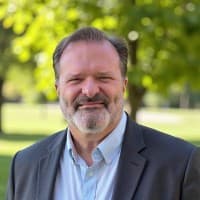
Full Transcript Guest Introduction and Sponsor Messages 0:01 Treating my sleep apnea has renewed my appetite for life. 0:05 What matters to me now is giving my family a little treat. 0:23 Jerry, we have Dr. 0:25 Mohammed Usama, who is triple board certified sleep and obesity physician and one of the leading voices in sleep medicine based in the greater Seattle area. 0:36 He also serves as an adjunct assistant professor of medicine at Still University School of Medicine. 0:43 His clinical and research interests center on the intersection of obstructive sleep apnea, obesity, and metabolic health, 0:50 with a particular focus on GLP-1 therapies like terzepatide that can shape outcomes for patients with OSA, Obesity and Cardio Metabolic Disease. 1:00 Well, we've got somebody with a lot of background coming at us today. 1:04 It's going to be exciting, especially to talk about GLP-1s. 1:07 I know that's been a hot topic for us a few times over. 1:10 So for someone who's boarded in sleep and obesity, I'd like to take a deep dive with that today Yep. 1:17 Hey, Marimus, and I love to read some of the content that he will regularly post on LinkedIn where You know, he kind of gives his take on a certain new 1:26 type of therapy or, you know maybe just a trend that he's seeing in the sleep medicine industry. 1:32 So excited to hear what he has to say. 1:34 We met him last year at Seattle's influencer event and it was, that was great to meet him there. 1:43 And we had talked about getting him on the podcast. 1:45 It's been a little bit, but we were able to pull it off. 1:48 Happy to have him the show today. 1:50 You guys ready to get started? 1:52 Let's do it. 1:53 Onto the show. 1:55 Lights out. 1:57 Solish is redefining how sleep apnea risk is identified. 2:00 Using a simple selfie-style face scan, our AI delivers a sleep risk score in under a minute.
Dr. Usamau2019s Path Into Sleep Medicine 2:06 The Solush platform then connects providers to evaluation, testing, and therapy through one seamless pathway, because every patient deserves expert guidance 2:15 wherever they are. 2:16 Choose Solesh. 2:17 One selfie. 2:18 Better sleep. 2:19 Scan the QR code to know more. 2:22 Sleep Tech Talk is brought to you by Fisher and Pike. 2:25 Fisher & Pike Health Care is a leader in CPAP mass design and innovation for over 20 years. 2:32 Their unique technologies have benefited millions of OSA patients through their top CPAT mass. 2:36 These advancements continue to further enhance patient experience and outcomes. 3:01 Welcome, everyone, once again to another episode of Sleep Tech Talk, the Sleep Podcast with your hosts and friends, Emerson Kerr, 3:09 Robert Miller, and me, Dr. 3:10 Gerald George Moneycrow. 3:12 Folks, thank you so much, so, much for all the love, to share the likes, and the subscriptions that you have been providing us over all these years and 3:22 it's because of you we keep going. 3:24 And so be sure to give yourselves a pat on the back because we sure do that for you, virtually of course. 3:30 But a huge shout out to our sponsors without whom we can't keep doing this. 3:35 Be sure and check them out. 3:36 We thank them so much for the love and support that they've provided us to help us keep growing and make us be able to do these things and provide really 3:45 good content for each and every one of And once again, we have a fabulous show, and to tell you a little bit more about it, 3:52 Emerson. 3:53 Thanks, Jerry. 3:53 We have Dr. 3:55 Mohammed Usama with us today. 3:57 Dr Usma is triple boarded, And among the things he's triple-boarded in is obesity and sleep medicine. 4:04 He comes from the Seattle area. 4:06 It's got an interesting history we want to ask him about. 4:09 But Dr, Usam, welcome to the show. 4:11 we are thrilled to have you with this today, Um, you know, one of the questions that we love to ask our guests is, how did you get here? 4:19 And how do you, did get into sleep medicine? 4:21 So we know a little bit from our conversation earlier, but can you share with our audience, your journey from end to sleep and how you ended up in Seattle 4:29 and what are you doing now? 4:31 Yeah, absolutely. 4:32 Thank you so much for having me. 4:33 So I'm working in greater Seattle area as a sleep in obesity physician. 4:39 and happy to be here. 4:42 So first to answer your first question, how did I get into sleep? 4:48 I got into to sleep accidentally, honestly. 4:51 I did not plan to a sleep doctor, but during my residency training, I took an elective in sleep medicine and that made me realize that how much impact 5:06 sleep has on metabolism, your health, energy, performance, all of that.
Obesity, GLP-1s, and Sleep Apnea 5:12 And then if we treat and address sleep disorder, first, the outcome is very quick as opposed to other chronic medical problems. 5:23 You can see a day and night difference. 5:26 So there is that gratitude. 5:28 Also, a lot of medical they get improved, which we are not expecting. 5:35 And that's what brought me to, took that elective in the first place, because a lot of my patients, I was sending them to the sleep clinic and their high 5:45 blood pressure was getting better. 5:47 Like, you know, their depression and mood was improving. 5:52 Their sugars were improving and I like what magic is going on there. 5:55 So I took it. 5:56 The other reason is that I liked technology And I feel like sleep is a perfect mixture of mind and body medicine, as well as technology. 6:07 So there's a lot of technology in it. 6:11 That's what brought me into sleep. 6:13 But I think that was the best decision I ever made. 6:21 I did my internal medicine training at Wayne State University in Detroit, Michigan, and sleep medicine Uh, at Cleveland clinic. 6:27 Um, and, um, after that I've been practicing for quite a while now. 6:31 And, uh, for the past one and a half year, I'd been in Seattle area and enjoying it over here. 6:37 So you said you love the mix of, of technology and medicine. 6:43 I think sleep tech talk is the right place to be right now, right? 6:47 So, so what took you to Seattle though? 6:50 Uh well, you know, I did most of my training in Midwest and then I stayed in rural Wisconsin for a while. 7:00 So my wife, she's a psychiatrist and she was doing her psychiatry residency over there. 7:06 But I think it was just incredibly cold. 7:10 And, you know, I don't have any issue with like, winter is a snow, but my life absolutely hates snow. 7:21 So over here in Seattle area, the weather is much milder and much better. 7:25 Like, you know, in the winters it doesn't snow over there. 7:29 If it does, it did once this year and the next day the rain washed it over. 7:33 So it's much more better from climate-wise. 7:38 I like to hike a lot. 7:39 A lot of outdoor stuff. 7:42 Seattle is the only big metropolitan city in United States which has three national parks within one to one and a half hour. 7:52 drive distance from it. 7:53 So I just love it over here. 7:57 Yeah. 7:58 Doc, you know, reading just your story, your boarded in obesity and sleep medicine. 8:04 clearly giving you some really keen insights into how those overlap. 8:09 What have you seen, especially over the last few years, as we see more about GOP1s, where do you see that intersection with your specialties coming together? 8:18 How do those complement each other and really allow you to have a keen insight into those special patients? 8:26 Yeah, that's a very interesting question. 8:28 So actually as a sleep disorder, Major sleep disorder we treat in the sleep clinic, which is the most commonly seen in sleep clinics, 8:39 is obstructive sleep apnea. 8:41 And one of the big underlying risk factors is obesity or weight gain. 8:47 It's not the only risk factor, but it is one the major underlying this factor. 8:51 I was always trying to address the underlying obesity in my patients who had sleep Apnea, so I sent them to our weight loss clinic and A lot of the patients, 9:05 they wanted the care under one roof and a lot them did not want to go. 9:13 A lots of them were lost to follow up and I felt like I was not in control. 9:17 And then, you know, my interest became in obesity kind of developed when I saw the results of GLP-1 therapy in obstructive sleep apnea. 9:32 And at that time, I decided that I'm going to treat these patients with GLP-1 therapy. 9:40 And that is going address their weight as well. 9:43 So might as we'll get some additional training and board certified in obesity medicine. 9:49 That's how I drew into obesity medicines. 9:52 But at the same time I feel like obesity is not like it's on the diagnosis list.
Why Weight Loss Alone Doesnu2019t Cure OSA 10:00 It's not like a side conversation if you're talking about obstructive sleep apnea. 10:03 So you cannot ignore the role of underlying obesity if someone has obstrative sleepapnea, so that is my journey into obesity medicine. 10:16 So, with that being said, the big, big conversation or the conversation that you hear all the time is, get rid of the obesity, 10:24 your OSA is gone. 10:26 And now with this miracle drugs that are out there, first injectables, and now we have the oral tablets for GLP-1 drugs. 10:36 People think it's like a magic bullet. 10:37 I pop these pills. 10:39 And I don't need to worry about OSA anymore. 10:41 So what's the actual truth? 10:43 What's, the myth behind these two things? 10:45 I think that's a big, big thing floating out there. 10:48 Wouldn't you agree? 10:51 Totally agree. 10:52 Because, you know, whenever a new therapy comes out, we try to pitch it against established therapy, but that should not be the case. 11:00 But let's talk about first the role of obesity in obstructive sleep apnea. 11:06 weight gain it worsens obstructive sleep apnea and if you lose weight it improves obstractive sleep Apnea so peppered and colleagues that did a study in 11:15 which they showed that if You gain 10% body weight your sleep APnea get worsened by 32% But if your lose the same 10 percent bodyweight your Sleep Apnia 11:27 only improves by 26% so it's easier to grow into Sleep apnia than to go out of Sleep APnia so You know, because once the disease is established, 11:37 there are some changes that occur at pharyngeal level, at your cellular level that makes it difficult to get rid of obstructive sleep apnea. 11:44 So weight loss is not the only picture because obstrative sleep Apnea is Not one disease. 11:52 And I'll come to that. 11:55 underlying pathophysiology for obstructive sleep apnea, it is airway narrowing which could be due to obesity, which would be like extra fat in tongue or 12:07 cheek or in your pharynx. 12:08 But at the same time, so that is one part, but at same, obstractive sleep Apnea could also be small mandible or low jaw. 12:16 Obstructive sleep apnea could also be impacted by your arousal threshold, your ventilatory instability. 12:25 It can be affected by you muscle responsiveness. 12:28 So all of these things, you know, interplace obstructive, sleep Apnea is not like, one monogenic disease. 12:37 There are multiple pathways to it. 12:40 Losing weight, it always helps, but at the same time, We have a lot of data from meta-analysis and bariatric surgery cohort that showed us that people 12:49 who underwent bariatic surgery lost a load of weight. 12:53 And, you know, the sleep apnea got improved, but majority of them, they did not get rid of obstructive sleep Apnea. 13:00 Even the minute amount of patients who got rid obstractive sleep, there are some studies which have shown that after bariatric surgery, 13:09 if they attained a healthy weight, and got rid of obstructive sleep apnea. 13:13 If we serially followed them in next three to four years with them maintaining the weight, the obstrative sleep Apnea came back, 13:21 okay? 13:22 Despite them being maintaining their weight because again, you know, it's not just due to the underlying obesity is not only the only factor. 13:29 It worsens with age, right? 13:31 And I explained to you there are other things, other pathophysiologic mechanism, which can cause it. 13:39 So that was a reason, because not everyone responds the same way to the weight loss. 13:45 And then the rate loss, it's a chronic process. 13:48 Losing weight, I say that it is the easy part, but it s the maintaining weight or chronic, like in a long term weight management, 13:56 that is really an art. 13:58 And so that was the reason why American Academy of Sleep Medicine in their latest guideline for treatment of obstructive sleep apnea, 14:06 they did not say that bariatric surgery is a treatment option for obstrative sleep Apnea. 14:12 Which a lot of bariatic surgeons, They tell my patient that I will do this bariotic surgery. 14:16 You will lose your weight and you know, you will, I'll cure your obstractive sleep. 14:20 Apneas. 14:20 So they are probably wrong in saying that. 14:23 That is why I'm at the Academy sleep medicine said that weight loss should be addressed in all of the patients. 14:28 have obstructive sleep apnea, but it's an adjunctive treatment option. 14:32 It's not the primary treatment options. 14:33 So these patients still need to be some sort of primary therapy, whether that is CPAP or oral appliance or mandibular advancement device or hypoglossal 14:41 nerve stimulator. 14:43 The answer is more nuanced than that. 14:46 A sound sleep calls for a high performing mask. 14:50 Introducing FNP Nova Nasal with SwingFit Headgear. 14:54 From fitting and seal to minimal noise and draft, is performance defined? 14:58 Go to fphcare.com forward slash nova nasal to learn more.
Endotypes and Combination Therapy 15:04 Treating my sleep apnea has renewed my appetite for life. 15:08 What matters to me now is giving my family a little treat. 15:17 Solish is redefining how sleep apnea risk is identified. 15:21 Using a simple selfie-style face scan, our AI delivers a sleep risk score in under a minute. 15:26 The Solush platform then connects providers to evaluation, testing, and therapy through one seamless pathway, because every patient deserves expert guidance 15:35 wherever they are. 15:36 Choose Solesh. 15:38 One selfie. 15:39 Better sleep. 15:40 Scan the QR code to know more. 15:43 So Jerry's going to eye roll when I bring this up. 15:46 He's already smiling, knowing what I'm going say. 15:48 But you mentioned the endotypes. 15:50 And when we begin to talk about those, I think it's such an important subject because I've bring it up a lot on this show. 15:58 How does that factor as you look into the future and the ability to see those from sleep studies emerges, how do you feel like that's gonna influence your 16:12 decisions in therapy and in ongoing care for your patients? 16:17 So I think we should take some lesson from heart failure management. 16:21 So if someone has heart failures, they're not on a single therapy. 16:25 It's not like, you know, one drug to rule them all. 16:29 You know they are on beta blocker. 16:30 They are own ACE or ARB therapy, They're on Aldosterone antagonist. 16:36 And so they don't on different form of therapies which are hitting different pathways, right? 16:41 So similar is the case with obstructive sleep apnea. 16:44 It's not one machine to cure it all, or one pill to win it, all of one injection will cure at all. 16:52 The future is gonna be a lot like heart failure, because these therapies, they work in conjunction. 17:00 Maybe it's gonna to be PAP therapy plus GLP-1 therapy. 17:04 May be in some patients, it is going to to mandibular advancement device plus positional therapy, maybe in patients it will be you know, 17:12 hypoglossal nerve stimulator plus GLP-1 therapy. 17:16 Or maybe down the road, we know there is a pill coming for obstructive sleep apnea as well. 17:22 It's gonna be that in combination with oral appliance. 17:25 So, you now, it's going to be in conjunction because first of all, its good to have multiple therapies with different pathways because if a patient is 17:34 not tolerating one therapy, they have more option to stick to. 17:37 At the end of the day, our goal is to treat the patient. 17:41 And regardless of how effective the therapy is, CPAP is more than 99% efficacious, but if someone is not using it, then the efficacy does not matter. 17:52 It's about reducing the mean disease burden. 17:56 How many nights they're using, how regularly they are using how many hours they were using. 18:01 If something else reduces the main disease burdens, then that's good and that the way we should go towards. 18:08 So again, the answer is more nuanced and we need to have more holistic care while treating the patients and kind of take it as a, 18:25 just like as I said for heart failure, we have so many therapies, so similar will be the, I think future with obstructive sleep apnea treatment So I do 18:36 read your content on LinkedIn a good bit. 18:38 I know that you've got this substack blog that also write articles and put content out. 18:48 You seem to be a student of the industry because I feel like I'm sort of in a similar position where I love all of new diagnostic tools, 18:56 but I don't want to just know about them, I want know how they work, the nuances and the differences to understand the capabilities and what is good science,
Innovation, Screening, and Rural Sleep Care 19:06 what's not so good, science and then also with the different therapy options that are out there. 19:11 I do love the fact that you're thinking about things from a phenotyping standpoint and we certainly need that broader approach to sleep therapy. 19:21 So tell us a little bit about your desire to know about all things sleep. 19:28 So I think, personally I that we provide medical care to patients in sort of a very epileptic way and very archaic or Jurassic way. 19:39 So, I'm always trying to come up with ways which are sort disruptive or out of the box solution. 19:49 Because 80% of patients who have obstructive sleep apnea, they're not diagnosed. 19:56 And there are probably one billion people on planet Earth who have obstructive sleep apnea. 20:01 So that's a big disease burden. 20:03 In order to really diagnose these patients, we need to come up with novel, new, innovative pathways, just like we cannot solve the problem of traffic congestion 20:19 by building more highways. 20:21 Similarly, we cannot solve the epidemic of obstructive sleep apnea by building more sleep labs, like home sleep studies here to stay, 20:30 and we need to come up with some innovative and novel pathways to meet the patients where we are. 20:35 So, interesting thing is when I was in Wisconsin, I working in a rural community hospital, in that hospital I designed a program of inpatient sleep-apnea 20:49 screening and screening diagnosis and management. 20:52 So what happened was that, and this was the first rural hospital in the United States in which that kind of program was implemented. 21:03 We know big academic centers which have such programs such as West Virginia University, Cleveland Clinic, where I trained at and University of Pennsylvania 21:12 and some other more academic programs. 21:15 Just to give you a brief overview that, you know, every patient who got admitted to that hospital in the ER, they got a stop bank score. 21:24 And when they get admitted, and if their stop-bank score was three or higher, it sent an alert to the admitting team. 21:33 in the inpatient site that this patient is at high risk of obstructive sleep apnea. 21:39 So a sleep medicine consultation is recommended. 21:43 And then they consulted me. 21:45 I went in patient in, in in hospital and did a complete sleep evaluation while they were admitted. 21:53 Then right before their discharge, we did portable sleep study while there in because we wanted them to be more physiologic, 22:06 near their point of discharge. 22:08 And they left the hospital with a CPAP machine. 22:15 So the concept was just like the concepts of everyone who get admitted into the hospitals during the flu season, they got influenza shot before they get discharged. 22:26 The point-of-contact the patient has with the healthcare system, we need to do the most in that. 22:30 And also with that novel inpatient sleep apnea screening and diagnosis program, when we track the data down the road, we saw that those patients, 22:41 they were more compliant to therapy because they came to the hospital usually with a health scare like a heart attack or heart failure or COPD exacerbation. 22:49 And when their cardiologist told them that you need to use your machine and we need treat the sleep apnea, otherwise your atrial fibrillation will keep 22:57 coming back. 22:58 Your heart health is not going to be good. 23:00 You will have increased readmission due to heart failure. 23:02 They listened and they were more motivated. 23:05 And so we needed to come up with innovative pathways like this. 23:09 So it was that discovery. 23:15 That is why I'm very interested in new developments so I can implement them somehow into my practice and see how it can help my patients. 23:23 Well, Doc, we are really getting really close to time. 23:27 And first off, I think it's really awesome to hear your interests, your depth of interest in the field. 23:36 It is really cool that you implemented such things. 23:39 I just took down some notes. 23:41 Yeah. 23:47 there of obstructive sleep apnea moving in the direction of just like we have with congestive heart failure, how we're moving that direction now where 23:56 there are different options. 23:57 Also understanding that you can't just simply open more sleep labs to do this. 24:03 This is just trying to alleviate congestion and the roads just by adding more roads. 24:08 It's not going to help you. 24:08 So we really appreciate the insight, but we are close to time. 24:13 Where can people get more information? 24:15 You have a sub stack. 24:16 Could you give us a shout out what your sub-stack is, and so that people can look at it? 24:21 Yeah. 24:22 So people find me on LinkedIn with handle SleepWarriorMD, on Twitter, LinkedIn, Instagram. 24:31 I'm most active on Linkedin. 24:33 That is the best place if you want to reach out to me. 24:37 But in addition to that, I have my substacks as well, which we can include in the show notes. 24:42 It's sleepphysician.substack.com. 24:46 Got it. 24:47 And you heard it here, folks. 24:49 Sleepphysisian.Substac.Com. 24:52 We'll make sure to have that in the show notes. 24:54 So, Doc, thank you so much for joining us. 24:57 Thank you. 24:57 Thanks for having me.
Closing Thoughts and Where to Find Dr. Usama 24:59 and thank y'all once again for joing us, it's been a pleasure. 25:12 Be sure to check out our clinical sponsor, Sleep Review Magazine. 25:16 More details in show notes. 25:18 Alright, that was another show and that's quite a bit. 25:22 What did you guys think? 25:24 Jerry, I think it's fascinating to hear someone talk about just all that goes into thinking about the GLP-1, the sleep patient. 25:33 I mean, there's so many moving parts and for someone like that to really take that deep dive was so interesting today and I really appreciate Dr. 25:41 Osama's perspective on the complexities of these types of patients. 25:48 I agree, I mean, GLP-1s are still being talked about this day and age, well, at this time. 25:57 It's interesting, especially because when the pill came out in January, it became hot once again. 26:04 So it's good to hear his take on it and alleviating some of the myths. 26:11 Yeah, you know, I think that one of the things that I'm I loved hearing from him today is just his more holistic approach and treat, 26:20 to treating patients who have issues with sleep apnea, for instance, where maybe it's a combo therapy or The idea that a GLP-1 is the magic bullet that 26:32 may treat sleep apnea by itself. 26:35 Love his take on that and the phenotyping models that he talked about. 26:41 That's always sort of a funny topic, I think, for us, but just love his perspective. 26:47 I'd think in a world where there seems to be some form of practice where it's just diagnostic study, CPAP, diagnostic, study CPAT, 26:57 that, you know, having these trendsetters who are willing to sort of think outside the box and treat patients a little more comprehensively is, 27:06 is certainly great for the field. 27:08 And I love the fact that he said, we now have options for patients. 27:12 That's the, probably the biggest thing out there. 27:17 Absolutely. 27:19 Well, I think this is a great place to stop. 27:23 Folks out there, thank you all so much. 27:24 Until next time, cheers.
Comments