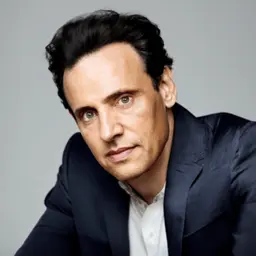
Full Transcript Introductions and Jonathan Marksu2019 Background 0:05 Hey everybody, Dr. 0:06 Rob Silverman here. 0:07 I'm with luminary Mr. 0:09 Jonathan Marks, a gentleman who's going to share some real insights on healthcare and healthcare marketing in the media genre. 0:17 Let me give you a concise bio Mr Mark's has without question, extensive background and success. 0:22 He's worked for the CDC, he's an MBA, He is an entrepreneur in health and medical education since 2001. He's the founder president of GoToHealth Media. 0:33 He hosts a multimedia interview show with health experts called Go To Health, which is enjoying 14,000 downloads per day and has surpassed 3 million downloads. 0:44 I was fortunate enough to be on your podcast. 0:46 Jonathan, how are you today? 0:48 I'm wonderful, Rob. 0:50 Thanks for having me. 0:51 It's really good to. 0:51 Be here. 0:52 Happy you're here, what's, the driver? 0:54 What puts you on the map? 0:55 What put me on the map? 0:56 Well, I'll first say that my mother wanted me to be a doctor and I never really fulfilled that. 1:01 But but I had I have a previous to what I'm doing now, which is a 25 year experience. 1:10 I. 1:10 Had another 25-year history in working in multimedia companies, first in cable television, then in the yellow pages and then and high speed Internet. 1:21 And what I decided to do after I got out of all that and got of corporate life was to really focus those different media on healthcare and medicine because 1:31 I really feel it was important to get the word out about evidence-based medicine. 1:36 And that's been my mantra for the past 25 years is to help folks like yourself, other healthcare practitioners, non-profit organizations, 1:45 healthcare companies get their word in multimedia. 1:49 What is wrong with the health care system now? 1:52 Oi. 1:52 Oi is a great way to start. 1:55 That's too huge. 1:56 I mean, one of the things that really concerns me is the move away from evidence. 2:01 We're just seeing so many claims from the current administration that have no evidence basis behind them. 2:07 The most recent thing that Bobby Kennedy was talking about was circumcision and and also I'm not all summer circumcision and Autism and it just crazy. 2:18 There's just no evidence behind it what what really has been the gold standard in the United States and which has Been the Gold Standard worldwide is what's 2:28 called evidence-based medicine and I am happy to talk more about that if you like, but it really is Making you know having medical practices that are based 2:38 on evidence not rumor not Individual experiences, but really evidence from a large number of people and I'm happy to talk more about that if that's of 2:47 interest Oh my goodness is that of interests because there was a chiropractor to seek out evidence-based it was an epiphany for me So let's define evidence-based.
Evidence-Based Medicine and Clinical Trials 2:58 Sure. 2:59 Good, good, Good. 3:00 So, let us talk about, I think the place where things start is what are called clinical trials, which is before something is approved as a procedure or 3:15 as prescription or as a drug, it goes through clinical trials and there's a three-stage process for that. 3:22 One, the first, which is stage A or the 1st stage, is really to find out whether something is safe. 3:29 Is it harming people or is it helping people? 3:32 And it's just done on a small number of people to show is that safe or harmful and what are the side effects. 3:39 Then it goes to, once it's proven to be safe, then it go through a second phase, which is trying it on a larger group of people to see what side effects 3:49 there are. 3:50 And again, are there any safety issues that are coming up? 3:54 And then the third phase is really trying on on large group people so that you get a sense for, hey, you know, does this does this have differences based 4:05 on gender, based, on race, base on ethnicity? 4:09 Does this work in large populations? 4:12 And it's after the drugs or procedures go through that kind of phases of trials, is it approved by the Food and Drug Administration to be administered 4:23 to the public because it has been proven to safe? 4:26 Now, the new thing that's happening, and I'll just bring this up now, and AI is contributing tremendously to basically developing bases of evidence. 4:39 What AI can do as we put information together from lots of different patients with lots different procedures is put together huge databases of what people 4:52 are going through and experiencing and showing what results are. 4:57 So we're not moving away from clinical trials, but AI is adding to this by showing evidence from large databases of people who are gone through different 5:08 procedures and different drugs. 5:09 So evidence-based clinical trials to AI, which I do like in research. 5:15 I utilize it. 5:17 It's not so great for grammar, but it's fabulous for research What is a proper sample size in a clinical trial as a starting point for evidence based? 5:27 Well, when we first start out just doing the first phase, it's usually done with 50 to 100 people. 5:36 And when you get over 50 people, at least in statistics, what I learned in school, you can start making conclusions because your trial base is big enough. 5:50 But when get into the second and third phases of trials, especially the third phase this will be done thousands of people Again, 5:59 really of different ethnicities, different races, various genders, so that we can really show that what we're proposing here works for all people. 6:10 So where do you think alternative healthcare fits into that? 6:13 I'm glad you asked that, because I've done a lot of research on this. 6:17 Let's talk about alternative healthcare for a little bit. 6:19 I really think of alternative health care as traditional medicine. 6:30 It's medicine that's been traditional. 6:32 It has been around for centuries. 6:36 And there's a tremendous amount of health care that has done under traditional medicine or what's called alternative. 6:46 Convention it's really alternative versus conventional medicine and conventional. 6:50 Medicine is Western based here in the United States But alternative has become very popular in The last 40 years Where you know many people were not really 7:02 served well by the conventional medical establishment and Moved to alternatives so it could be acupuncture chiropractic You know herbs And one of the challenges 7:18 is that clinical trials are usually done by pharmaceutical companies to get their medicine approved. 7:25 And the only reason it's worth doing that is so that they can make money on the drug. 7:31 Well, the issue is, what money is there to be made on an herbal medicine? 7:36 Or what is their practice or acupuncture? 7:41 So while we don't have The typical clinical trials that are done in alternative medicine, we do have a history of hundreds of years of experience of what's worked, 7:55 let's say in chiropractic or in acupuncture or herbal medicine. 8:01 It's just that we don't have funded trials. 8:04 Now, the CAM, which is the complementary and alternative medicine part of the US government, has done trials and has supported the development of alternative medicines. 8:17 But again, this has been government funded, not private funded. 8:22 And I'm not sure what's happening with that funding these days in this administration. 8:27 So is it fair to say that it may disturb you that the pharmaceutical companies do fund many studies? 8:35 Do you feel that if I could play devil's advocate now that those outcomes are jaded because of who funds them? 8:42 Because that's the number one complaint that we get. 8:44 Yeah. 8:47 You know, you could jaded to me. 8:51 I trust the clinical trial process, even if it's funded by pharmaceutical companies.
Alternative Medicine, Peer Review, and Bias 9:05 And it's not about who's funding it. 9:07 It's based on evidence. 9:08 Now, there are lots of, I will say, studies that are done by pharmaceutical companies that don't meet the rigor of clinical trials. 9:20 And you could say those are biased. 9:22 Okay, the nice difference point. 9:24 I love it. 9:24 Yeah. 9:25 And lastly, we'll tie this up with a nice typo and we move on. 9:28 Do you feel that the evidence-based has to be published? 9:32 And when I say published, peer-reviewed? 9:34 Things have more credibility when they're peer reviewed. 9:38 In other words, Peer Review is other experts who are taking a look at your study to see, is it meeting the Evidence-Based Criteria? 9:47 So the fact that there are other that are reviewing this and saying, yeah, this is, I'll say kosher, you know. 9:57 It helps. 9:58 But I will say also that, again, I've done a lot of training with the CDC and I have done many, many training webinars in healthcare. 10:09 I heard that peer review is not perfect. 10:13 There can be biases in peer reviews as well. 10:16 So you just have to really take a look at the rigor of the evidence to see if it's really out there. 10:23 I agree. 10:23 I think everybody should look at it. 10:25 They shouldn't look the title. 10:28 Look at the sample size, look what was done, analyze the conclusion. 10:32 But if we don't do studies and we do not do science, we are lost. 10:36 All this kerfuffle over autism. 10:43 was based upon quote-unquote studies that were done by somebody in England that made these connections between autism and other health conditions. 10:56 And it was found that, you know, upon review of these studies, that they were not scientifically done, the database was not clean, 11:06 and it's been refuted now for like 20 years. 11:09 And unfortunately, the rumors still abound. 11:12 But again, this whole process is not perfect, but we try to keep to that gold standard of evidence basis. 11:19 Agreed. 11:20 I mean, once somebody says something negative, it seems to have legs and a little bit of a stickiness. 11:25 And that's unfortunate in our mantra. 11:28 Yes. 11:29 What I want to know is I'm going to turn a page, I'll revert back to you. 11:32 OK. 11:33 what did you do before you became a health care marketer? 11:36 So I had like a 25-year career as I mentioned at the beginning in different media. 11:42 So in cable television, in the Yellow Pages, and then I was the president of one of the first four high-speed internet access companies. 11:52 What you now know as a cable modem and high speed. 11:55 I wasn't president at one the four first companies that did that. 11:58 I was also the vice president of strategy for the pacific bell yellow pages so i was in yellow page is advertising and i had a previous career as i said 12:08 in cable television and what that all taught me was basically the importance of multiple media and I applied that to adult learning. 12:20 which is I've done a lot of study about how adults learn. 12:25 Adult learning is a little bit different from kids. 12:28 We'll keep kids out of this for the moment. 12:30 But it's fascinating how adult learn, we make the mistake and particularly in healthcare as practitioners. 12:39 I'm not a healthcare practitioner, but I will say that we making mistake when we tell somebody something once and expect them to remember it and do it. 12:49 or expect them to bring it into their lives. 12:53 The fact is, and we know this even from marketing and sales, a lot of times before a buyer buys something, they typically have to have seven exposures. 13:02 That's kind of proven. 13:04 They need seven exposure to something before they actually buy. 13:08 Well, this is true in the way we intake health information and change our lives, if a doctor tells us something once, We don't just make the change. 13:19 Why? 13:19 Because we go back to our lives, and our life are busy and focused on what we're doing. 13:24 But we need to hear the information more than once.
Adult Learning and Multi-Media Health Education 13:28 And what I learned in these studies is there's something called the VARC learning method, which is we learn in different ways. 13:36 There are people who learn by listening. 13:39 There are people who are learned by seeing and there are People who learn by what's called read write, which is this is me. 13:47 I'm a very active note taker when I am learning something. 13:53 Not just listening. 13:54 Writing it down because writing it Down helps me retain. 13:58 So what this taught me was what something that has become my mantra which is if you want somebody to learn something it's multiple media multiple times 14:09 so you can't just say it once you have to say at many times and if he can say in different media Because of people's different learning styles it helps 14:22 them learn better because some people learn by listening some People learn, by seeing some, people as i said before had learned, 14:29 my writing Some people learned by doing so what we want to do is present information the same information multiple times in different media and that's 14:40 what's so powerful and about video because people can listen to us. 14:45 People can watch us, but even better, you know, if you provide the script to what we're talking about, people could read it if they want to. 14:56 And go ahead. 14:58 No, no, I'm just commenting. 14:59 It's outstanding. 15:02 And doctors should really take solace in what you're saying, because lecturing around the world, people complain they're not listening to me. 15:09 And you just saying yeah, you told them once. 15:11 You need to tell them seven times. 15:12 Even if they have an MIT PhD, they still human. 15:16 They need it seven time. 15:17 Multiple times, multiple media. 15:20 So when you explain it, it's not good enough just to show them it. 15:24 You've got to have them lecture, you know, and you want to add a little noise to it, if you will, but maybe have the muscle touch it. 15:30 Right. 15:31 This has been shown again in studies when people are exposed for something for the first time. 15:40 Your knowledge is way up here, because you've been in at whatever you're talking about for a long time. 15:47 When you present your information the first time, their knowledge goes from, let's say, zero to up where you are, Because they're intelligent, 15:55 they are listening, They're understanding. 15:57 You're doing a great job explaining. 15:59 But what happens is they go back to their lives, and their life are busy, And their recollection of the information falls back down, 16:07 not to zero, but let say to ten. 16:10 okay and then when you tell them again they say oh i've heard this before this sounds familiar okay i'm going to remember this now and it goes up a little 16:19 bit more on the third exposure they start putting ideas together they're saying oh my god dr rub said this and gosh you know what i went home and i did 16:30 that exercise and I'm feeling better so now what else did he say and so what happens is with the more exposures the knowledge and the understanding and 16:41 information and inclusion in their lives goes up. 16:44 So the doctor of today is a doctor that needs to utilize multiple medias And without question needs to be able to expound in a clear voice. 16:55 Yes. 16:56 And don't be afraid of repetition. 16:58 Repetition is good. 16:59 So, you know, a friend of mine said recently, he said the doctor of the future is the patient because they're going to seek out so many different venues 17:08 in which to learn. 17:09 that information, that input is coming from multimedia is like you said. 17:15 So my question is, you've got go-to health media. 17:18 And I was on your podcast, which is great. 17:21 Go-To Health. 17:23 What are your goals and dreams for your current company? 17:25 Because you know, You've had a fabulous career. 17:28 No one's saying to slow down. 17:30 I know you're not gonna slow it down, I'm not slowing down so watch out, don't look behind you I may be catching because I am still running late. 17:36 But what are you goals in dreams? 17:38 So I have my own show. 17:41 It's having great success, as you outlined. 17:44 We just hit three million downloads. 17:47 And I'm soon to go on WNEWHD in New York, which will be reaching, I understand, 95 million cars and 16 million households. 17:59 What I want to do is not only spread the word for people in my own show, but I also want to bring on other shows with me so that I can help other providers, 18:13 other nonprofit organizations, and other companies get the kind of media distribution that i'm enjoying now and will be enjoying in the future. 18:23 And so I wanna bring other people along. 18:25 I don't wanna be the only speaker. 18:26 You know, I kinda wanna multiply this. 18:30 So that's my dream is to really turn GoToHealth Media into a larger organization which can really be known for bringing evidence-based health professionals, 18:40 non-profit organizations, companies, and getting them wide distribution through multiple media. 18:47 That's me dream. 18:49 Outstanding, I love it. 18:50 Let me jump in that boat with you. 18:52 I hope it's a motorboat, but if not I'll pick up an oar and I will start canoeing, and promise. 18:56 Good, good, that'd be great. 18:58 My real question is, what does the future look for healthcare? 19:04 And we talked about AI, But what is the look of healthcare, where do people go to find something or somebody that they trust? 19:11 Because that's the biggest thing, let's just cut to the chase, who do I trust, What do I trust? 19:19 Who's telling me the truth? 19:20 And who's full of poop? 19:22 I would say, you know, I hate to say this, but social media has exacerbated the rumors in healthcare. 19:30 It's just really, it's very sad. 19:35 I think you need to make sure that you're looking at evidence.
GoToHealth Mediau2019s Growth and Mission 19:41 Your health practitioner, your health care provider. 19:44 Now, who your healthcare provider is, is up to you. 19:47 And what you can do is have a primary health provider, a doctor or an MD or a chiropractor, whatever. 19:57 You can choose, but I it's good to have multiple different providers. 20:02 So I see A doctor, I see a chiropractor, an acupuncturist. 20:09 I have worked with herbalists before. 20:11 It's really bringing that information together. 20:16 Some people say, who do I trust? 20:19 It is really up to me. 20:21 you know, who do I trust? 20:23 And there's not one answer and there is not 1 health care provider that's going to do everything for you. 20:29 I think it's really good to have a variety and really kind of knit together things that you trust. 20:36 You know relationships you, trust and information you trusted. 20:40 And really to see what's helping you? 20:42 Is this helping? 20:44 So you like that integrated model where options within the integration. 20:49 Yes, I ran for six years, an integrative health network called Starfish Health Partners. 20:57 I chose the name Star fish because in LoRa, a starfish with its five arms integrates information from different directions. 21:07 So I run that for about six-years in the Bay Area. 21:13 It ended in 2008 with the downturn, but it was a great interconnection of healthcare providers, both doctors, acupuncturists, 21:24 chiropractors, herbalists who work together with patients. 21:28 I had a good time doing that. 21:29 You and I are in agreement. 21:33 I believe in the integrated approach. 21:35 Kind of why I did my podcast, Proven Health Alternative. 21:39 It is what it is. 21:39 I am a chiropractor. 21:41 We have about 25% of the guests are chio-practic. 21:44 we have all different kinds of guests. 21:46 Now I'm going to hire you. 21:49 My friend's a medical doctor and he's perturbed because their approval ranking has gone down from 71 to 40%. It's dropped over the last four years 31.4%. 21:59 I'm not picking on them. 22:00 I am asking you to resuscitate people's favorability with them. 22:06 What do they need to do? 22:08 What's the reason for the favor? 22:10 And what ranking went down, just so I understand? 22:13 So doctors used to be, medical doctors, used be rated at a 71.4% favor ability. 22:18 Over the last four years, they've dropped down to about 40%. They've drop about 31%. Three in 10 people now view them unfavorably. 22:26 Obviously, that was COVID and the vaccine, but what would you do to reclaim their position and being favorable. 22:33 Remember, I'm not a medical doctor, but all my friends are medical doctors. 22:36 This is what I do. 22:37 I think what we need to do is get information out. 22:41 That's who I am. 22:43 And what i'm helping people do and I three or four shows a week with various different health care providers who are giving information.
Trust, Integrative Care, and the Future of Healthcare 22:55 And what I really do, I think I'm a very good interviewer in people not only saying what they're saying, but why are they saying it? 23:03 What's the evidence behind what their saying? 23:07 you know, what data do we have to show this? 23:11 So for example, I just did a show on why seniors should get vaccinated in the fall. 23:17 And a doctor, it could have been more powerful. 23:20 I said, doctor he's an emergent, he basically works in emergency rooms. 23:26 and I say, Doctor, if somebody's not vaccinated and they get a respiratory virus, tell me what's it like? 23:33 Okay, so you don't want to get And he sees people on ventilators because they didn't get they. 23:40 Didn't. 23:40 Get a silly, stupid little vaccine. 23:43 They're on. 23:43 Ventilators and their families are coming in, seeing their their family member on ventilation. 23:49 The family members get PTSD. 23:52 I mean, this is just this. 23:53 Is real world experience. 23:55 You want to have you want. 23:56 To have a debate against about, you know, getting vaccinated or not. 24:01 This is what happens if you don't get vaccinated. 24:03 If you're a senior citizen and you get RSV or you, get COVID or, you know, the flu and, and what he made a very important point. 24:13 The vaccines don t prevent you from getting the disease. 24:17 but the vaccines are like a seat belt or a bike helmet. 24:21 They don't keep you from getting in accidents, but if you do get in an accident, they merely minimize the damage. 24:28 And so what a vaccine, you know, the biggest complaint I'm hearing about vaccines these days is, oh, I got the vaccine and then I get sick. 24:36 The vaccine doesn't prevent you getting sick, what it does is prevent the really bad outcomes that you can have if don get vaccinated. 24:44 I think it's getting that kind of information out to people. 24:47 And that's really what I, my love and my job is to really get information to out people so that they can make their own choices. 24:55 Haven't lived through that period with you, of course. 24:58 I agree. 25:00 At the very least, there were things that were mis-messaged. 25:04 And being a chiropractor where I have to explain every day what I do and how I differ myself from the competition really gathers me to think about the 25:16 need to change how i speak and deliver evidence-based data, as you would say. 25:24 That said, again, what last message would you like to leave us with today? 25:28 Thank you for asking that. 25:30 In this time of I think increasing, ever increasing uncertainty about medicine itself and medical practice, stick with the evidence. 25:42 There's just too much out there in social media, unfortunately from our administration, our presidential administration where evidence is really being 25:54 Minimized and we're starting to have health care based on rumors Stick with the evidence look at the studies do some of your research Listen to your health-care 26:05 provider your healthcare provider cares about your Health, that's their job Don't get caught up in what you're reading on social media. 26:14 Really stick with the evidence. 26:16 And if somebody says something makes a claim, check it out. 26:20 What does the evident say? 26:21 There's plenty of evidence on the internet that you can find. 26:25 Stick with that evidence and follow the recommendations of health providers you trust. 26:31 and go to GoToHealth to get it like it is. 26:34 Yes. 26:35 You got it. 26:36 And come to Proven Health Alternatives to Get It Like It Should Be. 26:40 That'll be our little center point or center. 26:43 Outstanding. 26:45 Jonathan, this has been great. 26:46 Thanks so much for taking some time to share with me and share it with my followers. 26:50 I greatly appreciate it Good. 26:51 Rob, it's been a pleasure to be on the show. 26:53 It was a pleasant to have you on my show, getting evidence based out. 26:58 And thanks so much for allowing me to come on to talk to your audience today. 27:02 We'll see you soon. 27:03 Jonathan Marks, Rob Silverman, Proven Health Alternatives.
Comments