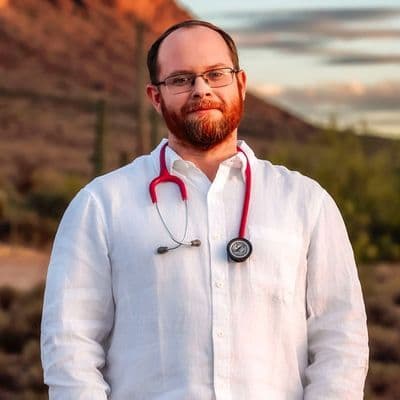
Full Transcript Introduction and Guest Welcome 0:00 Hi everyone. Welcome to the Future of Menopause Summit. 0:02 I'm your co-host, Doctor Ben Stills, and I'm joined today 0:05 by a very special guest, Kiran Krishnan. 0:08 Kiran is a research microbiologist who has spent more than 20 years studying 0:12 the human microbiomes effects 0:14 on digestion, metabolism, immunity and of course, hormones. 0:18 He's co-founded several companies, including Microbiome Labs and Endo Access. 0:23 And I'm very, very excited to have him here today to share his 0:27 immense knowledge and expertise with all of us on such an important topic. 0:31 Welcome to the summit, Kiran. Good to have you. 0:33 Thank you so much for having me. 0:35 What a poignant topic. 0:36 I'm excited to talk about it. 0:37 Absolutely. 0:38 So yes, without any further ado, let's jump right in. 0:41 So we are a menopause summit obviously. 0:43 So everyone knows or most people I would imagine are generally aware 0:47 that in menopause, the ovarian production of several hormones, 0:50 most notably estrogen and progesterone, really just kind of drops off a cliff. 0:54 But I was wondering if you could speak to how the gut microbiome itself 0:58 changes during this time, and how that may contribute 1:01 to some of the common concerns that we see in that population? 1:06 Yeah. 1:07 So in fact, you know, the the, the reduction in the endocrine systems 1:11 production of these endogenous hormones like estrogen 1:14 and to some degree, progesterone and even testosterone in women, 1:18 all of those actually have a direct effect on the microbiome 1:22 and then the effect it has on the microbiome 1:25 as a result further decreases the endogenous productions of the hormone. 1:29 So just to put that in context for people, 1:31 so what starts to happen is as estrogen levels decline, 1:35 less and less estrogen and progesterone are entering into the gut, right. 1:39 So now the gut becomes the endpoint of where hormones go to either 1:44 be reabsorbed, recycled in some way, neutralize and excreted. 1:49 Right. 1:49 So that the gut and the liver 1:51 play a very important role in that step of the process. 1:54 Now, as you have less 1:56 and less endogenous estrogen being produced and going through the gut, 2:00 that actually causes a reduction in the diversity of the gut microbiome. 2:05 And as a result of that reduction in diversity of gut
How Menopause Affects the Gut Microbiome 2:08 microbiome, we start to get an increase in barrier dysfunction. 2:12 So the gut becomes leak year as women go through perimenopause 2:15 and into menopause, as the gut becomes leak year, that actually has a negative 2:20 feedback effect on the ovaries and so on in terms of production of saxophones. 2:26 And so there is this ongoing continuous cycle where the effects 2:32 of changing hormones has a direct effect on the gut as and the effect of the gut 2:36 has a sequential effect on the production of hormones itself. 2:40 And as a result, there is a ongoing cyclical effect 2:45 that has to be slowed down at some point. 2:48 If not it, it just simply accelerates right. 2:52 And it's really hard to stop it at the to stop the cyclical effect. 2:56 At the endocrine level, 2:58 it's really hard to get your endocrine system to produce more hormones. 3:02 One of the areas that you can then target is actually the gut. 3:05 And what happens with the gut. 3:07 You can stop that barrier function issue. 3:08 You can stop the diversity loss or at least slow it down. 3:11 Awesome, awesome. 3:12 Kind of a good segue. Question off of that. 3:15 Would you mind going into a little bit more detail about the Astro Bloom 3:18 as it relates to just estrogen recirculation, how that kind of plays out, 3:23 how that might interact with some 3:24 a patient doing bioidentical hormone replacement therapy. 3:28 And just in a general sense, you know, what do you think every menopausal women 3:32 or even just woman should know about the astro alone? 3:36 Yeah. 3:36 You know, the trouble is such a unique constellation of microbes. 3:40 It's actually a collection of numerous microbes that have a uniform capability. 3:44 And that is the production of an enzyme called beta glucuronide. 3:48 Beta glucuronide is a unique enzyme in that it can remove the cap 3:53 or the neutralization of estrogen that is done in the liver. 3:57 So for people to understand what happens as estrogen is being discarded 4:01 from the body, it goes into the liver and then it gets capped, if you will. 4:05 That capping by the liver makes estrogen unrecognizable to the body, 4:10 and it makes it so that it ends up through defecation leaving the body. 4:14 Now, when you remove that cap, which is the action of this 4:18 enzyme, beta glucuronide, it makes estrogen reabsorbed, right? 4:22 So it's one way of maintaining a certain level of estrogen. 4:26 But what you tend to see is that beta glucuronide 4:29 activity starts to go down as diversity starts to go down. 4:34 We mentioned earlier as endogenous hormone levels start to decrease, 4:38 diversity goes down, which means beta glucuronide activity goes down, 4:41 which means the amount of estrogen that the individual can reabsorb 4:46 to try to maintain functional levels also continues to go down right. 4:50 And so this change in beta activity and diversity is very well 4:56 hallmark by changes in things like vasomotor instability. 5:01 Right. 5:01 Because that change is also related to changes in the interior nervous system. 5:06 That's this very complex neurological system 5:09 that covers the digestive tract and connects directly to the brain. 5:12 As a result, not only does that interior nervous system, 5:16 you know, changing basal motor function, it's also changing mood. 5:20 This is where a lot of the mood alterations come from. 5:23 Then it also initiates things like an increase in chronic low 5:26 grade inflammation so you can increase bone loss, increase cardiovascular 5:30 risk and all the other symptoms that goes along with it. 5:33 Right. 5:34 So what's important to note when you are when a woman is in childbearing 5:38 eight is you don't want to have too much beta 5:41 glucuronide function because that can lead to estrogen dominance. 5:46 Right. 5:46 And dominance is one of the most common types of hormone dysfunctions 5:50 in women of childbearing age. 5:52 But then you want to maintain some degree of alone
Estrogen Recirculation and Beta-Glucuronidase 5:56 as you're going into perimenopause and menopause, because you do 6:00 want to try to recycle some of your estrogen into the system. 6:04 So it's a delicate balance, which means dietary 6:08 shifts have to occur at those different periods of time. 6:11 And we could talk 6:12 about if you're estrogen dominant and you have too much beta glucuronide, 6:16 how should you eat to balance out that beta glucuronide activity? 6:20 And if you're in perimenopausal menopause and you're too little 6:24 AstraZeneca, you're not recycling enough, then how should you eat? 6:27 In that case, you're trying to optimize bit of glucuronide activity, right? 6:30 So there's there's little tricks on each side. 6:32 Absolutely, absolutely. Thank you. 6:33 That was such a great explanation in a general sense. 6:36 If you could change or list if you prefer two, 6:39 three things that most women or even just people do that 6:44 damage their microbiome, what rises to the top of the list for you? 6:48 Yeah. 6:49 Number one is the lack of feeding your microbiome, right? 6:53 So let's think about what feeds the microbiome. 6:56 Predominantly there are really three categories. 6:59 One is fiber both soluble and insoluble fiber. 7:03 Number two are resistant starches. 7:05 And then number three are polyphenol. Right. 7:08 And if you look at the standard American diet, those three components 7:12 are made up of less than 10% of the total dietary 7:16 intake from a day to day basis, right from meal to meal, 7:19 which means that we're wholly, inadequately feeding our microbiome. 7:24 What I want people to understand is that it's so critical 7:27 that every meal that you sit down to have 7:30 has some components of fiber, polyphenols, and resistant starch. 7:34 And if at least 30% of that meal doesn't contain those macronutrients, then 7:39 you're not feeding your microbiome adequately. 7:42 You're going to lose diversity. 7:43 You're going to allow pathogens to overgrow. 7:45 You're going to end up with leaky gut. 7:47 And then that's going to create, you know, like a really profound risk 7:51 for chronic conditions. 7:52 So that's number one is not feeding the microbiome enough right. 7:55 Number two is stress. 7:57 So stress has a profound effect on the microbiome. 8:01 In fact there was a publication 8:03 in the journal of called Frontiers of Immunology in 2015. 8:06 It was a prospective paper written by a number of experts in the field. 8:10 After they were viewed research, they actually concluded 8:13 that stress induced endotoxin, which is leaky gut, 8:17 was the number one driver of mortality and morbidity worldwide, 8:21 meaning it's the number one killer in the first world countries, right? 8:26 And the reason for that is stress actually acts like a little antibiotic 8:31 in your gut, 8:31 killing off beneficial bacteria, allowing for the proliferation of pathogens. 8:36 And then what we call pathogens. 8:38 These are microbes that have the pathogenic tendency. 8:41 Right. 8:42 So every little bout of stress that you have that you can't come down 8:46 from, acts like a little dose of antibiotic in your system. 8:50 And so managing stress becomes critically important. 8:53 Now here's the other connection with stress. 8:55 It's so important is that as your microbiome 8:58 becomes more dysfunctional, it actually makes you even more susceptible to stress. 9:03 Right. 9:03 There was a nine year long study in Netherlands called a Netherlands 9:07 study on anxiety and depression. 9:09 What that study showed was that 9:12 leaky gut and the toxin that leaks through in leaky 9:15 gut, called LPs, was the most accurate predictive marker for the 9:21 for the presence and severity of anxiety and depression in individuals, 9:25 which means it's the biggest biological driver of anxiety. 9:30 A leaky gut stress makes her gut leaky. 9:33 The leak in us and you got makes you more stressed, right? 9:36 So that cycle has to be arrested. 9:39 And then the third part I would say overuse of antibiotics. 9:42 You know, we use antibiotics in our food systems. 9:45 We, you know, prescribe too many antibiotics, right, for viral infection. 9:49 I had many conversations with urgent care facilities 9:53 because we were trying to change how they did things.
Top Factors That Damage the Microbiome 9:55 And many of those docs would say that they're prescribing antibiotics for flus 9:59 and viral infections, 10:01 that they know the antibiotics aren't going to do anything for. 10:03 But the reason they're prescribing it is, is they don't give the patient 10:07 some sort of pill 10:08 to make them think they're going 10:09 to get better sooner than they simply won't come back to that facility. 10:13 They'll go somewhere else that's willing to prescribe it. Right. 10:16 And so we overuse antibiotics. 10:19 Of course, antibiotics can save lives when, when it's used in 10:22 use in the right context. 10:24 But we over prescribe it. 10:26 So those things I think are the biggest things out. 10:29 There's lots of other things like, you know, our food system being loaded 10:34 with antimicrobials and, and, you know, processing aids and all of these things 10:39 are environment being loaded with microplastics and other toxicants. 10:42 But those three things are the biggest drivers. 10:45 Gotcha. Yeah. 10:46 No. And it's such a good point on the antibiotics. 10:48 Just just yesterday I had a patient call into the office 10:50 saying he had a sinus infection and he wanted antibiotics. 10:53 And I was just like, dude, you know, I'm not going to do that for you. 10:56 At least not first line. Let's try some other things first. 10:58 And I'm obviously very confident we'll be able to 11:00 get that side of affection under control without destroying his microbiome. 11:04 So yeah, it is. 11:06 It is such a thing. 11:07 Even in the alternative medicine space, people are just 11:10 they're so quick to just be like, let's not get out. 11:12 I've got to get back to work. 11:13 And, you know, we want to be nicer to our bodies than that. 11:16 Yeah. All right. 11:17 Since, again, this is a menopausal summit, can you offer some insights onto 11:21 how the microbiome, assuming it is well balanced, influences 11:26 the response to bioidentical hormone replacement therapy? 11:30 Yeah. 11:30 You know, so when we think about what bio hormone therapy actually is right. 11:35 So we're putting in a hormone that your body 11:37 is not making endogenously anymore. 11:40 So great. 11:40 We've solved that first step in that error. 11:43 But that hormone still has to go through a myriad of metabolic processes 11:47 in the body to be utilized. Right. 11:49 So we know estrogen is broken up into many different subtypes. 11:53 We know there's metabolism that occurs in the gut and in the liver. 11:58 We know that in order for any hormone to work in the body, 12:01 including estrogen or progesterone, they have to bind to receptors. 12:05 And so receptor expression for those hormones 12:08 are equally important as the presence of the hormones itself. 12:12 Now, all of those other parts, aside from putting in the hormone, 12:16 all of the other functions of metabolism in the circulation of the hormones, 12:20 the receptor expressions, all of those steps require 12:24 functioning systems that get inhibited by chronic, low grade inflammation. 12:30 Right? 12:30 So chronic, low grade inflammation completely inhibits the recycling, 12:36 the metabolism and the utilization of many of these hormones. 12:40 So putting it in is step one. 12:43 The next step is how do you get your body to utilize it properly. 12:47 In fact, there's a study that I just reviewed very recently 12:51 on a gut health product that is related to menopausal women. 12:55 And it was a study in menopausal women, actually. 12:58 And what we saw is that 12:59 when you modulate the barrier of the gut, the lining of the gut, and you bring down 13:04 inflammation, and this inflammation is measured as HSC, including six alpha. 13:11 So these kind of global inflammatory markers, what they saw 13:14 without adding in any additional hormone into those individuals, 13:19 they saw a significant increase in free estradiol as trial progesterone, 13:25 a significant decrease in cortisol, and a significant increase in D8 13:30 right, without adding those hormones in. 13:33 Additionally, so what that's showing you is that the management 13:37 of chronic, low grade inflammation through the gut 13:40 improves the utilization of those hormones that you do put in. 13:44 And so one of the messages I always give people 13:47 is that it's awesome that you may do at some point. 13:52 If you're not making the hormone, you don't have a choice but to put it in. 13:56 And if you're putting it in, you still have to manage 13:59 how it's being utilized and if it's being utilized properly.
Microbiome Support During Hormone Therapy 14:03 That's where the gut comes in and becomes absolutely. 14:06 I could not agree more. Love that answer. 14:08 All right. 14:09 So anxiety, brain fog, irritability, sleep disruptions, 14:14 weight gain all very very common concerns in postmenopausal women. 14:18 Can you speak to the role that the microbiome will play in all 14:22 or any of these symptoms, if any of them just really jump out to you? 14:25 As far as the microbiome is the keystone, if you will, 14:28 to how this symptom might play out in a person's body. 14:31 Yeah, yeah. 14:32 In fact, 14:32 all of them are, even though they may be seemingly different conditions 14:36 presenting differently. Right. 14:37 So you mentioned anxiety, depression, brain fog, 14:41 you know, 14:41 weight gain, some metabolic disruption in the body, 14:43 even though you mentioned many of those things separately, 14:46 they're all driven by the same pathology, same underlying pathology. 14:51 Right. 14:51 And in part there's a gut brain connection that is becoming disrupted. 14:55 And I'll explain what is becoming disrupted in the gut brain connection. 14:59 And then on the metabolic side, it goes in one one step further than the gut brain, 15:03 where we're actually creating 15:05 a disruption in how the body responds to the presence of food. 15:09 Right. 15:10 And what's happening with their mitochondria 15:12 and how much energy you're burning, muscle loss, all of those aspects. 15:16 Right. 15:16 So let me tackle the gut brain part of it first. 15:19 And this this part basically encompasses 15:22 anxiety, depression, brain fog and also metabolic issues. 15:26 So what is happening there is when your gut again loses 15:30 diversity then leaky gut or endotoxin increases. 15:34 Now some people may be wondering what is this word? 15:36 Endotoxin. 15:37 Endotoxin is the clinical manifestation of leaky gut. 15:42 When your intestinal lining becomes hyper permeable, meaning it's leaking 15:46 in more things than it should because normally it should be semi-permeable. 15:50 You want nutrients and all to come through, but not toxins 15:53 and not bacterial fragments and viral particles and all that. 15:56 You don't want those things coming through, right? 15:58 But when it becomes hyper permeable, then what you get is a leaking in 16:03 of bacterial components, especially one component 16:06 called LPs lipopolysaccharide. 16:09 This is a very common component in the lining of your gut, 16:13 where the microbes live, because it's made by a type of bacteria 16:17 called gram negative bacteria, 16:19 and about half of the microbes that live in your microbiome, 16:22 that 40 trillion or so, about half of them are gram negative. 16:26 Right. 16:26 And so they make a lot of this LPs. 16:28 Now, if the LPs stays in the lining of the gut, 16:30 it's not an issue because eventually gets defecated out on a day to day basis. 16:35 But if your gut is hyper permeable, it's going to leak through and it's 16:39 going to end up in circulation and it goes to a few different places, 16:43 a lot of it goes to the liver, starts causing havoc in the liver. 16:47 Right? 16:48 It causes a lot of fatty 16:50 nonalcoholic fatty liver disease, which is one of the reasons 16:52 nonalcoholic fatty liver disease and hepatitis is so prevalent. 16:57 Now, over 65% of adults struggle with it, right. 17:00 And suffer from it. 17:01 And then and then that plays into the metabolic health, which I'll tie in. 17:05 And then some of it also goes into the entire nervous system, 17:09 which is at neurological system that covers the digestive tract, 17:12 that also connects directly to the brain through the vagus nerve. 17:16 Right. 17:16 And so this LPs not only creates inflammation in that vagus nerve, 17:21 which means the gut and the brain are no longer talking to each other 17:24 the way they should. 17:25 But this LPs can also enter the central nervous system,
Gut Health, Mood, and Metabolism in Menopause 17:29 where it does three big things that affect mood and brain function. 17:34 Number one, it interferes with serotonin and dopamine binding, 17:38 so it actually interferes with receptor sites for serotonin. 17:42 Dopamine. Right. 17:42 So you're happy hormone can't bind to its receptor and make you feel good right. 17:47 The dopamine which is which is your reward center your focus hormone. 17:52 The thing that keeps you like kind of sharp 17:54 and all that that can't bind to its receptor. 17:57 So you lose that sharpness. Right? 17:59 That's part of the reason why you walk into a room, 18:03 you know, with some purpose. 18:05 You were going to grab something or pick up something 18:07 or do something in that room. 18:08 But the moment you walk in, you forgot why you walked into that room, right? 18:12 That's the kind of stuff that dopamine, you know, dopamine dysfunction creates. 18:17 Also, that lack of motivation, that kind of malaise feeling. 18:20 Right. 18:20 All of that goes along with the dopamine side, the serotonin side. 18:23 You start to get more anxiety, more depression. 18:26 The other thing it does is it creates inflammation 18:29 in the central nervous system. 18:30 When it creates inflammation in the brain, it takes the tryptophan, 18:34 which is an amino acid that needs to be converted into serotonin 18:38 and melatonin instead of being converted to serotonin, your happy 18:42 hormone, and melatonin, your sleep hormone. 18:44 It converts it to something called Kinney, renin and acid. 18:48 Those two compounds are neurotoxic, so they actually drive more inflammation 18:54 and disruption 18:55 in the brain, creating more brain fog, more anxiety, more depression. 18:59 All the while, you're not getting enough of your happy 19:01 hormone and sleep hormone, so you can't sleep. 19:03 You don't feel happy, you're not motivated, you're having brain fog. 19:07 You can't remember anything. 19:08 All of these things are occurring because of this gut brain disruption, 19:13 starting with leaky gut and endotoxin right now, the other part of that, 19:17 the metabolic side, why that's tied in, is that the gut talks to the brain. 19:22 When you eat food. 19:23 When you eat food, it's the gut that goes, okay, I have enough calories. 19:27 I need to stop the hunger hormone and need to start up regulating something 19:31 called leptin, the cited hormone, so we could start burning fat for fuel, 19:35 metabolizing sugars, bringing sugars into the cells, and so on. 19:39 All of that doesn't happen effectively when you have a leaky gut. 19:43 And this compounded this dysfunctional gut brain communication. 19:47 So your gut is not talking to your brain, which means you continuously produced 19:52 a hunger hormone even while you're satiated, actually physically satiated. 19:57 Right? 19:57 So people tend to start overeating more than they used to. 20:01 They even get cravings. 20:02 Now, I also mentioned 20:03 that the liver gets dysfunctional because a lot of that toxin goes to the liver. 20:07 Deliver is a very important part of your energy metabolism, right. 20:11 Because remember the liver activates your thyroid hormone, right? 20:15 That's how you get from T4 to T3. 20:17 The liver does that a lot. 20:18 Thyroid is a master regulator of your metabolism. 20:21 Once the liver is undergoing a lot of endotoxin dysfunction, 20:25 you're not activating as much thyroid hormone. 20:27 So your metabolism starts to slow down as well. 20:30 So that story keeps going on and on and on and gets worse and worse. 20:35 This is why as you progress 20:37 from perimenopause to menopause and further you feel more anxious. 20:41 You feel less happiness, you feel more brain fog, more memory issues. 20:45 You know, it becomes metabolically, becomes harder 20:48 to maintain your body weight. 20:49 You put on more weight and all of those things start to fall apart. 20:52 But it all comes from the same exact dysfunction, core dysfunction, 20:57 which is a loss of diversity and a hyper permeable intestinal lining. 21:03 That's what a fascinating answer. 21:05 And honestly, not even just for women. 21:07 I can't tell you how many male patients I have who fit that description. 21:10 You just gave 2AT. 21:12 Yeah. 21:13 And also, you know, male male menopause pause causes a very similar thing. 21:17 So that's another reason why as men when we hit our, 21:20 you know, mid to late 40s, we start getting more obesity, more muscle loss. 21:25 You know, you know, anxiety, all of those things. 21:28 Oh yeah. 21:29 And honestly I you know I see it far younger. 21:31 I mean I've got patients in their in their 20s who you know 21:34 are seeing these issues need testosterone replacement, need their guts addressed. 21:38 It's such a common thing I think, especially in today's world 21:41 where like you say, it's antibiotics, it's hormones and all our animal products. 21:45 There's all the, you know, inflammatory seeds. 21:47 I mean, we could we could spend the rest of the time 21:49 talking about all the creative ways we like to poison our food supply 21:52 and our population and the effects on the microbiome. 21:56 So I want to switch gears a touch here. 21:58 So we hear about the gut microbiome all the time from experts 22:03 such as yourself and, you know, numerous other sources. 22:06 But I was wondering if you could speak about the vaginal microbiome 22:10 and what women can do to support that naturally as well. 22:14 Yeah, that's so important. I'm glad you asked about that. 22:16 So the vaginal microbiome is very different than the gut microbiome. 22:20 So I've talked about this word diversity when it comes to the gut microbiome, 22:24 which is arguably one of the most important features to have 22:27 a healthy gut microbiome is you want to have high diversity. 22:31 The vaginal microbiome is exactly the opposite. 22:34 You do not want anything close to diversity in the vagina microbiome. 22:38 In fact, most healthy vaginal microbiomes are predominated by single species. 22:42 So, like Lactobacillus is one of those that some women have as 98, 22:47 99% of the population, you know, there's there's gas awry 22:51 and a number of other ones. 22:52 So there's about three different types of lactobacilli that women can have 22:56 as their predominant microbe in the vaginal canal. 23:00 Now, we don't want diversity, 23:02 and we want to maintain almost a monoculture in the vaginal canal. 23:06 And what happens when you start to gain diversity and you lose that monoculture 23:11 is, of course, the vaginal FR changes as a vaginal P.H. 23:16 changes. 23:16 And the reason the changes, which is the acidity in the vaginal canal, 23:21 the reason that changes is because the predominant strain are all lactobacilli. 23:26 And lactobacilli do a fantastic job of producing lactic acid, 23:29 and so they maintain a lower acidic for in the vaginal canal. 23:33 But when their numbers start to decline and you start to get higher diversity, 23:37 and we'll talk about what creates that higher diversity that you don't want, 23:41 what starts to happen as if it starts to rise as a faster rise. 23:46 You start getting fungal overgrowth. 23:47 You start getting pathogens from fecal matter, which is of course, 23:51 proximately very close in proximity to the vaginal opening. 23:55 Absolutely. Right. 23:55 E.coli and Klebsiella and so on. 23:58 You start getting more of those organisms growing in the vaginal canal, 24:01 and that they cause a lot of inflammation. 24:04 They cause a lot of irritation, and they can lead to infections that go 24:08 all the way up through urethra, urinary canal, bladder infections and so on. 24:12 But what the studies show, which is interesting, 24:15 is that the maintenance of a healthy vaginal canal is a huge part of fertility.
The Vaginal Microbiome and Natural Support 24:20 And so for childbearing age this becomes important. 24:23 But in perimenopause, in menopausal women, when you start to see an increase 24:28 in diversity and so a dying off of that monoculture, you get vaginal dryness, 24:33 you lose the mucosal layer of the vagina relatively quickly. 24:38 So you get a lot of pain from intercourse and a lot of discomfort. 24:41 And it also has an impact on hormone vessels, you know. 24:45 And so this is why Esther diol vaginal creams are so effective. 24:50 Because, you know, estrogen again feeds beneficial microbes, 24:54 which is one of the reasons why 24:56 when we talked about earlier, when estrogen levels drop, 24:58 a lot of the beneficial microbes 25:00 start to drop off in the gut because and as a result, diversity is lost. 25:04 Right. 25:04 So one of the roles of estrogen and Esther diol especially is 25:08 it makes its way through the mucosa 25:09 into the vaginal mucosa and feeds the beneficial bacteria in there. 25:14 So what are some of the things that women are doing that 25:18 that drives more dysfunction. 25:20 And then what can they do to improve the vaginal microbiota. 25:23 Right. 25:24 So some of the 25:25 things that they're doing is if there's in their perimenopausal period, 25:28 but they're still in their Parramatta Plaza phase 25:31 and they're still having periods, right? 25:33 So they're still cycling to a certain degree. 25:36 If they're using tampons, they are absolutely accelerating 25:40 the dysfunction of their of their vaginal canal. 25:43 One of the reasons for that is because tampons 25:46 and this there's been some studies on this showing that the high absorbing 25:50 cotton in tampons suck all the moisture out of the vaginal canal 25:55 and dries out that canal, actually killing off the beneficial lactobacilli. 26:00 So as much as you can, you should use pads instead of tampons, right? 26:04 So that's one most personal lubricants on the market 26:08 will hurt and destroy the vaginal microbiome. 26:11 Right. 26:11 So you want to be very careful because all of these 26:14 these lubricants are water based lubricants. 26:16 And as a result of being water based, they have to put antimicrobials 26:20 and all that in there to maintain shelf life. 26:23 You cannot have a water based topical product. 26:27 It's still considered topical even though it's going internally in the 26:30 in the vaginal canal. 26:31 You cannot have that without harsh antimicrobials. 26:35 The FDA won't allow it because it'll spoil and it'll grow microbes very quickly. 26:39 But those same antimicrobials will destroy your vaginal microbiome. 26:43 So personal lubricants is another big issue. 26:45 The detergents you use can be very harmful if you're washing 26:49 your underwear in detergents and fabric softener. 26:52 Right. 26:53 So you're conventional detergents that can have a negative effect 26:57 on your vaginal microbiome. 26:58 If you're spending a lot of times in hot tubs and pools, 27:01 all of that chlorinated water can also be an issue. 27:05 And then the fifth thing is your gut health. 27:07 So your gut microbiome and your vaginal microbiome are directly connected. 27:11 And in fact, your gut microbiome to some degree feed your vaginal microbiome. 27:14 And the immune system in your gut also plays a very important role 27:18 in controlling the growth of bacteria in your vaginal canal. 27:21 So if you have a dysfunctional gut, 27:22 you're more than likely going to have a dysfunctional vaginal microbiome. 27:26 So now on the other side, what can you do? 27:28 Right. 27:29 Number one, like I mentioned, tampons go to pads if you're still cycling. 27:34 If you're not cycling, then that's not something you need to worry about. 27:37 Number two personal lubricants. 27:39 Have we talked about instead of using the personal lubricants 27:42 that you buy at the store, I would use organic extra virgin olive oil. 27:46 Right. 27:47 It's not only is it not harmful to the vaginal microbiome, 27:51 there's actually some indication they could be beneficial. 27:53 Right. 27:54 But just keep this in mind as there's one little caveat here is as no 27:58 studies on use of olive oil, on 28:01 with contraception, with with condoms. 28:04 So you don't know what happens with the integrity of condoms. 28:07 So if you're still using 28:09 that kind of form of birth control, then I would caution you not to use it. 28:13 But if you're not using it and you need a personal lubricant, absolutely. 28:16 Look at something like extra virgin organic olive oil. 28:19 And then the other part of it, you know, 28:21 if you're if the vaginal canal is already showing signs of disruption, 28:25 minimize your time in hot tubs and pools and things like that. 28:29 Clean up what you're washing your underwear with. 28:31 I would, in fact, not even put your underwear in the in the washer. 28:34 I would hand wash it. 28:36 You typically don't even need any harsh soaps, right? 28:39 I would absolutely hand wash it and just line dry it or air dry it. 28:42 That way it's not going in with fabric softener and all that. 28:45 And then work on your gut health. 28:47 And then there are a couple of probiotics that actually have been shown 28:51 with significant amount of studies to improve the vaginal microbiome. 28:54 There is a Lactobacillus strain. 28:57 So g DS one is another strain. 29:00 A company called Microbiome Labs has a vaginal health microbiome. 29:05 That can also be very helpful as an add on. 29:07 But do the other things as well. 29:10 The probiotic alone is not going 29:11 to just resolve all the problems if you're not considering the other changes. 29:15 Gotcha. Oh man, so many more questions. 29:18 I would love to ask you, but most unfortunately we are out of time here. 29:22 Karen, this has been such an informative and fascinating conversation. 29:26 I really do wish we could keep going, but unfortunately, 29:28 like I said, out of time, places to be, things to do. 29:31 So I would just like to thank you once again for spending the time 29:34 with us today and sharing your immense expertise. 29:37 I know I and everyone listening are all the better for it. 29:41 Where can our listeners learn more about you and your work? 29:44 Yeah, well, thank you so much for having me. 29:46 First, I always appreciate an opportunity to share this kind of information 29:50 and empower people with it. 29:51 And thank you 29:52 for putting on programs like this, because this is the the keto program. 29:56 Like this is it empowers people with knowledge and information 29:59 so they can get like they can advocate for their own health, 30:02 which is the most important way to achieve 30:04 beneficial outcomes where people can find more information. 30:08 So I have a website called biome LC. 30:11 So it's WW biome L, the letter L, as in Larry C is in Charlie. 30:17 It is a.
Closing Remarks and Where to Learn More 30:19 It's the biome learning center community. You've got. 30:22 If you come on there 30:22 and you sign up for a free membership, there's no cost for that sign up. 30:26 I'll give you a free guide on leaky gut, on understanding leaky gut better 30:30 what all it does in the body. 30:32 And then my five pillars 30:34 that you can look at of how you start to modulate leaky gut. 30:38 Right. 30:38 We talked about how important it is to take take control of leaky gut. 30:42 We have we have access to that for you over there. 30:45 And then you can also follow me on Instagram at Kiran Biome Kiran Biome. 30:51 And in both places we put a lot of information. 30:53 But in that circle community it's great. 30:55 We also have practitioners in there 30:57 that are microbiome trained and answer questions, 30:59 and this is a great little place to empower yourself. 31:02 Fantastic. Everyone go check out his website. 31:05 Go get some of those free handouts and information 31:08 that he's offering and follow his socials. 31:10 Kiran is the king of the microbiome. 31:12 All right. So Kiran, thank you once again. 31:15 And thanks, as always to our audience for again taking the time to learn 31:18 more about your health. 31:20 Please join us again next time for another excellent conversation. 31:23 But until then, everyone take care. 31:25 Thank you. Thank you.

Comments