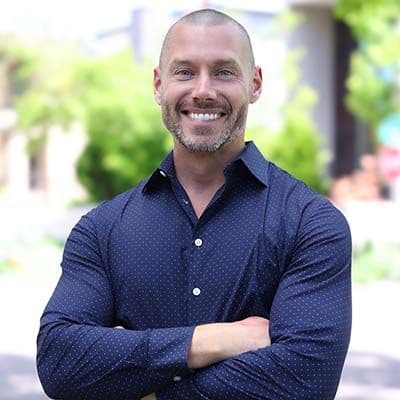
Full Transcript Introduction to Bone Health 0:00 Hey, everyone. 0:01 Great to be with you. 0:02 We've got a very exciting topic today. 0:04 I've got Kevin Ellis 0:05 Neves, an expert on bone health, a bone density, bone health effects. 0:09 Virtually everyone. 0:10 I mean, we get all these patients coming to the clinic, 0:12 and they have issues with their bone density. 0:15 And of course, I'm like, Kevin, we look at a much more holistic approach 0:19 in commercial mass, and it's like, wait till you get to a certain degree 0:22 and then put you on drugs. 0:23 So we don't like that approach. 0:25 So Kevin, tell us a bit more. 0:27 As a bone coach, I know you've helped over a million people 0:29 helping to understand what's involved with bone density. 0:32 Give us a bit more background on yourself to it. 0:36 Yeah. 0:36 So it's a really important issue, right? 0:39 Your bones are almost like a forgotten organ. 0:42 Most people, they don't think about them 0:43 until later in life, or they don't think about them at all. 0:46 They just think of them as the static structures that hold you up, 0:49 right, and carry you through life. And they do that. 0:51 They do a really good job of it. 0:53 But if you do the things that you should be doing now 0:57 and earlier in life, and you prevent and not react 1:00 and you preserve and strengthen the structure 1:03 that's going to carry you to an active future 1:05 and could even add ten, 20, 30 years on to the end of your life. 1:08 And those years could be better quality without pain. 1:11 And that's really what we want, 1:12 because it's not about how long you're living, it's about how good the years are 1:16 at the end of your life, where you're spending them 1:17 with the people you love most. 1:18 So that's why your bones are so important. 1:21 And the way that I got into this field was through 1:24 my own diagnosis of osteoporosis, right around 30 years old. 1:27 And part of that came because of digestive issues. 1:30 And I know that's a big tie in connection in with this summit 1:33 is our gut health is connected to our bone health. 1:37 And for me, I had chronic digestive issues and I had really low energy. 1:43 Some days I could barely even get out of bed. 1:44 And then I was diagnosed with celiac disease in my 20s, 1:48 and I had been absorbing nutrients for many, many years, 1:52 and my body still needed those nutrients, 1:55 specifically calcium, which is the primary mineral constituent of your bones, 1:59 still needed those nutrients, but I wasn't absorbing them. 2:04 These villi, 2:04 these tiny little nutrient absorption centers inside your small intestine 2:08 that are responsible for absorbing the nutrients from the food you eat. 2:11 They were blunted and damaged so they couldn't do their job,
Gut Health, Celiac Disease, and Bone Loss 2:15 and my body was still having muscle contractions, nerve impulses 2:20 that required these important minerals, and I wasn't able to absorb them. 2:25 So my body was going to the largest reserve of minerals that I had, 2:28 which were my bones, and pulling from there. 2:30 And that led to osteoporosis. 2:31 So if you're listening to this now and you have chronic digestive issues 2:36 bloating, belching, burping, gas, constipation, diarrhea, IBS, 2:40 loose stools, you have a diagnosis of celiac disease. 2:44 Or if you haven't ruled that out yet, 2:46 or maybe you have all sorts of colitis or Crohn's or something like that. 2:50 Have to be aware that your bones can and will be affected. 2:54 So pay attention to the things that doctor 2:57 Mark and I are going to talk about today, because it's going to be really, 3:00 really important for you to be able to protect your bone health. 3:04 Well, it's a great start. 3:05 Conventional medicine that health digestion really isn't talked about much. 3:09 Yes, they acknowledge that celiac disease. 3:11 Obviously is a risk factor for osteoporosis. 3:14 And you know what? 3:15 0.8% of the population have celiac. 3:17 And if you have it you definitely need to know you have it. 3:19 But then what you look at maybe 25% of people 3:23 approximately have non celiac gluten sensitivity, 3:27 which obviously is not to the same degree but causes digestion absorption issues. 3:31 Talk to us more about that if you would. 3:34 Yeah. 3:34 So I kind of touched on celiac for me, which is very clear 3:38 autoimmune condition where when you ingest gluten damages the bely, 3:42 the nutrient absorption centers, blunts them, prevents them from doing their job. 3:46 You can't absorb the nutrients. 3:48 Your body goes to the bones to get those nutrients. 3:51 There can also be an impact on the immune system, too. 3:55 And one of the reasons for 3:58 that is your bones are living tissue. 4:02 They're not just these static structures, they're living tissue. 4:05 And inside your bones you have something called bone marrow. 4:09 Bone marrow is this soft, 4:10 spongy material produces 95% of the blood cells in your body. 4:14 If you need help 4:15 with preventing bleeding and clotting, platelets are going to help with that. 4:19 If you need help with carrying oxygen to the body's tissues, carrying carbon 4:23 dioxide away from the tissues back to the lungs, 4:25 red blood cells are going to help with that. 4:28 If you need help with fighting infections, healing wounds, anything related 4:32 to the immune system, white blood cells are going to help with that. 4:37 The cells that break down bone are a form of white blood cell. 4:42 So anything that is stimulating the immune system is speaking 4:47 in the same language as the cells that break down bone. 4:51 Where does 70% of your immune system reside in your gut, right. 4:56 So if we have chronic digestive issues, even if you have non celiac gluten 5:00 sensitivity, right. 5:02 And you you continue to aggravate or irritate or not resolve 5:07 these issues or pull out the the offenders, then we can have this 5:13 this immune system connection that's going to lead to bone loss. 5:16 So it's really important to pay attention to your gut health for multiple reasons. 5:21 Absorption but also because of the immune system. 5:25 Great. 5:26 Great point. 5:26 Can you tell the viewers the difference between osteopenia and osteoporosis? 5:30 Latham heard the term so they don't really understand exactly 5:33 what the difference is. Yeah. 5:35 So when you go get a bone density scan, 5:39 this scan tells you the actual mineral content of your bone. 5:42 So if you've ever heard of a Dexa scan or a bone density scan, that's what this is. 5:46 It tells you the mineral content of your bone. 5:49 Most people don't get these scans until they're 6570. 5:52 I encourage people to get them earlier 5:54 so you understand what your baseline is from which to monitor future changes. 5:58 So get them when you're in your 30s, your 40s, your 50s.
Bone Density Testing and Bone Turnover Markers 6:01 If you haven't gotten one yet, go get one. 6:03 And when you get this scan done, it'll tell you the score. 6:08 It'll give you a score and the score, if it's plus 1 or -1 is considered 6:12 normal and healthy. 6:13 -1 to -2.5 considered osteopenia, which is like a precursor to osteoporosis. 6:20 We would call that low bone mass and -2.5 and lower 6:24 -2.6, -2.7 is osteoporosis. 6:28 And the greater the negative number becomes, the more severe the osteoporosis. 6:32 So I would always encourage people get the scan done 6:37 if you haven't had it done, and then also understand that bone density 6:41 is only part of the picture. 6:43 So bone density is the mineral content of the bone. 6:46 Bone quality is the structural integrity, 6:50 the microarchitecture, how the bone is organized. 6:53 Those two things combine to create bone strength. 6:58 So you can get the bone quality part of the picture 7:01 through some other tools, softwares, technologies. 7:04 One of them is called TBS trabecular bone score. 7:08 This is like an add on software to that bone density scan. 7:12 So if you're going to get your bone density scan, 7:13 you can call the facility ahead of time, say, hey, 7:15 do you have bones for capability? 7:18 And if they do, they can get you the bone density and bone quality 7:22 piece together so you can understand the density and the integrity. 7:26 Okay. 7:28 Then the other thing that you want to look at is, 7:31 are you still actively losing bone 7:34 right now, the bone density scan, 7:37 unless you've had multiple of them over time, it's not going to tell you that. 7:40 So I encourage people to look at what are called bone turnover markers. 7:44 There is a bone turnover marker called the serum CT x. 7:49 This test looks at the activity level of cells that are breaking down bone. 7:54 And if that activity level is elevated or even really high, 7:57 could be related to something related to your digestive health or digestive issues, 8:01 that can be an indicator of active bone loss and a root cause issue 8:05 that needs to be addressed. 8:07 So that could be the digestive health piece, 8:09 but it could be something else. 8:11 Then we also want to look at bone formation. 8:13 So when we look at bone 8:14 resorption and breakdown we want to look at bone formation too. 8:18 So the marker that we like to look at there is P1 and p 8:21 rho collagen type one and terminal pro peptide. 8:24 So this is how you start to understand your bone health picture. 8:29 Just like you've learned from doctor Mark how to understand your gut health picture 8:33 with different testing and all that kind of stuff. 8:37 Your bone health picture, you can get data, objective data 8:40 to understand where you at right now and monitor future changes from there. 8:45 And one of the reasons I like 8:46 your idea or recommendation for getting the objective data in part, is 8:50 people are motivated, obviously when they know they have a problem. 8:54 You don't have a 8:55 you don't know you have a problem, you're not going to take action. 8:57 I also like your your information on 9:00 when you get the bone density testing, which does have some good value. 9:05 It's already what's happened in the past. 9:07 Now, like you're talking about the markers 9:08 and see what's going on currently then tracking that. 9:10 So that's just that's just good science. 9:13 You obviously work with a lot of women. 9:15 Men get osteoporosis too. 9:17 But you know, we just dominantly tend to get more women getting treatment for that. 9:20 What's tell us about maybe some of the things 9:22 that are important in terms of the the females in osteoporosis. 9:26 Well, so primary osteoporosis is typically occurring 9:30 as a decrease in estrogen and postmenopausal women. 9:33 Estrogen has a protective effect on bone. 9:36 When those levels decrease, as they do during menopause. 9:39 That causes an increase in the activity level of those cells that break down bone. 9:45 Then there's a whole nother cause of osteoporosis 9:48 that is secondary osteoporosis. 9:50 That's where it occurs as a result of behaviors, 9:54 disorders, diseases, conditions, medications. 9:58 Any issues with your gut health fall into that secondary osteoporosis category. 10:03 An important note I want to make here, though, is 10:06 just because you're a postmenopausal women does not mean 10:10 hormones are the sole cause of your bone loss. 10:13 Yes, they can be a primary cause, but there can also be secondary causes. 10:18 We see this a lot. 10:19 People that have issues with not just their hormones but also their gut health. 10:23 Or maybe they have some kind of medication that they're taking that's 10:27 leading to bone loss. 10:27 Prednisone, glucocorticoids. Perfect example. 10:30 And or it could be that 10:33 they didn't just build up enough bone in their younger years. 10:37 They never reached peak bone mass. Two. 10:39 That happens a lot. 10:40 So it's usually a combination of those things. 10:43 People are actively losing bone right now for one or multiple reasons. 10:47 And they also may not have built up an a bone in your younger years.
Hormones, Menopause, and Secondary Osteoporosis 10:51 So 90% of your bone mass it's put on by the time you turn age 18, 10:56 the remaining ten fills in by the time you turn 30. 10:59 So listen up if you've got kids and grandkids to 11:04 the things you're doing now for your health, 11:06 they're also going to benefit you. 11:08 You can become the shepherd for the people who are in the prime 11:11 years of building and developing a healthy skeletal structure. 11:14 His view help 11:15 your kids and grandkids build that strong, healthy structure from a young age. 11:20 That could add again an extra ten, 20, 11:23 30 years of good quality life onto the end. 11:27 That's that's so important. 11:28 If we do this earlier in life, it can lead to that down the road. 11:32 So making sure you've got good diet, nutrition, 11:36 vitamin D, calcium, vitamin K2, a magnesium, 11:41 if they have digestive issues too. 11:44 They may need additional assistance. 11:46 Don't just brush those things off. 11:48 Get that. Get that investigated too. 11:50 From a young age and providing the stimulus. 11:54 I think a big challenge now that parents have and people in general, 11:57 not just not just for their kids, 11:59 but also us as adults, were glued to these things right here. 12:03 Right? 12:03 And most people just even in the gym, I see people that are just glued 12:07 with their heads to their phones, and 12:10 we have to be moving our bodies. 12:13 You have to be incorporating weight bearing exercise, resistance 12:16 training, exercise, moving the body in short, sharp, dynamic movements. 12:20 That's going to stimulate healthy bone. 12:22 You want kids doing the same thing from a young age. 12:26 Absolutely. 12:27 Well let's talk about the conventional approach generally. 12:29 You know, it's usually get some lip service. 12:32 I mean I do conventional medicine to integrate with. 12:34 So I don't want to just bash it. 12:35 But generally people get scans done. 12:38 They kind of get some lips, a little bit of lip service, 12:40 get some exercise and then take these drugs. 12:42 So give us an overview of the conventional approach to osteoporosis. 12:48 Well a standard recommendation would be take 12:51 some calcium take some vitamin D, go for a walk. 12:54 Here's your bone drug. 12:55 We'll see in two years for your next bone density scan. 12:58 That is woefully inadequate. 13:00 There is so much more that people can do beyond that. 13:04 And we've had thousands of people come through our programs at this point. 13:08 And I would say 90% of the time that was the recommendation that they received. 13:12 Or I think you kind of mentioned it earlier, they received, oh, 13:17 your osteopenia right now will monitor it till you get osteo osteoporosis. 13:21 Then we'll put you on a medication. 13:23 And there's no plan that goes with that and that. 13:27 That's a frustrating thing I know for the patient. 13:31 But it's probably also really frustrating for the physician too, 13:35 because most physicians that I know, they genuinely help want to help people. 13:39 They genuinely want to see their patients get better and improve their health. 13:43 But they're in a system that's not designed to help people 13:45 achieve their best possible health outcome, too. So 13:50 the conventional approach 13:51 when we talk about pharmaceuticals and medications, there are 13:56 these there are bone medications that are 13:58 they have a dramatic effect on bone physiology. 14:01 It's not like taking an aspirin. 14:03 And I liken their use to that old economic adage, 14:07 there's no such thing as a free lunch. 14:09 There are risks and side effects 14:10 and short and long term implications of using these medications. 14:14 You just have to be aware of that before you start them. 14:17 So there are anti medications. 14:20 These are medications that are designed to slow down the activity 14:23 level of cells a break down bone. 14:26 This would be your bisphosphonates and your rank ligand inhibitors. 14:30 This phosphates would be for some reclassed act and elbow 14:36 for I know Fossum is a popular one a lot of people hear about. 14:39 But for bisphosphonates the safety and efficacy of those drugs is not really well 14:43 known beyond five years. 14:44 And as you and I are going about our daily lives, doing our daily activities, 14:49 getting exercise, working out, doing chores around the house, you're starting 14:54 to get these tiny little micro cracks and micro fractures in your bones. 14:58 That's normal, happens for everybody. 15:01 And then you have cells within the bone called ostia sites that sense that damage. 15:06 And they send out a signal and say, hey, we need to become stronger. 15:10 And there are other cells that receive those signals 15:13 and they say, okay, these osteoclasts 15:16 come in and scoop out that damaged one. 15:19 And right behind it we have cells called osteoblasts 15:23 that come build stronger, healthier new bone. 15:27 That is a normal bone remodeling process.
Conventional Osteoporosis Treatments and Medication Risks 15:30 When you take some of these medications, especially for many, many years, 15:34 you can actually slow down the activity level of those cells in that process. 15:39 Too much to where you start to accumulate 15:42 that old worn damage weakened bone over time. 15:46 So if you have been on these medications for a long time, even if your bone density 15:50 scan is showing higher, the bone quality may not be better. 15:56 So you may be accumulating old worn damage, weakened bone 16:02 that is so, so important. 16:04 And most people don't realize that okay, so that's one part of it. 16:09 Then you've got rank ligand inhibitors. 16:11 That's the other anti that this would be pro Leah. 16:13 This is a common one people are familiar with now pro Leah. 16:16 It can yes. 16:17 Can it slow down the activity level cells. The breakdown. 16:20 Of course it can can also give a little bump and bone quality. 16:24 But when you start pro Leah 16:26 you cannot just stop that drug cold turkey right? 16:30 Even if you've done just one round of it, you can't just stop it cold turkey 16:33 because if you do, it will increase the risk of her tibial fractures. 16:37 So you would have to, especially if you've been on even a couple times, 16:42 you would have to follow it with another medication, an anti 16:46 another bisphosphonate, just to make sure that you don't have 16:49 that rebound effect and increase your risk of fractures. 16:52 If you've been on Pro Leah for three rounds, 18 months or more, 16:56 the the bisphosphonate that you would need to use to relay off 17:00 would be reclassed because the other ones aren't going to be strong enough 17:03 to shut down that rebound effect that will cause a vertebral fracture. 17:07 Most people, again, 17:08 they don't get that education when they're having their conversations 17:11 with their positions and making these kinds of decisions. 17:14 The majority of people can do so much more 17:18 before even starting those medications, right? 17:21 There's so much people can do before even getting to that point. 17:24 And I'm going to I'm going to wrap up the last category of drugs, 17:27 and then we can move on from this, which is there are anabolic medications 17:31 and anabolic are auto affinity. 17:35 Tim loves these are drugs that are designed to build bone, build 17:38 better quality bone and build it faster. 17:41 Can they do it? Sure they can. 17:43 Are the risks side effects, short and long term applications of use? 17:45 Of course. 17:47 Now you can only take these these drugs for a certain period of time, 17:51 like there's only a certain period of time you can take them. 17:54 And once you finish taking them, 17:57 you have to immediately follow it with an anti resort 18:01 just to not lose the bone you just gained. 18:04 So oftentimes you're not just committing to one medication, 18:08 you're committing to multiple medications for multiple years, if not a lifetime. 18:13 You just have to be aware of that. 18:15 When you start this out 18:16 now I'll I'll close this off by saying I am not anti medication. 18:20 I've seen situations where it's necessary and life 18:23 saving for people with osteoporosis. 18:25 But I am pro do everything you possibly can 18:29 naturally first before ever considering that as an option. 18:33 And that's that's exactly how we teach people to good good. 18:37 And of course for people that are on the medications, 18:39 the things we're going to talk about 18:40 now, the diet, the supplements, the weight pairing, exercise, 18:42 all that should be incorporated in addition to the medications. 18:46 So there's always a strong place for things are going to be talking about. 18:50 So let's talk about diet. 18:52 There's all sorts of different diets out there. 18:53 But what have you found in the research and with your, you know, clients 18:57 to be effective in terms of diet for supporting healthy bones? 19:01 Well, I think for, for bone health and any really any 19:04 health condition, anti-inflammatory diet is really important. 19:07 Removing refined process packaged foods 19:10 or minimizing those significantly, not eating a lot of sugar. 19:15 I think those are basic things. 19:16 Reducing seed oil intake and replacing them with healthy fats 19:20 could be things like ghee, olive oil, virgin coconut oil. 19:24 Those are a couple ones that you can can incorporate. 19:26 And then making sure you're getting enough protein is so, so important. 19:31 I know in the past there has been people would look up protein and it would say 19:37 can cause osteoporosis or could be a risk factor, high protein intake. 19:41 Well, our bones are 50% protein by volume. 19:46 They need amino acids. 19:48 You have to have protein just to maintain that structure. 19:52 Not to mention if we want to actually build bone. 19:55 The other part of this you need protein 19:57 because you need to support stronger, healthier muscles. 20:01 There's a tight connection between muscle and bone. 20:04 And you can't build muscle without protein. 20:07 So making sure you're getting enough protein is important. 20:09 I would say 1.2g/kg of body weight is the absolute minimum. 20:13 But you I would go you can go higher than that to 1.2 to 1.6 20:19 has a lot of good research in that range, but some people would even go 20:24 as high as one gram per pound of body weight that they have. 20:27 Now, I would encourage people, if you are just trying 20:30 to not measure everything and figure out exactly to a T 20:35 for every meal and obsessing about it for about 30g, right? 20:40 If you can hit somewhere in there, that could be a great starting point. 20:44 And you can go up. 20:45 You can bump up certain meals, 20:47 you know, first meal of the day, last meal of the day from there. 20:49 So that's a good starting point from protein perspective. 20:53 And then we want to make sure we're getting the minerals, 20:55 the new trans, all those other things that our bones need to become stronger. 20:59 What are those nutrients. 21:00 Well let's go with some of the ones that you probably heard directly 21:03 from your doctor calcium and vitamin D. 21:06 Those two have research behind them for bone health. 21:09 Specifically, vitamin D is important. 21:12 You need to have it. 21:13 I will say the sun's rays are aren't strong enough 21:16 to generate enough vitamin D production in those cold weather months. 21:19 So even if you're outside getting some sun 21:23 in those colder weather months, which is okay to do, 21:26 you're still going to have to. 21:27 You're most likely going to be supplementing with vitamin D 21:30 during that time. 21:32 And before you go just supplement willy nilly with vitamin D, 21:35 get your levels tested, get the 25 hydroxy vitamin D test, 21:41 understand where your levels are at, and then work to improve those levels. 21:46 If you need to. 21:47 Remember, the range for vitamin D is 30 to 100 21:50 NML that's a really, really wide range. 21:53 If you're at 30, you're going to be told that's normal. 21:55 We need to move that closer to center. 21:58 And for some people, even, especially if they've got,
Diet and Nutrients for Stronger Bones 22:00 you know, 22:00 immune conditions or autoimmune conditions, 22:02 that might even be a little bit higher than that too. 22:05 So calcium, that's another one. 22:08 I always encourage people to start with diet and nutrition first. 22:11 What progress can we make there with getting calcium from natural 22:14 whole food sources, and then then 22:17 pose the gaps with supplementation if and when necessary. 22:21 I do know a lot of times when people have gut health issues, 22:24 it can be harder, right, to get some of these nutrients in. 22:27 And we also need absorbable forms if you are trying to 22:31 if you are supplementing with calcium. 22:35 I don't like big doses all at once. 22:37 I would split it up in different meals. 22:39 So maybe a little bit with breakfast, a little bit with lunch, 22:43 and then not more than 500mg a day in terms of supplemental calcium. 22:48 When you do that, you're increasing your risk. 22:51 If you go above that, you're increasing 22:52 your risk of cardiovascular disease risk, increasing your risk of kidney stones. 22:56 And it's just not you have to have other minerals, 22:59 nutrients, cofactors to to make sure that that doesn't happen. 23:03 So what are the other nutrients then that you need to incorporate 23:06 magnesium as your vitamin D intake increases, 23:10 as your calcium intake increases, so too does your need for magnesium. 23:16 And if you want to rebuild anything inside your body, 23:19 your muscles, your bones, anything, you have to have magnesium to do that. 23:24 And it's used for a lot of different other processes in your body too. 23:27 So magnesium is important. 23:29 And vitamin K2K2 helps 23:33 activate osteo calcium and matrix GLA protein. 23:38 And that helps make sure that that calcium goes to the bones 23:41 and not to the soft tissues like your kidneys and your arteries. 23:44 And then the last major nutrient, there are others, 23:47 but the last major one that I would touch on here would be Bitterman C. 23:50 Vitamin C is important because as I mentioned before, your bones 23:54 are a collagen protein matrix with minerals laced into it. 23:59 Right? 24:00 Vitamin C stimulates pro collagen, 24:04 enhances collagen synthesis, and stimulates alkaline 24:07 phosphatase activity, which is a marker for bone building cell formation. 24:11 So you have to have vitamin C. 24:14 And if you don't have enough long term, that can increase your risk of fracture. 24:18 So those are some really important nutrients. 24:20 I also like vitamin E, Toca Knolls and Duran Duran. 24:25 Duran Duran is a it's an endogenous nutrient, 24:28 but you can also take it from supplemental sources too. 24:31 But it is a precursor to vitamin K, M, K, vitamin K2, 24:36 Mk4, pardon me and and CoQ10 as well. 24:40 And it's also something needed for protein synthesis. 24:42 So those are some great nutrients that I like to incorporate. 24:46 Absolutely. Those are important. 24:47 And like you said the nutrients work like an orchestra the days 20 years ago 24:51 and people are just trying to pound down calcium. 24:53 Studies show it did not work and it caused problems. 24:56 And you're right, they work as an orchestra. 24:57 So you don't necessarily need mega 24:59 doses of all these things, but you got to have them at the right amounts 25:01 and get them in consistently. 25:03 So that's good. 25:04 And then how about exercise? 25:06 Obviously so critical to getting that bone stress to cause bone building. 25:11 Tell us about that. 25:12 What do you normally recommending to people to get on track with that. 25:15 Yeah. Great question. 25:16 You need multiple types. 25:17 You need different types of stimuli for bone. 25:19 You need muscle pulling. On bone you need impact. 25:22 The most effective interventions use one or both of those things in combination. 25:27 You have to have weight bearing exercise. 25:29 You have to have resistance training and muscle strengthening exercise. 25:33 Weight bearing exercise is where your body and your bones work against gravity 25:36 to keep you up, right? 25:37 There are things that you are doing on your feet. 25:40 They're placing a good, healthy stress on the bones. 25:44 That would be things like 25:44 walking, jogging, hiking, gardening, playing 25:48 pickleball, playing with the kids or the grandkids outside. 25:51 Notice what I said? 25:51 Not all of those were formal exercise, right? 25:54 So you can do some play and that could be weight bearing exercise. 25:59 There's also weight bearing exercise. 26:01 That's yoga, Pilates, Tai chi, qigong okay. 26:05 If you're doing yoga and Pilates there are modifications for osteoporosis okay. 26:10 So if you have osteoporosis, just know there are modifications. 26:14 I won't go into those right now, but just know that we teach about that stuff 26:17 and you can learn about that later on. 26:19 The other part of this is there's non weight bearing exercise. 26:23 And this is where you're not placing that healthy stress on the bones. 26:27 And this would be swimming. So it makes a great example of this. 26:30 It's same thing astronauts face when they go into space. 26:33 They don't 26:34 they don't have gravity 26:35 that they're working against. They don't 26:36 have a healthy stress on the bones so they can lose bone density fast. 26:40 So if you're only swimming is your only form of exercise, you can keep doing it. 26:45 But you have to add in this next form of exercise 26:48 the resistance training, the muscle strengthening exercise. 26:51 This is so, so important. 26:53 And this is where you bring in the barbells, the dumbbells, 26:57 the variable resistance bands which I really like. 27:00 You can bring in the machines too, if that's where your comfort 27:04 level is at at the gym. 27:05 And then some of my favorite lifts are squats, 27:09 deadlifts, overhead presses. 27:12 If you don't have a compression fracture already, 27:15 if you don't have that, that's great. 27:17 Overhead presses can be can be great, and then you want to slowly work up 27:21 to where you're providing the stimulus that your body and your bones need. 27:24 Being in a 5 to 10 repetition range can be a great way 27:27 to get the stimulus that you need. 27:30 But if you are not 27:31 confident in your form and your body mechanics, 27:34 you need to learn that first before you progress up to that intensity 27:37 and you just want to do a safely. 27:39 You don't have to do everything as hard and as fast as day one, 27:42 because that can lead to entry. 27:44 Just you get the right plan in place, learn the fundamentals, 27:47 slowly work up from there, 27:49 and just tailor your plan as you go and you're going to be okay. 27:52 You're going to do great. 27:53 So, you know, the average person goes in, let's say woman goes 27:55 in, she's let's say 55, 60 low. 27:59 Like you said, we like to get bone density much sooner than that.
Exercise and Bone-Building Training 28:02 But mass and typically that's not happening. 28:04 And you know, they got the beginning of osteoporosis. 28:07 And they're obviously very concerned about fractures. 28:10 They see the disastrous things that can happen. 28:12 You know women fracture 28:13 a hip and 50% of dying here, blood clots and all sorts of nasty things. 28:17 And they're very, very concerned. 28:19 So the point being is, as you have seen and I've seen 28:23 with the kind of protocols you're talking about, 28:25 you can see objectively the bone density increasing very significantly, 28:30 the kind of things we're talking about. Tell us about that. 28:32 You absolutely can you can improve your bone density, 28:35 your bone quality, your bone strength. 28:37 And it doesn't have to be with medications. 28:39 You can do this naturally to now, the improvements that people see in 28:44 given time periods is it takes a while to see improvements in bone okay. 28:49 Bone remodeling is a slow process. 28:51 So you have to understand it kind of happens in phases. 28:55 So I look at near-term and leading indicators of success. 28:59 And then there are long term lagging indicators of success. 29:03 So near term indicators of success would be in weeks to months. 29:07 You're seeing improvements in your digestive health right. 29:10 Resolution of digestive issues. 29:12 You're seeing improvements in your sleep, reduction in stress and anxiety. 29:16 Your energy levels are coming up. 29:18 If you have brittle hair or fingernails, dry skin, 29:21 you're seeing improvements in those things in weeks to months, right? 29:24 Those are some near term improvements. 29:26 Leading indicators okay, I'm moving in the right direction now. More 29:30 objective near-term leading indicators would be the bone turnover markers. 29:36 Are we seeing that bone resorption coming down when we look at the CRM. 29:41 Are we seeing that bone formation coming up. 29:43 When we look at the p one and p, are we seeing the ratio 29:47 between the two of those improving in 3 to 6 months? 29:50 If yes, you're moving in the right direction. 29:53 That's good. 29:54 And then we've got longer term lagging indicators of success. 29:58 This is where your doctor is going to say, hey, 30:00 you know, we're not going to do another bone density scan for two years. 30:03 There's no point where we're a year. 30:05 Sometimes people really push hard. They might get a year. 30:07 You can see 30:08 improvements in your bone density in a year, year and a half, two years. 30:12 And you know, if you see 3 to 5% in a year, that's that's pretty darn good. 30:17 7 to 10% and two, two plus years, that's pretty darn good. 30:20 You if someone is going from leading a sudden 30:24 a really sedentary lifestyle, and then they jump in and they get 30:29 they get the digestive issues resolved, they get the exercise plan in place, 30:32 they're getting the right nutrients. They're doing all the right things. 30:35 They can actually see. 30:36 You can see better improvements faster if you're going from sedentary to then 30:40 doing all these things right. 30:42 But there are diminishing returns. 30:45 You get to a point where there are diminishing returns. 30:46 You can continue to improve, but you will have diminishing returns over time. 30:50 But just as a as a summary of that, you can improve your bone density 30:56 and your bone strength, and it doesn't necessarily require medication to do so. 31:02 It is possible. 31:04 Absolutely. 31:05 I don't know what 31:05 you guys, my patients, if they have mild to moderate osteoporosis, 31:10 I recommend to them unless they're not going to do the exercise, change the diet, 31:14 take the supplements. 31:15 I recommend they do a holistic aggressive protocol 31:19 and in monitor them and look for things to improve. 31:22 If they don't, they always have the drugs as a backup. 31:24 Is that kind of similar how you guys do it or. 31:27 Yeah, for the majority of people that come to us, I would say 90%,
Tracking Progress and Natural Bone Improvement 31:31 they're trying to do everything 31:32 they possibly can naturally, before ever considering medication as an option. 31:37 And the majority of people, 31:38 they they're able to successfully stay that way, which is fantastic. 31:41 Other people come to us and maybe they've already started a medication, 31:46 and either they had a really bad reaction to it, 31:49 or they took a Fossum or an active owl or something like that, 31:52 and they had horrible reaction, lots of pain in the body 31:56 or it made their digestive issues worse. 31:59 That can happen quite a bit and those people want to come off 32:02 of those medications. Sometimes that happens. 32:04 Other times people come to us. 32:06 Maybe they have really poor quality bone, they've fractured multiple times, 32:10 they're on a medication and they want to continue on. 32:13 And those those are cases where the smart use 32:17 of the medication and the plan probably makes sense, right? 32:20 If somebody's already fractured a lot. 32:22 I mean, we see people that have no fractures to 15 or more fractures, right? 32:27 If you're getting up in the higher end, you need to 32:30 there's going to be smart medication management that's taking place there. 32:33 But you also realize medication is over here. 32:38 And it is not a replacement for everything else that we teach 32:41 over here that you have to do. Right. 32:43 So it's not easy or you have to do have to do it all. 32:46 And that's really 32:47 what's going to help you lead not just a better life with stronger bones. 32:51 It's going to improve your overall health to absolutely. 32:54 So maybe an ending. Just give us like a scenario. 32:57 People go to bone coach, they get a hold of you.
How Bone Coach Works With Patients 33:00 I mean first house, you know what happens when you go to a website to 33:03 how do you guys work with people to help them with their bone density? 33:06 Yeah, happy to do that. 33:07 So bone Coach is the best place to find us. 33:11 We do have stronger bones programs there that you can apply for. 33:15 You go to bone coach com forward slash apply. 33:17 You submit an application. We review it. 33:19 You come through a process to figure out is there a program that's right for you. 33:23 Which program would that be? 33:25 You come into the program. 33:26 You meet with one of our team members. 33:28 They help you get confident and getting started, 33:31 and then we just walk you through one straight path. 33:35 It's a path that's personalized that we help you figure out. 33:37 What do you need to do for your situation to start building stronger bones, 33:41 and then how do you monitor that over time? 33:43 And what's great is that once you graduate, 33:47 we're still going to check in with you and make 33:48 sure you're doing the right things and send your reminders and say, hey, 33:52 are we actually doing the things that are going to make sure you're going 33:54 to build those, build stronger bones and get the results that you came for? 33:57 And and that's so, so important. 33:59 So yeah, Bone coach is the best place to find us. 34:03 Excellent. 34:04 Well, Kevin, thank you so much for your expertise on this very important subject. 34:08 Affects so many people and so prevention and treatment of it. 34:12 It absolutely. Thanks for having me doctor Mark.

Comments