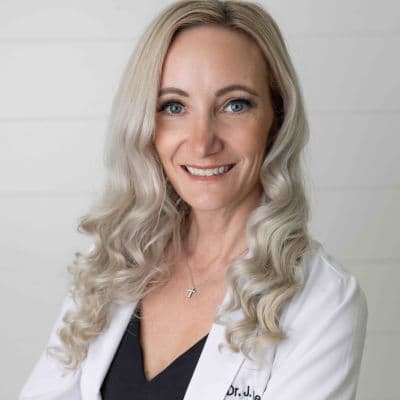
Full Transcript Introduction to Thiamine and Gut Health 0:00 Now there's a whole body of evidence and interest that gut health is related for the same reason. 0:08 So you look at the gut, right, in the enteric nervous system and the vagal nervous. 0:13 And again, the very same thing. 0:15 You look the lower portions of the brain, and they're sensitive, they don't get enough thiamine. 0:21 When that happens, you can get abnormal vagus tone. 0:25 Then when that happened, she can go lower acetylcholine. 0:29 And then a whole cascade can start with lower stomach acid, lower pancreatic enzyme. 0:35 Motility, particularly, you see a lot of issues with gut motility and thiamine, and even intestinal barrier function and intestal immune function, 0:45 all of that coming down from the brain down. 0:53 Hi, welcome back. 0:54 It's Dr. 0:55 Jen with the Healthy by Dr Jen podcast. 0:57 So today we're gonna talk all about thiamine, probably more than you would ever wanna know about Thiamin, but you really should stay tuned so you know 1:06 if you're taking the correct supplement or not. 1:08 I'm here today with Bonnie Thiel. 1:11 She is a health educator and has worked in the field of wellness education for over 40 years and she looks fabulous. 1:19 so she's obviously doing a good job if she look like this. 1:22 So long before podcast, she hosted the only live Colin radio talk show in Atlanta, Georgia, the focus solely on nutrition and integrative medicine on the 1:33 CBS affiliate WRNG radio. 1:35 She interviewed nearly every early pioneer in the field and served as the community liaison. 1:41 for the radio public appearances and community lectures. 1:45 At that time, she founded a non-profit health educator association for purpose of educating both the public and health professional community on the value 1:54 of integrating nutrition science, environmental medicine, fitness, psychological-emotional support into a model of disease prevention.
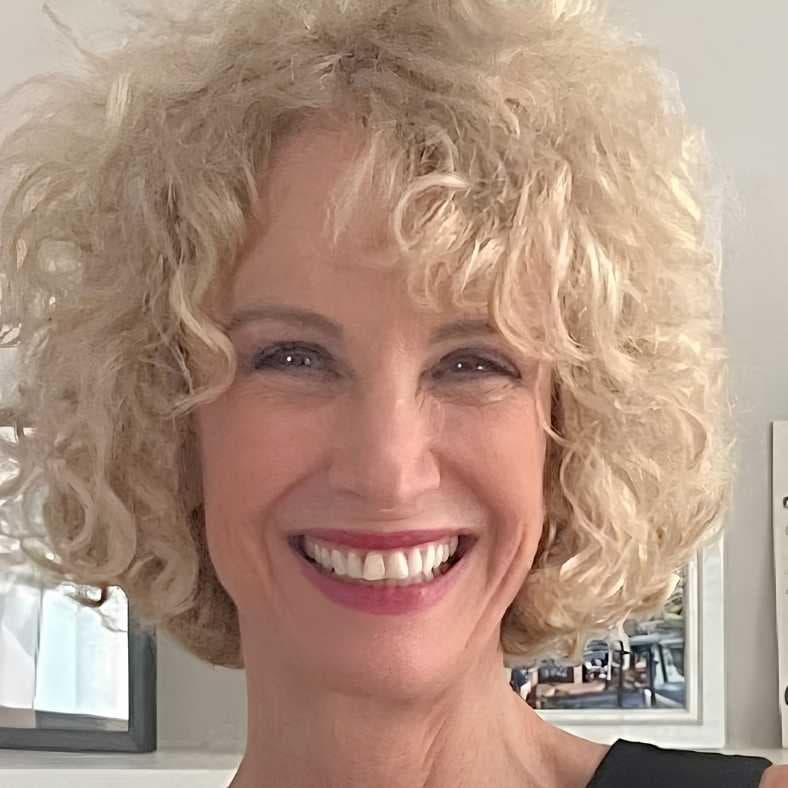
Bonnie Thielu2019s Background and Dr. Lonsdaleu2019s Thiamine Research 2:02 Now, if only the government would have accepted that. 2:05 Her Health by Choice conference was presented annually for 13 years in Atlanta, and she's also organized numerous wellness retreats and expos. 2:14 She received her health coaching certification from the Institute of Integrative Nutrition in 2011, And for 26 years, she has worked with Ecological Formulas 2:22 as their product educator in the face of the company of integrative medicine conferences across the nation. 2:27 Welcome, Bonnie. 2:27 Thank you, like this over here, that we're today. 2:30 I know, I'm so glad to have met you here. 2:33 Well, okay, when I think of thiamine, well, before practicing integrative medicine, I would just think Thiamin as the banana bag and what we would give 2:43 in the ER for alcoholics. 2:45 Right. 2:46 So true. 2:47 It's not just that, it's just a B vitamin. 2:50 You think it is pretty special. 2:51 I know it near and dear to your heart. 2:53 Introduce us to it. 2:54 Yeah, yeah, well, I'd like to just do a slight disclaimer before we start that, as you said, i'm a wellness educator, so I am not, 3:03 if I'm an expert in terms of being a physician or a scientist or researcher. 3:08 However, to interview some of the true pioneers in this field, and it just happens that the thiamin pioneer by the name of Dr. 3:21 Derek Lonsdale was my personal mentor. 3:24 And he, I brought along his book, which was the classic, we'll put it here, a classic book on thiumin. 3:30 Thiamine Deficiency Disease, Dysautonomia and High Caloric Cal calorie malnutrition, right? 3:37 So when was this book published? 3:39 Gosh, I should look at the original because this is a republished one. 3:43 Well, but when about was the originally? 3:45 Yeah, trying to turn into the early pages here, because I'm thinking, this one was republished in 2017, was he began using and researching thiamine at 3:58 the Cleveland Clinic clear back in the seventies. 4:01 Yeah. 4:02 So my point is this. 4:03 He was talking about dysautonomia as a symptom and not as the diagnostic like POTS because for me Pots is a. 4:12 Symptom. 4:12 Yeah, so he's been talking about this in high-calorie malnutrition, which means eating junk food. 4:19 I mean, he was all over this before. 4:23 He was so far above, and in addition to writing this text, He published over 100 articles, He was actually a pediatrician by training, 4:33 and he worked in the Cleveland Clinic, And he spent time researching the relationship of thiamine to metabolic brain disease, 4:41 particularly with children. 4:42 And exactly what you saw, he was seeing these kids consuming all this soda and all these junk, junk foods. 4:50 Back then, early on, it was called hyperactivity, right? 4:53 And so that's where he first got interested. 4:56 Then he later went on into a clinical practice in Cleveland, Ohio for another 20 years. 5:00 He practiced until he was well, probably 88 or so, lived to 100. And he just passed away two years ago. 5:07 So anyway, I'm going to defer to him a lot, but his co-author, Dr. 5:13 Chandler Mars, she's doing a great job even now. 5:15 She's got a wonderful online resource called hormonesmatter.com. 5:21 And she has a lot of articles about thiamine that are fascinating, too. 5:26 And then, actually, a lotta the guys here in the Academy were here at the International Academy. 5:30 They love thiumine. 5:30 Right, right. 5:31 So I've learned a little from them as well. 5:33 Anyway, that's my disclaimer. 5:35 I'm gonna be deferring to them. 5:37 But just like you said, I think that part of the reason that it's really not utilized as much as it could is that the majority of doctors or even dietitians 5:49 are taught that classic textbook presentation that if you don't see alcoholism or severe malnutrition or maybe eating disorders and maybe bariatric surgery. 6:01 If you do not see that, then there is no reason, right? 6:05 But what Dr. 6:07 Lonsdale showed is Not only are many, many people not consuming it, because honestly, when you think about where it is in our diet, 6:16 pork is the highest concentration of thiamine in the diet. 6:19 A lot of people don't, you know, even eat much pork. 6:22 I'm good. 6:23 Yeah, I love bacon. 6:25 Bacon doesn't count. 6:25 Wait, it doesn? 6:27 Then what part of pork? 6:29 You just ruined my day. 6:35 curate or whatever, the B1 isn't there anymore. 6:38 But at any rate, not only are people not consuming enough, but exactly what he's talking about, that the highly processed, 6:47 refined diets like bacon are depleting it.
What Thiamine Does and Why Deficiency Matters 6:55 I do eat pretty well. 6:57 You can tell you do. 6:58 Yeah, I still started taking higher dose thiamin after August, after the the International College of Integrated Medicine after that presentation. 7:10 I've heard a few on it. 7:11 So that's why this is so cool to talk about because And we'll get into detail because this is a B vitamin. 7:20 So if you take a methylated B, it's helping, but it might not even be enough is the problem. 7:24 Yeah. 7:25 And I think maybe it may help a little bit just to cut it back for those who don't know just the basic thing, what does it do? 7:32 What does the one even do in the body? 7:34 The history of it is that way back in late 1800s, this kind of mysterious illness emerged that was manifesting largely in countries that were eating a 7:48 lot of polished rice. 7:50 And it was manifest where they were getting extreme weakness, especially legs, walking disorders, and then heart failure. 7:58 Sometimes it fatal and mass confusion and they just didn't have a clue what was happening, right? 8:04 So it was the early 1900s and a Dutch physician finally started experimenting with animals. 8:11 I think he used chickens, and when he gave them the polished rice, they'd get the symptoms. 8:16 And when they gave the rice with the hull, the systems would go away or would never manifest, right? 8:22 So, they found out that's where the B vitamins were, but it wasn't until like, I don't know, 10, 15 more years into the 20s that they identified what was 8:32 called an anti-Berry-berry factor. 8:34 And they kind of brought it out, and it didn't become identified as a B1 until 1936. It was the very first vitamin, not just the first B vitamin but the 8:45 most first one that was ever discovered. 8:48 Those poor chickens. 8:49 Yeah, right. 8:51 I'm just kidding. 8:52 I have a bunch of chickens. 8:53 They would eat anything. 8:54 Anyway, so Berry Berry, they called it that. 8:59 And then they were like, well, this is an anti-Berry Berry factor. 9:06 a vitamin, and then named it B1. 9:08 I don't know if they knew there were going to be other 2, 3, 4, 5, 9's later. 9:12 Basically what it does, just in the simplest way to look at it, is it helps convert largely the carbohydrates in our diet, 9:23 although to a lesser degree the fatty acids and the amino acids, to use the energy that we can actually use, right, ATP. 9:30 So even though all the macronutrients are involved, it's predominantly involved in carbohydrate metabolism. 9:37 And that's the reason why the cells in the organs that are most susceptible to needing high energy demand, right? 9:47 So it was going to be your brain, your nerves, and your heart are the things that just are not going function properly. 9:55 And from that, Dr. 9:58 Lonsdale said that he thought that even a slight deficiency in thiamine could, in his words, derail mitochondrial function. 10:09 And, from then, what could rise up would be the dysautonomia, initially. 10:16 But then you and I looked at earlier this chart of all these different body systems that could be impacted, right? 10:23 Yeah. 10:25 I guess when I think of thiamine, I just think the word energy, right? 10:29 Because he called it the gateway to energy metabolism, all right. 10:33 Yeah, and it makes sense if you're talking about the mitochondria and the symptoms that you get, what needs mitochondrial energy more, 10:40 but also that if your mitochondrion are being kind of taxed or stressed, then that would make it even further a vitamin B1 deficiency, 10:50 or it would Show even more. 10:52 Perfect. 10:53 One of the things I love that he taught is he said that stress of any kind, whether it be physiological or environmental or emotional, 11:03 whatever it is, it depletes thymine at the cell level. 11:08 And he would, he's said, that even in the plant kingdom, if they get stressed, they make more B1, but we can't do that, right? 11:15 So we have to take it in. 11:17 But he then said that in his opinion, all disease is a form of stress that requires massive increases of energy and therefore maybe could benefit from thiamine.
Stress, Diet, and Common Thiamine Depleters 11:28 And so it was all about energy, you know, to him, which is why fatigue is such a huge manifestation when people are not getting the thiumine Yeah, 11:41 and so many people have fatigue. 11:43 Yeah. 11:43 So then you're like, well, does Do a lot of people have B1 deficiency? 11:46 And the answer is probably yes. 11:48 Well, if you look, again, what are we taking in, right, from our diet? 11:55 What are doing? 11:56 We didn't even kind of talk about what other things deplete it besides just a high carb diet, because you and I don't eat a ton of junk food, 12:03 but we might really like our coffee and occasionally some alcohol and even tea, you know, all those good things. 12:10 They depletes. 12:12 a sushi if you ate it frequently because actually raw fish contain an enzyme called thiaminase that depletes thiumin. 12:22 And so you think back in Japan when they're eating polished rice and a lot of raw And then when you begin to look at with your patients about the pharmaceuticals 12:32 they're consuming, right? 12:33 And, you know, everybody knows, the diuretics are going to run out your minerals, but hardly anybody talks about that they also massively decrease your 12:44 thiamine metformin. 12:45 They also, we talk a lot about needing extra B12, but we forget thiamine. 12:49 B1. 12:50 Yeah. 12:50 And as many as 70% of diabetics need more thiumine, and then they're taking metformin, which depletes thia-min, right? 12:59 And then, oh, PPIs, you're right, your proton pump inhibitor is depleted. 13:03 Again, we're learning so much about the different deficiencies, like I think we all know that the PPIs impact magnesium, 13:10 but hardly anybody knows that it does thiamine. 13:12 So it's all these things that I that when you're doing a history with patients that you can maybe ask some other questions that could say possibly we should 13:22 think about thiumine, Yeah, and how is it related to the dysautonomia? 13:27 Yeah. 13:27 So again, Dr. 13:29 Lonsdale said that the Dysautomia was the first symptom of beriberi. 13:35 Dyssautonoma isn't actually one syndrome, it's like a constellation of symptoms that All stem from the parasympathetic and sympathetic unbalance, 13:49 right? 13:49 The imbalance and the dysregulation of the autonomic nervous system. 13:54 And so the symptoms can present in kind of an erratic fashion. 13:59 And they could include things such as arresting tachycardia or other cardiac arrhythmias. 14:05 They could includes different kinds of sweating patterns. 14:08 Some people don't produce enough sweat, some people over sweat. 14:12 Certainly digestive problems, oftentimes especially motility issues emerge with dysautonomia. 14:19 salt and mineral imbalances. 14:22 A lot of POTS patients, for instance, are going to need more sodium. 14:25 So it's this whole constellation, but he said that it was the first presenting symptom of beriberi. 14:31 Yeah. 14:33 Even before the cardiac and the brain fog, their body was like Was there autonomic? 14:40 Yeah, because the way he explained it is that the lower portions of the brain, which would be like the limbic system and the brainstorms which do regulate 14:50 the autonomia system, are specifically sensitive to thiamine deficiency. 14:55 And so that's what he kind of set the whole thing going. 14:59 What's interesting is the gut, right, and enteric nervous system in the vagal nerve. 15:07 And again, the very same thing. 15:08 You look at the lower portions of the brain, and they're sensitive, they don't get enough thiamine. 15:14 And so when that happens, you can get abnormal vagal tone. 15:19 Then when it happens you get lower acetylcholine, then a whole cascade can start with lower stomach acid, lower pancreatic enzyme. 15:28 Motility in particular. 15:30 A lot of issues with gut motility and thiumin. 15:34 And even intestinal barrier function and intestal immune function, all of that coming down from the brain down, basically, 15:43 through the vagal. 15:44 So say you're doing things to help with the autonomic nervous system like vaginal nerve stimulation and things like that. 15:50 Could that overcome this deficiency or probably not, right? 16:00 I think that certainly any kind of vagal stimulation is going to have a lot of benefits. 16:06 We're seeing so many wonderful things with that. 16:09 But if, in fact, the origin could be the possibility that the thiamine is not present in in that brainstem area, and that's what his theory was. 16:18 Then, as I said, suddenly this whole cascade, we haven't really gotten into the Parkinson's story yet, but you look at, there's a whole theory called the 16:29 gut-first theory of Parkinson, where for 15 to 20 years before any brain symptoms appear, a lot of Parkinsons patients have a lots of gut issues, 16:39 constipation, motility issues. 16:40 A lot bloating, that kind of thing. 16:46 And, you know, if there is a relationship, in terms of the thiamine helping the gut and then the, gut being healed before it ever gets up to the brain, 16:57 so it's interesting.
Thiamine, Dysautonomia, and Gut Function 16:58 I mean, it was all things to speculate about, but interesting Well, what about if you're thiamine deficient and you become pregnant? 17:07 Is that going to hurt the pregnancy at all? 17:10 Again, when he was talking, I'm really glad you brought up pregnancy because actually when I talked to Lachlan, so my daughter was pregnant with her second child, 17:19 a little girl, and he told me about a book called The Trouble-Free John Irwin. 17:26 And it was all about the role of thiamine in pregnancy. 17:30 And I had never heard about this. 17:32 I know that any kind of extra stress, which pregnancy is, makes more demands on any type of vitamin. 17:41 There's been so much emphasis on folic acid, thankfully, over the years. 17:46 But hardly anybody was talking about thiumine, so this Dr. 17:48 John Erwin He felt that it was probably the key to avoiding preeclampsia and gestational hypertension. 17:57 Interesting. 17:58 Yeah. 17:59 Okay. 18:00 So my brain goes off on this because post-pandemic, there's been a lot more cases of pre-eclanpsia in pregnant women. 18:09 And so for those that don't know, preeclampsie is high blood pressure in the late stages of pregnancy. 18:16 It can turn into seizures in an emergency. 18:20 But the thiamine, huh. 18:23 Now I'm going to have to talk with some colleagues to see if they try that because it kind of makes sense. 18:30 This is why I am going bring it all around. 18:32 Because we all have this beautiful virus in us now that was given to us all. 18:39 You know, no matter if you got it just organically, you know or if got a jab, but that, the spike protein specifically is creating more stress on the body. 18:48 So that's why I'm like, oh, stress. 18:50 Like we probably all are more stressed right now unless we've detoxed from this. 18:55 And that is just the one thing that came to my mind, like preeclampsia, there's been so much more of that. 18:59 If they're doing the same thing but this is post pandemic, this might be something that even without the added stress of the COVID, 19:09 pregnancy itself is a stress. 19:10 Right, exactly. 19:11 But I'm saying I think it's pushing some people over the edge that have never had a problems because I am talking to people about this and everyone's noticing it. 19:19 Anyway, that's like something I want to dig into now, Dr. 19:22 Barney. 19:22 I was blanking on the actual name of book, but I'll get it for you. 19:25 Yeah, we can put it in the show notes. 19:27 Just to tell you what he actually did. 19:30 So over 25 years, he treated over a thousand pregnant ladies. 19:36 And he gave them 100 milligrams of thiamine, which seems like a lot considering that our day is 1.1 milligrams. 19:43 Right, right. 19:44 And freenatal might have 5 or 10 milligrams or whatever, but he believed in prophylactically addressing preeclampsia. 19:52 So he give them a hundred milligrams and in a thousand patients in 25 years, he never had a single case of preeclampsias and not a singles premature delivery. 20:01 Wow. 20:02 That's amazing. 20:03 The book is, I have a copy of one on my bookshelf. 20:05 It's hard to find now. 20:07 Oh, it's weird how books just kind of disappear. 20:11 My book just got pulled from Amazon like two weeks ago. 20:14 What? 20:14 Yeah. 20:15 Long story. 20:17 I think I'm being censored. 20:19 Okay. 20:19 So when we talk about thiamine, what is so confusing is the forms of it. 20:26 Yeah, so B vitamins are It's normally just a water-soluble form, but thiamine isn't, like... 20:36 Well, it is and... 20:37 It gets confusing. 20:38 Let's talk about just the various forms. 20:41 I think that's a great way to go on right now is that most everybody that buys B vitamins, if you went to a health food store or even a drug store and 20:51 you bought either one that just said B1 or you buy a B complex or a multiple, any one, You're going to see thiamine HCl, 21:00 thiaamine hydrochloride. 21:02 And that is the typical water soluble thiumine. 21:04 Okay. 21:05 Then prenatals and multivitamins. 21:07 Yeah, and it's okay.
Pregnancy, Preeclampsia, and Thiamine 21:09 It's ok. 21:10 But what the issue is, is that it has a rate limiting capacity to absorb. 21:14 Yes. 21:15 So only a certain amount can be taken into the cells and a large amount will be excreted. 21:20 So, for instance, about, if you take a 50-milligram thiamine hydrochloride, you might get 10% absorption, so 5 milligrams. 21:27 You make it 5 mg out of your 50. Okay. 21:35 to be is that because a lot of this berry-berry was, as I said, initially in the countries where they're consuming a lots of polished rice, 21:43 Japan was really hard hit. 21:46 So in 1950s and 60s, they began to experiment to try to find something that was superior to thiamine hydrochloride because this very berry was very, 21:58 very bad there. 22:00 And so the first derivative that they came up with was something called, I'm going to give you the acronym, it's called TTFD. 22:09 The proper name is tetrahydroferfol disulfide, which is why we say T-T-F-D, that's a crazy one. 22:17 But what it really is, is it is just one molecule of thiamine attached to a sulfur group. 22:23 And why this matters is that a lot of people think of these thiamine derivatives as like fat soluble versus water soluable. 22:32 But in fact, it's the disulfide bond that is the secret because what happens is it makes it so it needs no transport system to enter the cell. 22:42 And so, what goes in by diffusion and then it increases the levels and it stays active much, much longer. 22:49 So it turns out that this TTFD was the most potent, that's the best way I can say it, the more therapeutically active form that they found. 23:01 All right. 23:02 That is the form the Ecological Formulist, a company I work for, brought to America and introduced here in 1998. It is also the forum that Dr. 23:13 Lonsdale used exclusively in his clinical practice. 23:17 So he had from 2000 Now from 1973 to 2013, he had what was called an independent investigator's license to clinically use TTFD in practice. 23:31 And so he has to send regular reports to the FDA proving his lack of toxicity and also identifying how much it had helped people. 23:40 So this was kind of his baby. 23:42 This is what he used. 23:44 Now later, They introduced a form. 23:48 Well, I'll jump ahead. 23:49 There was a later version called solbutiamine, which not so many people have heard is now just starting to emerge. 23:57 It's also a thiamin disulfide derivative, just like TTFD, but it's two molecules of thiumin attached to a sulfur group. 24:05 It's a little bit stronger, and our company went, because we recently added it to our line, so we went and looked at the package insert for where they 24:14 sell it in France. 24:16 And they were promoting it specifically for fatigue, for post-viral fatigue MS-related fatigue and fatigue of unknown etiology. 24:26 But the nootropic people are kind of all over sulbutiamine right now in terms of focus, clarity, you know, that kind thing. 24:33 But just like the difference between, they're very minor, but the fact that they are both disulfide derivatives means they cross the blood-brain barrier. 24:43 That's the ticket about those. 24:46 Then a third one that came later was benfotiamin. 24:50 So benftimine also is an excellent derivative, But it is not a disulphide derivative. 24:57 So, there's, again, I have a study, but it is an old study from 2008, where they compared them both, and they said benfotiamin is very absorbable,
Forms of Thiamine and How They Differ 25:08 you'll increase it in the blood and the liver, But we don't see it getting into the brain, because it isn't a disulfide delirium. 25:16 There's a very, very bright young functional medicine nutritionist in the UK by the name of Elliott Overton, who's doing a bang-up job right now of educating 25:27 everybody on YouTube about thiamine. 25:28 He's great. 25:29 And he says that he thinks that that's starting to be challenged a bit now because this study that I had was 2008, because there's some interest in benfotiamin 25:39 for Alzheimer's now. 25:40 So I don't really know. 25:41 I just know what I got trained in is that it was more often used, Venfotiamine, for peripheral neuropathy. 25:50 And that if you're going to deal with central nervous system issues, that TTFD or Selbutiamin would make the best sense. 25:59 Now, the other thing that Elliott Overton says, is that sometimes you can combine the different forms, which is something I hadn't really thought about. 26:08 But he was saying that benfotiamin, first of all, you have to do a lot more of it, a higher dose, to be able to get where you're going with it. 26:19 So I've seen him say, well, maybe if you are not getting the results you were seeing, say you up to, let's say 400 milligrams of benfatiamine, 26:27 Why not add 100 milligrams to TTFT? 26:30 Got it. 26:30 And kind of mix and match these forms. 26:33 So yeah, as I said, there's a lot going on right now. 26:37 It's great. 26:37 That's exciting. 26:38 Yeah, it really is. 26:39 But the big thing is we want to get away from only taking thiamine hydrochloride or thionine HCl. 26:44 Yes, yeah. 26:45 If you're only just taking a regular methylated, that's good. 26:48 You're doing an okay job, but maybe go to more of these like fat soluble ones. 26:54 Or just the derivatives is the better way to talk about it. 26:57 But one thing we'll mention about the thiamine hydrochloride, because, again, Overton has mentioned this. 27:05 He said, sometimes with your really complex patients, the people that are highly sensitive, and you've had them, right? 27:10 Every integrative doctor has had these complex patient, Sometimes the derivatives are too potent to start with. 27:18 So he says sometimes he will actually begin them with thiamine hydrochloride. 27:22 Got it. 27:22 And then he'll begin and then double the dose and double dose. 27:26 Once they can tolerate, say, three to four hundred of the thimon hydro chloride, then they'll switch them to one of their derivatives. 27:33 Okay. 27:33 Especially if they haven't been on anything before. 27:35 Yes. 27:36 There's a role, I think, a roll of how to use it and the other book that I brought. 27:40 Can you overdose on the other derivatives. 27:46 Dr. 27:46 Lansdale told pretty clear that there was no toxicity, but he did talk about what he called the paradoxical reaction when you're using quote unquote high 27:58 dose thiamine, right? 27:59 So he postulated that the people that need it most, when you give it to them, sometimes they'll have a paradoxical reaction where they will feel a little 28:10 worse before they feel better, where there'll be more fatigue or they might get headaches, and it might go on for a few days, 28:15 it could go for weeks, but he says, that this was documented from the very beginning, from time B1 emerged, that there was this paradoxical reaction. 28:24 Now, I will point one thing out. 28:26 Do you have any patients who are sulfur-sensitive that do not use TTFD or sulfatiamine? 28:32 Got it. 28:33 Yeah. 28:34 So that's a caveat. 28:35 But in most cases, and I think Dr. 28:40 Lonsdale was pretty clear, he even used TTFT ID for a while when he was over at the Cleveland Clinic. 28:48 He was able to do that. 28:49 Yeah, so he used it in higher higher. 28:52 Well, one more question we can do is talk about the Parkinson's real quick. 28:58 So there is new emerging evidence that thiamine and Parkinson can be... 29:04 I was going to mention this other doctor. 29:07 He's unfortunately passed away too, but his work is still alive and well over in Italy. 29:11 This is Dr. 29:12 Antonio Constantini. 29:14 His book, Parkinson and the B1 Therapy, was written by one of his patients. 29:19 And so this is going to be her particular journey. 29:22 But he discovered, and he, by the way, used thiamine hydrochloride, but he injected and used high, high amounts. 29:31 So he would do anywhere from one to two injections a week of the 100-milligram thiaamine-hydrochoride.
High-Dose Thiamine for Parkinsonu2019s and Closing Thoughts 29:38 Or if he used oral, he'd go as high as 2,000 to 4, 000. He was using huge, huge amounts flooding the system. 29:47 But he got amazing, amazing results. 29:51 And he didn't know exactly what was going on, but he thought maybe it might have something to do with a defective thiamine transport system or something. 30:00 In cases like this, this isn't like a classic thiumine deficiency. 30:04 This is something else. 30:05 They're more susceptible to it. 30:07 Something's going on at an enzymatic level or a transporter level, or something, as to why they're not utilizing the B1. 30:14 But at the end of this book, she interviewed all... 30:17 He saw, while he was living, 2,500 patients with Parkinson's. 30:22 And you can go on his... 30:24 The website still exists. 30:25 It's called highdosethiamin.org. 30:29 Okay. 30:30 And it has all the Q&As about everything you'd ever want to know about it. 30:34 But this was just her personal journey. 30:35 And at the end, she interviewed a bunch of his patients and wrote what they reported. 30:42 They reported both nonmotor improvement and motor symptoms. 30:46 Under the non-motors category, They had great improvements with anxiety and depression and just general frustration and improved cognitive and memory, 30:58 sometimes improved smell and taste. 31:02 Wow. 31:03 pain, pain improvement, and then under the motor, they had improvement in their gait and their stability. 31:12 And he also did videos before and after of that. 31:17 What forms were you using? 31:19 Again, he only used the thiamine hydrochloride, but the high, high amounts. 31:23 But then imagine if you add on some of these the other ones. 31:26 Or imagine if you'd use them instead of, you know. 31:28 So there's so much to learn. 31:30 This is so exciting. 31:30 Yeah, it is really exciting, there is a lot more to learning. 31:33 But I'd really recommend people go on that website because just the frequently asked questions alone were really interesting because his crew over there, 31:40 I shouldn't call them his group, but the people who worked with him are trying to keep this research going, you know, since he passed away. 31:48 Well, that's amazing. 31:49 And I'm sure so many people listening, something will click, or they'll be able to recommend B1 thiamine to family members or someone struggling. 31:58 So thank you so much. 32:00 I would love to end with a lightning round asking you a couple questions. 32:04 What is your favorite biohack that actually works? 32:09 Sleep. 32:10 Yes. 32:11 No one said that. 32:12 Wow. 32:13 Absolutely. 32:15 If you could eliminate one toxin from the world today, what would it be? 32:18 Oh, I think the forever chemicals. 32:24 Get them out of here. 32:26 And one last thing. 32:27 What is one word you would like to leave with the audience? 32:31 Oh, think again about thiamine. 32:34 Think. 32:35 We all need to think. 32:36 If you're not thinking, you need thiumine, right? 32:39 Yeah, there you go. 32:41 Well, Bonnie, thank you so much. 32:42 I would love for you to tell the audience where to find you, where find these awesome supplements, and once again, your love of thiaamine. 32:50 Yeah. 32:51 So the company that I'm with, Ecological Formulas, and that would just be ecologicalformulas.net. 33:01 And I'm just at bonnie at ecological formulas. 33:04 net as well. 33:06 The books that I brought along are just available on Amazon that anyone could get and read. 33:11 So I just encourage people and also, you know, take advantage of the YouTube opportunities. 33:16 Our, the product that we sell, that's TTFT, we call it Allphiamin. 33:22 And then we have a version called thiamentia, which is the solbutiamine, got it, is our cute little name. 33:29 Yes, I love that. 33:30 Yeah. 33:31 Well, thanks again so much. 33:32 I learned a lot today, so I appreciate it. 33:35 Thank you. 33:35 Thanks for having me.
Comments