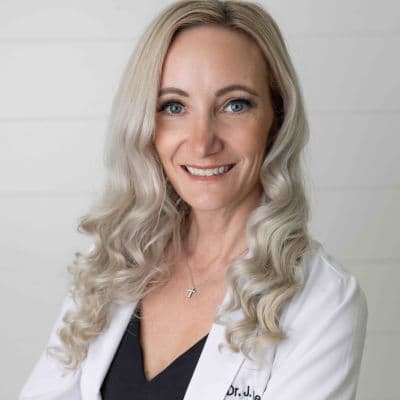
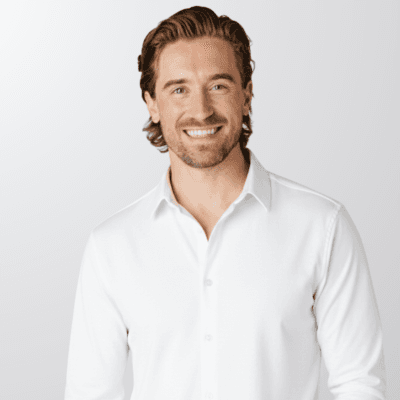
Full Transcript Podcast Intro and Guest Background 0:00 First off, you should not be eating at least two to three hours before you go to bed every night. 0:03 Ideally, should be tapering your calories as the day goes on. 0:08 Dinner should NOT be the biggest meal of the Dose it right before you go to bed. 0:15 Empty stomach. 0:16 And with testosterone, I use once a day. 0:19 I tell most just once-a-day, but some people are like, they really want to bulk. 0:23 But I sleep like a baby. 0:25 When I'm on a cycle of it, right now I don't know why I decided to cycle it. 0:39 Hi, welcome back to the Healthy by Dr. 0:41 Jenn podcast. 0:42 Stay tuned, today we are going to talk all about peptides from actual doctors, medical doctors. 0:48 So stay tuned. 0:50 Okay, so we're going be talking with Dr Russ, Dr Russell VanMalley. 0:55 He is a fellow DO. 0:57 Which we love. 0:58 And we actually met last conference and glad we were able to keep in touch and could have him here today. 1:04 He went to medical school at Michigan State, did an internal medicine residency at Western Michigan. 1:12 and he's in private practice right now at his company. 1:16 he loves working with insulin resistance, which is such a problem in the United States. 1:22 We moved to Arkansas, what, a few months ago. 1:25 And he lives with his wife and two kids under two. 1:29 So we should also talk about stress levels. 1:33 Welcome. 1:33 I'm so excited to have this conversation. 1:35 You're having me. 1:37 Yeah. 1:37 so you, you love peptides. 1:39 you were like, I could talk. 1:40 About GLP-1s all day. 1:43 If you had a favorite peptide, it would be GLPs. 1:46 Yeah, the class as a whole, what it's doing with everybody in America right now is amazing. 1:52 Yeah. 1:53 And I think there's a right way to do it, and I there is a wrong way do do. 1:56 I and think the vast majority of people are doing it the wrong. 1:59 Yes. 1:59 It works with, you know, lifestyle interventions, not alone. 2:04 it will work by itself, but it has not done the right because it is just going to bite people in the butt later on down the road.
GLP-1s, Weight Loss, and Lifestyle Foundations 2:11 So. 2:12 Who wants ozempic butt? 2:15 We don't want that. 2:15 I've heard about Ozempic, name your body part, I heard Ozmpic that, so. 2:20 We ladies, we still want to have a butt. 2:24 Yes. 2:25 But I joke, but people are doing it the wrong way. 2:28 Like it kind of like got out of control. 2:30 Yeah. 2:30 People look way too skinny. 2:32 Why does that happen? 2:34 Well, they ignore the basic cores of lifestyle because let's go back at first. 2:41 Why did people get there in the first place? 2:43 You know, obesity, the crisis of obesity in America is huge because of our diet and sedentary lifestyle. 2:49 People aren't changing their diet. 2:51 They're not changing in their lifestyle, but they're going on a medication that alters the way our body handles insulin, 2:59 which is great. 3:00 It's reducing risk to an amazing degree. 3:03 However, they're still not eating healthy. 3:05 They're just eating less and they are still exercising, which is a big problem because when you lose weight, you're losing everything. 3:13 You lose fat, but yes, your butt, a huge muscle in your body, and therefore everything just gets saggy and turns into nothing. 3:23 The biggest problem we're going to see in five, 10, 15 years with all these GLP-1s is osteoporosis is going to go through the roof. 3:30 Yeah. 3:31 And people are going be surprised, but we're not surprised. 3:36 But isn't at the point more osteoporosis than they put them on, you know, bisphosphonate or something instead of doing that. 3:44 And that's why, we have to like for integrative medicine, like save the world, or just teach. 3:51 That's the big thing that I like. 3:52 So what are the statistics? 3:56 Like how many tons of people have been on GLP-1s? 3:58 I know like people, so many people who have tried them and they don't even talk about it. 4:03 you can get them anywhere. 4:05 And I talked to patients about this. 4:07 They're like, can I talk about with you? 4:09 I'm like yeah, let's talk why I didn't suggest it yet, why it's a next appointment thing, and why we can start a lower dose now. 4:17 I tell them, I know you could get a GLP-1 tomorrow, wherever you want, but they come to us because we know how to use peptides properly. 4:27 So what is the correct way to get it? 4:31 So go back first, it's still before you entertain the GLP-1 conversation, you got to make sure people are on the right track to getting healthy. 4:40 Yeah. 4:41 Because yes, so you can make them lose weight and that's, that easy medicine. 4:47 Doesn't take skill. 4:48 It does not take skills. 4:50 So you have to start there because if you give them the medication, you can make them feel like that you're doing something good for them. 4:57 But you and I both know that long-term that's not fixing the root cause of the situation. 5:04 I always start that initial conversation with, hey, these are my non-negotiables. 5:10 Even if we want to entertain the concept of a GLP-1, which I think is great, It's like we have to start talking about these three things. 5:19 We have talk about number one, the basics of hydration. 5:23 You need to drink only water. 5:24 I learned this from Dr. 5:26 Erdborn, he was my mentor. 5:28 you do not drink your calories. 5:31 Even smoothies? 5:33 I even say smoothie. 5:34 If you have insulin resistance, you should not be drinking smooth. 5:37 There's a million other ways that you can get your fiber, your nutrition that does not need come in a smoothie. 5:43 What about like a protein smoothie? 5:45 I'm splitting hairs here. 5:46 Yeah, no, this is fair. 5:47 These are the counter I get every single time. 5:51 So my first rule is don't drink your calories. 5:53 My second rule, tell me all the ingredients and everything that goes in your mouth. 5:57 Then my counter to that is what is in you protein shake. 6:02 And most people have no idea because it's a triple chocolate fudge protein powder that they think they're just getting protein but now they are mixing 6:10 it with pineapples and bananas and mangoes and making it taste good when it is just a sugar bomb blended to where your insulin and your glucose is going 6:22 to spike and people are not exercising after that so where is it going? 6:29 Sadly, if you don't make your smoothie at home, it probably has added sugar in it. 6:35 That's the thing. 6:37 So when I had my brick and mortar for a decade, I would just always run late on appointments, of course, and I will just drink my lunch. 6:44 I have a protein smoothie, 30 grams of protein. 6:53 The problem with some of these people on GLP-1s, I encourage them to hit protein goals. 6:59 And I'm like, you're going to have to do a whey protein because they're just not hungry. 7:03 There's no way they are going hit that. 7:04 So that's my caveat. 7:05 But I am like you make it yourself. 7:06 I give them the clean brands I recommend. 7:10 For me as a woman, like I have a clear whay protein drink over there in case I didn't have time to sit and eat lunch. 7:18 So I think the preparation is really important that for the protein goal. 7:22 So sometimes that can be helpful, but I agree. 7:24 It would be better to make like just burger meat or ground meat, or have eggs or something like that. 7:31 But yeah, like smoothies and spinach smoothys and bananas and pie. 7:36 Like you said, it's a no go. 7:38 Yeah. 7:39 They're branded as these health foods, health drinks when In reality, they're just sugar bombs because if you're a fruititarian, 7:49 what happens? 7:49 You don't have any muscle mass and you get diabetes. 7:52 Oh my gosh. 7:53 And it's so funny because have you seen like those TikToks or Instagrams like this lady eating a whole watermelon and she's like all skinny and stuff? 8:01 I'm like, yeah, but you don' know what her liver looks like. 8:04 She could have fatty liver. 8:05 I've seen patients that are very thin and people think they are healthy and they have early fatty-liver disease. 8:11 That was one of my biggest revelations in residency when I was doing labs on my own, now ordering everything, like the whole panel. 8:21 And I'm like, I would see an overweight person and I'd get their labs, the labs that I don't run now because I do a lot more labs. 8:29 But those basic labs I got back in the day when people were overweight, ordering these labs thinking they're gonna be a mess.
Nutrition Rules: Hydration, Protein, and Smoothies 8:35 And they were like almost stone cold normal. 8:38 Then I got the labs on the skinny people thinking that it wasn't gonna a problem. 8:43 They were actually the ones that probably had the worst diabetes than the bigger people and it was how people manage insulin in their bodies. 8:51 It was almost like obesity's this protective effect because it goes outside of your blood vessels into your fat instead of hanging out in your body vessels 9:00 and doing all the damage there. 9:04 The biggest problem, like going back to like the protein and the smoothies and whatnot, protein, just like creatine now, 9:11 everybody's talking about creatines. 9:12 Protein is in everything. 9:14 Starbucks is like you add protein to Starbucks garbage. 9:20 But people still aren't doing the basics, right? 9:24 If you are just eating protein and you're not doing any strength training or not any exercise, that is going to get converted. 9:34 That's a calorie, just like anything else that you going be in an abundance of and it's going lead into fat. 9:40 Yes. 9:41 So protein, going back to my non-negotiables of a GLP-1, it's like you got to stay hydrated because if you don't, you're going to get constipated. 9:49 You're gonna have all sorts of GI issues. 9:52 you gonna feel really cruddy. 9:54 Number two is you gotta maintain adequate protein intake. 9:57 And number three, resistance training is a non negotiable. 10:00 Right. 10:01 I agree. 10:02 Those are my big three. 10:03 Hydration, protein and intake and resistance. 10:06 Yeah. 10:06 What supplements do you pair with the GLp-one? 10:11 So everybody that comes into my clinic, if you will, my telehealth clinic is always on the basics of vitamin D, omega-3, 10:21 magnesium, a good B complex in plus or minus DHEA. 10:26 I think that's like my standard cookie cutter for the one that, hey, I just want the absolute basics. 10:32 And then I'll start throwing in some antioxidants and whatnot, depending on their mitochondrial status, if I think they're super fatigued. 10:40 But that's generally where I start. 10:41 I Think GI health is huge. 10:44 So you've got to be on some form of pre probiotic fiber supplement, which I love working with. 10:51 Yeah. 10:52 Yeah, for those are the basics for the GLP one, like I add on some other ones that I want them to be on. 10:58 Like I do have them take creatine. 11:00 Yeah. 11:01 Non-ohydrate. 11:01 I'll be like, you know, if they're not already taking it, I'd be five grams. 11:05 And then have you heard of a plant peptide, plant-derived peptides called PeptiStrong? 11:10 I have not. 11:11 So I'll share that info, but this company, Narita from Ireland, it's an AI technology and Peptis strong is great. 11:21 So it helps maintain muscle basically. 11:25 Yeah. 11:25 It's pretty cool. 11:26 I will add that on and it decreases muscle soreness post-workout, which a lot of the times is a problem with. 11:34 people just starting to work out and lift, right? 11:37 Or that's their excuse. 11:38 So I add on that one. 11:40 And then sometimes I'll add for women that are pretty insulin resistant, I will add inositol at night. 11:47 Oh, yeah. 11:48 I love inostol. 11:49 But definitely the magnesium because they're also And I tell them, I'm like, if your bowels slow down, let me know. 11:55 We'll add some gallbladder liver support. 11:58 You know, we got to work through all this. 12:01 But I've noticed when we don't do the high super therapeutic pharmaceutical dosing, they're not getting these side effects. 12:09 No, I was just about to mention that. 12:12 That is, they're going to get those problems if they follow the standard cookie cutter dosages of start with, talk about semaglutide. 12:21 You're gonna start off with 0.25 milligrams on day one and on, you know, at the end of week four, your going up to 0,5 milligrams. 12:27 At the week eight, it's just like, hold on a second, let's go back What are we trying to accomplish here? 12:37 Are we just trying lose weight from a vanity perspective? 12:40 Or are actually trying improve somebody's health? 12:44 I thoroughly believe in the concept of you do not give a man a fish, you teach the man how to fish. 12:52 in so many conveniences, everything in medicine, it's really easy, really quick to just prescribe and you get results. 13:00 That's one of the things. 13:01 It's hard to knock it because people are getting results by not doing anything at all, but there's going to be problems. 13:08 I know, and it's like, they look good, we know losing weight decreases cardiometabolic risk and all of that, but they're not looking like you said, 13:20 like 10 years down the road, osteoporosis, muscle, rebound effect, I really believe peptides should be cycled. 13:28 Absolutely. 13:29 It's when you drive a car, do you have your your foot on the gas pedal the whole time? 13:37 No, you don't because you would wreck, right? 13:39 But it's just not good. 13:41 So what are some of your favorite peptides to pair with a GLP one? 13:45 So first I like to use the lowest dose GLP-1 that gets me the results that I want. 13:52 Because the problem with going too high on the dose of GLPs is you lose muscle mass. 13:57 And muscle mask could arguably be the number one thing I prescribe to anybody. 14:02 If I can prescribe you muscle masks, I have now fixed so many different issues. 14:07 We fixed insulin resistance with more muscle. 14:10 So, in addition to like creatine and protein and resistance training, you pair a microdose GLP-1 with these growth hormone-releasing hormones. 14:21 Like those are by far my favorite and the class is, Sir Morlin. 14:27 CJC, ipamerelin, and tessemerolin.
Supplements and Dosing Peptides Safely 14:31 And I find myself using tessameralin the most because I think it's the more potent and it has the visceral fat reduction component to it, 14:41 which I really like. 14:44 Clinically and objectively, you see higher amounts of growth hormone, IGF-1, when you use tesemeraline as opposed to sermerelin. 14:53 I like CJC 1295. I don't know, I just like hung on to that one since I started using it. 14:58 But yeah, so let's talk about growth hormone secretagogues, how you use them, because you'll be horrified by this. 15:05 My husband and I were out to dinner with a friend and you know he's getting black market peptides, research purpose only, 15:10 you just brogym peptide, which you guys, this is dangerous. 15:14 This is danger. 15:15 Don't do that. 15:16 That's why we're here talking about this, Work with a doctor and he was just taking it like twice a day, every single day. 15:23 Like just take it. 15:25 And I'm like, hey, five days a week, take two days off because we're talking about hormones that are pulsatile. 15:32 This is how God made us with rhythms, you know, and order. 15:37 I mean, when we put chaos into it and do things like go rogue, it's not good. 15:43 So I had to kind of tell them, I'm like, yeah, so you're going to do it on an empty stomach at night. 15:49 If you want to add an extra dose in with working out. 15:51 Now I would like your standpoint. 15:53 Do you like to. 15:54 Free or post-workout for your growth hormones to create a gag? 15:58 What do you favor? 15:59 So people very, when I dose it, if you do that next dose, you know, for more muscle. 16:05 So, uh, post workout, If. 16:07 You're gonna do a based on a workout. 16:10 That's what I would recommend. 16:11 Some people do it different. 16:13 And that I don't think is as big of a deal as making sure you're taking breaks two days off a week and at night. 16:19 Yes. 16:20 So why at nights? 16:22 Why would you do that at a night? 16:23 Girls' Worm was releasing in a pulse style fashion throughout the entire day. 16:28 But that first wave of deep sleep is when you're going to get your biggest pulsatile flow, if you will, of growth home. 16:36 Yeah. 16:36 So you want to pair it with that. 16:38 And the biggest thing that I, my non-negotiable, because, and this helps too, this stuff is not cheap. 16:44 Right, true. 16:45 Like anything in the peptide space is cheap, I go, hey, you are going waste your money if eat before you go to bed. 16:52 Why? 16:53 Because you've got insulin in your body, cause most people's late night snack is generally not healthy. 16:58 No one's eating sardines. 17:00 Exactly. 17:01 It's not just a pure fat or pure protein. 17:03 There's always something sweet. 17:04 So if you have insulin, it is going to completely knock out any effect that growth hormone gives you because growth hormones secrete mostly at night and 17:15 you cannot and should not have an insulin spike at nighttime. 17:19 That would be really bad for our health. 17:20 We'd probably not be around if hormones work that way. 17:25 What I tell people is, First off, you should not be eating at least two to three hours before you go to bed every night. 17:30 Ideally, should be tapering your calories as the day goes on. 17:35 Dinner should NOT be the biggest meal of the Dose it right before you go to bed. 17:42 Empty stomach. 17:43 And with testosterone, I use once a day. 17:46 I tell most just once-a-day, but some people are like, they really want to bulk. 17:50 But I sleep like a baby. 17:53 When I'm on a cycle of it, right now I don't know why I decided to cycle it. 17:56 You should definitely cycle. 18:03 Well, no, I mean, just haven't cycled it through for a while. 18:06 I'm just like, it's been like six months. 18:09 So I was, and I just, forgot how good I feel like sleeping wise, how, you just it so good. 18:17 Yeah. 18:17 Your dreams, super vivid dreams when you're on these things. 18:23 You sleep deeper and you get a better pulsatile max of your growth hormone. 18:29 And when they're used right with. 18:33 resistance training, consistent resistance, training and a proper diet, they work really, really well. 18:39 But you got to, you gotta earn it with these things. 18:41 They don't just like magically make, beautiful physiques. 18:46 You have to earn. 18:48 Yeah, and I agree with that. 18:49 And I tell patients, like I believe in this, I've called it like peptide prep, where we need to do some basic lifestyle things and detoxify and things 18:59 before you start the peptides, because they're gonna work better and they are expensive like you said. 19:05 But there are times where I'm like, okay, we're just gonna go into it. 19:08 Like for example, KPV and certain peptids that like if there's like a mast cell thing and we are working on other things, 19:15 yeah, were gonna calm things down. 19:18 But these ones, you know, especially like, yeah, GLP-1s, like you want to make sure that they're pooping every day, their liver is working, 19:25 because if they are losing fat, I mean, they need to be able to handle that from a detoxification standpoint, too. 19:32 Absolutely. 19:33 So yeah. 19:33 With everybody, peptides work really well when the foundation is set. 19:39 If you are not working out, if you're not eating healthy, and I'm honest with people in my head, that I just don't think this is the right thing for you. 19:48 And honestly, we should evaluate if I'm a good fit for you as a doctor because this is what I am going to recommend to you today and what am I going recommend 19:58 for the rest of my career. 19:59 Right, because you care about that. 20:02 You know it works. 20:02 Yeah, you can go somewhere else. 20:04 This is the way I practice and I truly believe in this stuff and it's like I just want to have a relationship where we're both, 20:11 You expect a lot out of me, I expect lot of you. 20:13 Yeah, no, absolutely. 20:15 Now, the wolverine peptide stack. 20:17 Can you tell us about that? 20:18 Because that's pretty popular. 20:20 Sure, sure. 20:21 So the Wolverine Peptide Stack is a combination of BPC 157 and TB 500 or thymus and beta 4. And the combination, they both work on similar mechanisms.
Growth Hormone Secretagogues and Recovery 20:36 They increase collagen, the increase nitric oxide, increase overall growth signaling. 20:43 So you combine them both together and they do really well for injuries, chronic injuries acute injuries. 20:51 I just read an article on, because they help with the collagen. 20:55 And so they're very good for your vessel health and blood flows the key to any health condition, health in general. 21:03 So if you're improving the collagen in a joint, why would that not be improving collagen, in your vessels? 21:11 Like anybody that has heart disease, post MI, heart failure, you name it, just plaque, heavy plaque burden, anybody would benefit from there. 21:23 When I get out the BPC, the Wolverine stack, I just am silly, and I'm like, Wolverene. 21:30 And I start going like this, my husband's like Jenny. 21:32 I don't want you to look like a man. 21:34 This one will not make me. 21:35 Like I am just being silly because I think the name of it is so funny. 21:39 But that one's a little bit more volume of an injection. 21:42 That and Matzi and my husbands, he does not like injections. 21:46 It's so fun. 21:47 When your kids get older, you should have them give you your injections, but I won't let them inject me, they'll inject my My 13-year-old felt like, 21:54 oh, he and pretend to poke him. 21:56 It's so funny. 21:57 In a couple of years, you could have your kids inject your peptides, but I talked to them about it. 22:03 I'm like these are peptide, they're chains of amino acids our body makes. 22:09 These are to help us age more gracefully because we live in a broken, fallen world and there's death and disease. 22:16 Anyway, my kids are just used. 22:17 They're like what are you doing now? 22:20 They are used to it, we hope and we pray that, you know, things are kind of smoothing out for the peptide world. 22:29 But, there is this discussion and I would like your take on if people want peptides, they should be what? 22:36 Going to a physician that prescribes a prescription from a 503 compounding pharmacy because safety is important. 22:44 So, explain that because I think this is like, You know, it's just kind of gotten out of control, you know where we've been using peptides for years and years, 22:53 and it just is getting popular. 22:55 And yes, people should get access, but we have to do it safely. 23:00 Yes. 23:01 So I'll be the first to admit, I tried the research peptide out for myself. 23:07 Okay. 23:08 You know, I had, the experience was fine. 23:10 I thankfully did not get a bad outcome or, you know react to it. 23:17 And it worked out fine for me. 23:19 But if the purity is not as close to a hundred percent and you get 1000 people that are a hunt, say a 100 people and yet 99% purity, 23:31 one out of every hundred people is going to have a negative effect. 23:34 That's not good. 23:36 There's a lot more than a hundred people doing peptides. 23:39 More than 1,000 people do peptide. 23:41 So everything in medicine should be controlled and the peptid space is like the wild west right now. 23:50 Hormones are too right. 23:51 Yes. 23:53 It's wild. 23:54 And we don't want people to get hurt. 23:55 I know, and that's the thing. 23:56 It is hard. 23:57 The amount of guys that I get, I borrowed my buddy's testosterone because he said it was good for me and I've been dosing it once every three weeks for 24:07 the last six months. 24:08 What is going on? 24:09 Dude, we need to talk. 24:12 But back to the Panties, it is the Wild West right now. 24:15 It's gotten a lot of hype for good reason. 24:19 Yeah. 24:19 it just needs to be controlled. 24:21 And selfishly, I want to have that control because I know where I'm sourcing it from. 24:27 Well, and it's not selfish. 24:30 It's also, this point isn't talked about a lot. 24:32 If I'm gym bro, whatever, at the gym, or if I am even a health coach, I can say whatever I want. 24:41 I don't have a medical board to answer to. 24:43 So doctors are held to a higher standard and that protects the patient. 24:47 Yeah. 24:48 so I think that everyone's a peptide expert on the internet right now. 24:52 Yes. 24:52 And they're like, but you're not, because you don' work with patients. 24:56 And yeah, so I think that that is very frustrating. 24:59 It can be done correctly. 25:00 And we're trying to do that correctly by seeing patients and giving that good care. 25:07 So people just, you do need to look out for this. 25:10 Yeah. 25:10 You and I have a lot to lose. 25:11 Multiple state licenses. 25:14 Uh, you know, years and years of training, hundreds of thousands of dollars worth of education. 25:22 And this is our careers that we can't just like start something new tomorrow. 25:26 Like these are our career. 25:27 So we take them very seriously. 25:29 Also, we have to have clinics that pay for malpractice insurance, but, with great power comes great responsibility.
Peptide Safety, Sourcing, and Regulation 25:37 We should be taking charge of knowing where our stuff comes from. 25:42 Yes. 25:44 I'd treat my parents, I treat friends, family, and I would not treat you as my patient any differently than I will treat them. 25:53 I want them as healthy as possible for as long as I can. 25:57 Guess what? 25:58 I'm not giving anything to them that I wouldn't give to you or do for myself. 26:04 I only source the peptides from 503A, 502B pharmacies, which is just kind of the pharmacy lingo for very scrutinized, a lot of oversight. 26:16 They have to pay a hot to make sure their licenses are up to date, their facilities are clean, they're using pure. 26:23 formulations and they know where it comes from. 26:26 Fun, you know, kind of quick story. 26:30 I get a lot of calls to do side hustles with people. 26:36 And a lot of these entrepreneurs are coming to me and be like, hey, peptides are a hit right now. 26:41 I'm like yeah, been doing them for years. 26:43 Like, I get it. 26:44 And they're like I can make a lotta money doing peptide. 26:46 So I was like okay, where are you going with this? 26:48 He's like well I am getting my peptidies from X, Y, and Z out in China. 26:53 Okay. 26:54 The guy is like the last batch I had was a bad batch. 26:57 and I threw up a few times. 26:58 so I decided to throw that one away. 27:00 But I only lost a couple of grand. 27:02 but I will not give that away to patients. 27:05 Is this your like, this is your regulatory process? 27:11 Is your safety protocol like injecting? 27:13 And let's not forget, like we are literally getting injections to inject through our body's defense mechanism, straight into our blood. 27:22 It has to be from a pharmacy, a 503B. 27:28 Well, people are so desperate and then these peptide companies and stuff that are doing research purpose only and they have health coaches that will tell 27:36 you what to do and how to buy and to how reconstitute it. 27:38 I mean, they're making so much money and that's the thing. 27:42 And I've seen this a lot in the functional integrative biohacking space is all these investors just look where people spending their money. 27:49 Sure. 27:49 Then they try to make it cheaper and it's just not as good as it was. 27:54 It's so frustrating. 27:55 And they have nothing to lose, right? 27:56 They have... 27:57 They don't care about the people. 27:58 That's why... 28:00 I feel like that's a little tougher. 28:01 They're looking at making money and not making people better, which is what we care. 28:06 It's so hard. 28:08 But it's good. 28:08 You turn that guy down. 28:10 Oh, yeah. 28:12 It was just the conversation. 28:13 I was like, hey, man, I'm not your guy. 28:15 And I'll be over the great rest of your day, and I am just not you're guy I told my wife after these calls, honey, you have no idea. 28:26 what people are actually doing. 28:29 Even when you buy something, even on Amazon. 28:33 It's sketchy. 28:33 I don't tell anybody to buy anything on the Amazon, tell me where it came from, just like your food. 28:39 Where did it come from? 28:41 Even like, it's really hard for even our foods that we think are good for us to say where it came from, who touched it. 28:48 Like, is it good? 28:49 Is it bad? 28:49 Who knows these days. 28:51 But if you're injecting something in your body, like gosh, make sure it is clean. 28:57 Right. 28:58 It's crazy. 28:59 Well, thank you so much. 29:00 it has been a great conversation. 29:02 I am going to do a lightning round with you. 29:04 Awesome. 29:04 What is your favorite biohack that actually works? 29:09 Ooh. 29:09 So my favorite biohack is the sauna. 29:12 Yes. 29:13 By far. 29:14 I think... 29:14 Tried and true. 29:15 ...is the best one. 29:16 It's, I say I love passive income. 29:19 And I have one rental home that I've held onto. 29:22 Passive income is great. 29:23 You don't do anything. 29:24 Yeah. 29:24 Just kind of sit there and you get healthier. 29:26 From a bio-hacking perspective of like something that people can get over the counter. 29:30 Mm-hmm. 29:34 is the best cheapest entry point thing that you can do for biohacking because it tells you instantaneous feedback on what you're doing with your health.
Lightning Round: Sauna, Alcohol, and Intentional Living 29:43 Yeah, that's good. 29:44 If you could eliminate one toxin from the world right now today, what would it be? 29:48 Alcohol. 29:49 Alcohol, good one. 29:50 Yeah. 29:51 Easy. 29:52 I mean, I went to Michigan State. 29:54 And I had years of drinking Thursday night, Friday night and Saturday night. 29:59 It killed my body and I'm probably going to pay for it later down the road. 30:04 But that is something I've just, I have a really hard time, even to this point, recommending any alcohol, because there's no good, 30:13 there is no safe amount of alcohol. 30:15 Well, for women, they can have zero. 30:19 It used to be like two glasses, it used be one glass, and now it's zero glasses. 30:24 Or we increase our cancerous because of breast cancer. 30:27 Yeah. 30:27 Because of estrogen metabolism. 30:28 But yeah, my husband and I just went, we're done drinking. 30:32 We're gone. 30:34 And I don't miss it. 30:35 See, the thing is, I'm like not done drinking. 30:38 I'll probably have a drink every once in a while, but it's nowhere near like every weekend or every, how would you say, maybe every couple of months I 30:47 have something to drink. 30:48 It's not a coping mechanism. 30:49 And I just don't, honestly, feel like crap every time I drink, so. 30:52 The older you get, your body, you're mitochondria are... 30:56 Yeah, this is always... 30:56 I don' even feel good. 30:58 Okay, and then one word to leave our audience with for the week. 31:02 My favorite word on the planet is intentional. 31:05 That's good. 31:05 Be intentional about everything you do from the time you wake up in the morning to how you treat your spouse to, how, you, 31:14 treat, your children to your relationship with Jesus Christ. 31:19 Like you have to be intentional, about, everything. 31:23 And if you don't, The opposite of intentional is just kind of lackadaisical. 31:27 You're just kinda living, you know, doing whatever. 31:30 That's when I think the devil kind takes in and takes over us and leads us down a path that we don't want to go on. 31:38 And that's so good. 31:39 So good, thank you, Dr. 31:40 Russ. 31:41 How can everyone find you and tell us if they want work with you? 31:45 Are you taking new patients still? 31:46 I am taking a new patient. 31:47 Oh, there we go. 31:48 Yes. 31:49 My company is called blacksheephealth.com. 31:52 Which we love. 31:53 When he told me that, when I met you, I just loved that black sheep. 31:57 It's just so funny. 31:59 So good. 32:00 Yes, but I am taking new patients and love with, it's a really, It is an intense program. 32:06 I work very closely with people, so I don't take very many people. 32:09 But they expect a lot out of me. 32:11 And I expect out a them. 32:13 and it is truly a true doctor-patient relationship. 32:18 Great. 32:18 Thank you so much. 32:19 Glad we got to talk. 32:21 Dr. 32:21 Jin.
Comments