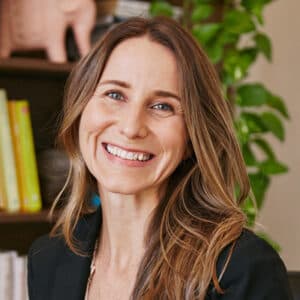
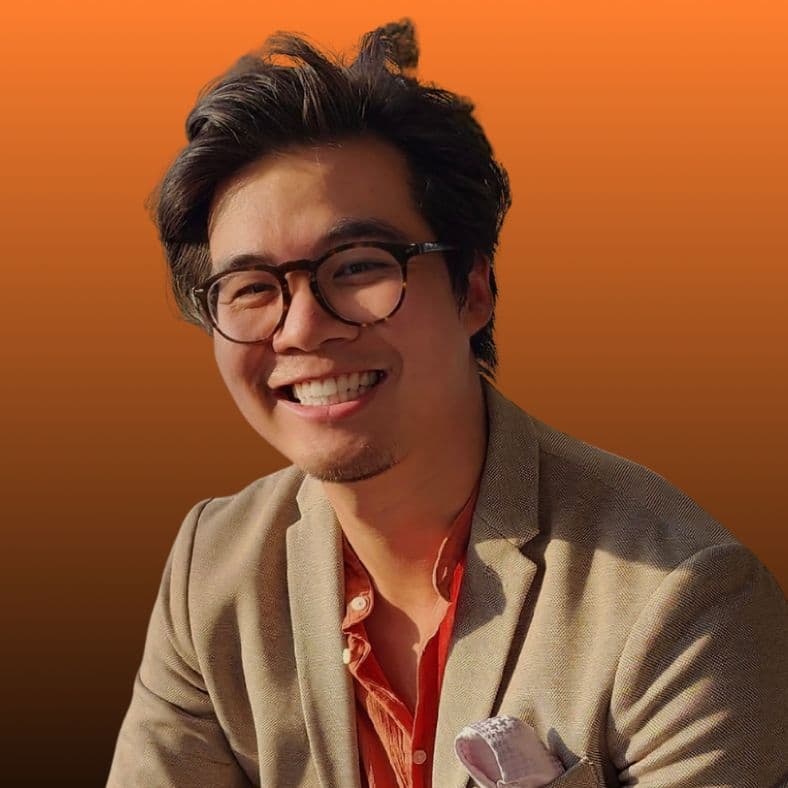
Full Transcript Introduction to Kevin Tran and APOE4 0:00 What do you wish the everyday people understood about Alzheimer's risk and prevention? 0:04 I'd say people should not look at it from a fear perspective. 0:08 I've seen it with a lot of members are very concerned about sharing their status, talking with their family members about it because then they feel like 0:20 people will perceive them differently. 0:21 And I believe that that's something that we should change. 0:25 All our members who have actually like politicians, who have actors, who have people who are very, very public, except they're using a pseudonym and they 0:33 don't want it to be known because they feel that it will affect like the perception of their constituents and so on. 0:38 And I'm really trying hard to change that and to push that idea that knowing that you have it before, as long as you act on it, 0:45 it can be such a powerful catalyst that then you actually become healthier compared to before and you're more able to do your job than before. 0:57 Welcome back to the Think Well, Age Well podcast. 1:00 I am your host, Dr. 1:01 Heather Sandison. 1:03 And today's guest is someone who took one of the highest genetic risks for Alzheimer's and turned it into a catalyst for personal transformation and scientific curiosity. 1:14 Dr. 1:14 Kevin Tran is a doctor of pharmacy with a rare blend of both lived experience, clinical training, and France's top geriatric hospitals. 1:23 and a background advising pharmaceutical companies on Alzheimer's drug strategy. 1:27 I mean, this is a really unique set of experiences. 1:30 And he discovered not long ago that he carries APOE4-4, what many people might consider in our world the highest genetic risk profile for later onset Alzheimer's. 1:42 He has refused, however, to adopt a wait-and-worry sort of approach. 1:46 Instead, he has begun a rigorous, evidence-based exploration of what it means to really take ownership of your long-term brain health despite genetic risk. 1:56 And so in the months that followed his knowing, his diagnosis basically, that he has this genetic risk, he has completely rewritten his own trajectory. 2:04 He's reversed pre-diabetes, he's improved cardiovascular markers, he's significantly lowering his APO-B, he's elevating both physical and cognitive performance. 2:14 And now his journey, it's a mix of like science and resilience and persistence. 2:18 He's also an entrepreneur and he's been shaped by a childhood that was marked by refugee grit. 2:24 Yours is a world ranked gamer and he's also a poker strategist. 2:28 He has a lifelong pattern of beating the odds. 2:30 And so I am grateful that Kevin is now on our team as someone working to support those who are struggling with dementia, 2:38 Alzheimer's, or caring for people who are or facing a genetic risk like his. 2:43 So he's bringing a fresh lens, and I am so delighted to have you. 2:47 Welcome, Kevin. 2:48 Thank you for having me. 2:49 I'm very excited to be here. 2:51 I'm so curious, like take me back to that moment when you learned that you were ApoE44 positive. 2:58 Yeah. 2:58 So it was actually a big surprise. 2:59 I was already on a longevity journey. 3:02 So just did a, uh, gene screening, actually just check my absorption to know which nutrients I should supplement or not. 3:10 And then I see these huge red flags coming in as cognitive risk, very high ApoE4. 3:17 I didn't even know what that was. 3:19 Even though I worked a bit in the Alzheimer's space and then I realized the risk because it goes up to 33x higher risk, especially for Asians. 3:28 So it depends on the ethnicity. 3:29 For Caucasians can be between like five and 15. For Asians, it goes higher. 3:34 Some other studies would show that the lifetime risk would be like 95% chance of getting Alzheimer's, which is extremely high. 3:41 In my residency in the geriatric unit, I've seen like Alzheimer's patients, I've seen when actually the patient's closest ones, 3:51 the family members, they actually end up hoping that they die faster. 3:54 That actually already traumatized me at that point in time. 3:57 I was already when I was like in my 20s already very scared of that. 4:00 And then I discovered that. 4:02 So it was extremely difficult, especially because I was delaying gratification my entire life. 4:07 I think that's part of the Asian culture of, you know, like working hard, focusing on career and having impact.
Facing the APOE4-4 Result 4:12 And then everything was shattered. 4:13 When you realize that you might not even have an identity, like 20 or 30 years down the road, that everything that you're building might be useless because 4:22 you don't remember it, it changes everything. 4:25 Yeah, how scary. 4:27 Yeah, to have this mix of professional experience watching the suffering firsthand and then to realize that, wow, that might be me. 4:37 Like, there's a likelihood almost. 4:39 I mean, you were saying up to 95% likelihood that you become that patient at some point in your life. 4:45 That's terrifying. 4:46 And I'm sure many people in your situation would freeze. 4:49 And what helped you kind of move to shift this potential tragedy into like a transformation? 4:56 What helped you turn that fear into action? 4:58 So to be honest, I froze. 5:00 I froze for three months. 5:01 I was getting my psychologist to help me, friends as well. 5:07 And the first Common answer that everyone will tell you is, all right, just relax. 5:12 It's still a risk. 5:13 Try to enjoy life. 5:14 But it seemed like very hard to do because the advice was to potentially semi-retire. 5:19 So I was living out of Singapore, so I could have retired in Bali enjoying life because two main risk factors for Alzheimer's actually like stress and 5:27 lack of sleep, which comes from having a big career or having like an entrepreneur journey. 5:32 So it kind of made sense to retire. 5:34 So I tried doing that, half retire in Bali, but The feeling I had was trying to enjoy like a train ride. 5:40 You can feel the wind in your hair and it's great. 5:43 You look at the scenery, but then you see that the train is going super fast towards a bridge that is broken. 5:48 And then you are still trying to enjoy the train ride. 5:50 Super difficult to do. 5:51 I couldn't do it. 5:52 So I decided to do the complete opposite and really take it into my own hands because I've seen that. 5:58 There isn't much happening in the space for APOE4 carriers. 6:01 So a lot is happening for Alzheimer's in general, but we as carriers will present 70% of all Alzheimer's cases, but we're very rarely segmented in clinical 6:11 trials when we're actually very different. 6:13 So I realized there was a big gap and then if no one is solving it, then I'll do it. 6:17 So I did this entire 180 degree switch where in the end, now I believe that learning that I carry APOE4 is actually the best thing that happened in my life. 6:28 Something that I want to put out there. 6:29 So having the gym is one of the biggest challenge in my life. 6:32 But knowing that I carry it, as you mentioned in the intro, it made me the healthiest ever. 6:39 I am the sharpest ever. 6:40 I'm the fittest. 6:41 I can see the result. 6:43 I feel like I'm my best self. 6:45 I'm also living life in a more present way, focusing on the most important things and not getting derailed by random drama or whatever you have. 6:53 So I feel like in the end, it was extremely, extremely positive that it was a catalyst for change. 6:59 That's incredible. 7:00 I mean, that's what I want for everyone who learns that they have an APOE4 copy or two, is to take that and make it actionable, 7:10 right? 7:11 To take that and have it be empowering, not paralyzing. 7:14 And you are just an incredible story of that. 7:17 So many people, I think like 10, 12 years ago, it was easy to say, well, why would I test? 7:21 I don't want to know. 7:22 If I find out that I have risk, It's going to do all of the things that it did for you for three months. 7:26 I'm not going to sleep. 7:27 I'm not going to enjoy life. 7:28 I'm going to be worried. 7:29 I'm going to be sitting on this train knowing that I'm going to cross a bridge that's broken. 7:32 That is so stressful. 7:33 And you really have taken this like bull by the horns and decided to do something about it. 7:38 Now, something that's super unique about your story is that you have this deep background in pharmacy and geriatrics. 7:44 So I want to understand like, what of that are you bringing to this? 7:49 So, okay, very frankly speaking, I do believe the system is a bit broken today. 7:55 Especially when I tried to go directly to see neurologists and the classic healthcare providers, the first thing they told me was, 8:02 hey, you don't have any symptoms. 8:04 I could give you the typical test, right? 8:05 The Mocha and something, but at 35, there's no way you don't hit the maximum score. 8:10 And then they're like... 8:11 Okay, you don't have any symptoms come back in 30 years when you are 60 or something. 8:14 I do believe even back in Paris or the way the pharma industry is tackling that is very in a creative way. 8:22 They wait until you're starting to have declined act. 8:25 I'm trying to take the complete opposite approach of focusing on prevention and personalized health and using interventions that are what I call like no 8:33 regrets where Like let's say like it's in your diet or exercising, like nothing wrong will come out of that. 8:38 And you'll feel good not only in 30 years or 60 years, you'll feel good in like two months. 8:43 So really the main focus will be to do that type of stuff. 8:47 That's amazing. 8:48 And so does that, I kind of hear you saying I'm leaving that behind. 8:52 Like the pharmacy, you are a doctor of pharmacy. 8:54 So is there a way that you see that integrating? 8:57 I think in a way I understand the mechanism of actions.
From Fear to Action 9:00 It's way easier for me to like read research papers. 9:02 it's also way easier to talk to because we actually partner with big pharmas to recruit for clinical trials and so on. 9:09 So having this understanding of how the whole industry is built and the different components is very, very useful. 9:18 I do have a lot of hope in pharmaceuticals for the future, especially in personalized medicine. 9:23 Once we are with this entire flooding of the medical pipeline with the molecular pipeline with like, you know, alpha folds and all the AI that is happening. 9:33 So very, very hopeful future, I believe, as long as we move from this creative path of waiting until someone is sick to triplen. 9:43 And that's really helpful. 9:44 That's the change is the paradigm, right? 9:46 Where we say, instead of waiting for somebody to get sick and then doing something about it, that's not even personalized. 9:52 It's going to be one size fits all. 9:54 Let's let go of that part. 9:55 But do drug development that is based on personalized medicine and on prevention, on reducing risk. 10:01 How exciting. 10:02 That is something to be excited and hopeful about. 10:04 I think in the drug space in Alzheimer's, there's been disappointment after disappointment. 10:09 Just this week, there was a paper published showing that the GLP did not have an effect on MCI, on mild cognitive impairment, 10:16 which I was hopeful about. 10:18 I was hoping that there would be at least a subset or some amount of that population. 10:23 There were, I think, about 1,900 people in the trial. 10:26 I was hopeful that we would see a bit of a signal there, that there was a reduction in risk that was associated with improvements in cognition, 10:34 and there wasn't. 10:35 It was such a bummer. 10:36 Yeah. 10:37 And I really believe it's all about the design of these trials and also the way they select patients. 10:44 What we've seen anecdotally among our members, because like part of what I'm building with the Phoenix community is helping people run experiments. 10:51 We have a lot of patients who are microdosing JLP ones. 10:54 And of course it's anecdotal, it's not in a clinical setting, it's not controlled, whatever, but they are seeing results. 11:01 And those are people who might be on the edge of MCIs and so on. 11:04 So it might be that it's a population selection problem or not. 11:08 We don't completely give up. 11:11 Yeah. 11:11 And we say, you know, back to your point about precision-based medicine, we certainly use GLP-1 selectively for people who do struggle with obesity, 11:18 elevated A1C for fasting insulin, you know, all the litany of sort of that metabolic dysregulation. 11:26 We find them to be very helpful and I think part of a complete approach, right, that they're a tool that we can use for the right person. 11:34 Okay, I want to understand about your transformation personally, because you mentioned you're feeling the healthiest, sharpest that you have basically 11:42 in your adult life. 11:43 Was there One thing that really stood out, like one symptom or one metric that convinced you like, all right, I'm on the right track. 11:51 Sounds super superficial. 11:53 The way I look at the mirror, I think I'm super happy of that change, the very physical changes and now being able to run much longer or do like much more 12:02 strenuous physical activities. 12:03 That's kind of the very fast feedback loop that you get as soon as you, you know, like fix your diet and exercise more. 12:09 And that is great for, you know, like a big catalyst for continuing to push forward. 12:14 I think that's the main one. 12:17 I think you kind of just mentioned it, but what were the levers that you pulled first, like diet and exercise? 12:22 And do you feel like those were what made the biggest difference? 12:25 Or is there anything else? 12:27 So diet and exercise, definitely. 12:28 But I'm talking about like 20X-ing the amount of exercise that I did before, which was probably like one session of the gym per like two weeks and now 12:38 I'm doing like 12 or 13 hours per week. 12:41 So it's definitely focusing a lot there. 12:42 Diet helps a lot, but that goes with the gym. 12:45 I'd say that a few things that are super high level, which you talk about in your book as well, which is managing stress and sleep, 12:53 especially sleep, because everything comes from that. 12:55 I believe that once you have good sleep, you have good discipline. 12:58 And when you have good discipline, then it's a waterfall to being able to manage like diet and sports. 13:05 And what I didn't have, but what worked for a lot of our members is removing any toxins, like heavy metals, plastics, mold in the environment that helped 13:15 us as well a lot. 13:16 They could see the impact after six months or one year. 13:19 Was there anything that surprised you on your journey? 13:22 Anything that really stood out as like, wow, I didn't expect that. 13:26 really, I'd say I think the majority of people know what they should do for their health. 13:31 I think it's really the little push to actually do it that changes everything. 13:36 Because if you really ask the common person, they know like what type of food they should eat that is healthier, they know that they should exercise, 13:43 they know that they shouldn't look at their phone right before sleeping and that kind of things are quite obvious and those are the highest impact. 13:49 I know a lot of People try to think about, oh, is there like a miracle pill because it's easy, you know, you just take a pill a day and then it fixes all 13:56 your problem. 13:57 But unfortunately, I think the different things that really work are the things that are difficult to implement.
Prevention, Pharma, and Personalized Medicine 14:04 Right. 14:05 And I have this conversation with Dr. 14:07 Bredesen all the time. 14:08 The most important part of the Bredesen protocol is the implementation, right? 14:13 It doesn't work if you don't do it. 14:15 And so what helped you to actually do it? 14:19 I mean, it sounds like certainly the catalyst was learning your APOE 4.4. But for three months or so, that was paralyzing. 14:25 That didn't actually get you going. 14:28 So what was it that helped to actually motivate you to implement a diet and exercise lifestyle sleep stress management program? 14:36 And what keeps you going? 14:38 Yeah. 14:38 So I'd say the trigger point was when I realized that no one is going to save me and that it's not aligned with, I think it's a personality thing as well. 14:46 You realize that you have two sorts of people. 14:48 You have the people who like to hide their head in the sand when they discover it and they don't want to hear about it. 14:53 Even if they hear that a family member carries APOE4, they don't want to get tested. 14:57 And that's completely fine, understandable. 14:59 And then you have the other type of people who are willing to take agency over their own lives. 15:03 And for me, I guess it took like three months to go back into that mindset of who I was there. 15:09 And then on your question of how to keep going, I believe having accountability partners, writing it down. 15:15 Like I'm doing that very openly with all my members, which means that. 15:19 I have to like walk the talk as well, but what works really well is setting like clear goals, having a journal where you track progress, 15:27 like in marketing and sales, right? 15:28 What you track can be improved. 15:30 So I started having like tons of wearables, like a newer ring, I have like a Garmin. 15:34 All of these, where you see those metrics that are objective, that are improving, all of that is extremely motivating. 15:41 And I believe it's all about momentum as well. 15:43 Yeah. 15:44 So for someone who is excited about this, who does have agency, who wants to do something like this, you've developed the Phoenix group, 15:52 your community. 15:53 And I'm curious what you tell them. 15:55 If they're overwhelmed as they get started, what is the simplest starting point? 16:00 Yeah, so we actually have a very simple guide of the main no regrets things. 16:05 And that's what we cover. 16:06 We're trying to fix one thing at a time to not overwhelm people with adding 12 supplements, changing your diet, doing sports, 16:14 because then you would not even know what works or not. 16:17 And then you end up with a situation where you're potentially doing all of that for life, taking those 12 supplements daily without knowing if they work synergistically, 16:24 some of them don't. 16:26 And also like going it slowly, there's still time, even if we feel like running against time, depending on your age, but going slowly and validating. 16:34 I believe that validating and having the certainty that when you're doing something, it works, the motivation is there. 16:41 And it's extremely difficult to validate some supplements, let's say omega threes and so on, because you don't really feel the effect. 16:47 So it's all about adding on blood work or the test to be able to at least isolate each intervention for let's say two to three months, 16:55 not change anything else, only changing one parameter and validating it, whether it's through blood work, cognitive tests or whatever that it works. 17:02 And then putting it in our stack and not like doing an entire stack by itself, like straight from day one. 17:08 That's interesting. 17:09 And perhaps that's a lot more accessible for people because we have the opposite approach. 17:14 We say, do it all today, yesterday. 17:16 And a lot of people that we work with have cognitive impairment already. 17:21 And so I actually don't want to wait to add one thing and then test it 12 weeks later and make sure that it worked. 17:28 I want to be adding a lot. 17:31 I want to be doing diet and exercise and sleep and stress management and vitamin D and omegas and curcumin, you know, I want to be doing all of the things 17:39 that we have evidence work and then see if things are better. 17:42 And to your point, I think, you know, you might end up on things for life that aren't supporting you, but we want to be precise, 17:49 right? 17:49 Like if you don't have elevated levels of inflammation, you don't need a bunch of proresolvent mediators and a bunch of natokinase and a bunch of curcumin, 17:56 right? 17:56 We can skip that. 17:57 And if your metabolism is good, but you have TBIs, we're going to do something different. 18:02 But we still want to be kind of all in because we see that if you just do pieces of it, you don't get the cognitive benefits as quickly. 18:11 And we're like, it's a ticking time bomb. 18:14 Like we need to do this yesterday. 18:15 I think For you, being younger and working with prevention, that does make a lot of sense. 18:21 I think what in your point, right, it depends on if you feel like you have time or not. 18:27 I definitely agree that if you still already feel that you are close to MCI already in that stage, then yeah, there's no regret in adding all of those 18:36 at one go because like any positive benefits, no matter where it's coming from, no matter if you don't know if it's coming from something, 18:42 you'll still take it. 18:45 Yeah. 18:47 As you've expanded this community of AboE4 carriers, what are the most common misconceptions that you hear as they join your community? 18:55 So a lot on diet, a lot of people focus on the keto diet, but then they don't realize that what we mean by keto diet for AboE4 is actually low saturated 19:04 fat keto diet. 19:05 So that's a big one. 19:06 So they come in and I'm on the keto diet, but then they eat like a ribeye steak and barbecue and so on. 19:11 And that's like terrible because at AboE4 we have like impaired lipid transportation. 19:16 So that is the main one that we see. 19:20 Our keto diet is the more like very low saturated fat keto diet. 19:25 And how do you feel about coconut oil? 19:26 There's a little bit of debate in the field around this, around APOE4 carriers and coconut oil because of, as you mentioned,
Lifestyle Changes and Early Wins 19:33 there's some lipid metabolism dysregulation with APOE4 and particularly with saturated fats, which coconut oil or MCT oil is, 19:42 but it's medium chain, not the longer chain. 19:44 So as a pharmacist, what is your take on that? 19:46 So I differentiate coconut oil and MCT oil because MCT oil is a pure version, right? 19:52 And definitely MCT oil, it bypasses the entire mechanism and then it's converted super fast ketones, which is great. 19:58 I wouldn't take coconut oil, I'm taking MCT oil. 20:03 So for APOE4, use the pure version, just use MCT and you don't have to worry so much about the saturated fat issue. 20:10 because it's converted. 20:10 So not all saturated fat is equal as mentioned. 20:13 But yeah, it's a good one. 20:15 Good misconception as well. 20:17 That's great. 20:18 Given your background and what you've learned on your personal experience, what do you wish that everyday people understood about Alzheimer's risk and prevention? 20:26 Yeah, I'd say people should not look at it from a fear perspective. 20:31 I've seen it with a lot of members are very concerned about sharing their status, talking with their family members about it, 20:40 because then they feel like people perceive them differently. 20:43 And I believe that that's something that we should change, like among our members, we have actually like politicians, we have actors, 20:51 we have people who are very, very public, except they're using pseudonyms and they don't want it to be known because they feel that it will affect like 20:58 the perception of their constituents and so on. 21:01 And I'm really trying hard to change that and to push that idea that knowing that you have it before, as long as you act on it, 21:08 it can be such a powerful catalyst that then you actually become healthier compared to before and you're more able to do your job than before. 21:15 You grew up in a family of immigrants and you, like really a family who repeatedly has beat the odds, it sounds like. 21:23 In what way has that shaped how you approach health? 21:29 Yeah, I think it's all about resilience. 21:31 So bit of history, my great-grandparents, they fled famine in China, they went to Cambodia. 21:38 Then one generation later, there was this entire genocide in Cambodia. 21:43 with like the Khmer Rouge and Popa, then they fled to France. 21:46 And then me, I go back to Singapore to live and now in San Francisco. 21:49 So it's like a lot of moving around. 21:51 It's all about knowing that you can make it no matter where you are on the planet, I'd say, and having that sense of resilience that you can forge your 21:58 own life and that you have like full agency, no matter what happens in your environment. 22:03 This is really about mindset. 22:05 How much of your community and your program is about mindset? 22:10 I believe a lot, a big percentage, a good like 60, 66 percent, like two-thirds of it, it's about the mindset of not giving up, 22:18 not feeling that fear, but feeling empowered by knowledge and acting on it and doing our best. 22:24 I also want to point out that it's not about trying to focus on preventing Alzheimer's and only doing that our entire days, 22:32 our entire life, because then it defeats the purpose. 22:34 You're not living because you are too concerned about it. 22:37 So it's like striking that balance about living our best life while doing the main levels to prevent it. 22:46 Yeah, I think that is something that comes up a lot for us in our coaching programs too is like how to hold both, right? 22:52 We want to dive in fully. 22:53 We want to be fully committed and we don't want to beat ourselves up when we don't get it perfectly right because it's, we're never going to achieve perfection 23:01 on this. 23:01 It's every day is building the habit. 23:03 It's like, you know, coming back to the lifestyle. 23:06 So I love hearing that, you know, you've kind of found the same thing. 23:10 It's like, we need to be able to hold both, fully commit and not be a perfectionist about it. 23:16 Yeah, I think it's all about having a baseline, right? 23:18 I mean, I'm French, so I love my cheese. 23:20 I love my wine. 23:22 And I was like, if I completely remove that out of my life, I'll be so miserable. 23:25 Yeah, it's about striking a balance, having a good baseline of, let's say 95% of the time, we're doing the perfect thing. 23:32 And then 5% of the time, then it's okay to like leave a little. 23:35 Right. 23:36 Yeah. 23:36 We talk about that all the time. 23:37 My classic thing is like, if you go to Italy, have the pasta, have the gelato. 23:41 But when you come back, make sure you get back on the plan, right? 23:46 But you want the whole point of this is so that you can fully engage in life. 23:50 And if you feel restricted all the time, then we're kind of missing the point, right? 23:55 Totally agree on that. 23:57 You've lived in several like brain heavy worlds, the chess world, the competitive gaming world, the poker world, pharmacy world. 24:04 What have these all taught you about cognition and performance in particular? 24:11 Oh, okay. 24:12 Good question. 24:14 I'd say I'm always surprised by the amount of daily variability and the amount of impact that a bad night's sleep or having something on your mind has 24:24 an effect on. 24:25 And then that reflects a lot on when we all members are trying to do like those cognitive tests to measure if whatever we're doing is working or not. 24:32 The impact of whatever is happening around us has such a big impact on those tests that it creates a lot of noise. 24:41 That's number one. 24:42 And I'd say second, it's like everything. 24:45 It can be trained, whether it's sustained focus, it's being able to be in the zone, being able to perform at the highest level. 24:55 All of that is like a muscle. 24:57 Like it can be trained and the more we do it, the better we are.
Building Momentum with Habits and Accountability 25:02 Wow. 25:03 Okay. 25:04 What are your daily or weekly habits? 25:08 What's non-negotiable for you? 25:10 And I know there's a 5% and you like your wine and cheese, but your habits, what are they? 25:15 What does a day in the life of Kevin Tran look like? 25:17 Yeah, so I wake up at 5.40 to go for a crossfit at 6. And that's great in terms of waking up and also having your brain properly vascularized so you feel better. 25:30 Doing cardio helps a lot. 25:31 So that's a non-negotiable to start the day there. 25:34 Even if I'm tired, even if I didn't have enough sleep, I feel like if the day starts, it sends the wrong message to the universe to go back to sleep. 25:42 Like, hey, I don't want to start my day. 25:43 Like you want to start your day. 25:45 It's a great day that is coming. 25:46 And somehow having the mindset that everything will work out eventually. 25:50 We don't know how, but it will work out. 25:52 So that helps at the beginning when you have like the sunrise and everything. 25:56 And then it's a lot of deep work that is coming right after. 25:59 Cause as soon as you finished exercising, I feel like you have that window of two to three hours of enhanced brain performance or even during the session, 26:07 actually you think like clearer, you solve problems randomly. 26:10 For some other people it's under like in the shower or something, but usually when you run and then when you don't listen to anything and actually stop 26:16 listening to music, a podcast while exercising because somehow I solve my problems doing that. 26:24 So that's an interesting insight. 26:26 So I have that like period of deep work between like six and let's say 11, at 11, 12, I start eating. 26:32 After that, it's like more, less deep work, like email and everything. 26:36 And some other sessions until four, five, six, where I have like my last meal and either I go to the gym right after. 26:44 or right before, and then I have like a wind down routine. 26:49 That's great. 26:49 Yeah, so really heavy on diet, exercise, but also mental engagement. 26:53 And that focus time, that really intentional time for deep work, that's an interesting, even people who are retired, capturing that morning after exercise, 27:05 are you fasting in the mornings? 27:06 Yeah. 27:08 But there's this time when your brain seems to work best and really furnishing that. 27:13 And I think for other people, it's easy, at least the people in our communities, it's easy for them to schedule a doctor's appointment then. 27:20 And now their entire day is derailed. 27:21 But really prioritizing that time for the deep cognitive work, for working that mind muscle, thank you. 27:28 That's an insight for me as well. 27:30 I'm already thinking, can I rearrange my schedule so that I can just block out the mornings for that deep work? 27:35 And then, like you said, do emails and things that are a little easier. 27:39 the catch up in the afternoon. 27:41 Interesting, interesting. 27:42 And I feel like if you have like five hours of deep work, let's say between like seven and 12 in the morning, you have achieved so much by lunchtime by 27:50 half your day that you don't feel that much pressure in the afternoon because everything, during the deep work, obviously you focus on the most important 27:57 task and the hardest task. 27:58 And then when you have achieved them, like the rest of your day seems like quite chill in the end. 28:03 And then it's like, it's great. 28:04 Yeah. 28:04 I mean, it's part of like winding down, resting a little bit more. 28:09 I'm curious, you know, reflecting on your habits and the science and the community around you, when you imagine your own future, 28:18 how do you imagine it, right? 28:21 Because so many people, when you get that APOE4, I don't want to call it a diagnosis. 28:25 It's not a diagnosis, right? 28:26 But it's this genetic information. 28:27 When you get that information, I think the initial, like you even described this, right? 28:31 The initial thought is to imagine yourself as that person in the wheelchair who can't respond, who's in a home, who's living this terrifying kind of existence. 28:41 So when you think about it now, what is it that you imagine? 28:46 So I actually think about that a lot about my ideal life at 80 years old. 28:50 So caveat is I believe I'll live until like 120 or more. 28:55 I am very, very bullish. 28:56 I'm very optimistic towards the science that is coming and the way is evolving, the rapid improvement of healthcare and so on. 29:06 So quite hopeful that at least past 120, I want to say 160. So let's say at 80 when I retire, I have this very vivid image. 29:17 where I'm chopping wood. 29:19 I've never chopped wood, but I see myself chopping wood as an exercise thing in a chalet with snow around me. 29:26 I have my dogs around me chopping wood. 29:28 I'm carrying the wood back and fishing some salmon in the stream next to me.
APOE4 Misconceptions and Practical Nutrition 29:31 I have this chalet, I have a wife at home and I also have an autonomous helicopter that is there because it's coming as well when I'm 80. It will be there 29:40 to be able to bring the groceries or friends to me in that chalet secluded and living a life that is like quite simple in the end, 29:48 having my own garden and having like a few animals there. 29:53 That sounds ideal. 29:54 It sounds amazing. 29:56 Especially because I live in a big city like my entire life. 29:58 I've been to Singapore, France, Paris, and now SF. 30:02 So yeah, I feel like going into nature would feel good. 30:05 And probably I'll not wait until I'm 80 to do that. 30:08 I hope not. 30:08 I hope not. 30:09 And I hope that a helicopter comes around. 30:10 It can come pick me up. 30:11 I'll come visit you. 30:14 You talked about the tech and about the advancements in medicine with AI, I mean, with everything, right? 30:21 And what gives you the most hope right now, specifically in Alzheimer's research and prevention? 30:26 Yeah, so I'm quite hopeful on CRISPR. 30:29 I've been very, very bullish on CRISPR gene editing. 30:32 There have been quite a few studies where they managed to swap out ApoE4 for ApoE2. 30:37 So ApoE2 is the protective gene, ApoE4 is one that increases risk and APOE3 is the one that the major part of the population has. 30:45 CRISPR is one I also believe deeply in like medtech as well. 30:51 So we've been experiencing with photobiomodulation and so on that is already there. 30:56 Other than purely for Alzheimer's, but like artificial organs, 3D printings, being able to like purebite all these different elements that might fail in 31:06 one's body, right? 31:06 Because if you are maximizing only for Alzheimer's and somehow your heart fails, it's kind of the same reason. 31:13 Right. 31:14 And then nanotech as well, especially to transport whatever molecule to the target so we don't have side effects and to have proper precision medicine. 31:23 I think we have these different technologies that are evolving at the same time that will be able to synergize properly, 31:30 having the proper therapeutics at the proper site and not having it spread out. 31:35 That's exciting. 31:37 You're certainly a tech optimist. 31:38 I mean, self-described, but I love hearing that. 31:41 I think, you know, we've heard a lot lately about the AI bubble and the fear of AI and like there's fear around technology these days. 31:48 Now you live in San Francisco. 31:49 It's probably the most tech optimistic place in the world. 31:53 But I think that there's, again, it's sort of like holding both of like, how do we take these technologies and make them you know, 31:59 tools that work to our benefit versus like the way social media and our phones kind of use us as tools sometimes. 32:06 And so how do you, how do you like see us navigating that? 32:10 It's tough because it's moving very fast, right? 32:13 I think us as humans who have never been cured to adapt so fast to technology, and that's why we're seeing now, as you mentioned, 32:21 like social media, the impact it has on on younger folks and even like AI and everything. 32:26 So that's both a positive side, the speed at which it's evolving, because it means we're probably unlocking a lot of things like very soon. 32:35 But in terms of adaptation, it's definitely difficult. 32:38 Like the usual analogy that people bring is during the middle age in the 1400 or something, like 95% of the population were farmers to be able to just 32:48 feed the population. 32:49 And then when you had the steam revolution and electricity and everything, then now it's probably like 0.01% of the population are farmers. 32:56 But that entire transition happened over I have no idea, 50 years or a century, but now with AI and internet and everything,
Mindset, Resilience, and the Phoenix Community 33:06 it's happening over like 10 years or even sometimes less. 33:08 So the ability to adapt to it in such a short timeframe, I think it's very critical. 33:15 Being able to be very open-minded, testing all the tools, reading the news properly on what is new and actually being hands-on on everything. 33:23 I think that removes a lot of fear because then you understand the tech better and you understand how to leverage it. 33:30 What is one belief, going back to this APOE4 status, what is one belief or insight that you've gotten on your journey that you wish every APOE4 carrier 33:41 could internalize? 33:42 That our gene is definitely not our fate and that we have the full control over it. 33:47 That's huge. 33:48 That's amazing. 33:49 Kevin, would you please also describe Phoenix? 33:52 Tell us a little bit more about where people can find you and find out more about the community that you're creating. 33:57 Yeah, of course. 33:58 The Phoenix is a community of equity for carriers. 34:01 What we do for the members is we help each individual find their interventions, finding what works for them and run those N equal one experiments to validate 34:12 that it actually works for them. 34:13 Then we zoom back and we look at the community data where we're able to find like, all right, we have Heather doing these five interventions working really well. 34:23 She has this type of genes, she has this environment, these habits. 34:26 And then we have these five other people that seem to form a cluster with her because they have the same genetics, the same environment, 34:32 the same habits, and the same type of interventions seem to work for them as well. 34:36 Then we look at what works for these people in your cluster, and we give you that insight. 34:41 What works for them and they are similar to you is likely to work for you at the same dose. 34:47 So that shortcuts a bit the experiments because no one has time to experiment for three months at one go and on 15 interventions, 34:53 you take your decades. 34:54 And then we take again, another step back. 34:57 And the idea is to look at the entire committee, not just the different people that form your cluster, but build those digital twins that are simulation 35:06 of your anatomy, of your biology and running AI that will run these experiments for you on your digital twin that is able to then determine which is the 35:16 interventions that has the highest likelihood to work for you. 35:18 That's what we do for the members. 35:20 We use all of this data to help pharma and medtech recruit for clinical trials. 35:25 What I mentioned earlier about finding hyper-responders for specific molecules and so on, it comes from having a very, very large and rich longitudinal 35:35 data over a longer period of time, basically knowing if someone has lower cholesterol from blood test A to blood test B, 35:42 what is the reason? 35:42 Is it because they changed their diet, they meditated, they did anything, supplements and so on. 35:47 And having this information helps pharma a lot to recruit. 35:51 So we do these two things. 35:53 You can find the Phoenix community at dphoenix.community, so t-h-e-phoenix.community. 36:00 And I also have like a YouTube channel, Dr. 36:03 Kevin Tran, where I do a lot of videos, educational videos on APOE4 cameras. 36:08 That's fantastic. 36:08 Thank you so much for making that available. 36:10 You really have this very unique expertise and experience finding out that you are personally APOE4 for a positive. 36:18 And I just love, I absolutely love your story and how you are really transforming not only your life, but helping other people transform. 36:26 There is this Phoenix idea, right? 36:28 To rise from the ashes, to have this devastating information come your way, but then to be able to harness it and use it for good, 36:35 use it for agency and make it be something you're grateful for, this thing that has transformed your life for the better earlier, 36:42 now. 36:42 Kevin, thank you so much for sharing this story and the science, your understanding of it, your perspective with just honesty and I love it. 36:50 It's really an engaging, wonderful conversation and it's refreshing to hear from someone who's who's done this, who's gone through this process of fear 36:59 and paralysis and transformed it into agency and clarity and real purposeful action, not only for yourself, but in a way that helps others who are on a 37:07 similar path. 37:08 And so for those listening, I hope that these insights help you feel more empowered and more informed. 37:13 And I hope that you'll reach out to Kevin. 37:14 We'll have, of course, the link and the show notes. 37:17 This really is an insight. 37:18 And I think there's so many people who are wondering, if I do just the reticence protocol, great, but what are the medications? 37:25 What is the science? 37:26 What is the technology? 37:26 What's next? 37:27 What else can I add onto that? 37:29 And it sounds like you're really filling that gap. 37:31 So thank you all for, thank you first, Kevin. 37:34 Is there anything else that you'd like to add before we sign off here? 37:38 I think we're good. 37:39 Like it was a great conversation. 37:40 Thank you so much, Heather, for having me. 37:43 Oh, it's been such a privilege. 37:44 I'm excited to run into you at a conference or something and dig in more and learn more about your community and also just like stay in touch because you're 37:54 clearly on the cutting edge of all of this science and technology and it's really fun. 37:57 Thank you for joining us and thank you all for listening to another episode of Think Well, Age Well. 38:02 Until next time, do continue taking those steps like heaven is that support your clarity, vitality and longevity each day. 38:10 Be well. 38:10 Thank you. 38:11 Thank you so much for listening to the Think Well, Age Well podcast. 38:15 If you enjoyed today's conversation, please take a moment to subscribe, leave a review, and share this episode with someone you care about. 38:24 It's one of the best ways to help others discover tools and inspiration for aging well. 38:31 To stay connected, get bonus resources and never miss an episode, head over to drheathersanderson.com and join my email list. 38:41 Until next time, keep thinking well and aging on purpose.
Comments