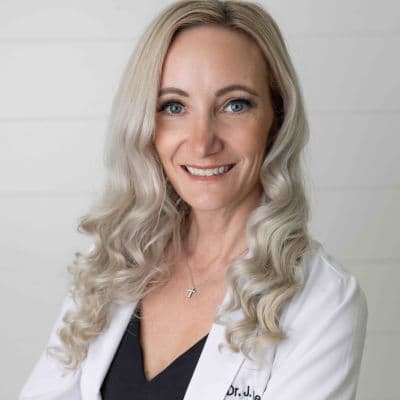
Full Transcript Introduction and Listener Review 0:00 our bodies are beautifully and wonderfully made. 0:01 So I really believe that we can have a root cause approach to this in healing. 0:08 So I just love to bring awareness to this. 0:12 I mean, invisible disabilities can also mean physical, mental, neurological conditions. 0:18 They can be debilitating pain. 0:20 They could be fatigue, dizziness, cognitive challenges, sensory changes. 0:25 So these basically are things that an onlooker can't physically see like a cane or a wheelchair, but limit our daily activities and quality. 0:34 This is Doctor Talks. 0:36 Real talk from real doctors on the issues that matter to you most. 0:42 Hi, it's Dr. 0:43 Jenn and welcome back to the Integrative Health podcast with Dr. 0:47 Jenn. 0:48 I'm going to be doing a solo episode today and I wanted to also start something new where I read reviews because I would love if you left a review and 1:01 wrote a little review out so I could share it with everyone. 1:05 here and this one is from Nikki Johnson 84. She says root cause health insights you can actually use. 1:13 Dr. 1:14 Jen brings a refreshing no-nonsense approach to complex health topics. 1:18 I appreciate how she breaks down issues like thyroid disorders, hormone imbalances, and chronic conditions. 1:24 into clear, actionable advice. 1:25 She has a total powerhouse of a minimum of four and a health acrobat. 1:28 She makes you feel like taking control of your health is actually possible even with a busy life. 1:33 And yes, that is true.
Why Invisible Disabilities Matter 1:35 Thank you so much, Nikki, that we can take control of our health even when we are so busy. 1:42 And that should be our priority because we need to feel well. 1:46 If we don't feel well, we can't do busy. 1:49 And if we're feeling tired, well, our mitochondria is not doing well and we need to fix that. 1:55 So go back, take a listen to the other episodes that talk about things that can hurt your mitochondria. 2:02 Okay, so I wanted to bring awareness this week to invisible disabilities. 2:08 As most of you know, I suffer from an invisible disability, which is Hashimoto's thyroiditis. 2:13 I am now in remission, so I don't even declare that illness over me anymore. 2:19 But because of what I went through with conventional medicine, I had to have half of my thyroid. 2:26 removed and I always have to be on thyroid medication. 2:29 And that can complicate things. 2:31 And it is frustrating that I have to take medication every day. 2:35 And I see it as a blessing from the Lord because now I am super passionate about integrative medicine, evidence-based medicine, 2:43 and maybe a little taste of distrust in the pharmaceutical companies and in conventional medicine that is brought to you by the pharmaceutical companies. 2:56 Actually have a little. 3:01 I may, for those of you listening on video, because it is really frustrating. 3:07 And there was this article, this study that came out on how eating eggs is bad for you. 3:12 And I'm like, I'm doubling down on eating even double the eggs this week because of that. 3:16 Because we can't have disease without inflammation. 3:19 If we have inflammation, we will have disease. 3:21 If we don't have inflammation, well, what is going to happen with the body that the Lord created for us? 3:26 we're going to thrive. 3:28 Okay, so let's talk about invisible disabilities. 3:31 what this means, and I do sit on the board for IDA, the Invisible Disabilities Association, and I will call the action right now. 3:37 I would love for you guys to join us for our yearly gala. 3:42 It's virtual. 3:42 I would love for you to donate $5 to my table. 3:46 I will link it below. 3:47 I'm very passionate about this because invisible disabilities are conditions you can't always see, but they shape our lives every day. 3:54 This could even be perimenopause. 3:56 Perimenopause is an invisible disability, I think, at this time because No one's really talking about it. 4:02 And if you go to your doctor, they give you birth control and what else?
Dr. Jenn's Hashimoto's Journey 4:08 Progestins, birth control, progestins and antidepressants. 4:12 Literally happens every day. 4:14 So when I had an invisible disability, an illness, it was the Hashimoto's in medical school. 4:22 And it was awful. 4:23 I was so tired when I got my thyroid, partially most of it taken out. 4:28 No one knew what I was going through. 4:29 I had to go through surgery. 4:31 I had to live with this diagnosis. 4:33 And I had thyroid disease all throughout undergrad. 4:35 And I was gaining weight because I wasn't on the right medications. 4:38 I wasn't on NIT3, the active thyroid hormone. 4:41 And you look and you're like, oh, she's just lazy or she's just whatever. 4:46 And I was struggling with this. 4:48 It was harder for me. 4:50 And things, they are a little bit harder. 4:52 But now I reclaim that and I work towards being healthier. 4:56 But there are people out there with diabetes, chronic fatigue, vaccine injury. 5:01 They have these invisible disabilities that No one knows why they don't have energy or they don't feel good or they can't do everything or they just want 5:10 to stay in bed. 5:11 So we need to bring awareness to that. 5:13 But I also think that we can bring hope because most of these invisible disabilities are root cause based and we can heal from them. 5:23 Our bodies are beautifully and wonderfully made. 5:25 So I really believe that we can have a root cause approach to this in healing. 5:31 So I just love to bring awareness to this. 5:35 I mean, invisible disabilities can also mean physical, mental, neurological conditions. 5:41 They can be debilitating pain. 5:43 They could be fatigue, dizziness, cognitive challenges, sensory changes. 5:48 So these basically are things that an onlooker can't physically see, like a cane or a wheelchair, but limit our daily activities and quality of life. 5:58 And the Invisible Disabilities Association defines it in exactly those terms, emphasizing that impact can range from mild to severe, 6:06 and it varies from person to person. 6:08 And this definition can often lead to misunderstanding social justice and just not getting enough support. 6:16 So this makes the invisible visible. 6:18 And this is a step to better care accommodations and community. 6:22 So for me, with Hashimoto's, like my first Clues were this crushing fatigue, brain fog while I was trying to be a medical student, 6:32 cold and intolerance, hair chains. 6:34 I just wasn't feeling myself when I was rotating in the hospital. 6:37 And, you know, my classmates and attendings, they couldn't see this. 6:41 So I was just pushed harder and harder. 6:43 And then I remember what really helped me was when I got on T3. 6:48 which was NP thyroid, natural thyroid, which they're trying to take away and cause ruckus again. 6:53 But that changed for me because I was not converting from T4 to T3 well. 6:59 And this was just really hard though. 7:02 And this is why I'm so passionate about invisible disabilities because I looked fine, but I really was struggling and trying to stabilize my thyroid hormones
Examples of Invisible Disabilities 7:10 while juggling exams, on night calls, working in the hospital, imposter center, all this stuff. 7:17 It was hard. 7:18 And what really helped me was getting on T3, dialing into sleep, nutrition, all those pillars of health, eat, sleep, breathe, 7:28 move, all those pillars, they really helped. 7:31 But this really, this season, it grew my empathy and shaped my approach as a physician. 7:36 And we really have to believe the patient no matter what. 7:39 We have to measure what matters, we have to personalize our care, and we have to look for root causes. 7:45 That was just like one example of my story. 7:47 Let's widen the lens a little bit. 7:50 So, invisible disability is not just one diagnosis, it's a broader category. 7:54 And for example, like perimenopause, you know, we have symptoms like sleep disruption, mood swings, vasomotor symptoms, like hot flashes, 8:04 brain fog, and cycle changes. 8:05 And this can really profoundly impact our daily function. 8:09 Diabetes, for example, you can't tell if someone has diabetes all the time, and this fluctuating glucose can cause energy swings. 8:17 They have neuropathy or neuropathic pain in their legs, and much of the struggle is not hourly visible. 8:25 What about chronic fatigue and post-exertional malaise where they have their spoons and they can only do so much before they're out in a day? 8:33 And that's really hard because they have this debilitating tiredness and this rash after patterns that the outsiders may misinterpret of them just being 8:43 lazy or they just want to watch TV and that's not it. 8:45 They physically can't. 8:47 was about vaccine injury. 8:50 So many people report persistent symptoms after vaccination. 8:53 And regardless of your viewpoint on vaccines, like compassion, evidence-based evaluation, and support are vital. 9:00 And I tried to get something passed in the AOA just recognizing vaccine injury. 9:06 And these were my colleagues and my friends, a lot of them. 9:09 They wouldn't even consider passing it along to the House of Delegates. 9:13 It was like ignored. 9:16 This is a big invisible disability. 9:18 I mean, these kids, these adults, especially post pandemic, there is vaccine injury and we do have to identify it and not gaslight and we need to repair 9:28 it and get to the root cause. 9:30 Other examples that we might not think of is an invisible disability. 9:35 or migraines, autoimmune disease like rheumatoid arthritis, Hashimoto's, Crohn's, ulcerative colitis, long COVID, mental health conditions like anxiety. 9:45 I mean, sometimes this can fit hand in hand with perimenopause. 9:48 So many women suffer with anxiety and perimenopause. 9:51 And this is why my approach is root cause because we can fix most of that anxiety. 9:56 And I also think spiritually, anxiety we can really attack too, because that's not what the Lord wants. 10:02 Concussion and traumatic brain injury. 10:04 All these kids playing football or soccer actually had more concussions. 10:08 When I worked in the ER, I'm like, my kids, I don't want them playing soccer. 10:11 But that can also be an invisible disability, hearing and vision impairments that aren't obvious to others. 10:17 So if a condition limits a person's movements, senses, or activities, and it's not obvious to others, it fits under the umbrella. 10:24 So this can be like a hidden, not apparent, or unseen. 10:28 This is used interchangeably, so it could. 10:31 So let's talk hope, not hype.
Root Cause Approaches to Healing 10:33 Invisible doesn't mean unknowing or untreatable to the medical professionals. 10:37 If we take a root cause approach, what's driving these symptoms in a person and what lovers are most likely to help? 10:44 So this is really helpful when we talk about it. 10:48 You know, like biology for endocrine, our thyroid, our adrenal rhythm, our sex hormones, insulin and glucose dynamics, that can all play a role into what's 10:58 going on, which is an invisible disability. 11:00 Our immune and inflammatory tone autoimmunity and triggers, like what are they? 11:05 Is it Epstein-Barr triggering this chronic fatigue? 11:08 Is it Lyme? 11:09 our mitochondrial neutral status, we can optimize those like our B12 or vitamin D magnesium to really help if we have these like chronic diseases and symptoms. 11:19 And looking at sleep in our circadian rhythm, that is so important just to help us that are struggling with these invisible disabilities get through and 11:29 cause hope. 11:30 Also, I like to talk about lifestyle inputs, so protein for nutrition and making sure our glycemic control is steady and not going up and down can be helpful 11:40 if we're battling with something. 11:42 Resistance training is great because metabolically when we are fit, we are going to feel better no matter what we are going through. 11:49 And then nervous system regulation. 11:52 This is so important. 11:52 I did a podcast a few episodes ago about the true Vega, which will stimulate the vagus nerve and put you in that sympathetic, 12:00 out of the sympathetic and into the parasympathetic rest and digest. 12:03 That can be really helpful. 12:05 Also prayer and breath work and meditation. 12:10 You know, we know Jesus meditated and that is really helpful to put us back into that rest and digest. 12:17 Also looking at environmental load like allergens, irritants, total toxin, toxic burden. 12:23 This could be swapping out things from the home. 12:26 I know we needed to get out of glyphosate country where we were living and we moved because it was very toxic glyphosate. 12:34 So I'm praying that our country does something about all these environmental toxins that we have. 12:40 So how this lands in care if we are listening and we have an invisible disability or we know someone that does, we first need to validate that you are 12:51 going through something that no one's in your shoes. 12:54 So, you know, we hope that the doctor or the person taking care of you or the person at the grocery store can just treat you well as a human being and 13:04 invalidate how you're feeling. 13:05 And then, you know, what matters for that condition? 13:09 How can you get help? 13:10 How can you express what you need from people? 13:13 Maybe just acknowledging is important enough. 13:16 So it's how we turn the I'm invisible to I'm seeing I'm supported and I have a plan. 13:22 And this is where the IDA or Invisible Disabilities Association can really help because you have an ally, you have an advocate, 13:30 we're bringing awareness to this. 13:33 So if you're out there listening, you're like, well, how do I support these people with invisible disabilities? 13:39 So believe people when they say that they have fatigue, pain or brain fog, because lack of a cast or cane doesn't mean lack of a disability. 13:47 Ask them what helps rather than just assuming, right? 13:51 If they're tired, like, ask them what they actually need. 13:54 Please don't give them just like, here's tips for feeling better, you know, unless you're professional.
How to Support and Advocate 13:59 But ask them because tiny adjustments, if they're asking for little things that you can help with, could be life changing for them. 14:06 support their accommodations at home, work, church, and school. 14:09 And this, like having, you know, a kid that maybe is a little more ADHD, this is really helpful when teachers adjust because they don't know how their 14:18 brain is processing things. 14:19 And this could be really helpful if you just go the extra mile and instead of judging people, like see how you can accommodate them. 14:27 And make sure you use respectful language and share accurate definitions as we spoke about today so you actually know what invisible disability means. 14:35 And then just build some community with them. 14:38 So maybe check in with them, invite them to the watch party or awareness events. 14:44 If someone is having a flare that has an invisible disability, maybe start a meal train for them. 14:51 Just be helpful. 14:52 And I know for me, I really like if a mama just had a baby is breastfeeding, I draw them off breastfeeding cookies and then I leave unless they want me 15:02 to stay or I offer to do laundry. 15:05 If you're there, because postpartum depression is an invisible disability, so there's all sorts of things. 15:10 And if you were there once, make sure you're helping them because you've walked in their shoes. 15:17 So if this episode resonated with you, please support Invisible Disabilities Association or IDA. 15:23 I will drop the website below. 15:25 You can donate to my table for the gala or if this is after the gala, we would just love your support in general. 15:32 We are looking for volunteers to help with things and board members. 15:37 You know, invite a friend for this. 15:39 This is so great. 15:41 IDA is doing amazing things. 15:43 They're getting cards that you can get that It shows, you know, what's going on with your invisible disability in case people don't know. 15:50 We're working on getting more awareness on driver's license. 15:55 So if a police comes up to you, they would know that maybe you you wouldn't act the same way or something else might be someone would consider a weird. 16:05 a weird behavior is not. 16:07 It's just part of your invisible disability. 16:09 So this is all just great stuff. 16:11 So I just really appreciate you guys for listening to this and for your support. 16:17 And I hope you enjoyed this mini session. 16:20 please leave a review and also please reach out to me if you want a specific guest or topic for the podcast. 16:27 This podcast is for you, for the listeners, and I really enjoy doing it. 16:33 And yeah, just thank you for your support, you guys. 16:36 Check out Ida and have a great day. 16:39 Thank you for tuning into Dr. 16:40 Talks. 16:41 We hope today's episode has enlightened and inspired you on your path to optimal health. 16:46 Each day is a new opportunity to make choices that empower your well-being. 16:51 For more insights and strategies, subscribe to our podcast and visit our website, www.doctortalks.com. 17:00 Stay connected, stay healthy, and join us next time on Doctor Talks. 17:04 Real talks from real doctors on the issues that matter to you most.
Comments