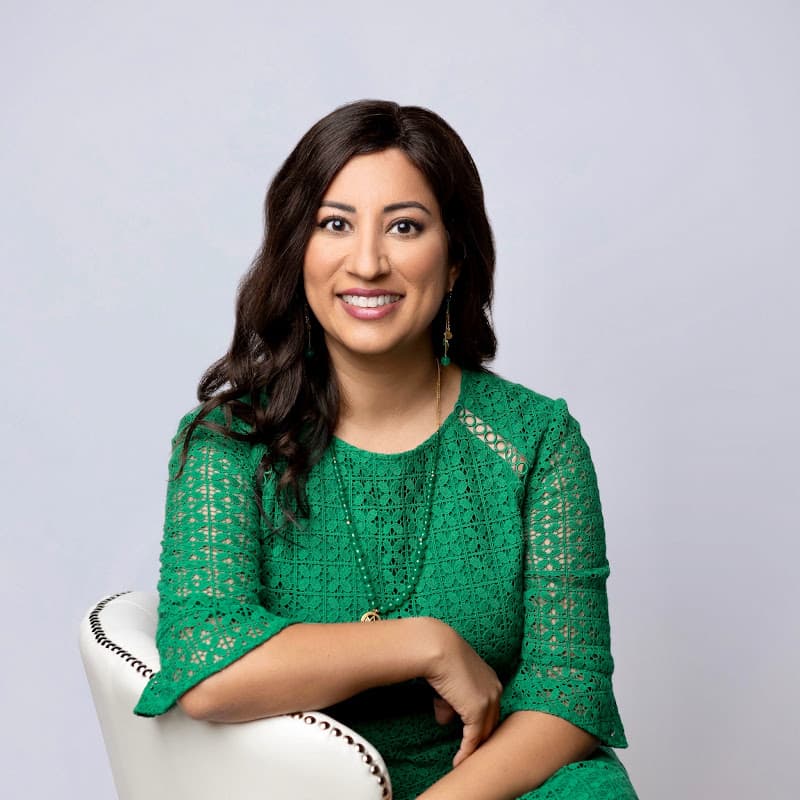
Full Transcript Introduction to the Gut Microbiome and Cancer 0:00 The gut microbiome can impact each and every disease that exists out 0:05 there is chronic inflammation, immune dysregulation, and metabolic changes 0:09 will influence cancer risk, and they start in the gut. 0:13 1 in 8 women are getting breast cancer. 0:16 And most people are thinking, oh well, it's their genetics. 0:19 Well, I can tell you right now, 95% of people, it's not their genetics. 0:22 Why? It's a lifestyle driven disease. 0:26 And I think we have to stop blaming our genetics for this and go, 0:29 what are we doing that we can actually control 0:32 and we can control what we put in our mouth. 0:35 This is doctor talks. 0:43 Hi everybody, 0:44 and welcome to this plant based cancer summit. 0:48 This is a we have a collection of exciting speakers. 0:50 And today we have we have a great physician, doctor Manisha Bono, a note 0:56 who's been who has a lot of a lot of different certifications. 1:00 She's the founder of Well Coola. 1:02 And she combines plant based nutrition, gut health optimization, 1:08 solar vitality, and she has expertise and certification in culinary medicine 1:12 into a transformational, holistic approach 1:16 to using her clinical experience to help people stay well. 1:21 Had better, happier, more vitality, better life, and certainly a lot of experience 1:25 seeking people with high risk of cancer or people who have cancer too as well. 1:29 So she holds certifications in mindfulness based stress reduction, 1:33 plant based nutrition, yoga therapy and are you Vedic medicine? 1:37 So she's an internationally sought after speaker 1:40 and she embraces these practices 1:43 that nourish the body, the mind and the spirit. 1:46 Okay. 1:46 So she wants to so we're happy to have her here today. 1:49 And we're going to talk about more about the microbiome. 1:52 Michael, it's an important topic. Well thanks for being here. 1:55 Yeah. Thank you. Thank you so much 1:58 for having me here today. 1:59 And I'm excited 1:59 to continue this conversation on, you know, plant based cancer solutions. 2:04 And I definitely think the gut microbiome is a key aspect 2:08 that is often under looked at. 2:11 Yes. And I think the microbiome 2:13 is a marker of the nutritional quality of a person's diet too. 2:18 So it can be used as reflect as indication of what the person is eating 2:22 and an motivational factor that a person is not eating healthily. 2:27 You could show them the markers in the microbiome that are showing 2:30 that what kind of negative impact their diets, having 2:33 to induce them to eat a healthier, to be on a healthier diet, to. 2:38 Absolutely. 2:38 I feel that there is still quite a big disconnect, that the food we eat 2:44 fuels our cells and how our body works to prevent all diseases, including cancer. 2:49 So, and one of the things is
Why Routine Bloodwork Misses Early Gut Changes 2:53 I often hear from patients, oh, well, 2:54 I went to the doctor and my blood work was fine, 2:57 but I want people to really understand 2:59 that that type of blood work that we get done is 3:04 really looking at late stage. 3:06 Right? 3:06 So when we're looking at our CBC or our chemistry or our lipid markers, 3:12 this is really more late stage changes and structural changes 3:16 that are already happening. 3:17 Or even the imaging where as taking a more proactive 3:21 preventative focus, you know, obviously using nutrition, we now have markers 3:25 that we can utilize to say how healthy is our gut microbiome? 3:30 And when, you know, this is really more recent research 3:33 in the last decade, we are seeing that the gut microbiome 3:37 can impact each and every disease that exists out there. 3:41 So why wouldn't we go in that direction and see what can we do? 3:45 I mean, honestly, I your data knew this 5000 years ago, 3:48 so modern medicine is just catching up. 3:51 And I think that's a good point. 3:53 You're making your your liver function tests are abnormal. 3:55 You have metastatic cancer or something serious. 3:57 The time your total protein, 3:59 your calcium drops in your blood, that means you have complete malnutrition. 4:03 It's like the very advanced stages of disease at the time. 4:05 The blood shows some damage. 4:07 The blood keeps this homeostasis of normalcy even while 4:10 your body is getting serious illnesses, until it gets to end stage. 4:14 So it's not it's not a good marker, right, of those test doctors use that anyway. 4:17 So you're saying we can identify certain markers before as something 4:21 advances that for to tell people they're doing something wrong. 4:25 Now that has to be fixed and not wait till the blood shows something. 4:28 Absolutely, absolutely. 4:29 So many of the factors that, you know, 4:33 when we have the root contribution being chronic inflammation, 4:36 you know, most people can identify, yes, I have inflammation 4:39 or you have immune dysregulation or maybe even metabolic changes. 4:43 Right. Because cancer does go in the spectrum of metabolic. 4:46 All three of these chronic inflammation, immune dysregulation 4:50 and metabolic changes will influence cancer risk. 4:53 And they start in the gut. Right. 4:56 So this will go undetected by routine laboratory. 5:00 And this is where we want to kind of go beyond 5:03 the conventional markers and just say all right I went to the doctors. 5:06 Everything was okay. 5:07 And really give us a much deeper insight into the gut cancer axis. 5:11 In fact, I feel that everyone should have a gut microbiome test annually 5:16 because this is one of the things they can control. 5:19 It's modifiable. 5:20 All these result factors are modifiable by the diet you eat. 5:25 So certain foods can help 5:27 establish a wide diversity and help a healthy bacteria in the gut. 5:31 Thickening the biofilm and a protective biofilm. 5:34 And certain foods could damage to that lining. 5:36 Create inflammation, throw out toxins. 5:39 So can you give a like a kind of a 5:40 summary of like foods that might help the gut and foods that might hurt the gut? 5:44 You know, before you go to the markers. 5:46 Yeah, absolutely. 5:47 So now we're getting to the end result of what everybody should be eating. 5:50 I it's a big picture is ultra processed foods, which is about more than 70% of 5:56 the American diet is going to damage your gut microbiome okay. 6:00 So that's number one. 6:01 Anything coming out of a package that has more than, say, three ingredients 6:07 or ingredients on it that you can't identify is 6:10 is going to affect your gut microbiome negatively. 6:13 Additionally to that diet that I have seen that are very imbalanced with, 6:19 okay, maybe now you're not doing ultra processed, 6:22 but you're eliminating major food groups like 6:26 legumes, plants, you know, these kinds of things. 6:29 When you eliminate them, you also create this new imbalance in the microbiome. Why?
Diet, Fiber, and Foods That Support the Microbiome 6:34 Because you're eliminating fiber. 6:36 So when I see individuals are like, okay, I'm not eating the processed food, 6:40 but I'm going to go into a more animal based diet 6:45 that then they create this inflammation pathway and not knowingly. 6:50 They're changing the gut bacteria that exist in their microbiome. 6:54 And by doing that, they might not feel the impact early on. 6:59 But a continuity of this will affect the way the body works. 7:03 So I think, you know, when I'm thinking about foods, it's really 7:08 fiber rich foods, whole foods, 7:11 prebiotics, probiotic rich food, and then 7:16 things that have resistant starches in them. 7:19 So these are the big categories 7:20 because we're really trying to feed our microbiome. 7:23 Right. And the foods are the most resistant. 7:24 Starch are legumes and lentils and stuff like that. 7:27 And teasing you I mean, I talk to people all the time 7:30 and I'm like, oh, so when, when did you have legumes or beans? 7:34 You know, and some people eat them maybe once a month and in the form of hummus. 7:40 And meanwhile I'm sitting here 7:41 eating for lentil soup almost every day if I can, you know. 7:45 And so this is very important for people to realize 7:47 that eliminating these big food groups is affecting 7:51 the status of your microbiome and what it can do to function. 7:55 Yeah. 7:55 And you know, I agree, because when people can't digest legumes 7:59 well and they get bloating and gas, they cut them out 8:03 instead of I tell them to cut down that habit every meal. 8:06 Small amounts with breakfast, small amounts with lunch, in small amounts 8:09 with dinner, 8:10 they can titrate to that little amount, but have it at every single meal, 8:13 and all of a sudden 8:14 they can start increasing large amounts 8:15 so they stay above the small amounts very frequently. 8:17 If they have it infrequently, they don't build the bacteria and the line. 8:22 The gut lining doesn't really improve their ability 8:24 to to handle those shoes without producing too much fermentation. 8:26 So yes, I think they, they gotta they can't just I can't digest beans. 8:30 Well, they have to train the body how to digest them right over time. 8:34 It's kind of like it's very easy to see on a outer level, 8:39 you know, and I, and I give this to my patients as comparisons. 8:42 Right. 8:42 So if you go to the gym 8:46 and you just work out once a week, you're not going to build your muscles, okay. 8:51 You can see that on the outside. 8:52 But same thing if you eat one salad or one 8:56 bowl of legumes a week, that microbiome is not going to change enough. 9:00 This is why it's the small things we do every day 9:04 that build the body that we become. 9:06 Yeah, really, that's really important point to make. 9:09 So and then you were saying that animal protein in particular 9:14 has effect to build certain bacteria that produces certain toxins, 9:19 and those toxins can promote and the inflammation 9:22 and even promote kidney damage and cancer from the bacteria produce. 9:26 Right. 9:26 And if multiple toxins that accelerate could it can inflame the body 9:31 when you have the regular exposure to animal products, 9:34 just like I have a regular exposure to beans, you know. 9:37 Yeah. 9:37 So so you had asked me before what what are some of the compounds. 9:41 Right. 9:41 So high animal diet, 9:43 high fat diets which animal protein diets are high in saturated fat. 9:47 There's no way to cut around that. 9:49 Diets with alcohol, diets with sugar and then the processed diets. 9:55 All of these will influence a specific enzyme in the gut, okay. 10:00 By influencing the gut bacteria that are there. 10:02 So this is one of the things that I test. 10:04 And it's absolutely fascinating 10:06 when I show it to people and they're like, oh my gosh, I had no idea. 10:09 So this enzyme is actually called beta glucan okay. 10:12 This is a enzyme. 10:14 It's produced by specific gut microbes, specifically cluster E coli Bacteroides. 10:20 They will make this and in adequate amounts beta glucan. 10:23 It has a great function. 10:26 It plays a role in kind of it's a chemical process called d conjugation, 10:30 where it takes the phase two of the enzymes 10:35 from the liver and helps the estrogen kind of move out of it. 10:38 But if we have too much of this beta glucan, 10:41 it is because we have too much of this bad gut bacteria. 10:44 It actually recirculate and brings those toxic elements back into our body. 10:49 And now we've got elevated circulating hormones that technically, 10:53 the liver worked so hard to remove from our body. 10:57 So that happens with high animal diet. 11:00 And the risk here is when that beta glucan is high. 11:04 And I and I do measure this in my patients and and we work very hard to decrease it 11:10 is it increases your risk of breast cancers 11:14 ovarian cancers and Demetrio cancer and prostate cancer. 11:18 So now when I think about my pathology career of diagnosing cancers, 11:23 and I have a breast cancer fellowship and 1 in 8 women are getting breast 11:28 cancer, and most people are thinking, oh, well, it's their genetics. 11:31 Well, I can tell you right now, 95% of people, it's not their genetics. 11:35 Why we test their genetics, you know, so 11:38 it's a lifestyle driven disease. 11:41 And I think we have to stop blaming our genetics for this and go, 11:45 what are we doing that we can actually control and
Gut Markers, Immunity, and Personalized Nutrition 11:48 we can control what we put in our mouth when we understand what we need to do. 11:53 Right. 11:54 And I think, like the tomato, the trimethylamine oxide, 11:58 the toxin that comes from the bacteria, can you measure 12:01 the bacteria levels that produce more of this toxins? 12:05 Female in the gut. 12:07 Yeah. 12:07 So those would be, you know, imbalanced amounts. 12:10 Having Clostridium, Bacteroides and E.coli is fine. 12:14 When we increase the and we create an imbalance diet 12:18 because we, we're eliminating legumes or eliminating plants 12:22 and all this stuff, and we're just eating animal protein. 12:25 We create an imbalance. 12:26 And those are the ones that are going to then grow out of control 12:30 and contribute to this inflammatory pathway. 12:34 Okay. 12:34 So what are what are some of the other more gut markers that you use 12:37 to identify people and motivate them to make more dietary, 12:41 increase their dietary fiber diversity and increase their resistant starch? 12:45 How do you show them they're not doing a good enough job? 12:47 The size the baiting for modest. Yes. 12:49 So it's kind of funny because everybody, as they start 12:53 the process says to me, I eat a really good diet. 12:56 I mean, I can't tell you how many times I have heard this. 13:00 I eat a really good diet. 13:01 And then they're kind of surprised. 13:04 And the gut microbiome is just one of the testing I do. 13:06 We have an entire protocol of more functional testing 13:09 that we do in my programs, but the beta blocker on it, this is modifiable. 13:13 The other one that relates to cancer is IGA. 13:16 So I g a is the main antibody. 13:21 It's really an immuno protein that's found on the gut lining. 13:24 And it acts like a bodyguard. 13:25 So it protects you against harmful bacteria viruses, toxins, pesticides 13:31 kind of trapping them and neutralizing them before they enter 13:34 and go into the bloodstream and go to the rest of the body and cause disease. 13:38 I measure Secretary IGA, and what I see is often 13:44 a majority of people have really high levels. 13:48 Which high levels indicate an active immune response. 13:51 It's usually due to or triggered 13:54 by chronic inflammation, food sensitivities, infections, toxins. 13:59 Now what happens is because it's an immune regulator, it can contribute 14:04 to this ongoing inflammatory environment, 14:08 thereby fueling tumor promoting pathways. 14:11 Right. 14:11 Because inflammation is that underlying pathway 14:14 of creating disease in the body. 14:17 So we know that the entry epithelia, lymphocytes 14:21 that lie right behind the villa in the small intestines flourish. 14:25 And they're dependent on green vegetable consumption, including lettuce 14:29 and cruciferous greens, to actually build the defenders at the gates of the castle. 14:34 Right. 14:34 So how do you get the patients to start to be eating, not just regularly, 14:40 but to better large amounts of these healthy foods to build their gut immunity? 14:44 Do you make it easy for you to blend salad? 14:46 Do you what do you do to get them to eat more of those healthy stuff? 14:49 So and it depends on the individual, because some people do 14:54 really well with salad, some people do very well with soups. 14:59 And I do take a personalized approach to it. 15:01 And I and I do add in an aromatic background 15:04 because I know some like from an irate standpoint, 15:07 not everybody is going to benefit from salads in that sense. 15:11 They will benefit from the ingredients. 15:12 So for them, we're recommending, you know, ten 15:16 vegetable soups or ten bean soups or something like that. 15:19 And because many people have grown up without the skills of actually 15:24 going in the kitchen and knowing how to fuel themselves and create meals, 15:28 I'm a big fan of one pot meals, right? 15:31 Or one sheet pan 15:32 roasting as many different colors of the rainbow as you can, can, or really 15:36 when you're having any meal looking at, do you have all the colors of the rainbow 15:39 to make sure you're getting as many different nutrients and 15:44 as possible, whether that's phytonutrients, 15:46 polyphenols, all these different compounds that are going to fight disease. 15:50 So with patients, we really start with where they're at. 15:53 I mean, if they're going from a standard American diet to like, let's just 15:56 clean up the diet, we go there if their diet is already pretty clean. 16:00 And now we're going into all right, let's see how we can optimize this. 16:05 So your symptomology and your gut microbiome are all kind of 16:08 heading in a better direction. 16:11 Yeah that's good. 16:12 So you know we know that we used to think that probiotics 16:16 were the way to establish good gut health. 16:19 But now we know it's the wide diversity of different plant materials 16:23 that leads to the healthiest gut and including, you know, like even, 16:27 you know, taking the oils instead of eating the whole not so seeds. 16:31 We get the fiber, we get the sterols, we get Stanleys. 16:34 The whole thing is to get a variety, different types of mushrooms, 16:37 different types of vegetables or pie and all this stuff. 16:40 And do you utilize or recommend fermented foods to where you don't? 16:44 We don't think that's what I do. 16:46 And it it really depends because so if I have an individual 16:52 that okay, where we're just trying to fix the gut microbiome 16:55 and they do not have say a histamine issue, like they don't have eczema 16:59 or anything else like that, 17:00 then yeah, I will absolutely recommend it for fermented foods. 17:04 If there's somebody who has like, you know, this eczema 17:08 or this kind of nasal drip and all this kind of stuff, we're going to hold off 17:12 on those until their gut is a little bit more repaired, because wise, 17:18 we won't be able to create that, that health inside of the microbiome 17:22 that we want because there's just too much damage there in that lining. 17:26 And they're going to be super sensitive to that. 17:28 But absolutely, I prefer probiotic rich foods over probiotics. 17:31 In fact, not all my patients are even on probiotics. 17:34 We focus on getting a probiotic 17:38 rich meal with like with every meal, which. 17:41 So that might look like if somebody is having oatmeal in the morning, 17:45 I might have them to put two tablespoons of plant based yogurt on it. 17:48 Or if they're having a smoothie, put that in there for lunch. 17:51 That might look like two tablespoons of sauerkraut or kimchi. 17:54 And then for dinner maybe a miso soup or something like that. So 18:00 I kind of talk through 18:01 what they're already eating and go, all right, how can we make it better? 18:05 Right. So you're already eating less. 18:07 Let's not make it more complicated. 18:09 How can we make it more nourishing for your microbiome? 18:12 Right. 18:13 And I do work with my chefs to to make some of those substances without salt.
Short-Chain Fatty Acids and Chewing for Better Absorption 18:19 We can have recipes to make some entered foods 18:22 without dousing a person with excess salt in their diet. 18:24 I don't think most of my cooking, like in general, does not have salt. 18:30 I use other spices to flavor my cooking, other spices, 18:34 and you could still ferment things without salt. 18:35 And we have so and then we just plus somewhat. 18:37 There are some other fermented products that can be utilized 18:40 that don't have salt in them. 18:41 Yes, that is so. 18:44 So then so now you have this person 18:48 who has some medical risk factors, their medical risk 18:51 improving their diet, and then they get a cancer diagnosis. 18:55 So then the question is how do you rev up the 19:00 how do you accelerate the intervention to be even more aggressive, 19:05 to help them prevent recurrence or survive with a cancer diagnosis? 19:09 Do you have any extra tips or tricks you do so 19:14 it depends where they are in their journey, right? 19:16 So if they are still receiving treatment and we want to make sure 19:21 that we're focusing more on the nutritional aspect, 19:24 making sure they're nourished, they're now if they are post-treatment, like say 19:29 a cancer patient is coming to me, they had chemo maybe a few years ago, 19:32 and their gut microbiome has not been restored because we know that 19:37 chemo will affect the gut microbiome. 19:40 That doesn't mean you don't take it when necessary. 19:42 It just means we need to address and rebuild this up. 19:46 The microbiome. 19:47 So same thing. 19:48 We go through the testing where we're looking at. 19:51 We will look at meal digestion. 19:53 Meaning when you eat something, are you able to break down 19:57 the food that you are eating? 19:59 Because if you can't break down the good food that you're eating? 20:01 Because most people, not most, but many people, once 20:05 they've had a diagnosis of cancer, they're like the next morning, 20:09 they're almost like, okay, now I'm just eating green juices and I'm doing this. 20:13 And without understanding 20:15 that, their body has to be able to digest those nutrients. 20:18 So if you're not breaking down food properly, 20:21 it could create inflammation again, even if you're eating the best diet. 20:24 So we look at mal digestion. 20:26 We'll look at three different types of inflammation. 20:30 One is looking at their food sensitivity type of inflammation. 20:33 And then the other one is also looking at those IGA markers. 20:37 We look at their gut microbiome 20:41 commensal bacteria, which commensal is the ones that you want to have. 20:45 You just want them in the right amount. 20:47 And then we look at the last one that I haven't given you is short chain 20:50 fatty acids. 20:51 And then we also look at pathogenic organisms. 20:53 Meaning do we have bugs there 20:55 that we might have picked up because our intestinal lining, 20:58 our intro sites were defective and they have entered our body. 21:02 So the one that we haven't really talked about yet is short chain fatty acids. 21:06 And in some people, 21:09 the first line is not to supplement with short chain fatty acids. 21:12 That is more of like a second third line, because 21:15 short chain fatty acids are your host biotics. 21:18 So we have prebiotic food, probiotic food, and post biotics. 21:23 Post biotics are created by the gut microbiome, by the gut bacteria. 21:27 So they make three compounds. 21:29 They make butyrate, acetate and propionate, which is short chain 21:32 fatty acids. 21:33 And research has shown us that short chain fatty acids 21:37 keep inflammation down right? 21:39 So they act as a primary energy source for our colon lining cells. 21:44 They protect and strengthen that intestinal barrier. 21:47 They actually promote immune tolerance, meaning that having adequate short 21:52 chain fatty acids can help your body identify between friend and foe. 21:58 All right. So these are very important. 22:00 And they will also influence gene expression. 22:04 Right. 22:04 So from the point of epigenetics and cancer suppression which is why 22:11 when we have low levels of short chain 22:13 fatty acids, it increases our risk of colon cancer. 22:17 It impairs our immune function. 22:19 It affects that chronic systemic inflammation. 22:22 And it will alter our cell signaling pathways. 22:24 Many, many patients have short chain fatty acids and even the plant based ones 22:28 because they're not breaking down the food they are eating properly. 22:34 So that is a problem. 22:36 So chewing would be number one. 22:38 And that. Right. 22:39 So I think that the to put that into action is that the food with the foods 22:45 that the highest resistant starch, if we weight rate 22:49 carbohydrates on a hierarchal scale of resistance, starch and fiber content, 22:54 we get beans, legumes, peas and lentils as the top. 22:58 And so eating those frequently is key. 23:01 But as you're saying, 23:02 if you swallow it whole and you don't chew it very well, 23:04 it's a combination of chewing with the epithelial growth factor 23:08 in the mouth and the nitric oxide mixed with the bacteria and the teeth, 23:11 and the right foods that combines to build and send the digestive enzymes 23:15 and all these beautiful compounds that are happening in our body. 23:19 Absolutely. 23:20 What reminds me of a study that showed that, you know, 23:23 we know that cruciferous vegetables and cruciferous vegetable intake 23:27 are linked to risk of common cancers, the higher level cruciferous intake. 23:31 But the but the data shows that the best correlation 23:35 is urinary urinary ISO file cyanide compared to intake
Practical Food Prep Tips and Closing Remarks 23:39 of cruciferous vegetables in general urinary isotype 23:42 isoleucine it's ITCZ is more an acute predictor of cancer risk 23:46 because it identifies the people that are chewing it better 23:49 when you eat, because if you cook it all, you destroy them. 23:52 I roast this enzyme that forms the ITCZ in the mouth, 23:56 because you break down the my roses from the glucosinolates in the vegetable 23:59 changes into the it sees as you chew and as you chew better. 24:02 You form our ITC. 24:04 So if you're putting sprouts or arugula on your salad and you're chewing 24:07 it better, you form ITC. 24:08 So it it really these tests delineate the people that are eating the food. Yes. 24:14 But also chewing it better 24:16 to create more nutrients in their blood, in their bowel and in their urine, 24:20 not just swallowing it whole and savable through undigested. 24:23 Absolutely. 24:25 I think I'm a big fan of purple cabbage. 24:27 I eat that every day, just like some crunchy purple cabbage on everything. 24:32 But I'm also chewing it. 24:33 And and so one of the tricks that I give people is, you know, 24:37 they're like, oh, I can't possibly eat more broccoli or cruciferous. 24:41 Like they just feel so, like heavy, right? 24:44 So I use a mezzaluna. 24:47 Okay. 24:47 A mezzaluna is a, 24:49 you know, for those chefs out there, it's like a kitchen contraption. 24:52 It's like basically like a handheld blade. 24:55 And it chops the stuff up into more bite sized pieces. 24:58 So you don't have, like, lettuce 25:00 or all that stuff hanging off the side of your mouth. 25:02 And then you're trying to chew it. 25:03 And that way you're also able to think of it 25:07 like a Cobb salad, where everything is kind 25:09 of chopped up smaller, and then you're getting 25:11 all the different colors and nutrients all in one bite bowl. 25:15 And I love that. 25:16 And people love using a mezzaluna because it's just fun to chop that way. 25:20 And it does it. 25:21 And it takes you to compare the food. Right. 25:23 But it also takes a lot of mindful attention 25:25 when you're eating to be able 25:27 to not want to swallow it too soon until you kind of liquefy it or, 25:31 you know, so that's I know you, you're putting that mind body together and having 25:35 and focus on the beauty of the food, the value of what they're eating 25:39 and how they're eating it all to make it improve their health. 25:42 Yeah. That's cool. All right. Well, pleasure having you. 25:45 Thank you so much for your contribution to this field of, of patient care 25:49 and to this summit as well. 25:50 And, you know, I hope everything goes well with you 25:53 and all your on the positive effect you have on all the people 25:56 that you, influenced positively. 25:57 So excited about that. 25:59 Thank you so much for having me on this time. 26:01 All right. 26:02 Take care. Bye bye. Bye, everybody. 26:04 See you in the next episode. 26:05 Thank you for tuning in to Doctor Talks. 26:07 We hope today's episode has enlightened 26:09 and inspired you on your path to optimal health. 26:12 Each day is a new opportunity to make choices but empower your wellbeing. 26:17 For more insights and strategies, subscribe to our podcast 26:20 and visit our website.www.drtalks.com. 26:26 Stay connected, stay healthy and join us next time on Doctor Talks. 26:31 Real talks from real doctors on the issues that matter to you most.

Comments