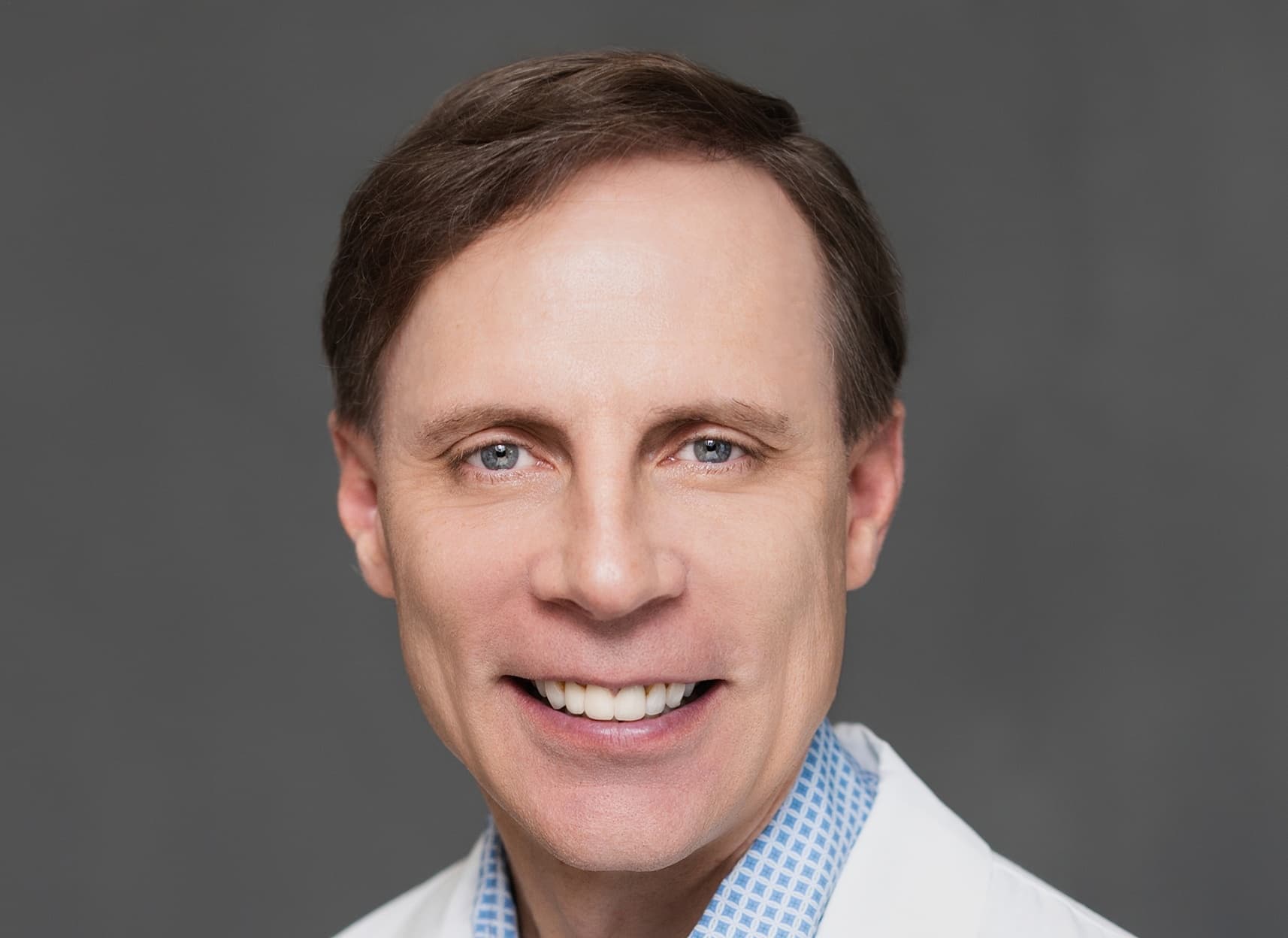
Full Transcript Introduction and Guest Background 0:00 Hi everyone. Hope everyone's doing well. 0:02 Today we have a special guest, Doctor Kelly McCann, 0:05 and she's an integrative doctor. 0:07 Practice is not too far from me. 0:08 It's a great practice in Southern California. 0:11 And today we're going to talk about mast cell activation syndrome and gut health. 0:16 This is very, 0:16 very important in terms of how defects, gut function, whole body health. 0:20 And so doctor McCann's really an expert on the subject. 0:24 And she's very unique. 0:25 She's only one of 35 physicians worldwide to have a residential fellowship 0:30 in the program of integrative medicine with doctor Will. 0:34 So that's very unique. 0:36 So doctor McCann, great to be with you. 0:38 Thank you so much for having me. 0:40 Doctor Stengler Yeah. 0:41 Tell us a bit more about your background. 0:43 I know integrative doctors. 0:45 It's becoming more common, especially here in California. 0:47 However, we're still limited numbers. 0:49 So tell us how you 0:51 went through your regular training and got into the integrative medicine. 0:55 I always wanted to do holistic medicine, and originally 0:58 I had considered going to acupuncture school, 1:01 but I made a deal with myself that if I got into medical school, I would go. 1:04 So I got into four medical schools and I thought, okay, well, 1:09 I guess I have to do this. 1:10 I went to Tulane, did the traditional medical school route, 1:14 got a master's in public health along with my medical degree, 1:19 and at that time started really learning about medical acupuncture. 1:24 I spent some time with a medical acupuncturist, learned 1:27 reiki and massage, and really tried to expand my toolkit 1:31 as much as I could continue that in residency, I did a residency 1:35 in internal medicine and pediatrics in Phoenix, 1:38 and then from there was able to do the fellowship 1:42 at the University of Arizona, worked and moved around 1:46 a little bit before I found my home in Southern California. 1:49 I did the Institute of Functional Medicine training. 1:52 So I have the that fellowship as well. 1:56 And then I went on and did training with Doctor Walter 2:00 and environmental medicine, realized that I needed to understand 2:04 mold and did some training with Doctor 2:07 Shoemaker, and then went on and realized that I needed to learn about Lyme disease. 2:10 So I kind of kept going with all of the 2:14 all of the complex chronic illness. 2:17 Lastly, realizing that all of my patients were getting more and more sensitive, 2:21 I couldn't do the usual treatments and discover Doctor Lawrence 2:26 Afrin and Marcel Activation Syndrome, and have been really focusing on that 2:32 as a foundational piece to really help people heal from complex chronic illness, 2:38 but also becoming more interested in a broader population, 2:41 recognizing that environmental toxicants are important, too. 2:45 And so now we're talking about Marcelle activation and gut health. 2:50 Yes. And also, you're a board member of the American Academy
What Mast Cell Activation Syndrome Is 2:52 of Environmental Medicine, so obviously well versed in all this. 2:55 So I came across you from a pharmacy. 2:59 We both, you know, use and you were doing trainings for doctors 3:03 on this topic and other one. So that was great. 3:05 So I'm like, wow, we got to get her on the series here. 3:08 So people a lot of the viewers probably have heard, you know, in recent 3:11 years, it's, you know, the terms been out there more mass syndrome. 3:14 I'm sure a lot of people don't fully understand 3:16 what it is because a lot of doctors don't. 3:18 So maybe give us the background to all that if you would. 3:21 Absolutely. 3:22 Mast cells are normal immune cells. 3:25 They are born in the bone marrow. 3:27 They're related to our white and our red blood cells. 3:30 And then they move from the bone marrow to the periphery, 3:33 and they line the areas of interface between ourselves and the outside world. 3:38 So they line our upper respiratory tract, our mouth, entire gastrointestinal tract. 3:43 They're in the lungs. 3:45 They're in the skin. 3:46 We have some in the brain. 3:48 They line the meninges and the blood brain barrier. 3:51 They also have a high affinity for our nerves and our vascular system. 3:55 So their job is to fight foreign invaders to their constantly 4:00 surveilling the environment, to look for foreign invaders. 4:05 And once they see them, they release what we call mediators, 4:09 these chemical messengers that are often inflammatory in nature 4:13 and then call out the immune system, hey, we got a foreign invader. 4:17 You got to come in and help. 4:19 You know, stave off the the attack. 4:22 And we want them to do this. 4:25 This is an important job that they do. 4:27 The problem comes in certain 4:31 people, in certain situations where the mast cells all of a sudden start 4:35 to become rogue, and they will misperceived a threat. 4:40 So they might see a food or a smell 4:44 or even touch sensations can be misperceived as a threat, 4:49 and they will start releasing their mediators inappropriately. 4:53 That's the activation piece. 4:54 And so what happens with patients is they become more and more sensitive 4:59 to things that normal people in close don't have problems with. 5:05 So they have to restrict their diet. 5:07 They start to have to restrict their lives. 5:09 They have to be very careful about their personal care products, sense smells. 5:14 Basically, their lives become smaller and smaller and smaller. 5:18 And when you have, for example, a mold exposure 5:22 that's triggering the mast cells and they're doing their job, 5:26 you you can have all this external problems and sensitivities 5:32 which complicate the body's ability to handle the treatments. 5:36 So until we get those mast cells calmed down, we can't do a mold detox treatment. 5:42 We can't kill Lyme disease, for example, and really help people get better. 5:47 Yeah. So very fundamental. 5:49 How do you tie in this mass occupation syndrome and get health 5:53 because there is a connection maybe director indirectly. 5:56 Could you link that for us? Absolutely. 5:59 So many many of the Marcel's are in the mucous membrane 6:03 in the gastrointestinal tract. 6:04 And so that's one of the first places that people tend to develop symptoms. 6:09 In fact, Doctor Afrin tells a story about his first three muscle patients. 6:15 And they all had burning, tongue burning mouth symptoms. 6:19 So people would eat something, they'd get burning tongue, 6:21 and then the burning tongue just persisted. 6:24 Most of my patients don't have burning tongue. 6:27 That was really kind of a more unique presentation. 6:30 But any issues in the GI tract? 6:32 So it could be heartburn, reflux. 6:35 People can have test pain from eating things. 6:38 They can get burping, gas, bloating, diarrhea, constipation. 6:43 I had one woman. 6:45 She had chronic diarrhea for probably 20 years and gave her ones. 6:50 Their tech didn't get better, gave her a second zero tech a day. 6:53 So now she's on bad dosing. 6:55 And then by the time we got to three zero a day, the diarrhea went away. 7:00 And this was after years of trying many, many, many other things treating her for, 7:05 you know, all the usual suspects, including parasites. 7:09 But it wasn't until we treated 7:10 the mass activation with antihistamines that she really noticed a difference. 7:15 Then, in addition to Marcell activation, there's 7:19 another condition that's strongly associated with Marcel issues. 7:23 Histamine issues in the gut that I want to mention called histamine intolerance
Gut Symptoms, Histamine Intolerance, and Testing 7:27 and histamine intolerance and Marcel activation are not the same thing, 7:31 although one person can have both conditions. 7:35 There are two main ways that we get rid of histamine in a body. 7:40 One is through methylation, 7:43 and that's not the one that's relevant for histamine intolerance per se. 7:47 But there is an enzyme called Deyo. 7:50 And the Dow enzyme 7:53 is responsible for breaking down histamine in the gastrointestinal tract, 7:58 which 7:58 means if you're eating high histamine foods, 8:01 if you're eating foods that trigger Marcell activation degradation, 8:06 and you have higher levels of histamine in the gastrointestinal tract, 8:10 or you are deficient in your daily enzyme production, 8:14 you're going to have histamine intolerance symptoms. 8:18 And these symptoms can be predominantly gastrointestinal. 8:22 Or they could result in headaches fatigue, migraines. 8:27 I have one patient who has d o deficiency and he gets hypertension. 8:32 So every time he eats something if he doesn't 8:35 take his down Simes his blood pressure shoots through the roof. 8:38 Now that's unusual. 8:40 But you know, it's possible to have 8:43 a myriad of different symptoms coming from Marcel. 8:47 Activation issues in the gut or histamine intolerance in the gut. 8:52 So if your patients, let's say they got multiple multiple food sensitivities, 8:56 they got irritable bowel syndrome, inflammatory bowel disease, acid reflux, 9:01 I presume you're always considering needs as issues going on with them. 9:05 And they probably get missed by a lot of practitioners. 9:08 Absolutely. 9:08 One of the easiest things to do when you're trying to work up somebody 9:13 with Marcel Activation, particularly if they have a lot of gut issues 9:17 and they're also working with a gastroenterologist, is 9:20 if they have had an endoscopy or a colonoscopy, 9:25 we can request a special kind of stain for mast cells. 9:29 So the special stain is called CD 117. 9:34 And it looks at mast cells. 9:37 You can request for a count of the mast cells per high power fields. 9:43 Now it's suggestive of not diagnostic for mass activation. 9:49 But if you have greater than 20 mast cells per high power field in the biopsies, 9:55 that's highly suggestive that there might be some Marcel issues there. 10:00 Are there other tests you like, maybe indirect, 10:03 that you like to use as well to kind of work patients up for this? 10:06 Besides, there are signs and symptoms. 10:09 Yes. Now it's really a clinical diagnosis. 10:12 And we love laboratory values to help support that diagnosis. 10:17 And just a brief aside, there are two consensus 10:22 groups who have diagnostic criteria. 10:25 Consensus one is typically your conventional allergies. 10:30 They have one test that they do called tastes. 10:35 And there are specific requirements. 10:37 So for example, if someone has a baseline of a certain number 10:41 and then they're in a flare and they have a higher level 10:45 than they meet criteria, it's very strict rigid criteria. 10:48 Trip days is more related to the burden of mast cells, the number of mast cells. 10:53 So much better for identifying people with master's 10:58 than Marcel activation. 11:00 And then there's consensus two, which is doctor Afrin doctor theater 11:05 heritage and and all of my colleagues. 11:09 And that's a much broader definition. 11:12 As I mentioned, it's a clinical definition. 11:14 And then for supportive laboratory evaluations, 11:18 we can use the stains, the CD 117 stains. 11:22 And then additionally there are a variety of biomarkers 11:26 that we can check in labs both in blood and urine. 11:29 My favorites if I'm using a commercial lab, 11:33 there's only really three that you can do through a commercial lab 11:37 that's trip taste, chroma and a. 11:39 As long as somebody is not on a proton pump inhibitors, 11:43 because that will falsely elevate the chrome granite A and then histamine. 11:47 Now histamine is not a perfect marker because there are other cells 11:50 that make histamine. 11:51 But if you have an elevated histamine level 11:55 at least two times, that's that's good enough for me. 11:58 And then there are some specialty labs that you can do as a send out. 12:03 Part of the challenge is that the blood needs 12:07 to be refrigerated, the urine needs to be refrigerated. 12:11 And so not all facilities have a refrigerated centrifuge 12:14 to handle the blood properly, such as prostaglandin or heparin.
Treatment Approaches for Mast Cell Issues 12:19 And luckily for us here in Southern California, 12:23 I've worked with Hoag Hospital locally so that their pathology department 12:28 knows how to handle the other markers that we can check. 12:32 So we can check methyl histamine, which is a histamine metabolite. 12:37 We can check some leukotriene markers and some prostate gland in E2 markers 12:42 and their downstream metabolites in 24 hour urine spot urine. 12:47 And then the blood work that I mentioned. 12:50 Oh, nice. Nice. 12:51 So what kind of therapies are you using with your patients 12:54 digestive and otherwise have these issues going on. 12:57 What do you like to use? 12:58 And I know 12:59 there are many different ways to do it, but what do you like to focus on? 13:02 Yes, there are so many different ways. 13:05 If people seem like they have a lot of histamine issues, 13:08 we will do a trial of a low histamine diet. 13:11 I'll also try people on down enzymes 13:14 and recognizing that not all do enzymes are the same. 13:19 People may have to 13:20 try a couple different varieties in order to see if they're helpful. 13:24 Do that for a couple of weeks. 13:25 If they're not helpful, then they probably don't have histamine 13:29 intolerance and so we can move on. 13:32 I like to start cheap and easy right. 13:34 So over-the-counter antihistamines, your Claritin Allegra Eisele are fantastic. 13:41 Some people do very well with Benadryl. 13:44 And then there are prescription versions of those. 13:46 For the people who are seeing a practitioner who have prescriptive 13:50 privileges. 13:51 I use hydroxy seen a lot, which is like Benadryl. 13:55 There's clarinets. 13:57 I'll also use singular, which is a leukotriene inhibitor for some patients. 14:02 And that's been very effective. 14:04 We will also use H2 blockers. 14:07 So this would be Pepcid. 14:08 And there are a couple of prescription versions of the H2 blockers. 14:13 I love a trial of Crumlin. 14:16 I give almost everyone Crumlin which is in a different category. 14:20 It's a mast cell stabilizer for most patients. 14:24 It's not that helpful. 14:25 But for the 20 to 30% of patients 14:29 for whom it is helpful, it is a game changer 14:32 and it works differently than some of the other medications. 14:36 It really coats the gastrointestinal tract. 14:39 And so it's taken before meals and sometimes before bedtime, 14:44 and acts as a barrier between whatever somebody is eating 14:49 and the masses that are in the mucous membrane. 14:52 So that's how Crumlin works. 14:54 Another one of my favorites is key today Finn Katahdin is a H1 blocker. 14:59 Marcel stabilizer compounded medication. 15:02 I love it because it's super clean for patients. 15:05 They don't have to worry about any of the inactive ingredients 15:09 in the in the pharmaceuticals and can be. 15:13 The doses vary greatly. 15:15 Typically start out at like 0.5mg twice a day. 15:19 I have some patients on nine eight nine milligrams three times a day. 15:23 So there's a lot of variability in the dosing for folks. 15:28 And then there are lists and lists 15:31 of herbal muscle stabilizing supplements. 15:35 And the list is very long. 15:37 So we can use things like quercetin luteola 15:41 pyramid resveratrol Tulsi. 15:46 Yes the list goes on and on 15:49 etc.. 15:50 And how do you find the natural agents are comparable to the drugs? 15:54 I'm sure berries depending on the person. 15:57 Is there a percent 25% is strong 16:00 or potent or is it just very so much person to person? 16:03 It varies so much from person to person. 16:05 And oftentimes we need to use more than one agent. 16:08 It's rare that you're going to be able to stabilize 16:11 all your mass cells with like 1 or 2 things. 16:15 Most people need, you know, 4 or 5 things, particularly when they're in a flare. 16:19 And so the hope is that we come everything down 16:22 and then they figure out, you know, what do I need to take in a flare? 16:26 Maybe they need extra Crommelin, maybe they need an extra antihistamine. 16:31 Maybe they need more question or luteal. 16:34 And honestly, I teach my patients how to muscle test because, 16:38 you know, I've got 70 different things that you can try. 16:43 Oh, we got a narrow it 16:44 down somehow, because otherwise we'll be here forever. 16:47 Just trying to, you know, find things through trial and error. 16:52 So let's say your patients, let's say they got multiple multiple food 16:55 sensitivities, environmental digestive problems. 16:59 Again, it's going to be better on the person
Root Causes, Leaky Gut, and Practice Information 17:01 how long they've had the problem, how bad it is. 17:03 But you probably see a lot of your patients probably within 2 to 4 months. 17:07 You can see some signs of good improvement. 17:10 Is that would that be accurate or what do you kind of notice 17:13 people with chronic issues? 17:15 Absolutely. Yeah. 17:16 We want people to get better as soon as possible. 17:20 And it's really multifactorial. Right. 17:22 So we're trying to move the needle to reduce the symptoms 17:25 while simultaneously trying to figure out what is the root cause, 17:29 what is the driver for this thing. 17:31 Because there's a reason that the mast cells are going rogue, right? 17:34 They're not doing it for fun. 17:36 Nobody does for fun. 17:38 Most commonly I see it's mold. 17:41 Mold is one of the hugest drivers 17:43 for Marcel activation, but it is not the only one. 17:47 It can be MF. 17:48 It can be chronic infections like Lyme, Bartonella, Berbizier. 17:52 It can be viruses. 17:54 It can be environmental toxicants. 17:57 It could be a heavy metal. 17:58 It could be you just renovated your home 18:01 and now you've got all these from all the building materials. 18:05 And it just turned the wildfire on in the mast cells. 18:08 So it's really important not only to get people better 18:11 but to find the root cause, because otherwise 18:13 we're just going to be playing whack a mole with symptoms. 18:16 And that's not really a good, good point. 18:19 What? 18:19 How often do you see leaky gut syndrome and dysbiosis with these issues? 18:24 Is it an indirect cause is caused of it just varies. 18:27 What do you what do you find with that? 18:29 I think that all of the drivers 18:32 for Marcel Activation contribute to leaky gut, right? 18:36 People say you're mold exposed and you get colonized with yeast and mold, 18:42 and then the yeast and the mold infiltrate 18:45 the gastrointestinal tract, and they destroy the gut lining. 18:50 Now you've got leaky gut. 18:51 You're going to have more food sensitivities and more reactions 18:55 to things. 18:56 And so it's really a dance of trying to, you know, calm down. 19:01 The mast cells, identify the root causes, heal the leaky gut so that you can 19:06 eventually start to eat more foods and calm down that immune response. 19:11 So there's many, many things going on simultaneously. 19:15 Yeah. Very good. 19:17 Well, fortunately we have doctors like doctor McCann who understand all this. 19:21 It is very cutting edge and it's very much needed. 19:23 Helps a lot of people. 19:24 Tell us a bit more about your practice, 19:25 where it's located, the website, because this is something, again, 19:28 there's not a lot of doctors who have expertise in this area. 19:31 And it's very common problem. 19:32 So tell us about that if you would. 19:34 Thank you. 19:35 So my practice is located in Southern California in Costa mesa 19:40 near Newport Beach. It the website is the Spring center.com. 19:45 We are accepting new patients. 19:48 It is a membership based model. 19:50 We do require that patients from out of the area and out of the state 19:55 come and see us for their first inpatient appointment. 19:59 I do have medical licenses in a variety of different states, 20:02 so you can reach out to the staff and ask about that 20:06 if you don't live in California. 20:08 And yeah, we'd love to see new patients and help you on your journey. 20:13 I also have a personal website. 20:16 It's Doctor Kelly McCann. 20:18 Com I have a webinar series where I'm inviting colleagues of mine, 20:23 and we have a fun kind of summit style conversation on a regular basis. 20:27 And there's a membership for the webinar series, blogs and other courses as well. 20:33 Excellent. 20:33 Hey, thank you so much for your time, doctor McCann. 20:37 You're welcome. 20:37 Thank you for the invitation. 20:39 I appreciate it very much.

Comments