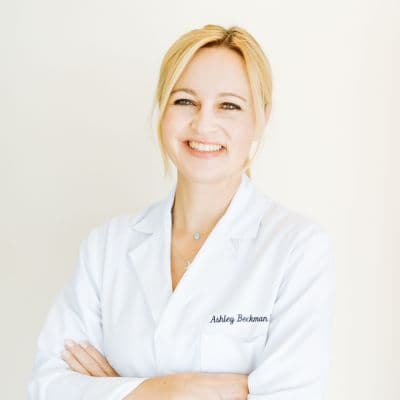
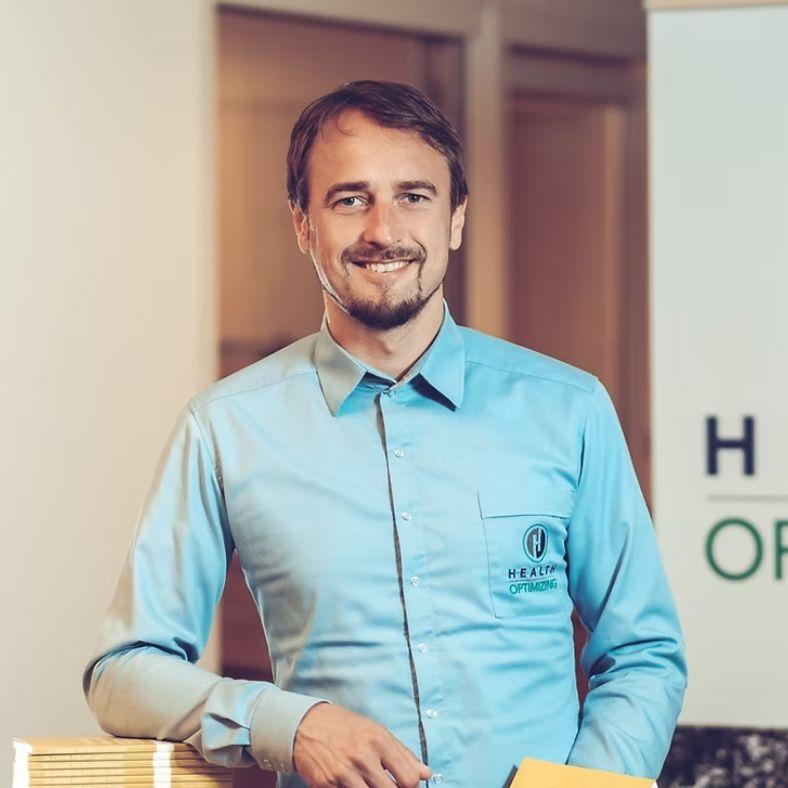
Full Transcript 0:00 And there are no simple solutions to the totality, but there all simple solution to each aspect. 0:05 You just need all the pieces of the jigsaw puzzle. 0:08 Like even for assessment, if you have a huge jig saw puzzle, But you only have three pieces, of that jigg saw puzzles, it doesn't matter how good they are. 0:16 Right. 0:17 you still cannot see the overall picture. 0:19 like blood tests for example, If you do all of blood test that exist in the world, You still have information about less than 1% of what is going on in 0:28 your body. 0:29 What if aging isn't about slowing down, but leveling up? 0:32 I'm Dr. 0:32 Izzy Jones. 0:33 This is the Longevity Leaders podcast. 0:36 Hi, I am Dr Ashley Beckman here on the longevity leaders podcast, and I m here with Thomas Oxness. 0:42 We're so happy to have you today. 0:45 Thank you for having me. 0:46 So you address a lot of different and unique instances and clients. 0:52 So is there something that we can dive into that will help people understand a little bit about how you work and what specific tools you use? 1:02 I think maybe to go into the basis of why disease develops in the first place, because that is something we have been exploring in great detail through 30 1:13 years now. 1:14 So what we've found, and I guess this comes as no surprise, but there are always causative factors for why this is developed. 1:23 But we haven't gone really deep into finding out what are the underlying causations that make it possible for problems to develop. 1:31 what triggers the disease development and why doesn't our self-healing mechanisms manage to deal with this. 1:39 And what's so interesting is that if we have a hundred people with the same diagnosis, Not even two of them have the same combination of causative factors. 1:49 And this is why we need individualized medicine, because it is always a different combination, of course, with the factors and there's always the combination. 1:57 Everything is also multifactorial. 2:00 If there is one challenge that our body has to deal with, the self-healing, self regulated mechanisms can easily deal that. 2:08 Right. 2:08 Yeah. 2:09 And we have this incredible self-healing, self regulating mechanisms that should be able to deal with everything we get exposed to. 2:16 It's just in the modern society, still a lot of people get in trouble and there's a combination of factors that make it possible for disease to develop. 2:25 Underlying causations that create that soil, which disease can develop in, something that triggers the development. 2:32 Other factors are responsible for why we can't fix it when it's early emerging. 2:36 And all of a sudden you have a disease development It's amazing because in the functional space, people just say, oh, we need to find the root cause. 2:45 But there's never one root clause. 2:48 And again, when you're looking at the body in many different layers and mental, emotional, spiritual, just because you've been exposed to a toxin, 2:56 you can get rid of the toxins, but the symptoms stay the same, right? 3:01 We have to address so many layers. 3:03 So what are some of ways that you do that? 3:07 Well, I want to make a comment to something you said first. 3:11 So people who have the same causative factor, like you mentioned, the toxin, or it could be a virus, it can be stressful situation, 3:19 whatever the causitive factor is, and the problems can express in different ways from that. 3:25 The genetic disposition is part of deciding what problems you will develop from those causatives factors and also what particular combination of factors 3:36 there are. 3:37 So we certainly need to find out in each and every case what is behind the problems developing and I think that is even more interesting than than just 3:46 looking at putting a name to a symptomology, to giving a diagnosis for something. 3:53 Because at least if you want to comprehensively solve a health problem, then it doesn't help to know what the disease is. 4:02 What you need is to find out why did this disease develop and to address those factors. 4:08 Now in the current medical system, there isn't that much focus on solving health problems. 4:14 There's more focus of disease management. 4:17 And I think in those cases where the diseases cannot be prevented or where it cannot reversed, then symptom management or disease managements might be 4:29 better than nothing. 4:30 So I'm not saying that there's something wrong with that, but there is something about the sequence that we should first attempt to fix the problems by 4:38 the roots. 4:39 If that with today's methodologies turned out not to be possible, then disease management might be better than nothing. 4:48 So it's just when to implement what. 4:52 And so I am on a mission to redefine the medical paradigm. 4:55 And what I foresee is a paradigm where we utilize all the latest advancements in technologies to be able to measure everything that's going on in the body, 5:05 to have effective methodologies to address each and every aspect of what can go wrong, and to stimulate the self-healing processes that are needed to resolve 5:16 the problem. 5:17 and then to make it as rare as possible to be in need of disease management because we should really strive at fixing this. 5:28 Yeah, it's frustrating here because so many patients keep chasing more diagnosis, right? 5:34 It's like they get something out of it because they feel comfort in that other people have symptoms like them. 5:41 And it is something that I come across with clients and I'm sure you do, especially coming here now, that everyone almost wants more diagnoses because 5:51 it comforts them somehow. 5:53 And it's not getting to any of the reasons of why they got sick. 5:57 But I think it is often because they think that that might help solve something and they don't know that there are ways to fully comprehensively find and 6:06 fix the roots of a problem and to turn it around. 6:09 A lot of our clients don't even know that the body has self-healing capabilities. 6:14 So I think the awareness of what exists, awareness even of own magnificent self healing capabilities, we need to raise that awareness. 6:26 We need educate and we also need bring good methodologies to those people who are in desperate need of it. 6:35 And definitely give them tools where they can keep implementing at home because when they get, they could be in your space, 6:41 right? 6:42 And get into a wonderful place. 6:44 And then they'd get dragged back to their reality at-home or their day-to-day thoughts. 6:49 Then they got pulled back into that mindset of identifying with being sick. 6:54 Yeah. 6:55 And then there are so many different opinions on things, like even amongst the thought leaders out there who have a big following on social media, 7:03 there's so much different opinion. 7:05 Yes. 7:06 I think we should try to walk a little bit away from opinions and things when there is actually a possibility to test these things. 7:15 We have a combination of 13 state-of-the-art assessment technologies where we can measure 20,000 factors in the body, we measure many, 7:26 many pieces of the jigsaw puzzle of how things are functioning and in 9 out of 10 cases we see that overall picture of where the rod is functioning, 7:35 what is leading to what Many of the factors that are today addressed as a problem is actually a compensation or a response to a program. 7:45 If the body is responding to your problem, trying to fix it or compensating for that, that is not what we should interfere with. 7:52 We need to find out what are the roots. 7:56 and to map it all out. 7:57 And a few years ago that was not possible. 8:00 Today it is possible, thanks to all the latest advancements in technologies and efforts that we've been doing for 30 years to put together everything and 8:10 put this jigsaw puzzle together. 8:14 Now we need to actually measure things and to do a more science-based approach rather than looking, as you said, for their root cause because that doesn't exist. 8:28 And also rather then just having opinions on things where you can actually measured it. 8:33 Put it to test. 8:34 What are some of the tools that you're using now? 8:37 Can you share them? 8:39 So we have a combination of 33 state-of-the-art tools. 8:43 So each of the tools work in completely different ways, because there are so many different aspects of what can go wrong in the body. 8:51 Maybe to mention, for the assessment, we use standard technologies like electrocardiograms, and we used different types of functional analysis, 9:02 like CT scans. 9:05 We use a lot of the conventional methodologies, but the most important is everything else that we add to that, because we want to measure as much as possible. 9:13 So we have methodologists to the charge of cells. 9:17 We can measure the exchange of ions over the cell membranes, and we can actually measure that in local areas of our body. 9:28 like with a factory, if you know that with the normal production, this is what goes in, and this what comes out, then you can monitor what's going in and 9:37 out and then see if they're changing the production. 9:39 Maybe producing more, producing less, changing to a different production? 9:42 That's how we can see also what is actually happening in the cells. 9:45 We can also see the sodium-potassium exchange, what we call this with ATP production and it fuels all of the big processes in cells, 9:52 We can measure the nitric oxide levels. 9:54 So we use all the state-of-the-art conventional methodologies and a lot of proprietary methodologists that we have been part of developing and in total 10:04 we get to 20 000 parameters and then we put all of these pieces of the jigsaw together to then understand what is actually going on. 10:14 So we have on our European website healthoptimizing.com, there is kind of a list of the technologies we use. 10:21 It's not an exhaustive list, it's all explaining things very much in detail, but it is an overview. 10:29 And what about here in the States? 10:31 So here in the States, we are not doing things under the European organization, but in collaboration with the Europe organization. 10:38 So we set up the first clinic now in United States. 10:41 Is it Marleybeer? 10:42 Yes, right by me. 10:44 Yes. 10:45 And so it's right across the pier at Malibu Plaza and it is a beautiful clinic and I actually quite enjoy living in Malabu now. 10:55 And we have all of the technologies there. 10:59 We have research protocols to also be able to use technologies that are not yet FDA approved for being able to implement in other clinics. 11:10 But every single technology that we have are under IRBs or already FDA-approved. 11:15 Our main diagnostics are already fully FDA registered. 11:20 And what about on the more either suppressed trauma, mental-emotional side, what are you doing to help identify some of those things that are really impacting 11:31 their healing trajectory? 11:32 So also for that we use a combination of specialists and giving them the right tools and the education for how to use those tools. 11:42 So on that side we headhunt the best psychologists. 11:47 Then we used tools like voice analysis with pattern recognition. 11:51 So we can see repeating patterns and we see what those repeating pattern means. 11:56 We can find childhood programs and direct the dialogue based on that specific information. 12:02 And while we're doing the cancelling, we are also picking up that pattern recognition on the voice. 12:06 You can also see the emotions behind what is being said. 12:08 Again, you can pick up those repeated patterns that are the most important to address. 12:13 At the same time, we use EEG systems with a pattern recognition on the brainwaves. 12:18 So we can see very specific patterns. 12:20 We have a huge reference database where we see what that correlates with. 12:25 And then we also have technology where you can regulate it. 12:32 We can set the predominance of the brain so we have more ability to make an impact through the dialy. 12:40 We have another technology we use at the same time where we can stimulate activity in different centers of our brain. 12:46 And we regulate the Brain chemistry with specific forces that activates the brains own regulation of these biochemical factors. 12:56 and we use the technology where we can activate subconscious processes. 13:01 So we do all of this combined with the counseling to find out how to target their dialogue and also to be able to make more impact therapeutically because 13:10 of the way we're doing the therapy together with a conversation. 13:16 So that's just an example for everything we do. 13:19 We have the top experts and then we have a combination of tools that enables that expert to do a much better job than they could otherwise do, 13:27 like with what you used as an. 13:29 Example here, our psychologists, what they say, pretty much all of them is that they can do more now in one single session than what I could previously 13:40 do in a whole year of weekly or bi-weekly sessions. 13:43 That makes sense. 13:45 What about, so when someone is coming to you, what type of clients are you seeing? 13:52 So we have historically helped mostly clients who could not find help anywhere else, because we've never had an advertisement anywhere in the world. 14:05 And we ever had more than 700,000 clients across a total of 209 clinics before we even came to United States. 14:09 All of the 700000 plus clients came through the word of mouth. 14:18 But those who come through the word of mouth are those usually who've tried everything else, nothing else works, then they keep hearing about how maybe 14:26 going to this clinic in all way potentially could solve it. 14:30 We have a lot of Americans also coming every single year, or not the same coming, every month we have people coming to the European clinics from the United 14:42 States also. 14:43 And they typically have problems that nobody else can help with. 14:47 And there are diseases typically in the category of chronic fatigue, digestive diseases, cardiovascular diseases and mysterious syndromes of this or that. 15:03 What we do is to put every client through the same process of assessing everything that we can assess with our technologies. 15:11 From that we can put the pieces of the jigsaw together to see the overall picture and we don't have all the piece of jig saw but when there are some pieces 15:21 missing we know a lot about them from understanding the over all picture. 15:24 So then we will do some biochemical test or some other test just to fill some extra gaps if that is even needed. 15:31 And then once we mapped it all out, we make a plan for how to address each and every aspect of the problem. 15:38 So we address the underlying causations, each of trigger factors, other more indirect causative factors. 15:46 Compromising the body's ability to self-heal. 15:49 each of the consequences of that problem, each aspect of problem itself. 15:54 And then once we've created a potential for healing by addressing all the roots and all aspects of a problem. 16:02 That's when we stimulate the body's intrinsic self-healing mechanism so we can reactivate those mechanisms. 16:08 If you're a medical doctor, nurse practitioner, chiropractor, or other health expert that's stuck in a broken system, there's a better way. 16:16 The Freedom Webinar shows you a proven five-step system to build a seven-figure virtual health practice or how to modernize your current brick and mortar 16:28 practice without the burnout. 16:30 Learn to create high ticket programs, automated income, residual revenue, and attract clients ready to work with you. 16:38 Book your million dollar strategy session today by clicking the link in the description. 16:48 So I'm sure you're seeing this, but it sounds like you've probably been seeing it for decades is the rise in complex chronic illness, 16:56 right, where they just have so many layers, so much emotional trauma, suppressed emotions and grief and than let alone all the toxins that we're exposed 17:07 to here. 17:07 Exactly. 17:08 Are you seeing a difference between your European clients and the United States clients? 17:13 There's definitely a different. 17:15 And especially you mentioned toxins and I think that's where I see the biggest difference. 17:20 Malt toxicity is so common here. 17:23 Toxicity from cavitations and root canals is common. 17:28 We don't see those things very often in Norway. 17:31 You see it more often than other European countries, but not anywhere near what we see here in the United States. 17:37 and also with the total overload of toxic elements. 17:41 We have amazing detox capabilities, but if you expose yourself to more toxic element than your capacity to detox, then what happens is you start accumulating. 17:52 And when you accumulate toxic elements, that's when get in trouble after some time. 17:57 So even things that aren't that toxic, like your safety studies showing that, oh, you know, this is not that. 18:04 But if you start accumulating for years, maybe 10 years maybe 20 years. 18:10 That's, when really get into trouble, it will impact even at the cellular level, the ability to maintain the healthy aerobic function. 18:19 I don't know if this is also something you see in Europe or not, but out here, our kids are very sick earlier and earlier. 18:27 Again, a lot of it is these toxin exposures. 18:30 Do you work with kids? 18:32 We also work with kids, definitely. 18:34 The statistics in the United States, I find it very interesting. 18:37 60% of the whole population have one or more chronic illness, according to CDC. 18:42 And above 35 and up to 65, there's 75% who have on or chronic illnesses. 18:51 And for the seniors above 65, it's 90 percent who have one or more chronic illness. 18:58 But the fact that the total average also is at 60 percent, which equals also from 18 to 35 as a standalone group, and it is quite extraordinary. 19:11 And it has to do obviously with lifestyle, with toxic elements in food, even The food has a big role. 19:20 There's a difference between food in Norway and the food United States. 19:25 But I also think it has something to do with other lifestyle choices. 19:29 For example, if something, let's say you get a flu virus. 19:35 then your body wants to fight that. 19:37 And if you can't fight it off easily without really activating more of the body's defenses, you will create a fever. 19:46 Right. 19:47 That is your buddy choosing to increase the temperature so that you could fight the pathogen with more ease. 19:54 And at 104 degrees, you have from five to 200 times more effective ability to fight off a pathogen, depending on which pathogenic it is and which immune 20:04 processes are compromised in the first place. 20:06 So that's just an example of in this country, the fever is seen as the problem, while in reality, that fever, is an amazing mechanism that helps us fight 20:19 the virus in a better way, right? 20:21 and everyone pops a fever reducer at 99 or 100 just very quickly. 20:28 Do they not do that in Europe? 20:30 Well, in some countries, and even in Norway it sometimes happens, but I mean, there's no logic behind it. 20:36 No. 20:36 So when the body is trying to fix the problem, activating an amazing mechanism to do a better job, then we should not interfere with that. 20:46 I think the way people are educated, even the doctors are advising their clients, is not always the greatest when the advice goes against our ability to self-heal. 21:03 Education is one of the biggest factors that needs to change to create a healthier population. 21:11 Yes, especially education in our medical system. 21:14 Yes. 21:17 It's not ideal, definitely not going and allowing the body to self-heal and do what it knows best. 21:23 And you know, the body's self-healing mechanisms are absolutely extraordinary. 21:28 Like we all heard about miraculous healings. 21:31 Yes. 21:31 When I was sick, I needed a miracle to happen. 21:34 I Was extremely ill and I started studying miracles to see does it happen? 21:40 Everybody said you need a Miracle. 21:42 So my scientific mind, you first had to find out, okay, is that just something people are talking about or do miracles actually happen And I found more 21:52 than 50 documented cases, well-documented cases of miraculous healings. 21:57 And that is what put me onto this idea that maybe our self-healing mechanisms are much more extraordinary than what we give them credit for. 22:07 and that when a miraculous healing happens, you know, it's like winning the lottery. 22:11 Sometimes it happens and you don't really know why. 22:14 I couldn't find any common factors for why these miraculous healings happen. 22:18 Some people found God, some people went to a therapist who somehow healed them, but they've tried to heal hundreds of other people from the same condition 22:27 and none of them were healed. 22:29 So I was looking for what is it At first I hoped that there was a common factor, but when there wasn't, I realized that the self-healing capability is extraordinary. 22:42 It's capable of creating miraculous healing. 22:44 And I wanted to make that miraculous feeling happen by finding and fixing every aspect of the problem. 22:53 And that is what put me in this direction to really explore every single factor involved and to address every factor and create the potential for healing 23:04 and at the same time to activate the body's self-healing mechanisms. 23:08 We didn't have the technology back then, so I had to do that with the power of my mind. 23:12 So I basically managed to self heal by just first finding every aspect of the problem Then I went through a list of all these different things that I had 23:24 to change and I visualized changing them in a meditative state and then went to every single thing every day for seven months. 23:32 I have three organ systems that were completely broken. 23:34 And I was told I could never have a normal life. 23:37 Everything was fixed to the point where I'm the healthiest person I know today. 23:41 just from activating my self-healing mechanisms. 23:45 But we have to be very specific to do that. 23:48 That is what I learned and that is, what we do with our approach, which is now a technological approach that we use technologies to find each and every 23:57 aspect that's wrong in the first place. 23:59 We use technology to activate these processes. 24:02 With other technologies, to address each one of the aspects. 24:06 Like if, for example, with cardiovascular disease, the single most important factor involved with the cardiovascular diseases is nitric oxide, 24:15 according to scientists who won a Nobel Prize in Medicine for their discoveries on nitrous oxide in 1998. Now there's all these supplements out there that 24:26 are supposed to influence nitric oxide. 24:28 And that's an example of where sometimes it's better to put things to test. 24:33 So we were looking for a way to address nitrous oxide, to fix a lack of nitro oxide in the body. 24:39 We tested every supplement that was on the market at the time, and we can measure nitrate oxide so we had a proper way of testing it. 24:47 we could measure the consequences of a like of Nitric Oxide. 24:51 And what we saw is that most of the supplements work, but that she's not very effective. 24:56 You need high dosage for several months to measure a difference, and still you're not where you should be. 25:03 So we decided, you know, why don't we just create nitric oxide and put it straight in? 25:09 And we started exploring that. 25:10 And the first thing we discovered, nitrous oxide has a half time of 10 seconds. 25:14 so you can't produce it and then store it, And then put into the body. 25:19 And then if you create a bond of nitric oxide, that bond to make it stable, to reduce the half time, it doesn't release in the body to then form a new 25:28 bond in your body. 25:29 So a bonded nitrous oxide doesn´t really help. 25:33 It doesn�t move the needle at all. 25:36 So that means, okay, then we have to create nitric oxide on demand. 25:41 We have create a machine that can develop that. 25:45 And together with researchers who had ideas for how to do that, especially one Institute who, who the original idea for that we put it to test, 25:55 we built a prototype, We tested it and, and he worked. 25:59 So now we can top up the nitrous oxide level to a perfect level in only 10 minutes. 26:04 Oh, that's amazing. 26:06 Yeah. 26:07 And it stays in the body. 26:09 If it was low in first place, there are reasons for why it reduced. 26:12 So we also want to find and fix those reasons. 26:15 Probably some imbalance of the aerobic metabolic functions. 26:21 For example, if there's a reduction of ATP, you have the same percent of reduction in nitric oxide. 26:27 That's the factor to look into. 26:29 and any type of insulin resistance, even if you don't have an inference yet on the blood sugar, because you produce more insulin to compensate and maintain 26:39 the sugar. 26:39 But even a compensated insulin-resistance will also suppress nitric oxide. 26:44 And a lot of people have a combination of reduced ATP, which often is because of the inability to maintain the exchange of sodium potassium ions, 26:52 which can be from electrochemical parameters, such as the charge of cells or imbalances of interstitial fluid. 26:58 But if you have that, plus a bit of insulin resistance because you had too high a glycemic diet, then over time you create a lack of nitric oxide and it 27:07 greatly increases your risk of cardiovascular disease. 27:10 And when we want to fix a cardiovascular problem, we wanna address each and every primary root of that and each aspect involved. 27:18 And nitric oxide is pretty much always involved, but there's always something else too. 27:23 So of course we have to do everything else and we to address the reasons for why the nitrous oxide dropped in the first place. 27:30 But if it took you 10 years to drop to the current level and you top it back up, it will take you maybe another 10 days before it drops back to that level. 27:39 And that gives us time to turn the other causative factors around. 27:43 So everything we do is aimed at addressing every aspect, every root of the problem. 27:49 and then to restore health to the point where our treatments are not needed. 27:54 Like we don't want to keep doing treatments. 27:56 We want enable your self-healing mechanisms to function as intended, which is to help us thrive and be full of energy and do everything we want in life 28:07 and to never be worried about developing any diseases. 28:11 That's how we are designed. 28:13 So to fix what already has accumulated, to help with the lifestyle, To make sure there's capacity for self-healing. 28:22 There is a possibility for almost every human being today to achieve optimal health. 28:29 And I think that's a big piece that people forget is that, A, remembering and knowing that the body is meant to heal and has a tremendous capacity. 28:38 And a lot of the clients that have been sick so long, their hope is gone, right? 28:43 And so reinstilling that is critical. 28:46 but having that combination of doing all of these testing and seeing all the different levels because people sometimes think that this medicine is very simple, 28:57 but it's so interconnected and woven with so many layers that it takes all these things to look at so that then you can trigger your body to do what it 29:07 knows best. 29:08 Exactly. 29:08 We don't want to keep patients from There are no simple solutions to the totality, but there are simple solution to each aspect. 29:15 You just need all the pieces of the jigsaw puzzle. 29:18 Like even for assessment, if you have a huge jig saw puzzle but you only have three pieces, it doesn't matter how good they are. 29:26 Right. 29:27 you still cannot see the overall picture. 29:30 And like blood tests for example, If you do all of blood test that exist in the world, You still have information about less than 1% of what is going on 29:39 in the body. 29:40 Blood is a transport channel. 29:41 We also do blood tests. 29:42 There are very interesting factors to find in blood, but you need so much more information if you really want to understand what's going. 29:51 So people can come see you and get all this testing done. 29:54 Yeah. 29:55 Right. 29:56 And you're located in Malibu. 29:58 Are you still in Europe as well? 30:00 Yes, we have our organization in Europe and I am from here, I'm supporting also all of our doctors around Europe, and also elsewhere in the world. 30:10 Perfect. 30:10 So where can everybody find you to learn more and if they want to hear more about your practice? 30:18 So we have a website here in the US. 30:22 It's healthoptimizingmalibu.com. 30:25 There's not a lot of information there, but it's a good starting point. 30:28 And there's also contact information. 30:31 We are going to start sharing more information, Yeah. 30:37 We want to do that in a smart way. 30:40 For 30 years, we have been pretty much under the radar and most of what we've done has been on the R&D side. 30:49 So we had 209 clinics testing our protocols, but it's to improve our protocol, to get the experience, and to find out how we manage to solve things in parallel. 31:00 further developing the technologies so this whole toolbox that we have we've been developing every single tool when we see that there's a gap we need a 31:09 solution to something then we find the right scientist who can help us build that then, we put it to test then. 31:14 We go through the medical approval processes so we're kind of part of that whole range Sometimes another development team develops something that has the 31:26 potential to fill a gap that we know that, we need to solve. 31:29 We test it, maybe it works. 31:31 Then we implement it. 31:32 Maybe it doesn't work so well. 31:34 And then we can help them further improve it so we are working on every aspect of this new direction. 31:42 in medicine and trying to partner with all the right partners, especially on the R&D side, but eventually also to be able to make this more available to 31:53 people because this country needs thousands of clinics working in this new direction. 31:58 And there are already so many amazing clinics with amazing doctors and amazing teams who can do a much better job with good tools. 32:07 But we are not ready yet to do that. 32:10 So at this point, we're working most of all on creating that scalability and creating the educational platforms and to be able to implement into other 32:22 clinics in a better way. 32:23 So also for those doctors who want to be part of that, at the bottom of the website healthoptimizingmalibu.com they can opt in there and receive information 32:36 earlier than what we will go public with to see if there is a potential to become a puppet. 32:43 Amazing. 32:44 Well, I know you have so much knowledge. 32:46 I knew this was just the tip of the iceberg, but I'm sure that we'll have you on again so we can go into some particular subjects. 32:53 But it was such a pleasure and it's always nice and important to have these different modalities that are unique and really unusual, 33:03 that's so effective because again, our, unfortunately our population is just getting more and more sick and needs a higher level of care. 33:12 Well, thank you very, very much. 33:14 Thank you.
Comments